Katin Images Travel Photography

Travel Photos, Travel Photography Tips and Software

Tag: africa

  • African shoestrings – Zimbabwe Day Ninety-Two Hwange

    The restaurant at Main Camp, run down or not was excellent value for money. Waiters in white tuxedos with gleaming teeth and pens poised ready to take orders were at our beck and call. This was not five star but it had the sort of character that only Africa has. A sort of colonial outdoor setting with smells of fresh cooking, candlelit tables and a quiet hubbub of guests enjoying the experience. Occasionally we would here the roar of a lion or the laugh of a hyena. This was so good that we could forgive the preoccupation black African waiters have with whisking your empty plate away almost at the same time as the cutlery hits the empty porcelain. The one thing the Europeans must have instilled in these guys was to ensure that nobody sat at a restaurant table with an empty plate or cup in front of them. “Never mind carrying out maintenance on rail carriages, lodges, roads or even vehicles just make sure there’s no empties left on the table!”

    Trouble is this obsession is starting to spread. Even in Australia young waiters are doing the same thing. What happened to being allowed to leisurely play with your spoon in an empty cup or at least wait until other diners at your table had finished?

    Sinamatella camp is 120 kilometres away, two thirds of which is a sealed road but at least a third of that is the usual tar between the potholes. In fact the unsealed section was a lot better than the majority of the sealed section. We decided to take our time and maybe have a game drive at the same time. Initially the animals seemed to be their usual shy selves; then at a waterhole we spotted two leopards, a male and female. The female was nervous and disappeared pretty smartly. The male on the other hand was totally unfazed and nonchalantly crossed the road in front of us, even having the gall to stop and look at us before disappearing into the scrub. At the next waterhole we spotted six elephants in convoys of three. From then on we seemed to see something new at every waterhole. The next 50 kilometres was spent concentrating on avoiding the potholes, so for all we knew there could have been a pride of lions nearby and we wouldn’t have known.

    The pièce de résistance came at Modava dam 14 kilometres from Sinamatella. There were three or four hippo standing out of the water, which is rare to see especially during the middle of the day, followed shortly after by two white rhino coming down to the water for a drink. A South African couple in the hide told us these two had apparently only just been released into Hwange from Matobo. This retired South African couple were driving around Southern Africa having a great time with their Landcruiser and camping gear. What a way to spend your retirement!

    Sinamatella itself is a lot smaller than main camp and is spectacularly sited on top of an outcrop or mesa (flat topped hill) with 180 degree views for as far as you can see. The restaurant and chalets all back onto a great view of the lower flats and the Sinamatella River where from time to time a distant elephant or giraffe would stop and chew the low thorny scrub. It was a lot drier here so there was fewer waterholes and pans for the animals, making game harder to spot.

    As at main camp they conduct guided walks. This time we were the only takers and Ndlovu, our guide, set up a good pace as we set off down the face of the hill. Ndlovu was short on words in comparison to Douglas but there was no doubting his eyes. He spotted a baby giraffe close by and took us as close as he could to an elephant that, as always, was munching away. Elephants spend most of their waking time munching and are also the vandals of the African wildlife social chain. Everywhere they go they leave a trail of destruction as they tear of branches and knock down trees with their powerful trunks and tusks.

    The restaurant at Sinamatella was called the Elephant and Dassie and was equally as good as the Waterbuck at Main camp. Here though we had quite a number of uninvited guests looking for a free feed, honey badgers. Honey badgers are small mammals that resemble the badger in size, shape, and habits, but apparently are a lot more aggressive and like eating honey as well as bees and animal flesh. These things scurry around the restaurant looking for scraps and then up and over the lodges at night as the pitter patter of their feet awoke us from time to time.

    If you like this then hit “follow” on the side bar

    Elephants in Hwange NP in Zimbabwe
    Elephants in Hwange NP in Zimbabwe


  • African shoestrings – Zimbabwe Day Ninety-One Hwange

    Main camp is’ as the name suggests’ the centre of Hwange. It has most of the facilities, accommodation and the National Park office. It was here that we had to check in and try and organise our spare night.

    The female official was not exactly helpful. “Yus we cun give you anuther lodge for dat night” After establishing that meant we had to change lodge I asked whether we could stay in the same lodge instead of changing. “Noo. Thaat is noot possible” There was no point in pursuing the issue further she wasn’t going to be any more helpful and that was that. She wouldn’t even give us the key to our first lodge until 2 pm. ‘Rules are rules’ in African government.

    We consoled ourselves with a beer in the rather tired Waterbucks head and then attempted to find a picnic spot.

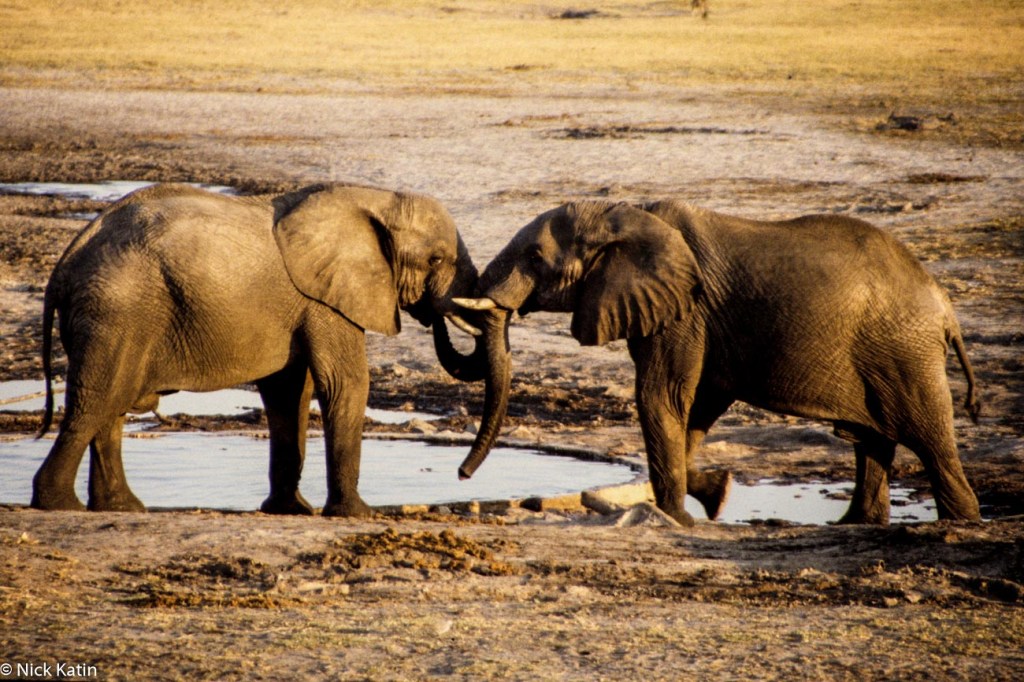
    The road we took was so bad that we gave up after a while but then came face to face with a herd of elephants that came perilous close to the car. Hwange has one of the largest populations of elephants in the world at around 30,000 and most of them seem to be crossing the road right in front of us.

    You know sometimes I can’t help myself, I just had to get a little bit closer to get that ‘great’ shot. It began to occur to me that we might be a little too close when one of the elephants turned and looked us rather menacingly and made to charge us. That was it, I was in reverse and began to move backwards so fast that the elephant was impressed enough to change his mind and went back to his herd. These guys are to be taken very seriously!

    The lodge was quite comfortable if somewhat (like everything else) rundown. It was completely self contained with a bedroom, kitchen, bathroom and lounge. It even had a braai and a shady veranda. Better still we had a cleaner who came in to make the beds and do the dishes. But the best thing was that it was so cheap. US$4 per night! At that price rundown or not it was a bargain.

    Hwange covers 14,600 square kilometres of hot, dry and dusty scrub interspersed with clumps of umbrella acacia trees and dotted with a few waterholes. It’s at these waterholes that most of the wildlife congregate, so most of us just drive from waterhole to waterhole looking for the most exciting wildlife we can find.
    It’s sort of strange how we can become blasé so quickly about the wildlife that we do see. Everyone wants to see the big cats and rhinos.
    At Nyamandhlovu (Nya to its visitors) Pan there is a platform where visitors get out of their car and sit for a while. Here we saw almost everything we had seen before wildebeest, kudu, giraffe and even elephants and still we wanted more.

    We visited this spot again the next day but had to return back to camp when I noticed a nail in one of the tyres. Repairing and replacing tyres was a big enough business in Hwange to justify having a permanent workshop there, so getting it fixed was not a problem.
    In the afternoon we returned to Nya and after an hour or so we got back into the car, turned the key and got nothing but a click. Now picture the scene we’re in the middle of an African wildlife park where the only time you can get out of the car is to quickly climb onto the platform and we’ve broken down. My first reaction was to get out of the car to have lift the bonnet. My second reaction when Sue pointed out that I could be risking my life in doing this was panic and then I got out of the car and lifted the bonnet but with my attention very much on the landscape around me rather than the slumbering piece of metal below me.

    Fortunately there was an armed guard who we hadn’t seen nearby and he made his presence known by coming over and without a word just stood guard close to the car. The problem was the battery lead had come loose from the terminal connection and with my limited tool kit and my great versatility as a mechanic, I had it up and running in no time.

    Back at main camp we washed down a ‘coldie’. Actually it wasn’t a beer but a gin and tonic. Gin was so cheap at US$1.00 for half a bottle that we thought we could save a little bit of money. Trouble was a gin and tonic without ice was like having a warm beer, it just wasn’t the same so that idea was abandoned after while and we went back to beer which at least we could have cold and was still only around US$0.80 each.

    That afternoon we went on a guided walk to the nearby Sedina Pan and back. Douglas our guide had good sense of humour and led us through the bush to the pan where we sat and watched in the hide for a while. Whilst peering through slot in the hide Douglas pointed towards one end of the pan. “What dooo yoou see my friend?”

    “What should I be seeing?’ I replied thinking that there was a lion or something equally as interesting.

    “Oh I don’t know. My eyes are not sooo goood”

    What was the point in having a guide whose “eyes are not so good”? We were relying on him to spot those animals that us mere tourists never spot!

    The other two other couples on the walk were from France and USA. I’ve come to the conclusion that yanks who go overseas must all have training before they leave because they all seem act the same way. Once again they wore the obligatory designer label safari gear, were loud and this time had a video camera that they talked to. That was irritating. We would be watching quietly for some wildlife when behind me would come the murmur “heere we ‘re watching quietly for some anemals in Seedona Paan” I’m sure whoever watched that video was bored shitless! I shushed him and neither of them spoke to us again until the end of the walk.
    Later we saw both couples having dinner together in the Waterbuck restaurant ignoring us as we walked past. Some people are just so petty!

    As it turned out Douglas didn’t actually need his eyes. On the way back we walked across a grassy plain full of zebra, wildebeest, jackals, baboon, giraffe and incredibly two kudu having a scrap within a couple of metres of us.

    If you like this then hit “follow” on the side bar

    Two elephants mixing it up at a Hwange NP waterhole in Zimbabwe
    Two elephants mixing it up at a Hwange NP waterhole in Zimbabwe


  • African shoestrings – Zimbabwe Day Ninety Bulawayo

    Cecil Rhodes is buried at a spot he called the “view of the world” but is also called Malindidzimu (dwelling place of the benevolent spirits). So taken was he with what could be seen at the top of this granite mountain that he nominated this place as his last resting place. It’s an eerie place, as the huge boulders that mark the spot appear to be positioned by Rhodes himself. He was a powerful man but somehow his power did not stretch that far.

    On the way back to Bulawayo we stopped off at Tshabalala Wildlife Sanctuary. Admission is free if you paid to see Matobo on the same day.

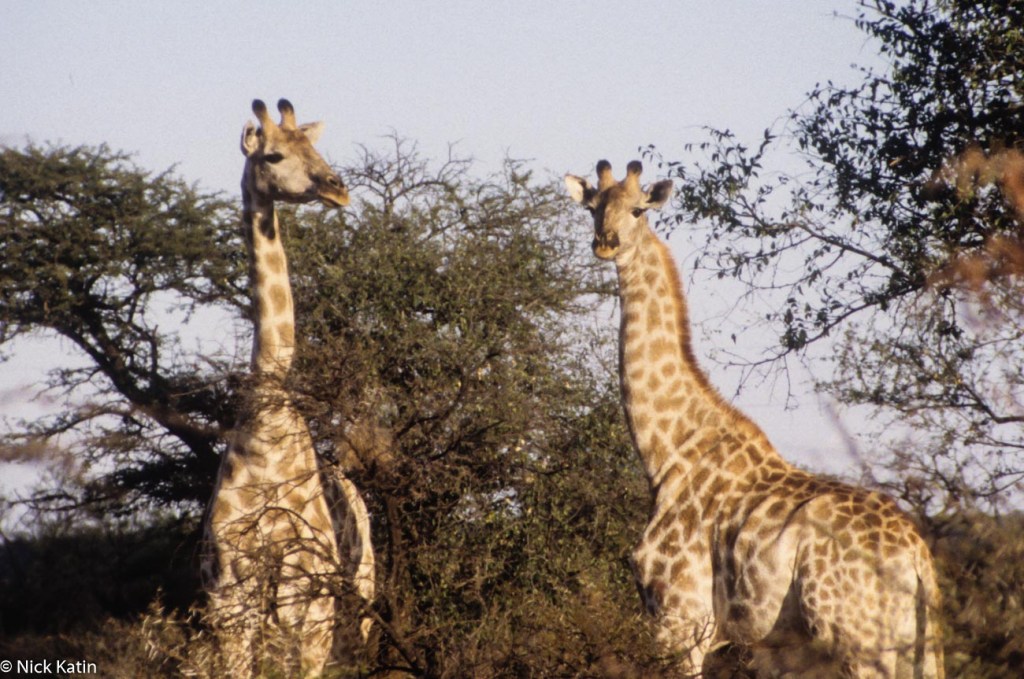
    Its an excellent park as there are no predators and we could get out of the car and just stroll around the many giraffes, impala and zebra to name just three. Our only fear was of being accidentally kicked by a giraffe due to their inability to see us beneath its torso and we being such a long distance away from their head. They are soooo tall!

    The following day just the two of us (Mark and Nicky left for Harare via the overnight train the previous evening) visited the Khami ruins.

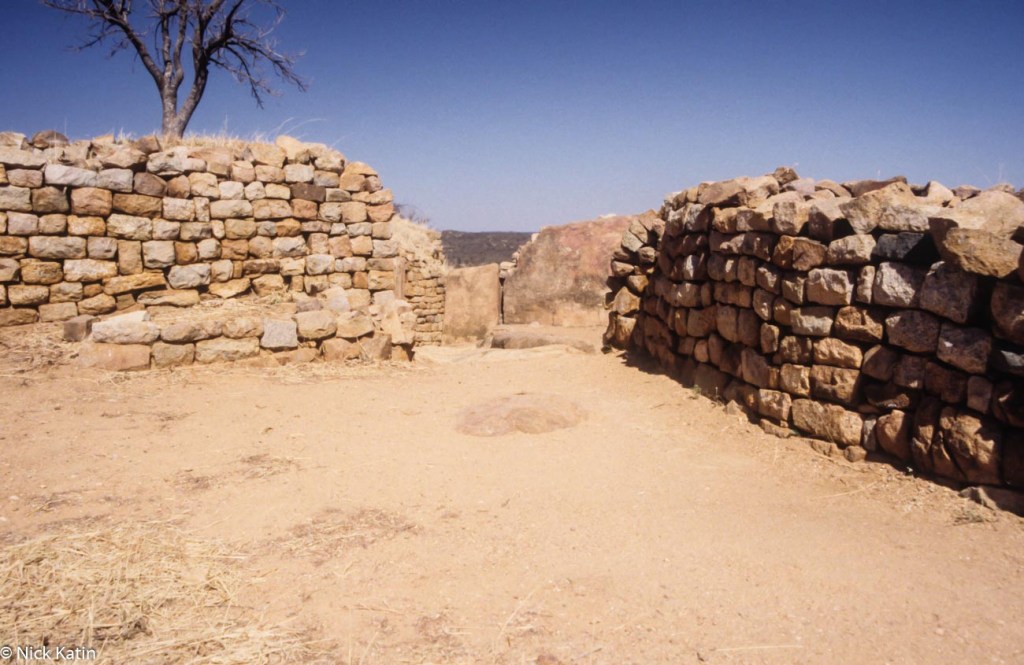
    Zimbabwe has several ruins dotted around the southwest and central parts of the country, the origins of which are often shrouded in mystery and varying theories. I can honestly say that Khami ruins did not leave me with lasting memory of mystique or intrigue. It’s a rather neglected and run down and the trail guide written and published by The National Museums and Monuments of Zimbabwe was ten years old and ventured very little on the taxing subject of who built this mini city. Like the Lonely Planet, it suggests that the Torwa people inhabited it until ousted by the much more powerful Rozwi who attempted to destroy Khami and from the looks of it needn’t have bothered as recent neglect seems to have done a much better job. The most recent theory given to us by Burkes Louise was the possibility that Indians from the Asian sub-continent might have been the original builders and architects.

    The ruins are divided into two different areas, the hill complex and the southern area. The most notable thing about the latter was its proximity to a really smelly reservoir. The hill complex on the other hand is not as spread out and had a concentration of stone walls and terracing surrounding it on quite a prominent mount. On the hill itself are tiers of huts or at least the remains of them. This apparently was the home of Mambo king of the Torwa; where he lived with his entourage. I guess it was interesting but not enough to keep us there too long.

    Across town in the opposite direction and around 24 kilometres from Bulawayo is Chipangali Animal Orphanage. This centre for injured, sick and ‘homeless’ animals was on our list of must see’s. It looks more like a zoo than a wildlife sanctuary. There were lots of cages and enclosures housing the various animals like lions, leopards, rhino, hyenas, and even crocs and snakes to name a few. Lots of these animals are perfectly fit but could not survive if returned to the wild. For instance, once a lion has had close contact with humans it loses its fear of man and becomes a risk to both man and itself. Chipangali also has breeding programs for cheetahs and rhino, so there were large enclosures for both of these animals. What always amazes me is how these places keep going. Obviously under resourced and running out of space somehow they seem to just soldier on and make the best of a bad thing. If I had one criticism it was there was very little info on why individual animals were there. Something like: “Petra (the lioness) was shot by a poacher and rescued by Tarzan, who traveled for three days carrying her to safety. She now has made a full recovery but has developed this habit for pounding her chest with her front paws and hence cannot be released back into the wild.”

    We goofed! As I said earlier we passed Hwange National Park by train to get to Bulawayo just because we wanted to travel in a train and we were under the delusion that hire cars were cheaper in Bulawayo than Vic Falls. As we now know, the train ride was a disappointment and hire cars cost pretty much the same. So now we had to back track 330 kilometres each way. It’s a long drive too, three and half hours to be exact to arrive at Main camp.

    If you like this then hit “follow” on the side bar
    Giraffe at the "on foot" Tshabalala NP in Zimbabwe
    Giraffe at the “on foot” Tshabalala NP in Zimbabwe


  • African shoestrings – Zimbabwe Day Eighty Nine Bulawayo

    We had some neighbours in a tent at Burkes, Mark and Nicky. Mark was Irish and Nicky was Welsh a powerful combination. As we got to know each other Sue and I started to discuss our home, Perth and I noticed that both of them had gone into a sort of trance and their eyes began to moisten. Were they on drugs I wondered or maybe mentally ill. No, nothing so sinister. Apparently they had met each other in Perth and had such a great time during their six month stay there that us prattling on about how good it was just brought tears to their eyes.

    Perth was one of the many places that they had been, South America, the Himalayas and India to name but three, all of which we had targeted sometime in the future. These guys were getting around on the smell of old guidebook. Their budget made ours look like the national account of a small country. Somehow they managed to spend only US$1000 per month between the two of them. We were by then exceeding our original budget of A$100.00 (US$60.00) a day by the handsome tune of 25% almost double the amount Mark and Nicky were spending and we thought we were doing well! The fact is that they actually missed out on a few things simply because they didn’t want to spend the money. They wouldn’t for example hire a car, so unless an attraction was accessible by public transport, which a lot of sights in Southern Africa are not, or a budget tour then they missed out. Similarly, if the entry fee was high then they would not go or only one would go. They also carried their own tent and managed to camp pretty much everywhere and like us eat out of supermarkets. Personally I think that we are often in these places possibly only once in our lives and to miss experiencing or seeing something simply because of mere money is missing the point. But that’s their decision. They did contribute to the cost of our hire car for a day so that they could come with us to see Matobo National Park.

    Matobo is around 34 kilometres south of Bulawayo and is one of Zimbabwe’s great Parks. Matobo means ‘bald heads’ and was so named by Mzilikazi, king of the Matabele who with his people arrived in the early nineteenth century, fleeing the ruthless Zulu king Shaka. Mzilikazi was referring to the impressive granite peaks that dominate the majority of the park. Some of these peaks are sacred to the African people and supposedly even just to point to them brings bad luck.

    Of course like so many places in Southern Africa the San people were there first. There are hundreds of caves dotted all around the park that house ancient rock paintings.

    The white man also has left some history. Cecil Rhodes is buried in a grave hewn out of rock at the summit of one of the granite peaks. Baden-Powell was inspired during a visit to this area to form the Boy Scout movement and its national training grounds are located in Matobo.

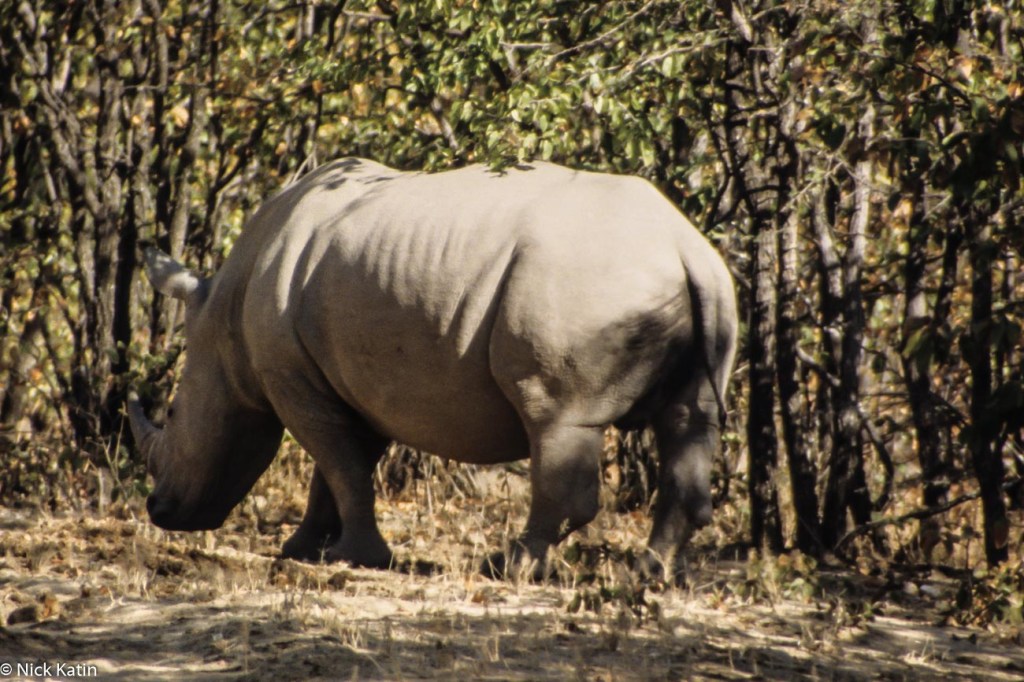
    But we were there to see animals. The largest part of Matobo is taken up by the Whovi Game Park and it’s here that mainly white and some black rhino have been reintroduced and are thriving thanks mainly to armed guards that deter poachers. Of course there are lots of other game including the elusive leopard and the ever present variations of antelope. In fact, it’s meant to have the largest concentration of leopards and also black eagles in the world. Needless to say we didn’t see either. What we did see were a family of white rhino (mum, dad and two little ones) lumbering along the road side by side just in front of us as we turned a bend and applied the brakes to bring us to a jarring halt. Not that we hadn’t been jarred through to the bones up until now; the road was a typically bitumen or dust between the potholes track that we now almost routinely encounter.

    Rhino are such ugly and at the same time beautiful beasts. They move with an ease that contradicts their size but look patently dumb! Of course the latter may because they can’t see, they rely on sound and smell to keep them on their guard against any unfriendlys. It is possible to tell the difference between a black and a white rhino. The white rhino has a wide mouth, somehow over the years the word ‘wide’ has been became white, and stands around 2 metres tall, weighs around 1.5 tonnes and is quite docile. The black rhino has a vertical mouth with a triangular shaped lip, stands around 1.5 metres tall, weighs around 1 tonne and is the most aggressive of the two. A Kruger ranger once told us that a white rhino is a grazer and the black is a browser. Why I remember this has nothing to do with the subject but more to do with the way that this Afrikaans speaking guy pronounced his ‘R’s. They seemed to roll around in his mouth, dig down into his throat come back up through his nose, back into his mouth and sound like a cross between a cat’s purr and a lion’s roar. But I digress. For those of you who haven’t worked it out yet a grazer chomps at the vegetation at ground or low bush level and browser, not wanting to hurt their back, intelligently chomps at the vegetation at head height, i.e. larger bushes and small trees.

    Despite these white rhino being quite docile we decided to stay a safe distance away. It did occur to me whilst slowly following them down the road that had they turned around and decided to charge, I would not have the luxury of being able to do a three point turn. Reversing at high speed along this minefield of a road was probably more dangerous than standing our ground. Of course the rhino weren’t the least bit interested in us they were quite happy going for a family walk along the road until I think even they got fed up with the potholes and disappeared into the thick bush. We saw more rhino towards the end of the day but not before seeing hippos and crocs hanging out at the Mpopoma dam and a few giraffes from the distance. In this area of the park there are two viewing platforms and picnic spot where you can get out of the car. The view from one of these platforms is as typical of the African Savannah as you will find. A grassy plain dotted with clumps of umbrella acacia trees, single umbrella acacia trees stood away from these groups as if exiled, spread before us. In the distance we could see a couple of giraffes that were casually wondering across towards their lunch whilst we ate ours and watched Africa play out its life.

    If you like this then hit “follow” on the side bar

    Rhino rolling in the dirt in Matobo NP Zimbabwe
    Rhino in Matobo NP Zimbabwe


  • African shoestrings – Zimbabwe Day Eighty Eight Bulawayo

    Our actual room was part of a block of four away from the house and quite tidy although as in most things in this country a bit run down. We made ourselves comfy and then getting a lift from Louise headed out to the centre of town to hunt down a cheap hire car and book our accommodation at our next destination, Hwange National Park. To book this accommodation (which by the way is almost mandatory) we had to go to the National Parks Booking Agency in Bulawayo. The main booking office is in Harare and they are not connected by any sort of technology except an unreliable fax. Consequently, we had to request certain dates and places and come back the next day to see if we had won lotto after they faxed head office to check availability.

    We almost got what we asked for……………. There are two camps in Hwange, Main Camp and Sinamatella and we asked for two nights at Main and one at Sinamatella. What we got was one at each with a night’s gap between the two. We weren’t particularly worried as we had heard that there are lots of no-shows (no deposit is required with the booking) so we had good chance of plugging that gap.

    The hire car we managed to get was a Nissan Sunny that had seen better days. A few chips on the paintwork, a couple of small dents, an interior of heavily worn upholstery and a windscreen with a huge crack across the passenger side gave this car ‘character’ and it was also the best of a bad bunch at the price we wanted to pay. We hired it for ten days to travel around Zimbabwe and drop it back in Harare.

    We were rapidly getting the idea that maintenance was a dirty word in Zimbabwe everything seemed in need of repair or simple maintenance. Apparently its been a slow almost unnoticeable deterioration that has been going on since 1980 the year of independence, even though for a time in the eighties Zimbabwe enjoyed a prosperity unequalled at that time on the African continent. So we were sort of hoping that this car had been maintained sometime in its long life.

    The centre of Bulawayo wasn’t quite as run down as other parts but didn’t particularly excite us. It’s just a functional town, its wide streets built around a grid system full of unexciting functional buildings. Even the museum didn’t enthuse us. It just seemed a well ordered assembly of rooms that housed hundreds of stuffed animals.

    What Bulawayo did have was Haefelis!……… Located on Fife Street, Haefelis was a little gem of a café that served cakes, fresh bread, rolls, coffee and pizza. This was the local trendy hangout and a good place to wile away some time, people watching. This was the place of the new Africa or certainly the one the world would like to see if not necessarily some of the African politicians. Young well-dressed Black and White Africans mingled with each other, laughing and joking, putting the world to rights and obviously enjoying each other’s company. Of course in modern day Zimbabwe whites make up less than 1% of the population so their influence should be minimal but still important.

    The bigger racial conflict over the years has been the two dominant tribes, the Shona (75%) and the Ndebele (18%). At the end of the ‘bush war’ that lead to independence in the seventies these two groups came close to starting a civil war and now live side by side in an often uneasy atmosphere. As a tourist there is no real evidence of this except the odd incident that gets a mention in the national or local newspapers. Local Europeans who, as in South Africa, tend to dominate the tourism industry and probably have a slightly different perspective than some of the Shona or Ndebele, fed us our information.
    We heard quite a few times how simple the majority of the population were and how difficult it was for the farmers or other local employers to get consistent productive work from their employees. If that’s true then as more whites and consequently valuable skills leave the country then the bigger the hole Zimbabwe will find itself in unless it takes steps to educate and teach its population the skills necessary to prosper.
    Now don’t get me wrong I’m not in favour of turning all these African countries into western societies and I’m fully aware that everybody was doing just fine until Europeans came along and tried to ‘civilise’ the various African tribes. But the damage is done and the clock only goes in one direction so westernisation is all we have got until someone comes up with something better, which I might add there must be, after all a society that’s produced McDonalds, Emnem, bell bottoms and Ronald Reagan can only be improved on.

    If you like this then hit “follow” on the side bar
    Khiami Ruins near Bulawayo in Zimbabwe
    Khiami Ruins near Bulawayo in Zimbabwe


  • African shoestrings – Botswana Day Eighty Two Chobe

    Audi had arranged a local tour guide to take us on a game drive into Chobe that afternoon and then a game cruise along the Chobe River the next morning. Our new tour guide didn’t show for a while and in his absence, led by yours truly, we organised with the agents at Tebe camp, where we were staying, to swap the two tours around. After all, watching the sun go down on the water from a boat surrounded by animals sounded much more romantic than being stuck in a vehicle. Not too mention that early morning is a better time to go for a game drive.

    Andre had now left us and returned back to Ngepi. He had done all right for his first time; nothing had been too much trouble and had often bent over backwards to make us comfortable. Humble that he was he was also a nice guy with it. The poor bloke was also just a little bit emotional when he left.

    Our new guide was a different animal!

    Chris was an Ethiopian brought up in Sweden (we actually thought that he was bullshitting when he told us that but we found out much later that it was true). With his long platted Bob Marley look alike hair and a fairly relaxed and casual attitude to his job; he was also an ‘expert’. Now I know he’s meant to be an expert certainly as a tour guide but I mean he knew it all and there was no doubting that the most important thing in his life was whatever worked for Chris. Which is why he was not too happy that we had rearranged the schedule. But we held fast despite his efforts to convince us otherwise.

    The cruise was pretty bloody good!

    From the boat we could see elephants and buffalo on the shore and hippos in the water, watching us with those beady eyes that live just above the surface, not to mention the abundant bird life.

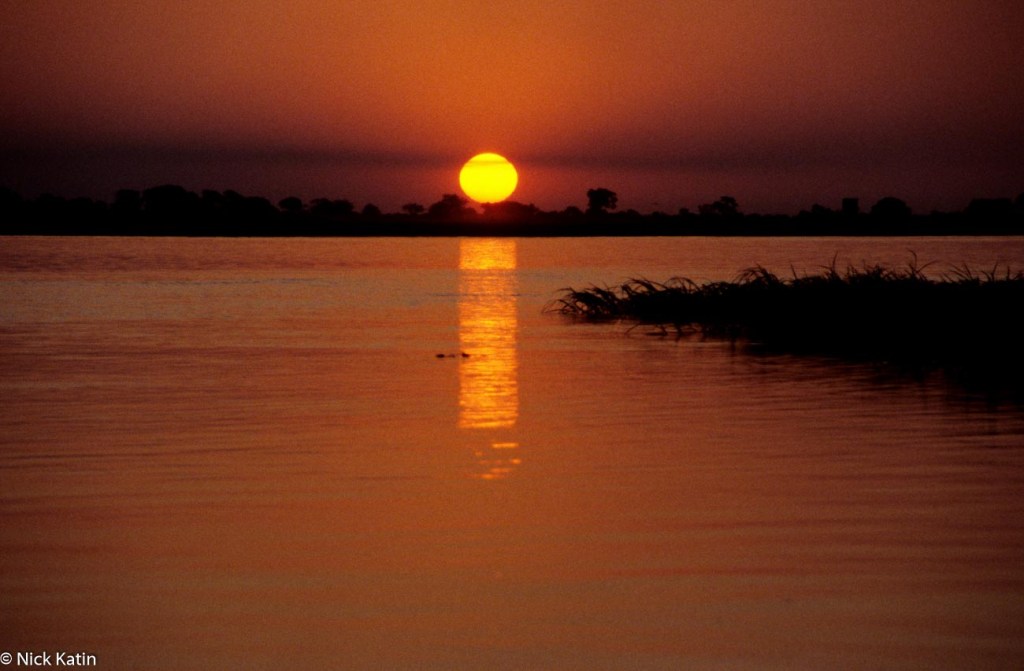
    The most impressive sight, though, was the sunset that seemed to happen just at the river edge. At home, in Perth, we get some pretty awesome sunsets over the ocean so when I say the Chobe sunset was pretty bloody good; I mean it ‘was’ pretty bloody good. I shot off a few shots after Sue had made the suggestion. One of these shots sits proudly on our dining room wall and when anyone remarks on it, Sue turns to me and says with great satisfaction “and you never wanted to take it!”

    Driving through Chobe early the next morning was a totally different affair. Safari trucks are open in the back and at 5.45 am it was bloody freezing. Obviously the animals thought so as well because none of them were anywhere to be seen. We drove around for around an hour along dusty sandy tracks with Chris barking instructions to the driver up front and scratching his head as to why we hadn’t seen anything yet. The night before despite our rearrangement of the final leg of the tour, he had promised us an abundance of wildlife and so far his promise seemed to be pretty empty. Two lionesses saved his embarrassment. They were chasing a squealing warthog 100 metres away across a water channel. We stopped and watched as the two got closer to their prey that was running at great speed first one way then another. I turned to look behind us and to my amazement saw another interested onlooker, another lioness, a mere five metres away peering around our vehicle in effort to see what her mates were up to. We had unknowingly parked right in front of her!

    After that the wildlife just kept coming! It was as if someone had sounded the wake up call because everywhere we went we saw something. A herd of buffalo chewing and nonchalantly looking at us quizzically, two hippos wondering around on the river bank, kudu and impala springing away as we neared.

    Back to the water channel and we just caught sight of two of the lionesses walking away into the bush. We drove on back towards to the park gates and our campsite and then suddenly around the next bend, as surprised as us, were all three lionesses walking across the track and within spitting distance of the truck.

    More buffalo and a crocodile were spotted near the waters edge and then reluctantly our time was up.

    Chris was crowing. “See, I said we would see lots this morning” he said in his sort of British, Swedish and African accent. My remainder that it was actually our idea to do this early morning game drive was totally ignored as he continued to crow all the way back to camp.

    If you like this then hit “follow” on the side bar

    Sunset on the Chove River in Chobe National Park, Botswana
    Sunset on the Chove River in Chobe National Park, Botswana


  • African shoestrings – Botswana Day Seventy-Eight to Eighty Okavango

    The Delta itself reminded me of a vast flooded field with pockets of dirt that support large trees and palms. It actually consists of a maze of meandering channels, with dense masses of papyrus and other aquatic plants; many shallow, water-filled basins; and numerous islands, or elevated wooded areas that remain dry during flooding. The delta normally covers about 16,000 square kilometres, but this year the rains had been good and it was at its highest level for many years, which translated into covering a larger area than average.

    PT our Polar seemed to be the number one man when the number one man, who was a lot older than the other polars, didn’t go out, which was often. Our first experience of riding in the Mokoro was on the way to the next camp on a nameless island near Qokoqere, deep in the heart of the delta.

    In no time at all we reached the new camp. This time there are no facilities whatsoever, just a hole in the ground for a toilet and the water of the delta for washing. Once we had set up camp again we went back out in the Mokoro and stopped on an adjoining island. PT took us all for a walk and told us of how his people use the trees and plants, what animals and birds are around and the danger of crocs and hippos. Because the water was so high most of the animals had moved away to higher ground so all we saw apart from the odd croc were some Letchwe, a small water antelope that kept their distance.

    After lunch we went for a swim, well some of us brave enough did. It’s a bit scary knowing that we were in the same territory as a croc or hippo but we were assured that this particular spot was croc and hippo free. I did notice however that a couple of the polars were continually scouring the water for any gatecrashers.

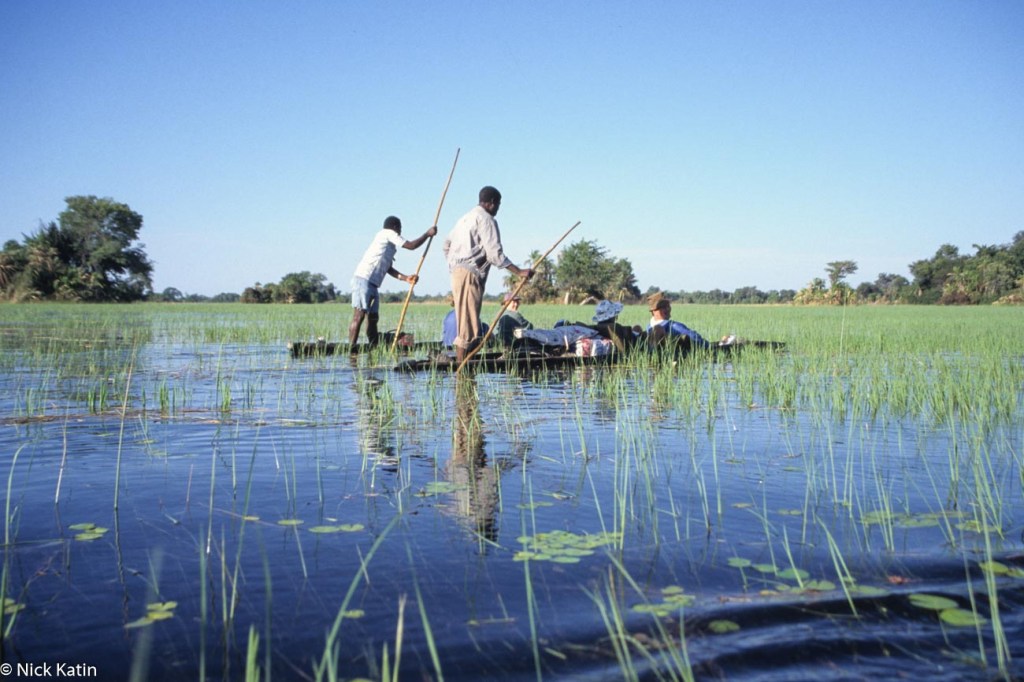
    For the next three days we had a set pattern, up early and out on the Mokoro, back for lunch, back out again after a siesta and the heat of the day to return at sunset. Travelling by Mokoro is a restful and mostly relaxing way to travel (apart from the odd pampas grass brushing our face and the zillions of insects). It just glides through the calm, crystal clear water without any noise, just a gentle splash of the pole as it too moves through the water pushing us on past the papyrus and water lilies that are dotted almost everywhere. Apart from the pole the only other noise is that of the polars chatting and laughing amongst themselves and the odd motor boat disturbing the serenity. We seemed to drift here and there in this water labyrinth, sometimes getting out for a walk or a swim or (as if we needed it) a rest.

    Occasionally these guys would get a bee in their bonnet about finding a particular bird or animal that we had been discussing the night before. We spent three hours one morning looking for Pel’s fishing owl and finally found one hiding in a densely leafed tree on a remote island. Then we spent the same afternoon searching for a Sititunga another antelope that was so rare and extremely shy that we never actually found one!

    Evenings were spent chatting and talking whilst waving away the persistent mosquitoes. These mosquitoes were not, we were assured, the malaria carrying variety, not that it mattered because the insect repellant that we used was capable of killing small animals at twenty paces.

    Andre and Annie did their very best to make us all comfortable and served us up basic but excellent fare.

    As I said before we were, apart from Klaus and Hilda, the oldest of the group by some years. The other four were all Uni. students taking time out and we became all reasonably friendly except for the ‘oldies’ who seemed to keep themselves aloof. Mind you they were only with us on the delta so I guess it probably wasn’t essential that they get to know us. It might have been though the fact that none of us had khaki safari suits and they felt the odd ones out.

    If you like this then hit “follow” on the side bar
    Polers on the makoros (canoe) in the Okavango delta, Botswana
    Polers on the makoros (canoe) in the Okavango delta, Botswana


  • African shoestrings – Namibia Day Seventy five – Windhoek

    In most African towns and cities there are plenty of curio and souvenir shops, a lot of them tacky and often overpriced and Windhoek was no exception, we did however find tucked away in an old renovated warehouse that once housed a brewery, the Namibia crafts centre. This place sold only artifacts and souvenirs made by local Namibian communities and the profits go back into the community. We bought some bits and pieces from the one of the Namibia women’s communities and came away with that warm and fuzzy feeling that comes from knowing that you have helped people who have so much less than you. After all a lot of souvenirs and curios are often mass produced by large wealthy companies and sold in markets and small shops with the pretense that they have been hand made by the seller themselves. In some of the instances, this is achieved by the use of nothing more than slave labour. So it’s good to see that places like the Namibia crafts Centre, are beginning to appear more and more. So to all you future travelers I urge you to seek out these places and buy!

    Out last night at the Cardboard box was spent socialising. We met Andre, our driver for the Botswana tour that started the following day. Andre had only just started as a tour guide and as it turned out he remained with us for the all but the last day of the 6 day tour. A white Namibian he was a nice guy who like all novices made up for a lack of experience with lots of enthusiasm.

    We also met Sharon an attractive girl from somewhere in Queensland who was travelling around southern Africa on her own. Somehow or other an American called Jed (aren’t they all?) got into the conversation. He was a young guy also travelling on his own and was heading south whilst we were heading north so we swapped notes for a time. He of course had done everything and in comparison to us was travelling a lot ‘rougher’. Within ten minutes of the conversation it became pretty obvious that these two were in the process of starting a ‘romantic’ relationship and we were in the way. Sue, of course, spotted this first and tried to drag me away. I wasn’t going until I had extracted as much info as possible from Jed. Eventually we left our two lovebirds and made our way over to a young German bloke who bored us with tales of his travels in Australia.

    We set off at 6.30 am to start our tour of Botswana. Its run by a crowd called Audi camp who are basically logistics experts. They seem to take a bit of a tour here and another one there and make a complete package. I guess we had four components to our trip, the transport to Audi’s main camp Ngepi in Caprivi in the far north of Namibia, the Okavango Delta, Chobe National Park and transport to Livingstone in Zambia. All these components could be purchased separately but as we needed transportation to Zimbabwe (Livingstone is about 10 kilometres from Victoria Falls in Zimbabwe.), it suited our purpose to do it this way.

    We were actually an hour and a half late setting off because Andre had to pick up another traveler, Louise, from the station.

    It’s a long ten and a half hour drive and the most notable point was crossing the ‘red line’ between Grootfontein and Rundu. It’s actually a veterinary control fence. Livestock bred north of this fence are banned from being moved south or being sold overseas in order to prevent any spread of disease to the rich cattle farms of the south. But it’s much more than that. Namibia like most of South Africa is fairly westernised and I suppose could almost be classified as a first world country.

    Except for north of the red line.

    The change is as dramatic as it is sudden. We went from large open spaces punctuated by population centres of varying sizes to a world of traditional and tribal villages that dot the roadside. Clusters of mud and thatch houses, surrounded by reed or bamboo fencing, were populated by cattle, goats and other livestock wandering aimlessly and feeding by the side of the road. Women were gathering wood or water and then returning with their pickings on their head.
    This is the Africa most of us expect to see!

    If you like this then hit “follow” on the side bar

    The inhospitable Skelton Coast in Namibia
    The inhospitable Skelton Coast in Namibia


  • African shoestrings – Namibia Day Sixty eight – Terrace Bay

    It didn’t start well. We had to cut short the tour of the rock paintings, as Sue was once again sick. What we did see (or what I saw) of it was fascinating. Some of the works are engravings that date back over 6000 years and appear to be still as clear as the day they were created. Fortunately Sue had the presence of mind not to leave a remnant of her stomach over any of them. Somehow I don’t think she enjoyed it one single bit.

    We had no choice but to press on. Sue had been sick twice now and I was starting to get concerned, but civilisation was now closer at Terrace Bay. The state of the roads didn’t help either. The road back to the main ‘drag’ was full of potholes and those irritating corrugations that leave you still stammering for hours.

    The road to Skeleton Coast was marginally better. There were less potholes but still plenty of corrugations and loose stones that had us slipping and sliding from time to time. It was slow going and bloody hot! Sue began to perk up the closer we got as she slowly recovered much to my relief. She had slept most of the way but really hadn’t missed much.

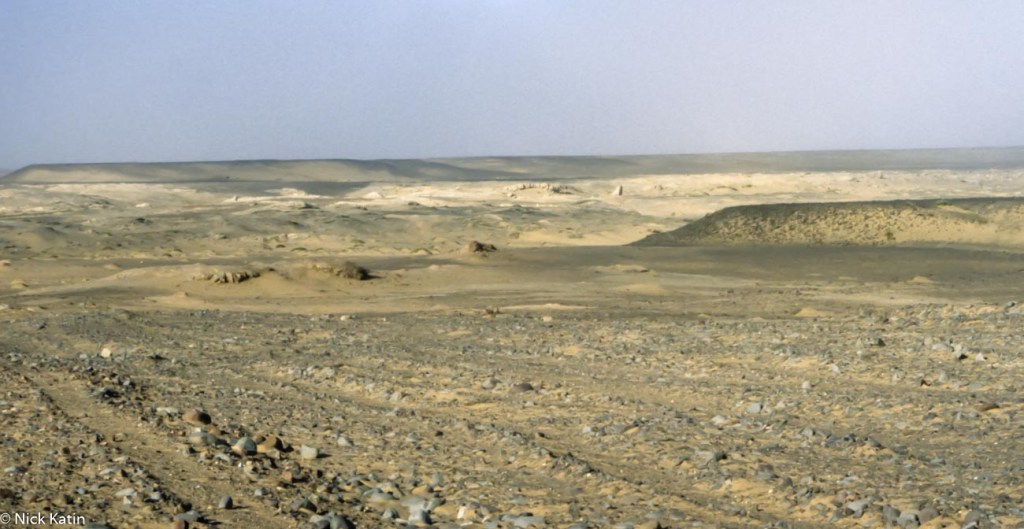
    The Skeleton Coast is as inhospitable as it comes. A waterless terrain of grey sand dunes and gravel plains for as far as the eye can see greeted us as we entered the park at the Springbokwater gate. I was amazed to actually see someone at the gate. The smiling gatekeeper with his house surrounded by a little patch of grass, an oasis continually under pressure from the relentless marching sand. He checked our passes and waved with a big grin on his face as we passed through. Did he know something we didn’t?

    The coastline of Namibia is an enigma. A desert that stops right at the waters edge. Certainly there are other examples of similar coastlines elsewhere. Our own North West of Australia is very inhospitable but at least it has some vegetation and even trees at the equivalent latitude. The difference is the temperature of the ocean. The Atlantic in this part of the world is bloody cold, consequently it just doesn’t create enough moisture to make it rain so this area averages less than 50mm (2″) per year! What the cold ocean does do however is keep the temperature down. Just as we experienced in Luderitz the temperature drops sharply at about 100 kilometres inland from the coast. Particularly when a southerly breeze is blowing (as it does most of the time) and covers the coast with a cool layer of fog. We went from a hot, dusty environment to a cool, almost cold, misty but still dusty environment in almost seconds. It was like walking into an air-conditioned shopping centre after having spent time walking in 35-degree heat. The change was that dramatic!


    There are many places that we have visited over the years that have not been what we expected and we have sometimes asked ourselves briefly “what are we doing here?” Terrace Bay is one of those places that begged the question continuously.

    It’s a small basic resort sandwiched between the ocean and the desert 3 million miles from anywhere and full of white South African and Namibian leisure fisherman all jabbering away in Afrikaans. We got chatting to a group from Paarl in South Africa and they even asked us what we were doing there. “Therre’s nothing ‘ere but fish” one of them said. It did have a restaurant where you have to eat, as full board is obligatory, a bar and a small shop with very little. The accommodation was reasonably comfortable. A few fibro semi detached huts with rather sparse self-contained rooms were dotted around the place.

    Fortunately we only had two nights here. We spent the rest of the day and the next day, relaxing, reading, sleeping and for a brief time, exploring.

    If you like this then hit “follow” on the side bar
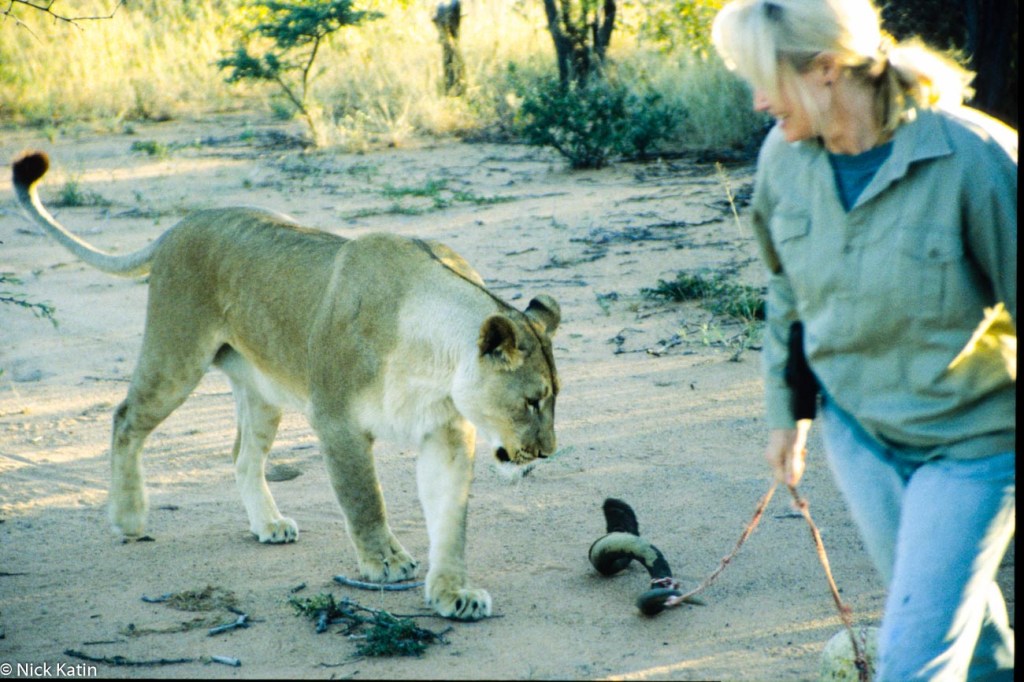
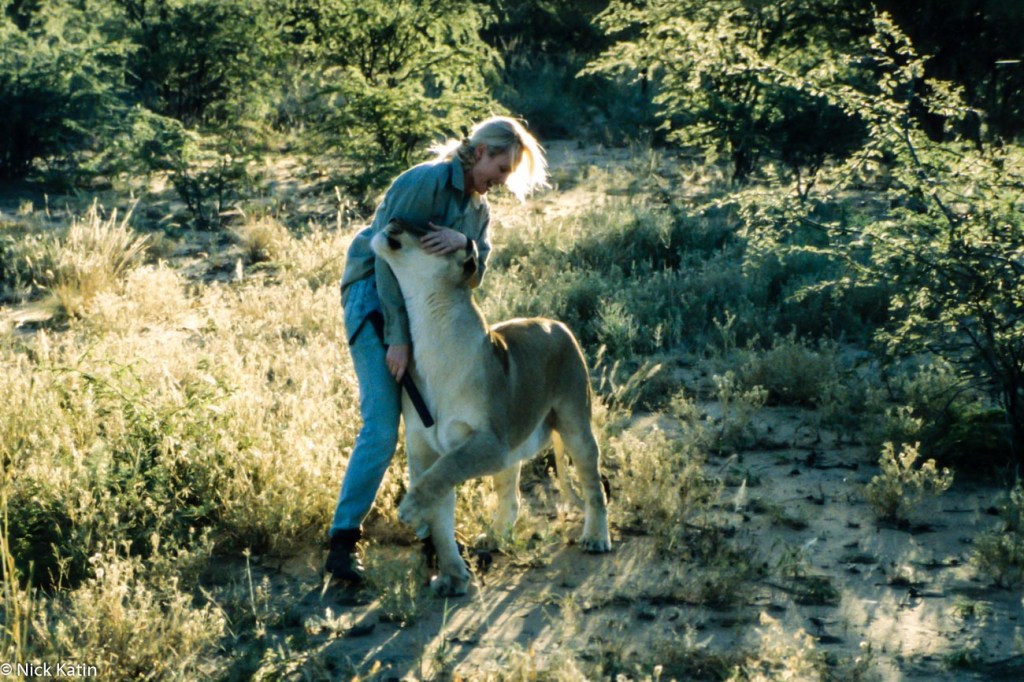
    Playing with a female Lion at Okinjima in Namibia.
    Playing with a female Lion at Okinjima in Namibia.
  • African shoestrings – Namibia Day Sixty seven – Twyfelfontein

    We got back to the resort in enough time to have another shower (our third) before dinner. Dinner brought us kudu steaks again and again it was the texture that put me off confirming after this second ‘chew’ that the kudu is safe from me in the future. Unfortunately there were no other choices so it was that or go hungry! Nonetheless the remainder of the food was good and really became secondary to the conversation we were having with a South African couple and a couple of journalists from Zambia who now live in New York. We were enjoying the conversation so much that it was almost an inconvenient interruption to be called to the night hide to see a porcupine munch on another slab of meat left there to attract him.

    It was all go the next morning. Up at 6 and into the huge long grassed paddock that was the lion’s enclosure, on the back of an open safari truck. These three lions (one female, Tess and two males, Matata and Tyson) were rescued from brainless people who kept and mistreated them in captivity. Even though they were now part of the family, it was intended that they would be relocated back out into the wild. Watching Donna and Roselea Hanssen play with them, I wondered whether how that could ever be. These animals were domesticated and appeared to me to be just big playful pussycats and then I remembered Guy’s story yesterday and made sure that I stayed well within the safety of the truck.

    Our final ‘activity’ was a guided bushmen walk trail. Chris our guide (who I noticed showed a healthy respect for the lions in the way he held on tightly to his rifle) took us on a track littered with bushmen artifacts, ‘home comforts’ and tools.

    It was interesting without being riveting. The bushmen like many other traditional peoples had no concept of ‘waste’. Everything had a use. A small animal would provide not only food but also pelts for warmth, fat for cooking and skin for shelter. It’s a principle that appears to be have lost over the centuries by Europeans.

    Back to the lodge and we only had a few minutes to vacate our room before Brunch (they like you out of the rooms by 9 am) which we enjoyed under the watchful gaze of the resident warthog.

    On the drive out Sue was feeling pretty crook and we hadn’t got far when I had to stop whilst Sue got rid of the contents of her stomach. From then on she slept whilst I drove onwards to Terrace Bay in the Skeleton Coast Park, some 380 kilometres away, in the blazing heat of the desert.

    As half of the road was gravel, there was no way we were going to make it in a day so our overnight stay was near Twyfelfontein where some of the finest rock art in Africa is found.

    Not so fine was the Abu-Huab Camp. Another dust hole masquerading as a ‘rustic and natural desert camp” in the middle of nowhere. Once again we had to put up with dust and sand blowing into every crevice and orifice. Sue was still crook and lay most of the time in the tent and I still had the remnants (in the form of catarrh and dry throat) of the cold I had caught nearly 3 weeks ago at Fish River Canyon.

    We were back down to the realities of independent budget travelling with a bump. No comfy bed in a dustless air-conditioned room for us that night. As darkness descended Sue gradually regained some strength to sit outside whilst I eat and we actually began to enjoy relaxing under the gaze of the millions of stars that lit the night sky with their pinpricks of light scattered in and around the milky way. That was until Sue almost put her foot on a scorpion, which could have put us right in the ‘shit’. Somehow this wasn’t the sort of place where emergency medical treatment would have been easy to find. That was enough for us, our beds were calling. Hopefully tomorrow would bring a better day.

    Playing with a female Lion at Okinjima in Namibia.
    Playing with a female Lion at Okinjima in Namibia.
  • African shoestrings – Namibia Day Sixty six – Okinjima

    It is estimated that there are 2500 cheetahs, a quarter of the world’s population, roaming rural Namibia, that is outside of the national parks. And that’s where all the problems lie. The farms are ideal for cheetahs and leopards (the other big cat that Africat specialises in). In the National Parks and game reserves both these predators are in competition with larger predators like lions. On the farms there is no such competition. Unfortunately they can’t tell the difference between small game and small farm animals like calves, sheep or goats which upsets the farmer just enough for him to set traps or go hunting! That’s where Africat come in.

    Straight after heating up the shutter in our cameras and blistering our shutter finger, we were whisked off in open top 4WD vehicles to the leopard hide. There we all sat in a small marquee whilst Guy one of the guides chats about Africat.

    “When a farmer kills or captures a cheetah or a leopard it often leads to making the problem worse.” He began “when a predator holds a territory it will chase out any intruding predators. Once its removed other predators will move in and often divide up the territory, so instead of having just one animal to deal with the farmer ends up two or three times as many. What we do is to try and educate the farmers to manage their livestock better so that losses are minimised and both can live together. Of course we often meet resistance and in those cases we just ask the farmer not to kill the cats but just capture them and release them to us so that we can release them back into the wild away from that farm.”

    He also told us that there were several cheetahs and leopards roaming wild on this farm and hopefully a number of leopards will visit the hide this afternoon. It occurred to me that we appeared to be in an unfenced area and wouldn’t there be the chance that the leopards might find us more attractive than the slabs of meat. Dumb question Nick!

    “Big cats will only really attack a human if the cat is cornered, injured or senses that we are vulnerable”. Guy said “If it’s got a much easier alternative then it will always go for that. Of course it also associates humans with guns and that also acts as a pretty big deterrent”

    I asked him what happened to his heavily bandaged foot that he couldn’t walk on without the aid of crutch.

    “Oh that, this happened in the lion enclosure”

    There was a complete silence. Sensing this, Guy went on. “Chris (the other guide) and I went in to see the lions and during our work I stepped backwards from the lion and caught my foot on a rock and fell spraining my ankle. As I said these big cats sense when we are vulnerable and in this case she began to make a move towards me. Fortunately Chris was there and herded her off before she actually attacked.” He smiled “So she didn’t really attack me. I just didn’t take enough care, something that when you’re dealing with these animals could cost a life”.

    “Aren’t we seeing these lions in the morning?” I whispered to Sue, who ignored me.

    With a degree of caution we are fed into the small hide and watch as the guides leave meat in conspicuous places on the elevated rocky terrain immediately in front of us. It was getting towards sunset so the light was that golden colour which bathed the rocks in almost perfect light. Within a few minutes a leopard appeared followed a few minutes later by another to chew on the slabs of meat and then disappear. For the next hour there was a regular pattern of first one then the other appearing and then disappearing.

    The hide was totally closed in except for a long thin viewing open window that made us feel like we were so close. In fact it was a zoo in reverse we were the ones imprisoned for our safety whilst the animals roamed around us. At one time one of the leopards looked straight at us and darted off after someone dropped their lens onto the small shelf we were all leaning on. Apart from that the only sound was that of camera shutters as we all strived to get that perfect leopard shot. I couldn’t help feel that this was all a bit contrived even though the leopards are free to roam anywhere they want and are native to the area. But I’m not complaining leopards are one of the most elusive animals to view in Africa and to see them up close and for so long, is an experience not to be missed.

    I like leopards! They are such magnificent beasts, like the shark they appear to be the perfect hunting machine with their muscular shaped body, long tail and strong stature.

    If you like this then hit “follow” on the side bar

    A leopard eats it's prey amongst the rocks in Central Namibia
    A leopard eats it’s prey amongst the rocks in Central Namibia
  • African shoestrings – Namibia Day Sixty four – Waterberg Plateau Park

    Our destination was the Bernabe de la Bat Resort in the Waterberg Plateau Park  (which sounds a lot more romantic than it is) some 300 kilometres south. We planned to see a couple of sights on the way, Lake Otijikoto and the Hobo Meteorite. Lake Otijikioto is one of the only two natural lakes in Namibia.
    This important fact didn’t really make it any more interesting. It’s just a collapsed limestone cavern that later filled with water and the only things of interest was its aqua blue colour and the fact that at its deepest (estimated to be 55 metres) lived some rusting ammunition and artillery. In 1915 the Germans were retreating from the South Africans and decided that dumping their weaponry into the lake to prevent those nasty South Africans having it was a master stroke.

    At least the lake was just off the main road.
    Not so the Hobo Meteorite! According to the Lonely Planet it was about 25 kilometres west of Grootfontein, which was 63 kilometres east of Otavi making it 38 kilometres from Otavi and a 76 kilometre round trip for us as we passed through Otavi.
    Easy! Well no, it was not! In fact the turn off, which was extremely hard to find, is a 76 kilometre round trip but the Meteorite itself was a 160 kilometre round trip!
    I guess we could have accepted that had this great artifact from the sky been a sight that would change our lives or at least been mildly interesting. It looks just like a rock (its mostly iron) partially buried in the ground with a little bit of landscaping to make it look pretty. Sure there was some interesting information on a board nearby but nothing we couldn’t have looked up on the internet.
    “So what did you expect?” I hear. I’m not sure but it was a long way to go for a lump of iron. If it had been green kryponite that glowed and changed colour, or throbbed like something from Star Trek, I would have been happy. But this thing just looked like something that had been found in another part of the country and brought here to make some extra cash and piss tourists like me off!

    The Bernabe de la Bat ‘Resort’ is nestled in the shadow of the 50 by 16 kilometre sandstone Waterberg plateau that stands around 150 metres high.
    The campsites were sheer luxury, grass. We hadn’t had grass since Daan Viljoen. No dust to find its way into your sleeping bag at night or blow into the tent by day. It was terrific.
    We actually spent the afternoon of our only full day there cleaning the dust out of the car. Considering how small it was, it seemed to hold an awful lot of sand.

    In Australia a big proportion of retirees, buy a caravan and do the round trip around Australia, sometimes for months, sometimes for years. In South Africa they head North to Zimbabwe, Zambia, Botswana and Namibia. Namibia is generally favourite amongst those from the Cape Town area. Here at Waterberg, we met three couples up from the ‘Cape’ travelling in convey. They were extremely friendly and helpful (even hanging up our washing whilst we were out walking).

    Speaking of walking we followed the only decent length walk trail, outside of the couple of long distance trails, in the park to a spot called mountain view at the top of the plateau. It was not a long climb but it gave us a bit of a workout after the day of driving we had the day before. The views at the top were certainly worth it, we could see for miles across the scrubby plains interrupted by the odd decaying sandstone hill but probably the best view was of the plateau rim with its sheer sided red, orange and green rock and vegetation.

    If you like this then hit “follow” on the side bar
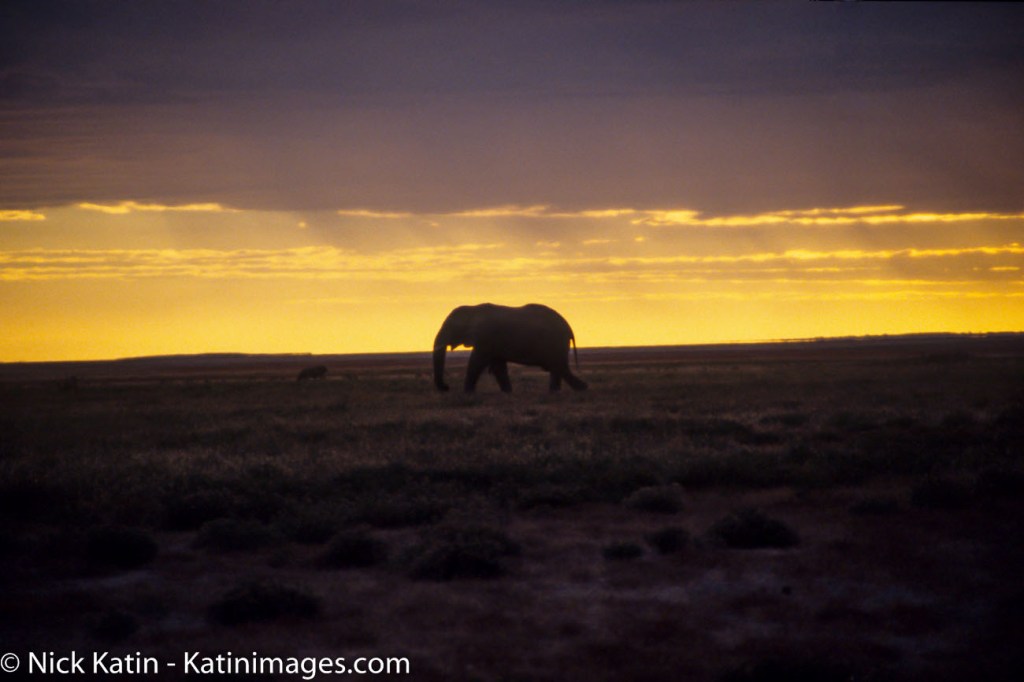
    An elephant strolling through the scurb at sunset in Etosha national Park, Namibia
    An elephant strolling through the scurb at sunset in Etosha national Park, Namibia


  • African shoestrings – South Africa Day Fourty three – Kalahari

    We got into Upington around 5 am and had planned to sit around the bus station until dawn and then find our way to Yeho’s.
    Trouble was that the bus station was just a kerbside stop and the office was closed that time in the morning. Fortunately the gods smiled on us and a local tour operator, who was actually looking for a German tourist he was there to pick up (she didn’t show), gave us a lift to Yeho’s.
    Livingstone weren’t due until midday so the owner let us catch up with some sleep in the deserted dorm.

    Upington is one of those nothing towns. Situated in the far Northern Cape on the main road to Nambia it’s a purely functional place. So there’s not a lot to see or do in the town itself apart from grabbing supplies from the two well stocked supermarkets there.

    A big majority of the food we had eaten since we left home had come from supermarkets. If you’re going to travel cheaply then one of the first expenses you can cut down on is food.
    Now you can do that either very drastically by eating very little or nothing at all or just by shopping smartly at the local supermarket. The former has a common problem associated with it called starvation and disease, so we elected to be smart.
    In these first three weeks of travel I had been in more supermarkets than I had for the last ten years.
    Actually South African supermarkets are on the whole quite good, well stocked with a good selection of food, refrigerated cold drinks cans and an excellent bakery. Some places like Upington were poor on fresh produce but that’s understandable.

    Yeho’s was a fifteen minute walk away from the town centre and once we recharged ourselves with some food from one of the supermarkets we wondered around the town, checked our email, made a futile attempt at trying to arrange accommodation for our next destination at Fish River Canyon in Namibia and wondered back.

    We got word that Livingstone were running behind due to a reassuring mechanical problem with the minibus and they ended up arriving 5 hours or so late.

    Did we know they had arrived! One minute we were quietly sitting in the garden reading, the next we seemed surrounded by what seemed like a crowd of 20 but was only actually 5! Having picked this tour from a backpackers I guess it was highly unlikely that other members of the tour would be around our age.
    But these guys were babies!
    There was Alexandre (Alex) a German girl from Dresden (around twenty), Hannah, a well-spoken English girl and her boyfriend Simon (Si) who were eighteen and Michelle, an American Peace Corp girl who at twenty five, was a pensioner in comparison.

    And then there was Roland, the tour leader. Roland makes an instant visual impact. A big guy, he had a pot belly, a full beard and tightly cropped hair, with a big round earring and gives the impression of someone normally found on a big Harley Davidson terrorising the local town folk. He had that guttural South African accent and spiels as good a yarn as Wilbur Smith. We could see straight away by Roland feigning to chuck Alex into the pool that all these guys had already clicked together on the journey down from J’burg.

    If you like this then hit “follow” on the side bar

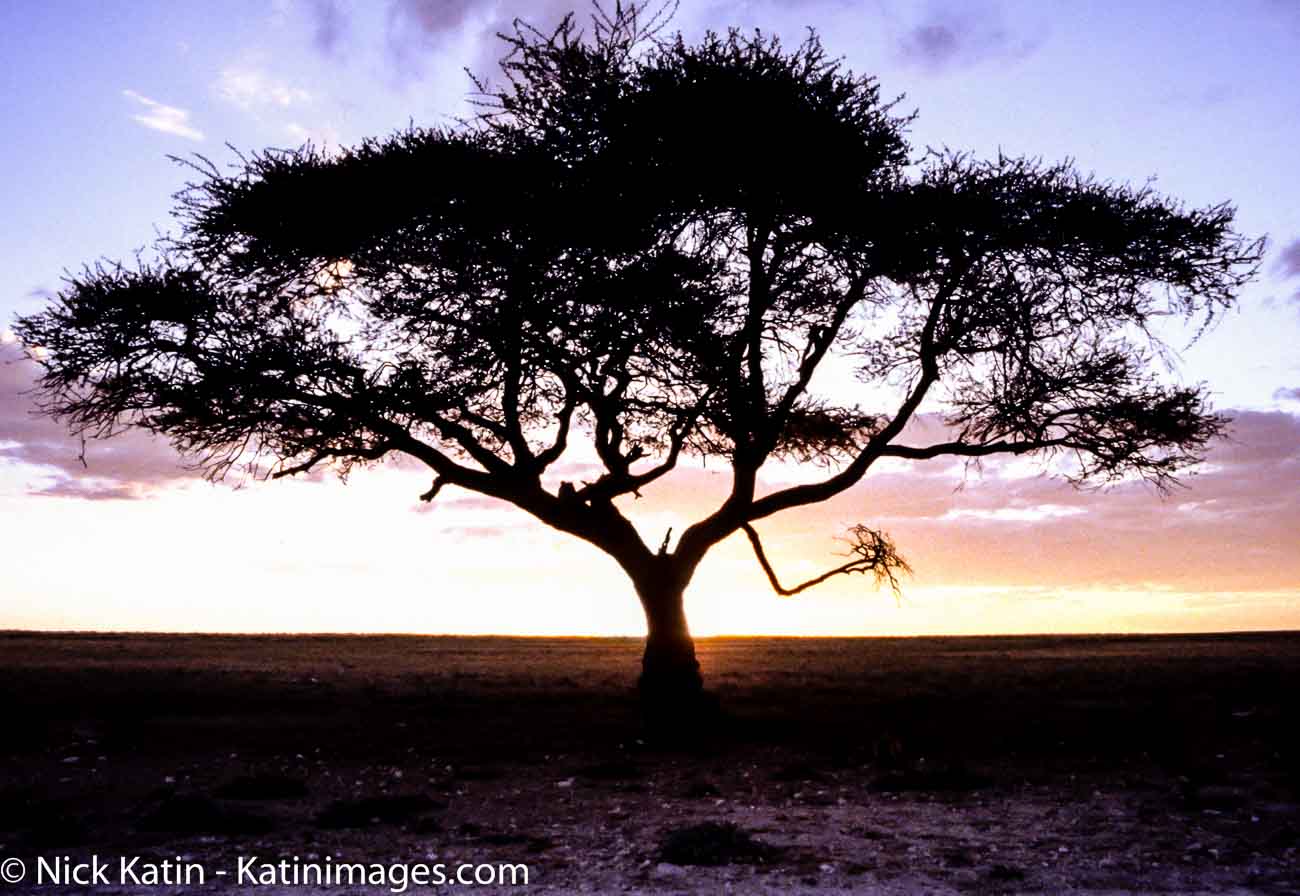
    An Umbrella Thorn Acacia at sunset on the savannah of South Africa. It's a native to Africa.
    An Umbrella Thorn Acacia at sunset on the savannah of South Africa. It’s a native to Africa.
  • African shoestrings – South Africa Day Thirty-four – Cape Town

    Table Mountain was next on our agenda but that was tomorrow’s challenge in the meantime we had to get back and eat!

    Largely because of its multiculturalism Cape Town is considered the gastronomic capital of Southern Africa. There are lotss of restaurants and cafes of all descriptions and price tags.

    In Observatory there were several with lip licking menus in which we could have quite happily whiled away a couple of hours.
    Andre in one of his monologues had recommended “A moment of madness” a darkly lit tiny and intimate two storey restaurant with a unique sort of smokers lounge and a small skinny black skinned waiter we nicknamed ‘lurk’ after the Adams family character. He had this way of plodding up and down the creaky stairs and then pausing to catch his breath that just cracked us up.
    Sue’s first order had been a salad of some description and he plodded downstairs to the kitchen with our order. A few minutes later he plodded back up to tell us that she couldn’t have that as they didn’t have any. Sue reordered and off he went reappearing later with the dish that Sue had first ordered but minus our cutlery.
    With a sigh he trudged down stairs and back up, …….. pause for breath… with our cutlery but no napkins, another sigh, another plod down and then up, …. ..pause… and we were happy. In fact we were so happy we were almost in hysterics and waited till he disappeared back down stairs again before falling off our chairs laughing and then using the nicely pressed napkins to wipe our eyes.
    The food from what I remember was pretty good, (I think we had fish of some description) the atmosphere with Louis Armstrong in the background was great but Lurk stole the show.

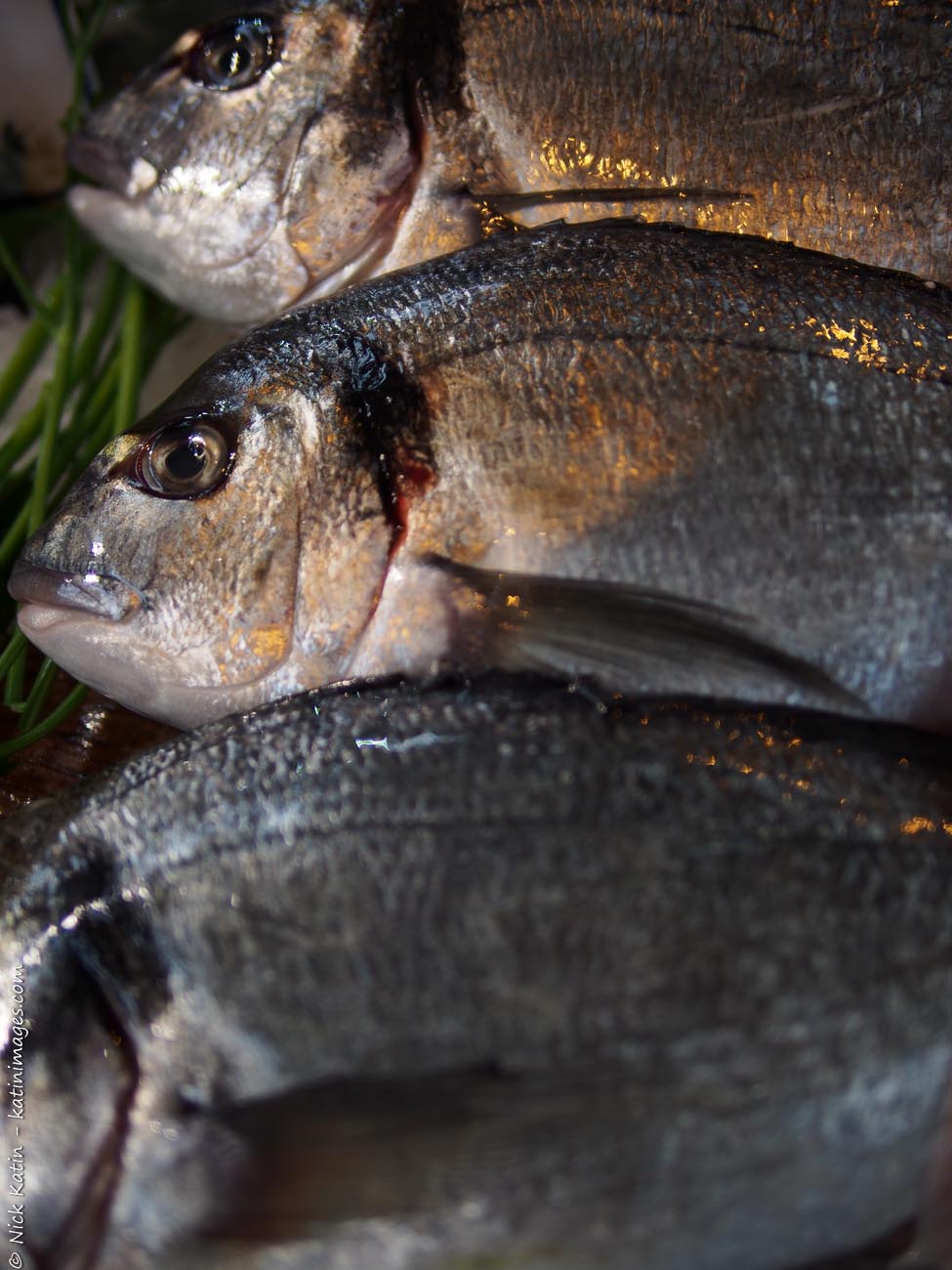
    Fish at one of London's famous markets, Borough Markets which is devoted entirely to food.
    Fish
  • African shoestrings – South Africa Day Twenty-six

    The main reason that we had elected to stay in J’burg the extra night was to see Soweto.

    Soweto you say! Why would anyone want to see such a notoriously dangerous place?

    Well, most tourists visiting South Africa regardless of budget have minimal contact with black South Africans. Very few get to visit black townships or satellite towns because of their reputation or lack of opportunity.
    Hotels and all levels of accommodation, tour companies and other tourist facilities are still in the main, owned and run by white South Africans and generally black South Africans tend to keep their distance particularly from white tourists.
    Not surprisingly Soweto has had the biggest media coverage and for most represents South Africa at its worse. It has in reality, been a war zone ever since that fateful day in June 1976 when many black students were killed by police in a march against the use of the Afrikaans language in black schools.
    So to see such an infamous place is to observe black South Africa.

    Of course we were not stupid enough to go in on our own. Soweto is now a tourist attraction, so there are a number of tours that are run chiefly by black South Africans.

    Like most people I expected to see squalor and poverty on a large scale and it stopped me in my tracks to see that parts of Soweto were just like any other middle class suburb in the world. Nic Mbewe, our guide and Padwana his driver lived all their lives in Soweto and as he explained “There are basically three types of housing in Soweto, upper for the educated with good jobs who are moving out because they can, middle for those with jobs and the poor end of town for those who have nothing”.
    To be contuined………

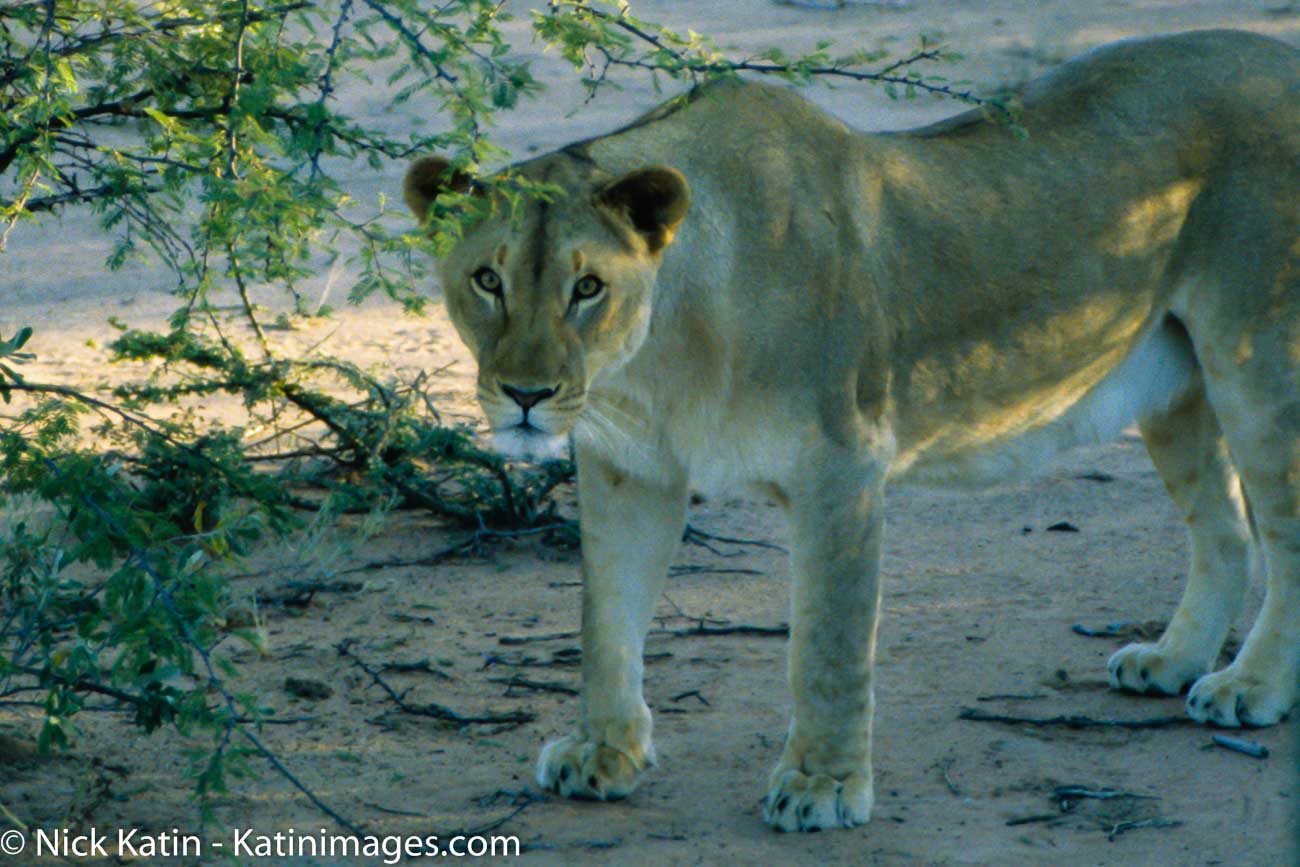
    A lioness underneath bush peers at it's potential prey in Namibia
    A lioness underneath bush peers at it’s potential prey in Namibia