

Blog
-
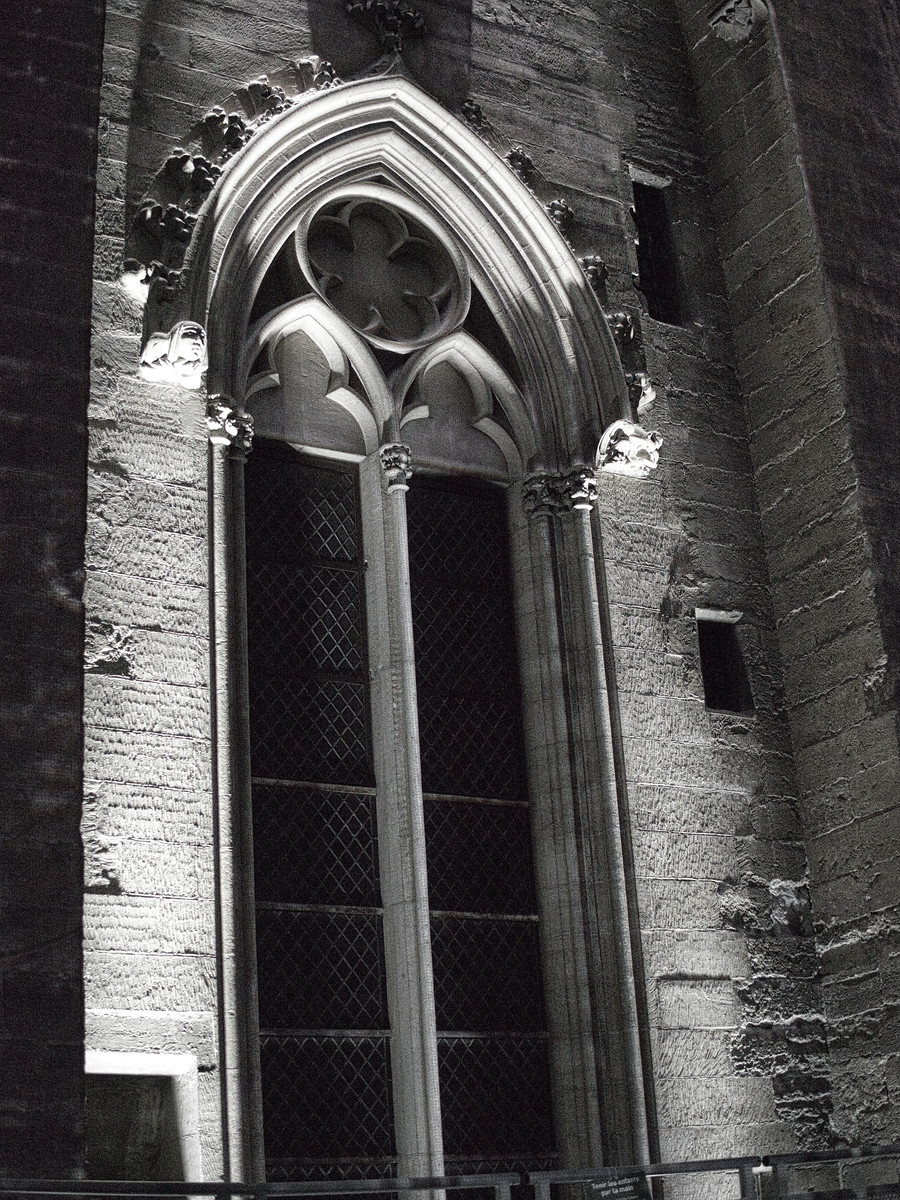
The door to the Metropolitan Basilica

One of the doors to the Metropolitan Basilca, Our Lady of the Doms, Avignon. Click on the image for a larger view -

An alley along the side of the Palais des Papes

An alley along the side of the Palais des Papes, Avignon, France. Click on the image for a larger view Share this:
-

Les Halles d’Avignon. Food Market in Avignon

Les Halles d’Avignon. Food Market in Avignon. Click on the image for a larger view Share this:
-
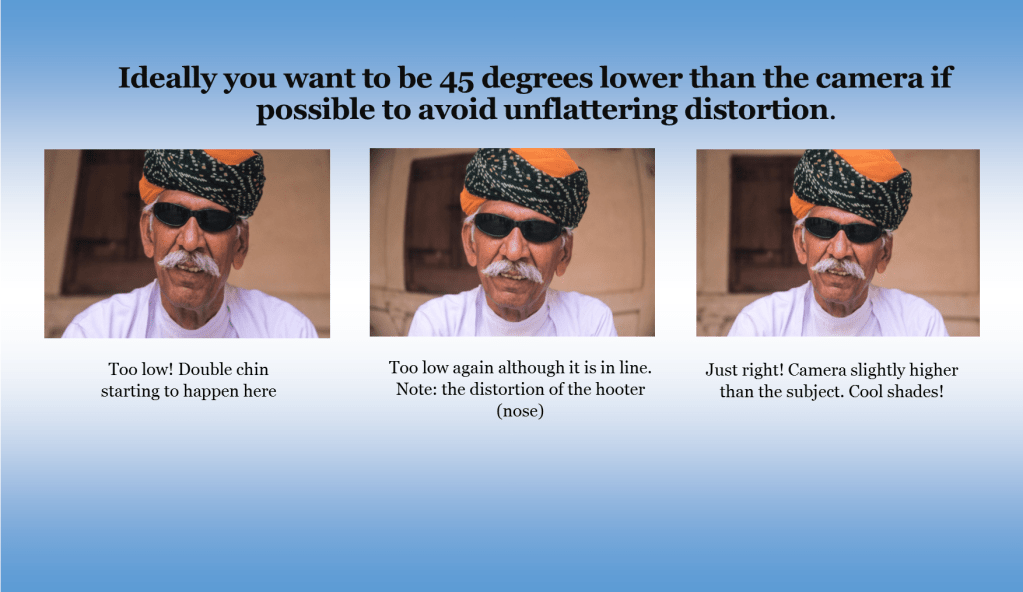
Why You Need a Professional Selfie.
We all know that a picture paints a thousand words. And we know that images are important to our marketing, particularly our online presence.
Why is it then that often the one image that we should have, is missing or at best average?
Which image is that? The SELFIE or as it used to be known as, the self-portrait.
When I visit a website I usually go straight to the about or start here page.
It often surprises me how many about pages make no mention of the people behind them.
For whatever reason they have no human images.In my many years of sales and marking there has been one truism people buy from People.
Usually people they like but most certainly people they trust and know something about.There has been a lot of testing and research that confirms a human face on about page increases trust.
When you have trust, the more likely visitors are to stick around and consume your content and/or buy your stuff!
The about (or start here) and contact pages are the usually the most visited pages on a website.

So if you don’t have a picture and some sort of bio you are telling visitors to your site that you are anonymous.
We as human beings tend not trust anonymous.Sure sites like Amazon or Microsoft are anonymous but they have multimillion marketing budgets that go a long way to overcoming their anonymous disadvantage.
So make sure you have a picture of yourself and your key personnel on your website.
So the first 2 steps to think about are:
1. What sort of self-portrait do you think represents your brand?
A financial adviser or lawyer may want a more conservative head shot. Or they may want a full length portrait with business like clothes like a jacket and trousers.
A social media site may wish to convey a trendy relaxed image.
So it may decide that, rather than have a headshot, an image of its employees being active may be better.A tradesperson my want to have an image of themselves in working gear with a tool as a prop.
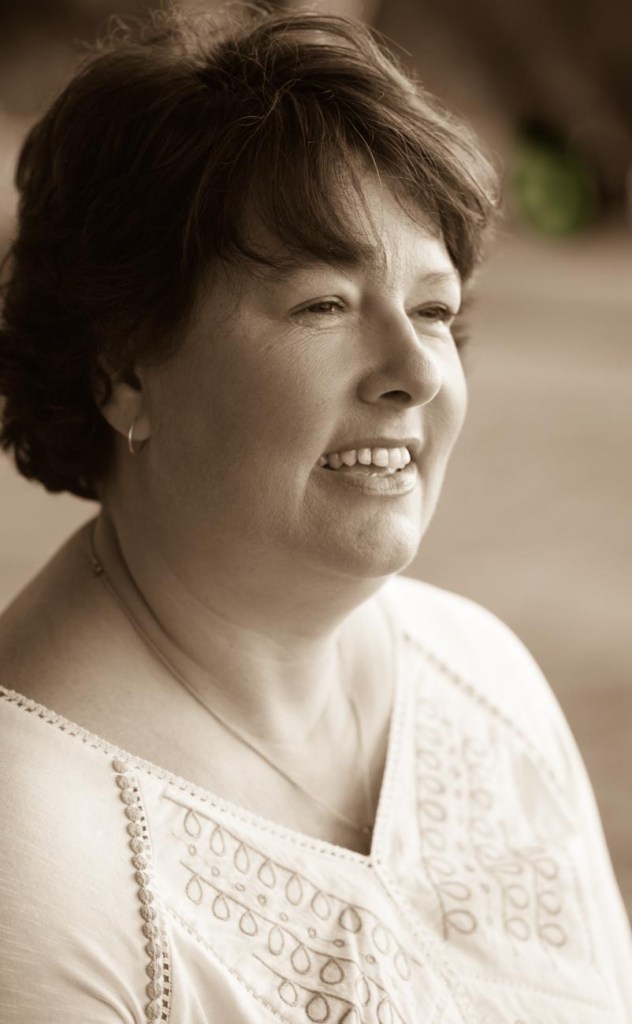
Real estate agents tend to want half body (torso and head) shots.
Maybe you want black and white or sepia (a reddish brown hue that resembles the effect of aging in old photographs) as a point of difference.
2. What are you using it for?
Well as I said earlier the priority should be the about page of your website.
If you have a team then make sure they too are on that page which could easily be a separate page underneath the main about page.Social media profiles are also pretty important. They show the human touch and are more likely to attract engagement
You may also wish to use it for some printed marketing material like flyers and business cards.
If you have been featured in publications, then a great head shot.
Most publications, primarily due to the cost, are moving away from using a photographer.
So having your own portfolio of self-portraits can be very usefulMaybe you’re thinking really big and looking to get your face on a billboard.
Whatever you are using it for make sure you take plenty of images, trying different poses and maybe different locations.
And by the way, there’s no rule that says you have to use the same images across the all platforms and marketing material.
You may want to convey a different image on your social media accounts than say, your business card.Why you are at, why not stick a ‘selfie’ on your contact page. It makes it feel more personal.
So you can’t really take too many!
So what do you have? Do you have good ‘selfies’?
Where have you posted and used them?
Please leave the answers in the comments below
Share this:
-
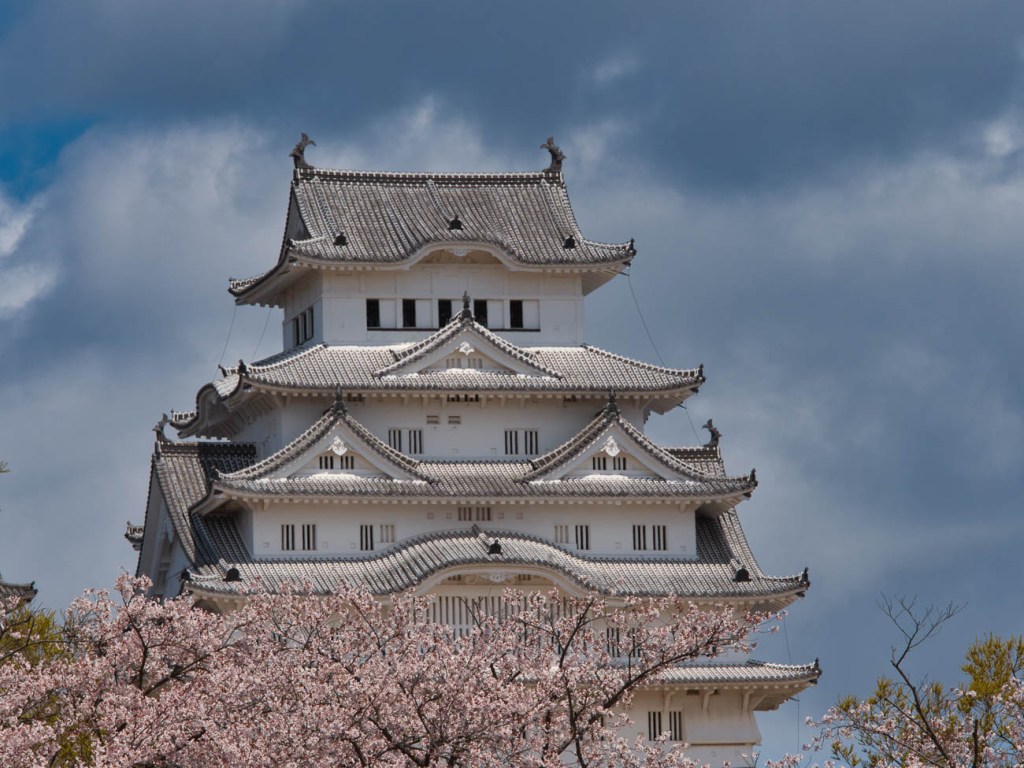
Travel Photography guide to Japan Part Two Kyoto and Hiroshima

Himeji Castle and Cherry Blossoms, Himeji, Japan. Click on the image for a larger view Travel Photography guide to Japan Part Two Kyoto and Hiroshima
In part two of this travel photography guide to Japan we go to Kyoto, Hiroshima and a couple of points in between as well as some general items to photograph.
As I mentioned in Travel Photography guide to Japan Part one you need to make sure you are prepared. If you haven’t read that article, I suggest you, at the very least, go and read the first section.What will you see that you might want to photograph?
I travelled from Tokyo south to Mountains, Hiroshima and a few points in between before getting back to Tokyo.
The area I covered has a wide variety of different subjects.
This area, I’m led to understand is similar, with exceptions, to the rest of the country.
The following is by no means exhaustive. It’s the subjects that I found interesting from a photographic point of view. Others may have a different opinion.I’ve only selected three items from each area that have some degree of photographic interest.
Kyoto
Kyoto is probably Japan’s jewel in the crown. It’s Paris or New York but on a much smaller scale.
Because of this you most certainly won’t be alone in wanting to capture all it has to offer. The tourists are many and the crowds are big but don’t let that put you off.
Kyoto is awesome!
Before I start on my suggestions on what to photograph. Let me suggest to you something not to photograph.
Geisha Girls!
Around the corner from Miyako Odori one of the theatres used for Geisha Dances we saw tourists at their worse.
The girls had finished their show and were walking out to either other shows or to live their own lives. Still in full dress they had cameras shoved into their faces and some were obviously distressed by this aggressive behavior.I didn’t get any photos of them because of that and the fact that these aggressors were in the way!
So leave them be when there are lots of tourist around.
You will just be compounding the problems for all of us.Onto my suggestions of what to photograph.
Ponto-Cho area
Ponto-Cho is a small pedestrian street alongside the main canal and whilst it’s pretty during the day when the cherry Blossoms are out, it comes alive a night.
The whole area is a fairyland of atypical Japanese buildings and narrow streets, especially across the canal in Gion.
The best time to take images is at dusk or after dark. So you will need to make some compromises on whether you risk ‘soft’ images due to camera shake or have a bit of graininess in there, some of which can be removed later.
It’s really all about architecture, people and culture.Fushimi Inari-Taisha
South of the city itself is a little gem of a vast shrine complex.
There around 10000 shrine gates (torii) that straddle the paths that lead up the mountain to different shrines.
All are painted in Vermillion Red and you can spend hours here photographing different angles of the architecture of the gates, shrines, graveyards and other buildings.
You may also get lucky and see priests conducting ceremonies at the actual shrines.
Torii shrine gates at the Fushimi Inari-Taisha complex in Kyoto. Click on the image for a larger view. Arashiyama Monkey Park Iwatayama
I’ve put this in to give some variety.
Architecture, people and culture are great but sometimes you need a break from photographing these subjects.
And what better way than to photograph Snow Monkeys.
It’s a steep climb up to where most of them are but you also get the bonus of some great views across Kyoto when you get there..So, it’s wildlife and landscapes form the Monkey Park.
Additionally there is also the famous Golden Temple but you won’t have much time to photograph that as they move you through pretty quickly so I’ve left it out.
But it’s still worth a visit.Himeji
A day trip from Kyoto or a stopover on the way to somewhere else, Himiji is all about the castle.
The outside of the Castle is extremely photogenic and if you catch it on a clear day it’s a sight for sore eyes.
The interior is not so photogenic, so you are better off zooming in to capture small points of interest.Next door is Koko-En, reconstruction of a Samurai quarters.
Well worth a visit as it’s all about gardens and culture.Nara
Again, a day trip from Kyoto.
Its main attraction is Todai-ji a temple which houses the great Buddha.
There are other sights and there is around 1200 deer there as well.
So it’s really all about architecture, culture and little bit of wildlife if can’t help yourself and want to take pictures of bambi.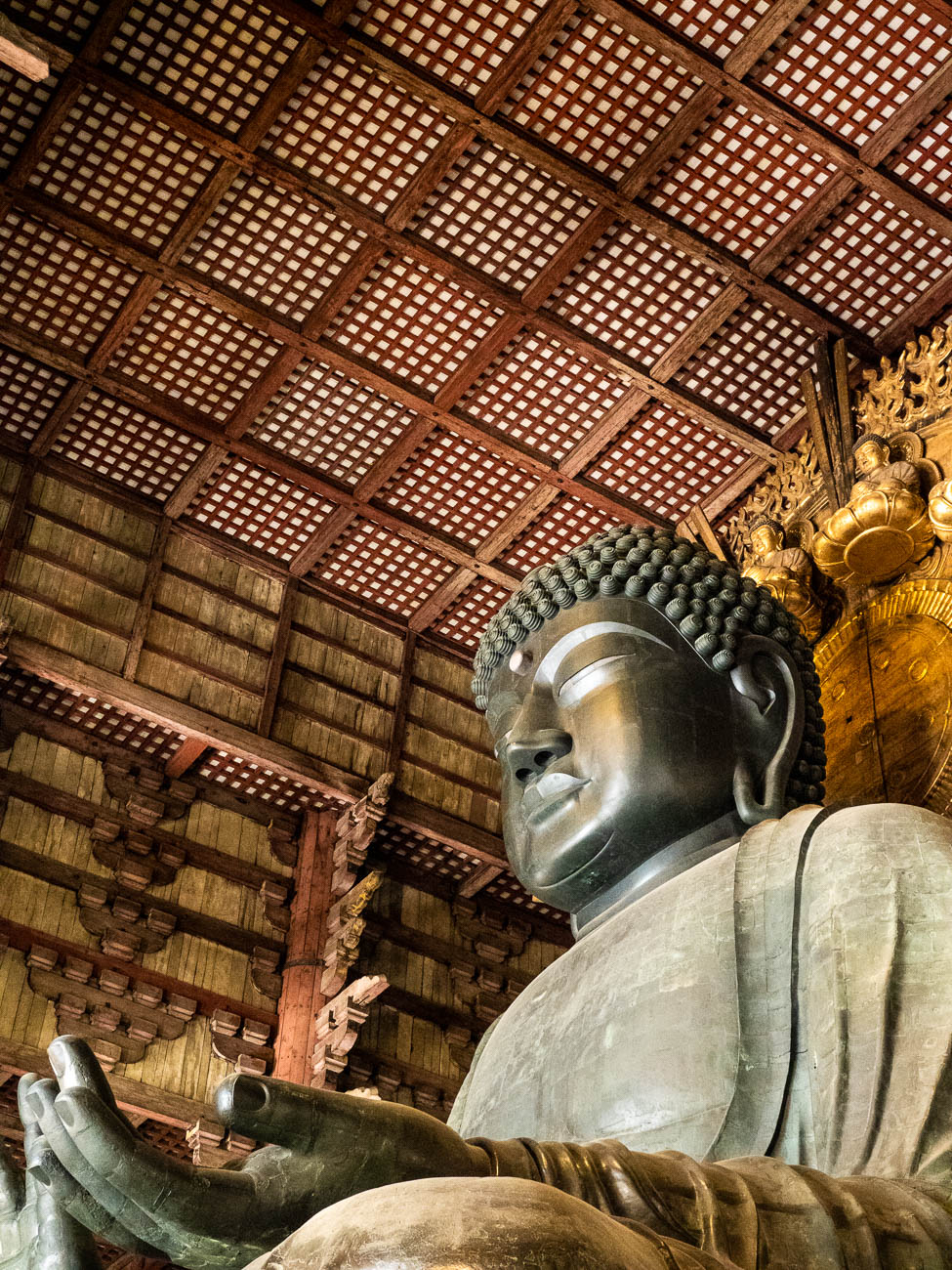
The great Buddha stature in the Todai-ji Temple at Nara. Click on the image for a larger view Hiroshima
There is lots to see and do in Hiroshima. But I’ve concentrated on 2 sights
Peace memorial Park and surrounds
Photography aside this is a sobering and confronting area.
There are a few memorials in the park and a museum.
There is also what’s left of a building called Atomic Bomb Dome.
Light is important here as the area lends itself to dawn and dusk light.
That’s not to say you can’t take pictures during the rest of the day as there is plenty of shade from the trees in the park.Miyajima
A lengthy ferry ride from Hiroshima is the island of Miyajima one of Japan’s most popular tourist spots.
There are lot activities available there but from a photography subject point of view, there are two main attractions.- The Torii (shine gate) that sits in the water.
Depending on what time of day you get there, you may well have to queue to take the popular front on view.
Take that one but also look for side views and reflections. - Misen at 530M is the Mijajima’s highest spot and you can get there via ropeway and a bit of a hike.
Terrific views of the ocean and mountain ranges beyond are worth the trouble.
After you finished go find the Miyajima Brewery.
Great beer with water views and nice food.Summary for Travel Photography Guide to Japan Part Two Kyoto and Hiroshima
- Kyoto is Japan’s tourist equivalent to Paris, New York or London with some much diversity
- Himeji and Nara make for great photographic stopovers.
- Hiroshima is a thought provoking and promotes a different type of photography. Don’t forget to get to Miyajima
Make sure you check out the Lonely Planet guide to Japan and the Japan Visitor Centre for some great travel info.
Thanks for reading this article
Do you see yourself taking some great travel photos that you can share or display?
Or can you see yourself reliving your travel experience by bringing home some emotive travel photos?
Maybe you aspire to getting your travel photos published.If one or all of these is YOUR goal, I can help. Sign up in the box below to subscribe to my exclusive Travel Photo Tips Newsletter.
Remember if you want to take great travel photos- that you can share and display.
- that help you relive your travel experience
- that give you a chance to have your travel photos published
then sign up below and subscribe to my exclusive Travel Photo Tips Newsletter.
Share this:
- The Torii (shine gate) that sits in the water.
-

Travel Photography guide to Japan Part one Intro, Tokyo and Mt Fuji

Mount Fuji. For a larger view click on the image Travel Photography guide to Japan Part one Intro, Tokyo and Mt Fuji
Earlier this year I visited Japan for the first time, and I was knocked out. Not literally but WOW! what a place!
I will follow up with more articles on photographing Japan
Let’s start with a bit of prep.
This is not intended to be a travel guide but a few tips on what, where and how to photograph some of the areas of Tokyo and Mt Fuji areas of Japan.
What to take
I’m not going to repeat what I said in Planning and Preparation for Travel Photos
but I will highlight some of the things I recommended there as they are important.
Depending on where you are travelling, I would recommend you take the following:
Everywhere:
- Camera Body or Compact Camera with Optical Zoom Lens
- Lots of empty memory cards.
- It’s one of the most photogenic countries in the world regardless of what time of year you go. Take lots of 32GB Memory cards you’ll need them.
- More than one charged battery for the same reason as having lots of memory cards. Have one in the camera and 2 charged spares
- A lens cloth
- Filters, if you use them, particularly Polarisers and Neutral Density,
If you intend using only a smartphone you will need lots of storage. See How to Back up your Travel Photos. to see the best ways to back up a Smartphone.
You also need to be aware that, with only a smartphone, you won’t have the flexibility to get shots of a lot of what Japan has to offer.
Cities
There’s lots of subject matter in Japanese cities.
So depending on your interests you need the following, if you have them.
If you don’t, put them on your wish list if you have plenty of time:- People and Street – 50 or 80MM Prime Lens plus a 28-150mm Telephoto
- Journalistic or lifestyle – 80 or 100mm Prime Lens plus a Telephoto Lens of 28-150mm
- Architectural – 24-100mm Telephoto and a 35 or 50mm ‘Fast’ Lens i.e. F1.2 or 2.4.
- Restaurants, Bars etc. – For low light plated food, a wide angle or 50mm lens with a large maximum aperture of F1.2 or 2.4.
Outside of cities
- Landscapes – Tripod and a 24mm Wide-Angle plus a Telephoto with a minimum focal length of 100mm
- Culture – 80 or 100mm Prime Lens plus a Telephoto Lens of 28-150mm
Again, this is a wish list. If you only have a telephoto because you have a compact camera, or you can’t afford a prime lens then you can get by.
A Telephoto Lens plus an 80mm Prime Lens ticks the 80/20 rule.What will you see that you might want to photograph?
I travelled from Tokyo south to Mountains, Hiroshima and a few points in between before getting back to Tokyo.
The area I covered has a wide variety of different subjects.
This area, I’m led to understand is similar, with exceptions, to the rest of the country.
The following is by no means exhaustive. It’s the subjects that I found interesting from a photographic point of view. Others may have a different opinion.
I’ve only selected three items from each area that have some degree of photographic interest.Tokyo
Tokyo is everything you expect and more. It would take a lifetime to discover everything it has to offer
Shinjuku Station
The World’s busiest transport hub where nearly 4 Million plus passes through every day. Here it’s worth watching and waiting to get some good people shots.
Shibuyu Junction
It’s humanity at its most compressed as literally thousands of people cross the junction every day.
At its busiest nearly a thousand people cross at one time.
Again, it’s people but don’t expect to get portraits it’s way too crowded for that.Tsukiji Market
Like food? Like to take food close ups and people involved with serving it and cooking? Then Tsukiji is the place. Food is also pretty good if you want to put down and rest your overworked camera.

A boat of Tuna and Otoro served up in Tokyo’s Tsukiji Market. Click on the image for a larger view and other options Mount Fuji
Away from the madness that is Tokyo, Mount Fuji is usually viewed from 2 sides:
Kawaguchi-Ko
The centre of the area called Fuji Five Lakes, Kawaguchi-Ko is a very busy place and the town itself is ok. What it’s famous for is the views of Mount Fuji.
There are 2 well know photos locations of Mt Fuji and both are near Kawaguchi-Ko.Fuji-Sengen-jinja is known for the photos of the shrine with the backdrop of Mt Fuji.

Mt Fuji from the famous shrine of Fuji-Sengen-jinja Click on the image for a larger view and other options
On the north side of Lake Kawaguchi-Ko is another famous spot to capture Mt Fuji and its reflection on the lake. Sadly, it was too windy when I was there, so I couldn’t replicate that shot.Hakone
Whilst the view of Mt Fuji from Hakone is not so well known.
It’s much smaller (and quieter) than Kuwaguchi-Ko and the views are much more varied.Take the Hakone circuit which is a combination of different transport modes such as cable car, ship, narrow-gauge rail, gondola and bus.
On this circuit you will see lots of different scenery and some small towns all of which provide ample reward for the travel photographer. More info can be found hereWatch out for the next article on Japan:
The Travel Photography guide to Japan Part two Kyoto and SurroundsIn the meantime check out the Lonely Planet guide to Japan and the Japan Visitor Centre
Summary for Travel Photography Guide to Japan Part One Intro, Tokyo and Mt Fuji
- Japan has that WOW factor that you want to make sure you capture with your travel photos
- You need plenty of Battery Power and Storage
- To give you the best opportunity to take some great photos you need more than just a smartphone.
- A removable lens camera will do that for you
- Tokyo has many, many interesting a diverse attractions but you can’t see them all
- Mt Fuji is as spectacle in the flesh as it looks. Take lots of shots from different locations and angles.
Do you see yourself taking some great travel photos that you can share or display?
Or can you see yourself reliving your travel experience by bringing home some emotive travel photos?
Maybe you aspire to getting your travel photos published.If one or all of these is YOUR goal, I can help. Sign up in the box below to subscribe to my exclusive Travel Photo Tips Newsletter.
Remember if you want to take great travel photos
- that you can share and display.
- that help you relive your travel experience
- that give you a chance to have your travel photos published
- then sign up below and subscribe to my exclusive Travel Photo Tips Newsletter.
Share this:
-
Finding the best Camera for your Travels Part 3 DSLR
Finding the best Camera for your Travels Part 3 DSLR In The basics of camera equipment – Best camera equipment for travel photography, I mentioned That “despite those who say its’s not about the gear, you need a camera that will suit your style and objectives.”
This is especially true when you are off travelling.
Having a camera that you are comfortable with and that can help you take photos that you will proud to bring home with you is essential.In the third and final installment of this series I will again defer to some reputable camera reviewers who can help guide you.
The other two articles are Finding the best Camera for your Travels Part 1 Compact and
Finding the best Camera for your Travels Part 2 MirrorlessYou may also be interested in reading Best Camera Lens for Travel Photography
So, without further ado please read below
Best DSLR Camera Photography Blog
Thanks for reading this article
Maybe you aspire to getting your travel photos published.
If one or all of these is YOUR goal, I can help. Sign up in the box below to subscribe to my exclusive Travel Photo Tips Newsletter.Remember if you want to take great travel photos
- that you can share and display.
- that help you relive your travel experience
- that give you a chance to have your travel photos published
then sign up below and subscribe to my exclusive Travel Photo Tips Newsletter.
Share this:
-

8 Tips on how to use a Smartphone Camera
8 Tips on how to use a Smartphone Camera
8 Tips on how to use a Smartphone Camera Smartphones are amazing things. You can live your whole life on one. From doing your banking to checking your email to turning on your lights; hell! it even talks to you now!
It’s a great device for managing almost anything on the go.
The one thing that it was lagging on was the camera. But over the last 2-3 years that’s all changed.
Samsung and Apple lead the race on this but Google, Nokia and HTC are catching up quickly.
Is the Smartphone as good as a DSLR or Mirrorless I.e. Interchangeable lens camera or high-end compacts?
Not yet.
The quality of the image and more importantly the flexibility and options are not there yet and whilst I’m reluctant to say it, they may never be.
So how do you get the best images from that small device you have in your hand.
Here’s 8 Tips on how to use a Smartphone Camera
1 Hold the camera still
In my recent article How to hold a camera correctly there is some detailed information on how to hold a smartphone camera but it’s worth repeating some of that here:
Most smartphones these days have the option to operate the shutter with a physical button like a volume control instead of tapping the screen.
So, if you have that option then use it for the landscape position. It’s a big more awkward in the portrait position so the virtual button is better to use in most situationsTuck in your elbows and bring it close to you. Holding it away from your body makes it much more difficult to hold still.
Use both hands. It gives me nightmares watching some people take photos one handed.
In low light use a Tripod. I love the little Joby GripTight Micro Stand. It folds down flat
2 Turn off that flash
Ever taken a picture of a loved one and they look like a rabbit caught in headlights. Yes. Well that’s cos you had the flash on.
As with any camera with a built-in flash they are not in the right position for most shots. So, if you can, avoid using it.
3 Familiarise yourself with the settings
These days the smartphones come with lots of different settings.
They are there to give you options rather than just leave it on auto.
Nothing wrong with auto of course but if you can improve an image by using a different setting then why not?
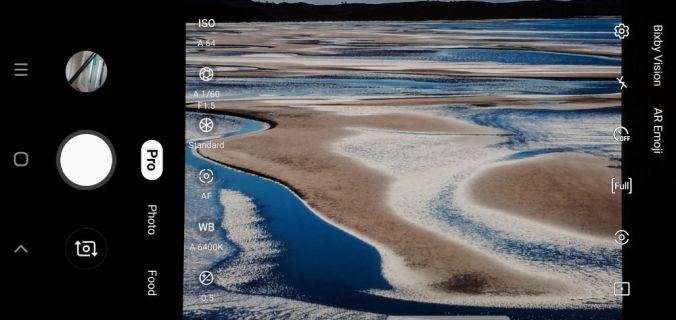
For example, the Samsung Smartphone camera has a “Pro” mode. This allows you to change the ISO, White Balance and shutter speed amongst other things.
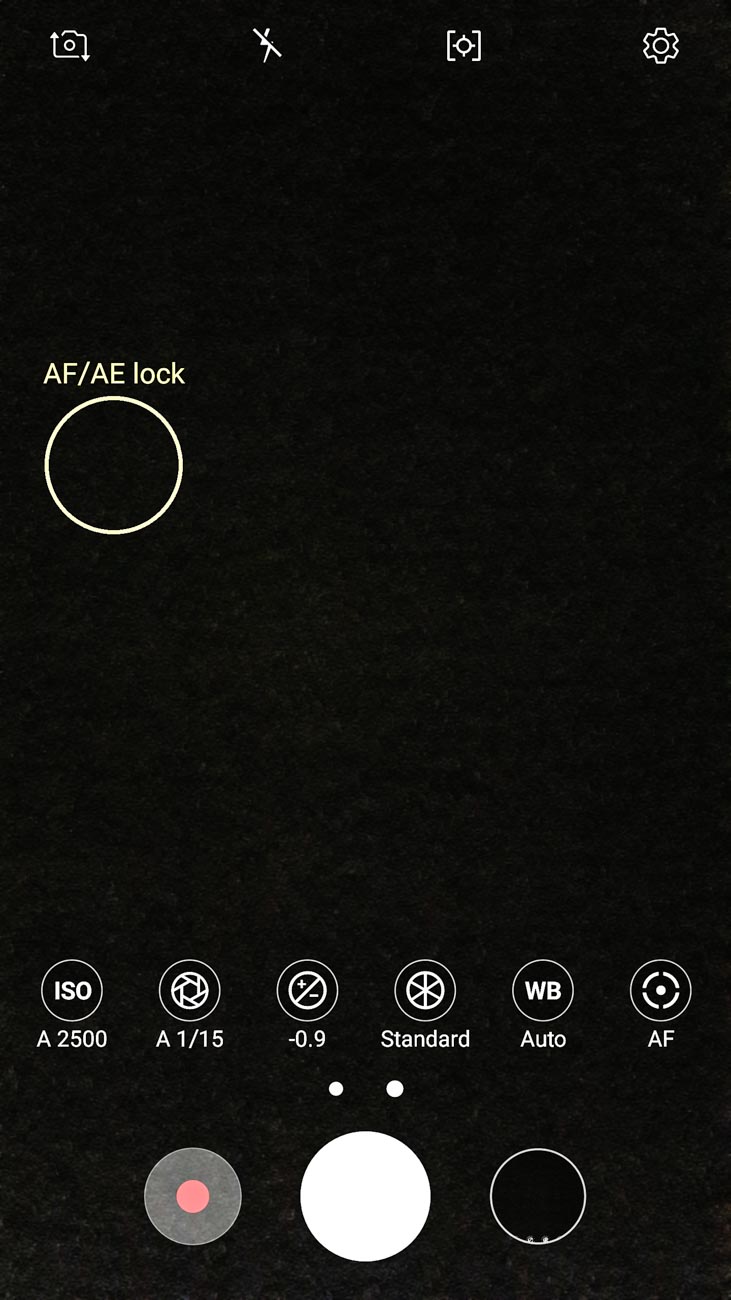
Samsung Galaxy Pro Camera Settings 4 Use apps
The Camera Apps for the smartphone, as I mentioned before in 4, are improving and coming up with more ways that allow to you control your image.
However, there are a number of apps out there that not only give you ways of filtering and editing but shooting as well.
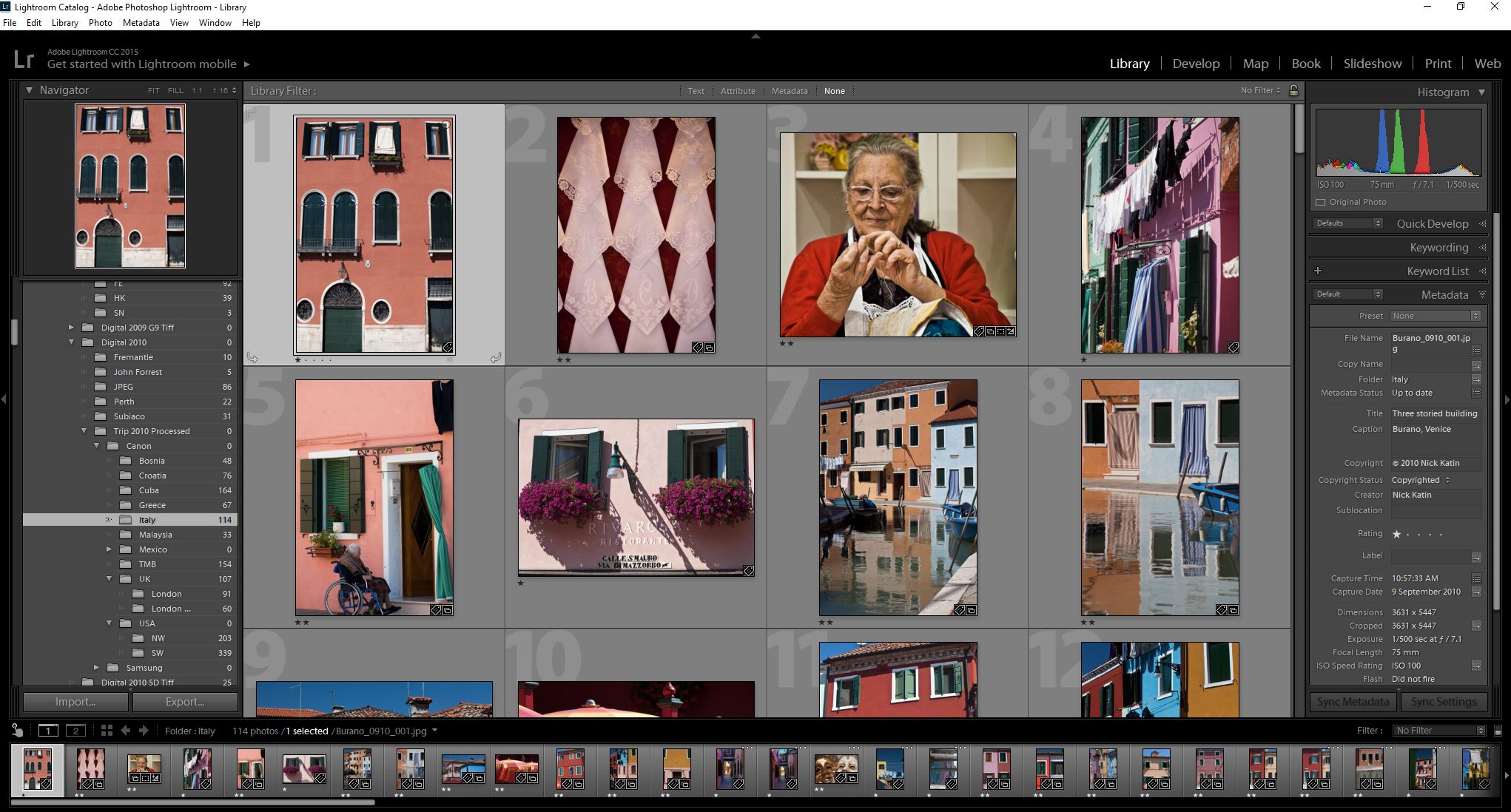
My favourite is Lightroom but you need to have Lightroom on a desktop or Laptop for it to sync to.
What I like about is that it allows you to shoot in RAW using the Adobe DNG format. That way when you sync to your desktop version you have much more flexibility in editing.
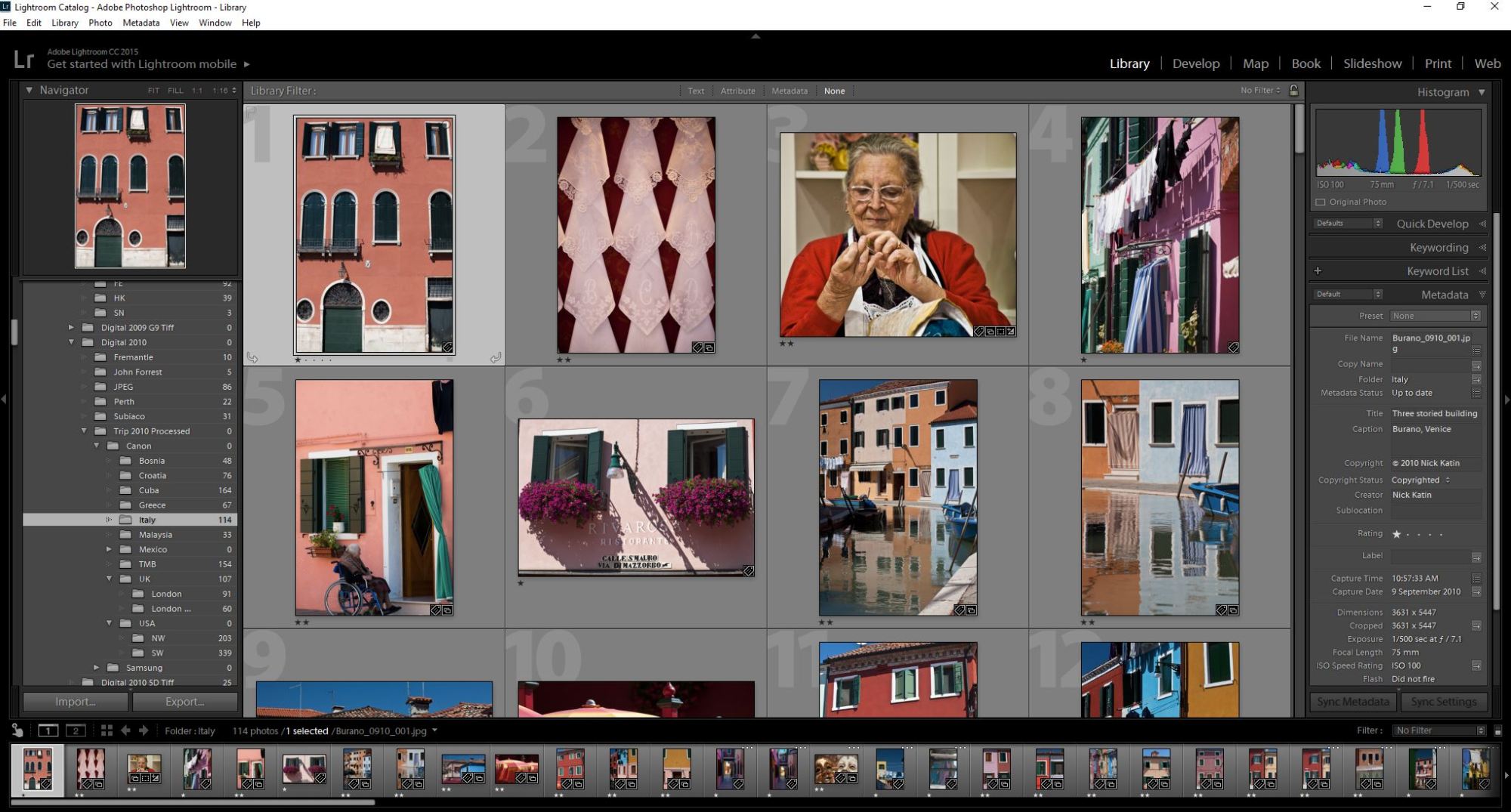
Lightroom Library View 5 Photo size
Now you should always shoot with the maximum size selected so that you have options on the size print you can have.
The camera setting will allow you to choose this so select maximum size id if you are only sharing by text or on social media. Sharing apps have the algorithms necessary to automatically reduce the size.
6 Watch your storage
Once you start increasing the size of your photos then storage can be an issue.
But these days there are plenty of ways to overcome this. The obvious one is to increase your storage with a mini SD or equivalent.
However, some phones won’t allow you to do this so cloud services are the next, in fact they are probably the best, option. I mentioned Lightroom earlier.
When it syncs with the desktop version, it downloads into a folder on your hard drive.
Other more well-known ones though are Google Photos, Dropbox, iCloud or OneDrive.
So, once you’ve uploaded (usually you set the service to do this on auto) delete the ones you don’t need on your smartphone.
You should be able to view the photo via the app rather than your gallery.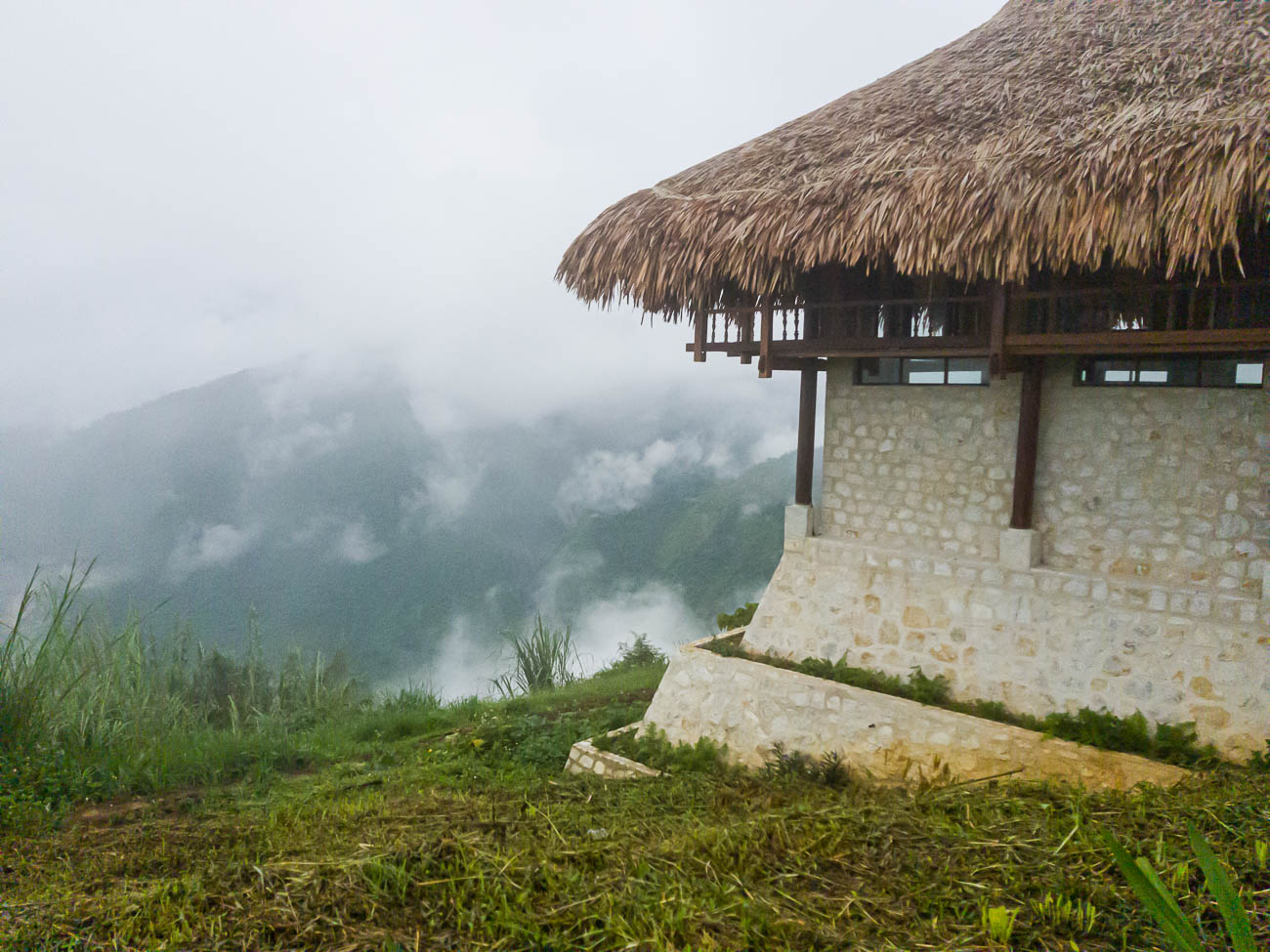
Sapa Mountain Resort Vietnam. Taken with Samsung S8 7 Remember that the Camera Lens is at the top of the Phone.
This is something that can be confusing.
Usually the Camera Lens on a Smartphone is, when looking at it vertically or in the Portrait position, about 25mm (1”) from the top.
Not a problem if you are taking what you see but if you are mounting it on a Tripod or propping it up just bear it in mind otherwise you will end up with a lopsided photo or you might not capture what you wanted.
8 Forget Bokeh unless you have the latest Model
Bokeh what’s that? Well it’s the picture of the flower with little or no focus in the background but a good focus on the flower.
I’m not going to go deep into that here but if want that ‘effect you need to find a decent app that will do it after the shot has been taken. Alternatively the latest smartphones such as Googles’ Pixel, Samsung S10 or the iPhone X etc. have duel or triple lens with some grunty alogoritms that will create that bokeh effect. However outside of those you are not going to get good results with a smartphone when you attempt to get that sort of image.
The sensor is just too small.
However, I did say you can use an app. These apps can be easily found but have varying reviews and I haven’t really found one that performs as well as a DSLR or Mirrorless camera for Bokeh.
The problem is that they simulate by software and that is a long way from being perfect – Yet!
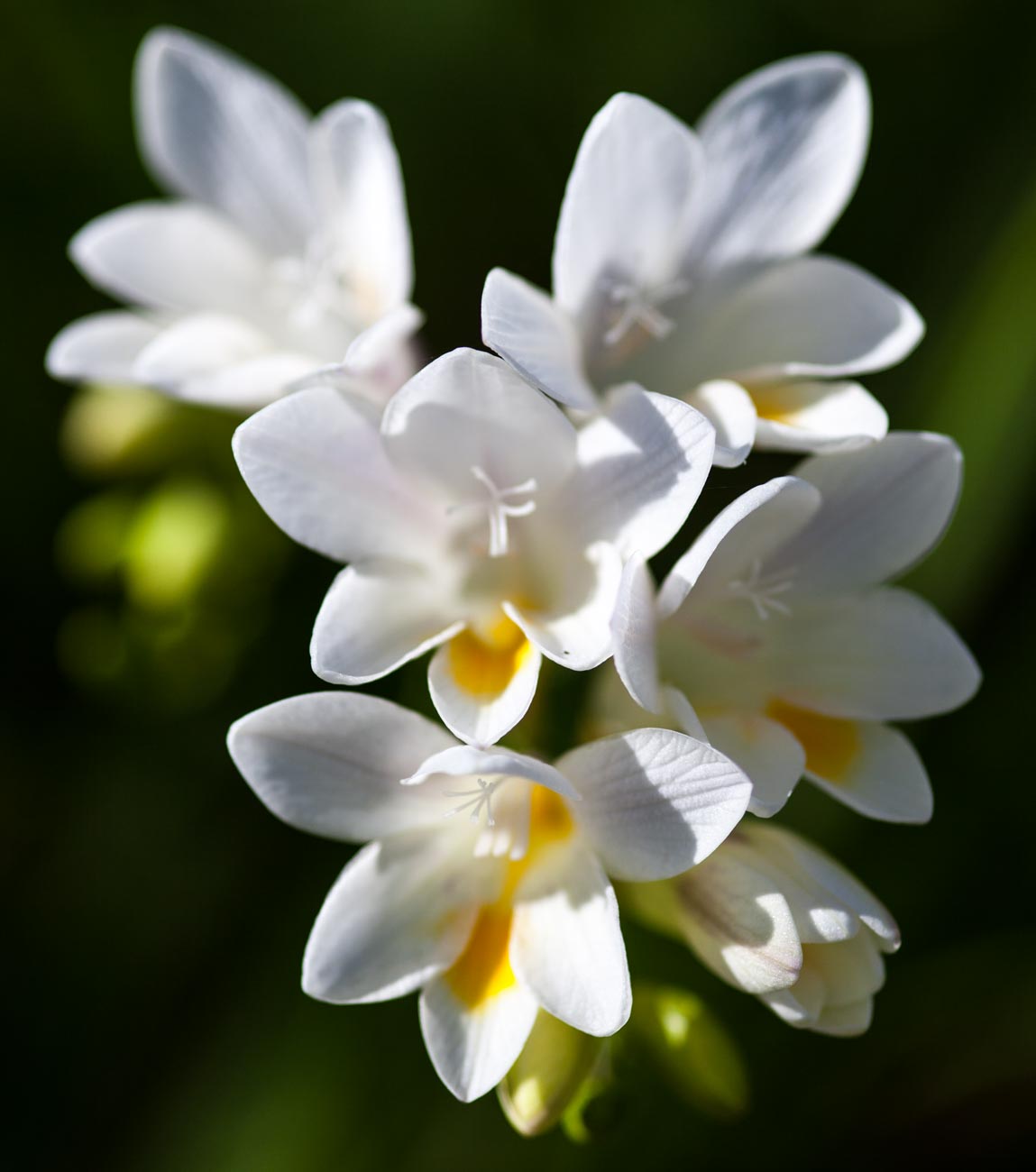
Wildflower Kings Park Perth So, in conclusion if you follow some or all of these tips, you should end up with a half decent image
Summary for 8 Tips on how to use a Smartphone
- 1 Hold the camera still
- 2 Turn off that flash
- 3 Familiarise yourself with the settings
- 4 Use apps
- 5 Photo size
- 6 Watch your storage
- 7 Remember that the Camera Lens is at the top of the Phone.
- 8 Forget Bokeh unless you have the latest model
Remember if you want to take great travel photos
- that you can share and display.
- that help you relive your travel experience
- that give you a chance to have your travel photos published
then sign up below and subscribe to my exclusive Travel Photo Tips Newsletter.
Share this:
-
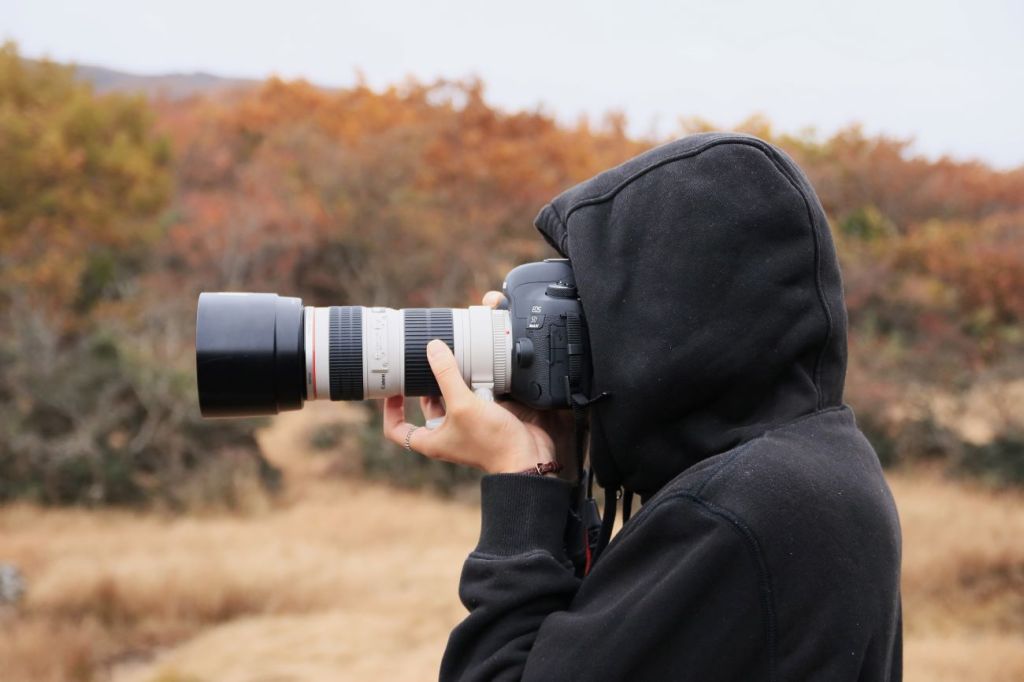
How to Hold a Camera Correctly
How to Hold a Camera Correctly
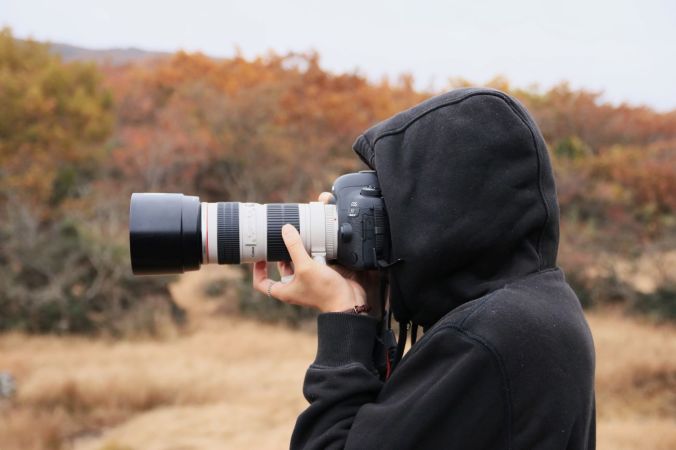
How to hold a camera correctly (Photo by Hyunwon Jang on Unsplash) So, you think you can hold a camera or smartphone correctly?
Well how do you know?
In this article learn why camera shake can be avoided with a little of knowledge.Take a good look at your photos.
No, not on the camera or phone screen but on your PC, Mac or Laptop. Even a tablet is better than a smartphone or camera screen but the bigger the better.
Now does it look really sharp or does look a little bit blurred (the industry phrase is “soft”) in parts or may even a quite a bit blurred?If so, there is a good chance you are not paying enough attention to the fact that a camera moves when you hold it. Now that’s not the camera moving on its own but you moving it.
Got It?Techniques
Now there are several techniques to overcome this but I’m going to basically cover how you should be holding your camera and smartphone.
Camera with a Viewfinder.
- If it has a view finder – then use it!
- When you use the view finder you are putting the camera up to your face and therefore bracing it on your face.
- Now to add to that, tuck your elbows in against your side.
- Depending on the weight of the camera, grip one side with one hand usually the right where the shutter button is and the position the other hand underneath the body or if it’s a fairly long lens then under the lens. .
Camera with no Viewfinder
Ok so it doesn’t have a viewfinder or you don’t want to use it!
If either one of those is you. You need to know that:- The overwhelming majority of people taking pictures using the view finder do not hold it correctly
- And consequently get pictures that are ‘soft’.
If you have studied physics you will know what the pendulum theory is.
Holding the camera at arm’s length creates a pendulum effect and ‘soft’ or blurry photos unless the light is very good and you have a high shutter speed.So just like using the viewfinder tuck those arms in against your sides and bring the camera closer to your eyes.
- Again, depending on the weight of the camera, grip one side with one hand usually the right where the shutter button is and the position the other hand underneath the body or if it’s a fairly long lens then under the lens.
- Ideally you want to stand with your legs shoulder width apart so that you well grounded.
- If there happens to be a handy surface, say a wall, rest the camera on that.
- Alternatively you can support yourself against a vertical surface such as a tree or a wall if practical.
- The portrait position is similar for both the viewfinder and rear screen.
You just need to decide which side is more comfortable for the shutter button. The shutter speed at the bottom is the most practical so that you can use the bottom to help support the bottom of the camera.
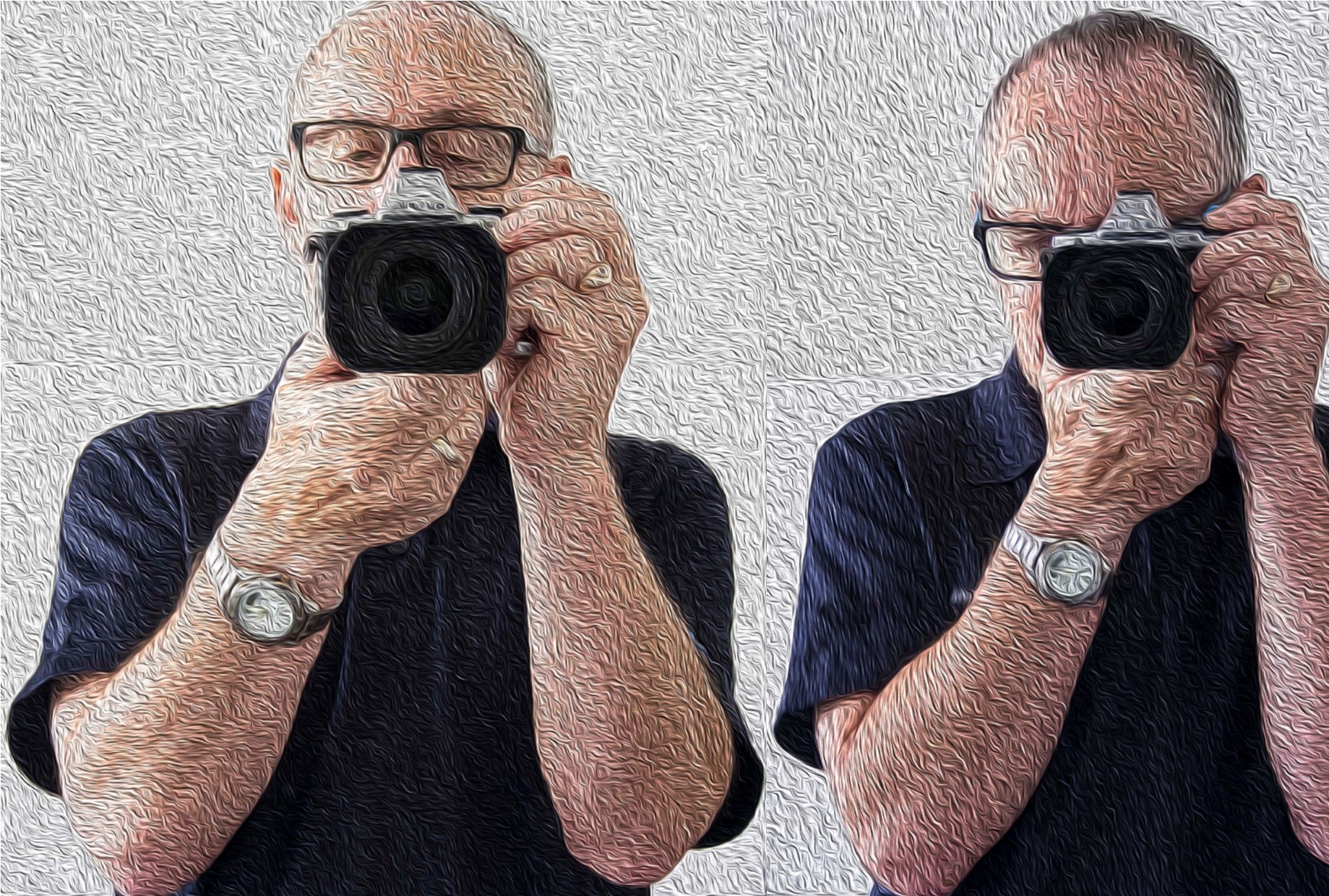
Camera Holds The Smartphone
- Most smartphones these days have the option to operate the shutter with a physical button like a volume control instead of tapping the screen.
So, if you have that option then use it! Especially for the landscape position. - As with a camera most people using a smartphone camera often don’t hold it correctly. So tuck in your elbows
- Use both hands. It gives me nightmares watching some people take photos one handed.
With a smartphone, you need to use 2 different handling techniques. - In the horizontal or landscape position hold it with your hands in the same spot on each side.
- With whatever hand you are using to press the shutter button make sure you have that trigger finger free so that you can tap the virtual shutter or press the physical shutter button.
Now the vertical or portrait position is bit trickier. - If you are using a physical shutter, then hold the phone with whichever side it’s on and curl it around the back the lens with the thumb operating the shutter.
- The other hand can hold the bottom of the phone with the index finger and thumb.
- For a virtual button the difference is that it’s the hand at the bottom that presses the virtual button and can’t in that case grip the bottom of the smartphone at the same time.
- When in portrait mode, it’s often better to use the virtual button.

Smartphone Holds Other Situations
- In some situations, you may not be physically vertical.
- You may have to lie or sit to take the photo.
- If you are lying down, you have the added support of the ground or floor but you need to rest the elbows on the ground or you will end taking a steady image of the ground which may not be your intended subject.
- If you are sitting, then usually there is something you can rest the camera on.
Other ways to avoid that Blurry or soft Photo.
- Use a tripod,
- Have image stabilisation turned on (if fitted),
- Ensure that your shutter speed is fast enough,
- Use the timer
- And so on.
But this piece is just the basics on holding the camera.
More on those tips on the next post.
If you have any tips, please don’t be shy just stick ’em in the comment box below?
Is there anything else that you want explained? Again just ask.
Share this:
-
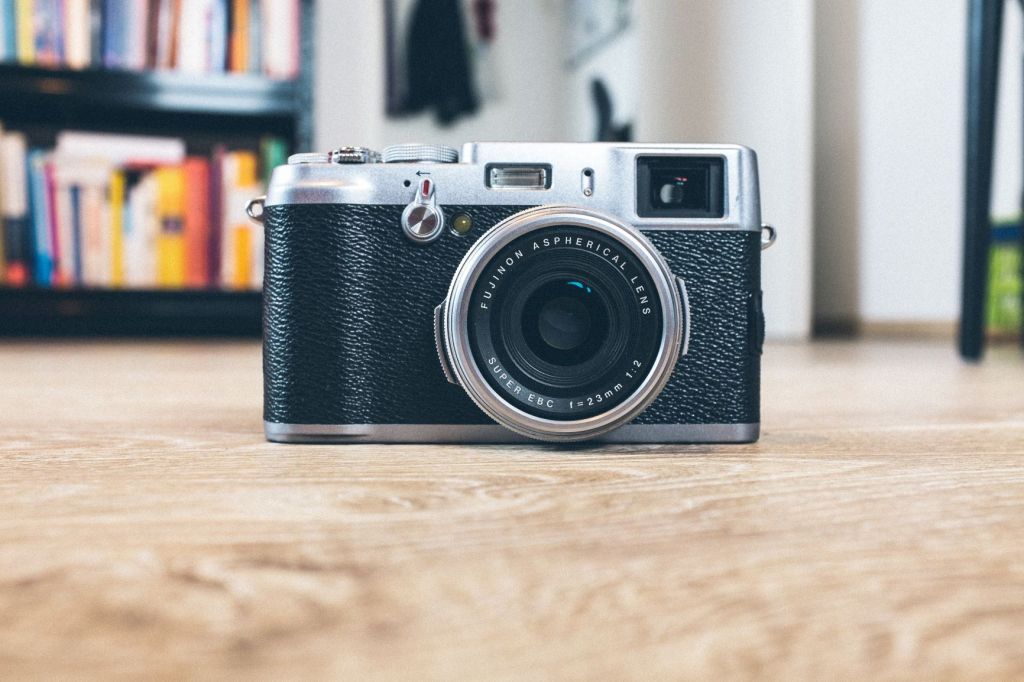
Finding the best Camera for your Travels Part 2 Mirrorless
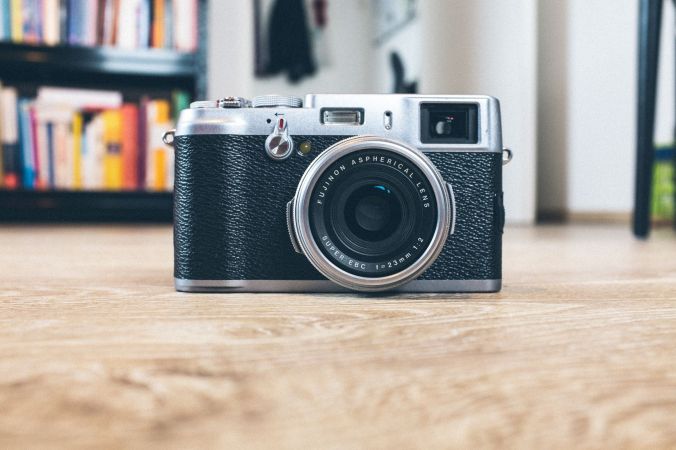
Finding the best Camera for your Travels Part 2 Mirrorless In The basics of camera equipment – Best camera equipment for travel photography, I mentioned That “despite those who say its’s not about the gear, you need a camera that will suit your style and objectives.”
This is especially true when you are off travelling.
Having a camera that you are comfortable with and that can help you take photos that you will proud to bring home with you is essential.In the second of this series I will defer to some reputable camera reviewers who can help guide you. Only two this time as DP Review don’t distinguish between SLR’s and Mirrorless
So, without further ado please read this one from Camera Labs below
And whilst your at it check out this one too Best Mirrorless Camera
Thanks for reading this article
Do you see yourself taking some great travel photos that you can share or display?
Or can you see yourself reliving your travel experience by bringing home some emotive travel photos?
Maybe you aspire to getting your travel photos published.
If one or all of these is YOUR goal, I can help. Sign up in the box below to subscribe to my exclusive Travel Photo Tips Newsletter.Remember if you want to take great travel photos
- that you can share and display.
- that help you relive your travel experience
- that give you a chance to have your travel photos published
then sign up below and subscribe to my exclusive Travel Photo Tips Newsletter.
Share this:
-
How to take an ‘awesome’ selfie!
How to take an ‘awesome’ selfie!
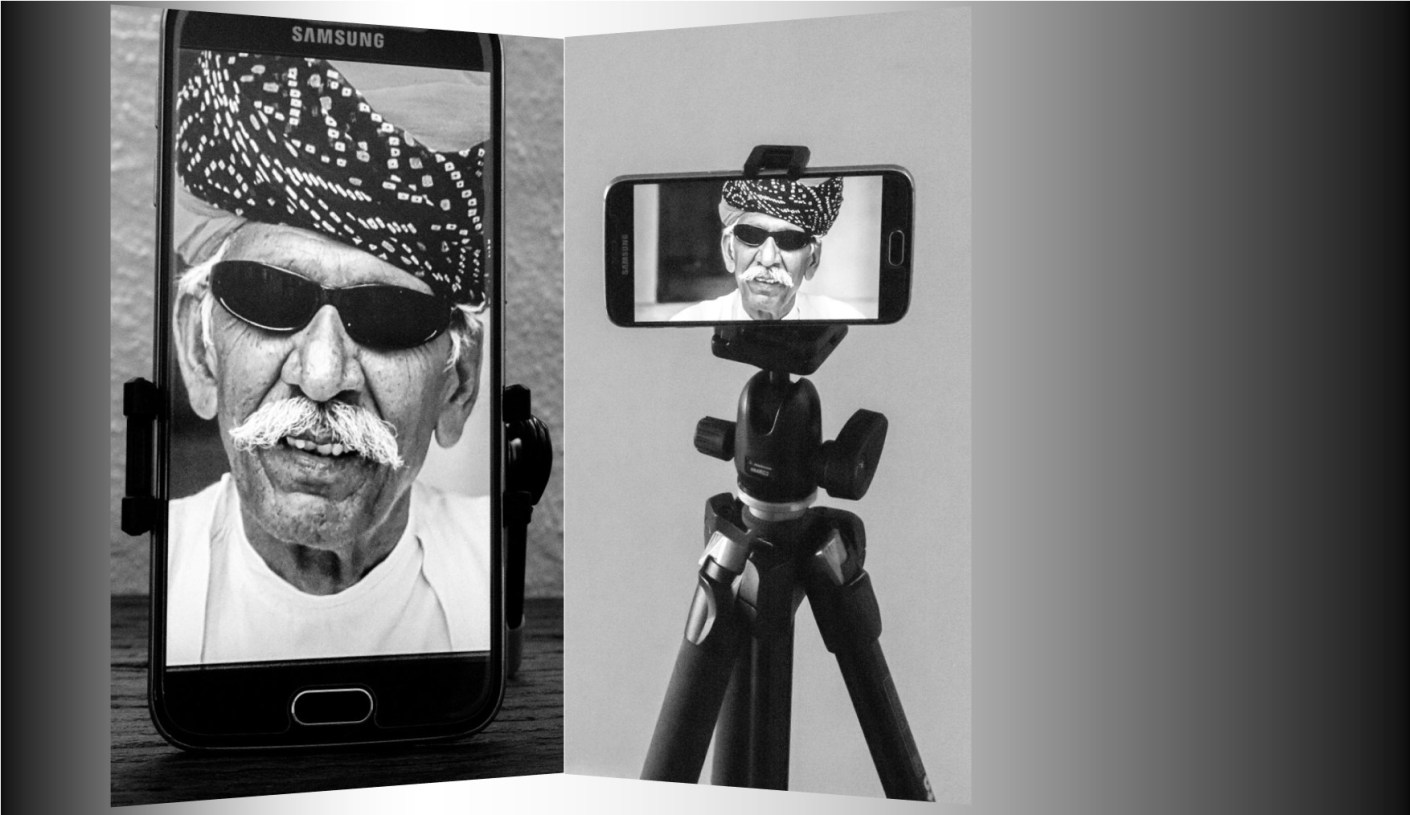
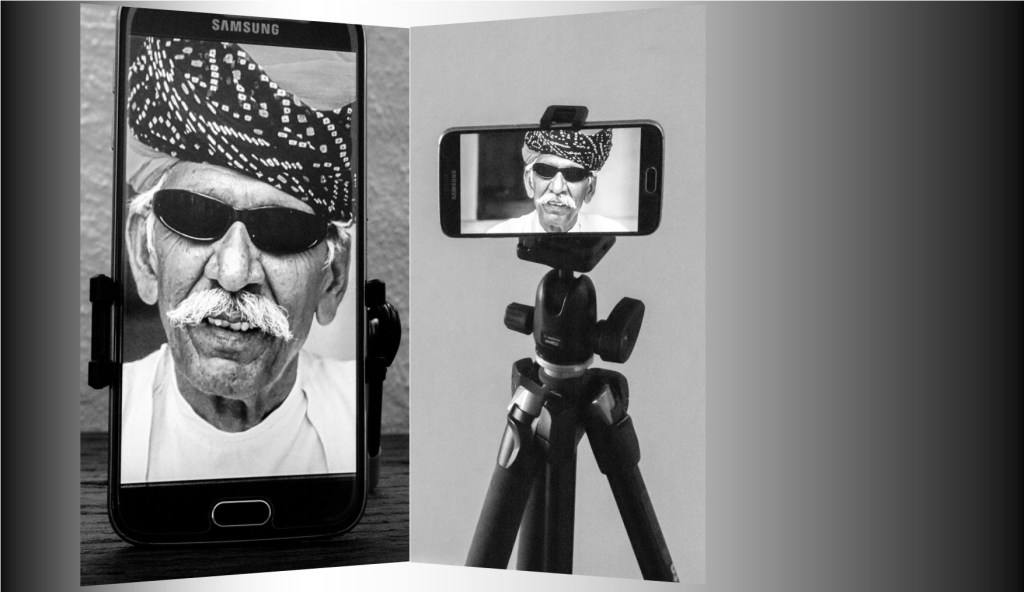
In previous posts I’ve talked about having the need to have a decent self-portrait or ‘selfie’ on your website or publication to show the human face.
If you don’t have a website or business you almost certainly will have a social media presence, whether it’s LinkedIn, Facebook, Instagram, Twitter or anything else.
In this day and age of digital social interactions I believe it’s still important to control your personal image and make sure any ‘selfie’ is a true representation of you.
That’s right, ‘you’ not your dog, kids, motorbike or picture taken on holiday in a bar in Bali.
Once you get ahead around that you then need to decide what sort of self-portrait or selfie you think represents you best
- You may want a more conservative head shot.
- Or a full-length portrait with business like clothes like jacket and trousers.
- On the other hand, you may want to convey a trendy relaxed image.
- There are no rules except to be true to yourself.
The four most crucial factors to getting a professional ‘selfie’ or self portrait
1 Equipment
I’m going to show you on a smartphone but any camera should do the job provided it works
2 Light
Light is everything. If the light is dull or too bright the image can be too dark or ‘blown out’ (a term for images that have the highlights way too bright).
3 A way of mounting the camera.
A tripod is undoubtable the best way if someone is not taking it for you.
4 Staging
Make sure you select the correct pose. You may have to take several different images at different angles to get one you want to use.
Incidentally there is no rule that says you must use the same image across the all platforms or for the same purpose
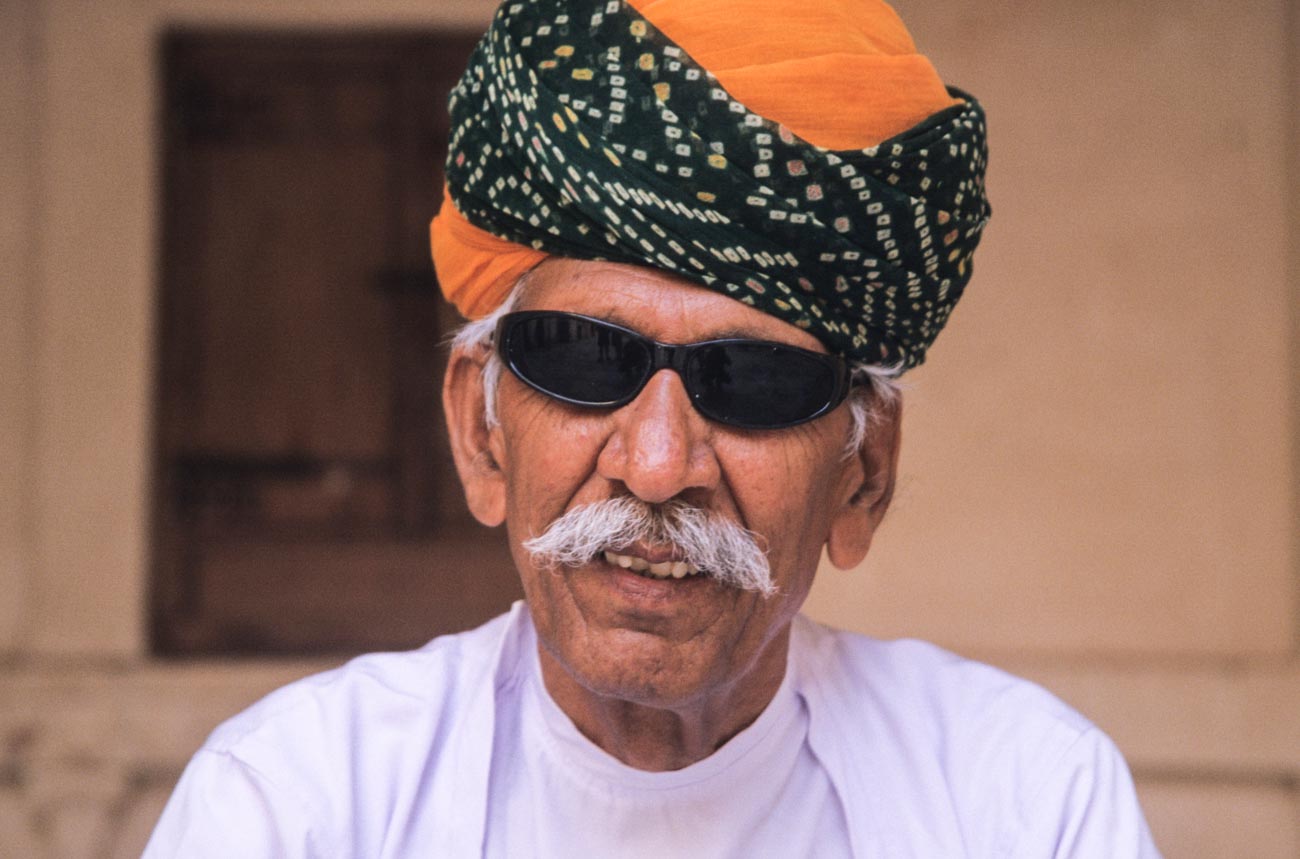
Man in turban at Mehrangarh Fort in Jodhpur, Rajasthan. Set the camera up;
1 Regardless of what the use is, make sure you have the biggest resolution.
- Much better to size down than try to upsize.
For example on the Samsung S series smartphone cameras you will find picture size next to the settings icon.
Select 16M or 12M or whatever the largest number is.
The resolution on the IPhone is set to maximum and has no adjustment from that except with the use of a third-party app.
Some other brands only give you the option to select large or high
Note: The front camera usually has a much smaller resolution than the main camera, so avoid using it for this application
- Find the timer and set it to 10 seconds
You can usually just leave the camera on auto if the light is pretty good.
But you can change the settings on some smartphones.
The only settings I recommend changing are either the ISO and/or the exposure compensation.
- Mount the camera on a tripod or any other way you can find to mount.
I use the Joby Grip Tight Micro Stand a great little find that has a mini stand.
It can also be fitted to a standard tripod head.
2 Set the scene
- Find a well-lit position.
You can be creative by sitting or standing near a window and allow the light to be strongest on one side.
Alternatively, if you want to light up both sides, use a whiteboard on the side away from the light.
- Think about the background.
Make sure it’s not cluttered and distracting to the eye.
Again, a whiteboard is handy.
White (or off white) backgrounds are always the best way.
- Think about your position.
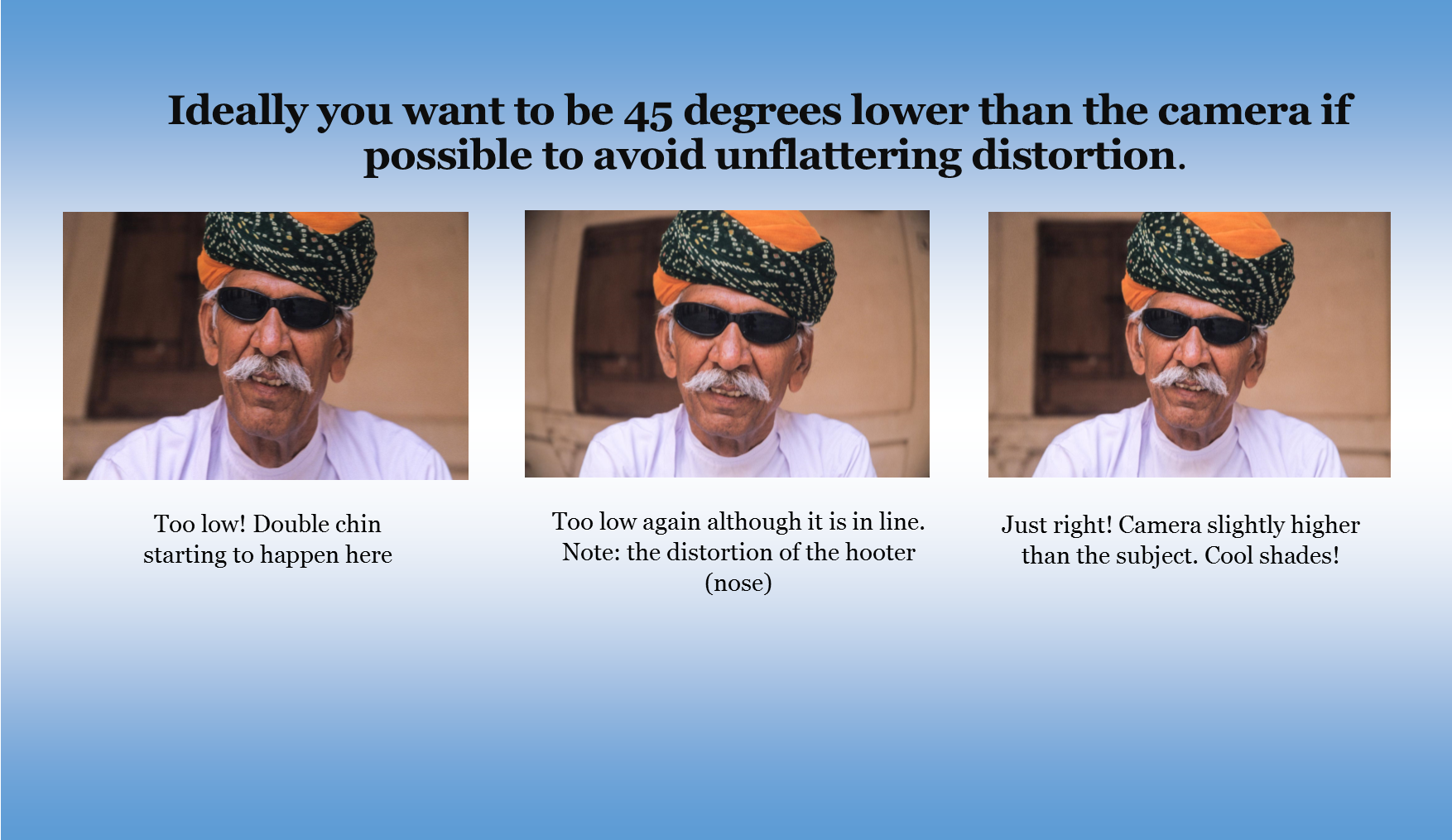
Ideally you want to be slightly lower than the camera if possible to avoid unflattering distortion.
- Now comes the tricky bit.
Unless you have someone else helping, you are going to have to focus the camera on your final position, be it a full length or head shot.
The easiest way to do this is to put something in that position and then focus on it.
- Just press the shutter button and then get into position.
- Take plenty of images, trying different poses
and maybe different locations.
You can’t take too many!
3 Review
- Review on your phone and add a filter if you wish.
There’s plenty of them out there! - Load the images onto your computer.
- Look for softness (slightly blurry), unwanted distractions or items and light
- Crop if required.
You may need to crop for different applications. - Upload to your platform of choice
Finally
Rinse and repeat if need be.
You may think you’ve got it right but there’s always room to improve.Summary for “How to take an ‘awesome’ selfie”
- Make sure you are true to yourself and have a ‘selfie’ that truly represents you.
- Decide on your orientation and pose
- Four crucial factors for selfies are:
- Equipment
- Light
- Mounting
- Staging
- Set the camera up
- Set the scene
- Review
Do you see yourself taking some great travel photos that you can share or display?
Or can see yourself reliving your travel experience by bringing home some emotive travel photos?
Maybe you want to get your travel photos published.
If one or all of these is YOUR goal, I can help.
If you go to the form below you can sign up and get my free eBook “9 ways to improve your Travel Photography”.
At the same time, you will also subscribe to my Travel Photo Tips Newsletter which is exclusive to those who have signed up.
Remember if you want to take great travel photos
- that you can share and display.
- that help you relive your travel experience
- give you a chance to have your travel photos published
Then go to the form below and subscribe to my Travel Photo Tips Newsletter and for your trouble get my eBook “9 ways to improve your Travel Photography”
Any questions then please write your comments below or contact me here
Now that you’ve got down this far can I ask a favour.
Please share this with anyone who is going on a trip and wants to take and bring back some great travel photos.
You’ll be doing both them and I a favour.
Share this:
-
Tips for travelling with Camera Equipment

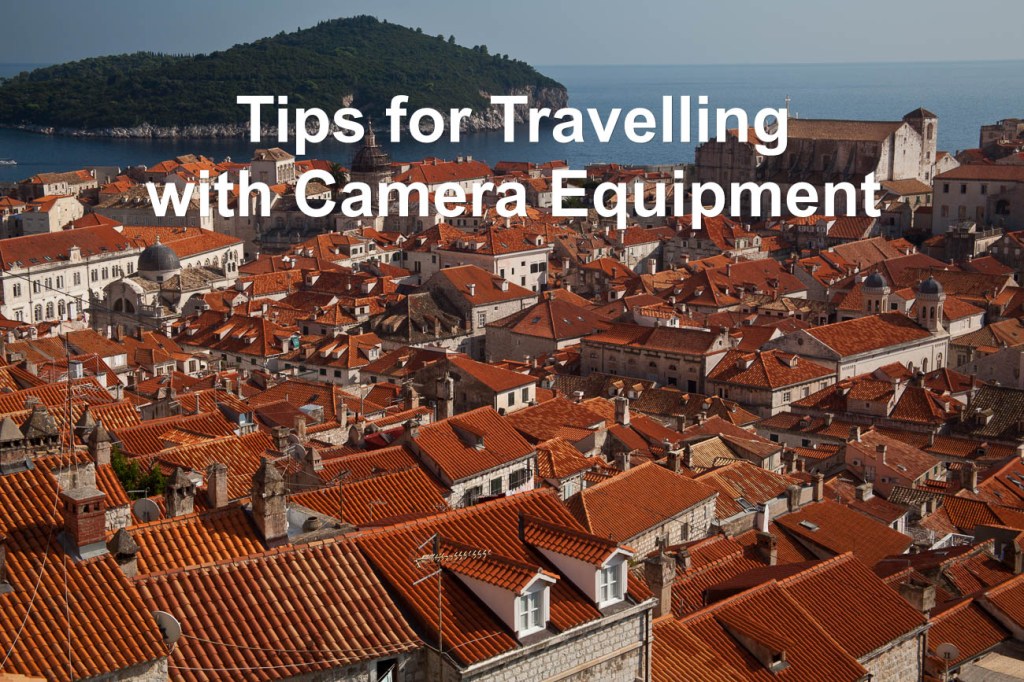
Rooftops of Dubrovnik’s old town. click on the image for other views If you are off on some travels soon and you want to ensure that you make best use of photographic opportunities you will discover, it’s worth having a plan. Especially about the Camera Equipment you are going to take with you.
I cover this is a number of posts:The Travel Photographer Destination Guide Part One
The Travel Photographer Destination Guide Part Two
Planning and Preparation for Travel Photos
However, it’s always worth getting other perspectives.

Rooftops of Dubrovnik’s old town. Used extensively in the Game of Thrones TV series. Click on the image for a larger view This episode of the podcast TWIP (This Week in Photo) is called “Why you be trippin”. In it Frederick the host, is joined by 2 travel photographers, frequent-flyer Jeff Cable and globe-trotting photographer Giulio Sciorio.
They discuss what camera equipment to take with you, and what to leave at home.
They also reveal some secret packing tips that may just change the way you think about luggage!Do you see yourself taking some great travel photos that you can share or display?
Or can see yourself reliving your travel experience by bringing home some emotive travel photos?
Maybe you want to get your travel photos published.
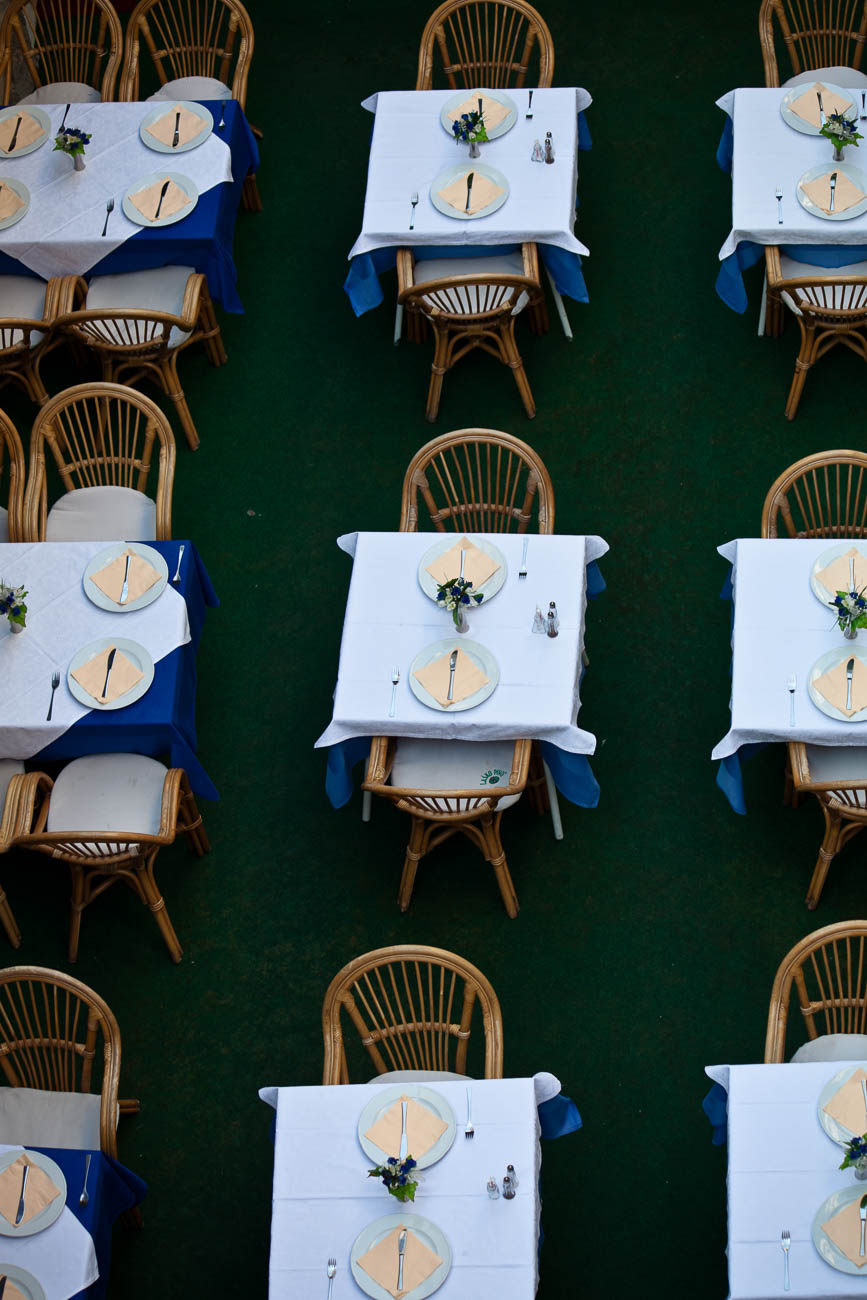
An aerial view of a cafe and it’s tables settings in Dubrovnik, Croatia. Click on the image for a larger view If one or all of these is YOUR goal, I can help.
If you go to the form below you can sign up and get my free eBook “9 ways to improve your Travel Photography”.
At the same time, you will also subscribe to my Travel Photo Tips Newsletter which is exclusive to those who have signed up.
Remember if you want to take great travel photos
- that you can share and display.
- that help you relive your travel experience
- give you a chance to have your travel photos published
Then subscribe to my Travel Photo Tips Newsletter and for your trouble get my eBook “9 ways to improve your Travel Photography”
Any questions then please write your comments below or contact me here
Now that you’ve got down this far can I ask a favour?
Please share this with anyone who is going on a trip and wants to take and bring back some great travel photos.
You’ll not only be doing both them and me a favour.
Share this:
-
Finding the best Camera for your Travels Part 1 Compact
In The basics of camera equipment – Best camera equipment for travel photography, I mentioned That “despite those who say its’s not about the gear, you need a camera that will suit your style and objectives.”
This is especially true when you are off travelling.
Having a camera that you are comfortable with and that can help you take photos that you will proud to bring home with you is essential.In the first of this series I will defer to some reputable camera reviewers who can help guide you.
So, without further ado please read below
https://www.dpreview.com/products/compacts/all?view=grid
https://www.photographyblog.com/best_cameras/us
https://www.cameralabs.com/best-point-and-shoot/
Thanks for reading this article
Do you see yourself taking some great travel photos that you can share or display?
Or can you see yourself reliving your travel experience by bringing home some emotive travel photos?
Maybe you aspire to getting your travel photos published.
If one or all of these is YOUR goal, I can help. Sign up in the box below to subscribe to my exclusive Travel Photo Tips Newsletter.
You’ll also get my free eBook “9 ways to improve your Travel Photography”.Remember if you want to take great travel photos
- that you can share and display.
- that help you relive your travel experience
- that give you a chance to have your travel photos published
then sign up below and subscribe to my exclusive Travel Photo Tips Newsletter and for your trouble get my eBook “9 ways to improve your Travel Photography”.
Share this:
-
16 Tips for Photographing Wildlife whilst Travelling

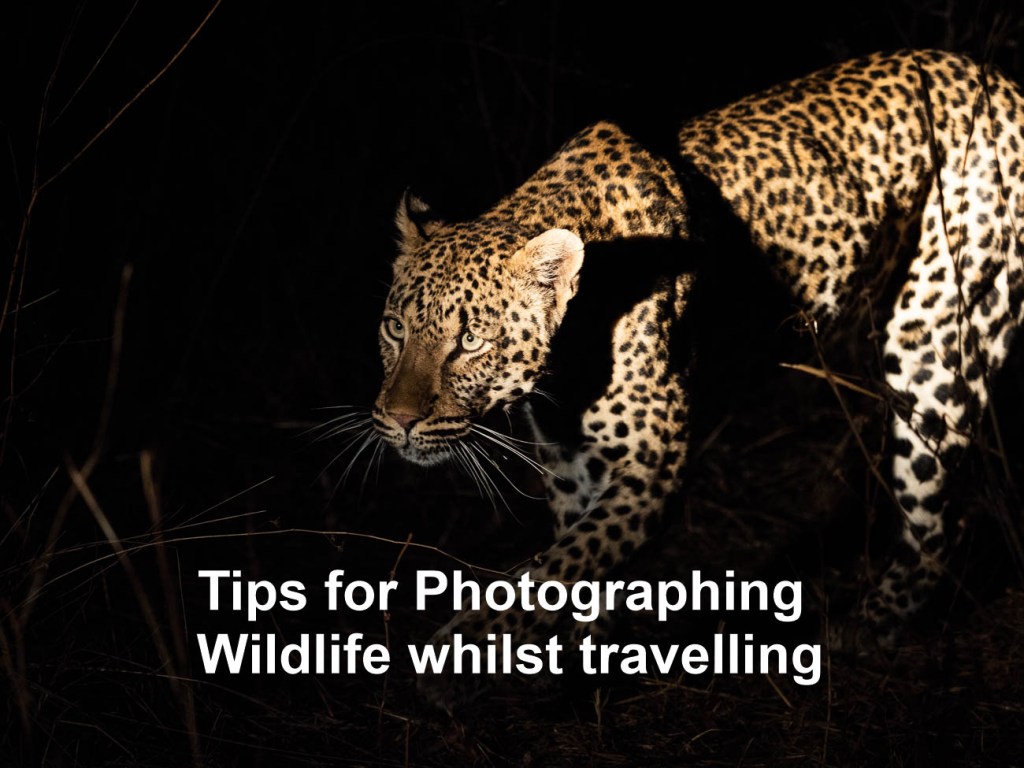
Leopard stalking his prey in South Luangwa NP in Zambia In Tips to Prepare for Photographing Wildlife while Travelling I gave you some handy tips on preparing for photographing wildlife while travelling. Now it’s time to give you some tips on actually photographing wildlife whilst travelling.
So if you have read Tips to Prepare for Photographing Wildlife while Travelling you will know what sort of wildlife you may get an opportunity to photograph whilst you are on your travels.
As I stated in the previous article travellers like us will never reach the level of expertise of a wildlife photographer. Of course, if you aspire to be a wildlife photographer that’s different. But in general, there are photographers out there who specialise in photographing wildlife. They are meticulous in their preparation. They leave almost nothing to chance, have lots of patience and spend a huge amount of time trying to get that “shot”.
So now to the tips
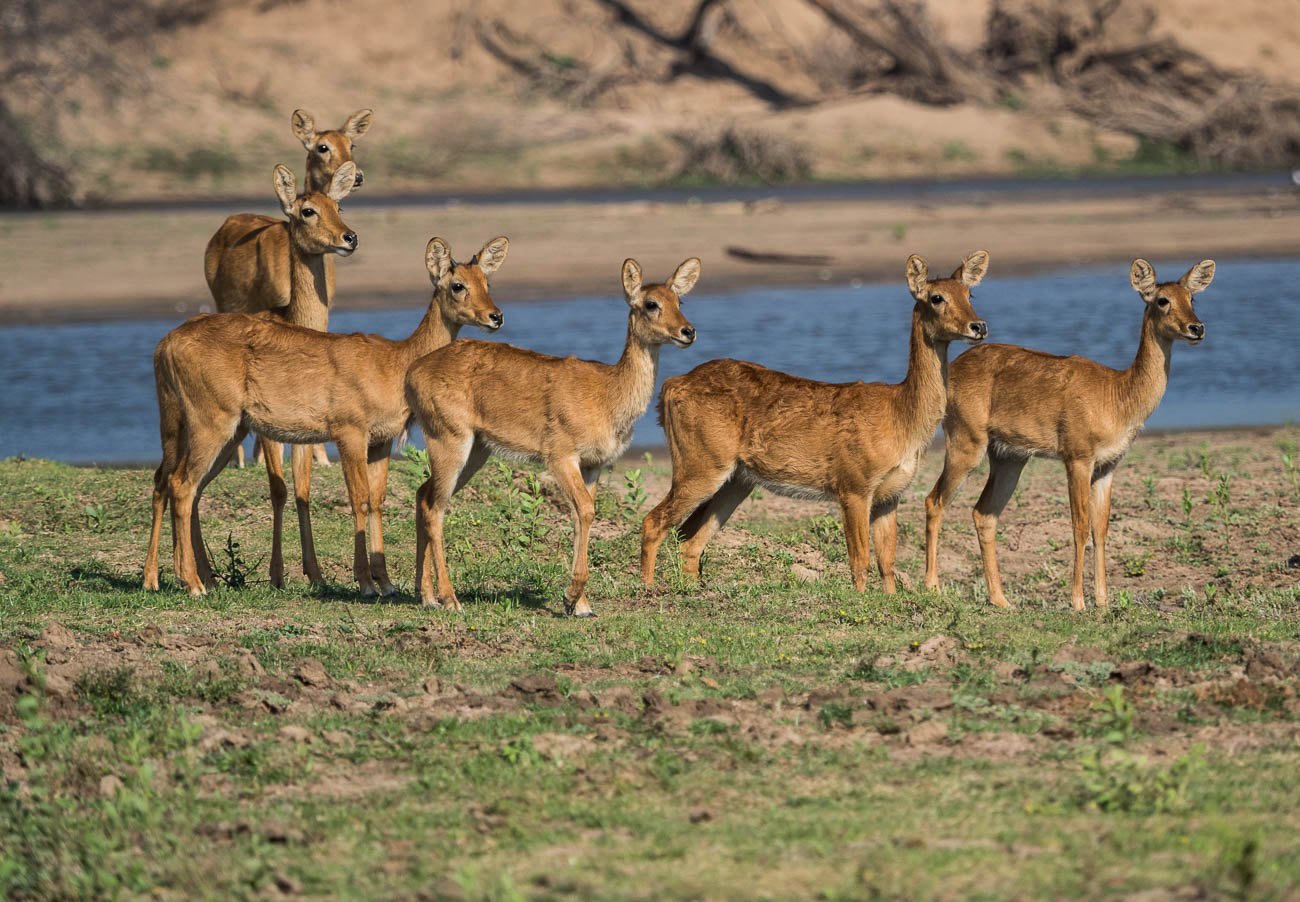
Puku near a riverbed in south Luangwa NP Zambia Basic equipment.
1. Zoom or Telephoto lenses. This is non-negotiable. Sure you can take pictures without a zoom if you have a long fixed or prime lens. But that’s restrictive as you can only be a set distance away. Having a long zoom of at least 300mm (in 35mm) gives you flexibility.
2. Either a DSLR or Mirrorless camera so you can swap out lenses. You also get better control of the exposure and focus with an interchangeable lens camera.
3. Smartphone? Well unless you going to get really close, which in most cases is not recommended, leave it for the happy snaps.
4. If you want to get serious get a fast write speed memory card. Nothing worse than shooting away only to find the camera is buffering.
5. Weather protector like a hood or a Rain and Dust Cover for your camera. Going on safari or wildlife spotting can often be dry and dusty or wet and raining. Don’t forget to protect the rest of your gear as well. Most backpacks come with rain covers that offer a reasonable amount of protection against both the rain and dust.
Settings:
1. Aperture Set to wide open (lowest F-Stop). And on Aperture priority (A). Why?
A couple of reasons:
You want to make sure that you eliminate any background distractions as much as possible.
You also want to allow plenty of light in. See also no 2.2. ISO
Set to auto
Even in the tropics or sub tropics, light can vary from bright sunshine to dark shadows. More often than not, animals tend to be in the shadows. Where it’s quite dark you may need to override the auto and set the ISO to an even higher setting.3. Shutter
As you should have the camera set on Aperture priority the shutter will take care of itself. Unless of course you are looking to try some advanced motion techniques which is outside the scope of this article.
4. Focus
Think you can take wildlife photos with your camera set to manual focus? Think again!
You need your focus set to auto. Animals are always on the move. Even if they are lying down, they can jump up quickly leaving you struggling to maintain focus on auto, let alone manual
Lilac breasted roller in South Luangwa NP Zambia 5. Frame Speed
Set your frame speed to continuous or sequential or whatever your camera’s equivalent is. You’ll need to do some controlled spray and pray in some instances.
Note: Check the camera default setting for continuous. I didn’t check the number of frames per second on a new camera. I ended up with 100 shots of an elephant hardly moving, as the default setting was 60FPS.Last tip: GET UP CLOSE
There are some basic rules in getting up close to wildlife:
1. Be very careful in choosing what wildlife to get close to. They are WILDlife which means they can be unpredictable. So stay safe
2. Where possible use a telephoto lens to get a close up shot.
3. Be quick. Wildlife is always on the move. If you are close you will need to have your wits about you. It’s easy to get distracted when you are behind the camera.
4. Consider using a shutter speed of 1/250 to reduce the chance of blur
5. As I mentioned in point 5 of the previous section, it’s worth setting your frame speed on continuous or sequential.
6. Sometimes the wildlife is behind a fence or in a cage, or you are the one in a cage or compound, as I’ve experienced. In these cases, it is possible to reduce or totally eliminate the wire of a fence or cage in a photo, by going up close. Same applies to any glass enclosures found mostly in Zoos. Get up close and have your lens, or lens hood, touching the glass to reduce reflections.

Hyaena in South Luangwa NP in Zambia Extra tip on this one is that you can also use a polariser filter to reduce reflections
For more about getting in close go to The One Big Creative Travel Photo Idea
Summary of 16 Tips for Photographing Wildlife whilst travelling
· Unless you are prepared to invest in a lot of time and patience it is extremely unlikely that you will consistently take ‘National Geo” quality photos
· For best results use an interchangeable lens camera with a Zoom lenses
· In most cases it’s best to have a wide-open aperture (small F-Stop), ISO set to auto, Focus on Auto and Frame speed should be set to continuous
· Get in close, if not physically then with your telephoto zoom lens
Thanks for reading this article
Do you see yourself taking some great travel photos that you can share or display?
Or can you see yourself reliving your travel experience by bringing home some emotive travel photos?
Maybe you aspire to getting your travel photos published.
If one or all of these is YOUR goal, I can help. Sign up in the box below to subscribe to my exclusive Travel Photo Tips Newsletter.
You’ll also get my free eBook “9 ways to improve your Travel Photography”.Remember if you want to take great travel photos
- that you can share and display.
- that help you relive your travel experience
- that give you a chance to have your travel photos published
then sign up below and subscribe to my exclusive Travel Photo Tips Newsletter and for your trouble get my eBook “9 ways to improve your Travel Photography”.
Share this:








 Katin Images Travel Photography