Katin Images Travel Photography

Travel Photos, Travel Photography Tips and Software

Tag: photography

  • Why good photography is a great investment for any small business.

    Why good photography is a great investment for any small business.

    Why good photography is a great investment for any small business.

    *“Don’t let nobody take care of your business better than you

    In the game of marketing the big brands are winning hands down.
    They hire large marketing companies and/or specialist photographers to make their brands stand out in an increasingly crowded market.

    So does that mean that the small business like you can’t compete in the visual stakes?

    Of course not – let’s read on and find out why good photography is a great investment for any small business.

    The internet has levelled the playing field.
    Before the internet, for a small business to get its brand out to the marketplace would involve expensive marketing material or foot slogging. Then there was also a reliance on others such as distributors to market your brand as well the other brands it had in its stable.

    Don’t get me wrong these strategies still play a role.
    But the reach of the internet is so vast and the entry cost so small.
    And now you get instant feedback from targeted campaigns. 
    So for a you, without the marketing budget of some of the bigger brands, it’s a no brainer!

    Image Branding

    Wherever we look online, its images that catch our attention so we have to create a visual depiction of the brand we are offering.

    That’s where photography comes in.

    There are thousands of images of products, services and other related subjects. These are posted by the minute on to social media, websites, apps and online publications every day.
    In my humble opinion there are only a few that are memorable.

    The majority are taken and published by consumers, who have no vested interest in producing photos of any great quality.
    They are usually what could be called record images, that is a record of the wine drunk, the restaurant visited, the food eaten, the place visited etc.

    Those that are likely to have the most impact on potential consumers are are produced by reviewers and few other industry players. 

    Take Control!

    So don’t leave it to others to represent your brand. Take control! 

    So what’s a good image?

    To make a brand stand out the image has to be usually (sometimes you can get lucky) well planned and memorable.
    It’s that last word “memorable” that’s so important.

    Consumers will nowadays more than likely see a brand online before they see it physically.
    A memorable image will help them remember it when it comes time to purchase your product in a store or online.
    Composition, opportunity, technique and to a lesser extent, camera equipment play a part in getting the right ‘shot’.

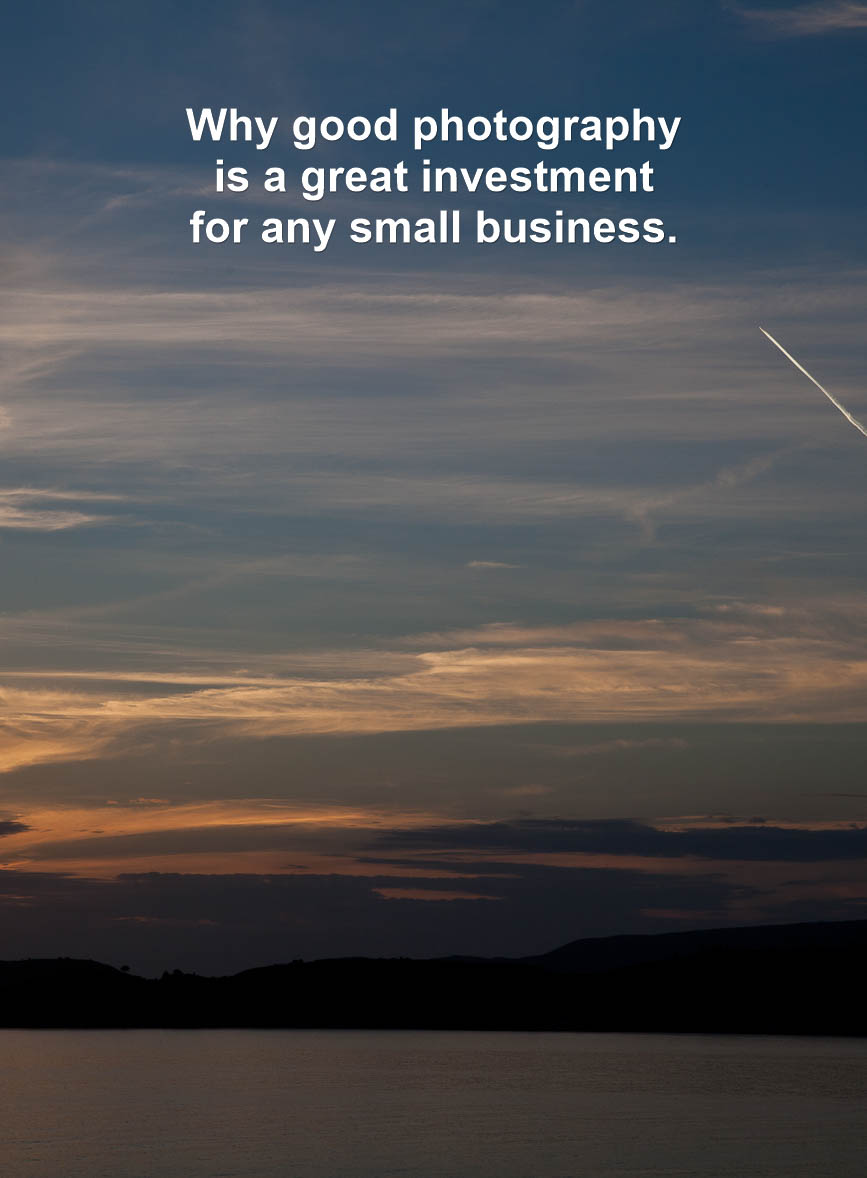
    Dusk from Lassi, Kefalonia looking across to Lixouri
    Dusk from Lassi, Kefalonia looking across to Lixouri. Click on the image to see a larger view and other options

    Other factors

    Of course image alone is not purely responsible for that, product design, good reviews, interesting stories and reputation all play a part.
    But you can have a terrific product and great reviews but if the image is poor and almost indistinguishable it’s not providing any value.

    So where should you put most of these images?

    Well by far social media is has become the place to display and share photos.
    So let’s take a look at the most popular and well known channels.
    These are not in order of importance, as each one has its own individuality:
    Instagram

    ig

    Instagram is a photo-editing mobile app that not only beautifully renders photos taken on Smartphones, it also has some powerful social sharing features.

    Last year Instagram was the fastest growing social network on the planet and is evolving to be an image based Facebook (who by the way own Instagram).

    Pinterest

    In the purely visual stakes we have Pinterest which is focused on sharing things that are visually pleasing (both photographically and in video).

    Images and videos are at the heart of the Pinterest experience.
    Because of the fact that Pinterest emphasises pictures over text, it’s extremely important to have high-quality photos.

    Facebook

    fb

    Then there is Facebook by far THE most popular website on earth.
    What’s more, the average Facebook user spends on average just under two hours per day on Facebook.
    The incredible viral nature of Facebook enables business’s to get in front of a huge audience

    High quality and eye catching images go along way on Facebook


    LinkedIn

    LinkedIn is the largest social network for business owners and professionals.

    LinkedIn doesn’t generally market to “the general public”.
    LinkedIn allows a business to target a different demographic of business owners and professionals.

    Google+

    The not so sexy Google+ is Google’s answer to Facebook.
    Whilst not quite as popular, it has two things going for it that other social media sites don’t.

    If you have a Google+ page, then you can connect it to Google My business listing (formerly known as Google Places or Google Local).

    What does that mean? Well guess who controls 80-90% of searches on the net? Yup, Google

    Because of the way that high quality images are displayed on Google+, it’s no coincidence that one of it’s most active users are from visual medium industries like Photographers and Graphic designers.

    Twitter

    twitter

    Twitter has in the past been considered almost a text message service.
    Since it introduced the display of images in streams (i.e. without having to click on the link) a couple of years ago that’s all changed.

    According to tests, tweets with images are 55% more likely to be shared or re-tweeted.

    There are others of course, YouTube and Qzone (China’s answer to Facebook), have a huge number of users.

    Other places

    It goes almost without saying that today a website, which can highlight some great images is essential.
    The cost of building a visually appealing website has dropped significantly over the last two or three years.
    In fact, those who are tech savvy build their own at very little expense.

    Uploading images to any of the social media sites and a website is now a simple process that anyone using a computer can do.

    Summary for why good photography is a great investment for any small business.

    So to recap: 
    The reality is that you as a small business need to ensure that the quality of your marketing images stand out.

    That’s not to say that word of mouth, good reviews and on the ground marketing don’t work anymore. It’s just that we have become an image sharing society and any business looking to grow would want their images shared.

    * James Brown, It’s A New Day

    Do you agree? Are images that important for your business? Feel free to add opinions below. I would really like to hear them.

    For more on this and other photography subjects why not sign up for my email and get a free “Camera Features Guide”.

    Just sign up below

    [mailerlite_form form_id=8]
    Dusk from Lassi, Kefalonia looking across to Lixouri
    Dusk from Lassi, Kefalonia looking across to Lixouri
  • 4 features you must have on your camera

    4 features you must have on your camera

    “*Been dazed and confused for so long it’s not true”

    This follows on from my previous post The essential feature to have on your camera

    Over the next few weeks I’m going to suggest some essential features you need to consider having when you are in the market for a new camera or even mobile phone with a camera.

    At the end of each feature I’ll give a rating out of 10 – 10 being must have.

    At the end of the series if you haven’t had time to read them all then you can scroll to the bottom of the last in the series and get all four in a PDF.

    1. Drive

    Drive selection is the option to select single, continuous or timer shooting.

    Single is one shot each time the shutter button is pressed, whilst continuous can be anything up to 15 frames per second (FPS) which is great for action pictures.

    The self-timer option is great for selfies, however it’s really handy if the self-timer has two intervals.

    A short, say 2 second, interval can be handy to use if on a tripod and low light instead of using a remote cable or wireless device.

    One thing to be aware of is that cameras these days are really mini computers and sometimes there can be a lag if you shoot in continuous, especially in Raw format due to the larger file size.

    Drive selection again is pretty much standard on most new cameras.

    Rating: 10/10


    2. Bracketingbracketing-colour

    I mentioned earlier that I’m a champion for getting the shot right first time in the camera, well bracketing helps this.

    Bracketing allows you to automatically take 3 shots of the same subject at different exposures, usually by one or half a stop each. I.e. aperture and/or shutter speed settings.

    So you take the shot at the setting you think is correct and the camera automatically takes another 2 or even more at different settings to make those images lighter and darker.

    Really handy when taking images of scenes or subjects where there is a lot of contrast.

    Some cameras allow you to bracket at different ISO, white balance and flash settings, which apart from the flash option is a little superfluous.

    Rating: Exposure bracketing 8/10 ISO, white balance and flash settings 3/10


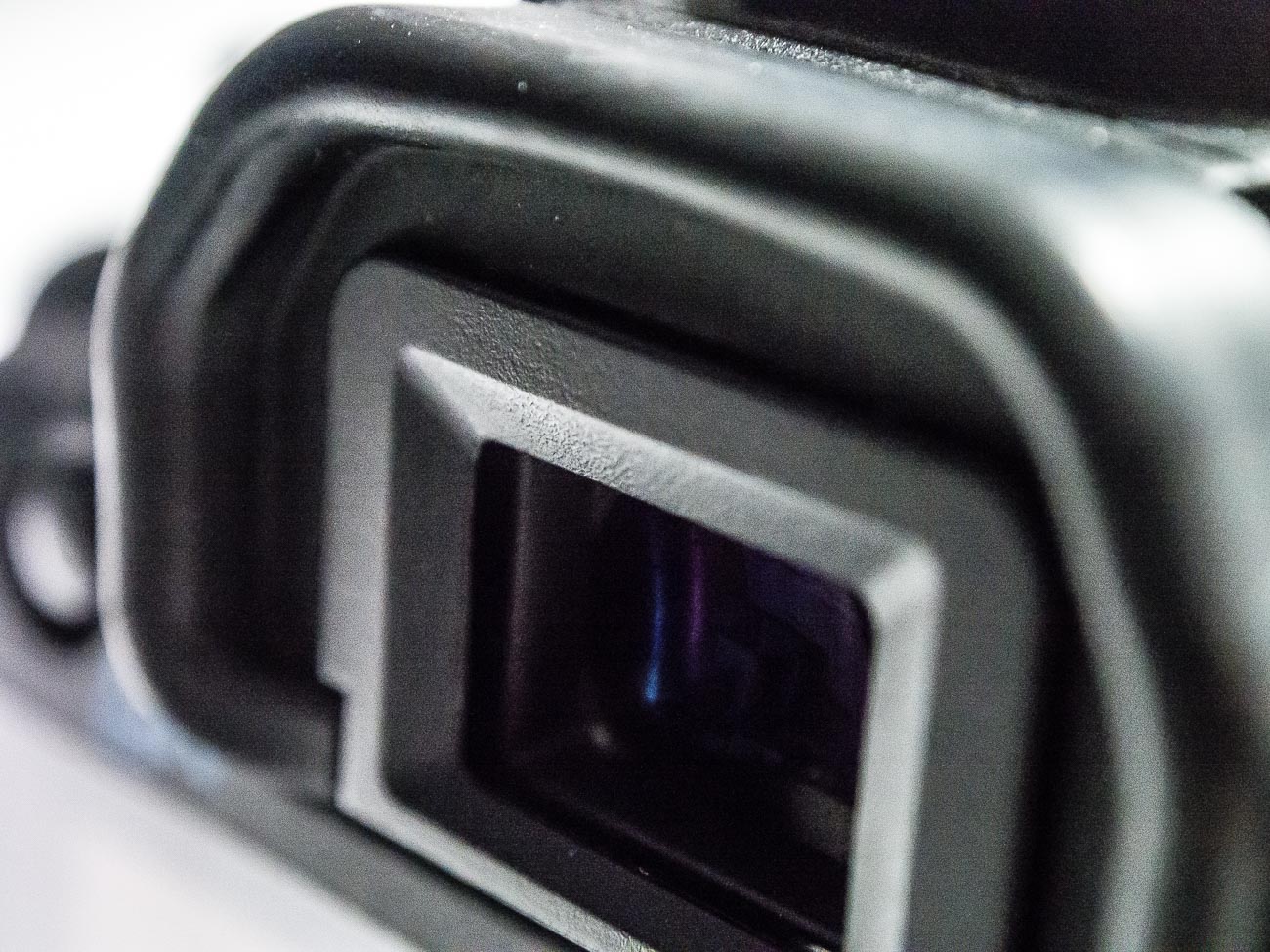
    3. Viewfinder

    OLYMPUS DIGITAL CAMERA

    In the early years of digital cameras, very few had viewfinders thinking that everyone would migrate to the rear screen or monitor on the back of the camera.

    However, the exception to the rule was the DSLR which retained the optical view finder.

    Nowadays Electronic Viewfinders have come into their own and very good they are too.

    Why use a view finder at all?

    Why not the rear monitor?

    Well 3 reasons come to mind

    1. Camera shake is reduced. Holding the camera out from your body means it is a lot harder to keep still. 2. Competing light. Ever looked at the rear screen on a sunny day? You can’t see a bloody thing!
    2. Battery power. An LCD screen will always use a lot more power than a viewfinder either optical or electronic.

    But there are viewfinders and there are viewfinders.

    Just make sure it feels comfortable and that the frame is 100%, has a central view i.e. as if you were looking through the lens and not cropped.

    Rating: 10/10


    4. Shooting and viewing videos.

    This is usually on most cameras and is the future of online marketing.

    This is a whole article on its own so I won’t go too deep.

    I would say that at this stage the only recommendation is to ensure that the camera shoots in high definition (HD) at the minimum.

    A lot of cameras are now able to shoot in 4K but like 3D there are still limitations on being able to view 4K videos.

    That will change over time as it’s only a matter of time until 4K TV’s and Monitors will be more common as the price drops.

    Unfortunately, the image and video quality available is not yet matched by the audio quality that comes standard with most cameras.

    So make sure you buy a good microphone that’s compatible.

    Rating: 10/10

    So did you understand all that? I’m happy to clarify anything you’re not sure of.
    Just post in the comments section below. Don’t be shy.
    While you are at it why not subscribe for future updates here.
    You’ll get my free guide “Eleven easy ways to improve your marketing photography”.

    *Led Zeppelin sang this in (you’ve guessed it) Dazed and Confused in 1969.
    They could have been singing about how most people feel when shopping for new electronic equipment these days.

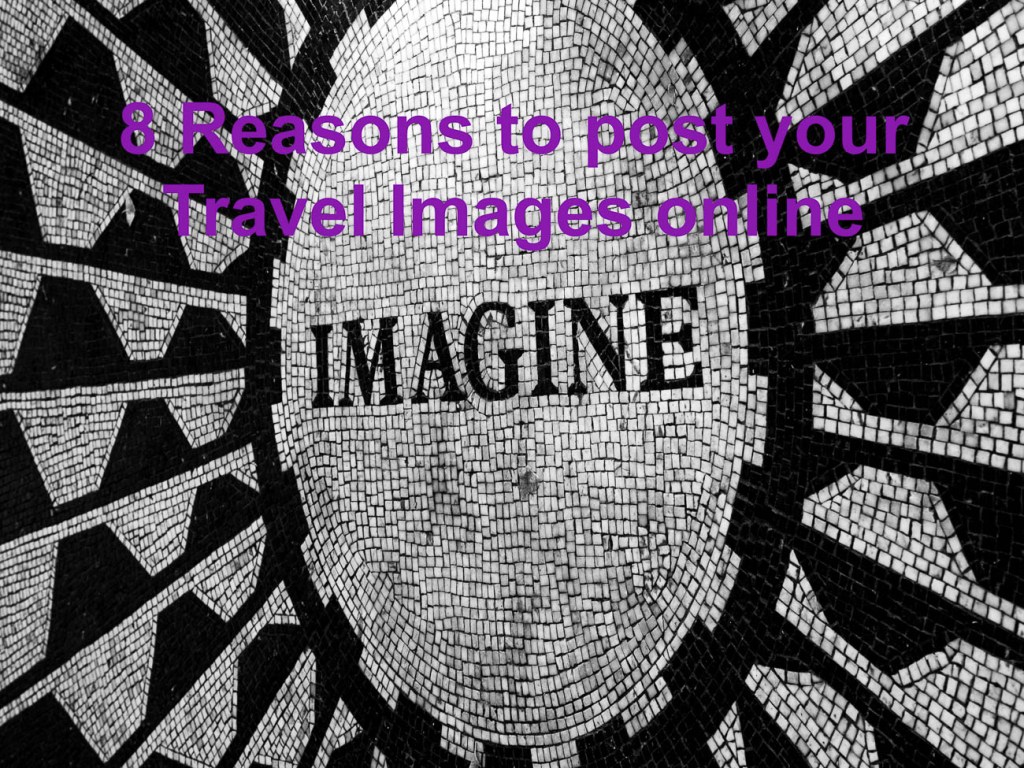
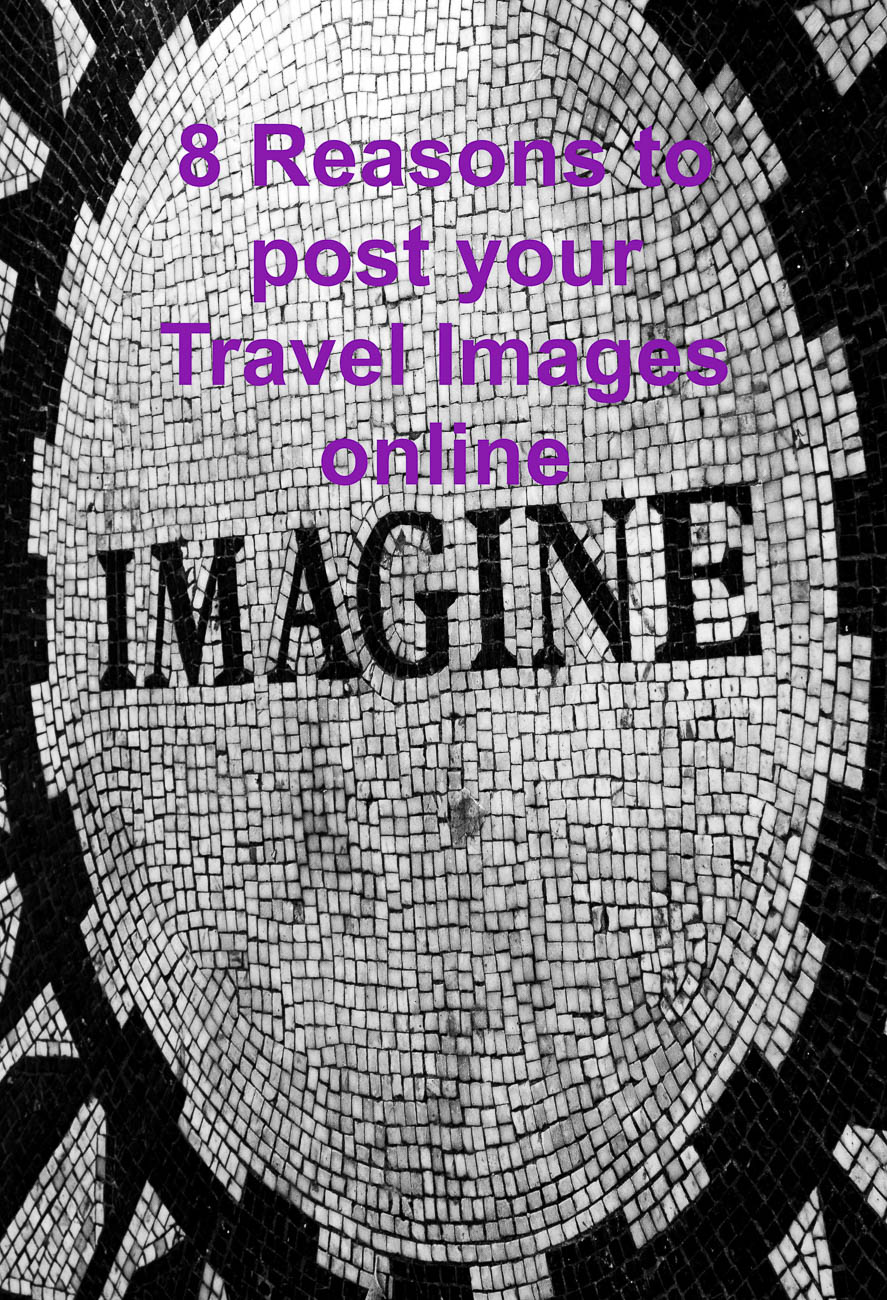
  • 8 reasons to post your Travel Images online

    8 reasons to post your Travel Images online

    8 reasons to post Travel Images online

    *Imagine no internet, I wonder if you can.

    I wonder if John Lennon was to write Imagine today whether this wouldn’t be an extra verse.

    When I first started photography the only Travel images in the public domain was either in print or as part of a TV or Movie.

    Photographers like me lugged around a portfolio of printed travel images to various companies and people hoping that they would like our images.

    Nowadays there are so many places that you can post travel images online, that it’s almost mind boggling!

    And there’s lies the problem.

    The real consumption of travel images is happening on line.

    So why post your Travel Images online?

    Well let me give you 8 reasons on why you need to post your Travel Images online.

    1. Huge Market

    Last year there were 3.2 Billion Internet users.

    Let me say that again, 3.2 Billion.

    That means 40% of the world’s population have an internet connection!

    Over 80% of the population of developed countries have an internet connection.

    So if you are looking to get some exposure for your travel images to any of those countries then you have to be online.

    2. With the right strategies you can get in front of potential admirers using various electronic forms such as email or social media.

    As much as doomsayers tell us that Facebook or twitter or any other form of social media is dead.

    It’s not.

    It’s never been more popular. Sure the up take has slowed which is normal.

    Social media uptake is dwindling not because of unpopularity but because they are running out of people who aren’t already on it.

    8 reasons to post Images and Visual Content online
    Man looking at Smartphone, in Central Perth, Western Australia.


    Social media is here to stay in its different forms

    3. 85% of customers expect business’s and everyone else to be active on line.

    Everyone jumps on facebook or a website to see the latest posts.
    And there’s nothing like a great travel image to attract their attention.

    4. With smartphones users can look up destinations and search for images whilst walking past  a travel agent.

    So if you’ve got some great travel photos and you’re not posting your Travel Images online you’re missing out?

    Of course you still need to have some great travel images.

    You also need to ensure that you update regularly, otherwise people looking at your site will get bored and move on.

    And it goes without saying that your site should also be mobile friendly.

    5. 46% of people say a business website’s design is number one for gauging the credibility of a company.

    By that I mean not fancy but just easy!

    This is BIG!.

    Why not approach a business that needs travel images of the destinations you’ve been to.
    You never know where it may lead.

    If you have your own site make sure it’s quick and easy to load.
    And make sure your site is easy to navigate and works well on Apple, Windows and Android operating systems.

    I’m sure you’ve come across a site that is not easy to navigate on your iPad but easy on a PC or Windows laptop or vice versa.

    6. 90% of information transmitted to the brain is visual. We humans process visuals 60,000 times faster than text.

    Thanks to our evolution over millions of years of, we are genetically wired to respond differently to visuals than we are to text.

    It’s important that words, concepts and ideas are hooked onto an image, otherwise they will go in one ear, and go out the other.

    Words are processed by our short-term memory where we can only retain small bits of information.

    Images, on the other hand, go directly into long-term memory where they are indelibly etched.

    7. Good visual content is often shared around amongst friends and acquaintances.

    Like a visual word of mouth. Take a look at Instagram and see how many followers some travel photographers have.

    Whilst there’s no guarantee that these images will be have been shared, you’ve got to be in it to win it, as they say.

    8. Creates engagement with others especially through groups and forums.

    8 reasons to post Images and Visual Content online

    Some of the best ways to grab people’s attention is by posting an image on a forum such as Reddit (via a link) or Quora.

    The travel industry has lots of other forums some created by travellers othere by magazines and travel companies.


    So what about your experience in the online world? Do you post your Travel Images online?

    If not what’s the number one obstacle stopping you posting travel images online.

    I’d really like to know. So please leave your answers in the comments below.

    For more on travel photography you may like to go to: 

    Displaying your Travel Photos

    Or

    Travel Photography

    If you liked this article then you may want to drop your name and email in the box below to get updates and for your trouble you’ll get a free e-book.

    [mailerlite_form form_id=7]

    PS: *John Lennon actually wrote “Imagine no possessions, I wonder if you can” and then goes on to say “No need for greed or hunger, a brotherhood of man”

    Those words are as relevant today as they were in 1971


     “8 reasons to post your Travel Images online” is locked 8 reasons to post your Travel Images online

  • 20 easy ways to find time to learn photography (or anything else!)

    20 easy ways to find time to learn photography (or anything else!)

    I often hear the complaint of “I don’t have time to learn how to take better pictures of my product or service”

    Of course we live in a busy world where there are lots to things to grab our attention and pull us this way and that.
    I’m no different.
    It’s easy to be distracted by the emails, texts, people, facebook, twitter, I can go on and on.
    It much easier to do something that is going to give instant gratification than work on something that doesn’t give you that instant hit of achievement
    So over the years I’ve learned several techniques which allow me the time to do what I need and should do.
    I’ll share them with you today:

    1. Develop a ritual:

    I have a plan mapped out every day of the week that begins when I awake and finishes when I go to sleep.

    For instance, I stretch for 10 minutes at 5.50AM then exercise at 6.00AM. The exercise varies according to the day for example Mondays and Wednesdays are days I go for a run.

    From 2.30 – 3.15PM I make at least 10 phone calls that are likely to lead to promotion or sales of my business

    1. Establishing the best use of your time.

    Ask yourself on a regular basis, even hourly:
    “is what I’m doing now the best use of my time”
    “Is this going to lead to me achieving my goals”.

    1. Establish yearly goals

    Most of us have a to do list. A to do list are your mini goals for the day and more often than not we over estimate what we can get done in a day.

    What we also do is underestimate is what we can do in a year.

    Start first with your goals for the year and then work backwards.
    Then you can define what you should be doing on a daily basis and set up your ritual (see no 1)

    1. Turn off all notifications

    There are notifications everywhere these days, on your phone, your PC or Mac, your tablet, watch etc.
    Turn off any notifications that tell you that have mail, text, messenger, skype etc.

    There are always notifications you need like calendar and maybe reminders for your next client phone call. But in the main the rest can be turned off.

    Start by putting your phone on silent for half an hour at first, then an hour, then as long as you your business will allow. You’ll actually be surprised that no one missed you.

    1. To do lists

    There’s a theory that’s gaining momentum about the little old to do list.
    Basically you shouldn’t use a daily list but have a continual list. Having a daily to do list just exerts extra pressure and the reality is that most of us never tick off everything on there. So items you didn’t get around to, roll over to the next day and then the next day and the next day and so on.

    Better to have permanent list that gets added and subtracted to and then schedule time to do this in your calendar.

    1. Calendar scheduling

    Speaking of scheduling there’s a saying what doesn’t get scheduled gets doesn’t get done. You could turn that around and say whatever get scheduled gets done. But you get the point. Whichever calendar you use whether it be Google, Outlook or Apple you can easily schedule time to do certain tasks, if not all of them and add reminders.

    1. Unsubscribe, do, delete or delegate

    We spend so much time in our inbox these days. There are countless apps and theories on how to manage your inbox. Trouble is working them out is almost as much work as it to actually process your inbox.

    It’s easier to either unsubscribe, delete, delegate or just do it.

    In getting things done by David Allen, he advocates only acting on an email if it it’s going to take a small amount of time

    Anything more and if you’ve decided it still needs action by you, then decide when.

    1. Use a Voice Recorder or Smartphone App to take notes on the go

    Inspiration often comes from outside the workplace, so make a habit of recording your ideas whenever they pop into your head.

    I use a voice recorder and a note-taking app on my phone, and carry around a notepad

    1. Research on your Phone during downtime

    Use your smartphone to research when you find yourself waiting around.

    That might be waiting in shopping lines, riding public transport, or anywhere else you find yourself waiting

    1. Audiobooks and Podcasts

    Audiobooks and podcasts that help your business and your professional development are great to listen to whilst travelling.

    Extra tip: Try speeding it up to 1.3-1.5. Our brains are capable of handling speech at faster speed than normal speed.

    1. The 80/20 Principle

    Also known as the Pareto Principle, the 80/20 principle is the idea that 80% of your output will come from 20% of your effort. Start by eliminating or delegating non-essential tasks that don’t impact results.

    The more you focus on things that will affect your business, the more you’ll get done with less effort.

    1. Delegate

    If someone else can do a task 80% as well as you can, and you don’t have time to do it yourself, consider handing it off to another team member.

    1. Hiring Help

    Don’t have time to do everything yourself? Consider hiring freelance help if you can.

    1. The Pomodoro Technique

    Try using the Pomodoro technique throughout your workday.

    It’s a productivity method where you work in 25-minute bursts, separated by 5-minute break periods.

    There’s a free app available called, surprisingly, “Pomodoro”

    1. Don’t multitasking

    Studies show you’ll get much more done, faster if you focus on one task at a time rather than try to multi-task.

    1. Checklists

    Create task checklists to keep yourself on track for your projects. Checklists are an effective tool for getting things done. And it feels good to check them off as done.

    1. Never start a meeting without an agenda

    Meetings are a pet hate of mine! Plan your meetings and set timers. Never go into a meeting without an agenda or a goal that the meeting is going to help achieve.

    1. Only Use Tools That Show Real Benefits

    With the many tools and software services that are available, we often end up with non-productive tools. Get rid of them! That saves time and money all in one fell swoop.

    1. Take On Your Toughest Task First Thing In The Morning

    Do your most IMPORTANT task first thing in the morning, to free up mental space to take on the rest of your day.

    1. Sleep

      Asleep on the job
      Asleep on the job

    Get a good night’s sleep. Some say 7-8 hours per night. The more you get the more you’ll get done and with less effort, if you’re well rested. Working when you are tired leads to less energy as the day progresses.

    There’s many more but I’d really like to hear from you any additional tips or tricks that you have.

    You may be using some of the above but have adapted it for your own use. Great! Please share what you do.

    So please leave your comments in the box below.

    While you are at it why not subscribe for future updates here.
    You’ll get my free guide “Eleven easy ways to improve your marketing photography”.

  • The essential feature to have on your camera

    The essential feature to have on your camera

    This follows on from my previous post Why selecting a new camera is like selecting a new date (or TV).

    Over the next few weeks I’m going to suggest some essential features you need to consider having when you are in the market for a new camera or even mobile phone with a camera.

    At the end of each feature I’ll give a rating out of 10 – 10 being must have.

    At the end of the series if you haven’t had time to read them all then you can scroll to the bottom of the last in the series and get all four in a PDF.

    When we were in the market for a new TV, we discussed all the different features and benefits with retailers and become absolutely confused by salespeople in different shops telling us something different about the same TV.

    For example, one would say this TV doesn’t have Freeview plus whilst another would say that it does.

    In the end I researched on each manufacturers website and even rang them to ensure that the information I had gathered was accurate.

    After doing that we went and bought the TV we wanted.

    So what about the features and benefits of a new camera?
    Well compared to TV’s I think there way more things to think about and personally I believe that there are too many features that are just not needed!

    So over the next few weeks I’m going to suggest some essential features you need to consider having when you are in the market for a new camera or even mobile phone.

    At the end of each feature I’ll give a rating out of 10 – 10 being must have.

    At the end of the series a free cheat sheet for will be available for you to have on hand when you need it.

    So let’s start with absolute must!!

    Mechanical Exposure controls
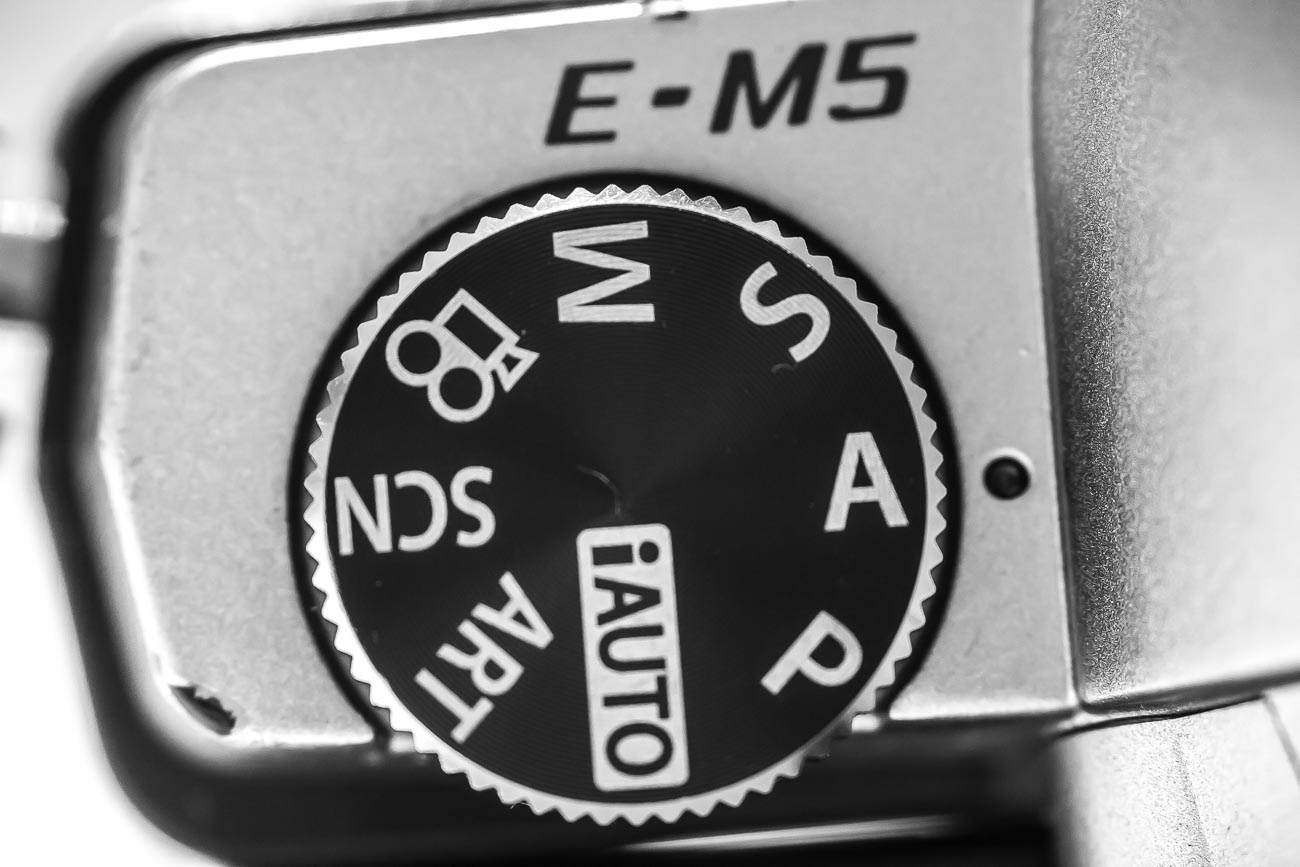
    Usually on most cameras there are a P, A, S and M modes.

    However, on small compacts there usually is only a P mode and on smartphone cameras, even the best ones, they don’t yet have the option to adjust the exposure the “old fashioned way”.

    So what’s with the “old fashioned way”? Well without going into a great deal of details on how a camera works, I’ll explain:

    All cameras have an aperture and a shutter. Both allow light into the sensor but differently. The aperture allows in light by changing the size of its hole, the shutter allows in light by the speed of its movement.

    Having the option of being able to control both or at least one of these is one of the keys to getting great photography.

    So what do all these letters mean?

    P stands for program and is basically a slightly more sophisticated way of shooting in auto.
    The camera decides which aperture and shutter speed to use but you can also weigh in by using what’s called in the industry “shift”.

    A stands for aperture priority and S stands for shutter priority.
    In both these modes you control one whilst the other one is controlled by the camera. Most pro photographers depending on their specialisation will shoot in aperture priority.

    M is where you have complete control you set both the aperture and the shutter speed and is not something a beginner would dabble in until they have goCamera_0216_017t some experience with the other modes.

    Confused?

    Let’s simplify. Basically if you want to take a photo of a product with all the background blurred than you would need to adjust the aperture.

    If on the other hand you want to take a photo of movement, say one of your dance students practicing or performing then you would more than likely want to adjust the shutter to capture the type of movement you want.

    So It’s really handy to have that degree of control.

    What’s that you say?

    You’re only beginning so you just need auto.

    That’s fine however I would suggest that if you really want to create images that represent your brand then at some time in the future you will need a greater degree of control.

    One additional control that goes hand in hand with exposure is ISO adjustment.

    In fact the aperture, shutter speed and ISO are called the exposure triangle.

    That is to say that adjustment of one affects the other two.

    With each camera manufacturer trying to outdo each other, the ISO on a top end DSLR can now be adjusted to over 400,000 which is crazy, as now the camera can take pictures in the dark!

    When you change your ISO setting, you’re adjusting your camera’s sensitivity to light.

    ISO settings are normally anywhere from 100 to 10,000 (or higher), and these numbers have a direct relationship with the device’s sensitivity and therefore the aperture and shutter speed, so a lower setting means you need more light whilst a high setting needs less.

    Rating: A or S is 10/10

    So did you understand all that? I’m happy to clarify anything you’re not sure of.
    Just post in the comments section below. Don’t be shy.
    While you are at it why not subscribe for future updates here.
    You’ll get my free guide “Eleven easy ways to improve your marketing photography”.

  • Why stock images are bad for business!

    Why stock images are bad for business!

    Why stock images are bad for business!

    We all use stock images but are they really good for business? In fact stock images are bad for business!

    Imagine

    You are driving down the road and you see this big billboard with a terrific image on it. You think to yourself that’s a great image and that it looks familiar. Quickly you realise it’s the one you used in a recent marketing campaign.

    Then you take a closer look and you realise that it’s advertising your competitor’s product or service.

    The fine print

    Seething, you get to your office and send a nasty email to the stock agency you used.
    Later that day you get a response that draws your attention to their terms and conditions which basically say that they have no control over how the image is used.

    In other words, as long as they get paid they don’t really care.

    Hiring your own photographer

    Now imagine that you are driving down that same road and you see the same billboard.
    It has a great image on it that’s advertising your business and no one can else can use that image without your express permission.
    Now you may be thinking that you got that image by hiring a good photographer.
    Comment-Anzac March_0411_001[mailerlite_form form_id=7]
    Not necessarily!

    When a photographer conducts a shoot for any business (or wedding or portrait session or any other third party) they keep the copyright. So what that can mean is that unless you have a watertight contract with them, that they are prepared to sign (and then the price will increase) they can resell that image to another business or alternatively a stock agency.

    Now don’t get me wrong I don’t believe that many photographers would knowingly sell an image commissioned by you to your competitor but they, like you, need to make a living.

    But it does highlight the legal minefield that is copyright.

    So what to do?

    Take control

    They only way to truly retain copyright is take the image yourself or have an employee take it. In the former you own the copyright and in the latter provided the employee takes it in the course of their employment, again you as the employer, own the copyright.

    Another good reason to take these images yourself or use a photographer (if you are prepared to pay for some control of the copyright) is creative control.

    The disadvantages of using a stock agency

    Stock agencies have thousands of images. Scrolling through that many, even with the great search engines that most of them have, is time consuming and you could end up settling for second best.

    Of course you could outsource the selection to a marketing company or even the stock agency itself by giving them a brief.

    Again you are giving away your creative control, not to mention the additional expense you will incur. And who’s to say that they will come up with a what you are looking for.

    I know that when I have submitted images along with many other photographers for a stock agency brief, often the client ends up not choosing any image.
    Which is a pain for everyone, especially me, which I why I’m very selective these days but I digress.

    Take your own Stock images

    But, I hear you cry, none of us have the expertise to take really good images.

    That can be taken care of easily, the web is awash with tutorials and tips on how to take great images.

    Off course these are aimed at the amateur photographer who could be looking for information to take great family shots right through looking to carve out a career as a photographer.

    Taking photos (and videos) for business marketing is different and similar in a lot of ways to travel photography. Not harder or easier but different.
    The eye should be looking to make your product or service as attractive as possible sometimes in an obvious way, other times in a subliminal or subtle way.

    Comment-Guadalajara_1010_169Some of the articles on this site are intended to bridge that gap. My goal is to help small business owners raise the quality of both their image and marketing by providing the information that they need to improve their photography.

    Plus I will give options on where are the best platforms are to post or use their images.

    So come and regularly visit my site nickkatin.com or subscribe below to get the latest articles into your inbox and a free guide on where to start.

    [mailerlite_form form_id=7]


  • Why selecting a new camera is like selecting a new date (or TV)

    Why selecting a new camera is like selecting a new date (or TV)

    I’m in the market for a new TV at the moment. We went to a couple of stores and there are countless products with different and arguably the same features.

    Trying to get the showroom staff to give you accurate info is a challenge.
    Like moths changing direction to fly to the light so the sales staff change their song as you look like you are favouring one brand or TV over another. In the end Mr Google helped me clarify what I needed to know. But it’s a confusing experience!

    That got me thinking about buying a camera and it’s as bad or maybe even worse. The thing is, like TV’s and many other products today, there are many cameras of all shapes and sizes. So it’s no wonder we don’t know which one to buy.

    Do I get a DSLR, a Mirrorless, or a top end compact? Which make? Which model? What features do I need….?
    What about lens, filters, bags —- the list is endless.

    And then we’re fed this BS that it’s all about the camera

    “You must have a great camera to get that shot”, I hear all the time. So the pressure is on us to buy the best we can with what we can afford.

    Is it really about the gear?

    Well yes and no!

    gridYou certainly wouldn’t say to a chef that they must have a great kitchen or cooking equipment after eating a terrific meal at their 5 star restaurant.

    And if you did look in their kitchen would the meal been any the less terrific if you found the same tools as anyone else, even those you find in a domestic kitchen.

    Are drivers of Rolls Royce or Porsche cars any better drivers than you or me (assuming you are not one of them)?

    If you’ve only got one device with you that is capable to taking photos whether it’s a phone or a DSLR – then that’s what you’ve got – period.

    You can take great images with pretty much anything provided you know how.

    Having an expensive camera is not directly proportional to the quality of the image.

    In fact cameras of all shapes and sizes are all good. You just cannot buy a bad brand new camera!

    I’ve heard it said amongst winemakers that you can make bad wine from great fruit but you can’t make a great wine from poor fruit regardless of the shiny expensive equipment you might have in the winery.

    However you can make great wine from great fruit without necessarily having the latest, greatest and most expensive equipment.

    Well the same applies to a camera if you have good technique, a good eye and skill then you can make great images with any camera.

    The reality is that even for photographers, who rely on their cameras for their income, e.g. Weddings, Portraits etc. there’s plenty of smaller options than the traditional DSLR.
    So for the vast majority a simple, usable and light camera is more than enough when you know how to use it properly.

    So how to choose the camera you need?

    Well that’s where ‘selecting a new date’ comes in (you were wondering what the connection was weren’t you!)

    You see when you select a new date you’re looking for a good fit, in the dating sense its commonality and probably visual cues. Basically you want to be comfortable in their presence

    Well it’s the same for buying a new camera. When you pick it up it needs to feel comfortable (the camera that is, not the date).

    Does the grip feel good?
    Is it easy to turn to portrait or vertical mode?Your camera takes really nice pictures

    Does the weight seem too heavy, too light or just right?

    If it has a viewfinder, does that fit comfortably against your eye?

    Is the rear screen easy to see? How easy is it to see when you are holding it?

    How easy is it to adjust the dials and access the menu/s?

    This is what you need to look for in a new camera.

    Of course before that you will need to decide on features and benefits, or do you.

    As I said before, it’s not the camera that take the images but you. All features and benefits do is give you more options a lot of which you will never use or use once or twice a year at best. More on features in the next post in this series.

    So a short cut is to decide how much you are prepared to spend, go into a shop and test drive those within your budget, decide on the most comfortable and buy it.

    Now I know some of you will try before you buy in the shop and then jump on the web and buy from the cheapest online outlet. But just remember you wouldn’t be able to test drive it if the shop didn’t exist.

    By all means shop around online but a least give the shop an opportunity to match it or at least get into the ball park.

    So that’s my take on it. What about you?
    Have you purchased a camera recently?
    Feel free to add your tips and opinions below. I would really like to hear them.

    While you are at it why not subscribe for future updates here.
    You’ll get my free guide “Eleven easy ways to improve your marketing photography”.