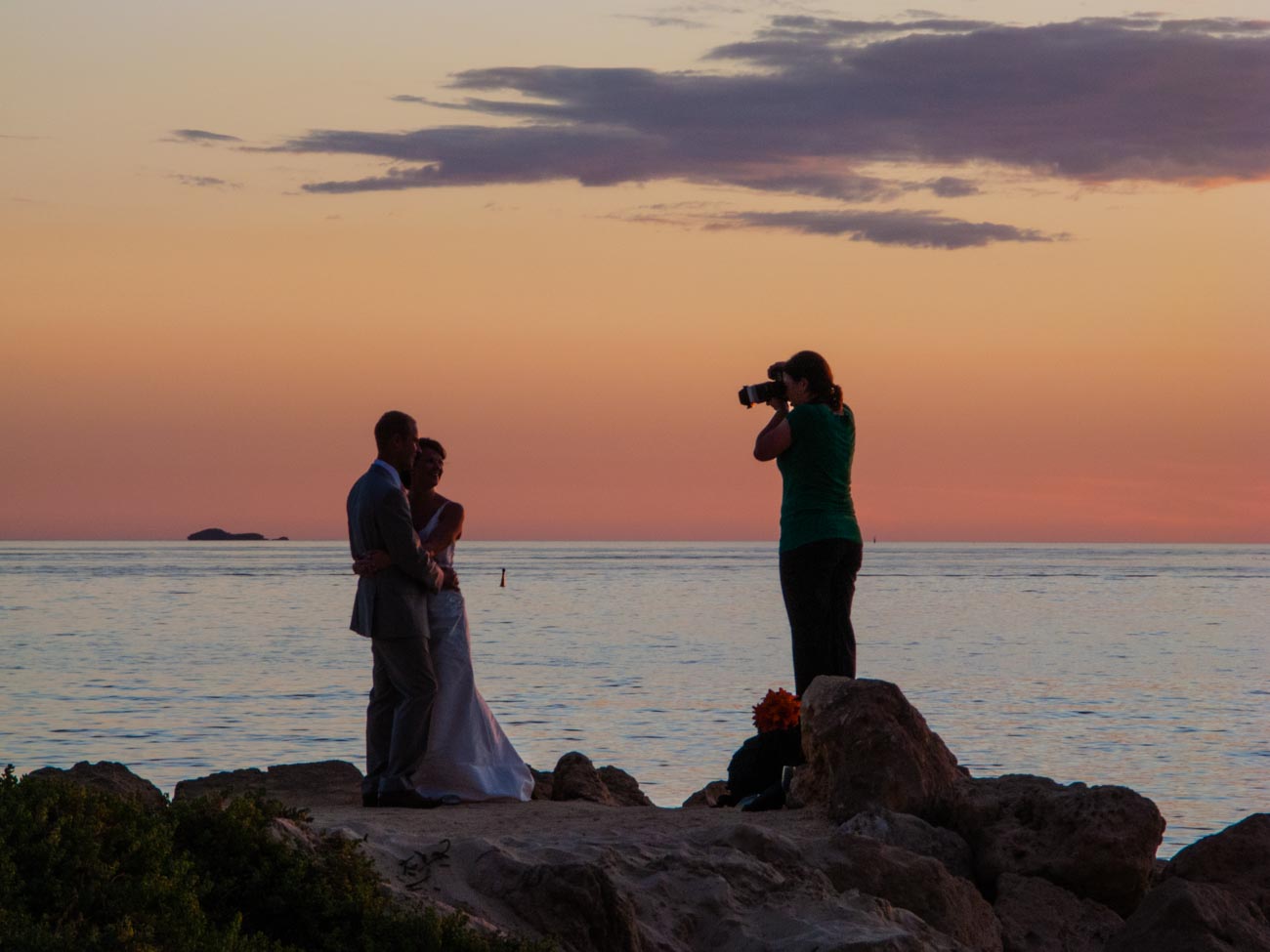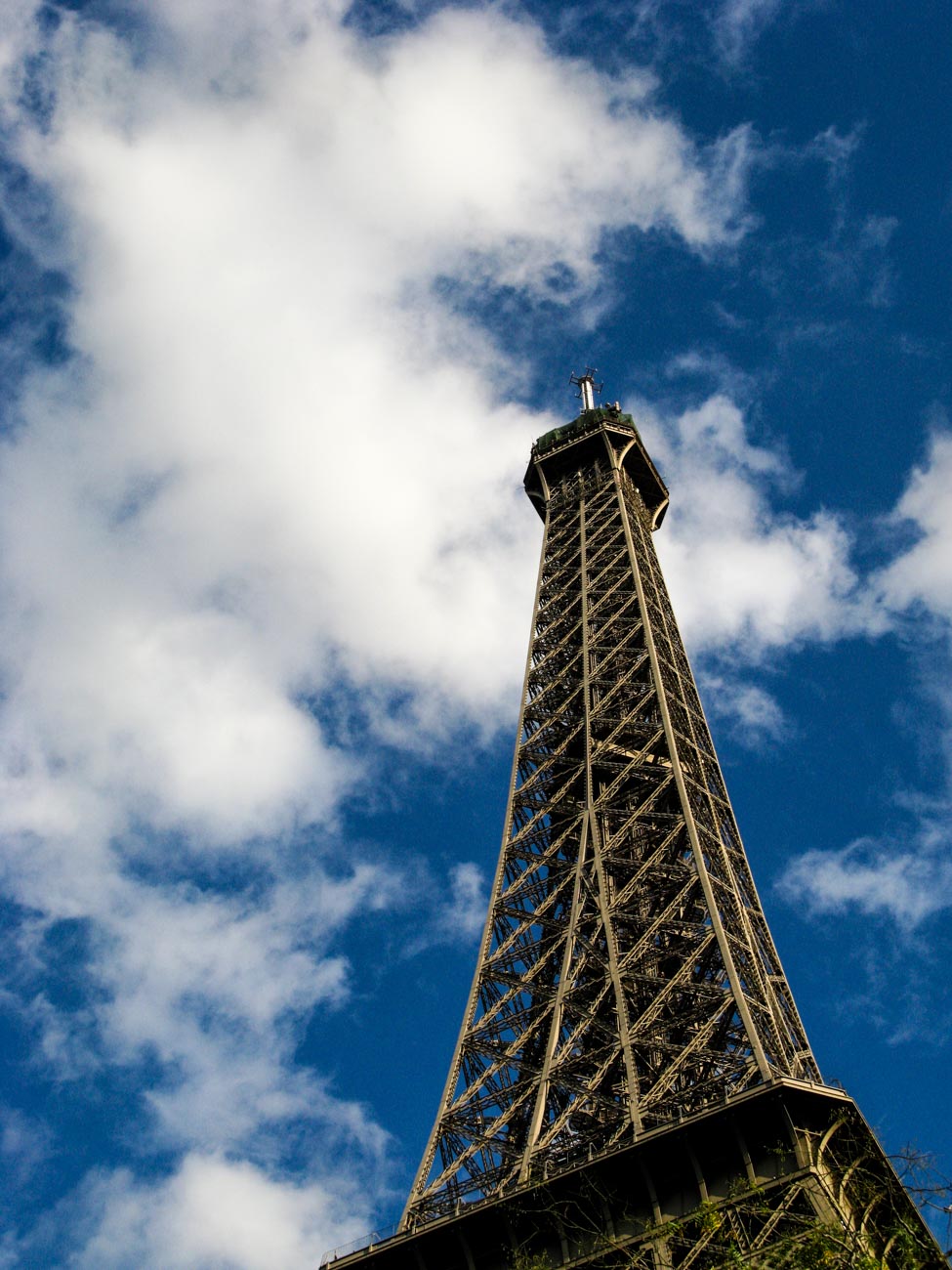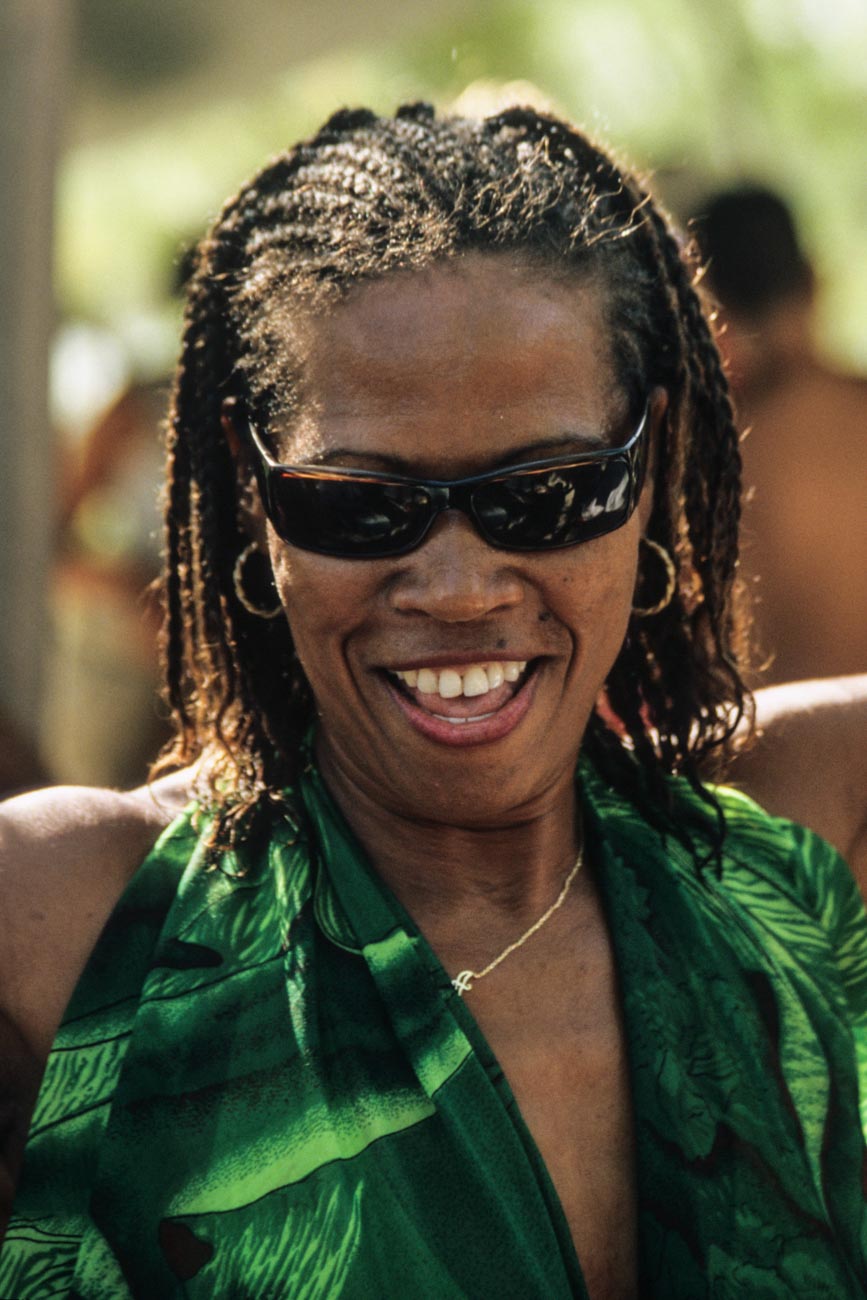
Katin Images Travel Photography

Travel Photos, Travel Photography Tips and Software

Tag: photography

  • An Introduction to Travel Photography

    An Introduction to Travel Photography

    An Introduction to Travel Photography

    Definition

    According to Wikipedia the definition of Travel Photography “is a genre of photography that may involve the documentation of an area’s landscape, people, cultures, customs and history.
    The Photographic Society of America defines a travel photo as an image that expresses the feeling of a time and place, portrays a land, its people, or a culture in its natural state, and has no geographical limitations.
    There are other definitions but those two pretty much nail it.

    History

    Travel Photography, unlike most other genres is a later addition to Photography.
    When Photography was first invented in the early 1800’s few people travelled and for the next few generations any who did were only the wealthy ones.
    The major pioneers in travel photography were explorers who wanted to visually document their experiences whilst exploring.
    But you had to be keen as they had to carry the bulky equipment.
    Not only was the camera equipment itself heavy but, as the frames needed to be developed almost immediately, the photographer needed to have a darkroom and enough chemicals for a small laboratory.
    Of course that all changed when Kodak invented a camera that used a roll of film and then introduced the Kodak Brownie.
    Almost immediately photography was a lot more accessible and therefore popular with explorers and traveller alike.
    But it wasn’t until colour film was introduced that travel Photography became a mass media.
    Even then not everyone had a camera or if they did they didn’t use it whilst travelling.
    Digital photography changed all that. And then Smartphones come along.
    Now anyone who steps outside their door takes pictures. 

    We have millions of images of exotic and not so exotic locations being circulated by social media and other forms of communication.

    The Travel Experience.

    It wasn’t until I went travelling that I took an interest in Photography.
    It was to be a 7-month trip around the world and I felt that we needed to document, as well as we could, our experiences.
    So it was I had 2 very different skills to learn, how to travel and how to take photos of my experiences. It was a challenge, but it was one that I learnt so much from.
    That’s the beauty of Travel Photography. Yet, there are times when you must forget all the techniques and the technical stuff and be in the moment of the experience.
    Knowing when to take that shot or not is a skill in itself.

    That too me is what Travel photography is all about. 

    Genres

    Of course, when you travel there are lots of subjects that you will want to take photos of:

    Landscapes, People, Festivals, Entertainment, Urban, Food and Drink and Wildlife are the most popular.

    Landscape

    Landscape Photography is taking images of usually the area in front of you.
    That can be a mountain range, a field of flowers, the desert, pretty much anything that is of a natural beauty.
    Some manmade objects e.g. a lakeside house or a sailing boat can help with context.

    Reservoir close to Yosemite NP, California, USA is an area of lakes and reservoirs.
    Reservoir close to Yosemite NP, California, USA in an area of lakes and reservoirs.

    People

    Always a difficult one to get right. People move, blink, frown and often, whether posed or not, can assume unflattering positions.
    Taking portraits in different cultures are a great way to get to know locals and customs.
    We are all fascinated by the daily life of those in other countries. Travel Photography gives you the option to capture that.

    Festivals

    The Colour and movement of some of the world’s most famous and not so famous festivals can make great photos.
    Even the local fete can offer some interesting character or scene shots

    Entertainment

    Shopping in the market, Music and Theatre performances are two events that come to mind when taking photos in the field of entertainment.
    But there is also sporting events like a game of footy or nightlife. The latter being particular challenging due to the lack of light.

    Urban

    What is urban? Good question!  I guess it’s Street Scenes, Street Art, Sky Lines, Architecture, both inside and outside and even Light Shows.

    Food and Drink

    There are many food and drink situations. You may want to take some photos of where you are, what you are doing, eating or drinking.  
    In a restaurant, a winery, in a field or at the market.
    Food and Drink is quite a diverse genre. But it can also be the most creative and satisfying, especially if you are having a great experience at the same time.

    Travel Photography
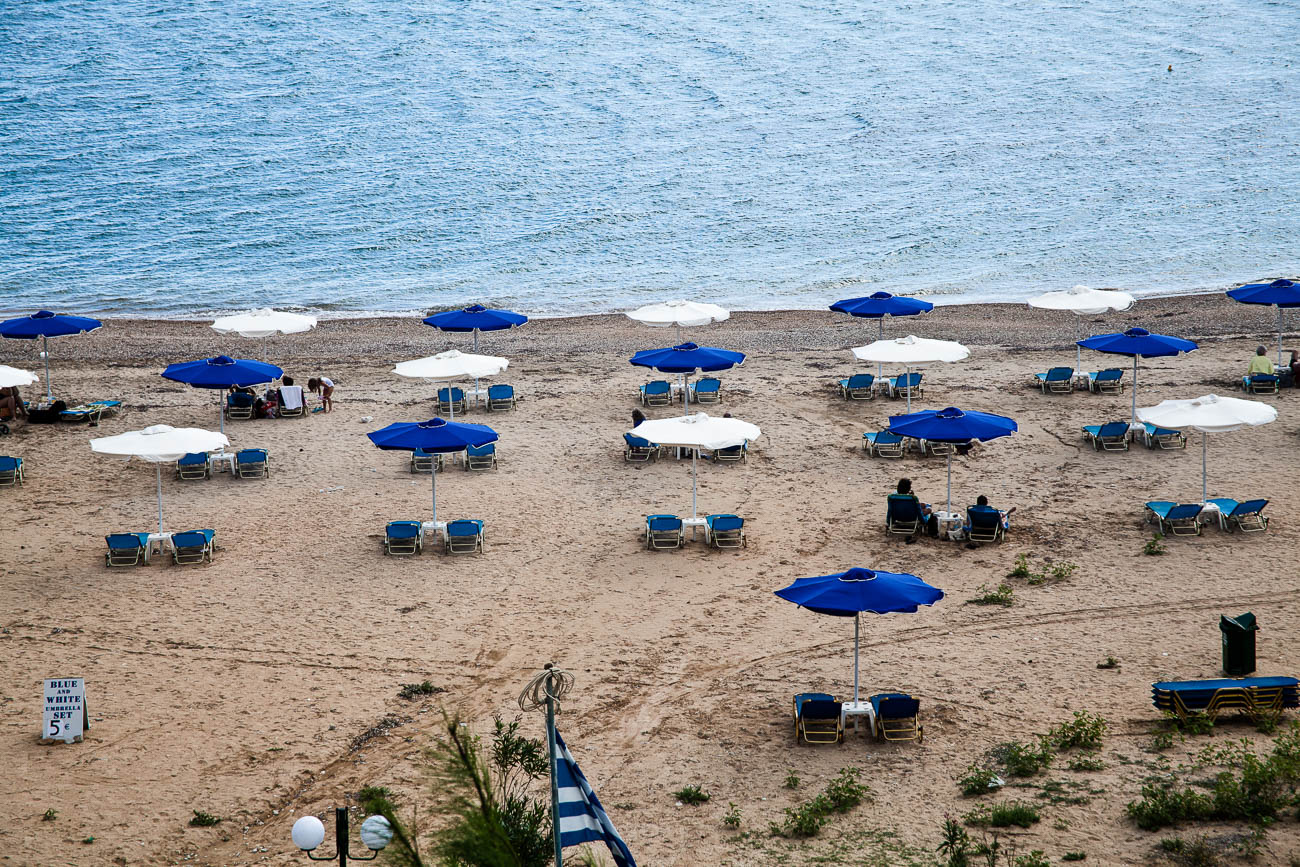
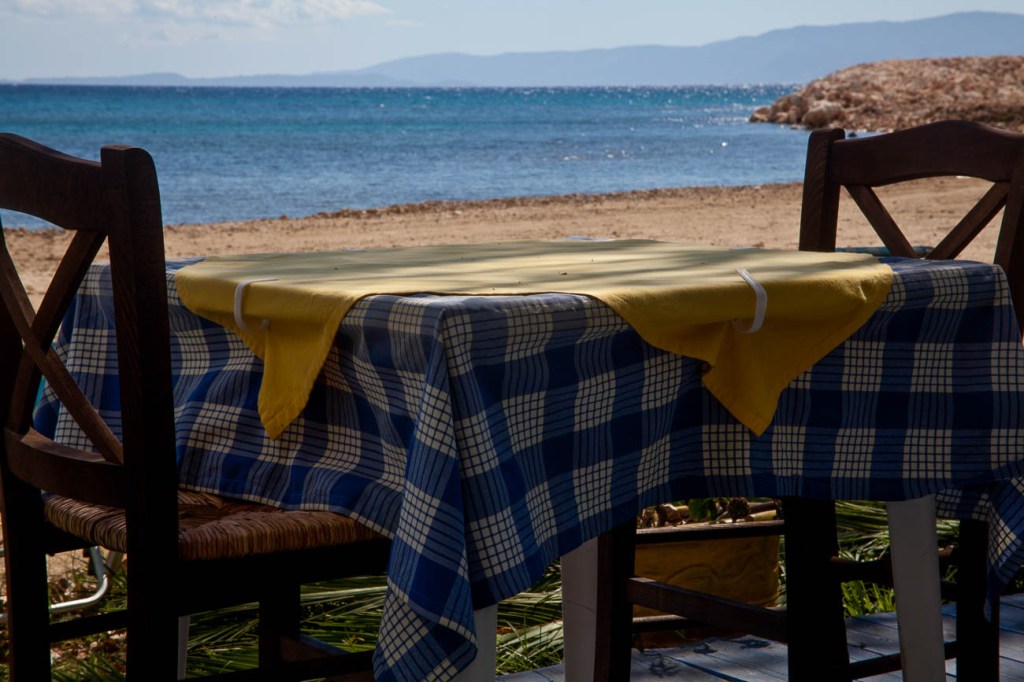
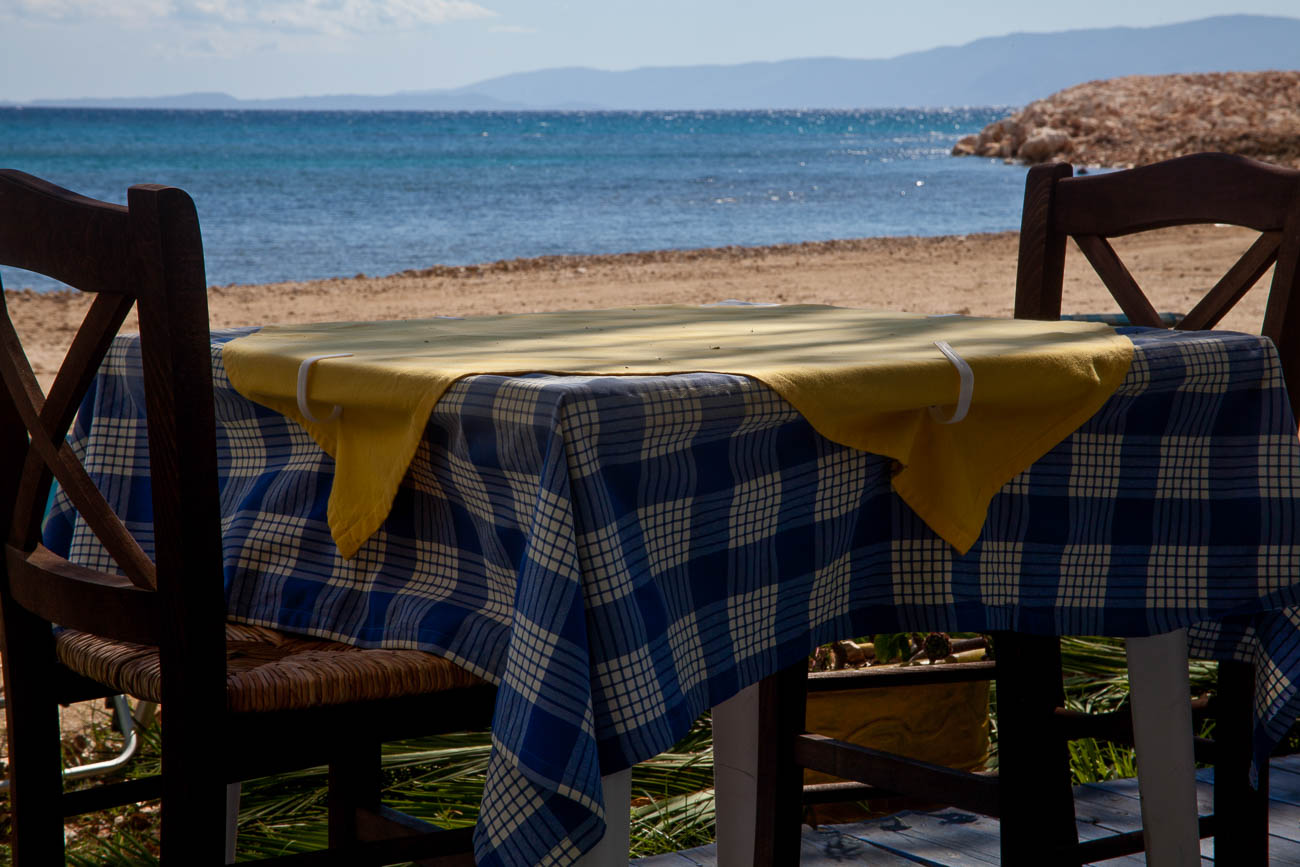
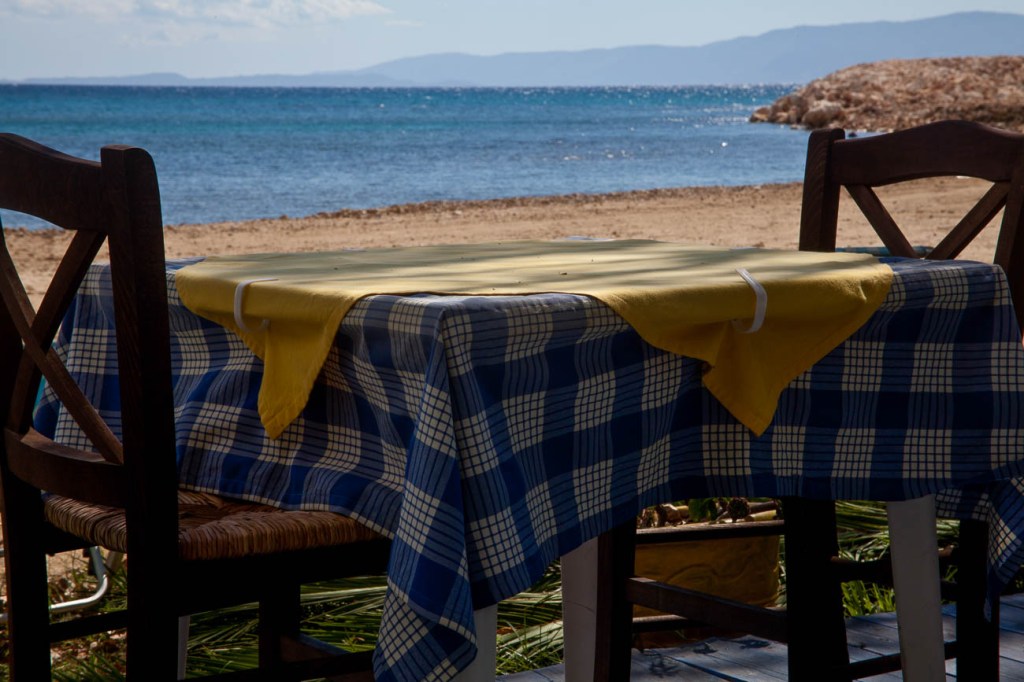
    Table on the beach. Kefalonia. Greece

    Wildlife

    Who doesn’t want to capture that great shot of a Lion or Leopard in the wild somewhere in Africa.
    But there is more to it than the big 5 (the big 5 is Lion, Leopards, Rhino, Hippo and Elephant).
    Even going to a Zoo or Sanctuary can provide some great photographic opportunities.
    There are various types of environment for grabbing a shot or 2 of wildlife. Marine, Forests, National Parks even the Urban Environment can have wildlife.
    But be wary of two things, firstly your safety is paramount, don’t be that person who steps outside the car in a Lion park.
    Secondly, wildlife photography is challenging.
    There are photographers who have devoted their lives to taking great wildlife shots. They will spend days even weeks waiting for that ‘one’ shot.

    Mother Nature

    Travelling over time means you will experience all types of weather which can make it difficult to use your camera equipment.
    Rain, Heat, Cold, Snow, Dust they are a few extreme weather extremes that we all will experience in our travels.
    But even though taking photos in such conditions will take you out of your comfort conditions, often it will be well worth it.
    So, don’t run for cover (unless of course your life is in danger) embrace the challenge.

    By copyright I don’t mean your copyright. More and more their famous landmarks (and People) want to control their image.
    For example, under French law it is illegal to take photos of the Eiffel Tower’s light show at night.
    Of course, we’re not all going to check on every possible landmark but it’s worth a quick google on a big-ticket item. 

    Photography Techniques

    So you now you know the sort of experiences that you will want to document visually, how do you do it successfully?
    Well firstly, you will never stop learning! I’ve been shooting for 22 years and I’m still learning.
    That’s not to say you can’t learn to take good even great pictures straight away on your travels.
    It takes time to know what to do in certain situations and as you have seen there are many genres that make up Travel Photography.
    I hope that this will motivate you to read more from this site and support some of the manufacturers or service providers that I recommend to help you.

    Additional skills

    Of course, it’s not all about techniques and composition.
    If you want to take Travel Photography seriously you need to also be prepared some of the time to:
    Plan but be flexible
    Be reasonable fit, so that you have the energy to walk for hours at a time
    Be Patient enough to wait for the right moment to get that shot.
    Develop good social skills so that you can converse with many people, often in a language which you can’t speak
    Be creative
    Be open to sharing. After all it’s no good taking photos if no one is going to see them!

    In Summary

    This introduction to Travel Photography should give you a taste of what’s involved in improving your travel or holiday experiences. 
    You can see that gaining the skills that allow you to take good or, indeed, great photos will help expand your travels and give other people pleasure.
    Travel Photography is about the gear, the composition and being creative
    But it’s also about being in a place that’s not your home, adding depth to your experience and bringing home great photos that will live with your memories for a very long time!

    Just click on any of the above images to view a larger version and for other options

  • Why You Need a Professional Selfie.

    Why You Need a Professional Selfie.

    We all know that a picture paints a thousand words. And we know that images are important to our marketing, particularly our online presence.

    Why is it then that often the one image that we should have, is missing or at best average?

    Which image is that? The SELFIE or as it used to be known as, the self-portrait.

    When I visit a website I usually go straight to the about or start here page.
    It often surprises me how many about pages make no mention of the people behind them.
    For whatever reason they have no human images.

    In my many years of sales and marking there has been one truism people buy from People.
    Usually people they like but most certainly people they trust and know something about.

    There has been a lot of testing and research that confirms a human face on about page increases trust.

    When you have trust, the more likely visitors are to stick around and consume your content and/or buy your stuff!

    The about (or start here) and contact pages are the usually the most visited pages on a website.

    2-people-buy-from-people

    So if you don’t have a picture and some sort of bio you are telling visitors to your site that you are anonymous.
    We as human beings tend not trust anonymous.

    Sure sites like Amazon or Microsoft are anonymous but they have multimillion marketing budgets that go a long way to overcoming their anonymous disadvantage.

    So make sure you have a picture of yourself and your key personnel on your website.

    So the first 2 steps to think about are:

    1. What sort of self-portrait do you think represents your brand?

    A financial adviser or lawyer may want a more conservative head shot. Or they may want a full length portrait with business like clothes like a jacket and trousers.

    A social media site may wish to convey a trendy relaxed image.
    So it may decide that, rather than have a headshot, an image of its employees being active may be better.

    A tradesperson my want to have an image of themselves in working gear with a tool as a prop.

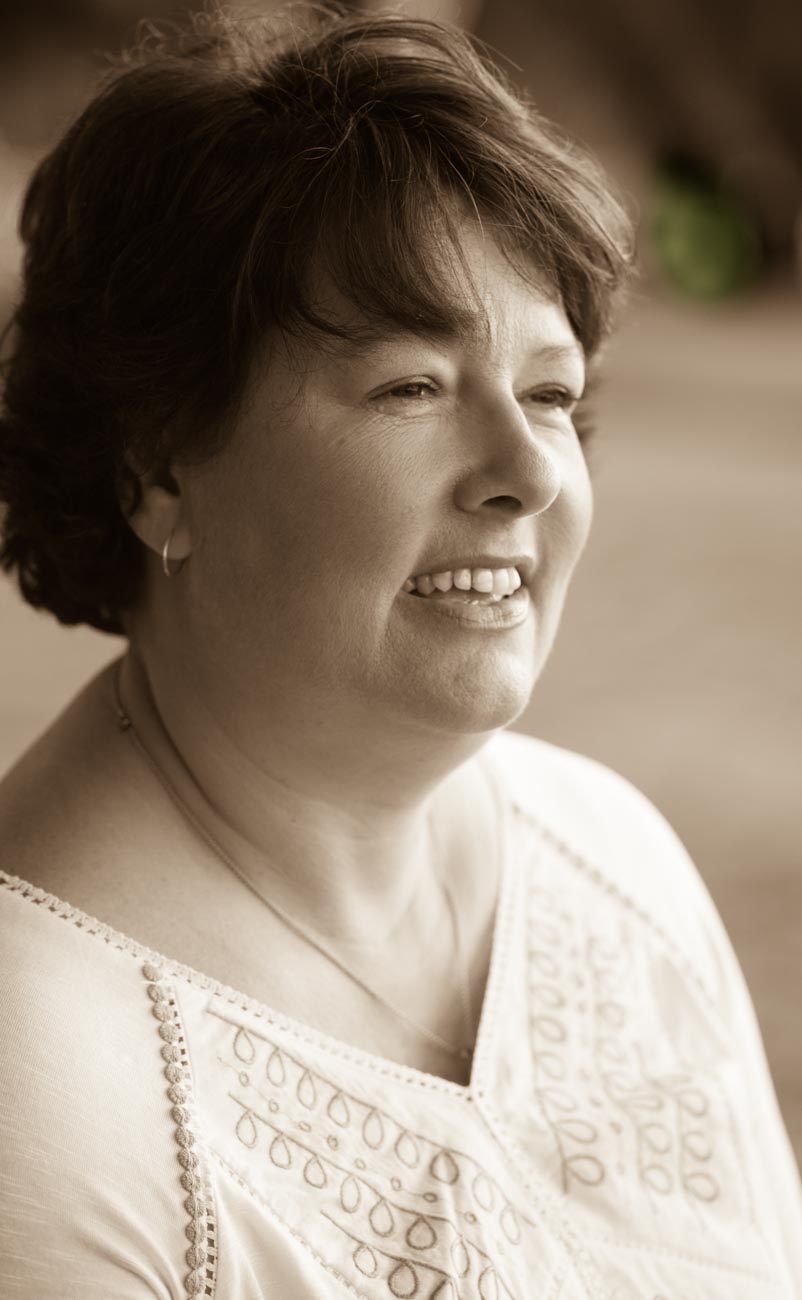
    Self portrait

    Real estate agents tend to want half body (torso and head) shots.

    Maybe you want black and white or sepia (a reddish brown hue that resembles the effect of aging in old photographs) as a point of difference.

    2. What are you using it for?

    Well as I said earlier the priority should be the about page of your website.
    If you have a team then make sure they too are on that page which could easily be a separate page underneath the main about page.

    Social media profiles are also pretty important. They show the human touch and are more likely to attract engagement

    You may also wish to use it for some printed marketing material like flyers and business cards.

    If you have been featured in publications, then a great head shot.
    Most publications, primarily due to the cost, are moving away from using a photographer.
    So having your own portfolio of self-portraits can be very useful

    Maybe you’re thinking really big and looking to get your face on a billboard.

    Whatever you are using it for make sure you take plenty of images, trying different poses and maybe different locations.

    And by the way, there’s no rule that says you have to use the same images across the all platforms and marketing material.
    You may want to convey a different image on your social media accounts than say, your business card.

    Why you are at, why not stick a ‘selfie’ on your contact page. It makes it feel more personal.

    So you can’t really take too many!

    So what do you have? Do you have good ‘selfies’?

    Where have you posted and used them?

    Please leave the answers in the comments below

  • 8 Tips on how to use a Smartphone Camera

    8 Tips on how to use a Smartphone Camera

    8 Tips on how to use a Smartphone Camera

    8 Tips on how to use a Smartphone Camera
    8 Tips on how to use a Smartphone Camera

    Smartphones are amazing things. You can live your whole life on one. From doing your banking to checking your email to turning on your lights; hell! it even talks to you now!

    It’s a great device for managing almost anything on the go.

    The one thing that it was lagging on was the camera. But over the last 2-3 years that’s all changed.

    Samsung and Apple lead the race on this but Google, Nokia and HTC are catching up quickly.

    Is the Smartphone as good as a DSLR or Mirrorless I.e. Interchangeable lens camera or high-end compacts?

    Not yet.

    The quality of the image and more importantly the flexibility and options are not there yet and whilst I’m reluctant to say it, they may never be.

    So how do you get the best images from that small device you have in your hand.

    Here’s 8 Tips on how to use a Smartphone Camera

    1 Hold the camera still

    In my recent article How to hold a camera correctly there is some detailed information on how to hold a smartphone camera but it’s worth repeating some of that here:

    Most smartphones these days have the option to operate the shutter with a physical button like a volume control instead of tapping the screen.
    So, if you have that option then use it for the landscape position. It’s a big more awkward in the portrait position so the virtual button is better to use in most situations

    Tuck in your elbows and bring it close to you. Holding it away from your body makes it much more difficult to hold still.

    Use both hands. It gives me nightmares watching some people take photos one handed.

    In low light use a Tripod. I love the little Joby GripTight Micro Stand. It folds down flat

    2 Turn off that flash

    Ever taken a picture of a loved one and they look like a rabbit caught in headlights. Yes. Well that’s cos you had the flash on.  

    As with any camera with a built-in flash they are not in the right position for most shots. So, if you can, avoid using it.

    3 Familiarise yourself with the settings

    These days the smartphones come with lots of different settings.

    They are there to give you options rather than just leave it on auto.

    Nothing wrong with auto of course but if you can improve an image by using a different setting then why not?

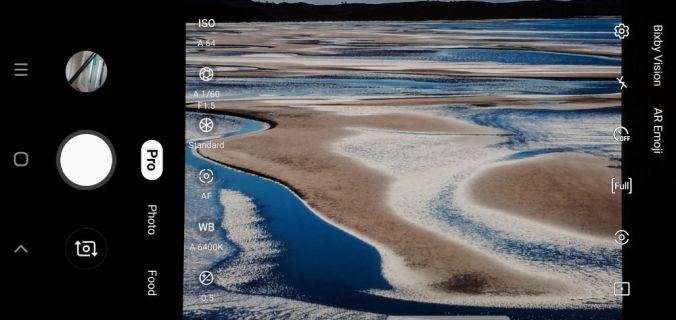
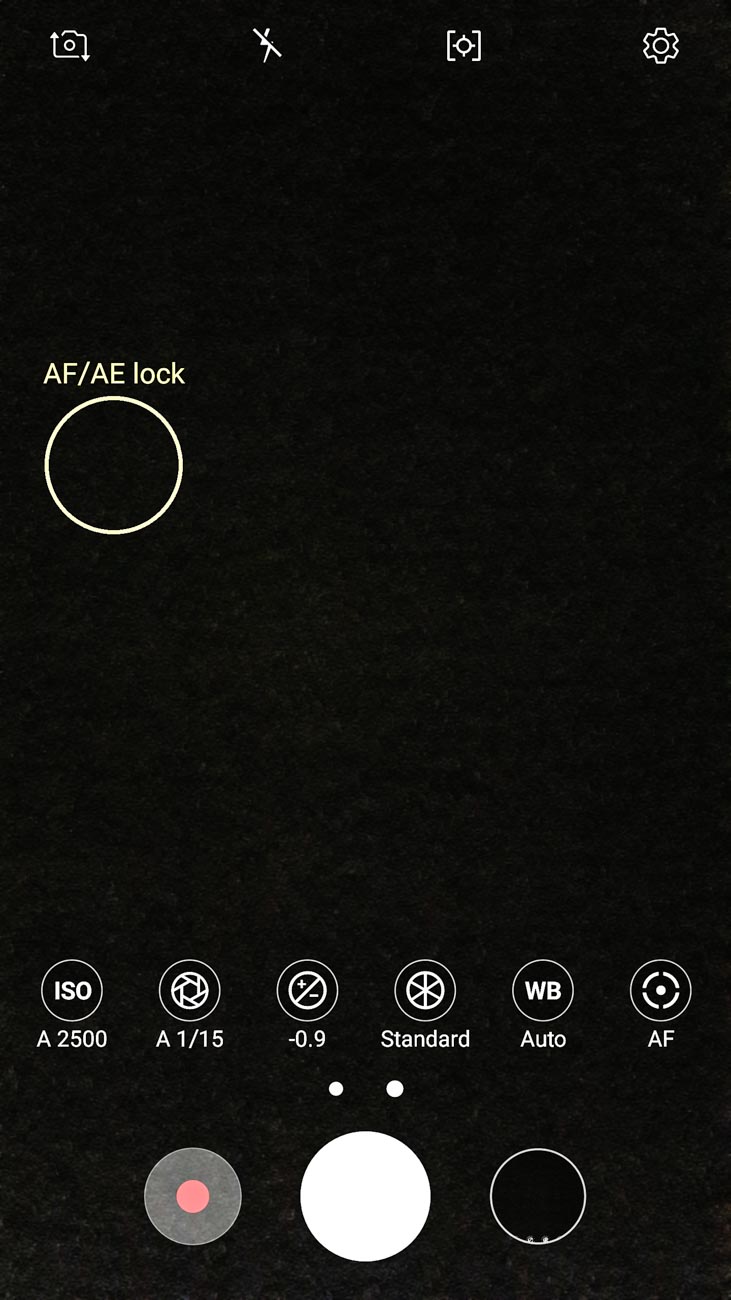
    For example, the Samsung Smartphone camera has a “Pro” mode. This allows you to change the ISO, White Balance and shutter speed amongst other things.

    8 Tips on how to use a Smartphone Camera
    Samsung Galaxy Pro Camera Settings

    4 Use apps

    The Camera Apps for the smartphone, as I mentioned before in 4, are improving and coming up with more ways that allow to you control your image.

    However, there are a number of apps out there that not only give you ways of filtering and editing but shooting as well.

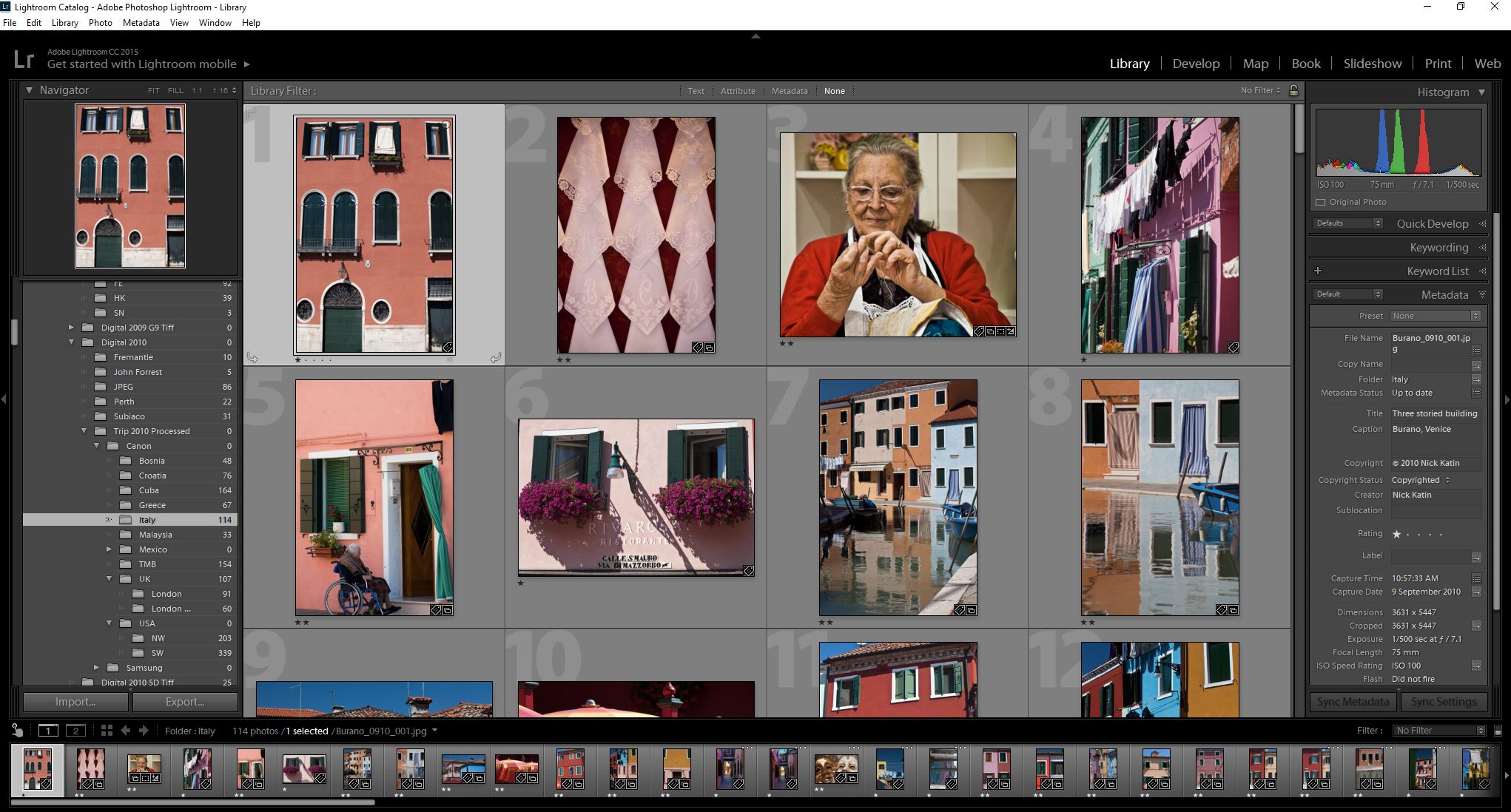
    My favourite is Lightroom but you need to have Lightroom on a desktop or Laptop for it to sync to.

    What I like about is that it allows you to shoot in RAW using the Adobe DNG format. That way when you sync to your desktop version you have much more flexibility in editing.

    8 Tips on how to use a Smartphone Camera
    Lightroom Library View

    5 Photo size

    Now you should always shoot with the maximum size selected so that you have options on the size print you can have.

    The camera setting will allow you to choose this so select maximum size id if you are only sharing by text or on social media. Sharing apps have the algorithms necessary to automatically reduce the size.


    6 Watch your storage

    Once you start increasing the size of your photos then storage can be an issue.

    But these days there are plenty of ways to overcome this. The obvious one is to increase your storage with a mini SD or equivalent.

    However, some phones won’t allow you to do this so cloud services are the next, in fact they are probably the best, option. I mentioned Lightroom earlier.

    When it syncs with the desktop version, it downloads into a folder on your hard drive.

    Other more well-known ones though are Google Photos, Dropbox, iCloud or OneDrive.

    So, once you’ve uploaded (usually you set the service to do this on auto) delete the ones you don’t need on your smartphone.
    You should be able to view the photo via the app rather than your gallery.

    8 Tips on how to use a Smartphone Camera
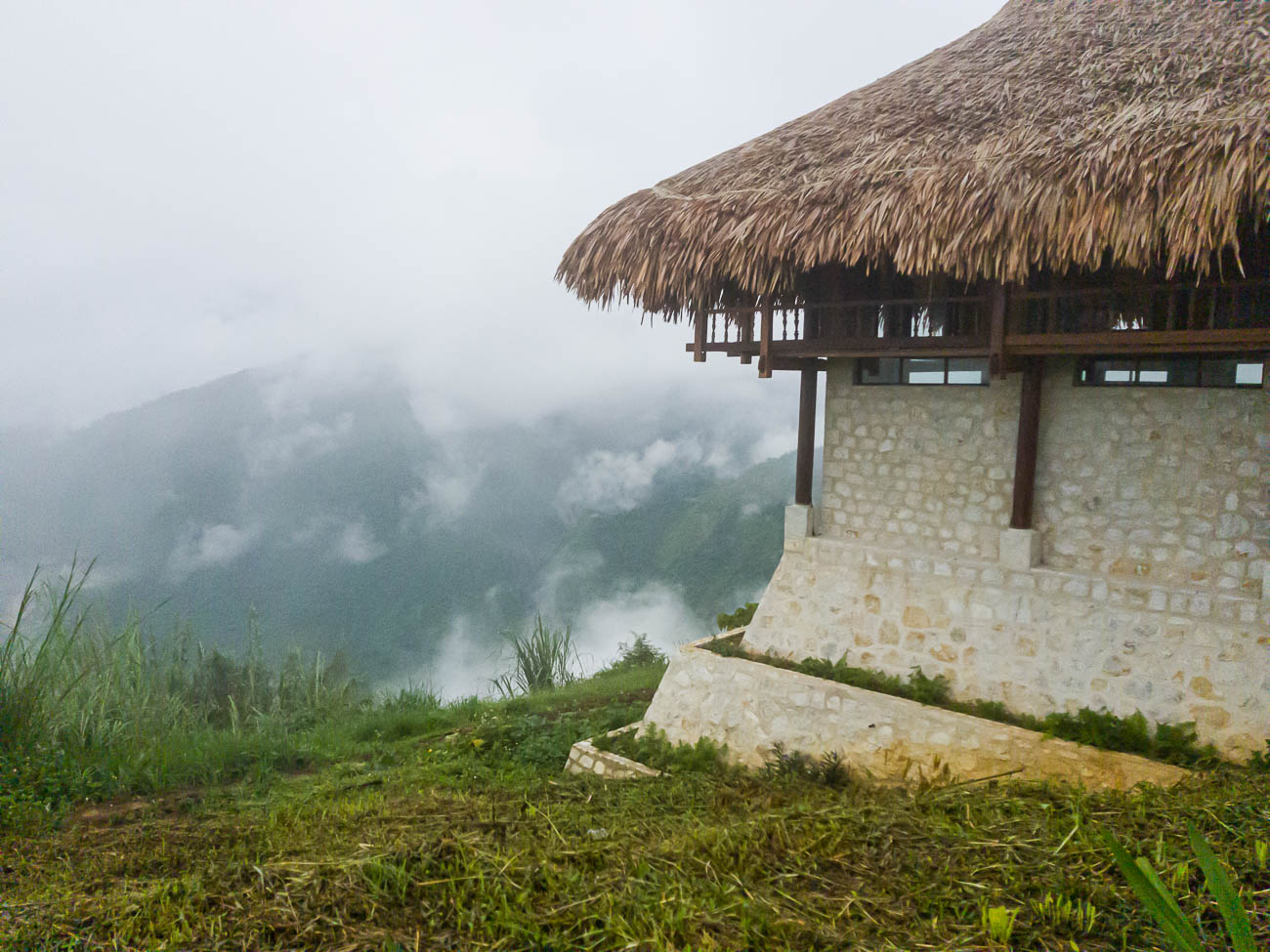
    Sapa Mountain Resort Vietnam. Taken with Samsung S8

    7 Remember that the Camera Lens is at the top of the Phone.

    This is something that can be confusing.

    Usually the Camera Lens on a Smartphone is, when looking at it vertically or in the Portrait position, about 25mm (1”) from the top.

    Not a problem if you are taking what you see but if you are mounting it on a Tripod or propping it up just bear it in mind otherwise you will end up with a lopsided photo or you might not capture what you wanted.

    8 Forget Bokeh unless you have the latest Model

    Bokeh what’s that? Well it’s the picture of the flower with little or no focus in the background but a good focus on the flower.

    I’m not going to go deep into that here but if want that ‘effect you need to find a decent app that will do it after the shot has been taken. Alternatively the latest smartphones such as Googles’ Pixel, Samsung S10 or the iPhone X etc. have duel or triple lens with some grunty alogoritms that will create that bokeh effect. However outside of those you are not going to get good results with a smartphone when you attempt to get that sort of image.

    The sensor is just too small.

     However, I did say you can use an app. These apps can be easily found but have varying reviews and I haven’t really found one that performs as well as a DSLR or Mirrorless camera for Bokeh.

    The problem is that they simulate by software and that is a long way from being perfect – Yet!

    8 Tips on how to use a Smartphone Camera
    Wildflower Kings Park Perth

    So, in conclusion if you follow some or all of these tips, you should end up with a half decent image

    Summary for 8 Tips on how to use a Smartphone

    • 1 Hold the camera still
    • 2 Turn off that flash
    • 3 Familiarise yourself with the settings
    • 4 Use apps
    • 5 Photo size
    • 6 Watch your storage
    • 7 Remember that the Camera Lens is at the top of the Phone.
    • 8 Forget Bokeh unless you have the latest model

    Remember if you want to take great travel photos

    • that you can share and display.
    • that help you relive your travel experience
    • that give you a chance to have your travel photos published

    then sign up below and subscribe to my exclusive Travel Photo Tips Newsletter.


  • How to Hold a Camera Correctly

    How to Hold a Camera Correctly

    How to Hold a Camera Correctly

    How to hold a camera correctly
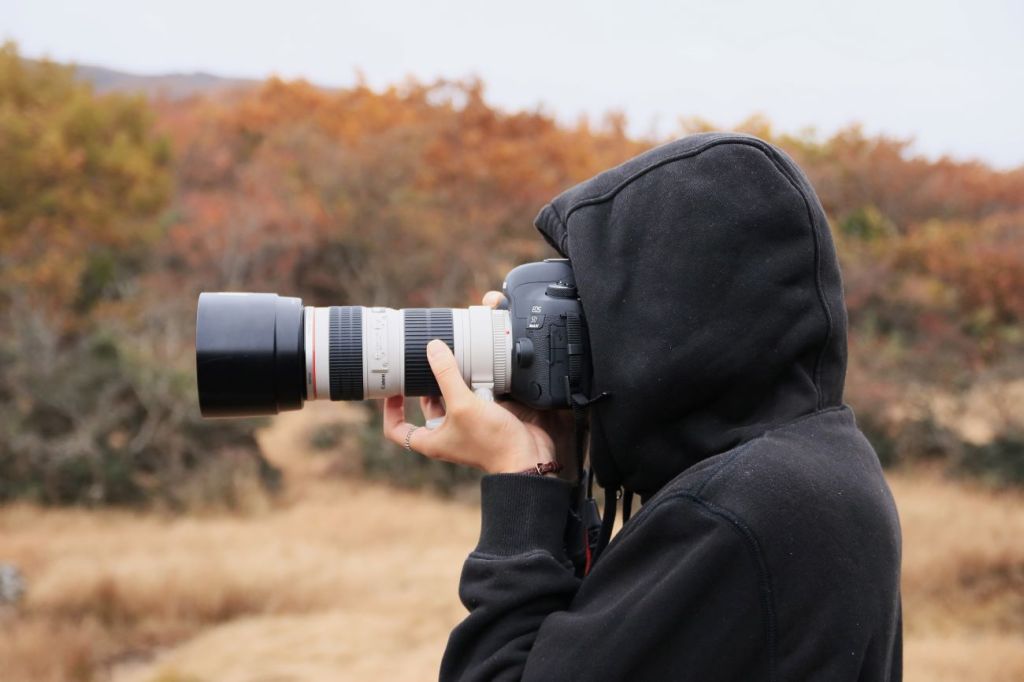
    How to hold a camera correctly (Photo by Hyunwon Jang on Unsplash)

    So, you think you can hold a camera or smartphone correctly?
    Well how do you know?
    In this article learn why camera shake can be avoided with a little of knowledge.

    Take a good look at your photos.

    No, not on the camera or phone screen but on your PC, Mac or Laptop. Even a tablet is better than a smartphone or camera screen but the bigger the better.

    Now does it look really sharp or does look a little bit blurred (the industry phrase is “soft”) in parts or may even a quite a bit blurred?If so, there is a good chance you are not paying enough attention to the fact that a camera moves when you hold it. Now that’s not the camera moving on its own but you moving it.
    Got It?

    Techniques

    Now there are several techniques to overcome this but I’m going to basically cover how you should be holding your camera and smartphone.

    Camera with a Viewfinder.

    • If it has a view finder – then use it!
    • When you use the view finder you are putting the camera up to your face and therefore bracing it on your face.
    • Now to add to that, tuck your elbows in against your side.
    • Depending on the weight of the camera, grip one side with one hand usually the right where the shutter button is and the position the other hand underneath the body or if it’s a fairly long lens then under the lens. .

    Camera with no Viewfinder

    Ok so it doesn’t have a viewfinder or you don’t want to use it!
    If either one of those is you. You need to know that:

    • The overwhelming majority of people taking pictures using the view finder do not hold it correctly
    • And consequently get pictures that are ‘soft’.

    If you have studied physics you will know what the pendulum theory is.
    Holding the camera at arm’s length creates a pendulum effect and ‘soft’ or blurry photos unless the light is very good and you have a high shutter speed.

    So just like using the viewfinder tuck those arms in against your sides and bring the camera closer to your eyes.

    • Again, depending on the weight of the camera, grip one side with one hand usually the right where the shutter button is and the position the other hand underneath the body or if it’s a fairly long lens then under the lens.
    • Ideally you want to stand with your legs shoulder width apart so that you well grounded.
    • If there happens to be a handy surface, say a wall, rest the camera on that.
    • Alternatively you can support yourself against a vertical surface such as a tree or a wall if practical.
    • The portrait position is similar for both the viewfinder and rear screen.
      You just need to decide which side is more comfortable for the shutter button. The shutter speed at the bottom is the most practical so that you can use the bottom to help support the bottom of the camera.

    How to hold a camera correctly
    Camera Holds

    The Smartphone

    • Most smartphones these days have the option to operate the shutter with a physical button like a volume control instead of tapping the screen.
      So, if you have that option then use it! Especially for the landscape position.
    • As with a camera most people using a smartphone camera often don’t hold it correctly. So tuck in your elbows
    • Use both hands. It gives me nightmares watching some people take photos one handed.
      With a smartphone, you need to use 2 different handling techniques.
    • In the horizontal or landscape position hold it with your hands in the same spot on each side.
    • With whatever hand you are using to press the shutter button make sure you have that trigger finger free so that you can tap the virtual shutter or press the physical shutter button.

      Now the vertical or portrait position is bit trickier.
    • If you are using a physical shutter, then hold the phone with whichever side it’s on and curl it around the back the lens with the thumb operating the shutter.
    • The other hand can hold the bottom of the phone with the index finger and thumb.
    • For a virtual button the difference is that it’s the hand at the bottom that presses the virtual button and can’t in that case grip the bottom of the smartphone at the same time.
    • When in portrait mode, it’s often better to use the virtual button.

    How to hold a camera correctly
    Smartphone Holds

    Other Situations

    • In some situations, you may not be physically vertical.
    • You may have to lie or sit to take the photo.
    • If you are lying down, you have the added support of the ground or floor but you need to rest the elbows on the ground or you will end taking a steady image of the ground which may not be your intended subject.
    • If you are sitting, then usually there is something you can rest the camera on.

    Other ways to avoid that Blurry or soft Photo.

    • Use a tripod,
    • Have image stabilisation turned on (if fitted),
    • Ensure that your shutter speed is fast enough,
    • Use the timer
    • And so on. 

    But this piece is just the basics on holding the camera.

    More on those tips on the next post.

    If you have any tips, please don’t be shy just stick ’em in the comment box below?

    Is there anything else that you want explained? Again just ask.


  • A Travel Survival Guide for Photographers

    A Travel Survival Guide for Photographers

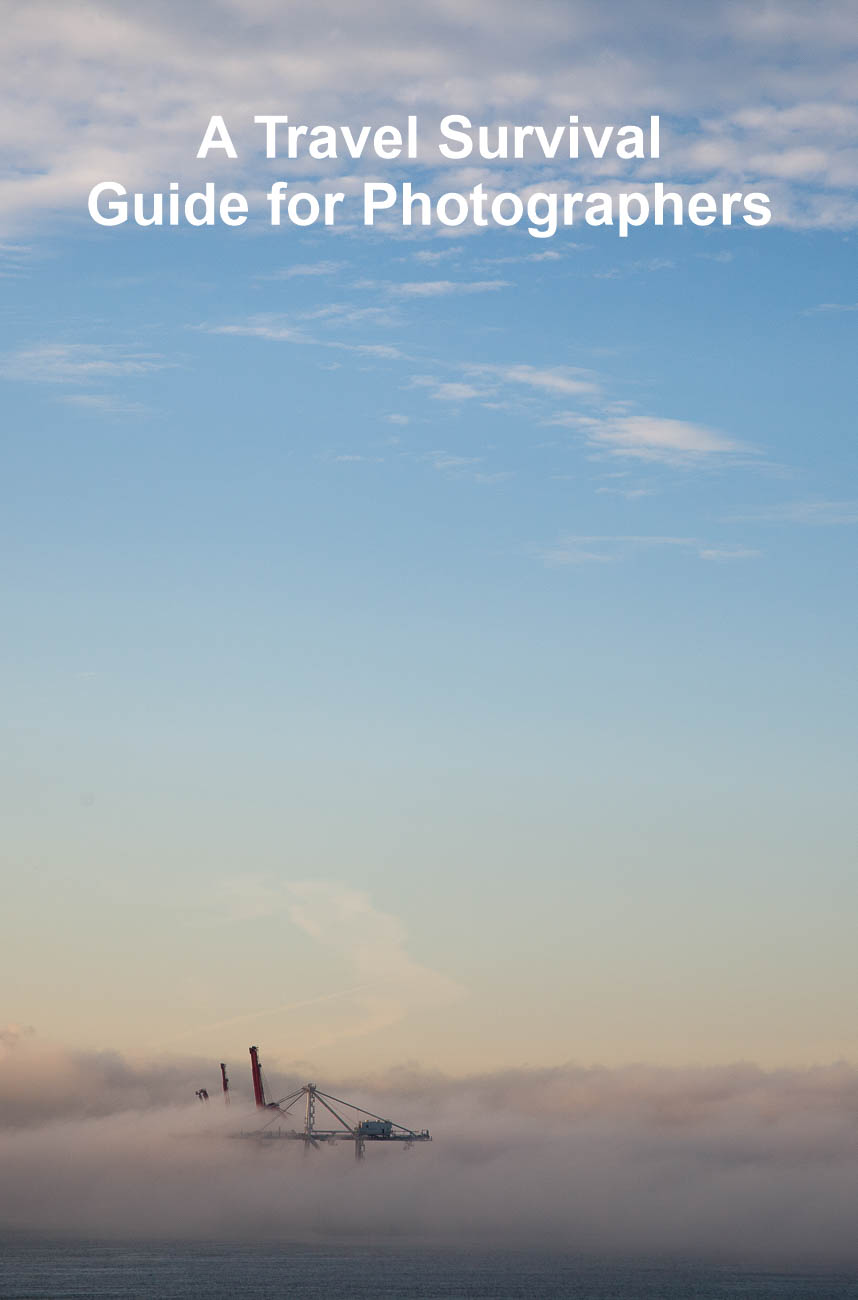
    Elliot Bay, Seattle Washington USA. Click on image for a larger view and other options

    When we travel there are lots of challenges on the road. And the longer you travel the more challenges you face. In this travel survival guide for photographers, I cover most of the common challenges. I also cover a few of the least know but equally as important challenges as well


    Weather

    We have no control over the weather whilst travelling. But we do have control on how we manage it. There are various situations that need us, as potential photographers to have our wits about us. So, we need to adopt some special precautions.

    Cold

    A few years back I went on a Polar Bear safari near Churchill in North East Canada. It was November and the first day or so was at 5°C which was reasonably mild.
    The cold came quickly! It reached around -20°C for the next 3 days.

    What I learnt is that whilst we could be warm inside the lodge, we couldn’t afford to have our cameras warm. It was OK to bring them in overnight, although even then they had to be in the coldest part of the lodge.
    But when we had much shorter breaks, like lunch time, we had to leave them hanging up outside. Why?
    If you wear glasses, then you will know that when you walk into a warm building from a cold outside area, your glasses steam up.
    The same happens to your camera except it will need a lot more time for the moisture to dry.
    If you took your camera back out after only half an hour or so and the temperature is low enough, the moisture will freeze.
    What can happen then is that it can damage not only your lens but your sensor as well, not to mention other working parts.

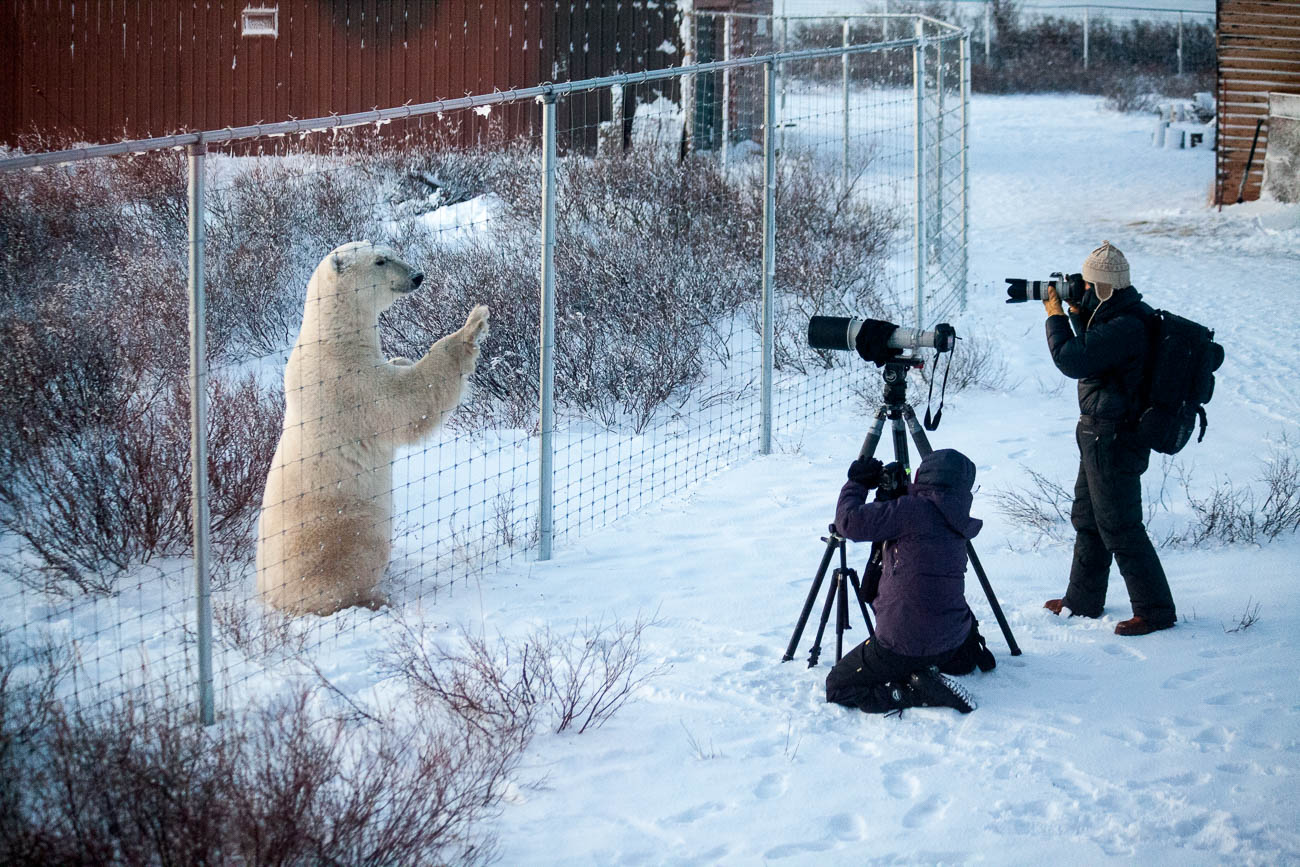
    Polar Bear outside Diamond Creek Lodge near Churchill Canada. travel survival guide for photographers
    Polar Bear outside Diamond Creek Lodge near Churchill Canada

    So, be very careful with your camera equipment and I mean a smartphone as well, in very cold weather.
    Give your camera plenty of time to acclimatise in both the heat of your digs and the outside cold.

    Humidity

    Leading on from cold challenges, humidity can also be a danger to cameras.
    Again, to use the same analogy of glasses but now in reverse. If you go outside from an airconditioned space into high humidity, chances are that they too will fog up.
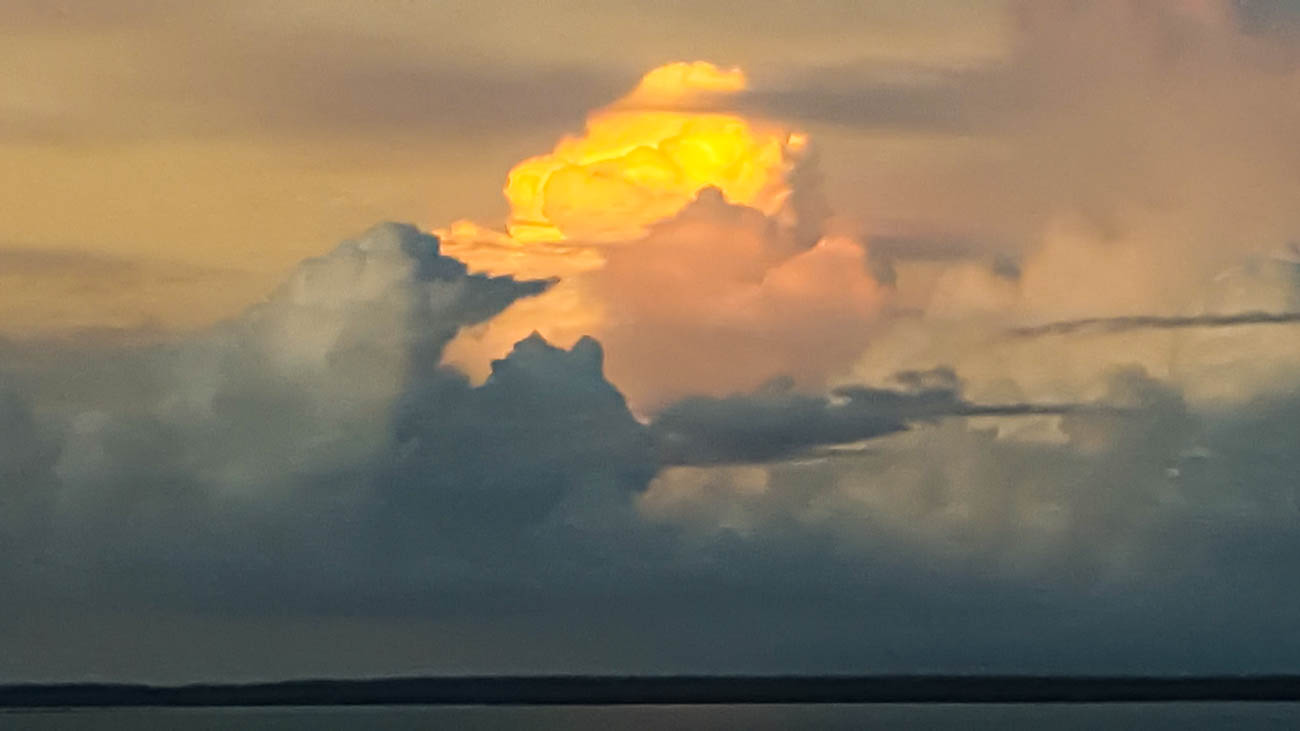
    When I was in Darwin in the North of Australia I was out walking early in the morning.
    I went to take a shot and guess what?
    You guessed it.
    What I saw through the lens was just fog! I had forgotten that that whilst it didn’t seem too humid, there was enough moisture in the air to condense onto the cold lens.
    It took around 10 minutes for it to clear.
    I also had my smartphone with me which also had fogged up.
    But a small lens clears a lot quicker, so I didn’t end up missing the shot!

    Sky above Darwin, Australia, during the the wet season

    So how do you prevent this from happening?
    Get organised!
    If you know you are going to go outside into the humidity with your camera, put it out there at least an hour before you intend using it.
    You can do this by taking it outside for coffee or breakfast or putting it out onto your balcony.

    Heat

    In the heat and by the heat I mean anything above 30°C, everything gets hot.
    Whilst it won’t necessarily affect its picture making capability, Cameras don’t like heat.
    Most cameras are black which means they absorb the heat and can then be too hot to handle.
    Not only that but the electronic circuitry in a camera or smartphone is not made to withstand high temperatures.
    Whilst most cameras have an operating range of 0°C – 40°C, the recommended temperature for using a camera is a mere 25°C!

    Dust

    Dust is the enemy of all cameras. There are some high-end cameras that are meant to be sealed to prevent dust ingress, but I doubt very much if that is 100%.
    As we all know from our personal interactions with dust, it comes in many forms and can get into everything.
    However the sort of dust I’m talking about is the particles you find on a beach or in the desert. Sometimes the fine dust can be found in old properties where it has been disturbed.

    It’s essential that dust doesn’t get into the camera or smartphone. Yes, smartphones are not immune.

    travel survival guide for photographers.
Katelious beach in Kefalonia
    Katelious beach in Kefalonia. Click on image for a larger view and other options

    If I’m taking pictures on the beach or on sand dunes, I always have a Ziplock plastic bag that I can quickly put the camera into. It’s not just wind or sandstorms you need to be careful of. Vehicles, people and animals can all churn up enough dust to make a big nuisance.

    Wet

    As I mentioned before there are some Cameras that are sealed against Dust. Well the same cameras are also ‘water resistant’. Again, that’s not foolproof. Common sense tells us that we should keep any electronic gear away from water. So be careful around bodies of water like swimming pools, rivers, lakes etc.

    Be especially careful around the ocean, as sea breezes have minute water particles as well.

    Rain, on the other hand, is little bit harder to protect gear from. Not to mention that it may not be the right time to take photos when it’s raining. Mind you I have got some good shots during rain showers. There are covers that you can buy like the Ruggard RC Rain Cover that will protect your camera and allow you to keep shooting. You can also make your own with a plastic bag or Ziplock bag.

    Batteries

    Batteries don’t like extremes of temperature, water or humidity, so make sure you protect them from the elements as best as possible. They tend to discharge much quicker and can charge a lot more slowly in temperature extremes.

    Theft

    I covered this briefly in 7 Travel Photography Workflow Tips to use on the road.
    I firmly believe that the majority of the Earth’s population is honest. But, especially in developing countries, it pays to be careful.
    Here’s a few tips:

    1. Don’t check your camera gear in on public transport like air planes, trains or buses

    2. If your camera strap has the camera logo and model on it, change for one that’s blank. Not only will that make your camera less noticeable, you’ll get a better strap anyway.

    3. Carry your camera across your shoulder i.e. not around your neck. It makes it less conspicuous and is actually more comfortable

    4. If you have a safe in your hotel room, use it! Lock up your gear when you are out without your camera and even when you go to bed. If there’s no safe use your suitcase and lock it up.

    5. Whilst we all want to get that earthy, gritty shot, don’t take your gear (or yourself for that matter) into a known dangerous area. You are asking for trouble.

    6. Don’t leave your gear sitting around without being secure

    7. Remember that $500-$1000 worth of camera gear can feed a family for 3 or 4 months in some countries.

    Damage control

    Of course, it’s not only the elements or other people who can damage your equipment.
    Stats prove that more accidents happen at home than in the workplace.
    They also show that the camera user is the most likely to damage photographic equipment.
    That’s you!
    In the main most cameras are fairly hardy but don’t assume that they are bullet proof!
    Any piece of electronic equipment doesn’t like being dropped, thrown around or slid around with movement. There’s a reason that camera bags have padding.
    The best thing you can do is keep with you and don’t sling the bag around. Be careful how you load onto transport and that includes planes.
    Here’s some more tips:

    1. Keep your equipment in a bag that has some sort of padding.

    2. Don’t carry it one handed with the strap doing nothing. There’s every chance that you could get knocked and the camera ends up in the dirt.

    3. Keep the lens and body clean.

    4. Extra tip on this one, don’t use the same cloth to clean your spectacles if you wear them. You could end up scratching one or the other because you’ve picked up grit from either one.

    5. Don’t leave your gear hanging around without being secure, even in your hotel room. Things get knocked around unintentionally.

    Summary for a survival guide for photographers whilst travelling

    • Be mindful of the potential for freezing moisture damaging camera equipment in very cold climates

    • Allow your camera to acclimatise to humidity before you need it, so that any ‘fog’ has dried first.

    • Keep your camera out of the heat and especially the sun, in warm to hot climates. Excessive heat can damage the electronic componentry

    • Use protection e.g. plastic bags or purpose made products to protect your camera equipment from Dust and Rain

    • Make sure you guard and protect your camera equipment from theft by avoiding situations where that may be possible.

    • Treat your gear well and it will look after you. Even the most ‘bullet” proof camera can get damaged if you are not careful with it.

    Thanks for reading this article

    There must have been something that piqued your interest.

    Is it that you see yourself taking some great travel photos that you can share or display? Or is it you can see yourself reliving your travel experience by bringing home some emotive travel photos?
    Maybe you aspire to getting your travel photos published.

    If one or all of these is YOUR goal, I can help.

    If you sign up in the box below, you’ll get my free eBook “9 ways to improve your Travel Photography”. At the same time, you will also subscribe to my Travel Photo Tips Newsletter.

    Remember if you want to take great travel photos           

    • that you can share and display.
    • that help you relive your travel experience
    • that give you a chance to have your travel photos published

    then sign up below and subscribe to my Travel Photo Tips Newsletter and for your trouble get my eBook “9 ways to improve your Travel Photography”

    Any questions? Please write your comments below or contact me here and please say hello at these places:

    FacebookTwitterInstagramLinkedIn:

    Elliot Bay Seattle, Washington, USA
travel survival guide for photographers
    Elliot Bay Seattle, Washington, USA. Click on image for a larger view and other options

    Feel free to share this to your social media of choice

  • Understanding the Basics of Digital Travel Photography

    Understanding the Basics of Digital Travel Photography

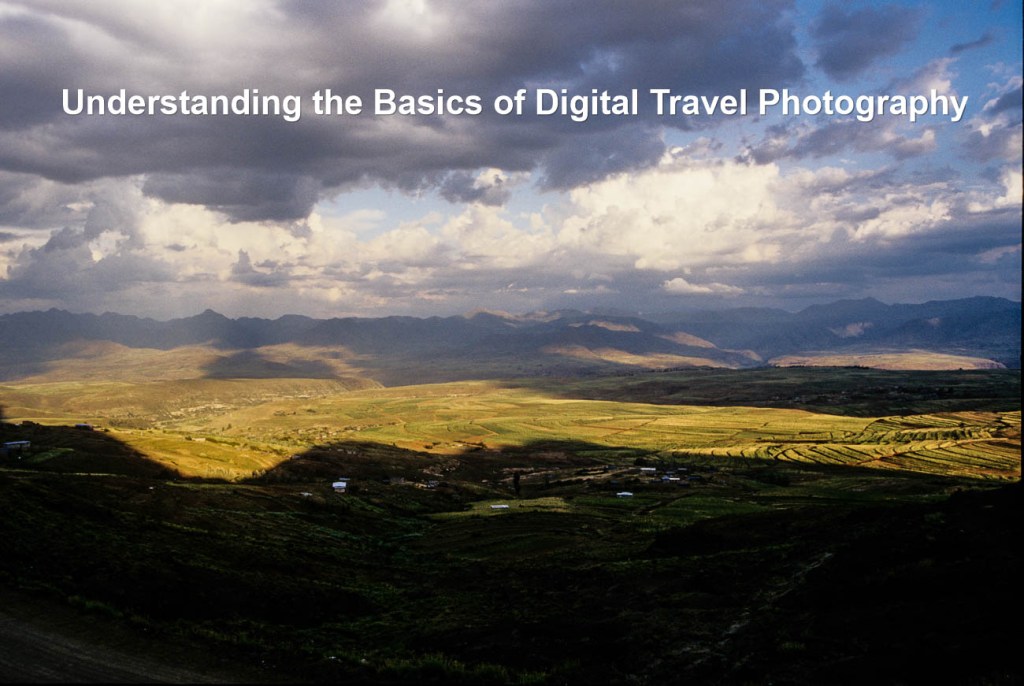
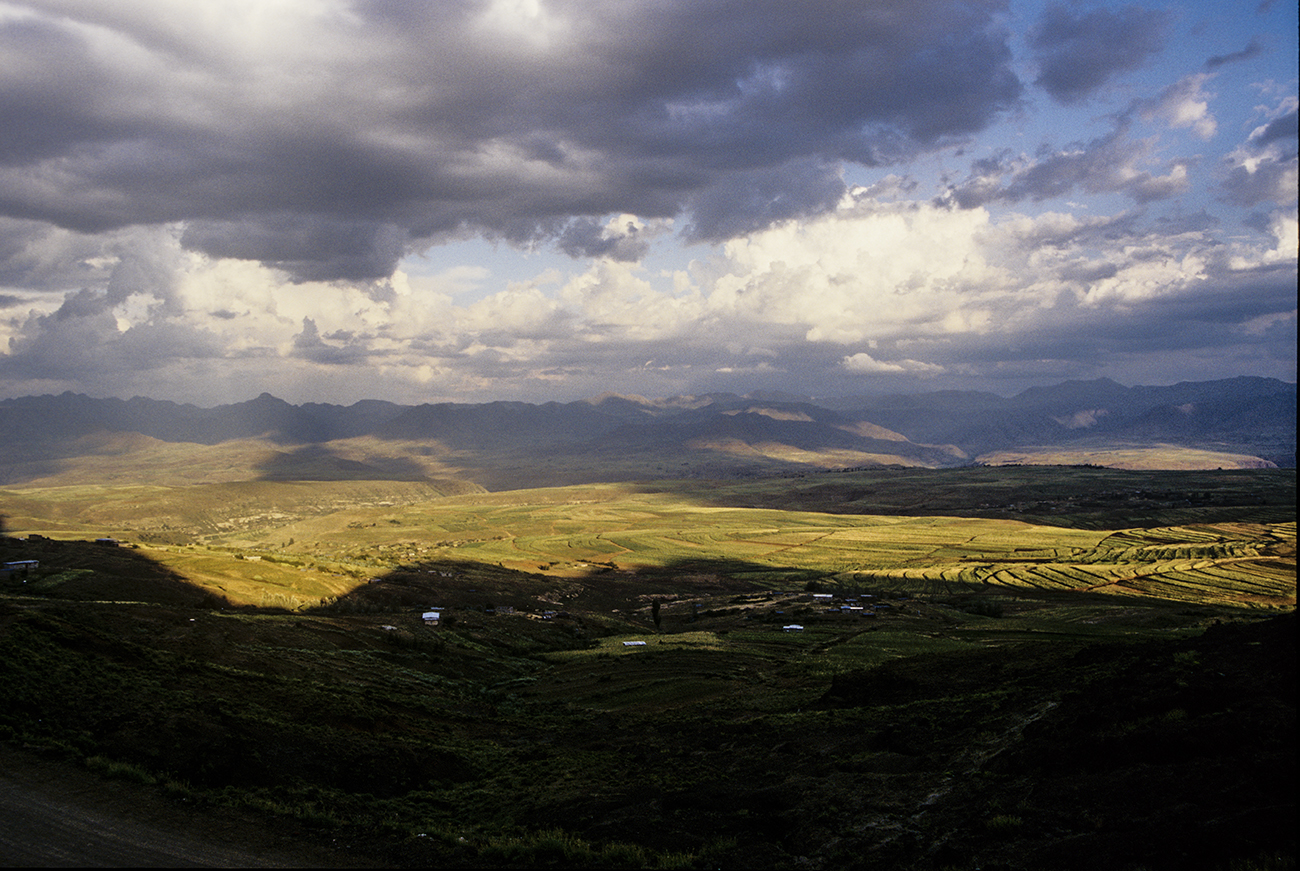
    Maloti Mountains of Lesotho in the late afternoon light.

    The majority of us use digital cameras these days for our travel photography.
    But do we really understand it?
    In this article, understanding digital travel photography, I’ll explain in simple words, some of technicalities we should all know about digital travel photography.

    Digital Travel Photography

    So, what is digital travel photography?
    Well of course we know what travel photography is, don’t we?
    If you don’t, head over to An Introduction to Travel Photography to get a better understanding.
    But what about the digital bit?
    When we push that shutter button whether it be a physical or virtual one, a complex process takes place in less than a second.
    Let’s look at the components of this process:

    Hoh river rainforest on the Olympic Peninsula, Washington, USA. Understanding the Basics of Digital Travel Photography
    Hoh river rainforest on the Olympic Peninsula, Washington, USA Click on image to see a larger view

    The Sensor

    The heart of all cameras is the sensor. It’s integral to the camera as it dictates pretty much everything.
    There are lots of different sensors manufactured, but the most common in digital cameras are the CCD (Charge Coupled Device) and the CMOS (Complementary Metal Oxide Semiconductor). Sensors are semiconductors that consist of a grid of tiny light-sensitive cells called photodiodes.
    Because photodiodes are black and white devices, a coloured filter is placed over the sensor so it can record colour.
    When you take a photo, you allow light to hit the photodiode which then generates an electrical charge.
    The individual photodiode records the brightness and colour of the light and generates a pixel that is placed in a grid.
    The number of pixels in the grid determines how much information is recorded.

    Sensor Quality

    The sensor’s quality is affected by how the following factors:

    a. The physical size of the sensor.

    b. The build quality.

    c. The quality, size and spacing of the actual pixels.

    d. The way the camera’s image processor treats the data.

    Understanding the Basics of Digital Travel Photography
    Photo by Mika Baumeister on Unsplash

    Sensor Size

    Larger sensors allow the use of larger pixels, which can process more light. Usually that results in the capture of sharper images. Sharper images have more detail, less noise, wider dynamic range and smoother tonal gradation.
    But it doesn’t stop there.
    For example, I have an Olympus OMD1 MKII and a Canon 5D MKII.
    Whilst the Canon is a lot older, it is a full frame camera which means it has a larger sensor than the Olympus which has a crop sensor of 1/2.
    The image quality on both is excellent and I would challenge anyone to tell the difference.
    In fact, my opinion is that the Olympus is slightly better.
    And I’m taking into account that it could also be because of a difference in the quality of the lens.

    Resolution

    Ah, resolution! Disturbingly misunderstood and incorrectly used as a benchmark of quality

    A camera’s resolution is the number of pixels on both the vertical and horizontal sides of the sensor. That’s called the total pixel count and is usually in the millions and is described in megapixels (MP).
    One million pixels equal a megapixel.
    For example, a camera with a sensor size of 5184 x 3456 pixels has total pixel sum of 17,915,904. Camera manufacturers round it up to 18 MP and so it is an 18 MP camera.
    You should find this number somewhere on the camera body. In the past it has been used to justify the price. I.E. More MP’s more dollars!
    Nowadays that is no longer the case. Although there are exceptions, image quality is much more important.
    The actual quality of the image file is affected by the same variables used to determine a sensor’s quality. See Sensor Quality 

    Print Size

    The other important factor is the maximum print size that the camera can be expected to produce. 
    This is based on the sensor pixel count. 

    Most printers print at the international professional standard of 300 Pixels per inch. Therefore, by going back to the above example 5184 x 3456, you divide 5184 by 300 you get 17.28”. 
    And then divide the other side 3456 by 300 you end up with a 17.28” x 11.52” (or 432mm x 288mm) paper size.
    Now it’s not my intention to get into the black art of printing. But some printers will print at 240 whilst others might print at 350.
    What does that mean? Well basically if you use the same calculation of 240 then you can be forgiven for thinking that you will get a bigger print. However, the quality is not as good because those pixels are being scattered over a bigger area. On the other hand, printing at 350 should give you a smaller picture but it actually works out that you will get a better print. There are lots of articles and charts available online if you really want to get into print sizes.
    The one takeaway is that if you want to print a A4 (8 x 10”) size print you must have at the very minimum a 7-8 MP Camera. 2400 x 3000 Pixels divided by 300 comes to 8 x 10”. 2400 x 3000 = 7200000 or 7.2MP
    A good inexpensive eBook on this whole topic is Making the Print by Martin Bailey

    Screen size

    Having said all that, most of us these days only view photos on a screen.
    And the smaller the screen the smaller the photos you need to display it without pixilation.
    Most cameras have different “image quality” settings. That’s a rather misleading way of telling you that you can adjust the size of your images.
    That is also usually only for JPEG images as RAW is fixed.
    Having smaller images has the benefit of requiring less space with both your memory card and your computer storage. But can also mean that you are restricted to a maximum size screen when you view it on a larger screen as it will drop in quality if you try to enlarge to fit.
    If you were to view it’s original size on a larger screen, you will get a border, usually white, around it taking up the space from the edges of the image to the edge of the screen.
    Conversely viewing an image that is larger than the screen means that you will not see all the image as it will fill the screen.

    In the examples below you can see an image of 4608 x 3456 on a screen of 2560 x 1440 which is on a 25” computer screen. If you look in the right-hand corner of the second image you can see a box that tells how much of the image you are looking at.

    Understanding the Basics of Digital Travel Photography
    Understanding the Basics of Digital Travel Photography

    Whatever software you are using to view will allow you to zoom in or out. But you can see how the dimensions of an image directly relate to the physical viewing medium

    Upscaling

    Of course, there are exceptions.
    When viewing images on your TV with something like a Chromecast or an Apple TV you’ll see that they will fill the screen regardless of size.
    That’s because they do a great job of sizing it according to the size of the TV.
    In fact most of the newer TV’s do the same.
    That’s called scaling the image.
    On a larger TV they usually have to upscale. Although there are limitations of what these devices and TV’s can do. A very small image of say 320 x 240 Pixels just won’t be able to be upscaled on a 65” TV and still look great. It may be just OK but more likely it will be pixelated or shown at its original size.

    Summary for understanding digital travel photography basics

    · Digital travel photography is the process that happens once you press that shutter button.

    · At the heart of all cameras is the sensor

    · A sensor is an electrical device for absorbing light and then transmitting it in a form of electrical current

    • · There are several factors that determine the quality of a sensor.
    • · Resolution is no longer an indicator of quality
    • · When considering printing always consider that quality printers print at 300 pixels per inch. So size your camera (min 8MP) and then your image accordingly
    • Viewing on electronic screens allow you the luxury of having smaller image sizes

    Thanks for reading this article

    There must have been something that piqued your interest.

    Is it that you see yourself taking some great travel photos that you can share or display?

    Or is it you can see yourself reliving your travel experience by bringing home some emotive travel photos?

    Maybe you aspire to getting your travel photos published.

    If one or all of these is YOUR goal, I can help.

    If you sign up in the box below you’ll get my free eBook “9 ways to improve your Travel Photography”. At the same time, you will also subscribe to my Travel Photo Tips Newsletter.

    Remember if you want to take great travel photos 

    • that you can share and display.
    • that help you relive your travel experience
    • give you a chance to have your travel photos published

    then sign up below and subscribe to my Travel Photo Tips Newsletter and for your trouble get my eBook “9 ways to improve your Travel Photography”

    Any questions then please write your comments below or contact me here and please say hello at these places:

    FacebookTwitterInstagramLinkedIn:

    Understanding the Basics of Digital Travel Photography
    Maloti Mountains of Lesotho in the late afternoon light.

    Feel free to share this to your social media of choice

  • 13 Tips for Street Travel Photography

    13 Tips for Street Travel Photography

    Brick Lane Street Sign Poplar, East London
    Brick Lane Street Sign Poplar, East London Click on the image for a larger view and for other options

    In Tips to Photograph People while Travelling I said that some of the most interesting subjects can be people going about their normal day.
    I would also add to that the environment that surrounds them as well.
    In this article I will give you 13 Tips for street travel photography.

    Street Photography

     Before we begin , what is street photography?

    Interpretations and definitions of street travel photography abound.
    My take on it is that it’s photography that captures the moment in settings that are predominantly man made like cities, towns and villages.

    So now we have rough idea of what it is, let’s get into my 13 tips for street travel photography

    1. Being Organised

    I’ve mentioned in articles like Planning and Preparation for Travel Photos or The Travel Photographer Destination Guide Part One, about the benefit of planning and organisation. I’ll repeat it here again. Doesn’t matter what type of travel photos you wish to take, being organised is the single most important facet of travel photography.  Particularly if you want to give yourself the best opportunities to take home some great photos.

    2. Have a Plan

    By plan I mean know what sort of street travel photography you want to practice.
    Are you looking for a certain type such as people looking at their mobile (cell) phones? Maybe you want to get images of people working in café’s and the café’s themselves.
    Whatever it is, focus on that and find the right location/s.
    It’s no good wandering down a suburban street looking for cafés.

    Brick lane cafe, Poplar London, England
    Brick lane cafe, Poplar London, England. Click on the image for a larger view and for other options

    3. Have Patience

    In How I took this Travel Photography Image I took quite a good picture of 2 guys laughing outside a bar.
    I ‘camped’ in one place to take advantage of any possible photo opportunity.
    Sometimes you must be patient and keep your eyes open.
    In most areas something will turn up. It’s not much different to taking wildlife.
    Wildlife doesn’t pose or turn up when you want it to, you have to be in the right spot and wait to grab that picture.

    4. Batteries and Memory

    Ensure you have the camera battery and your spare (you have a spare don’t you?) are fully charged.
    Also make sure your memory card has plenty of capacity.
    If it’s nearly full, change it NOW for an empty one. And of course, make sure you have at least a couple of empty spares.
    32GB is a good size these days. It’s not just memory you are after. Sometimes memory cards play up or fail, so a backup or 2 is essential
    Can’t do street travel photography without battery power and spare memory cards
    In the case of smartphones, most modern smartphones don’t have the option to change batteries. But you can have a mobile power bank to keep it charged. Similarly, with memory if your phone has the option of micros SD cards or if not, flash drives, it’s worth investing in either.

    5. Have the Camera Switched On

    One reason for having plenty of battery power is that you should always have your camera on.
    If you have a smartphone then make sure the camera app is open and if possible turn off the lock or adjust the time to turn off the app.
    Street photography is very much about being ready and in the moment. If your camera is off, then you will miss opportunities that you would get with the camera on.

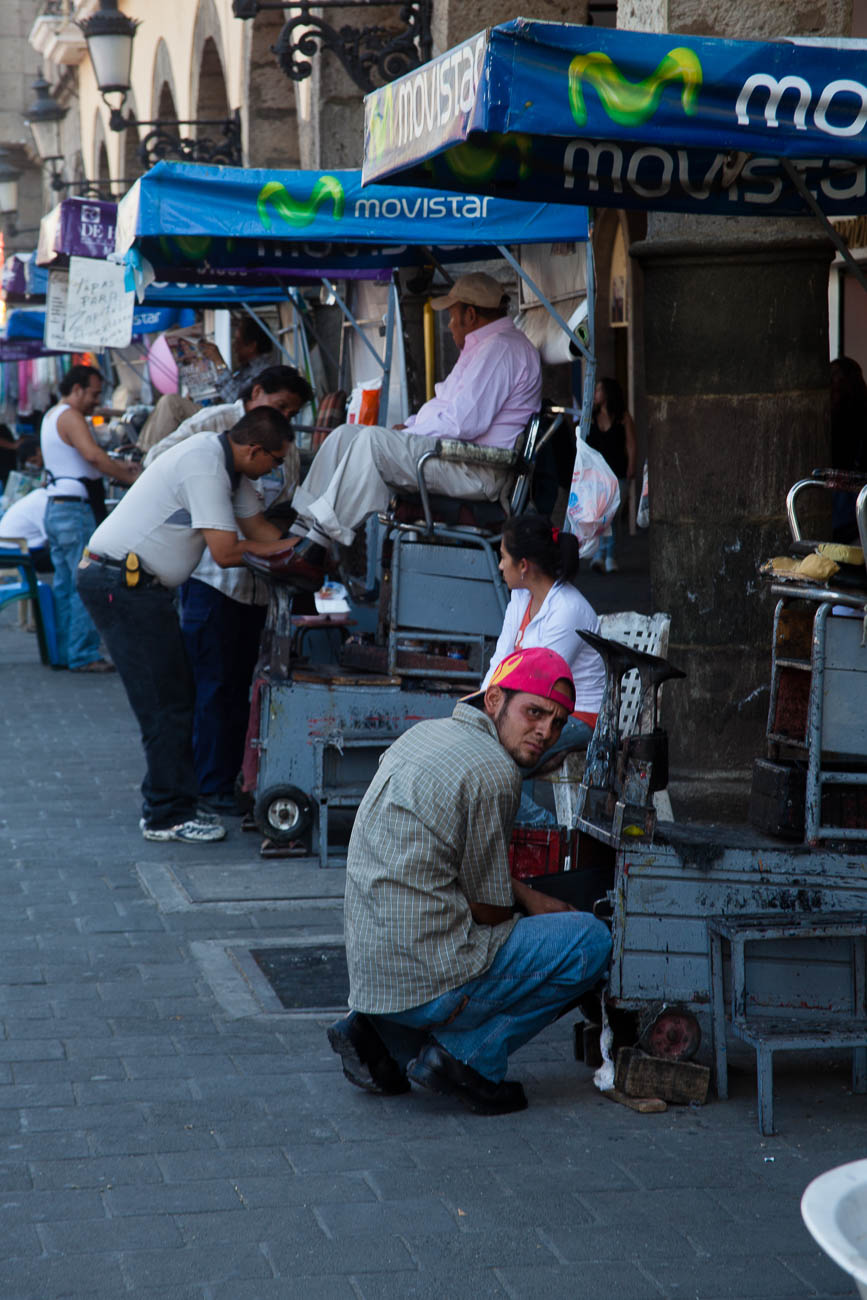
    Shoeshine carts, Guadalajara, Mexico
    Shoeshine carts, Guadalajara, Mexico.
    Click on the image for a larger view and for other options

    6. Have that Lens Cap Off

    Leading on from the last point. Any extra step you have to take to have your camera ready can be one step too much. Use a lens hood instead if you are worried about damaging the lens.

    7. Get Close In

    When you have a telescopic lens, there is the temptation to position yourself away from possible subjects.
    Now there are times when this is a good idea. But some of the best street photos have been taken whilst close in.
    That’s not to say you need to be in someone’s’ space with a camera up their nostril.
    No, that’s not what I mean.
    For example, if you are taking a picture of some street art, don’t try and get it all. Pick some small parts and concentrate on that. For more on that see The One Big Creative Travel Photo Idea

    8. Be Respectful

    Taking pictures of people can be done quite close without them knowing.
    If you are going to have people as your subjects, be aware of any cultural sensitivities. Always ask when it’s a situation where it’s pretty obvious that you want to take their picture.
    For more on that go to my last article Tips to Photograph People while Travelling

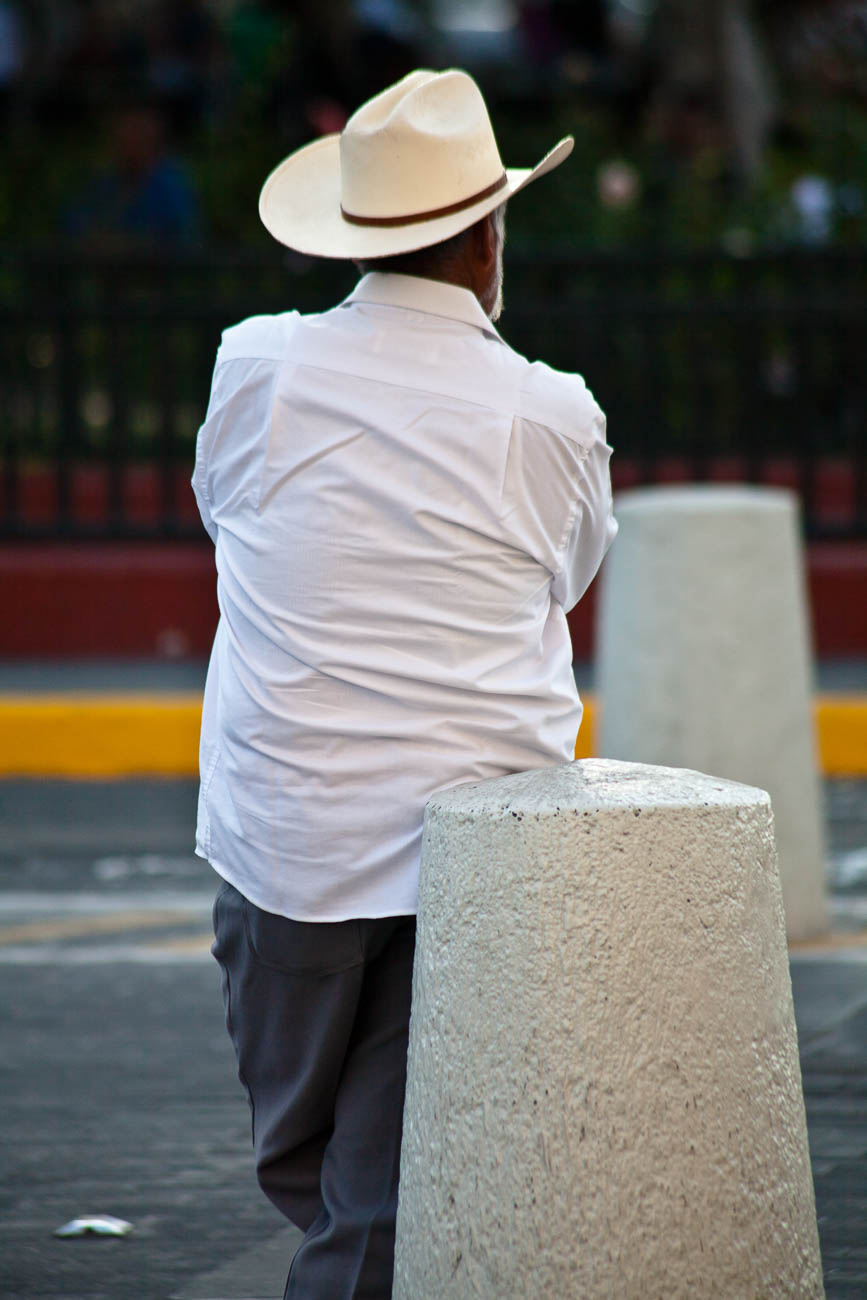
    Leaning Mexican Cowboy, Guadalajara, Mexico
    Leaning Mexican Cowboy, Guadalajara, Mexico.
    Click on the image for a larger view and for other options

    9. Use your Flash Sparingly

    If you have the on camera flash on auto – turn it off!
    On camera flash should only be used as a last resort. Much better to jack up the ISO and have some grain or noise than have that “rabbit in headlights” look.
    As you can see, I don’t use it. 

    If you do have off camera flash then use it.
    You don’t have to have an arm with a flash hanging off your camera to have off camera flash. There are lots of ways of lighting a subject without flash. Having someone shine a torch (flashlight) onto the subject can work as well.

    10. Be Imaginative

    Street photography is an open ended opportunity to take photos. You have permission to take pretty much anything. Regulatory and cultural sensitivities permitting, of course. So you have an opportunity to be creative and imaginative.
    Take something you’ve never seen before, use different angles, heights and positions. Often, we get stuck in the standard position of holding the camera at our standing height.

    11. Shoot in Shade.

    On sunny or bright days then it’s best to try and reduce contrasts.  Unless you are taking a photos that highlights light e.g. backlighting or individual light falling on a subject.  If you’re in an area with lots of reasonably high buildings that shouldn’t be too hard and makes for a more even exposure. Getting a great photo of a subject only to find some of it is badly overexposed can be disappointing.

    12. Shoot from the Hip

    There will be times when you want to grab a shot without being seen. Whilst you can do this with a telescopic lens, you may not be in the right position to use it.
    A technique, which takes a bit of practice, is to shoot from the hip.
    That is have your camera hanging down by your hip, with your finger on the shutter button. I would also suggest you have the rear LCD screen set on live view, so you can get a rough idea on what sort of photos you are taking. 

    If you have a reticulated screen on your camera, one that can be manipulated at angles away from the camera body, then that’s even better.

    13. Convert to Black and White

    Lastly, whilst not compulsory, street photography seems to lend itself to black and white. Most cameras allow you to shoot in black and white. I would suggest that you don’t do that. Instead choose and convert the photos that you think will look good in black and white with your post processing software. Whilst you can take photos in black and white, you want to have the choice about whether colour or black and white is better for a particular photo.
    Of course, there’s nothing to stop you challenging yourself and shooting everything in Black and White. In other words, don’t worry about whether it would have looked better in colour.

    Le mouffetard bar on Rue Mouffetard, home to one of Paris's many markets.
    Le mouffetard bar on Rue Mouffetard, home to one of Paris’s many markets.
    Click on the image for a larger view and for other options

    Summary for 13 Tips for Street Travel Photography

    1. Being organised

    2. Have a plan

    3. Have patience

    4. Batteries and memory

    5. Have the camera switched on

    6. Have that lens cap off

    7. Get close

    8. Be respectful

    9. Use your flash sparingly

    10. Be imaginative

    11. Shoot in shade.

    12. Shoot from the hip

    13. Convert to black and white

    You’ve got this far and I appreciate that.

    But there must have been something that piqued your interest.

    Is it that you see yourself taking some great travel photos that you can share or display? 

    Or is it you can see yourself reliving your travel experience by bringing home some emotive travel photos?

    Maybe you aspire to getting your travel photos published.

    If one or all of these is YOUR goal, I can help.

    If you sign up in the box below you’ll get my free eBook “9 ways to improve your Travel Photography”. At the same time, you will also subscribe to my Travel Photo Tips Newsletter.

    Remember if you want to take great travel photos 

    • that you can share and display.

    • that help you relive your travel experience

    • give you a chance to have your travel photos published

    then sign up below and subscribe to my Travel Photo Tips Newsletter and for your trouble get my eBook “9 ways to improve your Travel Photography”

    Any questions then please write your comments below or contact me here and please say hello at these places:

    FacebookTwitterInstagramLinkedIn:

    Feel free to share this to your social media of choice

    Brick lane signs, Poplar London, England
    Brick lane signs, Poplar London, England
    Click on the image for a larger view and for other options
  • Planning and Preparation for Travel Photos

    Val Veni from Rifugio Elisabetta Italy on the Tour Du Mont Blanc
    Val Veni from Rifugio Elisabetta, Italy on the Tour Du Mont Blanc

    Planning and Preparation for Travel Photos

    One of the most overlooked items when preparing to go on a holiday or to travel is planning and preparing for taking travel photos.
    Usually people think about accommodation, eating and transport. But never how they are will visually document their experience.
    So read on about Planning and Preparation for Travel Photos

    Planning

    You are off to an exotic or culturally fascinating destination.
    You worked out where you are going to stay, where you will eat and how you will get there.
    But what about what you are going to photograph?
    After all, you want to come back with memories but also memories that you can share with those who you travelled with and those you’ve left behind.

    Before you go

    Your itinerary should tell you what your destinations and stops are.
    Now it’s time to do research on what you should and want to take photos of.
    The first thing you need to have clear in your mind is what do you like taking pictures of?
    Have you selected a genre? Go to Different types of Travel Photography for more on this.

    Researching the destination

    At any new destination there will always be lots of subject matter for taking photos of.
    And in today’s online world it is easy to do research.
    Check out sites like the Lonely Planet, or National Geographic. Instagram and the much-aligned Google+ have some great images as well.
    There is no end of online resources for you to get some inspiration from.

    Icons

    Start by finding out what the big ticket items are. 

    These are the icons that make any travel destination famous.
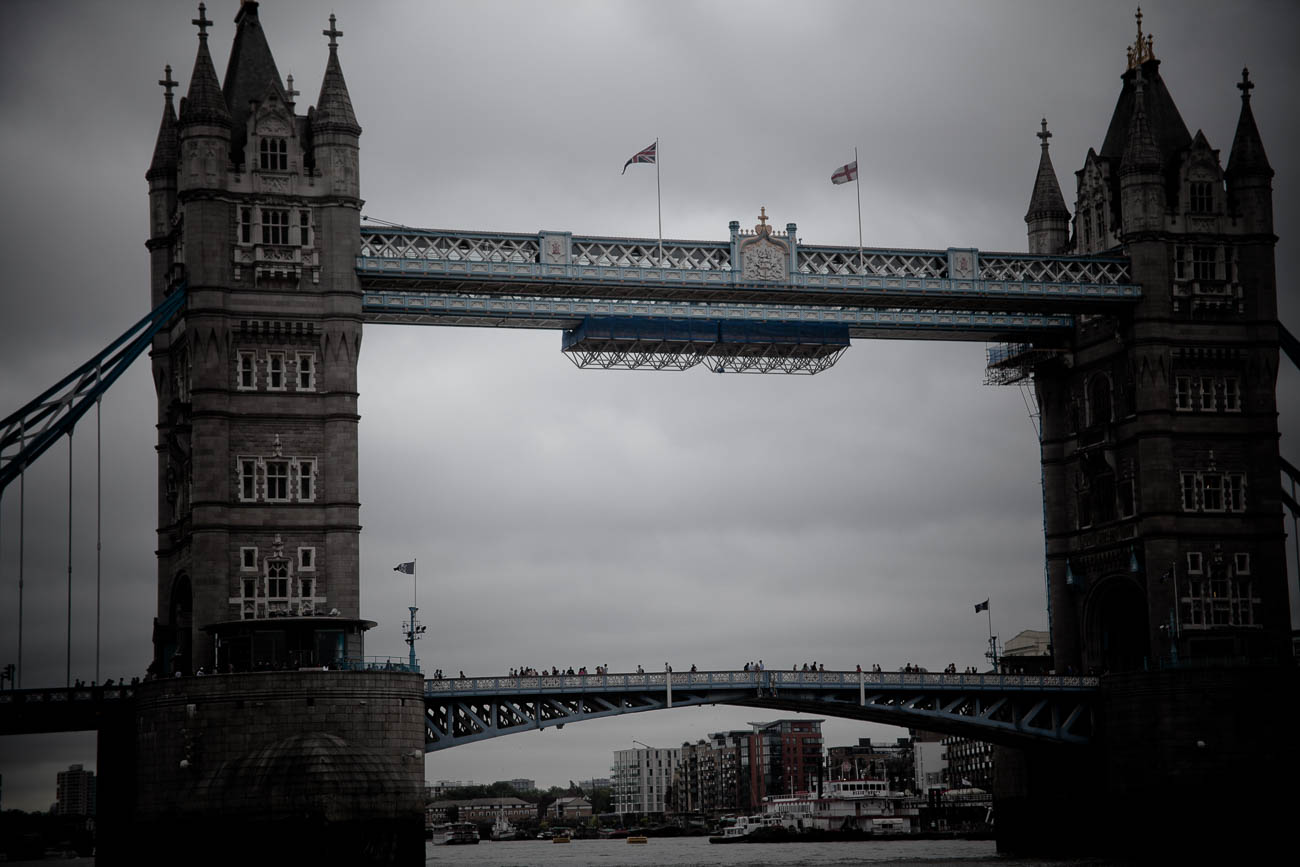
    You are looking for Icon’s like London’s Tower Bridge, Paris’s Eiffel Tower or Sydney’s Harbour Bridge.
    Find out what access there is. Are there restrictions on taking photos? Can you use flash or a tripod? Have a look at some of the pictures online and make a note of the angles you like.
    You will want to find different angles as well, which may not be so easy to see until you are physically there.

    The famous tower bridge in East London, England
    The famous tower bridge in East London, England. Click on the image to view a larger version and for other options
    Culture

    Some of the most emotive photos are of people and culture. Look for photos online of the culture of the place and again make note of how, when and where they were taken

    Landscapes and Architecture

    Whether you are going on a safari, hiking the Tour Du Mont Blanc or discovering San Francisco for the first time, you will want to take photos of Landscapes and Buildings.
    They could be anything from Mud Huts to skyscrapers, so again see what photos there are and take notes.

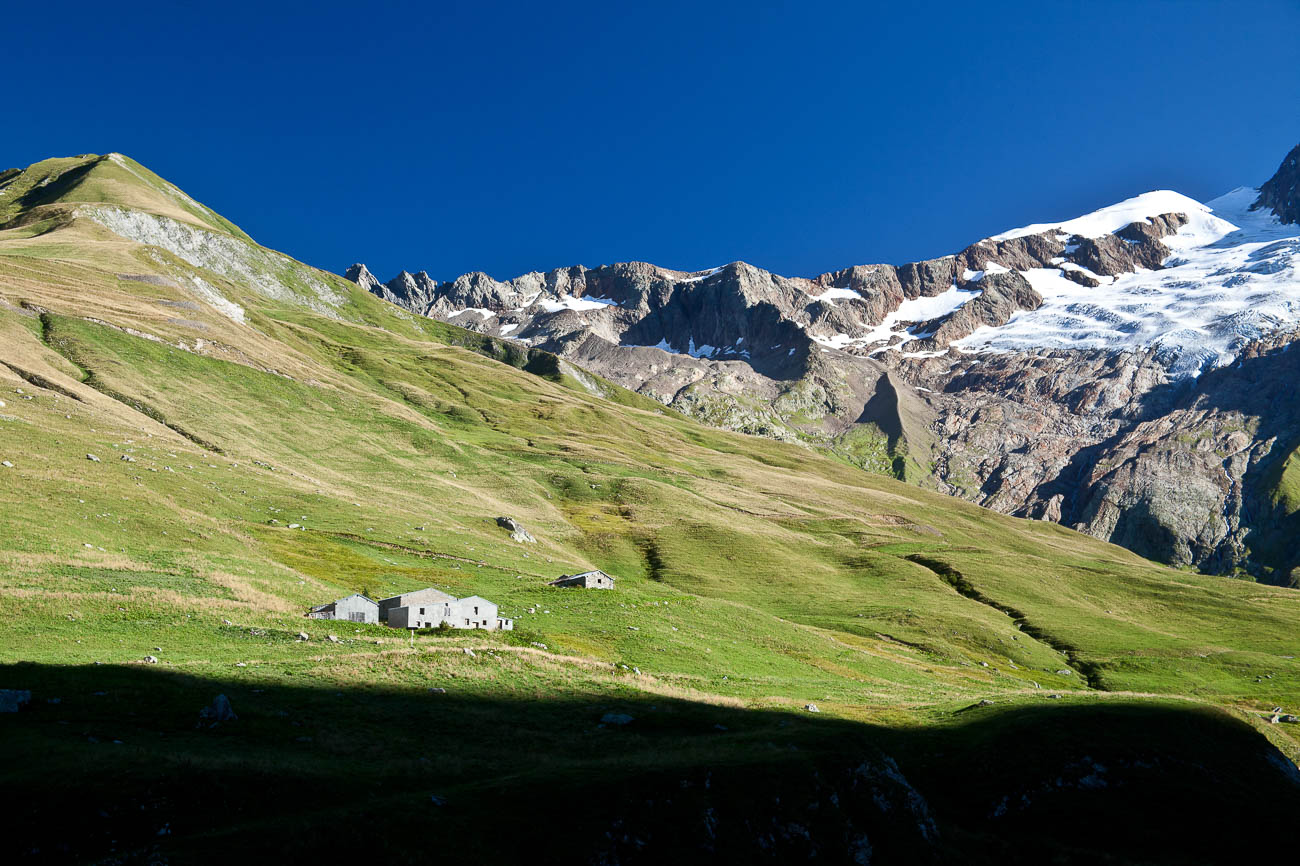
    Refuge des Monttes, Vallee des Glaciers, near Les chapieux, France
    Refuge des Monttes, Vallee des Glaciers, near Les chapieux, France. Click on the image to view a larger version and for other options

    Transport

    So now you know what travel photos you are likely to take, you must now decide what equipment will travel with you.
    Now if you are just taking a smartphone, then this really doesn’t apply so I would suggest you skip this section.
    For the rest, a lot will depend on what equipment you have and how you are travelling.
    If you are travelling using your own car then you would think you can take almost anything.
    But if you are hiking or doing a lot of walking whilst away do you really want to carry ‘everything’? And if the answer is no, then where will you leave what you don’t take with you?
    You don’t want to travel on public transport, and that can be anything from a bus to a plane, with a lot of equipment.
    Consider reducing what you take to what you think you will need based on what you are likely to be shooting.

    Climate

    One thing easily forgotten is that there’s a good chance you may be travelling to a different climate. If you are going to the tropics, then there’s a good chance it’s going to rain.
    If travelling to Australia in summer it’s going to be hot, travelling to Canada in winter then it’s going to be really cold.
    This topic is big enough to justify an article on its own but let’s just say make sure you take enough protection for your equipment.

    Practising

    If you have recently purchased a new camera or you haven’t used yours for a month or 2, it’s worth getting out and practising.
    I would suggest you practice the type of shots you are likely to encounter on your travels.
    It doesn’t take much to look for opportunities.
    Wherever you live there’s always landscapes.
    If you live near or in a city, town or even a village, there will be plenty of street, architectural and people shots to be had.

    Getting your equipment ready

    The Basics

    Whether you are taking a compact or a DSLR, you will still need some basic auxiliary equipment like extra memory cards.
    Consider taking more than one battery, a lens cloth, filters if you use them and a tripod.
    I take a couple of Bags – one for travelling and one smaller one for around town.
    Make sure your bag is clean and ready to use.
    I always put everything I’m going to take in the bag at least a couple of days before I’m about to leave, so it’s done.

    A good idea is to go through your memory cards and make sure that they are empty.
    You never know how many photos you will take, so you can never have enough memory.
    Don’t think that you don’t need to worry if you are using a smartphone camera.
    You need to ensure that the smartphone memory is big enough.
    If it’s not, then you will need to add space either by a plug-in memory stick and/or a microSD.
    Batteries need to be charged. 

    Camera and Lens


    If it’s going to be a big trip, it’s worthwhile checking to see if the sensor needs cleaning.

    You can do this by shooting a white piece of paper with the focus set at infinity and over expose to get it really white. Then look at it on a computer screen and look for marks.

    Select the lens you are taking and make sure you clean it with a lens cloth and then ensure it’s packed for travel.

    One essential thing to take is your charger. And if going overseas a plug adaptor for your destination.
    You will be surprised at how many people forget these 2 essential items.
    You can’t take pictures with a flat battery!

    Back Up

    If you are anything like me you’ve become obsessive about backing up your travel photos. After all, often you are only there (your destination) once!
    Look if you are only away for a weekend, then you could take the risk of not backing up.
    But I wouldn’t recommend it.
    This is a topic on its own which I will tackle in a future article.
    But I do recommend that you don’t rely on cloud storage. At least take a hard drive preferably with a tablet or laptop.

    Family and Friends

    Most of us travel with family and/or friends. If you are travelling alone then move on.
    For the rest of us though, it’s important that you set expectations.
    If you are starting to get serious about your travel photography, then you will need to make sure that your fellow travellers are onboard.
    Ideally speaking it is better to travel alone if you intend spending a lot of time taking photos.
    Yet, for most of us that’s not usually an option and let’s face it you don’t really want to travel by yourself.
    One of the great joys of traveling is sharing moments on the road with whoever you are travelling with. And I emphasise that sharing moments is pretty important.

    Get out from behind the camera

    Don’t let the urge to shoot away at a romantic or special monument blind you to how you should be enjoying the moment with your loved one.
    If you are at the Taj Mahal for example, make sure you get out from behind the camera.
    Enjoy being there with your fellow traveller/s, especially if your partner is there with you or be prepared for the consequences! (I’ve learnt that the hard way).
    The next rule is to negotiate when you take photos.
    That can be almost any time but there may be some special times that you want to concentrate on getting some good shots. The golden hour (just before sunset or just after sunrise) is one example. So, give some advance warning and you may actually get an assistant as well.
    Another way of sharing the experience can also be by taking photos together.
    But lay out what you want to do before you set off and then negotiate along the way.

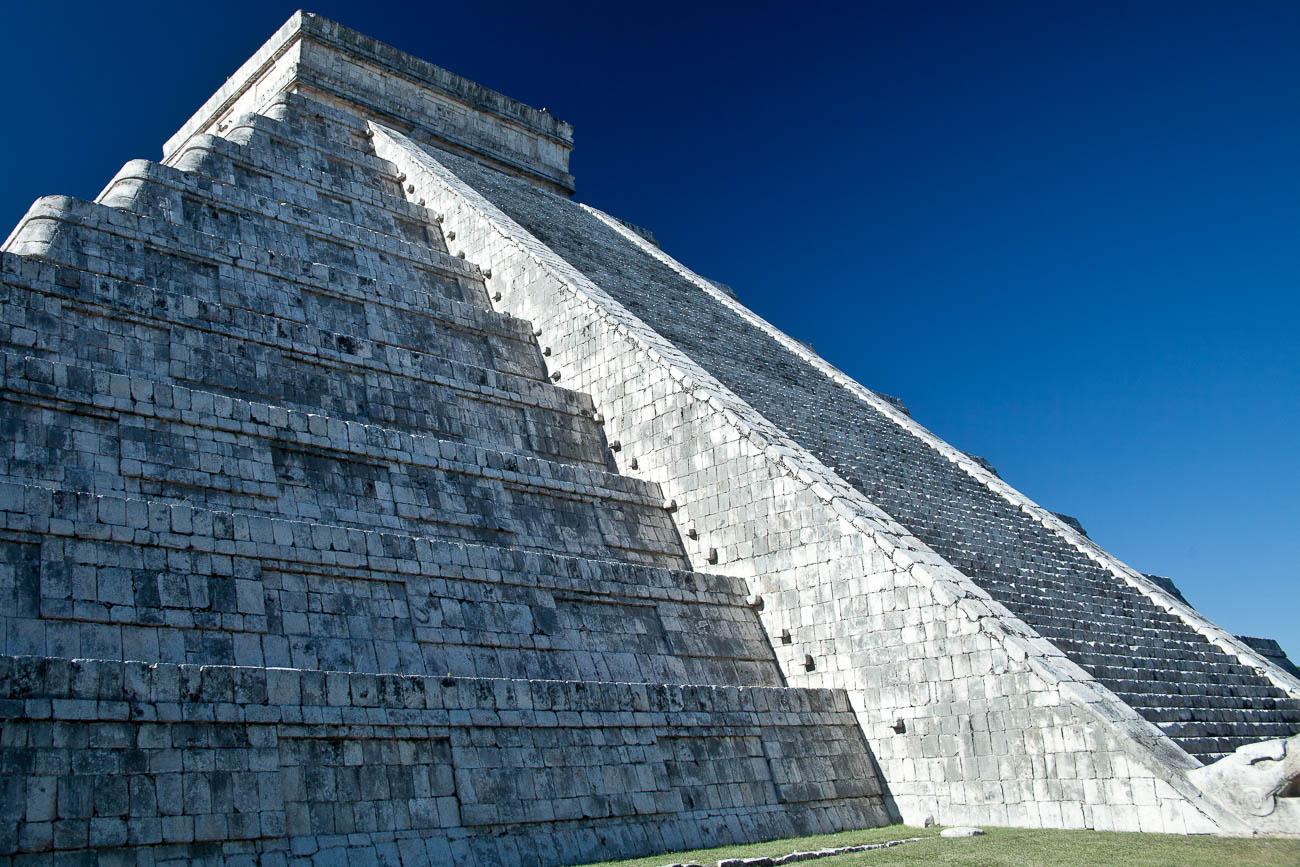
    El Castillo the pyramid, at Chichen Itza the most famous Maya ruin in the Yucatan, Mexico
    El Castillo the pyramid, at Chichen Itza the most famous Maya ruin in the Yucatan, Mexico. Click on the image to view a larger version and for other options
    Insurance

    Most of us get travel insurance to cover medical and cancellation.
    But it’s just as important if you have some expensive kit, that it is also insured for loss or damage. Nothing worse than having a camera stolen or damaged and realising you weren’t insured.
    Now don’t get me wrong, the likelihood of that happening is remote, especially if you are careful and take the obvious precautions.
    But you never know.

    Hire

    Whilst you are not likely to hire lens on every trip. It’s a good idea to make sure you’ve got that set up when you do.
    I’ve done it several times, the last time in Canada for taking photos of Polar Bears with a large pro lens. The company had a lens waiting for me at the destination.
    It was a simple process to send it back from the same place once I had finished with it. That meant I didn’t have to carry it to my next destination where I didn’t need it.

    Timing

    When we plan travel it’s essential that we maximise the time there.
    One way to do that is to research what special events or festivals are on.
    And don’t forget to find out what the weather is going to be like at the time you will be there. Special events and weather conditions can be double-edged swords. Depending on the event you may not want to be there at the same time.
    For example, with weather, the wet season in Northern Australia can be a challenge.
    But during most wet seasons you get some great scenes of flooded landscapes and interesting cloud formations and thunderstorms.

    Summary – Planning and Preparation for Travel Photos

    As you can see whether you are going travelling or just holidaying, with travel photography, there’s a lot to think about before you have even left.
    Do your research and make sure you know what you are going to take photos of.
    Find out what Icons, Culture, Landscapes and architecture there are to take.
    From there you can work out what equipment to take.
    Protect your equipment from the elements.
    Practice before you go.
    Make sure you take the essentials; spare battery, charger and adaptor, memory cards.
    Clean your equipment and make sure it’s insured.
    Take some sort of back up for you to back up on the go.
    It’s vitally important that you have an understanding with your fellow travellers and family about when you will want to take photos.
    Above all don’t forget to have fun and enjoy yourself!

    Need some help with your travel photos?

    Why don’t you pop your email in the box below and not only will you get content that’s not always posted on this site but you will get my free e-book “9 ways to improve your Travel Photography” to get you started

    Any questions then please contact me here and/or please say hello at these places:

    Facebook: Twitter: Instagram: LinkedIn:

    Feel free to share this to your social media of choice

    Just click on any of the above images to view a larger version and for other options

  • How I took this Travel Photography Image

    How I took this Travel Photography Image

    In the historic copper mining town of Jerome, Arizona, USA
    In the historic copper mining town of Jerome, Arizona, USA

    This is the second of a series of articles that uses travel photography to show how you can get a particular type of shot.
    Some of the examples won’t be stock, product or marketing photos, although any image can be used to market anything. 
    Nearly all of them will be travel photography images

    But this is a good starting point for taking similar photos for any reason whether it’s travel photography or for your business. 

    And I hope that this inspires you to go and emulate and even improve on the method I give you here. 

    So, let me clarify that this article is not some much about technique but opportunism.

    Let’s set the scene

    I was travelling through the South West of the USA and stopped off at a little town of Jerome.
    Smack bang in the middle of Arizona and north of Phoenix, its claim to fame is that it was a copper mining town.
    Nowadays it’s a tourist hot-spot. Being at a higher altitude, Jerome is attractive to residents of Phoenix, the big smoke, during their ugly summer months of high temperatures.
    And so, I discovered how attractive it was as I roamed the streets of Jerome taking shots of the interesting sights as well as the landscape beyond.

    Human Interest

    However, what I really became interested in was the locals.
    There’s only around 450 of them and they all seemed to be happy, friendly and smiling.
    Whilst I have done some portrait photography, I’m not a big lover of it.
    I find that taking impromptu spontaneous images tend to bring out much more of the subject’s character.

    Positioning for Street Photography

    When you take any street scene sometimes you get lucky and fire off a few shots straight away.
    Other times you have to kind of go with the flow and watch and see how the street life unfolds.
    That day was one of the latter.
    I wondered around until I found a spot diagonally opposite a bar, a hotel and a winery cellar door, yes, they do have wine in Arizona and good wine it is too.
    The spot I found was a corner or rather a T-junction.
    Normally I would find a café to sit and watch but there wasn’t one where I wanted to be.
    But there was, at that time, enough people around to make me feel inconspicuous.


    The Wait

    So, I waited.
    As it was mid-afternoon and wasn’t a Sunday I figured that there would be a bit of coming and going from the bar.
    There was but not as much as I wanted.
    But I did shoot a few images as I hung around.
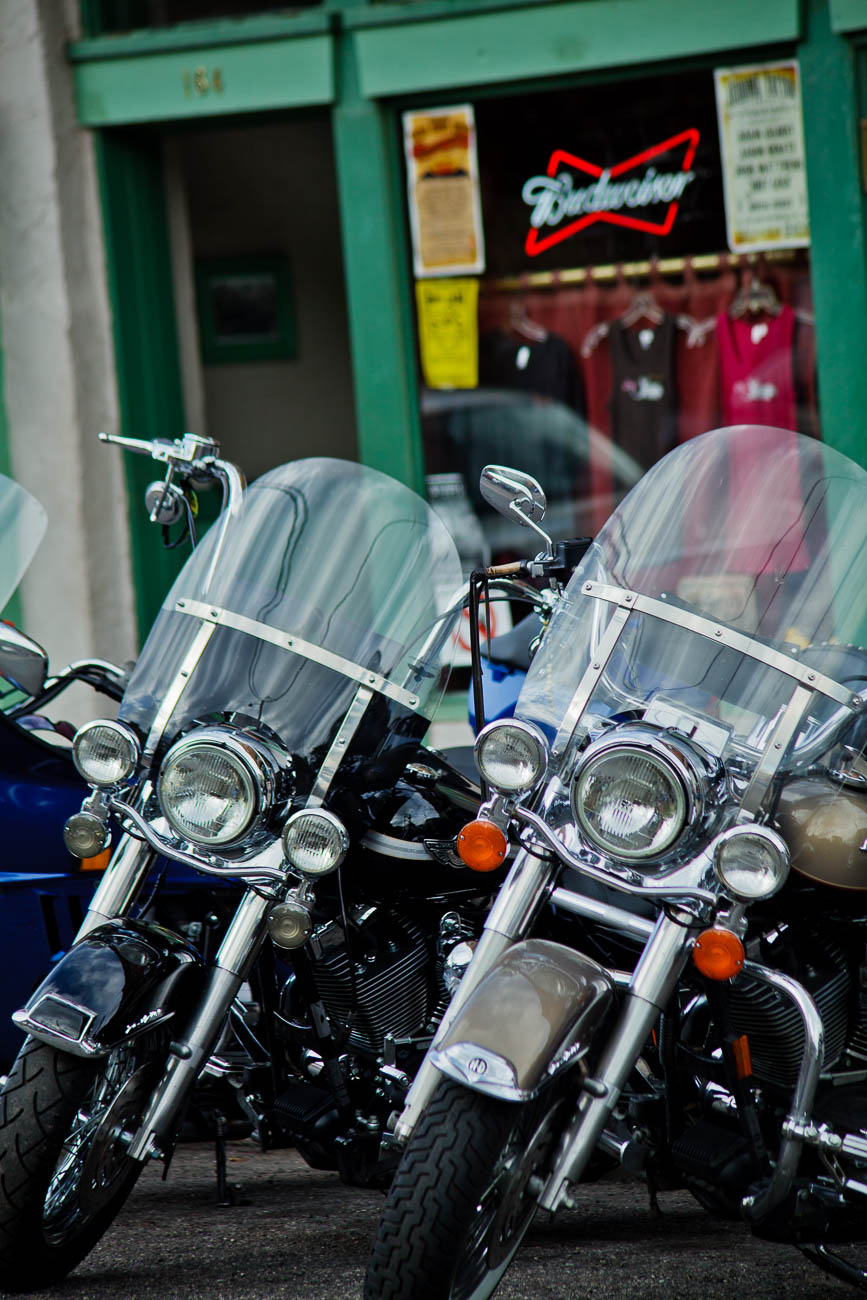
    After about 10 minutes some motorbike riders turned up and went into the bar.
    I shot off a few shots of them.
    But being mindful that I didn’t know these guys I was fairly conservative and kept a low profile. 

    Travel Photography
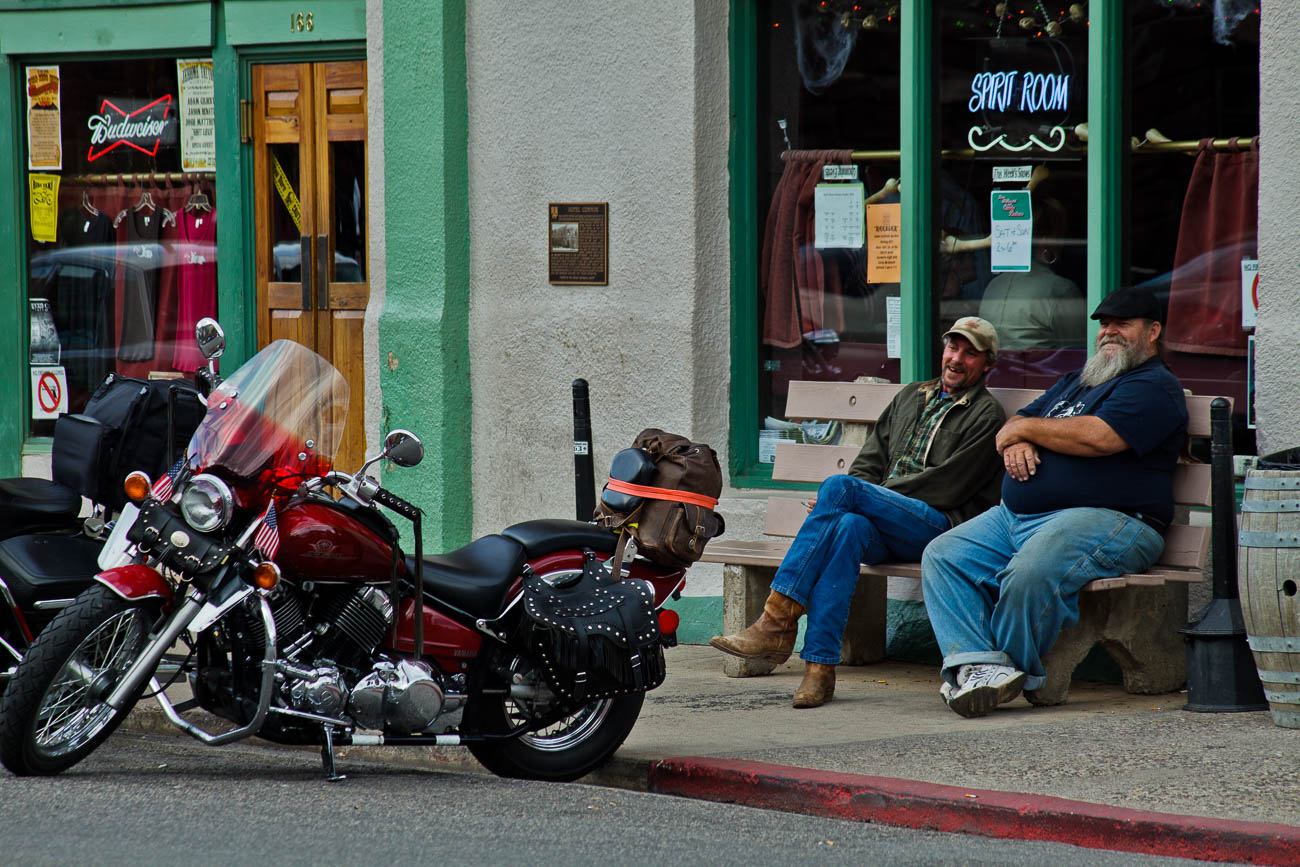
    Harleys in the street in Jerome, Arizona, USA

    The Subject

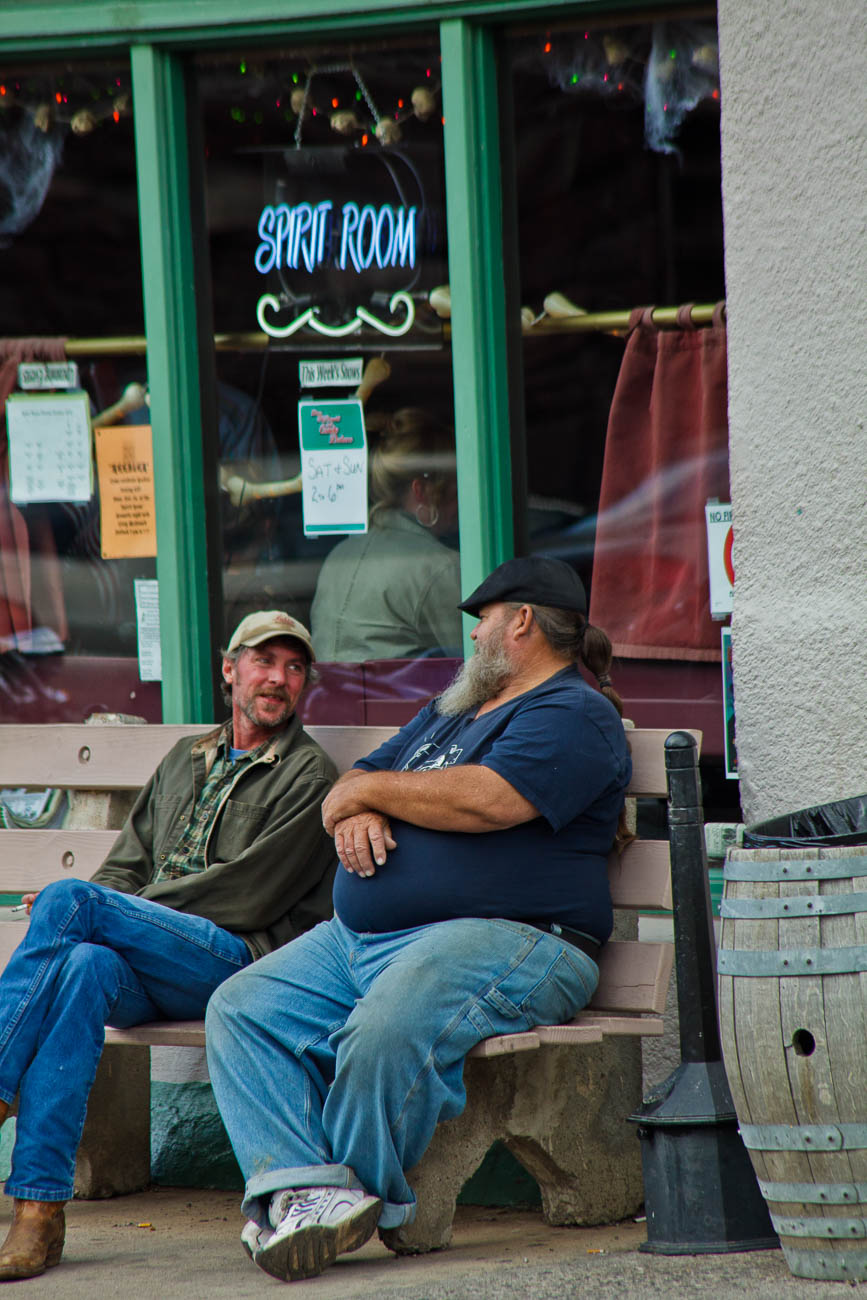
    After about 5 minutes these couple of guys came out and sat outside chatting and looking at the bikes.

    Travel Image
    Two men talking in the historic copper mining town of Jerome, Arizona, USA

    Now neither of these guys are oil paintings but they were perfect for me. 
    So, I was off a running – not literally, of course.
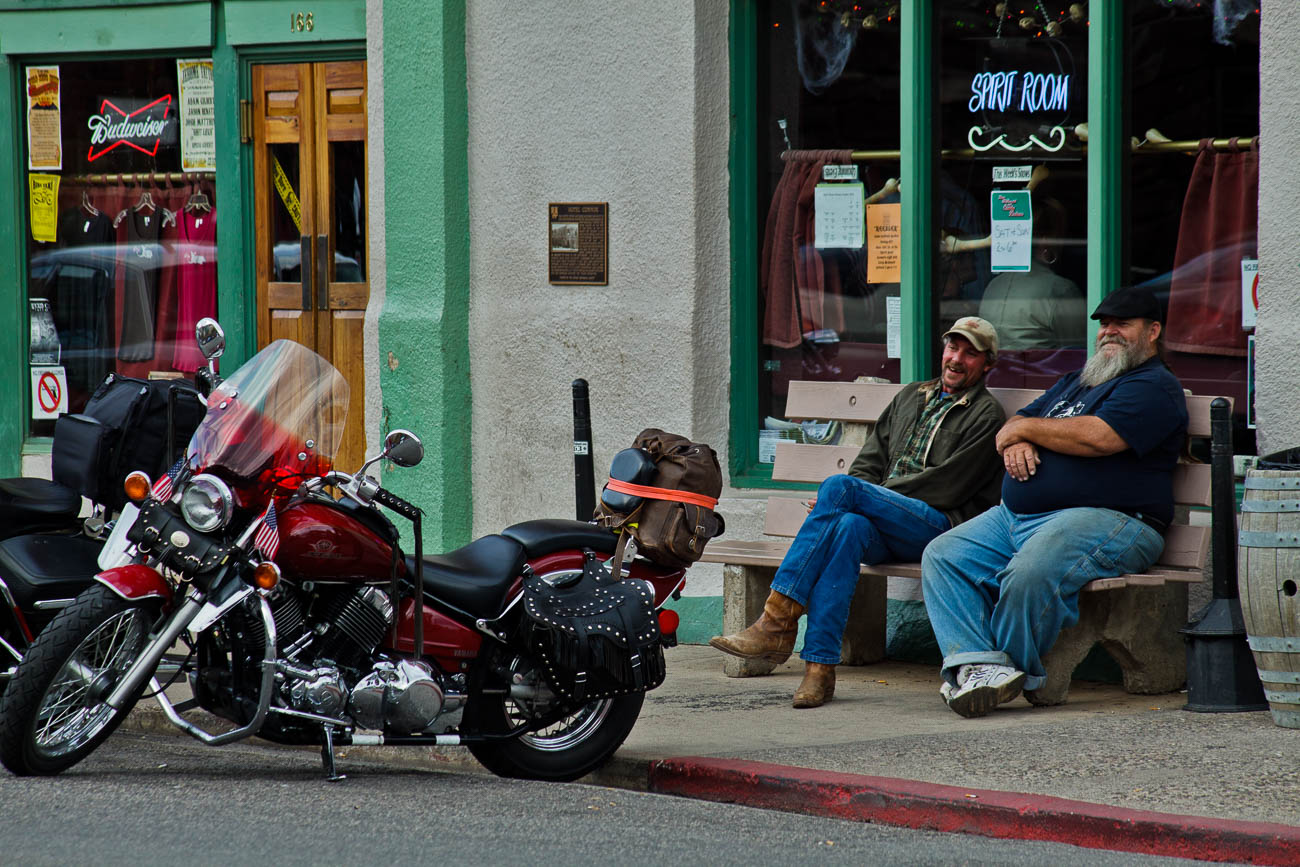
    This one is the best of the shots I took.

    Travel Photo
    Two men and motorbikes

    One is smiling and the other is laughing and both are looking at the bikes.
    I have no idea whether they were laughing at the bikes or something completely different.

    Technical

    So, let’s get technical.
    My gear was a Canon 5D MKII with a 75-300mm telescopic lens, which is a full frame DSLR
    I usually use aperture priority and had that set at F/8.
    F/8 is the sweet spot for this and most other cameras for subjects that are a short to medium distance away. Ideal if shooting travel photography.
    You should get everything in focus regardless of the focal length you use, which in this case was 180mm.
    It also means that unless the light is low, you should get a fast-enough shutter speed which at 1/200 sec, I did.

    Even though the light was quite good, it was overcast. Having said that, I had the ISO set to auto and it selected 320 ISO, so the light was not as bright as you may think for somewhere like Arizona.
    In this camera you have to get up to about 1000 ISO before there is any noticeable difference to the picture quality i.e. noise or grain.
    I could have set the ISO even lower as I had a lens that had IS, Image Stabilisation but I didn’t feel that I needed to use it.

    Conclusion

    To get a good photo of anything, you need a bit of luck but at the same time you can make your own luck. If you used this example for instance, you would do that by:

    1 Scouting the location
    2 Working out the best position
    3 Being patient
    4 Ensuring you have the correct equipment, which can be the best you have with you.
    But be realistic. For example, using a smartphone is not the best camera to use for all situations.
    5 Setting your camera correctly.

    6 Make sure if you are taking street photos, you are in a location that will allow you to quickly move into a better position.

    One last tip: If you are holidaying make sure you actually make time to enjoy the location. Forget Travel Photography occasionally and move in front of the camera and have a good time!

    Need some help with your photos?
    Why don’t you pop your email in the box below and not only will get content that not always posted on this site but you will get a free guide to get you started

    Any questions then please contact me here and please say hello at these places:

    FacebookTwitterInstagramLinkedIn:

    And feel free to share this to your social media of choice

  • An Introduction to Travel Photography

    An Introduction to Travel Photography

    Table on the beach. Kefalonia. Greece

    An Introduction to Travel Photography

    Travel Photography is something we all do from time to time whether on vacation or when travelling for any reason. In this well written and researched article “An Introduction to Travel Photography” I will attempt to ‘introduce’ you to the world of Travel Photography

    Definition

    According to Wikipedia the definition of Travel Photography “is a genre of photography that may involve the documentation of an area’s landscape, people, cultures, customs and history.
    The Photographic Society of America defines a travel photo as an image that expresses the feeling of a time and place, portrays a land, its people, or a culture in its natural state, and has no geographical limitations.
    There are other definitions but those two pretty much nail it.

    History

    Travel Photography, unlike most other genres is a later addition to Photography.
    When Photography was first invented in the early 1800’s few people travelled and for the next few generations any who did were only the wealthy ones.
    The major pioneers in travel photography were explorers who wanted to visually document their experiences whilst exploring.
    But you had to be keen as they had to carry the bulky equipment.
    Not only was the camera equipment itself heavy but, as the frames needed to be developed almost immediately, the photographer needed to have a darkroom and enough chemicals for a small laboratory.
    Of course that all changed when Kodak invented a camera that used a roll of film and then introduced the Kodak Brownie.
    Almost immediately photography was a lot more accessible and therefore popular with explorers and traveller alike.
    But it wasn’t until colour film was introduced that travel Photography became a mass media.
    Even then not everyone had a camera or if they did they didn’t use it whilst travelling.
    Digital photography changed all that. And then Smartphones come along.
    Now anyone who steps outside their door takes pictures. 

    We have millions of images of exotic and not so exotic locations being circulated by social media and other forms of communication.

    The Travel Experience.

    It wasn’t until I went travelling that I took an interest in Photography.
    It was to be a 7-month trip around the world and I felt that we needed to document, as well as we could, our experiences.
    So it was I had 2 very different skills to learn, how to travel and how to take photos of my experiences. It was a challenge, but it was one that I learnt so much from.
    That’s the beauty of Travel Photography. Yet, there are times when you must forget all the techniques and the technical stuff and be in the moment of the experience.
    Knowing when to take that shot or not is a skill in itself.

    That too me is what Travel photography is all about. 

    Genres

    Of course, when you travel there are lots of subjects that you will want to take photos of:

    Landscapes, People, Festivals, Entertainment, Urban, Food and Drink and Wildlife are the most popular.

    Landscape

    Landscape Photography is taking images of usually the area in front of you.
    That can be a mountain range, a field of flowers, the desert, pretty much anything that is of a natural beauty.
    Some manmade objects e.g. a lakeside house or a sailing boat can help with context.

    Reservoir close to Yosemite NP, California, USA is an area of lakes and reservoirs.
    Reservoir close to Yosemite NP, California, USA in an area of lakes and reservoirs.

    People

    Always a difficult one to get right. People move, blink, frown and often, whether posed or not, can assume unflattering positions.
    Taking portraits in different cultures are a great way to get to know locals and customs.
    We are all fascinated by the daily life of those in other countries. Travel Photography gives you the option to capture that.
    As an example of this check out How I took this Travel Photography Image

    Festivals

    The Colour and movement of some of the world’s most famous and not so famous festivals can make great photos.
    Even the local fete can offer some interesting character or scene shots

    Entertainment

    Shopping in the market, Music and Theatre performances are two events that come to mind when taking photos in the field of entertainment.
    But there is also sporting events like a game of footy or nightlife. The latter being particular challenging due to the lack of light.

    Urban

    What is urban? Good question!  I guess it’s Street Scenes, Street Art, Sky Lines, Architecture, both inside and outside and even Light Shows.

    Food and Drink

    There are many food and drink situations. You may want to take some photos of where you are, what you are doing, eating or drinking.  
    In a restaurant, a winery, in a field or at the market.
    Food and Drink is quite a diverse genre. But it can also be the most creative and satisfying, especially if you are having a great experience at the same time.

    Wildlife

    Who doesn’t want to capture that great shot of a Lion or Leopard in the wild somewhere in Africa.
    But there is more to it than the big 5 (the big 5 is Lion, Leopards, Rhino, Hippo and Elephant).
    Even going to a Zoo or Sanctuary can provide some great photographic opportunities.
    There are various types of environment for grabbing a shot or 2 of wildlife. Marine, Forests, National Parks even the Urban Environment can have wildlife.
    But be wary of two things, firstly your safety is paramount, don’t be that person who steps outside the car in a Lion park.
    Secondly, wildlife photography is challenging.
    There are photographers who have devoted their lives to taking great wildlife shots. They will spend days even weeks waiting for that ‘one’ shot.

    Mother Nature

    Travelling over time means you will experience all types of weather which can make it difficult to use your camera equipment.
    Rain, Heat, Cold, Snow, Dust they are a few extreme weather extremes that we all will experience in our travels.
    But even though taking photos in such conditions will take you out of your comfort conditions, often it will be well worth it.
    So, don’t run for cover (unless of course your life is in danger) embrace the challenge.

    Copyright

    By copyright I don’t mean your copyright. More and more their famous landmarks (and People) want to control their image.
    For example, under French law it is illegal to take photos of the Eiffel Tower’s light show at night.
    Of course, we’re not all going to check on every possible landmark but it’s worth a quick google on a big-ticket item. 

    Photography Techniques

    So you now you know the sort of experiences that you will want to document visually, how do you do it successfully?
    Well firstly, you will never stop learning! I’ve been shooting for 22 years and I’m still learning.
    That’s not to say you can’t learn to take good even great pictures straight away on your travels.
    It takes time to know what to do in certain situations and as you have seen there are many genres that make up Travel Photography.
    I hope that this will motivate you to read more from this site and support some of the manufacturers or service providers that I recommend to help you.

    Additional skills

    Of course, it’s not all about techniques and composition.
    If you want to take Travel Photography seriously you need to also be prepared some of the time to:
    Plan but be flexible
    Be reasonable fit, so that you have the energy to walk for hours at a time
    Be Patient enough to wait for the right moment to get that shot.
    Develop good social skills so that you can converse with many people, often in a language which you can’t speak
    Be creative
    Be open to sharing. After all it’s no good taking photos if no one is going to see them!

    In Summary

    This introduction to Travel Photography should give you a taste of what’s involved in improving your travel or holiday experiences. 
    You can see that gaining the skills that allow you to take good or, indeed, great photos will help expand your travels and give other people pleasure.
    Travel Photography is about the gear, the composition and being creative
    But it’s also about being in a place that’s not your home, adding depth to your experience and bringing home great photos that will live with your memories for a very long time!

    Need some help with your photos?
    Why don’t you pop your email in the box below and not only will get content that’s not always posted on this site but you will get a free guide to get you started

    Any questions then please contact me here and/or please say hello at these places:

    FacebookTwitterInstagramLinkedIn:

    Feel free to share this to your social media of choice

  • Here’s why it’s about Time you took your own Stock Photos.

    Here’s why it’s about Time you took your own Stock Photos.

    I Know, you’re happy using other people’s stock photos – And that’s fine.
    However, your business is unique and it deserves unique content to grow and scale.
    I’m not saying that you need great photos to be successful, you may have other advantages or skills that can offset that.
    But we are an image driven society and without originality a business will struggle to stand out from the crowd.
    You can read more on this topic here.
    By the way I’m not the only one to hold this opinion read these articles as well:

    The tyranny of stock photos

    Stock Photography Sucks! Let’s Do Something about It!

    11 Ways Photos Harm Ecommerce Conversions

    Say No to Stock Photography and Create Authentic Photos

    So let me ask you this:

    • Are you fed up with wasting your time searching for stock photos for your business?
    • Have you used a stock photo, only to see it being used elsewhere by another business, even a competitor?
    • Do you always find yourself saying “Oh if only I had a photo of X”?
    • Have you had a photo taken on your behalf that you submitted to your ad agency or printer only for them to charge you to rework or even retake it because they don’t think it’s up to scratch?
    • Have you paid a photographer to take some photos for your business only to be unhappy with the ‘finished article’?

    If you answered “yes” to even one of these questions, then read on.

    Because despite everything you read to the contrary you can learn to take some great photos consistently to impress and attract customers.

    Stock photo of spanish shoe shop

    So what’s the advantages:

    Well you can

    • Spend time creating your own and be in charge of your own destiny.

    Taking photos (and videos) for business marketing is different. Not harder or easier but different.

    The eye should be looking to make your product or service as attractive as possible sometimes in an obvious way, other times in a subliminal or subtle way.

    Stock photo of library in Melbourne

    • Make unique photos that you own the copyright to

    It always amazes me how little is understood about just the basics of copyright
    When a photographer conducts a shoot for any business (or wedding or portrait session or any other third party) they keep the copyright. What that can mean is that unless you have a watertight contract with them, that they are prepared to sign (and then the price will increase) they can resell that photo to another business or alternatively a stock agency who can then sell it on.

    Read more on this here

    • Take photos of what you think will help move your business forward

    As I said before you know your business and it’s not the same as other businesses. It’s unique and only you know the sort of photo that you want to represent your business.

    And then you will

    • Stop paying for services that delay your campaigns

    There are some great photographers out there who will no doubt give you exactly what you want. But they are expensive and often hard to book. Getting a less expensive job will save you money but it can cost you if the quality and/or service is substandard.

    • Stop settling for someone else’s interpretation on what photos you need.

    Photographers, stock agencies and marketing agencies are all just interpreting what they think you want.
    Earn yourself the freedom to choose what you want.

    Now I know some you will say:

    1 I don’t have time – well how much time do you spend on searching for stock photography now?
    More on this here.

    2 I don’t have the money to spend on photo education – Look I get that you want to run your business on the smell of an oily rag. I’m in business too.
    But sometimes you have to pay for something that’s going to take your business forward and will give you potentially a big ongoing return on investment.
    More on this here

    3 I don’t have a decent camera – Assuming you have a camera that works then you have a ‘decent’ camera.
    The idea that you need a certain quality of camera to take great photos is simply not true.
    Check out an article on this here.

    4 I can’t learn photography because ………. (fill in the blank) – Well there might be a reason that I can’t think of where this is true but if you can run a business or hold down a challenging job then you will be surprised how quickly and easily you can learn.

    Shop front

    To summarise

    You own or run a business and you want it to succeed.
    Well you can’t do that by buying, or downloading for free, photos that only vaguely represent what your business is about.
    You have a unique offering and therefore all your marketing needs to be unique and that includes photos.

    You can achieve this by taking your own photos and
    1 Save time and money on searching for photos.
    2 Save money by not having to pay for a photographer who may not give you want you need.

    Taking you own photo means learning the basics and building on that.

    Have I convinced you?

    If so, I’d like to suggest you sign up to, not only get notified of future updates, but also get some exclusive content that won’t be available on this site.
    If you’ve been here before and haven’t already signed up, then what are you waiting for?
    Either way you can sign up at these places and get a checklist or guide for your trouble: 

    Camera Features Guide

    Eleven easy ways to help you take your own stock photography

    Aperture Priority Checklist

    Product Photography Checklist

    Alternatively pop your email in the box below.

    Any questions then please contact me here and please say hello at these places:

    FacebookTwitterInstagramLinkedIn:

    And feel free to share this to your social media of choice


  • Buy a Camera in 15 minutes with these 5 Questions

    Buy a Camera in 15 minutes with these 5 Questions

    Buying any sort of technology whether it be a phone, a TV or in this case, a camera, can be mystifying in a lot of cases and more importantly, time consuming.

    But it doesn’t have to be.

    Ask these questions and you have a fair chance of coming away with a decent camera from a camera store. Note that I said camera store not online store. Sure, you can still buy it from Amazon or B & H or any online store but as with a TV you really want to ‘try before you buy’. Cameras are personal and if doesn’t feel right it won’t help you take the sort of photos you want.

    All these questions are for you to answer not the camera store salesperson or online forums, facebook groups but you.

    1 What are you going to use it for?
    Are you are a business looking to take product picture.
    Are you in the travel industry and looking for a general all-rounder for travel pictures?
    Do you just want to use it for your blog?
    Do you also want to take pictures of your family?

    You get the point.


    Buy a Camera in 15 minutes with these 5 Questions


    Buy a Camera in 15 minutes with these 5 Questions
    The High Line Walk Way in New York

    2 What’s your budget?
    Whilst the camera is not always the main reason for taking great photos it does give flexibility and that flexibility is usually but no always proportional to the amount of you want to spend.
    Don’t get into financial stress over it but don’t scrimp if you can afford not to.

    3 What size camera do you want?
    Cameras come in all sort of shapes and sizes. If you’ve been used to using a smartphone then buying a DSLR may not suit. The camera is big and the lenses quite heavy.
    So maybe a top end compact or a mirrorless camera may be better. If on the other hand you’ve had a DSLR but it’s a bit old in the tooth then consider a Mirrorless. It also depends how mobile you want to be.
    Do you have an existing interchangeable lens camera that you want to upgrade?
    In which case you will want to keep to the same brand if possible.

    4 Are you the only one going to use it?
    If one of your staff or another member of your family are also going to use it then it may be worth getting their input as well. On the other hand, that could also confuse the issue so think this one through first.


    Buy a Camera in 15 minutes with these 5 Questions
    Cigar smoking fortune teller near Catedral Plaza, Havana


    Cigar smoking fortune teller


    5 Are you going to buy more than one lens?
    Nearly all interchangeable lens cameras come with a ‘kit’ lens which is usually enough to get you started. You can always add to it later

    So that’s it. All you need to do now is to go into a camera store and say  the following for example:

    I want an camera with an interchangeable lens,
    that’s light,
    than can be used for portraits that will be used commercially and
    that I only need one lens for.

    Try it out. It’s much quicker and better to ask yourself these questions than spend hours of research on the net and then be totally confused.

    You can change your mind once you get into the shop but I’d try and be certain as you can before looking at different cameras so that you can keep on point.

    For more on buying a camera please go to:

    BUYING A NEW CAMERA? THEN READ THIS

    You may also want to download my free Camera Features Guide

    Thanks for reading

    Post any comments below. I’d love to hear them.

    And do us a favour! Please share any way which works for you.

    If you want more like this then please subscribe below and you will get a free guide on how to improve your photography.


  • The 10 things you need to know about photographic copyright

    The 10 things you need to know about photographic copyright

    In my article Why stock images are bad for business! I mentioned Photographic Copyright and that I would expand on it at a later date.
    Well it’s taken me a while but here it is:

    Copyright is very misunderstood and complicated. But it doesn’t have to be.

    Let’s see if I can make it simpler for you in with the 10 things you need to know about photographic copyright.

    In your business, you will take or have someone, i.e. a photographer, take photos of customers, products, workplaces, employees, landscapes etc etc.
    Often, we don’t even consider the legal aspect of these and use them wherever we need to.

    So, without further ado, here’s the 10 things you need to know about copyright.

    1 Copyright definition

    According to the Oxford Dictionary, it is “The exclusive and assignable legal right, given to the originator for a fixed number of years, to print, publish, perform, film, or record literary, artistic, or musical material”

    2 The photographer holds the copyright

    Yes, that’s right unless a photographer signs over his copyright to you in a signed agreement, they have the right to do anything they like with any photo they take.
    Even if they have taken these as a paid assignment.
    So those great wedding photos you’ve got, can be used by the wedding photographer in any way they choose.
    There is one very important exception to this. If a photo is taken by an employee during their employment, the copyright is automatically owned by the employer.


    The 10 things you need to know about photographic copyright
    A wedding photographer and the bride and groom at South Beach in Fremantle, Western Australia


    3 Editorial copyright

    If you use a photo to make a point or tell a story. E.G. the images in this article are not advertising but are there to add substance to the article.
    This is called Editorial.
    Warning: This can be subjective so there are often exceptions to this.

    4 Commercial copyright

    When a photo is used to sell or market something then it can come under the banner of commercial use.
    In other words, it focuses on the product or service you are selling. If you have a picture of a widget that you advertise on Craigslist with a price on it, then you must have permission from the photographer to use it for that purpose.
    The same applies if you are using a photo to depict that this same widget will make life happier and better.
    Even though you haven’t got a price it’s still considered that you are marketing this widget and using a photo to do it.
    In this instance it’s considered commercial photography.

    5 Copyright laws

    Laws vary from country to country which makes it difficult if your markets are international.
    So be careful when you are using photos for your marketing in a different country.
    The info I posted here is based on the US and is very similar in most other countries.

    6 Copyright can cover icons.

    So, you’re in Paris and you take a great photo of the Eiffel tower.
    It’s so good that you think you can use it for one of your marketing campaigns.
    Well think again.
    There are a lot of icons that you cannot use for your marketing even if you took the photo.
    You need permission first.
    There are places where you are banned from taking images, especially if you look like a professional. E.G using a tripod or DSLR.


    The 10 things you need to know about photographic copyright
    The Eiffel Tower


    7 Creative Commons

    Creative commons is an alternative to rights managed photos.
    Most of the photos on Flickr have Creative commons rights.
    That means that you can use the photo for anything as long as you give credit to the creator. There are many different types of Creative Common licenses some of which exclude commercial use.
    So if you use a photo with a creative commons licence, read the fine print.

    8 Internet Photos

    The web is awash with photos and there are thousands posted every day.
    Each one has been taken by someone who owns the copyright.
    If you ‘borrow’ a photo and put it on your site or use it for any purpose without permission you are taking a risk.
    They can come looking for you and if they don’t actually sue you they can take up a lot of your time. Don’t do it.


    The 10 things you need to know about photographic copyright
    katinimages.com


    9 Stock photo copyright

    Stock agencies will usually have their I’s dotted and T’s crossed so you shouldn’t have any issues there.
    But it does pay to check.
    Of course, you could pay for the use of a photo and find that it’s being used somewhere else.
    That’s a common complaint that I hear about royalty free or sites that will supply free images.
    There’s not much you can do about that except take you own.

    10 Royalty free

    Royalty Free Images are one-time payment for use.
    The use/s can be stated on the agreement or they can be used for any purpose.
    Either way they are not free.

    Bonus Point:

    Model Release

    I could write another article on this one.
    The only way to cover your arse (ass) is to get a model release from anyone in your photo. It’s good practice, regardless of whether you think you will use the photo for editorial or commercial use.
    It’s not worth the risk

    For your bedtime reading check out these:
    The Copyright Zone is a book by Jack Reznicki and Ed Greenberg. Formerly called the Photographers Survival manual and primarily US based this book still has lots of good tips and information
    Copyright.gov (USA)
    Australian Copyright Council
    Intellectual Property Office (UK)
    Canadian Intellectual Property Office
    Last and not least Wikipedia have lots of info here

    As you can see there’s a lot to it, so watch out for a follow up article in the future.

    As usual please share with someone who would like to read this.

    Please leave your comments below or you can send me an email via the contact page here

    And now that you have got this far, keep scrolling down and subscribe to my newsletter where you will get exclusive info that I don’t publish publicly.
    I’ve got some good stuff coming so don’t miss out.


    To help provide free content and to cover costs of running the site I run some advertising on the site and engage in the use of some affiliate links. These affiliate links earn me a small commission on any purchases that anyone makes when they visit stores such as Amazon after clicking on one of our links.

    These commissions help me to keep nickkatin.com growing.


  • Buying a new camera? Then read this

    Buying a new camera? Then read this

    Once upon a time I had zero interest in photography but as we were going on the trip of a lifetime I figured I should get a ‘decent’ camera.

    I went to a local camera store and spoke to the guy there who had been to some of the places we were intending to visit.

    He came up with a camera and a lens and a couple of other bits like a couple of filters etc. and said this what you need and it’s going to
    cost you $1000.00.

    So, I bought it and got hooked on photography.

    Now was that the best camera for me?
    Could I have got a different camera cheaper but with same quality?

    Possibly.

    Now, granted this was pre-internet and digital cameras, so research was a lot more time consuming. New camera models didn’t get
    released every 6 months or so as they do today.

    But I trusted him and I guess it did the job.

    But 18 months later I had upgraded and had a top of the range camera and sold the original one at a second-hand photo market.

    So maybe it wasn’t the right one.


    What you shouldn’t do


    Since then I have bought many cameras and used them for various applications.

    In doing that I have developed a fairly simple set of questions to ask when buying a new camera.

    Let me go over what most will do when buying a camera.

    First, they spend hours trolling through reviews and checking places like Amazon or B & H for the best price. 

    Then they may go into a camera shop and screw the salesman into giving them the best internet price.

    Then they buy and off they go. 

    Alternatively, they buy online if they couldn’t get the deal they wanted at the bricks and mortar shop.

    What’s wrong with that?

    Well most people wouldn’t buy a car that way or even a TV.

    Buying it that way means that the camera ends up sitting on the shelf unused. And then they blame the camera manufacturer or
    salesperson for making the damn thing so complicated.

    You see everybody is different when it comes to comfort levels and abilities (and lots of other things as well, of course).

    How do you know it’s the right camera for you? If it’s sitting on your shelf unused it’s not the right camera!

    Buying a new camera? Then read this

    The Smartphone factor

    I know a lot of people have gone for the convenience of using their smartphone instead so the camera they originally bought is
    now redundant.

    Don’t get me wrong I’m not against smartphone cameras, I use mine all the time.

    But there are lots of applications that a smartphone won’t pass muster on. That’s a future post I think.


    What you should do


    Here’s my system

    1 Be clear on what you are going to use it for.

    Here’s some questions for you to answer:

    Q Do you want images with Bokeh (where the background is blurry but the subject is in focus)?

    A For best results get a full frame DSLR or Mirrorless (not many Mirrorless have full frame) with a ‘fast’ lens. What’s a fast lens?
    Well a lens that has a small f stop number of say F3.5

    You could also get crop sensor camera with an ‘fast’ lens but it needs have a low F stop number of at least 2.4

    Q When would you use it?

    A Taking product shots or maybe portraits of your employees or yourself


    Buying a new camera? Then read this


    Q Are you going to take action images

    A You will need a camera that has a high number of FPS (frames per second). Depending on the action 6FPS should do but you
    can go as low as 4FPS

    Q When would you use it?

    A For freezing motion or multiple shots of an action scene (see examples)

    Q Will you be taking workplace shots

    A The good news on this is almost any camera will give you images of people in the workplace. However, you may want to go for
    one that has a reasonably high MB (Mega Pixel) if you are using this for print publications.

    12Mb is the lowest you would go.

    Q When would you use it?

    A Taking groups of workers either in posed or casual situation depending on the sort of image you are trying to portray.

    Q Will you be taking Landscapes

    A You can take Landscape images with pretty much any camera including the smartphone. However, if you want good quality and
    flexibility then an interchangeable lens camera with a wide-angle lens that will go at least as wide as 24mm (in 36mm).

    You’ll also need a tripod.

    This is because to get a Landscape in focus you usually need a high F stop number. A high F stop number reduces the amount of
    light and therefore will increase the chances of camera shake blur.

    Q When would you use it?

    A Plenty of examples out there for using Landscape images.

    Wineries or Breweries in scenic areas. Restaurants, Accommodation etc. etc.

    Anything that needs a sense of place and a scenic backdrop


    Buying a new camera? Then read this


    2 How much can you afford?

    Pretty obvious I guess but worth mentioning anyway.

    No point taking out a loan or getting into debt over a camera.

    Especially if it’s your first one.

    After all you may decide that it’s not for you and it gets consigned to the shelf in your office with lots of other redundant tools.

    You can get a pretty decent mirrorless or even a DSLR camera for less than a $1000 including lens.

    3 Try before you buy

    This is the most important factor. Your comfort level with any device will determine how much you use it and what you will get out of it.

    Go into a camera shop and test drive cameras within your budget that will give you the features you want, decide on the most
    comfortable and buy it.

    Does the grip feel good?
    Is it easy to turn to portrait or vertical mode?
    Does the weight seem too heavy, too light or just right?
    If it has a viewfinder, does that fit comfortably against your eye?
    Can you see anything trough it?
    Is the rear screen easy to see? How easy is it to see when you are holding it?
    How easy is it to adjust the dials and access the menu/s?

    Now I know some of you will try before you buy in the shop and then jump on the web and buy from the cheapest online outlet.

    But just remember you wouldn’t be able to test drive it if the shop didn’t exist.

    By all means shop around online but a least give the shop an opportunity to match it or get into the ball park.

    So to summarise do yourself a favour and ask these 3 questions before you decide which camera to buy:

    1 Be clear on what you are going to use it for.

    2 How much can you afford?

    3 Try before you buy

    As an example there is no point getting an expensive DSLR that will give you those ‘bokeh’ shots (where the background is all blurry)
    if that’s not how you are going to use it.
    You’re just wasting your money.

    Likewise, no point in getting a small compact or smartphone if you do want that ‘bokeh’ because you’re not going to like the results.

    There are other questions that could be asked but let’s not confuse the issue too much.

    If you want to know more then go to these posts:

    The essential feature to have on your camera

    4 features you must have on your camera

    8 features to have on your camera

    The 6 features you don’t need on your camera

    You can get these all in a PDF by going to Camera Features Guide

    From a stock photography point of view then this post may also be worth reading:

    A Basic Stock Photography Equipment List

    Be really interested in any comments you have. Just drop them in the section below.


  • Eight Industries that need Excellent Stock Photography

    Eight Industries that need Excellent Stock Photography

    Stock Photography and/or Visual content can be many things, like photos or images, infographics, videos, *Memes, screenshots and presentations.

    There are others of course but these are the main ones.


    *BTW don’t know what a Meme is then check out this site Memes.com


    In this article, I will concentrate on what stock Photography means to eight industries.

    So, off the top of my head some of these industries include real estate, boat or yacht sales, restaurants, commercial builders, used car dealers, viticulturalists, jewellers and fashion designers.

    Of course, there are many others.

    But what they all have in common is that they all need a constant flow of high quality images to market themselves and their products.

    And that’s because the speed and ease of their sales is connected to the quality of their photograph

    So, let’s look at why you need it for marketing from these selected industries point of view:

    1 Real estate


    It goes without saying that real estate is an extremely visual industry.

    Without images of the property on offer, a real estate sales person is going to struggle to get anyone to come and look at any property.


    A properties image should show its livability and its condition.

    The quality of the images should be good enough to tempt anyone looking for a property into seeing the real thing.


    Any property investor, whilst not wanting to live in the property wants to know it’s condition, so that they won’t be having to update or worse still renovate before anyone can move in.


    Of course, this is not new, real estate has always published images of properties for sale.

    From grand 5 or 6-page booklet or flyers or portfolios to the current on-line platforms, images of real estate have always been well presented (well, mostly).


    It’s interesting that despite the on-line opportunities the flyer is still going strong.

    Why is that? Well when the image is being displayed in print especially in a newspaper ‘type’ publication, the print the quality is often poor.

    And a poor-quality print will exaggerate flaws.

    Yes, that’s right a lot of Real Estate markets still use newspapers. So, agents back it up with good quality flyers.


    So it’s essential to ensure the image quality is as high as possible.

    2 Marine Vehicle sales


    Eight Industries that need Excellent Stock Imagery
    Haeding towards the Adriatic from Dubrovnik’s Marina


    Once again selling a boat is a very visual process.


    Each boat for sale can have up to 20-30 images portraying different angles and features.

    As with real estate if you are going to buy a boat you need to see the condition it is in if it’s a used one.


    For new ones, you need to be able see the features, benefits and comforts.


    Boats have the luxury of usually of being able to be photographed on water so that you get that eye pleasing character.


    3 Restaurants


    Rather than rely on the self-appointed reviewer who posts images to whatever Social media platform they are on, it’s about time that restaurants took charge of their own images of their property and products.

    A chef will spend hours creating a work of art to put on the table but the effect can be ruined by a poor image, whether it be by a well-meaning customer or by the restaurant management themselves.


    There are two trains of thought on images of food.

    One is to portray it as a work of art and the other is to make it mouth-watering and tempting.


    Pictures of the restaurant itself also come into play.

    Often potential customers will be tempted by the interior of a restaurant rather than the food. Images need to convey whatever character the restaurant is trying to portray whether it be a fine dining or home cooking.


    4 Wine industry


    Eight Industries that need Excellent Stock Imagery


    Wineries are usually located in stunning parts of the world.

    Rolling vine covered hills, some with a mountain backdrop.

    Some are less dramatic but equally pleasing to eye.


    Capturing the essence of the terroir of a wine should be easy.

    Likewise, a bottle of wine with an attractive label is again, usually easy to capture.


    The wine itself being poured into a glass can be tantalisingly mouth-watering.

    When you take a sip of wine you are buying into the back story whether it be the wonderful landscape of the vines or the winery history.

    Even the aesthetics of the how the wine is packaged can be attractive.

    Or the type of scene that the winery wants you to consider like a moody wine bar or a garden on a sunny day.


    Yes, the wine industry has lots of options to visual its marketing.


    5 Jewellers


    In the 21st century more and more jewellers are selling their creations online as well as through the shop front.
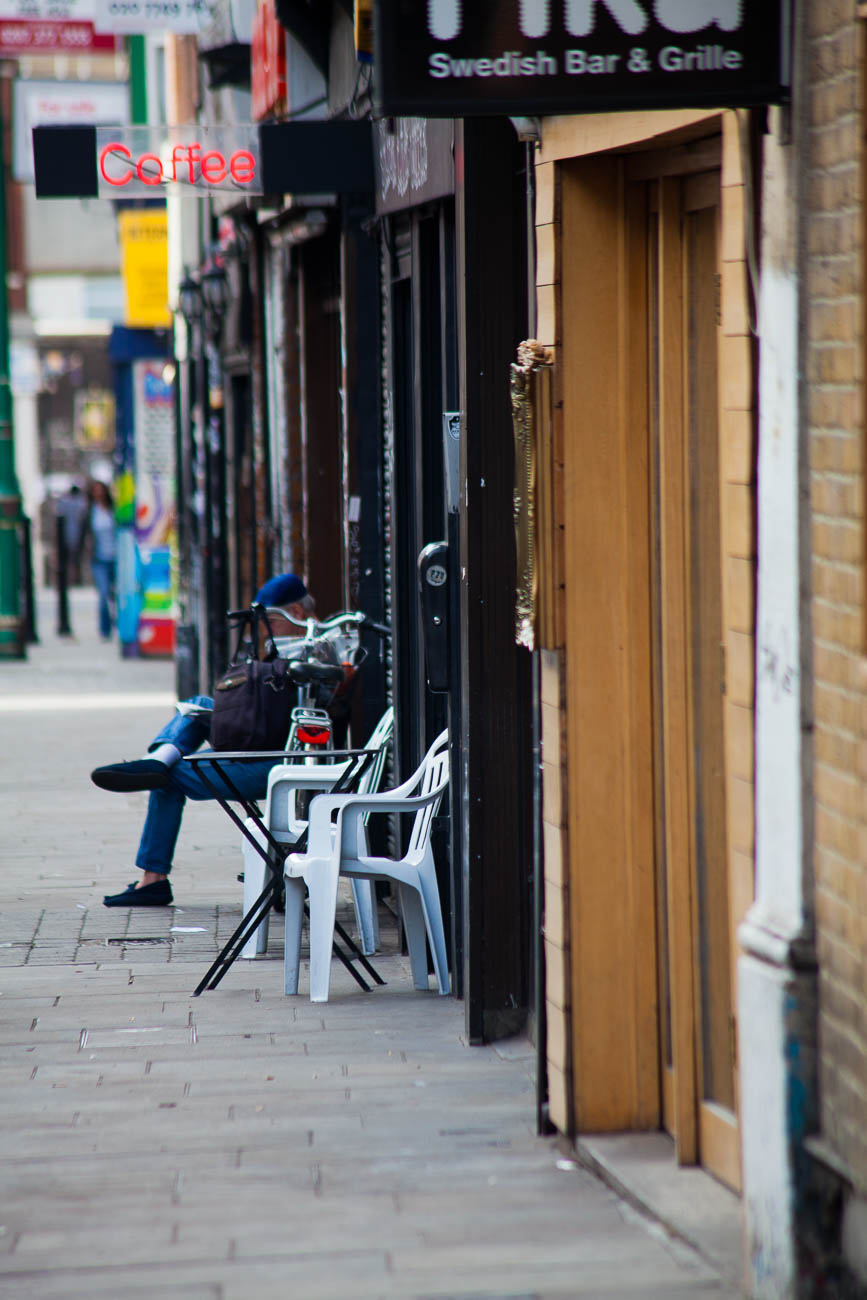
    Not only are they finding that customers are coming to their shop after seeing a piece of jewellery online, in some instances customers will buy off their website.

    Customers look up websites first, unless they know and trust the jeweller.


    6 Fashion design


    Eight Industries that need Excellent Stock Imagery


    How do you get your new design out there? By the web of course but that’s not the only way I’m sure.

    Designers have relationships with buyers and will send off images of their latest ideas to garner interest.


    There is the other side to marketing fashion and that’s directly to the end user.

    There are lots of roads to that end but all rely on great visuals.


    Twenty years ago, the new designs were either first seen in a boutique or a fashion show or media coverage of a fashion show.
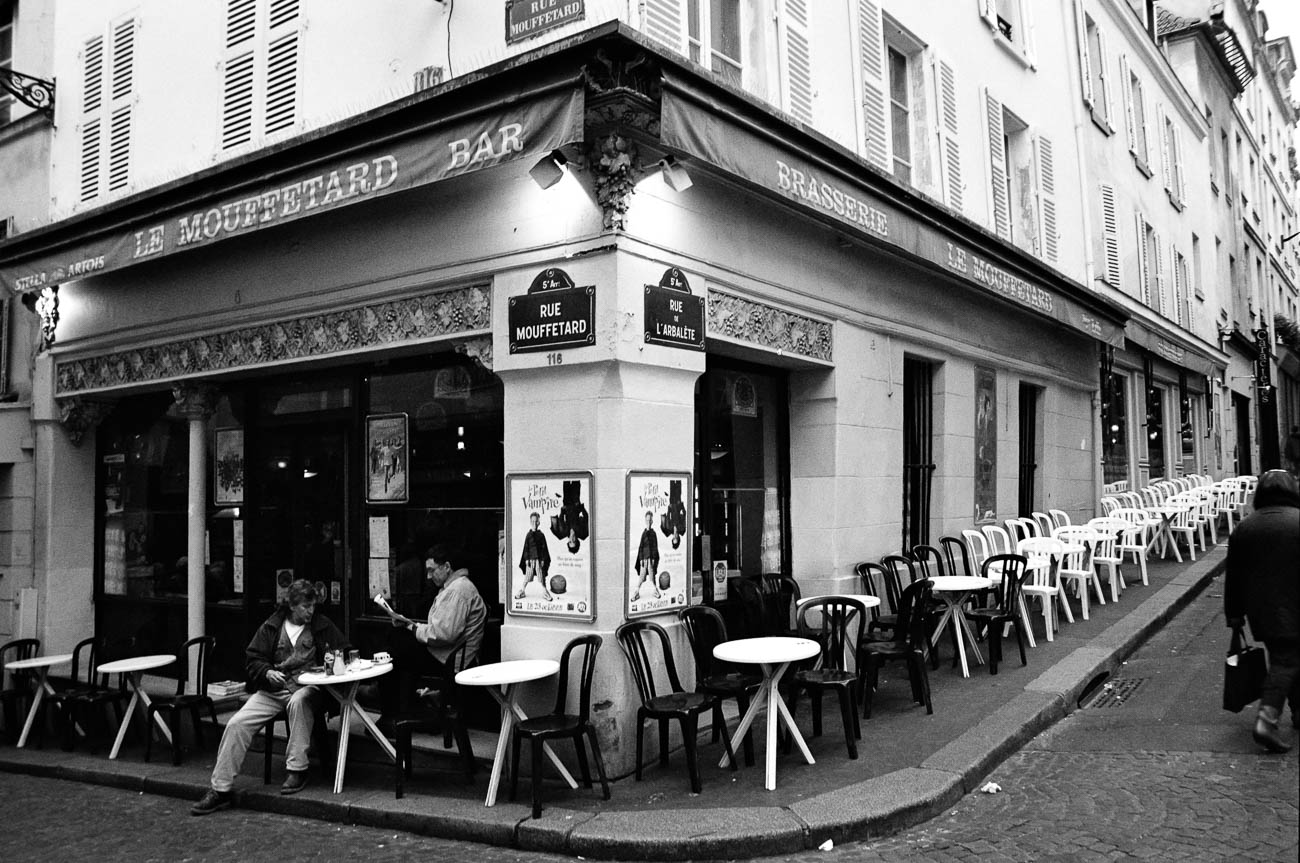
    Now of course we can search the web for the latest fashions.


    7 Used car dealers
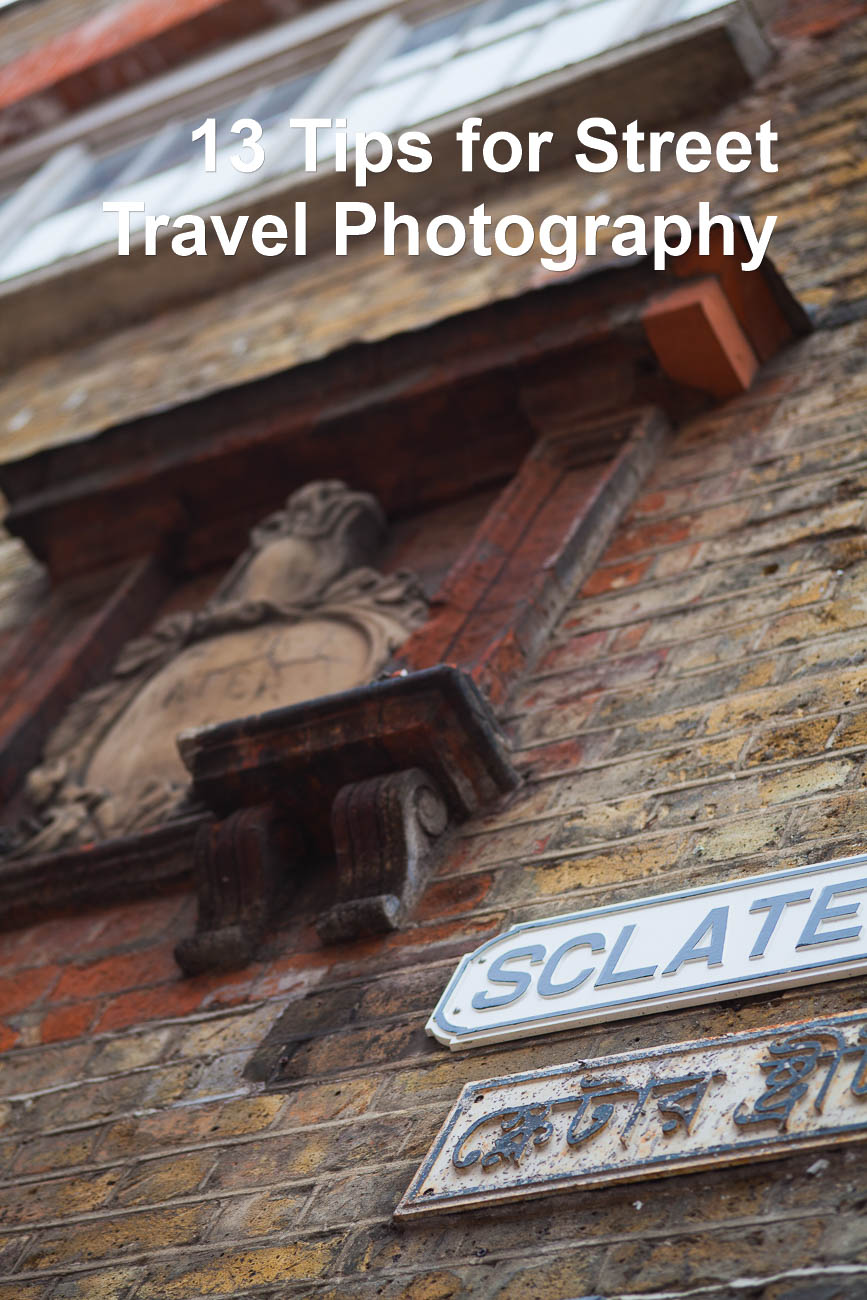
     

    Eight Industries that need Excellent Stock Imagery
    One of Havana’s many classic cars

    I say used car dealers, because new car dealers usually have the car manufacturer provide them with quality images.

    Car manufacturers pay big bucks to have top line professional photographers do a shoot on each new model release.


    From a used car perspective, the cars are all individual and they need images that will stand out.

    Most of the advertising with images is in print and/or online.


    It is especially important when using print, to ensure the quality of the image is high. As I mentioned before, print as a rule, especially newspaper print, has poor reproduction.


    8 Construction industry


    For new property developments, images are used to sell off the plan properties like apartments or even new houses.


    Often the property hasn’t been built yet so images must be taken of properties of similar design.

    They are then edited (not a negative in itself) to depict a more lifelike image of what the future property would look like.


    There are of course opportunities to take some great images of show houses or apartments if they have been built which is often the case.

    A lot of this is now put on line.


    Residential apartment developments often have their own website full of images that they will hope to catch the eye of any prospective purchasers.


    So, to recap there are many different industries that need excellent Stock Photography.


    The main ones that I have identified are:


    1 Real Estate


    2 Marine Vehicle sales


    3 Restaurants


    4 Wine industry


    5 Jewellery


    6 Fashion Design


    7 Used Car dealers


    8 Construction industry


    I’m sure you can think of many more and I’d be interested to hear which ones that are out there that you think need excellent Stock Photography.

    Just leave your comments in the section below

    And by the way thanks for reading this.

    Whilst you are at it why not enter your details in the box below to get a guide “Eleven easy ways to help you take your own stock photography” plus I have some great material coming up that will be exclusive to those who have signed up.