

Tag: landscape
-
African shoestrings – Tanzania Day One Hundred and Nine – Dar es Salaam
And so the events leading to bus ride from hell number three started to unfold. The bus wasn’t due to arrive until 11.30 pm but Leonard, who was not as friendly and as obliging now that we were leaving, would only give us a lift to Mzuzu at 12.30 in the afternoon and charged us for the privilege. So the three of us (Stephan and Lucy were also coming, except Lucy decided that she wasn’t ready to leave at that time and would get the bus later whilst Stephan obligingly took her bag with us) plus two other locals crammed into the back of this small Ute. After another bone jarring journey we were dropped off at the Mzuzu hotel where the porter helpfully checked in our bags whilst we killed time in the town. We had lunch at the Sombrero restaurant and wondered as aimlessly as possible around the markets. It was here that we found a tape of ‘Brenda’ the instigator of the song that had been buzzing around in our heads ever since that sleepless night in the Gross Barmen camp in Namibia. It must have finally brain washed us because we actually bought the damn thing!
Back at the hotel we settled down in the bar to watch the cricket world cup until the game got rained off and we decided that we might as well have a decent feed here at the hotel.
Stephan is a big bloke who, we had noticed, likes his tucker. So when our meals arrived first – all looking quite respectful in quality and quantity, his mouth was watering. However, the look on his face, when what can only be described as a sample of a mini pizza, was put in front of him was priceless. He shook his head in absolute disbelief and sent it back, replacing it with the curry hoping it that it came in the same or bigger portion as Lucy had. Fortunately for the rather confused waiter, it did.
We caught a taxi to the bus station with all our bags and waited there with three other tourists for three hours. At around 12.30 am the bus eventually turned up and then all hell let loose. From the shadows all the other passengers moved as one towards the bus. People on the bus were trying to get off to go to the toilet and stretch their legs whilst what seems like the population of Malawi was trying to get on. Stephan used his bulk to push his way through the madding crowd with us following in his wake and eventually we get on. But there was nowhere to sit! The bus had obviously been overbooked and we had a choice, stand and travel or get off and wait a couple of days for the next one like one of the other tourists was doing. Well we stayed on and I stood with our bags around my feet and only one of my feet actually on the floor, rubbing rear ends with a sizeable local woman and hanging on for dear life. Eventually the bus moved on and the journey for the next five and half hours will remain forever etched into my memory. The recent heavy rains and flooding had damaged a lot of the roads and once again the bus spent valuable time trying to avoid or simply running straight through potholes. At one time both Sue and I incredibly fell asleep whilst standing up for just a few seconds of escape from this nightmare. Its 36 hours to Dar and somehow the thought of travelling like this put us into denial. Surely people would get off on the way and we would end up sitting.
We reached the Tanzania border just after dawn and without much fuss we were allowed to pass into our last African country of the journey.
Even though we were assured by the driver and his sidekick that there would be seats for everyone from hereon as a lot were getting off; the thought of travelling another 30 hours standing up was too painful to contemplate and we looked for an alternative during the hour or so stop.
It was Stephan who came up trumps. A group of five preachers from Malawi were travelling to Dar for a conference. They would take us on condition that we pay some of the cost of fuel and change some local currency into US$, which they badly needed to pay the horrendous vehicle transit fees that Tanzania had imposed on them at the border. They had a four seater Toyota Hilux Ute and the only room for all of us was in the tray! We didn’t deliberate too long; at least we would be sitting down and would most likely get there well before the bus. We later found out that the bus got to Dar an hour later but had to sit on the outskirts of the city for five hours because of a midnight to dawn city curfew on large vehicles.
So we got in and somehow the four of us managed to cram amongst the preachers and our bags and we were off. It was a long trip. Lucy and Stephan jumped out at Mbeya from where they were making their way elsewhere and we continued on with another 880 kilometres to go. All in all it wasn’t too uncomfortable and we were out in the fresh air.
We soon came to realise why these guys had been so anxious to have us along…………. they had no money! The fees they had to pay at the border was an unbudgeted expense and had wiped them out, so we ended up having to pay for most of the fuel. At first I felt cheated but then I thought well we’re helping them as much as they’re helping us. Maybe their master will look after us a bit better next time we attempt to travel by local transport.
Watching the scenery and the towns and villages go past from the rear was an interesting experience for that length of time (we had our backs to the cab). It was typical African rural countryside. Dusty villages and towns were dotted along the road with crops of tobacco, coffee and various others dominated the terrain. At one stage the scenery changed to that of the high country, small streams, rainforest and mountains as we passed through the Rubeho and Ulunguru Mountains before ascending down towards the coast where Dar es Salaam sits. Just on the outskirts of the Dar we were diverted down what seemed to be an endless, very dark unsealed road that made us very nervous. Our apprehension was justified half way along when a skinny shadow suddenly appeared on the back of the Ute and was obviously looking to pinch one of the bags. The speed of my reaction surprised me as much as it did him. I lunged with my foot and made enough contact and noise to frighten him off. The old heart was pumping well at that moment.
Eventually at 1 am we reached the city and then spent the next half an hour trying to find a hotel we had booked. These guys really didn’t know Dar at all and eventually we gave up and settled for any hotel. The Starlight Hotel was not the best value for money. It was tired and grotty and for US$50 it was a rip-off but by that time we really didn’t care and just wanted to find a safe bed.
Footnote:
Get more traffic to your blog! Let me help you take, edit and publish your images now by signing up here to get “Eleven easy ways to improve your marketing photography”
A free guide on how to start improving your images to help you take control of your marketing.
That link again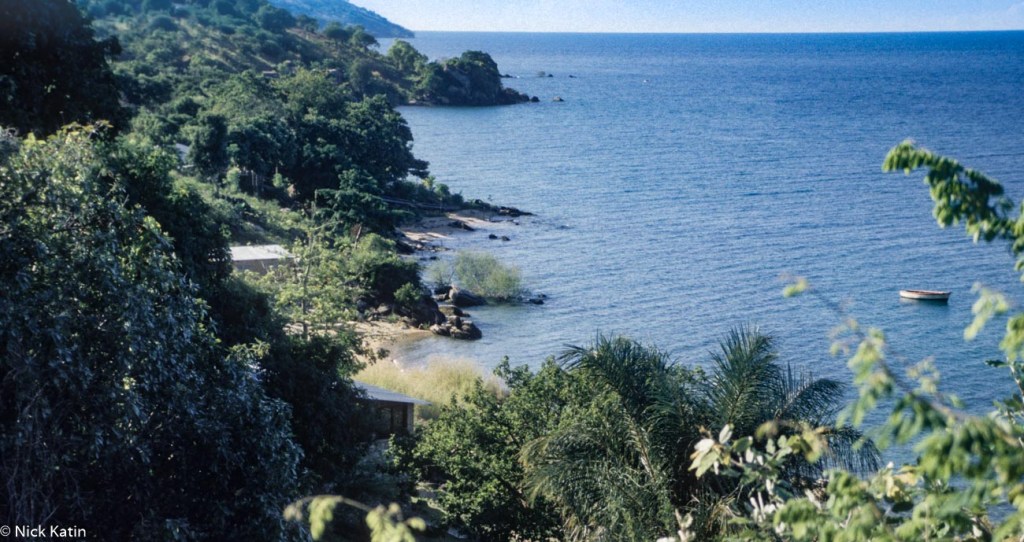
Lake Malawi’s eastern shore Share this:
-
African shoestrings – Malawi Day One Hundred and Seven/Nine – Nkhata Bay Malawi
So the very next day we went into Mzuzu to find out for sure. The information we were getting in Nkhata bay was unreliable and sketchy.
Stephan had a saying “Africa wins again” well that’s exactly how you could describe the sum result of the next eight hours in Mzuzu.
We were getting a lift in the back of Leonard’s Ute but due to the remarkable fact that it had run out of petrol before it had even moved we were delayed for a while. Eventually we were dropped off at the main Post Office in Mzuzu. Nearby there was a bus depot where we asked for directions to the bus station where the office of TVC, the Dar es Salaam bus operator, was located. The guy offered us a lift in his bus that was about to start its journey. Half an hour later we were still sitting there and decided to get out and walk the 500 metres (he had said that it was a least two or three kilometres).
At TVC’s office, which incidentally was also a hairdressers and beauticians, we found out from the couple of guys in there that they were sure there was a bus Thursday but to ring later to confirm.
We were still toying with the idea of flying to Dar so off we went to the Air Malawi office in the Hotel Mzuzu, the closest premises Mzuzu has to a three star hotel let alone a five star. There the rather impatient ‘customer service officer’ told us that flights to Mbeya (at a mere 500 kilometres away and the first major town in Tanzania) had been discontinued LAST WEEK! But we could take either a flight back down to Lilongwe and up to Mbeya for US$225 each, which he was happy to tell us had just gone up or a flight to the town of Karonga (180 kilometres away but still in Malawi) for US$53 each. Neither of these options were really much good as we would still have to get some form of land transport to Dar or pay another few hundred dollars to fly. Thanks for nothing!
Whilst we were at the hotel we thought we may as well change some money. This was also a waste of time, as they didn’t have any cash, so we had to walk back to the bank and queue for half an hour.
One of the reasons that we needed money was to help bail out the resort. We had been approached the day before to pay some of our bill so that the resort could afford to stock up on beer and food. As we mostly ate and drank there it seemed like this was in our best interests.
Despondent we caught a minibus that as well as looking like it should be condemned and probably not good enough to be wrecked for parts, packed us in like sardines and took one and half hours.
Back in Nkhata Bay we phoned TVC from the travel agents. No there was no bus on Thursday after all but there was definitely a bus on Saturday night.
Thoroughly depressed we drowned our sorrows at Njaya, watching the Aussies beat Zimbabwe and reflected on Stephan’s “Africa wins Again!”
We spent the next two days strolling into town, eating, drinking and just lazing around on the beach. On one day we watched our laundry being washed in the lake and dried flat on the sand by Fraser an entrepreneurial young man, who on reflection charged a lot more than a coin operated washing machine.
The only chore we did was to visit the local doctor to obtain some ‘cleansing’ tablets for Bilharzia. Apparently you can take these pills that make you feel like shit for a day or so but cleanse your body of any of these little worms that carry the disease. We never actually used them but visiting a local doctor’s surgery was certainly an eye opener. The surgery itself was tucked away behind some houses and the main supermarket. So get to it we had to follow a small footpath through several private gardens. The doctor’s rooms consisted of two rooms, the consultation room equipped with a basic examination, table desk and a chair and the pharmacy equipped with just a table. All the medication was sealed in bags and small containers sitting on this table. The doctor was helpful and did say that Nkhata Bay was Bilharzia free but we decided to err on the side of caution. It cost us nothing for the doctor’s consultation and very little for the tablets we required. We felt that we had somehow denied the locals medication simply to save a few dollars. (The same service and tablets in London would have cost a small fortune).
We did mix a little with the others but it became fairly clear that Stephan and ourselves were no longer part of the ‘inner circle’. The problem seemed to stem from my comments about some ‘friends’ of Lucy’s who in between bouts of dope induced blankness told us of their far-fetched plans to build a lodge around another bay. I innocently said after they wobbled away that they didn’t know what the hell they were doing (I’m easily irritated by anyone who loses control of their faculties due to excessive drugs or alcohol). Lucy obviously took offence and contradicted me and I left it there. What Stephan’s crime was I don’t know nor did I care much.
We spent our final day mooching around town and attempting to pick up two shirts and two sarongs that we were having made. I say attempt because we had been unable to get these items made by the same tailor as the first one (he was too busy) and we had to settle for Kenny. It became clear to us that Kenny liked a drink or two. The day before we had checked on his progress and the smell of stale alcohol was everywhere, even so he had promised us that they would be ready on time and at that stage in the game it was too late to change tailors…………. Well, we went to pick them up and he had a made a real mess of it. He hadn’t finished for a start and had stitched the shirts with the wrong colour cotton, one of Sue’s sarongs had not been even started and the material for the other had been turned into a shirt! The sum result was that Kenny (again smelling of alcohol) paid us for the shirt material and replaced the material for the sarongs from another market stall but we had no shirts or sarongs. For some strange reason I actually felt sorry for him and until stopped by Sue and Stephan I was quite prepared to just walk away and leave him the material. After all it had cost very little. But as they said it was the principle.
Footnote:
Take control of your blog’s images now by signing up here to get “Eleven easy ways to improve your marketing photography”
A free guide on how to start improving your images to help you take control of your marketing.
That link again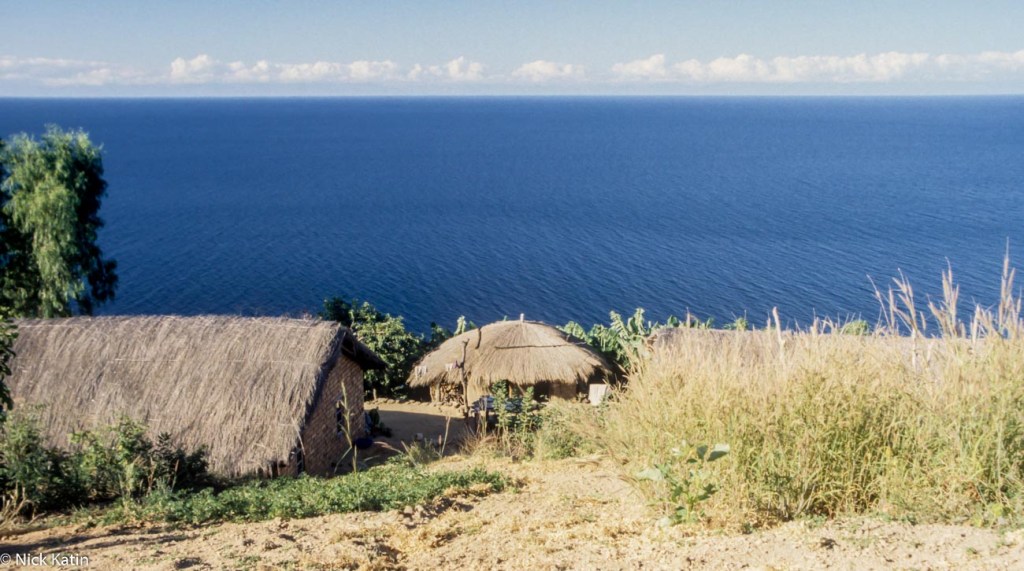
Small cluster of huts on Lake Malawi’s eastern shore Share this:
-
African shoestrings – Malawi Day One Hundred and Five-Six – Nkhata Bay Malawi
No sooner than had we settled in and despite our fatigue, we were out exploring. We came across a couple that we had met in Chimanimani, Patricia and Jonathan. Patricia was a short attractive French girl who liked to talk whilst Jonathon was her antithesis, tall, balding, quiet and English. They too were staying here and told us that the Njaya resort next door was probably nicer but a lot noisier.
We went to see for ourselves. Run by an English couple, it had a sort of up market backpacker hostel feel to it. But it did have a great bar high on the hill overlooking Lake Malawi and it had a satellite TV. By now the world cup cricket was well under way and as we going to crash here for a few days, we could allow ourselves the luxury of being couch potatoes for periods of time.
Lake Malawi is an awesome sight……….. Taking up one fifth of Malawi its located in the Great Rift Valley and forms a natural border with Tanzania in the north and Mozambique in the south. It is about 500 kilometres long and an average of about 48 kilometres wide. The area of the lake has been estimated at 27,785 square kilometres and its surface is a surprising 472 metres above sea level. Looking at it from the shore or even from the Bar of the Njaya resort it seems to have that slight concave surface of a large body of an ocean as if it were hugging the contour of the earth (which it is of course). It looked so tempting in the hot humidity of the afternoon. But there was one thing holding us back. Bilharzia!
Bilharzia is a disgusting disease. It’s not the disease itself that is so bad, although it’s pretty serious, but the way it’s caught! Its carried in freshwater by minute worms that initially live in a certain type of snail and then after an increase in numbers hit the water ready for any poor unsuspecting humans.
It will then enter through the skin and find its way to the intestines and bladder and from then on it’s all downhill. It’s found in slow moving bodies of water like the shallows of rivers and streams and lakes. There has been a long debate as to whether it exists in Lake Malawi and the bottom line is that it does in some parts. However, we decided to risk it on the basis that we were assured that the area around Nkhata Bay was clear of these horrible little bleeders. It did actually make sense. One look at the small swell and waves that seemed to continuously wash the beach meant that water was moving and the absence of reeds where the host snails were found was also comforting. So I took the plunge!
That night at the restaurant we met the other two residents. Stephan, a Swede who had been travelling all over the world for around five years (three in Australia) and Lucy another Pom. The six of us were the only guests in the resort and for the next few days we saw a lot of each other.
Nkhata Bay was a smaller quieter lakeside version of Blantyre. Ramshackle building and stalls lined the dusty streets that became small paths in and out of small pockets of more ramshackle buildings and stalls. Banana sellers were everywhere offering their produce for almost next to nothing in western currency.
As the others had been there longer they had already acquainted themselves with some of the more extrovert individuals of the tourist curio trail. We meet Chester, Comfort and Shosho amongst countless other sellers. Shosho to his credit showed us how to play the local game of Boa a game similar to checkers played on an indented board with Mahogany seeds. Later in the day he found us on the beach and chatted with us all the time hoping, we would buy some of his wares.
We also met Happy, Happy and Fraser, three young boys who were selling home made postcards. That’s the key to these people they wanted to learn about you and practice their English but most of all they wanted to sell you something.
I arranged to have a shirt made for the ridiculous price of US$2.
And that’s all there was to do in this tranquil place. Browse, eat, drink and swim.
The next day (Tuesday) we decided that whilst this might be a little bit of paradise it was time to move on and get to Zanzibar. We found out that there was a bus leaving to go to Dar es Salaam that night from Mzuzu. So after another eventful day of doing nothing, we said our good byes to the others in our regular lunch spot, the beautifully located Safari Restaurant and headed back to pack and leave. By the time we had walked back we had changed our minds at least four times. I felt that we were acting out that song that goes “should I stay or should I go”. In the end we decided to stay and would see if there was a bus any earlier than Saturday. We were just not ready to face yet another bus ride especially a much longer one than the last two.
Footnote:
Take control of your blog’s images now by signing up here to get “Eleven easy ways to improve your marketing photography”
A free guide on how to start improving your images to help you take control of your marketing.
That link againLake Malawi’s eastern shore Share this:
-
African shoestrings – Malawi Day One Hundred and Three/Four – Nkhata Bay Malawi
So hang on tight, Bus ride from hell two starts now!
We arrived at the bus station at 5 pm for a 5.30 pm departure. This dusty, grimy, polluted bus station was not quite as threatening as Harare. There were lots of people floating around, and almost as many security guards. Music blared from the PA system and even at that time of day the market stalls that surrounded the station were doing a roaring trade.
At 7.30 pm the bus finally arrives and then all hell let loose. No orderly queue here just chaos as everyone attempts to get onto the bus at the same time with bags, pillows, blankets, box’s, small children and heaven forbid, babies. Any thoughts of having a reserved seat are blown out of the water. Another bus turned up, so thinking we were smart we attempted to board that one but were turned back by the bureaucratic driver who unconvincingly pointed out that our tickets said we should be on the other bus.
“But there’s no room on that bus” we countered.
He just repeated the fact that his bus was not our bus.
That was the final straw for Sue. She marched onto the first bus, cleared all the staff belongings from the front seat and shouting at anyone in the way that this was where we were going to sit. The rest of the passengers and staff were stunned into submission as we chucked our bags on the floor in front of us and sat down.
They had never seen a wild white woman before……….. usually we were so polite and accepting.That’s not to say that we now had the best seats in the bus. We had to sit with our legs elevated on top of our bags, resting on the handrail in front, not the most comfortable position for a long bus ride but at least we had seats away from the congestion of the rest of the bus (the isle was crammed full of bags, boxes and other belongings). Plus we had full possession and sight of our bags. The doubt in our minds about the security of having bags stowed away in the luggage hold or on the roof were confirmed by the rest of the passengers.
Not one of them had their belongings where they couldn’t keep an eye on them.At around 8.30 pm the bus took off and we had been going for just over an hour we were stopped at the first of five police roadblocks that we were to pass through before reaching our final destination.
Two police officers carrying AK 47’s over their shoulders, ordered us all off and went to search the bus and our bags. The reaction to this was not cooperative.
After a lot of arguing and discussion we eventually had no choice and an hour later we resumed our travels. The rest of the journey was an ongoing frustration at the speed at which we were going. Either the bus was heavily overloaded or it wasn’t man enough for the job, because it just about crawled up every hill (and in Malawi there’s nothing but hills). On some stretches we could have walked faster!Eventually we got to the bus station at Mzuzu at around 9.30 am, some four hours late and managed to meet our next challenge finding a bus to take us to Nkhata Bay.
We found what’s known to travelers to third world countries as the chicken run bus. It was exactly like the local buses you see portrayed in the movies. Full with locals carrying on just about anything you could imagine. Bags of seed, wood, fruit, ordinary luggage and yes, of course, chickens. We sat with our bags on our laps and watched our knuckles turn white from gripping tightly anything we could hang onto as the bus weaved its way at a speed that was just a wee bit fast down the winding potholed road to Nkhata Bay.
As it sped past banana plants and maize fields, I did manage to notice that every inch of land appeared to be cultivated. Even the steep hillsides were terraced with various crops. In between there were small clusters of straw huts with their chimneys masquerading as a hole in the roof smoking. It was a cold morning in the highlands of Mzuzu.
It was a lot warmer in Nkhata Bay and we were thankful to get there in one piece. We now had to find our way to Chikale Beach Resort a couple of kilometres south. When we got off the bus a young local approached to see if we wanted a lift. Thinking that he wanted to take us to another hotel or resort we declined and with our backpacks on we summoned up some energy and marched in the general direction of Chikale Beach. A few moments later he was back.
“Where are yoou gooing?” he asked
“Chikale beach resort”
“I am Leenard, de manager. I will take yoou dar.”
This guy had to be no older than 21 but despite this and our initial concern that this was a potential mugging we jumped into the back of his Ute, too tired to really care. We had to share the Ute with a couple of crates of beer and a couple more passengers but it sure beat walking with all our belongings on our back.
The resort was pretty basic with thatched cottages grouped around a tree-lined beach and the bar/restaurant right on the beach. Each cottage had double bed and its own bathroom, which as far as we concerned after the experience of the last few days was heaven! All this for 600 kwacha (US$10) per night.
Footnote:
Take control of your blog’s images now by signing up here to get “Eleven easy ways to improve your marketing photography”
A free guide on how to start improving your images to help you take control of your marketing.
That link again
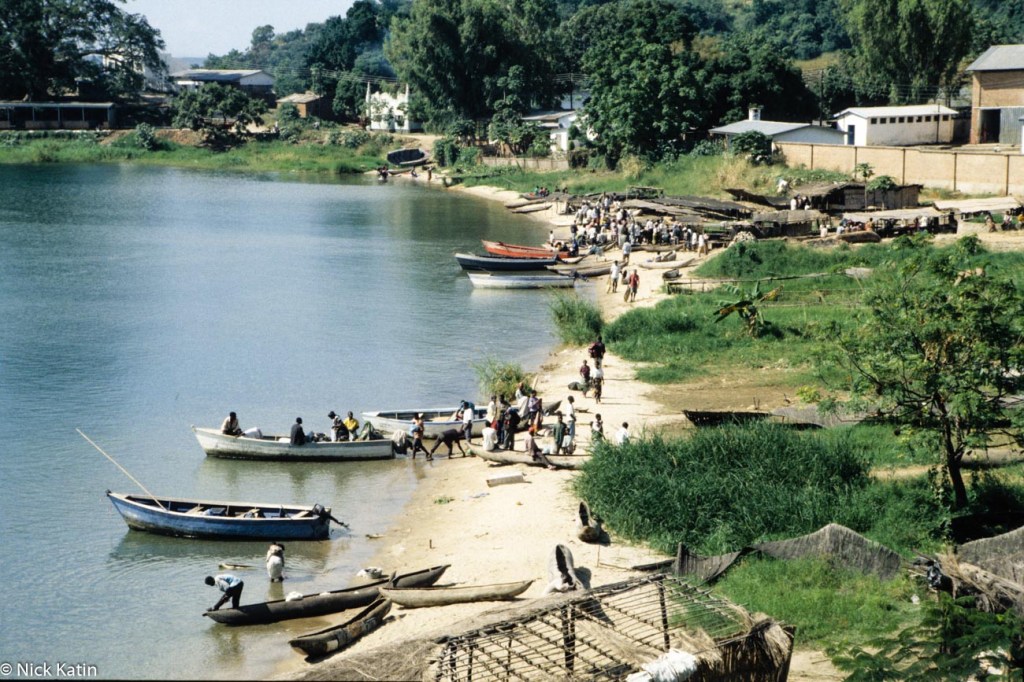
Nkhata Bay on Lake Malawi. Share this:
-
African shoestrings – Zimbabwe Day One Hundred Harare
Our last session of paddling was a mere 6 kilometres to our final destination, Nyamepi Camp in Mana Pools National Park. All in all we had paddled a total of 58 kilometres and by the time we had finished we all felt strong and confident enough to have gone on for another three days. When we were asked later on what had been the best thing we had seen and done whilst travelling this always comes to mind. It had been one of the greatest experiences of our lives!
We were back in Harare at around 10 pm and settled into our very ordinary (especially at the price of US$65 per person) room in the annex of the Bronte Hotel. This was meant to be our treat but the room was tired and old and really was no more comfortable than an average priced motel found in anywhere in the western world. What was nice about the Bronte was the hotel lobby and gardens and we made sure that we fully enjoyed having our breakfast, a drink in the afternoon and a coffee after dinner in the tropical colonial style gardens. Dinner was actually the best event of the day (we had spent a good few hours at the Tanzania embassy obtaining our visas). The Italian Restaurant Fat Mama’s in the Russell Hotel was obviously the local white and ex-pats hangout and I could see why. Great food, great atmosphere and great prices!
The next few days were taken up with transport and what I call the bus rides from hell! What follows next is reality but not necessarily typical of public transport in this part of the world. Of all the people we met during our travels we were the only ones who seemed to cop the experiences that I’m about to describe. It just seemed to happen to us!
Bus ride from hell number one started with a pick up at our hotel, early the next morning, by the bus company Ute to take us the Mbare bus station across town. On his way (in fact out of his way) the driver went via Possum lodge and picked up two other unsuspecting white passengers.
The bus station was chaotic and frightening. People came from everywhere grabbing at our bags and us. Someone grabbed one of our bags and with me still hanging onto it, led us onto the bus and then asked for our passports. What then confused us was another guy sitting further down the bus also asking for our passports and at the same time shouting “Watch your bags, watch your passports, watch everything!”
This guy was obviously in charge and we held onto the passports until we reached him. The other guy mysteriously disappeared and there was no doubt in my mind that had we relinquished our passports to him that would have been the last we would have seen of them.
Once we found our seats we could see the chaos and crap outside the bus. I say crap because the diesel fumes were noxious and those working in the area had paper filters fitted over their mouths and noses.
The seats we had were one row from the back and directly behind the other white couple who seemed to have handled the situation a with lot more cool than we had. Our bags were on the seat behind and we had three seats all to ourselves. This wasn’t going to be so bad we thought as eventually the bus got going. But that was as good as it got! Fifteen minutes later it stopped at the bus depot to pick up double the amount of passengers and probably triple the amount of luggage. There is a rule in Africa; don’t allow your bags to sit on the roof of any vehicle ’cause there’s a big chance you won’t see them again. Even the locals hang onto their bags. This time despite our protests we knew we had no choice; there was hardly enough room for all the passengers let alone the bags.
I got out of the bus and stood and watched as they loaded the bags on to roof. The only other white guy, Andy stood next to me. Andy was a Zimbabwean and his girl friend Jenny was from South Africa.
“So what happens now” I asked
“I dunno” he said
“You’re the local”
“Yeah but I’ve never traveled on one of these before”
The bus driver, conductor and other helpers finished covering the bags with a huge tarp and tying it all down and we were beckoned back onto the bus.
Oh well I thought not much we can do now as we got back onto the bus.
We had now lost our spare seat to a small quiet man who spent most of the time dozing. His head flopped about as if connected to his body by a rubber neck and often ended up on my shoulder. We westerners are funny like that we cringe at someone encroaching on our space. I had to keep shrugging him off and I swear that if I had some rope I would have tied his head to the back of the seat.
The bus actually set off at 8.15 surprisingly only one and half hours late. It didn’t take long for part of the tarp to come away and start flapping against the side of the bus and on our first refreshment stop it was retied well enough to last around fifteen minutes before it started flapping again.
After that stop we acquired a rather sinister looking uniformed man who checked a few passports and then disappeared and then reappeared half an hour later to collect a Z$70 ‘border fee’ from everyone. It was the last of our Z$ and I had the feeling that we were being ‘had’ especially when no receipt was forthcoming even when asked for. This fee was apparently to ease the pain going through the Mozambique border post.
At the Nyamapanda border our passports were collected by this bloke and he made a sort of half hearted inspection of our bags before giving our passports and presumably money to the Mozambique officials. We had to wait around for about an hour whilst all this ‘officialdom’ was dealt with.
This was the pits.
The Zimbabwe side was not too bad but the Mozambique post was an old dilapidated shack with a couple of holes in the ground masquerading as public toilets a few metres away. They stunk! The stench was almost visible from 10 metres away.The whole area was full of persistent moneychangers, curio sellers, drink sellers and sellers of anything else they could rip you off with. It was the first of only two times that we were glad to get back onto the bus.
Footnote:
Take control of your blog’s images now by signing up here to get “Eleven easy ways to improve your marketing photography”
A free guide on how to start improving your images to help you take control of your marketing.
That link again
Happier times -Dug out canoes at the Okavango Delta In Botswana Share this:
-
African shoestrings – Zimbabwe Day Ninety-Six Harare
We moved on the next day to an area called the Vumba Mountains around 250 kilometres to the north. This small area of high country also borders Mozambique and is much more green and lush than Chimanimani. In fact it’s reminiscent of the Dandenong ranges near Melbourne with its eucalypts, rhododendron and tree ferns. We booked into the Ndunda Lodge, an inexpensive thatched lodge nestled amongst the trees and surrounded by manicured lawns and bushy gardens that housed a multitude of bird life. The Botanical gardens are the big attraction in the Vumba. They overlook the Bvumba valley and the surrounding mountains and are expertly manicured outside of the thick rainforests. The forests themselves have lots of trails that allow closer contact with nature. As we strolled around we had the distinct feeling that we were being watched.
The Samango Monkey is as elusive as they are rare. They are unique to the Eastern Highlands and have this birdlike call and it was these little buggers that kept a watchful eye on our movements. No doubt it wasn’t just us that attracted our attention, we had a four-legged companion. Gypsy was the lodge sheepdog and for some reason known only to herself, wanted to lead us through the gardens stopping occasionally to look around as if to say “hurry up I haven’t got all day, you know”
But without doubt the best attraction in the area is Tony’s Coffee Shoppe. It serves nothing but coffee and cakes. I don’t know why but I expected Tony to be white. Maybe its because the concept is mainly a western rather than an African indulgence or maybe it’s the name Tony. Either way Tony and his waiters were dressed in bow ties and long white aprons and served each table as if it were in a fine dining restaurant. The cakes were absolutely terrible! Rich, gooey and laced with alcohol we pigged out and washed it down with coffee spiked with chocolate. Is that gross or what!
Another long drive took us to Harare, capital of Zimbabwe and the drop off point for the hire car that had somehow managed to get us there without further problems and despite all the extra weight we were carrying from our indulgence at Tony’s.
As far as historians can tell the Shona were the first inhabitants of this area and called it Ne-Harawa after one of their chiefs. It actually means “The One Who Does Not Sleep” which is quite an apt name for a now bustling metropolis. The poms arrived in the late nineteenth century and as is their way decided to settle here and construct a few buildings and called it Fort Salisbury again after one of their chiefs the British prime minister of the time Robert Cecil the Marquis of Salisbury. What Ho!
At independence in 1980 it was renamed Harare a sort of anglised variation on the original. Now of course it is like most other Southern Africa cities a mix of western and African culture. High rise office buildings, shopping centres and colonial buildings dominate the landscape with two large African markets offering the usual bargains and rip off’s.
We have a general aversion to most cities but Harare wasn’t so bad. Mind you we had been there before. At that time we had an overnight in the Sheraton courtesy of our travel agent. What I remember most about that stay was the power cut to the whole city fifteen minutes after we landed and at the same time as the bags were being wheeled out on a two large flat baggage trolleys (no automatic carousel here). With the aid of a fellow Aussie traveler’s torch we managed too locate our bags before anyone else decided to add to their collection of bags.
This time our arrival was by road and relatively uneventful until we dropped off the hire car. The attendant there had our credit card imprint and whilst we were there, phoned for authorisation only to be denied. We left it with him and went on to our accommodation. We rang him some time later and he had still no luck. In the end he sent his offsider to us with the existing credit card docket and a new one for a different card which I signed and all was well.
We didn’t think anything of it. In a place like Africa the lines of communication are often interrupted and mistakes are frequent.
However we did attempt to use the original card another time and came across the same problem. We were now down to our backup visa and we didn’t know why! It wasn’t until we reached England some 4 weeks later that we realised why. Two items appeared on our statement that we knew nothing about. The first was an additional transaction from the service station in Bulawayo that we had used on our way to Masvingo, the second was for A$1629.11 paid to the Amabhantu Safari Coy in Bulawayo. This last one was a worry we had never heard of the company; never bought anything for that amount and had not been anywhere in Bulawayo at the time of the transaction. Obviously these transactions had taken us over our credit limit and hence the authorisation rejections.
To the Commonwealth banks credit they acted quickly and cancelled both amounts and referred it to their fraud department and that was the last we heard of it.Footnote:
Take control of your blog’s images now by signing up here to get “Eleven easy ways to improve your marketing photography”
A guide on how to start improving your images to help you take control of your marketing.
That link again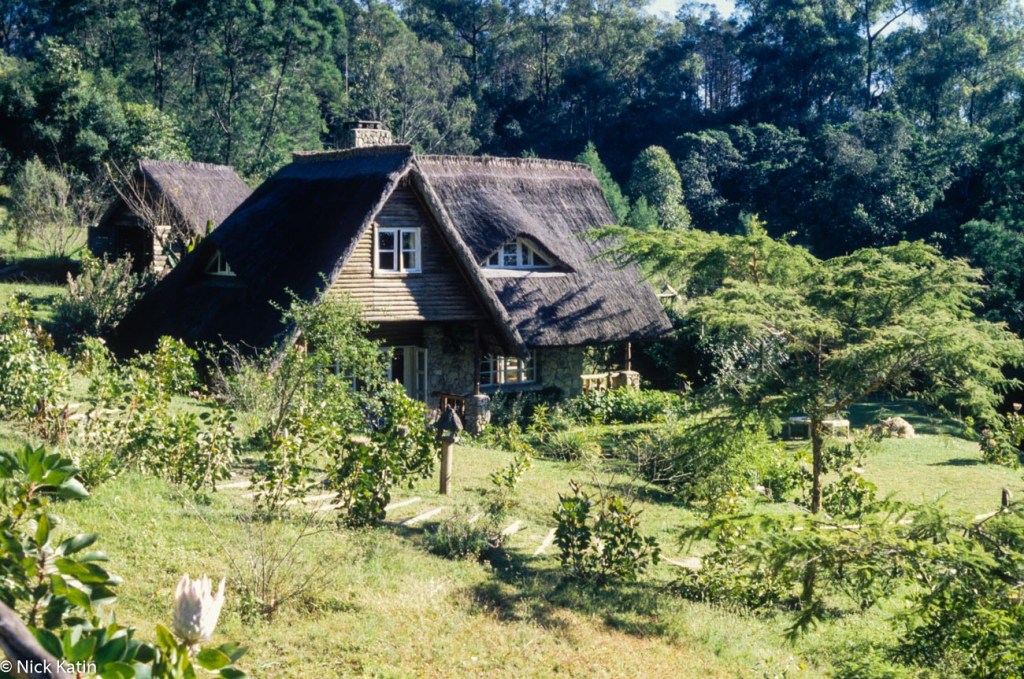
Tony’s coffee house in the Vumba in Zimbabwe Share this:
-
African shoestrings – Zimbabwe Day Ninety-Five Chimanimani Zimbabwe
From Great Zim. we drove to the small village of Chimanimani in the Eastern Highlands. Located at the eastern border with Mozambique, Chimanimani also gives its name to a national park and a mountain range. We had been told that there’s great walking and views to be had and that there was a great place to stay just outside the village called Heaven’s Lodge. It wasn’t a bad place but it wasn’t fantastic either. A sort of backpacker’s retreat with little chalets dotted around the large grassy paddock that sloped down the hill. The chalet we had was cold and the door wouldn’t stay shut unless we propped something against it on the inside but the view across the surrounding green hills and down into the lowlands from where we had just come wasn’t bad.
The mountain range of Chimanimani was 19 kilometres away, well at least the starting point for all walk tracks at Mutekeswane base camp was. There was vehicle access as far as this but we had heard that the road was in bad condition so bearing in mind the temperamental nature of our car’s battery terminal we decided to catch the lodge shuttle. We made the right decision! The road was as bad as it gets. This time there was no bitumen between the potholes, it was just one unceasing pothole punctuated by large boulders. However as is the norm for transport in general in Africa it was half an hour late which meant we had less time to walk.
The track we took up to the mountain hut was called Bailey’s Folly. No one could tell me why it was called this but it didn’t take long to realise that the track was aptly named. A track in name but not in structure, it was basically a way marked with stone cairns (when we could find them) through rough rocky and slippery terrain. I will say that the first section through a forest of Msasa trees was well marked and an easy climb, it was just the second bit that was frustrating. I’m one of those orderly people who like to follow a well defined track, even if difficult and not have to keep trying to figure out where we are and if we going in the right direction which in this instance we often found that we weren’t. Once the track reached high ground it leveled out and then become a lot easier to follow until we reached the Mountain Hut.
The views at the hut were worth the effort. We could see right across the flat yellow grassed valley to the mountains of Mozambique just across the border. Mount Dinga Chimanimani’s highest was directly in front of us and Skeleton Pass was to the right. Our intention was to go on to Skeleton Pass. The ranger living at the hut told us that it was only about a fifty minute walk away but to avoid the muddy section of the paddock that lay between us. Skeleton Pass is actually a major trade route between the two countries. Even from the hut we could see tiny figures strolling to and from the border (it’s unmanned) as if just walking down to the local shop. In fact during the wars both countries have had over the years, it was also a major guerrilla route for arms and people.
After a thirty minutes or so of trying to avoid the quagmire we seemed to getting nowhere and by now had lost sight of the pass and any clear track. It was now midday and we only had until 4.30 pm to get to the pass and back and then down to base camp to meet the shuttle. As it took us two and half hours to get to mountain hut there just didn’t seem quite enough time. So reluctantly we turned back and to our dismay ended back down the mountain an hour early. Still it was just as hard coming down as it had been going up so we were grateful for a rest, a drink and the obligatory sugar injection in the form of a chocolate bar.
Our companions for the bumpy ride back to Heaven lodge were Andy and Caroline, an English couple from Oxford on a three week holiday. They had originally booked to go to Zaire but had to cancel due to the turmoil that was happening there and decided to come to Zimbabwe instead. I mention this because Zaire is not your usual holiday destination; in fact Zimbabwe would not have been either a few years ago. These places were once the domain of the die-hard rough and tough travelers like us!
We had dinner with them at a restaurant called the Msasa Café run by a couple of women who by the looks of them regretted not being old enough to experience the sixties and go to Woodstock. Mind you they may have been hard to take seriously but their food most certainly wasn’t. It was the best we had since leaving South Africa.
If you like this then hit “follow” on the side bar
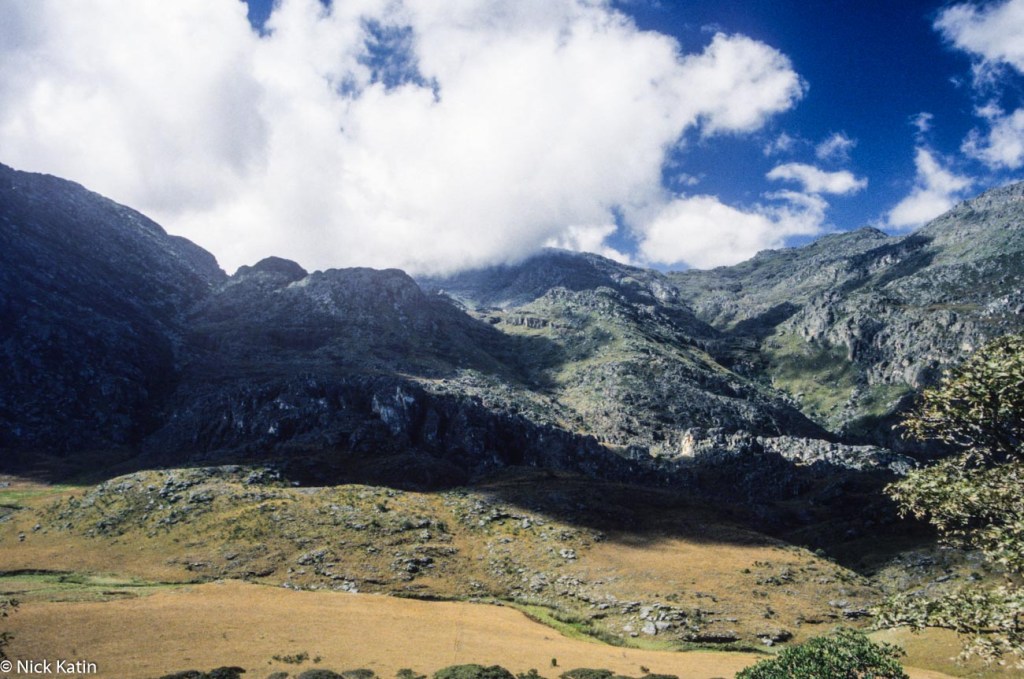
Mountain Hut at the top of the Chimanimani rnage in Zimbabwe Share this:
-
African shoestrings – Zimbabwe Day Ninety Bulawayo
Cecil Rhodes is buried at a spot he called the “view of the world” but is also called Malindidzimu (dwelling place of the benevolent spirits). So taken was he with what could be seen at the top of this granite mountain that he nominated this place as his last resting place. It’s an eerie place, as the huge boulders that mark the spot appear to be positioned by Rhodes himself. He was a powerful man but somehow his power did not stretch that far.
On the way back to Bulawayo we stopped off at Tshabalala Wildlife Sanctuary. Admission is free if you paid to see Matobo on the same day.
Its an excellent park as there are no predators and we could get out of the car and just stroll around the many giraffes, impala and zebra to name just three. Our only fear was of being accidentally kicked by a giraffe due to their inability to see us beneath its torso and we being such a long distance away from their head. They are soooo tall!
The following day just the two of us (Mark and Nicky left for Harare via the overnight train the previous evening) visited the Khami ruins.
Zimbabwe has several ruins dotted around the southwest and central parts of the country, the origins of which are often shrouded in mystery and varying theories. I can honestly say that Khami ruins did not leave me with lasting memory of mystique or intrigue. It’s a rather neglected and run down and the trail guide written and published by The National Museums and Monuments of Zimbabwe was ten years old and ventured very little on the taxing subject of who built this mini city. Like the Lonely Planet, it suggests that the Torwa people inhabited it until ousted by the much more powerful Rozwi who attempted to destroy Khami and from the looks of it needn’t have bothered as recent neglect seems to have done a much better job. The most recent theory given to us by Burkes Louise was the possibility that Indians from the Asian sub-continent might have been the original builders and architects.
The ruins are divided into two different areas, the hill complex and the southern area. The most notable thing about the latter was its proximity to a really smelly reservoir. The hill complex on the other hand is not as spread out and had a concentration of stone walls and terracing surrounding it on quite a prominent mount. On the hill itself are tiers of huts or at least the remains of them. This apparently was the home of Mambo king of the Torwa; where he lived with his entourage. I guess it was interesting but not enough to keep us there too long.
Across town in the opposite direction and around 24 kilometres from Bulawayo is Chipangali Animal Orphanage. This centre for injured, sick and ‘homeless’ animals was on our list of must see’s. It looks more like a zoo than a wildlife sanctuary. There were lots of cages and enclosures housing the various animals like lions, leopards, rhino, hyenas, and even crocs and snakes to name a few. Lots of these animals are perfectly fit but could not survive if returned to the wild. For instance, once a lion has had close contact with humans it loses its fear of man and becomes a risk to both man and itself. Chipangali also has breeding programs for cheetahs and rhino, so there were large enclosures for both of these animals. What always amazes me is how these places keep going. Obviously under resourced and running out of space somehow they seem to just soldier on and make the best of a bad thing. If I had one criticism it was there was very little info on why individual animals were there. Something like: “Petra (the lioness) was shot by a poacher and rescued by Tarzan, who traveled for three days carrying her to safety. She now has made a full recovery but has developed this habit for pounding her chest with her front paws and hence cannot be released back into the wild.”
We goofed! As I said earlier we passed Hwange National Park by train to get to Bulawayo just because we wanted to travel in a train and we were under the delusion that hire cars were cheaper in Bulawayo than Vic Falls. As we now know, the train ride was a disappointment and hire cars cost pretty much the same. So now we had to back track 330 kilometres each way. It’s a long drive too, three and half hours to be exact to arrive at Main camp.
If you like this then hit “follow” on the side bar
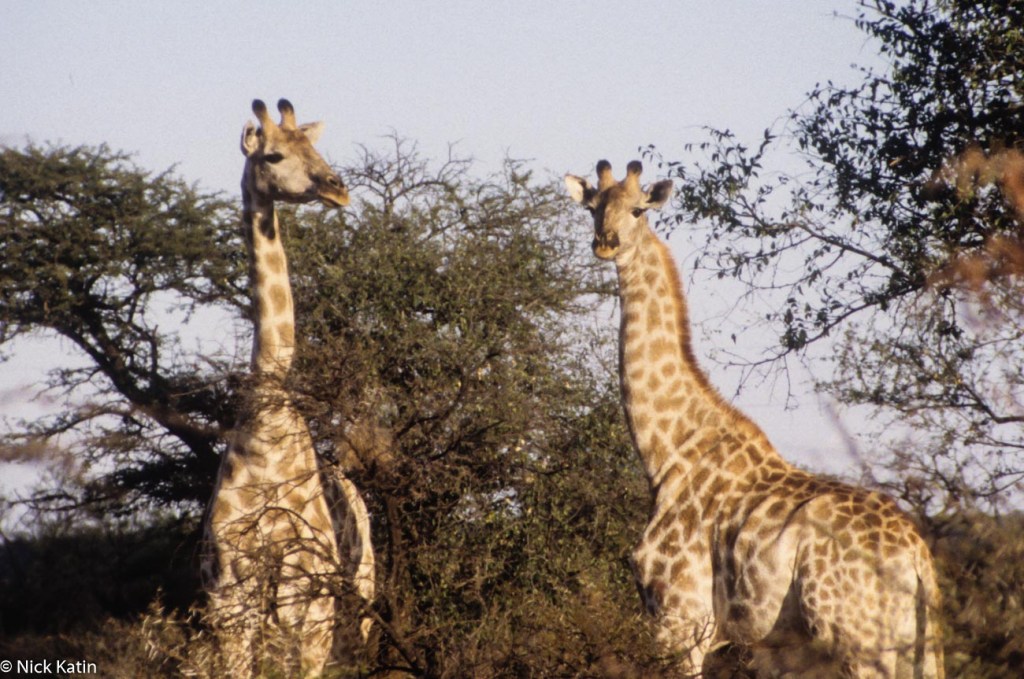
Giraffe at the “on foot” Tshabalala NP in Zimbabwe Share this:
-
African shoestrings – Zimbabwe Day Eighty Eight Bulawayo
Our actual room was part of a block of four away from the house and quite tidy although as in most things in this country a bit run down. We made ourselves comfy and then getting a lift from Louise headed out to the centre of town to hunt down a cheap hire car and book our accommodation at our next destination, Hwange National Park. To book this accommodation (which by the way is almost mandatory) we had to go to the National Parks Booking Agency in Bulawayo. The main booking office is in Harare and they are not connected by any sort of technology except an unreliable fax. Consequently, we had to request certain dates and places and come back the next day to see if we had won lotto after they faxed head office to check availability.
We almost got what we asked for……………. There are two camps in Hwange, Main Camp and Sinamatella and we asked for two nights at Main and one at Sinamatella. What we got was one at each with a night’s gap between the two. We weren’t particularly worried as we had heard that there are lots of no-shows (no deposit is required with the booking) so we had good chance of plugging that gap.
The hire car we managed to get was a Nissan Sunny that had seen better days. A few chips on the paintwork, a couple of small dents, an interior of heavily worn upholstery and a windscreen with a huge crack across the passenger side gave this car ‘character’ and it was also the best of a bad bunch at the price we wanted to pay. We hired it for ten days to travel around Zimbabwe and drop it back in Harare.
We were rapidly getting the idea that maintenance was a dirty word in Zimbabwe everything seemed in need of repair or simple maintenance. Apparently its been a slow almost unnoticeable deterioration that has been going on since 1980 the year of independence, even though for a time in the eighties Zimbabwe enjoyed a prosperity unequalled at that time on the African continent. So we were sort of hoping that this car had been maintained sometime in its long life.
The centre of Bulawayo wasn’t quite as run down as other parts but didn’t particularly excite us. It’s just a functional town, its wide streets built around a grid system full of unexciting functional buildings. Even the museum didn’t enthuse us. It just seemed a well ordered assembly of rooms that housed hundreds of stuffed animals.
What Bulawayo did have was Haefelis!……… Located on Fife Street, Haefelis was a little gem of a café that served cakes, fresh bread, rolls, coffee and pizza. This was the local trendy hangout and a good place to wile away some time, people watching. This was the place of the new Africa or certainly the one the world would like to see if not necessarily some of the African politicians. Young well-dressed Black and White Africans mingled with each other, laughing and joking, putting the world to rights and obviously enjoying each other’s company. Of course in modern day Zimbabwe whites make up less than 1% of the population so their influence should be minimal but still important.
The bigger racial conflict over the years has been the two dominant tribes, the Shona (75%) and the Ndebele (18%). At the end of the ‘bush war’ that lead to independence in the seventies these two groups came close to starting a civil war and now live side by side in an often uneasy atmosphere. As a tourist there is no real evidence of this except the odd incident that gets a mention in the national or local newspapers. Local Europeans who, as in South Africa, tend to dominate the tourism industry and probably have a slightly different perspective than some of the Shona or Ndebele, fed us our information.
We heard quite a few times how simple the majority of the population were and how difficult it was for the farmers or other local employers to get consistent productive work from their employees. If that’s true then as more whites and consequently valuable skills leave the country then the bigger the hole Zimbabwe will find itself in unless it takes steps to educate and teach its population the skills necessary to prosper.
Now don’t get me wrong I’m not in favour of turning all these African countries into western societies and I’m fully aware that everybody was doing just fine until Europeans came along and tried to ‘civilise’ the various African tribes. But the damage is done and the clock only goes in one direction so westernisation is all we have got until someone comes up with something better, which I might add there must be, after all a society that’s produced McDonalds, Emnem, bell bottoms and Ronald Reagan can only be improved on.If you like this then hit “follow” on the side bar
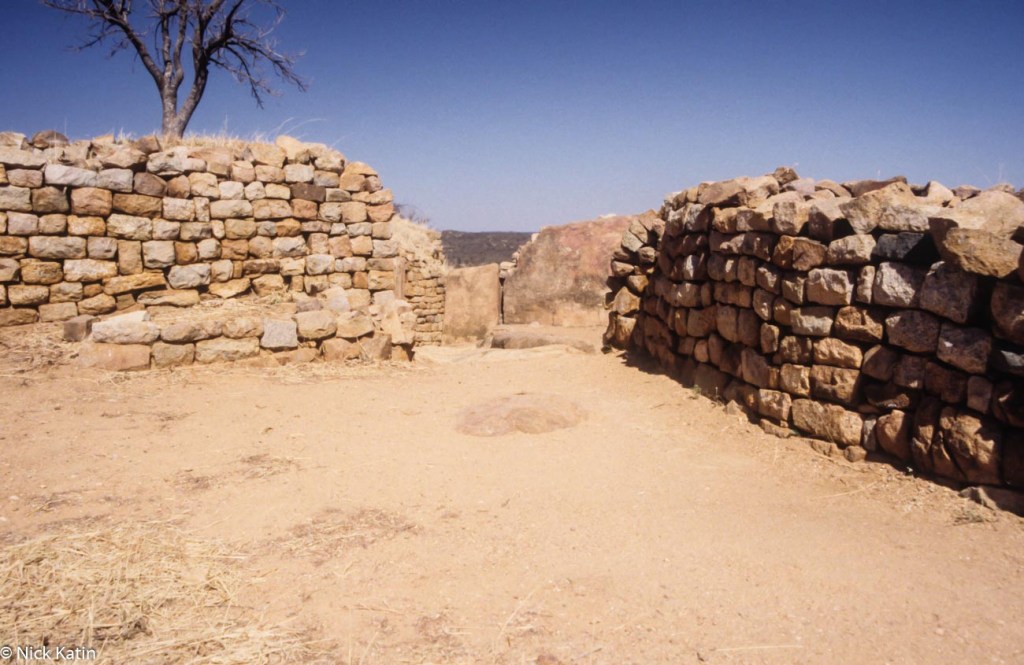
Khiami Ruins near Bulawayo in Zimbabwe Share this:
-
African shoestrings – Zambia Day Eighty Three Livingstone
We were now into the final day of the Audi tour and the final trip was from Kasane to Livingstone. Somehow five of us, plus Chris and our bags, managed to squeeze into an old beaten up left hand drive Nissan Sunny and drive to Kazungula where we crossed the Zambezi by ferry into Zambia. After the usual slow border control process we were met fortunately by one of Chris’s offsiders in a minibus that was able to take our bags. We mere humans continued on in the luxury Nissan along 60 kilometres of what we presumed was once upon a time a flat bitumen road surface that had now been reduced to an ‘African’ track of potholes punctuated by the odd short stretch of almost smooth bitumen.
Our final destination was the quaintly and considering Chris was one of the owners, appropriately named Fawlty Towers backpackers in Livingstone. Actually it’s one of the better backpackers we had seen so far. It was like a mini resort without the poolside cocktail bar. A big private courtyard with a swimming pool was at the centre with most of the accommodation and functional rooms fronting it. A little of oasis of western culture in the heart of a very African town, somehow I felt that it had been designed to keep the residents away from the inquisitive locals.
Actually Livingstone itself was quite a nice place. Its located 11 kilometres from Victoria falls itself as distinct from the Victoria Falls the town. Four years previous we had stayed a few days at Victoria Falls and had hired a couple of bikes so that we could ride across the border and see the Zambian side of the falls and visit Livingstone. We did the former but we were put off the idea of the latter by the bike hire guys. “You must make sure your wife is always in front of you and close to you otherwise those Zambians will kidnap her. Livingstone is a bad place”. Needless to say four years on, it was with some trepidation that we actually walked into the main part of town.
We needn’t have worried! Whilst the Lonely Planet does actually mention incidents of the occasional walker being mugged between the falls and the town, there was certainly no indication of a wild town that was eyeing up every white female with a view of selling her at the local slave market. Mind you the Lonely Planet did mention the fact that due to the muggings bike hire had become popular which changed little as there were now reports of the odd cyclists being mugged. So even though the Zimbabweans probably laid it on thick there is apparently some truth to their warnings.
Livingstone was until the 1970’s the centre for the falls but the Zimbabwean town of Victoria Falls started to become much more popular as Zambia itself struggled with its own political and economic problems. Nowadays its making a comeback for those wishing to escape the frenzied tourist activity and more recently the unsettling political and economic problems of its Zimbabwe neighbour.
Mind you from a tourism prospective there isn’t a great deal to see in Livingstone itself so we contented ourselves with having lunch and a few beers with John & Alison at the rather colonial Pig’s head pub. We had a developed a sort of travelers friendship with John and Alison, probably because they were a couple like us and also because they too were heading in the same direction. John, as an Englishmen, was certainly pretty patriotic and for me that was honourable but more importantly it offered a good opportunity to bait him about his country’s pathetic imitation of a cricket team.
The food at the Pigs head was nothing special but was almost five star in comparison to the Funky Monkey restaurant where our group had our farewell dinner that night. It was awful!
If you like this then hit “follow” on the side bar
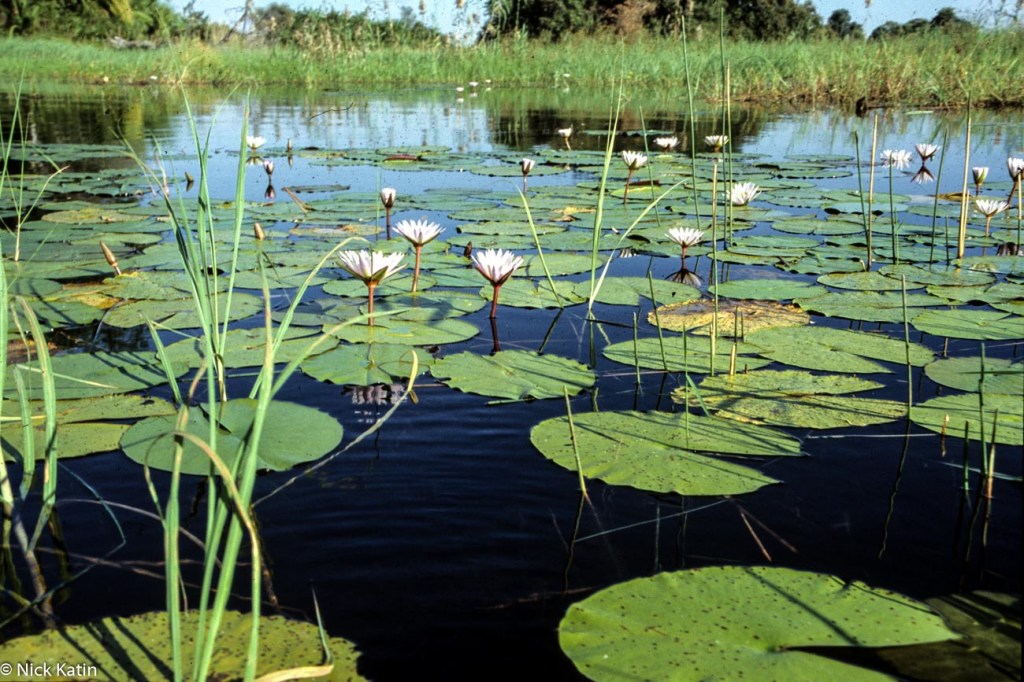
Lilies at on the Okavango Delta In Botswana Share this:
-
African shoestrings – Botswana Day Eighty Two Chobe
Audi had arranged a local tour guide to take us on a game drive into Chobe that afternoon and then a game cruise along the Chobe River the next morning. Our new tour guide didn’t show for a while and in his absence, led by yours truly, we organised with the agents at Tebe camp, where we were staying, to swap the two tours around. After all, watching the sun go down on the water from a boat surrounded by animals sounded much more romantic than being stuck in a vehicle. Not too mention that early morning is a better time to go for a game drive.
Andre had now left us and returned back to Ngepi. He had done all right for his first time; nothing had been too much trouble and had often bent over backwards to make us comfortable. Humble that he was he was also a nice guy with it. The poor bloke was also just a little bit emotional when he left.
Our new guide was a different animal!
Chris was an Ethiopian brought up in Sweden (we actually thought that he was bullshitting when he told us that but we found out much later that it was true). With his long platted Bob Marley look alike hair and a fairly relaxed and casual attitude to his job; he was also an ‘expert’. Now I know he’s meant to be an expert certainly as a tour guide but I mean he knew it all and there was no doubting that the most important thing in his life was whatever worked for Chris. Which is why he was not too happy that we had rearranged the schedule. But we held fast despite his efforts to convince us otherwise.
The cruise was pretty bloody good!
From the boat we could see elephants and buffalo on the shore and hippos in the water, watching us with those beady eyes that live just above the surface, not to mention the abundant bird life.
The most impressive sight, though, was the sunset that seemed to happen just at the river edge. At home, in Perth, we get some pretty awesome sunsets over the ocean so when I say the Chobe sunset was pretty bloody good; I mean it ‘was’ pretty bloody good. I shot off a few shots after Sue had made the suggestion. One of these shots sits proudly on our dining room wall and when anyone remarks on it, Sue turns to me and says with great satisfaction “and you never wanted to take it!”
Driving through Chobe early the next morning was a totally different affair. Safari trucks are open in the back and at 5.45 am it was bloody freezing. Obviously the animals thought so as well because none of them were anywhere to be seen. We drove around for around an hour along dusty sandy tracks with Chris barking instructions to the driver up front and scratching his head as to why we hadn’t seen anything yet. The night before despite our rearrangement of the final leg of the tour, he had promised us an abundance of wildlife and so far his promise seemed to be pretty empty. Two lionesses saved his embarrassment. They were chasing a squealing warthog 100 metres away across a water channel. We stopped and watched as the two got closer to their prey that was running at great speed first one way then another. I turned to look behind us and to my amazement saw another interested onlooker, another lioness, a mere five metres away peering around our vehicle in effort to see what her mates were up to. We had unknowingly parked right in front of her!
After that the wildlife just kept coming! It was as if someone had sounded the wake up call because everywhere we went we saw something. A herd of buffalo chewing and nonchalantly looking at us quizzically, two hippos wondering around on the river bank, kudu and impala springing away as we neared.
Back to the water channel and we just caught sight of two of the lionesses walking away into the bush. We drove on back towards to the park gates and our campsite and then suddenly around the next bend, as surprised as us, were all three lionesses walking across the track and within spitting distance of the truck.
More buffalo and a crocodile were spotted near the waters edge and then reluctantly our time was up.
Chris was crowing. “See, I said we would see lots this morning” he said in his sort of British, Swedish and African accent. My remainder that it was actually our idea to do this early morning game drive was totally ignored as he continued to crow all the way back to camp.
If you like this then hit “follow” on the side bar
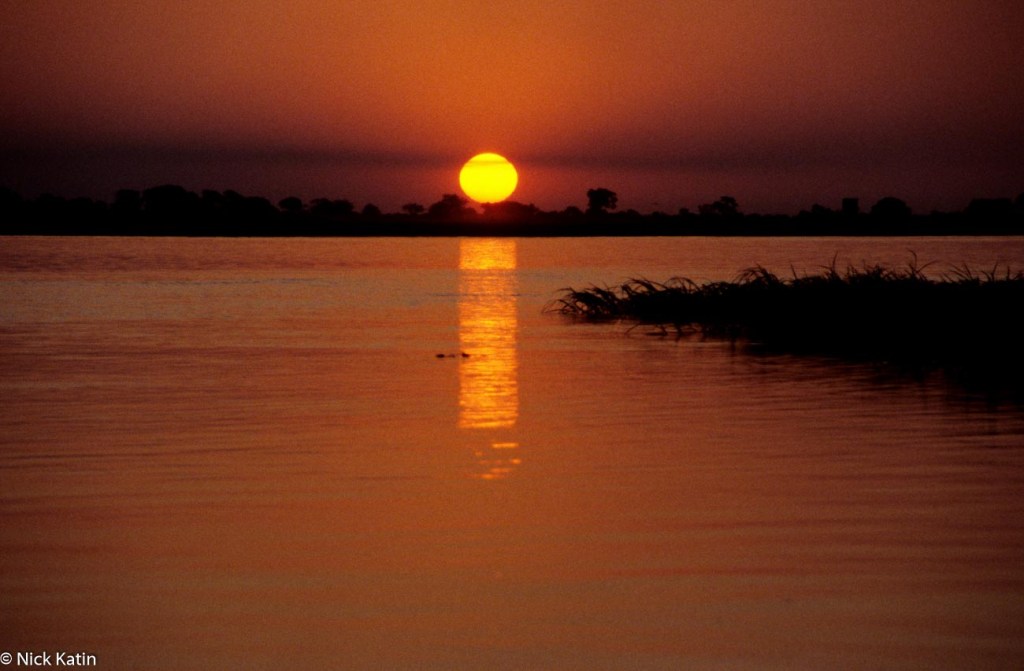
Sunset on the Chove River in Chobe National Park, Botswana Share this:
-
African shoestrings – Namibia Day Seventy-Six Botswana/Namibia
At Rundu we saw for the first time since the Fish River now some 1200 kilometres south a riverbed that actually had water! The Okavango River separates Namibia from the infamous Angola and was at the time experiencing its highest water levels for fifteen years. Considering that no other river in Namibia, except for the Orange River that separates Namibia from South Africa, has water in it, this was a sight for sore eyes. Well every silver lining has a cloud! Ngepi camp is on the river about 50 kilometres east of Rundu and the only access road to the camp was flooded due to the high river level. This meant we had to leave our comfy minibus and wade the final stretch through the overflowing river, a river know to have the odd croc or two!
The camp itself was a bush camp but with all the basic modern amenities in the form of open air toilets and showers separated by a bamboo walls and a pole barring the entrance to indicate if in use. Our tents had already been erected for us close to the riverbank, which was a lot steeper than where the road had passed it.
We were briefed on the next 6 days by Neil and then Paul and then after dinner Neil again. Neither of them were actually coming with us, Neil, a South African was the manager and Paul an American had just returned from the delta. I actually took an instant dislike to Paul; he took a holier than thou attitude as he explained that the tour was a local community based tour. By that he meant that the polers (I’ll explain this later) all came from the same village and using them to canoe tourists around the delta was a good way of helping the local communities and villages. He was quite right of course but he didn’t have to be such a prick about it!
We had heard that there were hippos and crocs in the Okavango but we didn’t expect to hear hippos chewing grass right outside our tents. Chomp! Chomp! They went all night or so Sue said the next morning. I slept through the whole thing!
At 7.30 am we were shunted onto an overland truck to pass through the flooded road and then loaded back into our minibus to drive onto our next destination, Sapepo on the Okavango Panhandle in Botswana. Crossing into Botswana was unremarkable except for one thing the Namibian border post building was a shameful shack in comparison to the brand new buildings at the Botswana post. Botswana is an expensive place to visit when it comes to national parks and reserves. It costs around US$25.00 per day per person in park fees unless you are part of guided group i.e. Safari. By comparison Etosha cost US$3.00! The Botswana government’s rationale is that they don’t want the mass tourism of Kenya so they spend very little on infrastructure in the parks and charge high fees to restrict the number of visitors. From our experience trying to independently travel through Botswana is not easy either, especially on a tight budget. There are many obstacles, like extremely limited public transport, and gaining access to the parks and reserves, so the vast majority of tourists end up touring Botswana with tour operators who know the country; but don’t stay any longer than they have to. So I guess so far its only partially working!
The Botswana/Namibia border was also the first place that we went through the passport swapping routine. This is not an illegal act of changing identity but simply changing nationality. So we gave Namibia our Aussie passport, that we had so far been using, for our exit stamp and Botswana our British passport for an entry stamp. Now bear with me why I explain why we did this. South Africa, Namibia and Botswana offer fee free visitors visas at the border for both Australian and British passport holders. Zambia charges British passport holders and Zimbabwe charges Australians however Zambia doesn’t charge anyone who enters the country with an official tour operator. This tour was going to leave us in Zambia from where we would cross the border into Zimbabwe. So why didn’t we just swap when we got to the Zimbabwe border? Well, a lot of third world countries don’t like this practice particularly if looks like it’s being done to avoid paying a fee (which it usually is of course). So it’s likely to be a lot less problematic if you choose to swap whilst in a group as the immigration officer is often too busy to check for an exit stamp from the adjoining country. As it happened the Namibian immigration officer did ask us on our way back a few days later, as to where our previous entry stamp into Namibia was. When we explained that we had used another passport he shrugged his shoulders and allowed us through. However as they don’t charge for visas I don’t suppose he cared.
Unfortunately the last part of this grand plan let us down. We knew that Tanzania required you to purchase a visa but it was cheaper to purchase in advance when traveling independently and we also knew that it cost US$50 for a British passport and only US$10 for an Australian. So when we went to the Tanzanian embassy in Harare two weeks later we obviously produced our Australian passports for stamping. We were politely told that they could only stamp the passport that we had used to enter Zim on. But we could take our chances at the border post when we arrived although there were no guarantees. Having experienced problems before at a Tanzanian border post four years ago we paid up and shut up and thus ended up worse off than if we had just used our Aussie passports throughout, which being the patriots that we are, was our preferred option.
If you like this then hit “follow” on the side bar
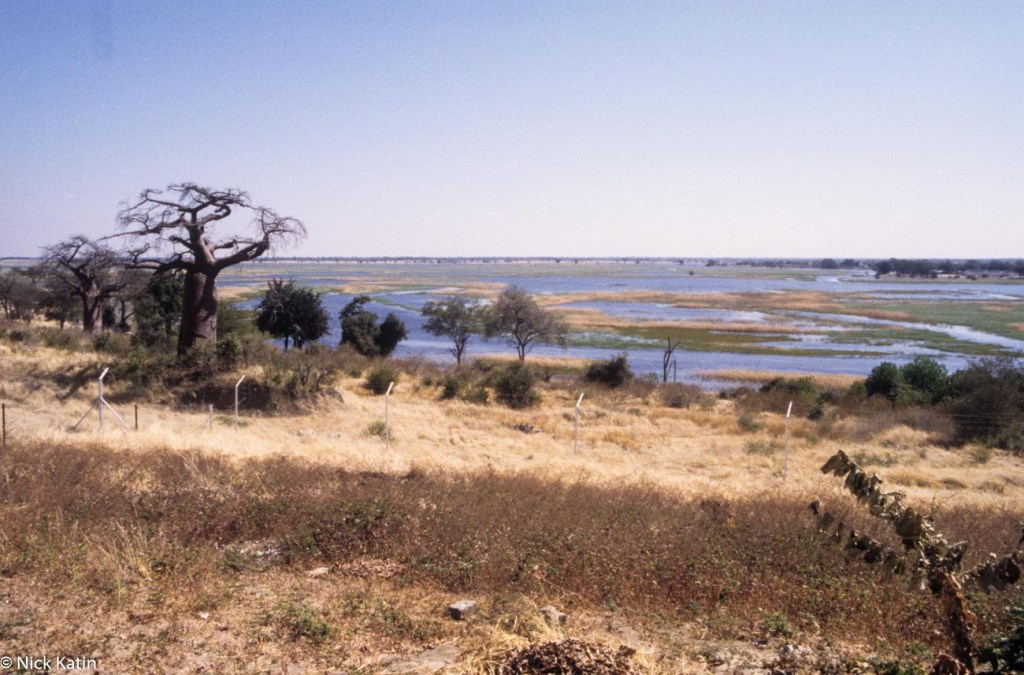
Ngoma bridge Border on the Chobe River Botswana and Namibia Share this:
-
African shoestrings – Namibia Day Seventy four – Windhoek
Spitkoppe is an attractively shaped mountain on the main drag between Swako and Windhoek (we were now heading back to Windhoek). Its been called the Matterhorn of Africa due to its similarity in shape. Well, maybe but it’s a bit like comparing Fish river Canyon with the Grand Canyon, once you’ve seen the real thing comparisons aren’t helpful.
What was fascinating was the little community camp ground at the foot of the mountain. Run by the local women’s development corporation, it had a basic bar constructed of stone with a shady pergola attached and some half finished thatched chalets. The toilets were long drops stuck in the middle of the desert with shade cloth doors and hesian or bamboo walls, whilst the showers were similar in construction with gravity fed water. There were even some ‘natural’ camp sites quite away from the rest of the camp, which is why they must have been called ‘natural’; after all if you got up in the middle of the night for a pee only the most conscientious are likely to walk 200 metres to relieve themselves. We were tempted to stay there but decided against it, in order to make some time to our next destination, Gross-Barmen Hot Springs.
Gross-Barmen was a MET resort and we were a bit concerned that as we hadn’t booked anything, it might be full. Well we shouldn’t have worried, even though it was late in the afternoon and a Sunday there was only one other site in use. We had an ablution block and a kitchen for our own exclusive use for the two nights that we stayed there.
As the name suggests the main attractions were the baths. There were 2: one to put minerals into your body and the other to cook them out again and leave you looking like a red double decker London bus with skin as creviced as Mount Everest. Wow, that thermal bath was hot!
These baths, in fact were the only attractions. We had only selected it as was within striking distance of Windhoek and we decided that it was a good place to ‘veg’ for a day.
Our site was on the edge of the campsite and probably about 500 metres from the staff accommodation. On our second night, the staff decided to have a party, or at least that’s what it sounded like. So from about 10 pm till the early hours of the morning we treated to some popular African music, trouble was that it was all the same and I don’t mean it sounded all the same; it was the same! There was one particular song that was played over and over and over… We actually found out by hearing it again sometime later that it was Sum’Bulala by Brenda a smash hit in Southern Africa.
We spent the next 3 nights back at the Cardboard Box in Windhoek. Our camping tour through Botswana didn’t start until Friday and as it was Tuesday when we left Gross-Barmen we had to cool our heels for 3 days. Werner came and picked up the hire car and was pretty good about the bill from Hennie. He did however charge us for a small crack in the windscreen and a broken gas light glass, the former happened on the road back from Sossusvlei as a Landcruiser coming in the opposite direction rounded a bend and chucked up most of the loose gravel between us. We really didn’t have a problem with either and I think, in a weird sort of way, we were quite sad to hand back the little Chico that we had become quite attached to.
Apart from some sojourns into Windhoek we spent most of that time reading and deciding what we were going to do after the tour had finished.
We spent a couple of hours following the Hofmeyer walk on the outskirts of the city. At least we thought we followed the walk until we came across a sign towards the end, pointing in a different direction. It didn’t matter too much, the point of the walk is too see elevated views of the cityscape and its surrounds and we had achieved that. We finished that off with an indulgence trip to Gathemann’s, a colonial style café famous for its great terraced outdoor area and lots of mouth-watering cakes and pastries. Unfortunately neither the cakes nor the coffee lived up to its reputation and we just had to be content with the activity of people watching from the terrace.
If you like this then hit “follow” on the side bar

A Cape Fur Seal at Cape Cross Seal colony in Namibia Share this:
-
African shoestrings – Namibia Day Seventy One – Swakopmund
Everybody (that is mainly the white population) was friendly and seemed to have either German or Afrikaans accents. Wilma our landlady, a white Namibian of German heritage was a third generation Namibian, But she had been brought up to speak German in school and at home and spoke English with a strong German accent.
Despite our immediate liking for Swako our second day turned out to be quite expensive. We had to send a fax relating to our house to Australia which cost the princely sum of N$31.50. Sue was still not feeling quite right so a trip to the doctor cost N$100 who immediately ordered a blood test (another N$36). Fortunately the blood test cleared Sue of Malaria, which was our main concern. But it didn’t answer the question as to why she was still feeling disorientated. The doc put it down to the Lariam that we were taking. It’s a strong anti malarial drug with a bad reputation for side effects such as disorientation, hallucinations, anxiety and nightmares. The last time we had taken it we had both experienced the latter two but this time I hadn’t experienced any side effects and up until Sue had been sick nor had she.
We had been quiet happy just to laze around Swako for the couple of days that we were there but as always curiosity got the better of us. Swako is at the edge of the Namib Desert, so we had almost done a full circle on our tour of Namibia. This part of the desert holds a few surprises or so we were led to believe by the Lonely Planet and the Swako tourist office. That was enough for us and we were off having a look. In fact it was more of a ‘so what’ tour rather than a scintillating safari into the desert. I say ‘so what’ because unless you’re a botanist or a historian most of the items on the signposted Welwitschia drive mean very little. The Swako tourist office gave us a handout called “The Welwitschia Plains-a scenic drive” with thirteen numbered stone beacons to watch out for. Each of these beacons are positioned at places of interest along the drive. The first stop was at little cluster of lichen; the next was at a couple of bushes called the Dollar and the Ink. So far we’re yawning and wishing that we had stayed in bed.
Oxwagon tracks remarkably preserved from decades ago and just as remarkably almost impossible to see were next and followed by something much more interesting, the Swakop valley moonscape. This dark brown and wheat coloured pitted and crated landscape was formed by 1000’s of years of erosion and is very much reminiscent of the moon’s landscape. Not that I’ve been there of course but those who know this sort of things say it is.
Our interest began to wane again, as more lichen was sign posted. Apparently the lichen of the Namib Desert is the most extensive in the world. I suppose a botanist would find that fascinating but we’re still stifling those yawns. Our interest was rekindled by a much bigger expanse of moonscape. Created this time by a non-existent river cutting it’s way through softer material. Even my imagination was finding it hard to imagine any river flowing through this dry and inhospitable landscape.
A heap of junk left behind by the South African army in 1915 was considered notable enough to be the next point of interest. Somehow I cannot see how even 85 year old broken bottles and rusting cans are a great tourist attraction!
The next two beacons are not even worth us getting out of the car. A couple of ridges of Dolerite (what’s that I hear you say, forget it, it’s in the dictionary) were somewhere around.
Then we had a small patch of vegetation dressed up as picnic spot. Apparently the river that I had trouble picturing earlier actually runs deep underground and in some spots is high enough for some trees and bushes to tap into.
Speaking of vegetation, the Welwitschia drive is named after a unique ‘tree’ that has also been described as a living fossil. The next and penultimate stops are for these strange looking ‘trees’. They are apparently dwarf trees and are related to pine trees but you would never know that by looking at them. They look like straggly low lying semi tropical palms that have had a bad day. In fact if you saw one anywhere else you wouldn’t even stop to have a second glance. The point of interest is however that they somehow thrive in this hostile environment and are totally unique to the Namib Desert and get this; live for up to 1500 years.
Our last stop on this spell binding drive was a let down after the Welwitschia. An abandoned iron ore mine from the 1950’s is really nothing but a hole in the ground.
If you like this then hit “follow” on the side bar
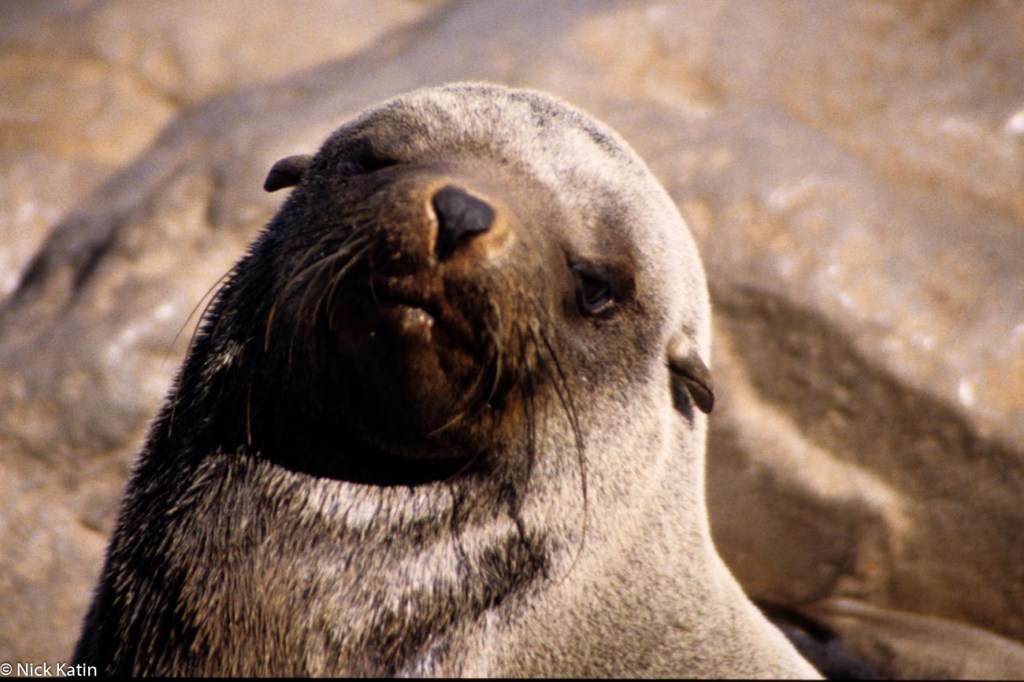
A Cape Fur Seal at Cape Cross Seal colony in Namibia Share this:


 Katin Images Travel Photography