

Category: mexico
-
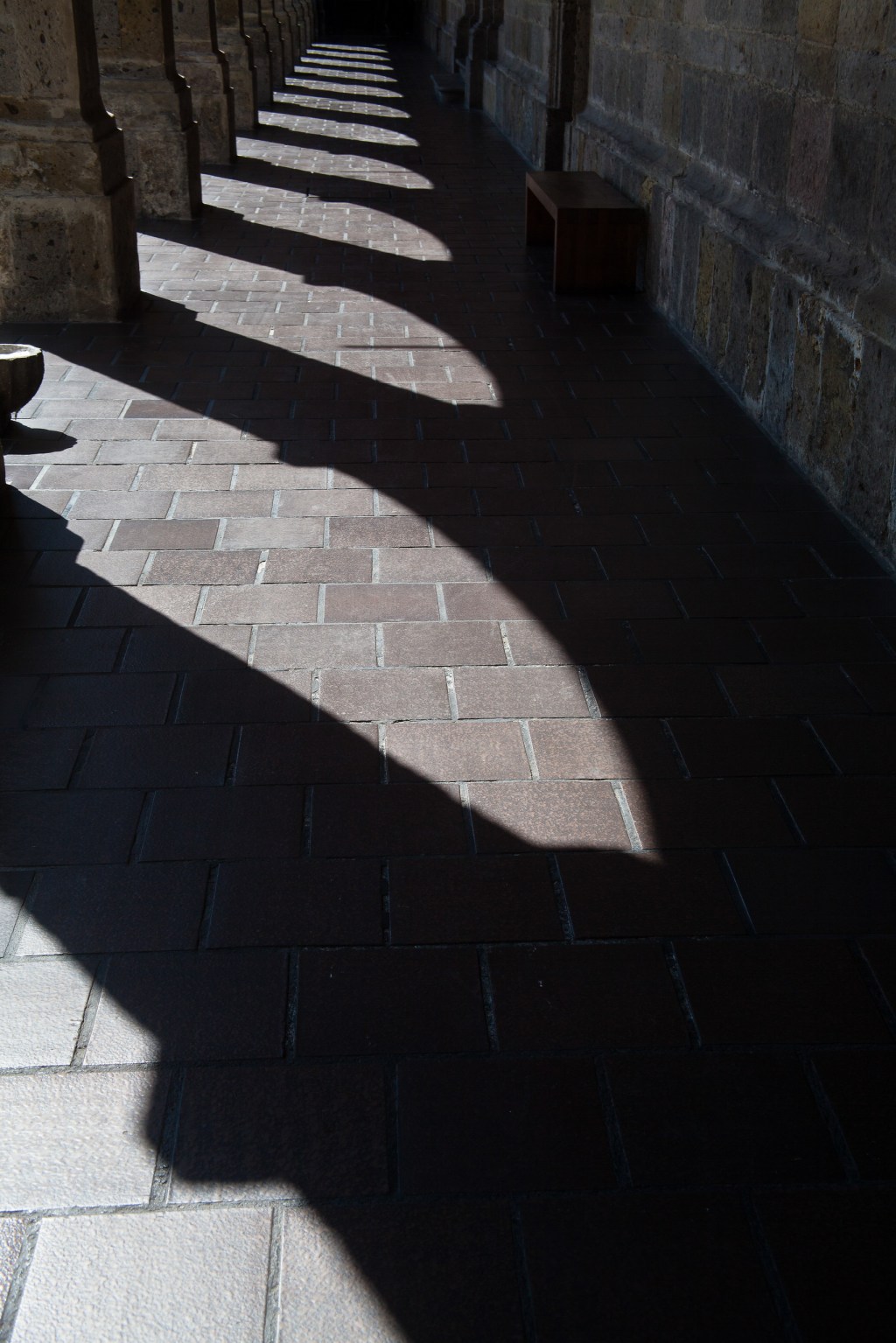
Cloisters and Shadows
Instituto Cultural De Cabanas in Guadalajara, Mexico. Click on the image for a larger view -
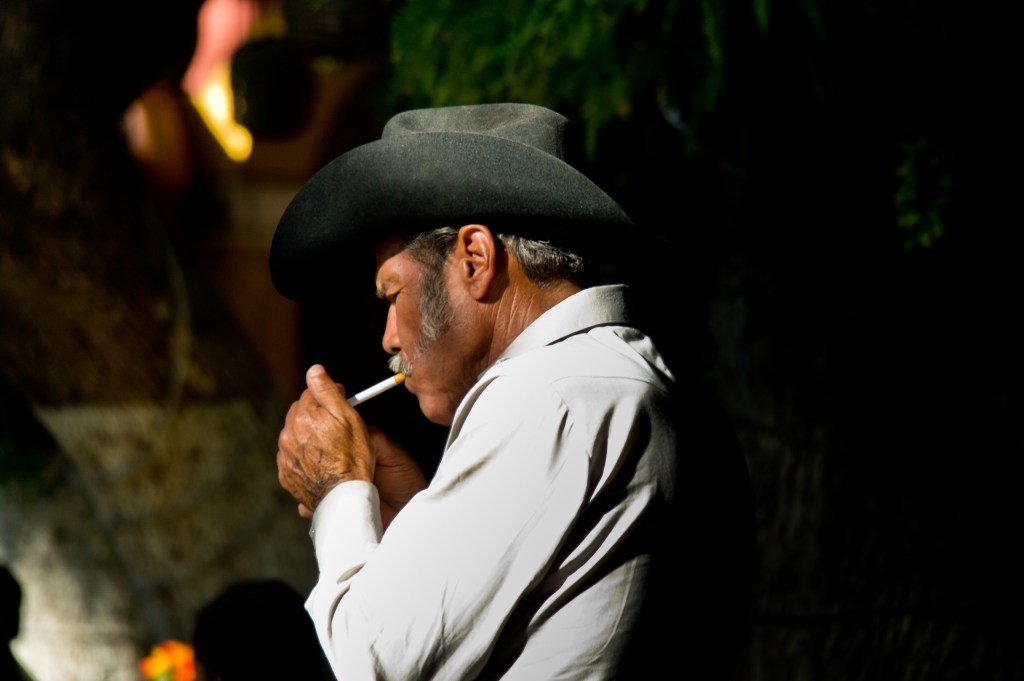
Mexican cowboy
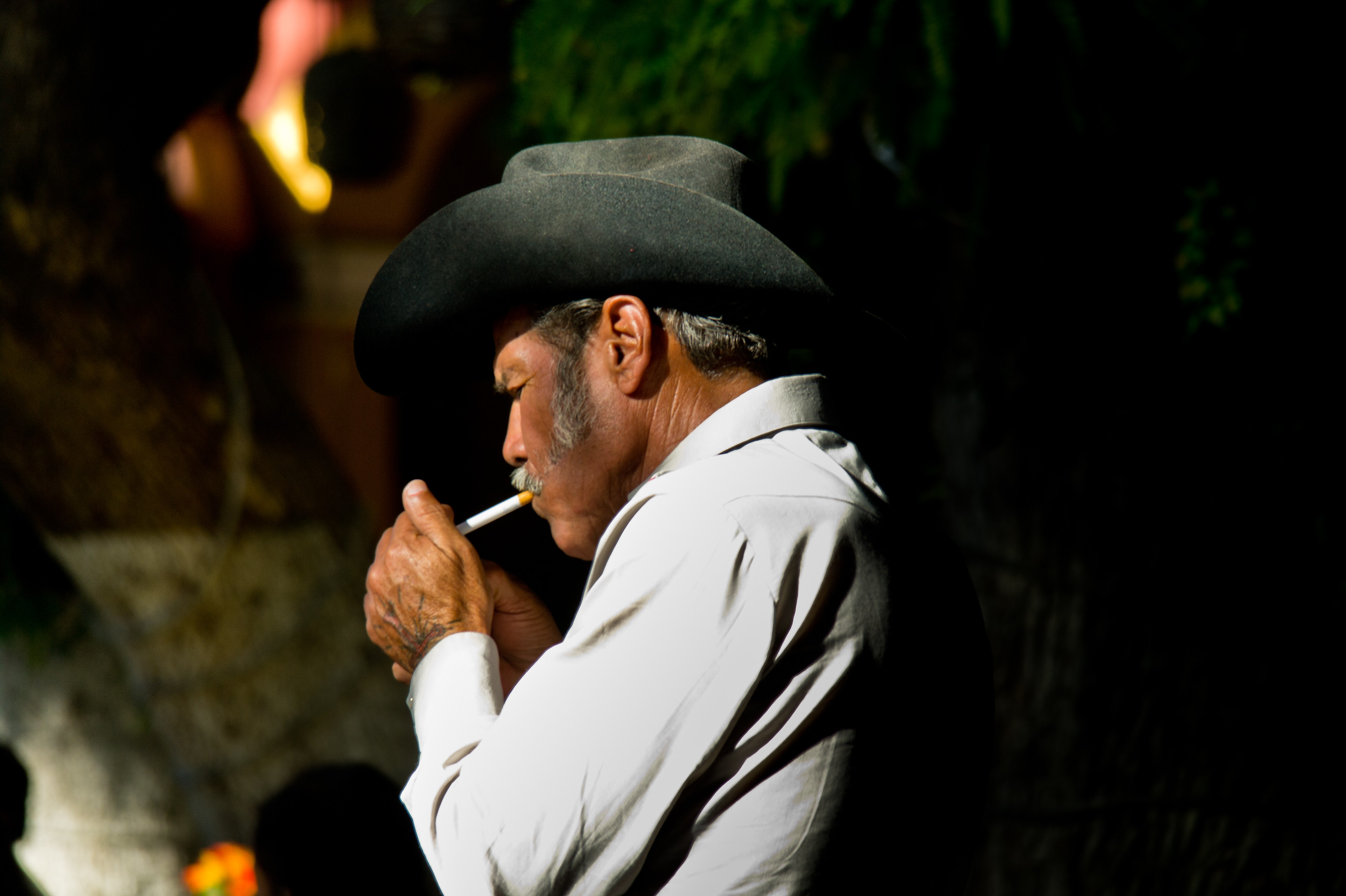
A Cowboy lights up at El Parian, Tlaquepaque, Guadalajara, Mexico. Click on the image to view a larger version. Share this:
-
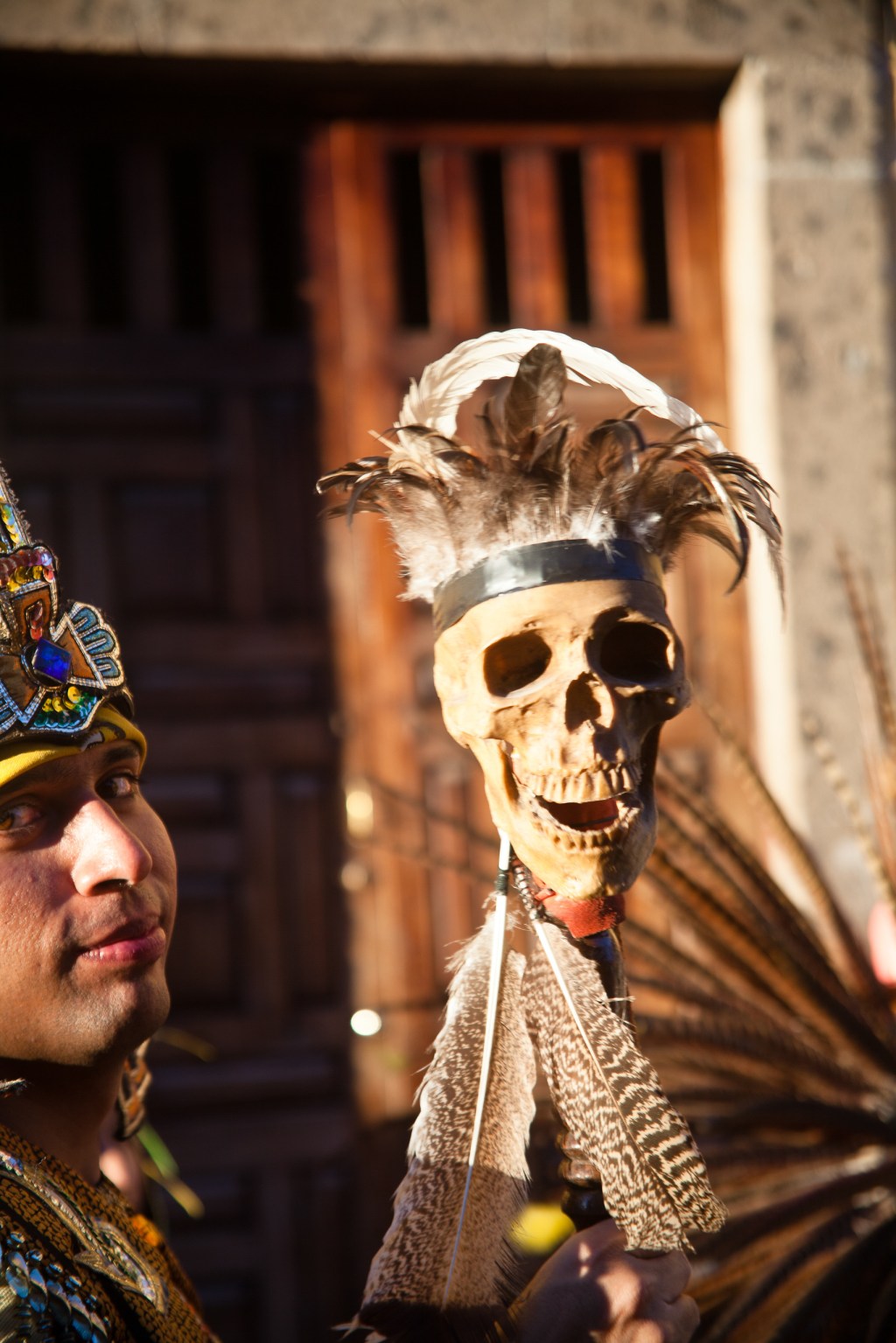
Festival parade participant and friend.

At the Day of the Dead festival in San Miguel de Allende, Mexico. Click on the image for a larger view Share this:
-
El Castillo the Pyramid, Chichen Itza, Mexico
Planning and Preparation for Travel Photos

El Castillo the pyramid, at Chichen Itza, Mexico. Click on the image to view a larger version and for other options Share this:
-
Mexican Cowboys In Guadalajara photo
Continuing on with my Mexican Cowboy images. Another name for Mexican Cowboys is vaquero (pronounced baˈkeɾo) which means herder of cattle. These horse-mounted livestock herders come from a tradition that originated on the Iberian Peninsula. Today the vaquero is still a part of the doma vaquera, the Spanish tradition of working riding. The vaquero traditions developed in Mexico from methodology brought to North America from Spain became the foundation for the North American cowboy.
The vaqueros of the Americas were the horsemen and cattle herders of Spanish Mexico, and first came to California in 1687, and later with expeditions in 1769 and 1774.
They were actually the first cowboys in the region.
As you can see there still plenty in Mexico that may not necessarily be ‘real’ cowboys but that hat is still pretty popular especially in Guadalajara.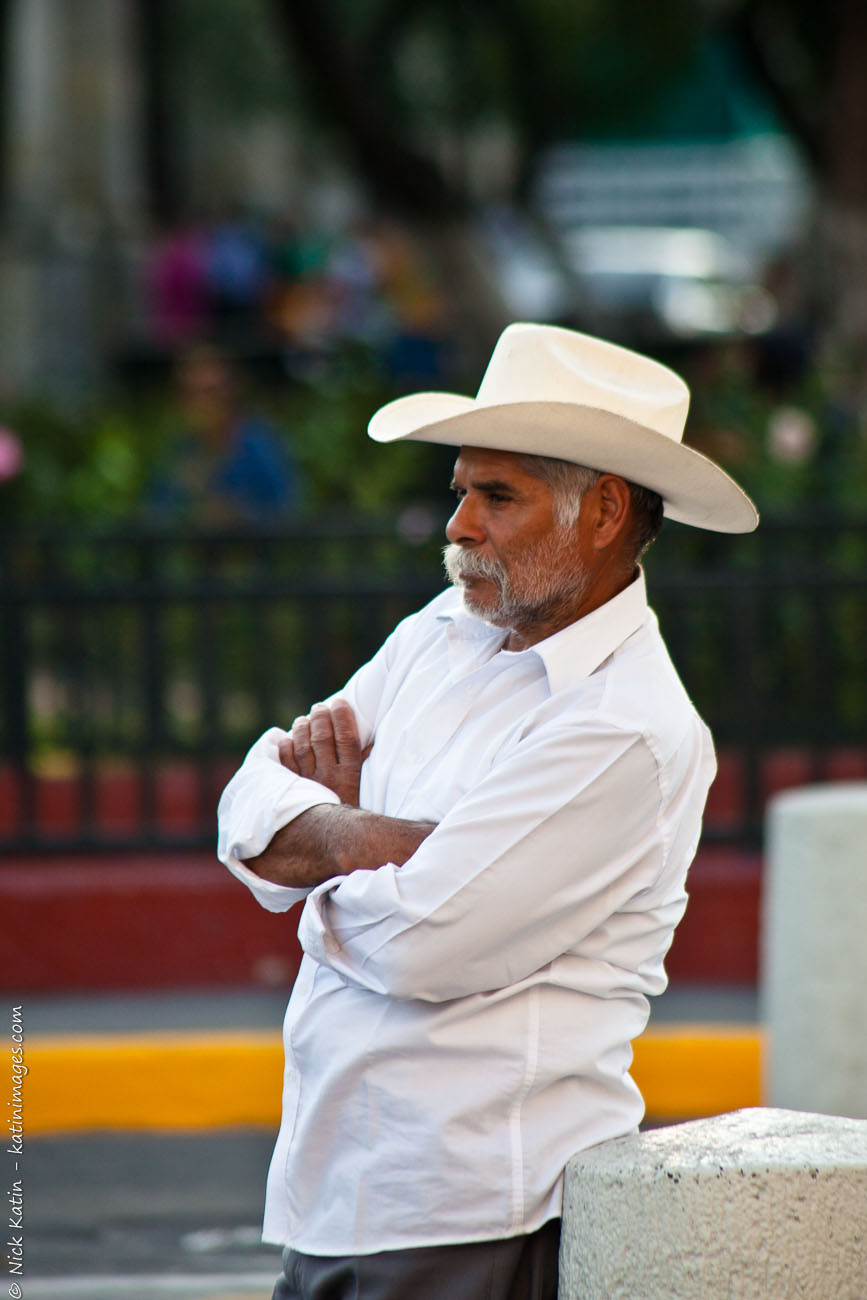
Leaning Mexican Cowboy in Guadalajara, Mexico
To see a larger image or to see purchase options click on the imageShare this:
-
Mexican Cowboys In Guadalajura
One thing I noticed In Mexico was the number of “Mexican Cowboys”. Older guys wearing the Stetson. In fact Stetson is actually a brand of Cowboy Hat and the founder of the company, John Batterson Stetson, is created with its creation. So the term “Cowboy Hat” is the proper generic description but I digress. A Mexican cowboy is normally referred to as a Caballero, which is literally translated as’ gentleman and in the mixed history of North and Central America, The Spanish brought the concept with them. More in the next post.
I love the look of this guy, cigarette and all.
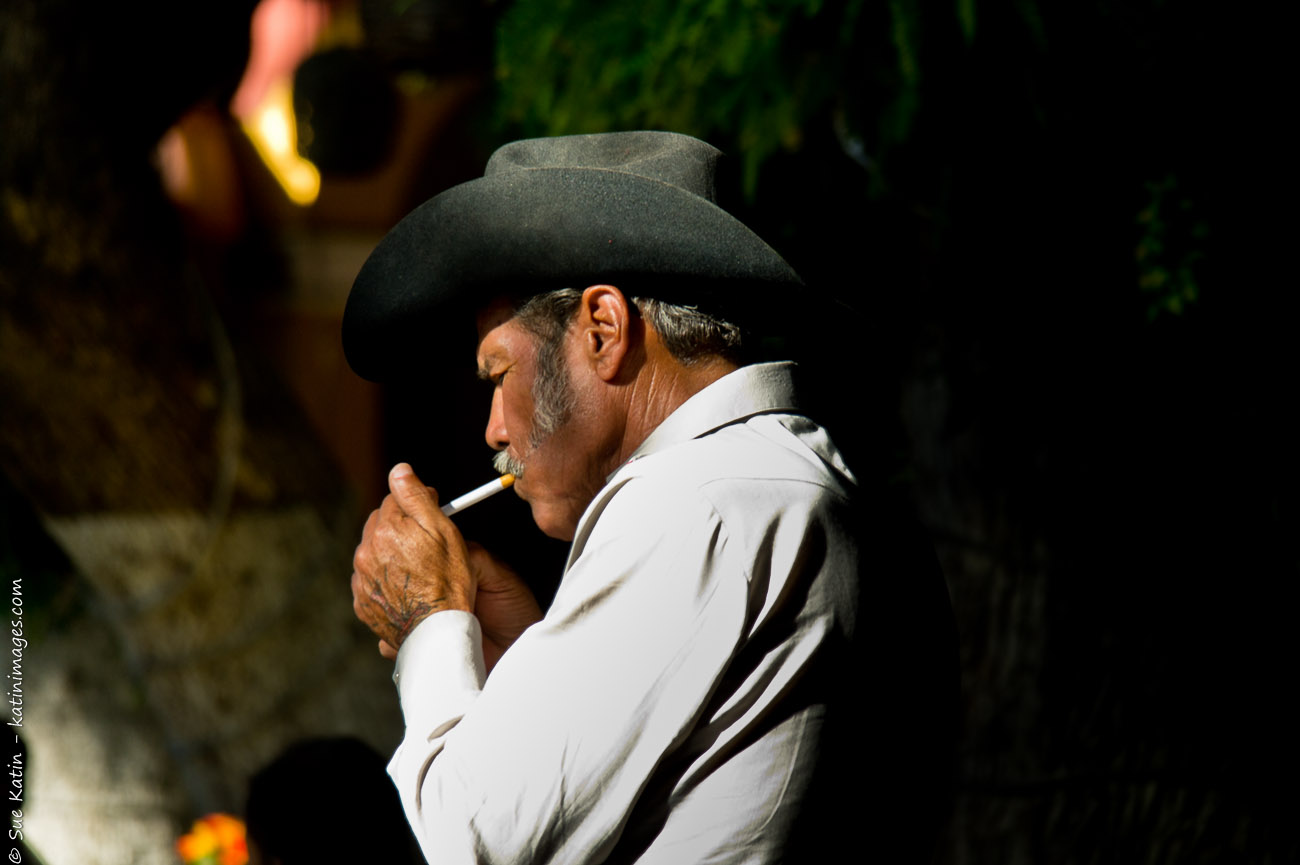
Mexican cowboy at El Parian, Tlaquepaque, Guadalajara, Mexico
To see a larger image or to see purchase options click on the imageShare this:
-
Lock display in Mexico City Cathedral
At the altar of Saint Nonnatus in Mexico city’s Metropolitan Cathedral is a display of hundreds (so it seems anyway) of padlocks all intertwined and locked together.
My instinctive reaction when I saw I thought was what is this all about? Actually it was a lot more colourful than that.
Well, it turns out that the said Saint Nonnutus is the patron saint of childbirth, midwives, children, pregnant women, and priests who want to protect the secrecy of confession. And the locks are placed at his altar to stop gossip, rumours, false testimonies and bad talk. They are also used to keep secrets, stop cursing or lying and to guard priests who want to protect the secrecy of confession. After placing a lock the person takes a seat in the main bench, for all to see.
How fascinating is that?
For more photos of Mexico go to North America
Locks in Saint Nonnatus’s Altar in Mexico City’s catedral metropolitana To see a larger image or to see purchase options click on the image
Share this:
-
Mariachi’s in El Parian, Tlaquepaque,
In the village of Tlaquepaque, south of Guadalajara, Mexico, is El Parian, a large plaza flanked by arcades and surrounded by restaurants and bars. In it’s centre is a stage surrounded by chairs and tables from the restaurants and bars. Pretty quiet up until lunch time the action really hots up In the middle to late afternoon of most days when Mariachi bands come and put on a show.
You can sit there all afternoon and be entertained as different acts take the stage and it all will cost you is one drink. Of course the bands themselves come around with their CD’s for you to take home and wonder why you got carried away with the moment. having said I bought two CD’s and I have got to own up to listening to one of them regularly and the other occasionally even after three years.
These couple of guys were part of the band that supported two different singers, Ana Gabriel and Dulce Maria Castro.
For more photo’s of El Parian go to North America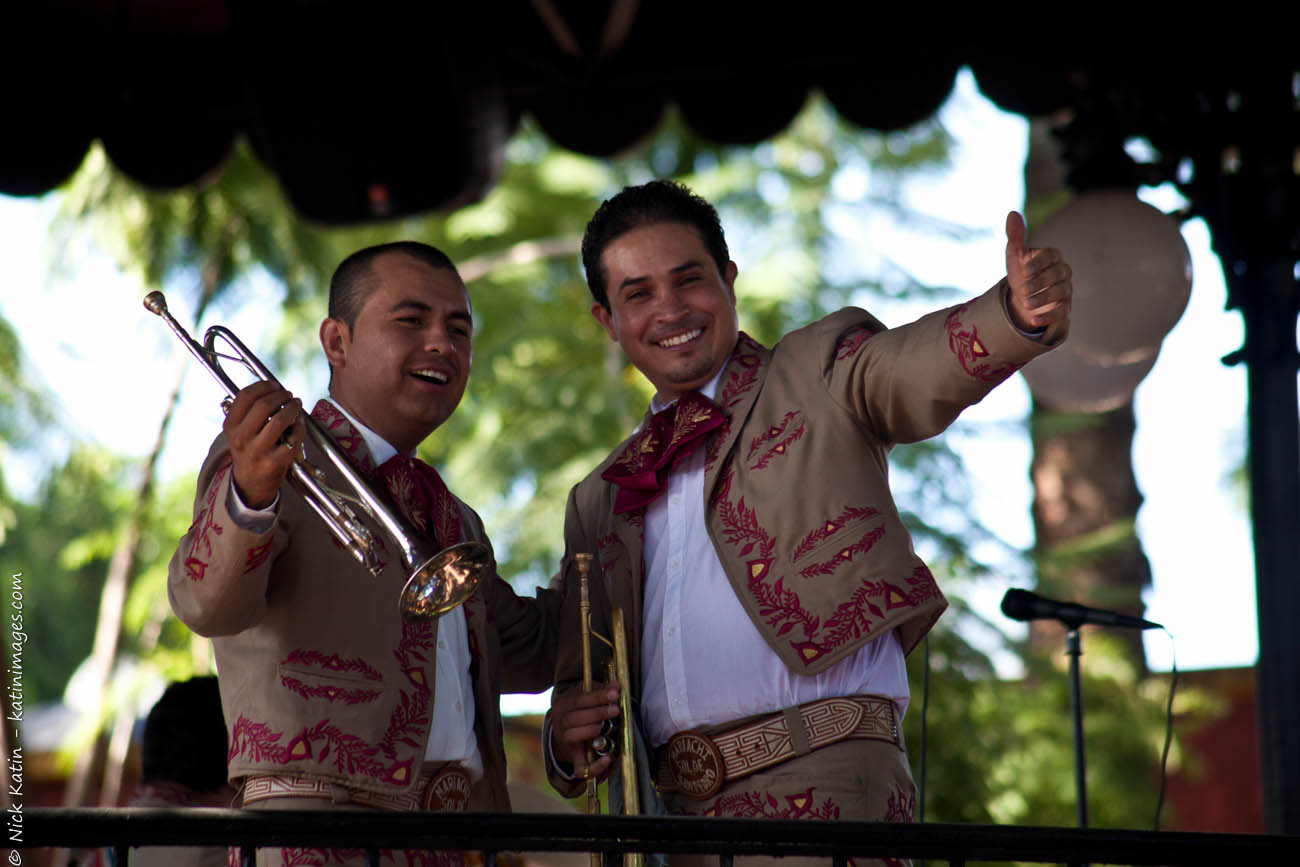
Mariachi musicians at El Parian, Tlaquepaque, Guadalajara, Mexico To see a larger image or to see purchase options click on the image
Share this:
-
Mural in Palacio de Gobierno, Guadalajara photo
Palacio del Gobierno is Guadalajara’s government palace. Built from 1883 to 1892, the palace was built using two architectural styles known as Tuscan (main floor) and Dorian (upper floor).
From February 14 to March 20, 1858, the building was the official seat of the Mexican federal government, when President Benito Juarez and his cabinet resided in Guadalajara during the Reform War.
But what the Palace is known for is the gigantic murals by the famed muralist Jose Clemente Orozco.
The mural above the main staircase of Miguel Hidalgo, the father of Mexican Independence was painted in 1937. This mural shows Hidalgo brandishing a fiery torch at shadowy figures representing oppression and slavery.

Mural by Jose Clemente Orozco in Palacio de Gobierno, Guadalajara, Mexico To see a larger image or to see purchase options click on the image
Share this:
-
Native indian dancing at the Day of the Dead festival photo
In past posts I’ve mentioned the Day of the Dead festival in Mexico. Its also held in other Latin countries as well. However in Mexico it’s a really big thing. Even though it’s more well known roots are Catholic, it has been traced back to indigenous origins as well which is probably why these guys are so enthusiastic This is one of my fine art photos that are a bit alternative. I’ve hardly touched the photo since taking it so what you see is what I took in camera.
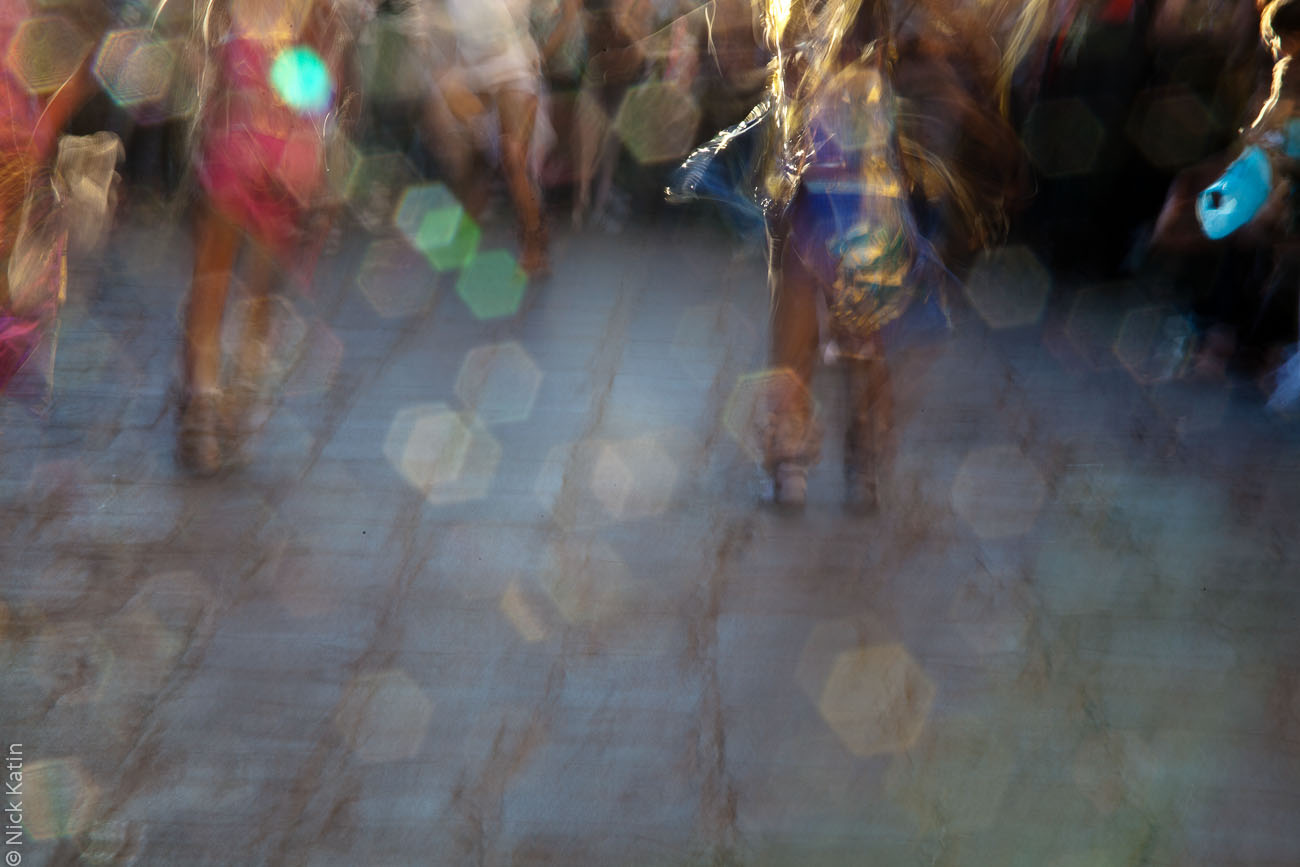
Native indian dancing at the Day of the Dead festival in San Miguel de Allende Share this:
-
Bar La Fuente, Guadalajara, Mexico photo
I have generally found that bars are the most interesting places to visit when travelling. There if it’s not a tourist hot spot, you usually get to see the locals at play. In Guadalajara the guide books direct you too Bar La Fuente and yet when we where there the were no tourists to been seen. Just guys sitting up at the bar and mixed groups at tables all singing along to the live singer and his small two piece band. When the music stops the guys get up and sing to any female close by and this case it was one of us who was treated to a Spanish version of what sounded like That’s Amore but in truth could have been anything. One of these romantic boys was actually a tourist guide who earlier that day took us on a tour of one of Guadalajara’s impressive buildings that contained murals by the famous 1940’s Painter & Muralist Orozco.
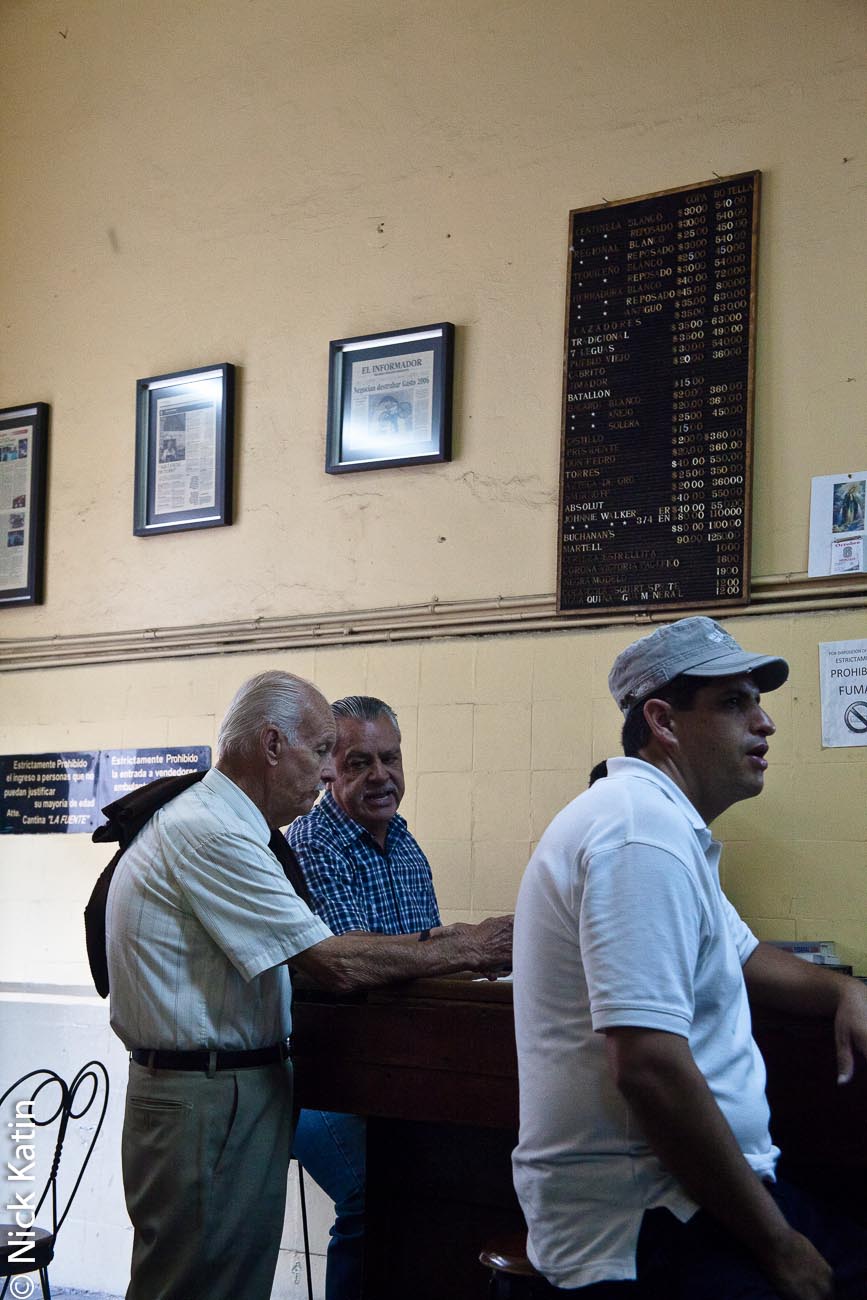
Bar La Fuente in Guadalajara, Mexico Share this:
-
Day of the dead models in San Miguel de Allende Mexico photo
On a previous post on San Miguel de Allende I mentioned that I was there for the day of the dead (Día de los Muertos) festival. Everywhere you go in Mexico in the weeks preceding the festival, you will find various incarnations of skeletons from full size to these small models I came across in San Miguel’s market. The origins of the skeleton used in this festival are a bit hazy but are considered to be as recent as the 18th or 19th century when a newspaper published a poem about a cemetery. Whatever the reason is, it makes for a colourful and almost macabre sight. 1/60 @ f4 75mm ISO 250

Small models on sale In a San Miguel de Allende market in Mexico ©2013 Nick Katin To buy a print of this photo go to San Miguel de Allende photo. To licence this photo email or contact us
Share this:
-
Gran Pyramid Uxmal, near Merida, Mexico photo

Gran Pyramid Uxmal, near Merida, Mexico. is one of the top Maya digs © 2010 Nick Katin The Yucatan peninisula is home to some of the worlds greatest pyramids. Chichen Itza is the most famous but this one at Uxmal near Merida is, in my humble opinion, just as gob smacking and without the tourists. There are many other ruins but the Gran Pyramid is the show stopper. Despite it being the middle of the day I was able, with the aid of my trusty polariser, to capture some good light and the white fluffy clouds.
Share this:
-
Native Indian dancing at San Miguel Allende
For anyone looking to visit Mexico but is a bit unnerved by the bad press Mexico gets these days, they should go to San Miguel de Allende in the state of Guanajuato. Located 274 km form Mexico city, it’s as western as it gets with its large population of foreign retirees, artists and writers, most of whom come from the big country to the north. It’s a beautiful spot and has lots of festivals. These dancers were part of the Day of the Dead (Día de los Muertos) festival. Couldn’t resist the angle!
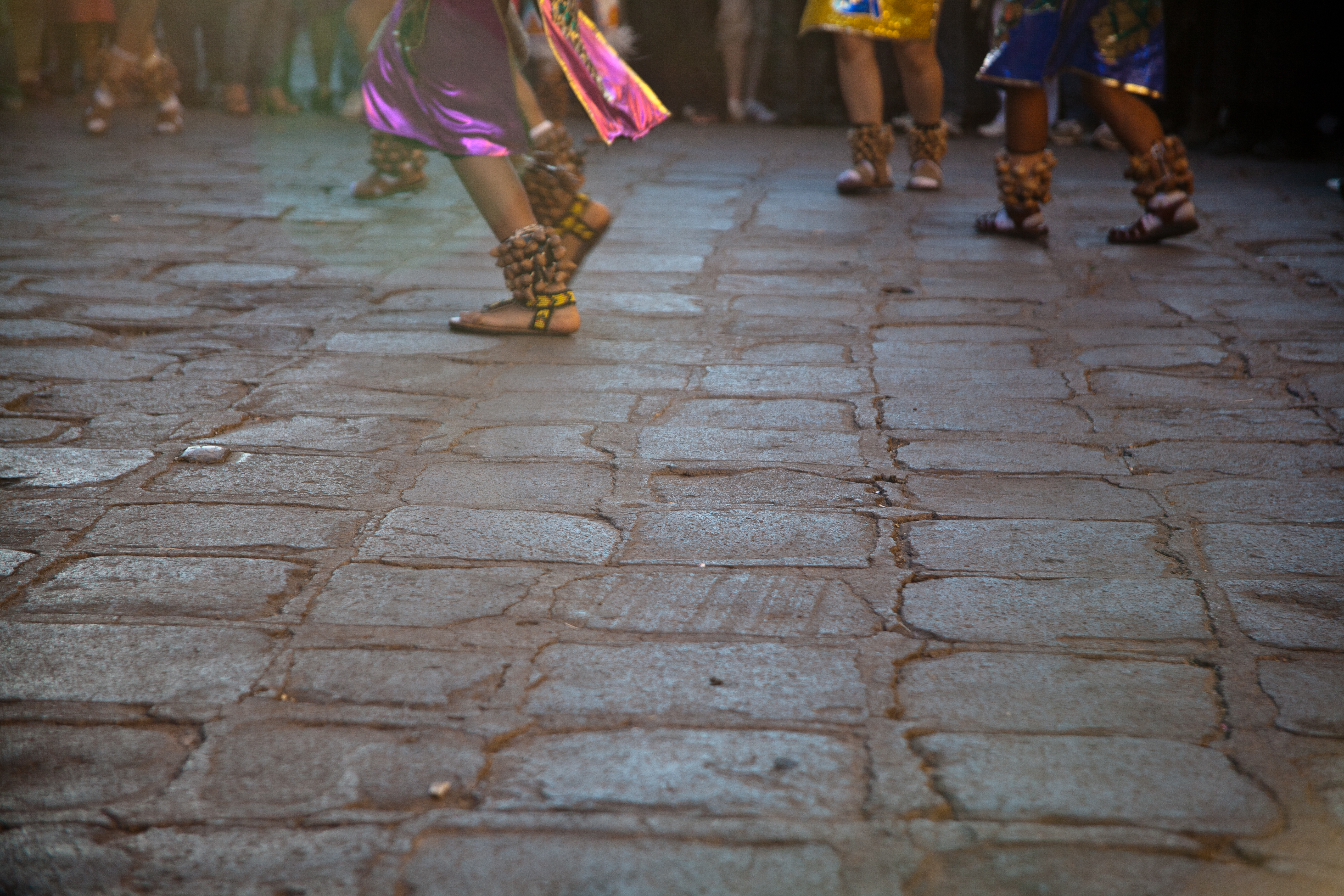
Native Indian dancing At the Day of the Dead festival in San Miguel de Allende © 2010 Nick Katin Share this:


 Katin Images Travel Photography