We all know that a picture paints a thousand words. And we know that images are important to our marketing, particularly our online presence.
Why is it then that often the one image that we should have, is missing or at best average?
Which image is that? The SELFIE or as it used to be known as, the self-portrait.
When I visit a website I usually go straight to the about or start here page. It often surprises me how many about pages make no mention of the people behind them. For whatever reason they have no human images.
In my many years of sales and marking there has been one truism people buy from People. Usually people they like but most certainly people they trust and know something about.
There has been a lot of testing and research that confirms a human face on about page increases trust.
When you have trust, the more likely visitors are to stick around and consume your content and/or buy your stuff!
The about (or start here) and contact pages are the usually the most visited pages on a website.
So if you don’t have a picture and some sort of bio you are telling visitors to your site that you are anonymous. We as human beings tend not trust anonymous.
Sure sites like Amazon or Microsoft are anonymous but they have multimillion marketing budgets that go a long way to overcoming their anonymous disadvantage.
So make sure you have a picture of yourself and your key personnel on your website.
So the first 2 steps to think about are:
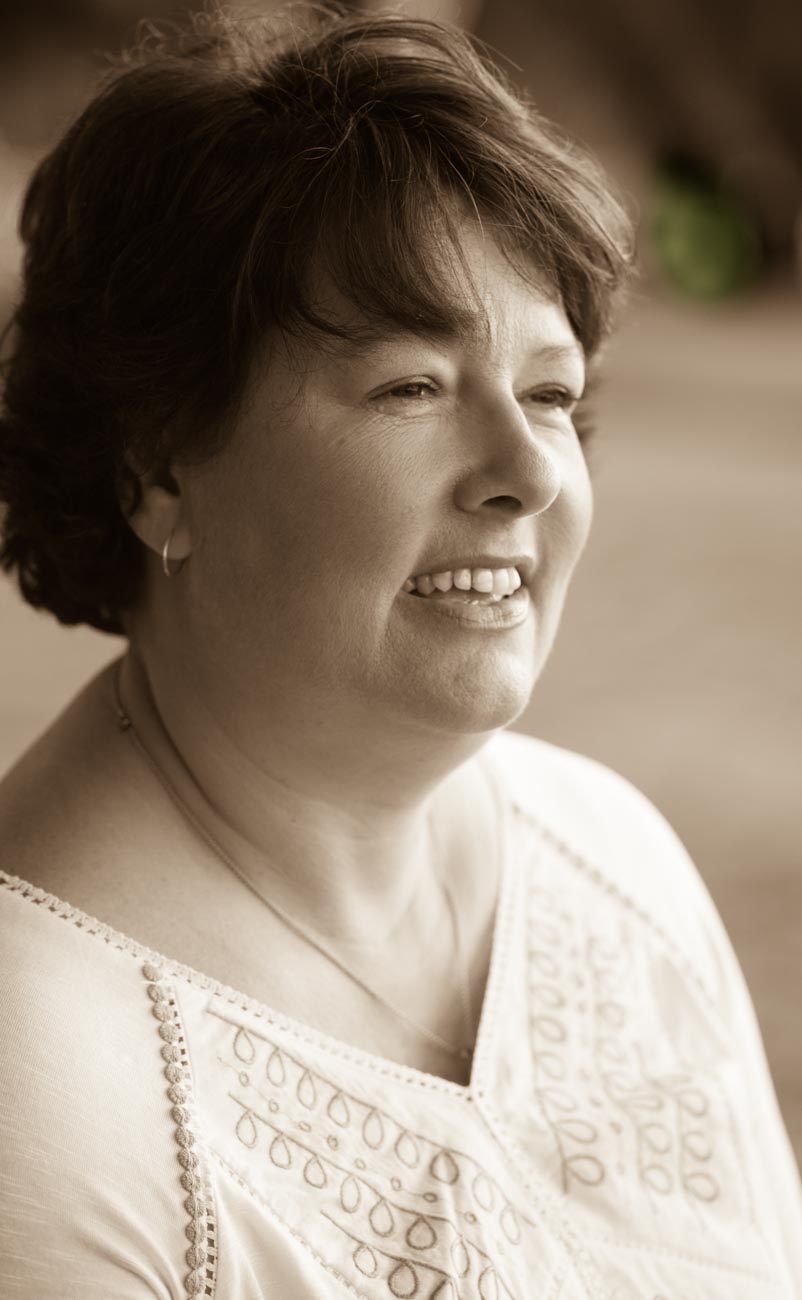
1. What sort of self-portrait do you think represents your brand?
A financial adviser or lawyer may want a more conservative head shot. Or they may want a full length portrait with business like clothes like a jacket and trousers.
A social media site may wish to convey a trendy relaxed image. So it may decide that, rather than have a headshot, an image of its employees being active may be better.
A tradesperson my want to have an image of themselves in working gear with a tool as a prop.
Real estate agents tend to want half body (torso and head) shots.
Maybe you want black and white or sepia (a reddish brown hue that resembles the effect of aging in old photographs) as a point of difference.
2. What are you using it for?
Well as I said earlier the priority should be the about page of your website. If you have a team then make sure they too are on that page which could easily be a separate page underneath the main about page.
Social media profiles are also pretty important. They show the human touch and are more likely to attract engagement
You may also wish to use it for some printed marketing material like flyers and business cards.
If you have been featured in publications, then a great head shot. Most publications, primarily due to the cost, are moving away from using a photographer. So having your own portfolio of self-portraits can be very useful
Maybe you’re thinking really big and looking to get your face on a billboard.
Whatever you are using it for make sure you take plenty of images, trying different poses and maybe different locations.
And by the way, there’s no rule that says you have to use the same images across the all platforms and marketing material. You may want to convey a different image on your social media accounts than say, your business card.
Why you are at, why not stick a ‘selfie’ on your contact page. It makes it feel more personal.
Do you produce wine but are not sure how to display it?
Are you in marketing and are struggling for the best way to market your wines or the wines of your clients?
When browsing the wine store for the evening’s bottle of wine how many labels do you recognise? One, two, three if you’re lucky?
What about the corner liquor store or wine merchant, what do they push your way? Don’t get me wrong some wine shop assistants are excellent but most go with the wines they are familiar with and a lot are only familiar with the label, not what’s inside the bottle.
If any of this sounds like you then read on.
Because Photography is just not taken seriously enough by the vast number of wine producers!
The wine industry is highly competitive and whilst you can have the best made wines from some of the world’s best vineyards, it doesn’t mean that it will sell.
Like any product it’s not just the quality but increasingly image!
Just look at how the wines of Bordeaux and Burgundy sell.
What about Grange from Australia? Or Mondavi from California, Guigal from the Rhone Valley.
Then there are regions,
Sauvignon Blanc from Marlborough, Pinot Noir from Oregon and Central Otago.
I could go on and on!
The point is that these wines are all about image and in some cases prestige.
I’m not here to educate you on how to position your brand, only you can do that but what I can tell you is that you need great images to help formulate your marketing strategy.
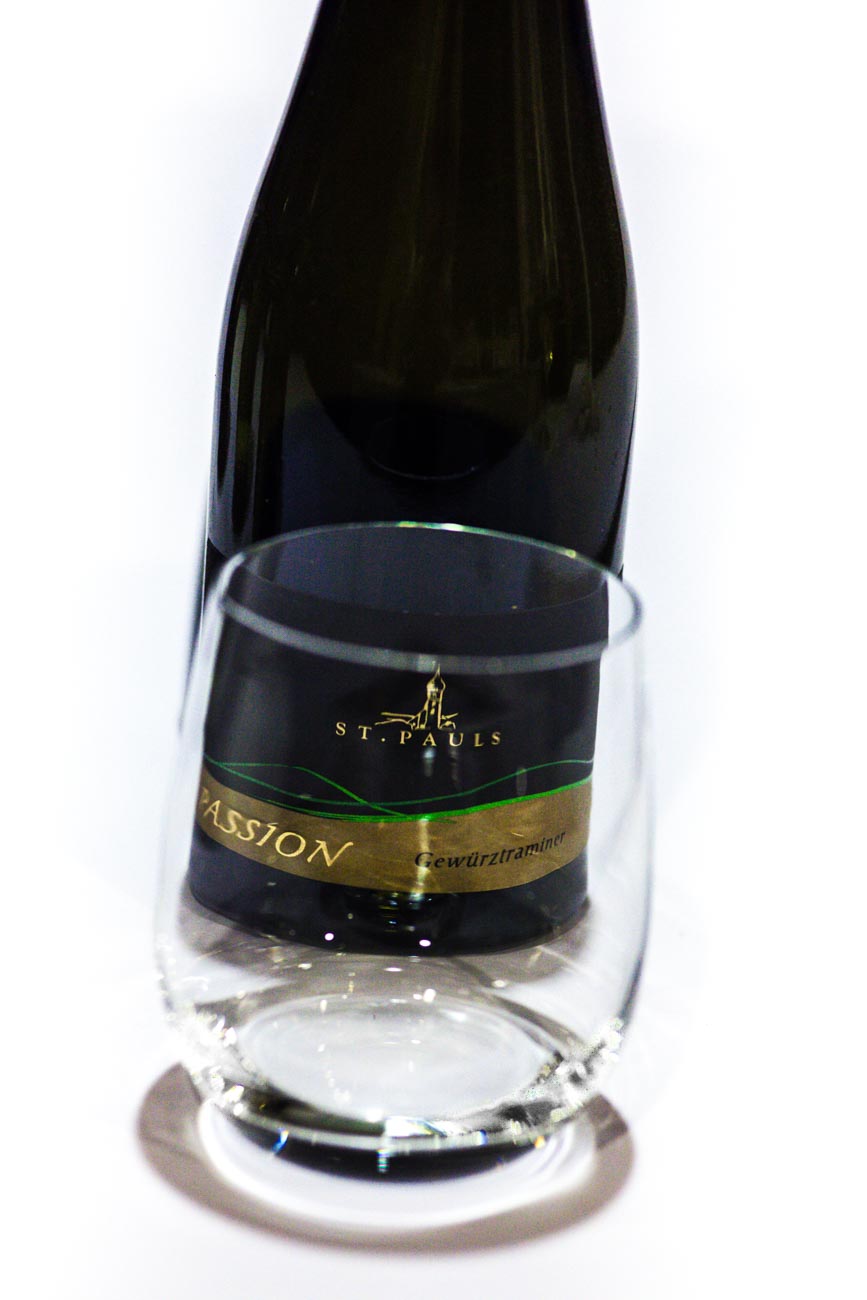
Bottle of wine with glass at angle
OK how do you create a brand image that make people want to buy your product?
Well obviously, anywhere that sells wine but before that, the vast majority of potential customers will come across the image of your wine or winery somewhere online.
And more and more its social media channels that wine consumers will see wine and winery images.
Instagram, Snapchat and Pinterest are the most visual whilst Facebook, Google + and LinkedIn have both visuals and information and let’s not forget YouTube and Twitter and apps like Vivino.
Then you have blogs, winery websites, reviewer’s websites, online magazines, etc. all of which, by the way, now need to be mobile friendly, so the online space is really where you need good images for consumers to share.
Studies have proven that we as human beings remember things that are connected with our emotions whether it be curiosity, anger, sadness, happiness, laughter etc. so an image needs to be memorable.
Think of one photograph you remember, maybe it was of friends, family, travel, or a photo you saw in a magazine or online somewhere, I’ll bet another 1000 words that it evoked some sort of emotion. That’s what I’m talking about!
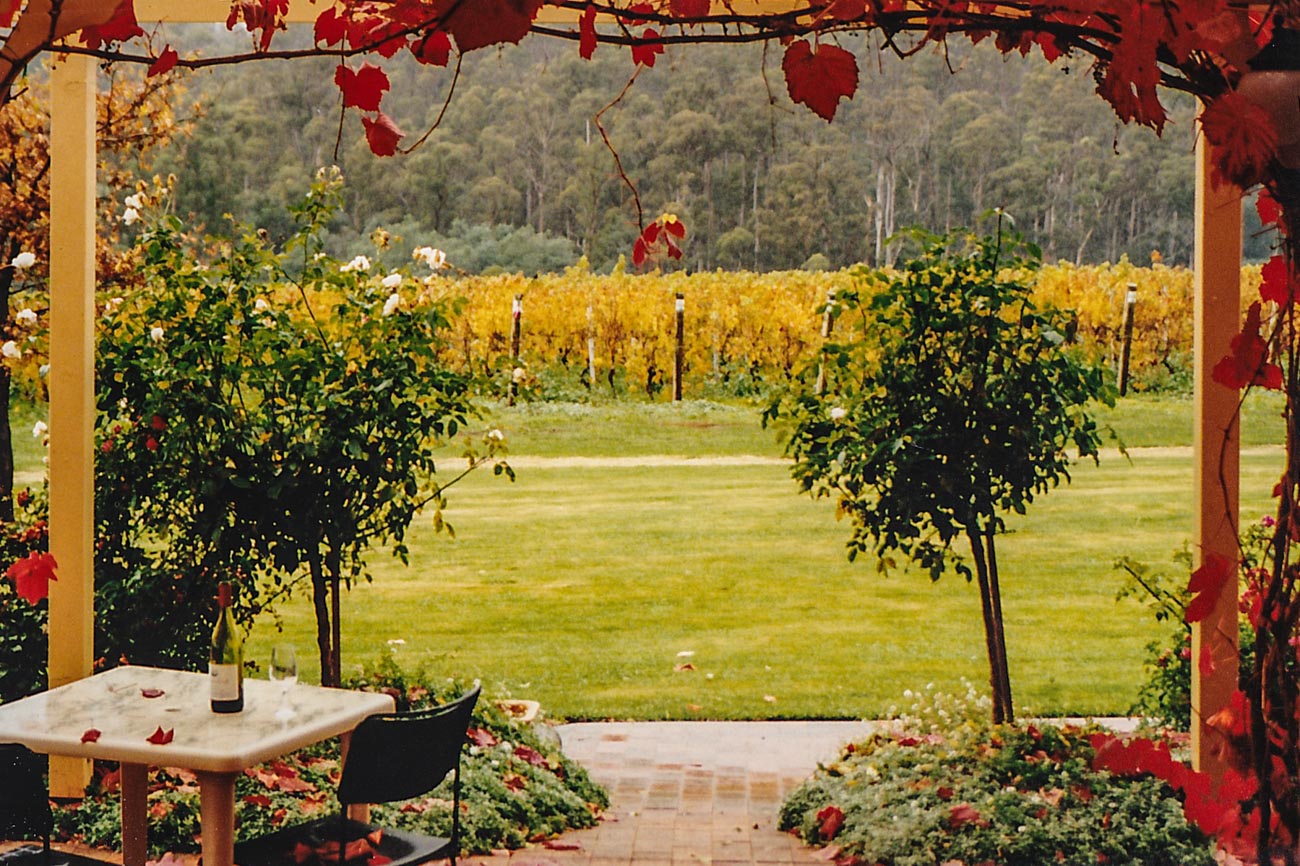
Table and Vines in Winery
What to do about it?
You must produce visual content that helps you stand out.
Have images that help evolve your brand and tell a visual story of who you are.
The key to that is to see visual moments everywhere. Behind-the-scenes peeks are becoming popular with some of the big brands. For example, active photos that show real customers or employees doing real things — as opposed to staged shots or logos.
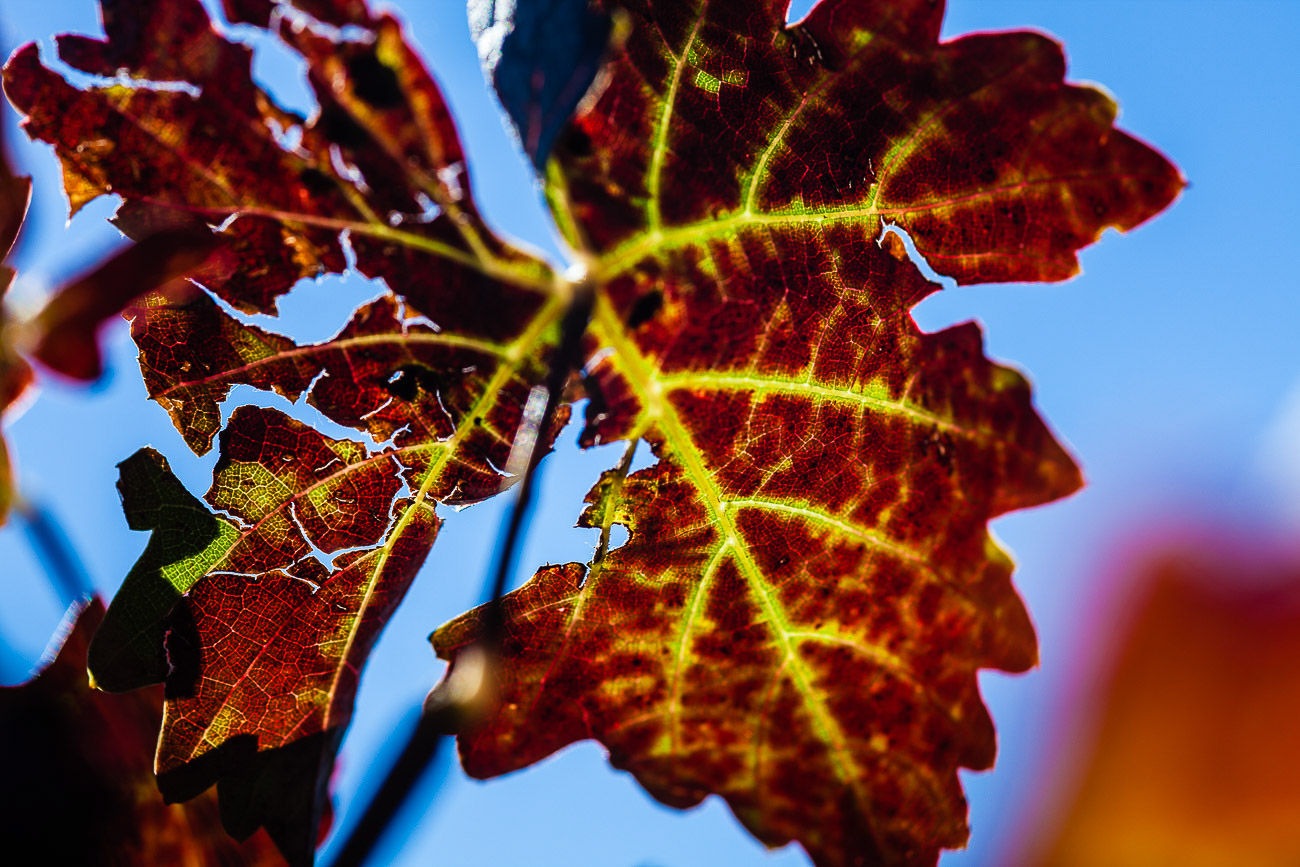
Vine leaf
Of course, someone still needs to push the shutter button and that can be by engaging a good photographer.
Many organizations have photographers they contact in times of need — for events, product launches, etc. But that makes Photography a bit of an afterthought.
And will they be able to capture the essence of what you are about? The other option is to DIY.
All you need is to start is good technique and a good eye, assuming that you have a camera. These things can be taught to anyone who is willing to learn and follow specific instructions.
Don’t get me wrong this won’t get you to the levels of the greats, they spent years honing their craft, but you can quickly and easily get to the stage where your photos become the envy of your peers.
Do you agree? Is Photography an afterthought for a lot of wine business? Feel free to add your tips and opinions below. I would really like to hear them.
I Know, you’re happy using other people’s stock photos – And that’s fine. However, your business is unique and it deserves unique content to grow and scale. I’m not saying that you need great photos to be successful, you may have other advantages or skills that can offset that. But we are an image driven society and without originality a business will struggle to stand out from the crowd. You can read more on this topic here. By the way I’m not the only one to hold this opinion read these articles as well:
Are you fed up with wasting your time searching for stock photos for your business?
Have you used a stock photo, only to see it being used elsewhere by another business, even a competitor?
Do you always find yourself saying “Oh if only I had a photo of X”?
Have you had a photo taken on your behalf that you submitted to your ad agency or printer only for them to charge you to rework or even retake it because they don’t think it’s up to scratch?
Have you paid a photographer to take some photos for your business only to be unhappy with the ‘finished article’?
If you answered “yes” to even one of these questions, then read on.
Because despite everything you read to the contrary you can learn to take some great photos consistently to impress and attract customers.
So what’s the advantages:
Well you can
Spend time creating your own and be in charge of your own destiny.
Taking photos (and videos) for business marketing is different. Not harder or easier but different.
The eye should be looking to make your product or service as attractive as possible sometimes in an obvious way, other times in a subliminal or subtle way.
Make unique photos that you own the copyright to
It always amazes me how little is understood about just the basics of copyright When a photographer conducts a shoot for any business (or wedding or portrait session or any other third party) they keep the copyright. What that can mean is that unless you have a watertight contract with them, that they are prepared to sign (and then the price will increase) they can resell that photo to another business or alternatively a stock agency who can then sell it on.
Take photos of what you think will help move your business forward
As I said before you know your business and it’s not the same as other businesses. It’s unique and only you know the sort of photo that you want to represent your business.
And then you will
Stop paying for services that delay your campaigns
There are some great photographers out there who will no doubt give you exactly what you want. But they are expensive and often hard to book. Getting a less expensive job will save you money but it can cost you if the quality and/or service is substandard.
Stop settling for someone else’s interpretation on what photos you need.
Photographers, stock agencies and marketing agencies are all just interpreting what they think you want. Earn yourself the freedom to choose what you want.
Now I know some you will say:
1 I don’t have time – well how much time do you spend on searching for stock photography now? More on this here.
2 I don’t have the money to spend on photo education – Look I get that you want to run your business on the smell of an oily rag. I’m in business too. But sometimes you have to pay for something that’s going to take your business forward and will give you potentially a big ongoing return on investment. More on this here
3 I don’t have a decent camera – Assuming you have a camera that works then you have a ‘decent’ camera. The idea that you need a certain quality of camera to take great photos is simply not true. Check out an article on this here.
4 I can’t learn photography because ………. (fill in the blank) – Well there might be a reason that I can’t think of where this is true but if you can run a business or hold down a challenging job then you will be surprised how quickly and easily you can learn.
To summarise
You own or run a business and you want it to succeed. Well you can’t do that by buying, or downloading for free, photos that only vaguely represent what your business is about. You have a unique offering and therefore all your marketing needs to be unique and that includes photos.
You can achieve this by taking your own photos and 1 Save time and money on searching for photos. 2 Save money by not having to pay for a photographer who may not give you want you need.
Taking you own photo means learning the basics and building on that.
Have I convinced you?
If so, I’d like to suggest you sign up to, not only get notified of future updates, but also get some exclusive content that won’t be available on this site. If you’ve been here before and haven’t already signed up, then what are you waiting for? Either way you can sign up at these places and get a checklist or guide for your trouble:
When taking any photo, it’s the done thing to have rules.
Now I don’t go along with rules all the time after all, aren’t they made to be broken?
But this one is an essential rule for anyone starting out or even still learning (not that you ever finish learning but you get my drift)
So, what is the rule of thirds?
It’s way of ensuring that the photo has some sort of balance.
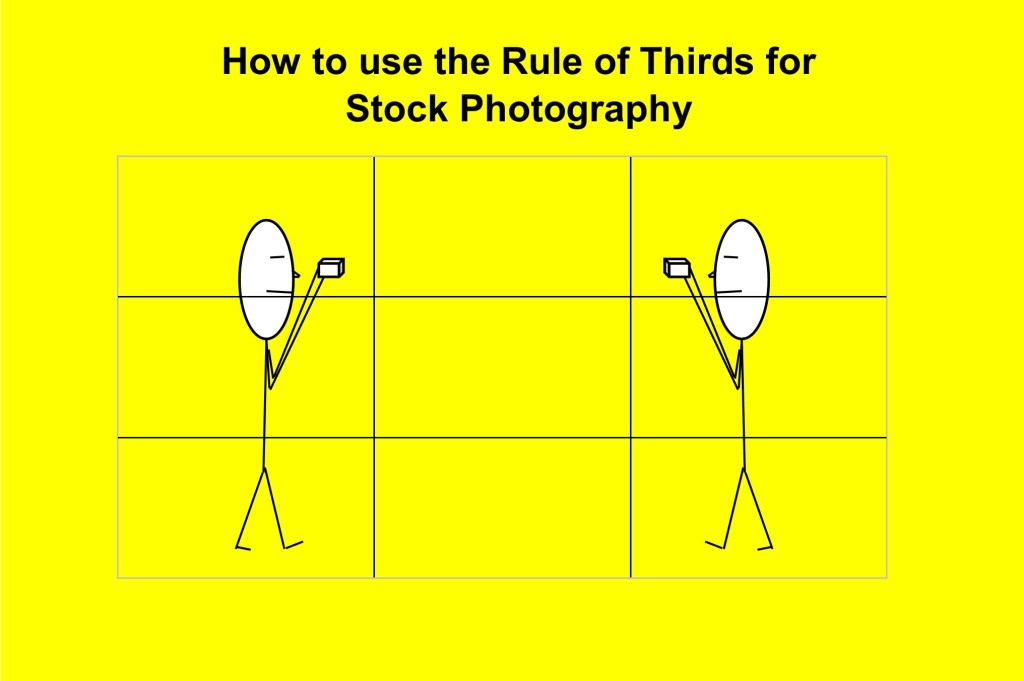
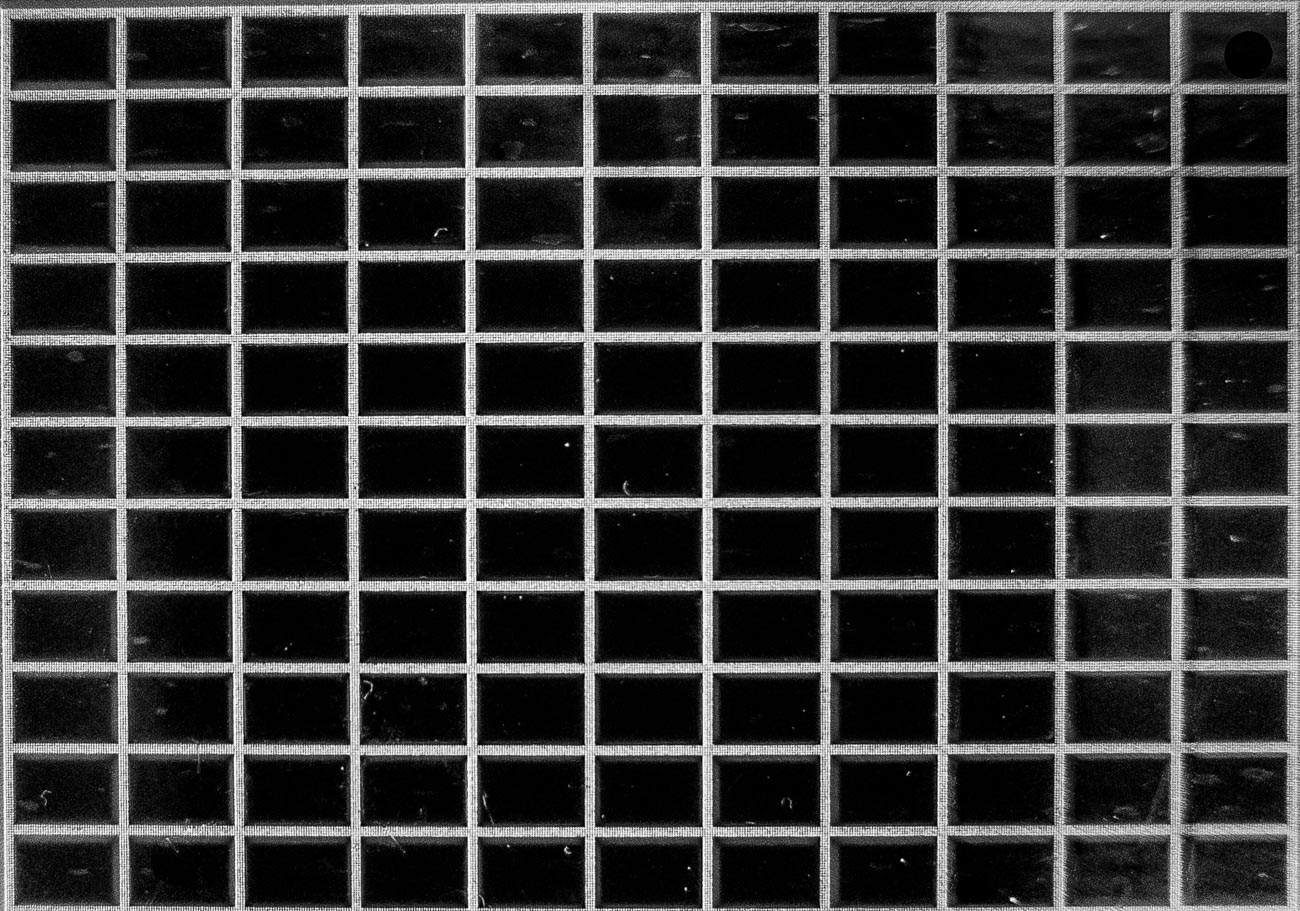
Basically, you divide the photo frame into thirds.
You have a top third, middle third and a bottom third, plus you then have 2 vertical lines that divide the frame into 3 going from one side to the other.
It’s like an imaginary empty noughts and crosses box overlayed on your photo
The idea is that you position your subject along one of these lines.
For example, generally speaking, a horizon shouldn’t be right in the middle, it could be on the lower third or upper third line depending on what’s interesting in, usually, the sky or the foreground.
Basically, the rule of thirds promotes that the main elements of a composition in any photo should be placed one third away from the edges of the frame.
The idea behind it is that our eyes are naturally drawn to the intersecting points, how we are drawn to the balance of an image. This is all theory of course.
People relaxing enjoying the view after a swim at Perth’s Cottesloe’s beach
But it is a good start. The example of avoiding putting the horizon smack bang in the middle is probably the most obvious.
Other examples could be having a model over to one side along, let’s say, the right-hand line, the moon in the right-hand corner or a lone tree to one side.
Here’s three more examples:
Taxis outside Flinders st station Melbourne
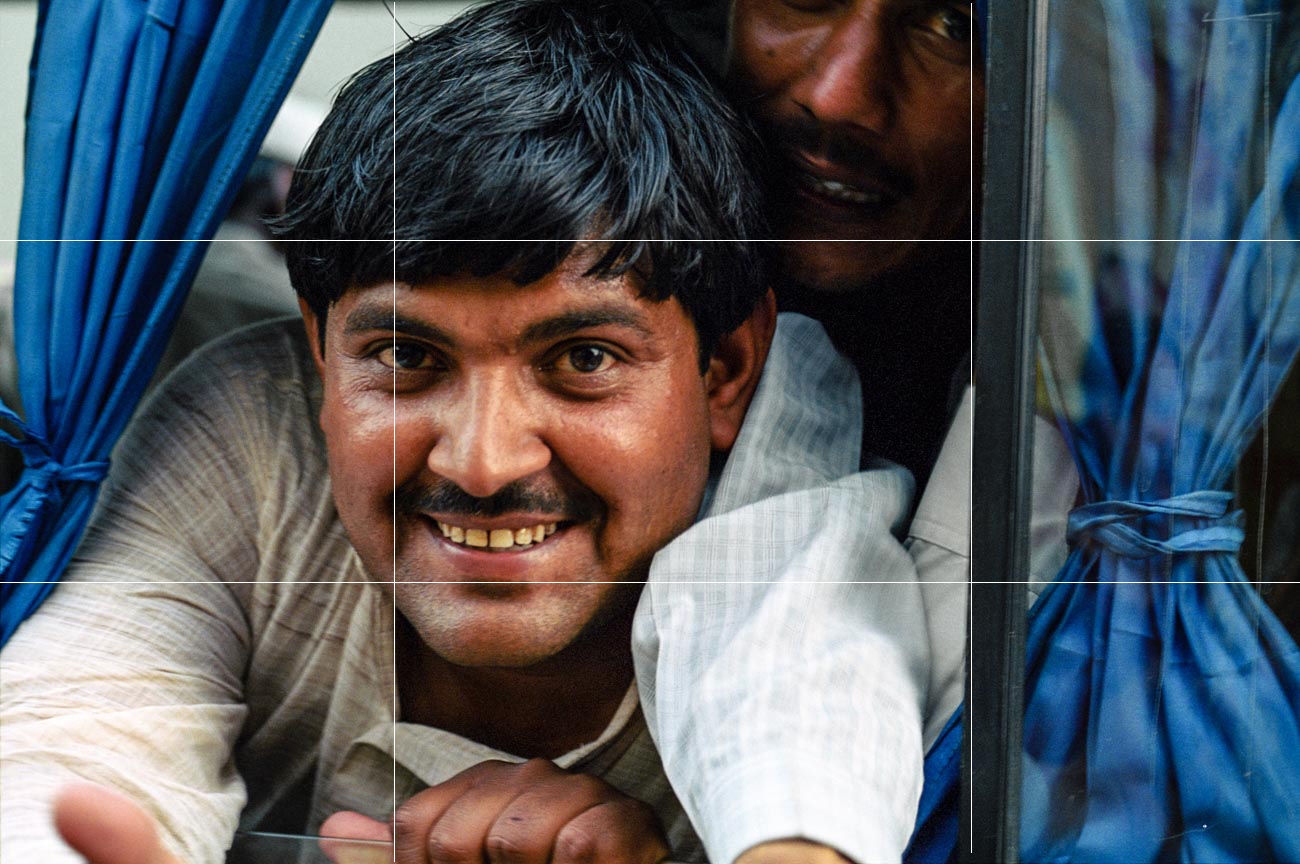
Young man in a crowded car in Bikaner, Rajastan, India
You can see by these examples it’s really all about keeping the main elements to one side and not smack bang in the middle.
So how to use it?
Well from a purely technical point of view the easiest way if you want to see when composing an image is to use the focus points.
On every camera and even some smartphones there is now the ability to display multiple focus points and/or a grid similar to the thirds grid which can see through the viewfinder or rear LCD screen.
And that’s fine when you are trying to get the hang of it but once you get into the habit of where to put the imaginary lines roughly I suggest you go back to using the points more naturally.
For stock or marketing photos your composition you may have to take into account any captions you want to overlay over the photo.
No point putting it across a vital part of the image as you will lose the impact of both the image and caption or message.
Of course, as I stated at the beginning it’s a rule that doesn’t have to rule every photo you take (excuse the pun).
It should really be called a guide to creating composition using thirds or something like that as not every situation lends itself to this rule.
Of course, you can go overboard as well.
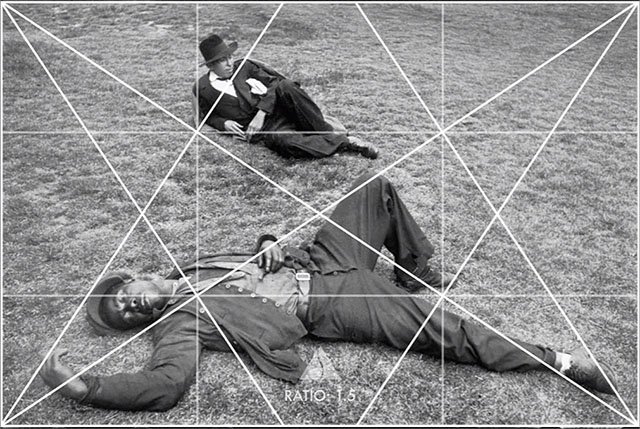
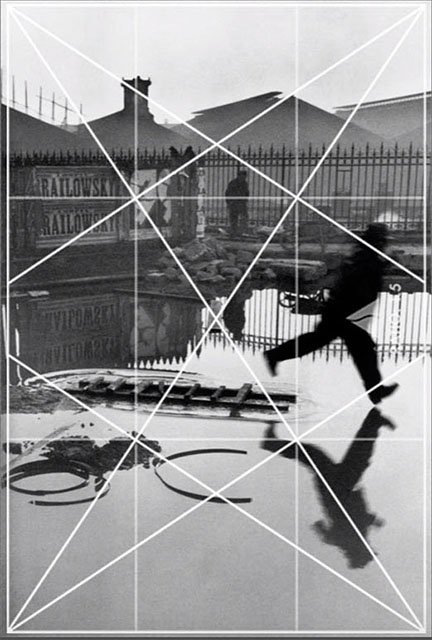
The image lines below, that have been drawn anonymously, are an analysis of the how supposedly of one of the greats, Henri Cartier-Bresson, framed his images.
That I’m not convinced about.
He was a natural talent and I’m sure in his mind’s eye he composed around the frame but I don’t think it was to as detailed.
So to summarise
The rule of thirds is a is a way of making sure the viewer focuses on what you want them to by dividing a photo frame width and height into thirds.
Thanks for reading
Post any comments below. I’d love to hear them.
And do us a favour! Please share any way which works for you.
If you want more like this then please subscribe below and you will get a
free guide on how to improve your stock photography.
We often spend too much time searching for things that we have under our noses.
Let’s take Stock photos for your marketing as an example.
We’ll either jump on the net and spend hours searching for images that will fit the bill or set up our own temporary photo studio and take something ourselves that we believe will do the job.
Often, we may already have the image in our ‘carefully ordered’ catalogue of photos that we have accumulated over the years.
Sometimes the image doesn’t have to be of you, your product, your shop or your staff.
It can just represent your business in a less straight forward way the message you are trying to get across.
So below are several examples of images that can be used to speak to your potential market with suggested captions.
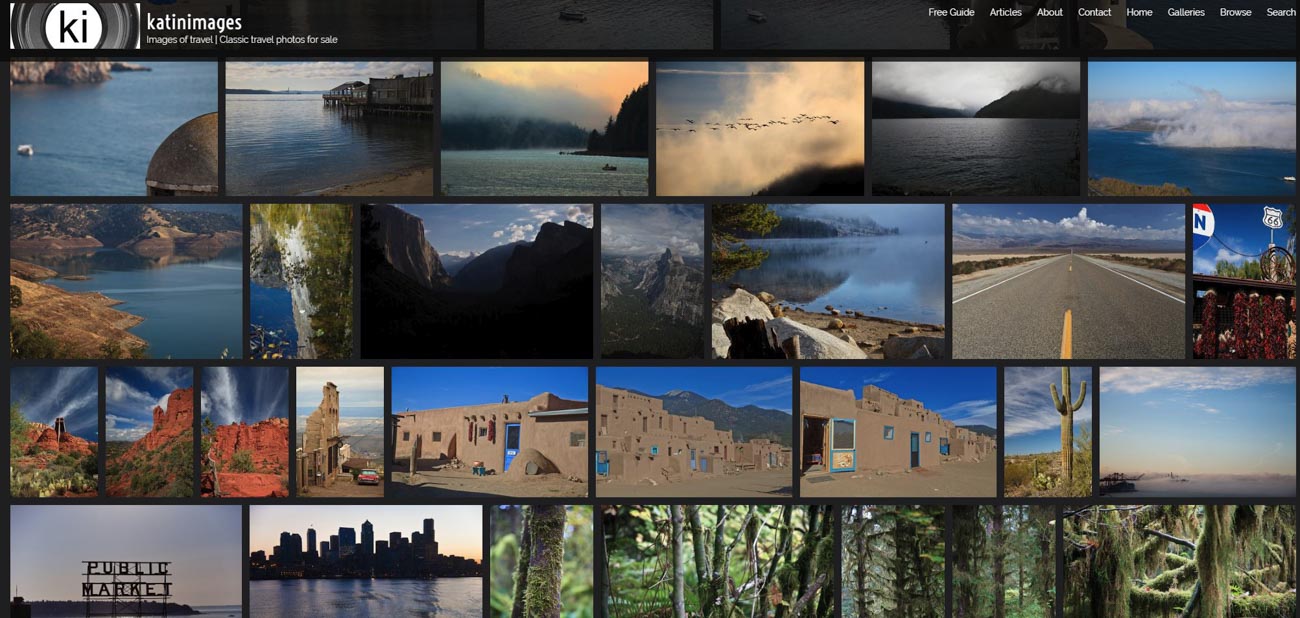
This is not meant to be a promotion for my other brand katinimages.com.
However, if you are interested in any of these images just click on them and you will be taken to my gallery where you can, if you so desire, make a purchase or just see a bigger version.
Are you winging with your finances? Go to dontwingit.com
Fed up with flying an empty plane. Talk to us about charter flights
OK so maybe the captions are not that good but hopefully you get the idea.
Maybe you’ve got some better ones. If so don’t be shy share them in the comments section below. You could help someone else who’s struggling to coin good marketing phrases.
Additionally if you have any questions or comments about this post, you can also leave them in the comments section below.
Or feel free to contact me directly via my contact page
Sharing is caring as they say (although not sure who “they” are).
If there’s some people you know who may enjoy this or any other post on this site, please share with them.
In my article Why stock images are bad for business! I mentioned Photographic Copyright and that I would expand on it at a later date.
Well it’s taken me a while but here it is:
Copyright is very misunderstood and complicated. But it doesn’t have to be.
Let’s see if I can make it simpler for you in with the 10 things you need to know about photographic copyright.
In your business, you will take or have someone, i.e. a photographer, take photos of customers, products, workplaces, employees, landscapes etc etc.
Often, we don’t even consider the legal aspect of these and use them wherever we need to.
So, without further ado, here’s the 10 things you need to know about copyright.
1 Copyright definition
According to the Oxford Dictionary, it is “The exclusive and assignable legal right, given to the originator for a fixed number of years, to print, publish, perform, film, or record literary, artistic, or musical material”
2 The photographer holds the copyright
Yes, that’s right unless a photographer signs over his copyright to you in a signed agreement, they have the right to do anything they like with any photo they take.
Even if they have taken these as a paid assignment.
So those great wedding photos you’ve got, can be used by the wedding photographer in any way they choose.
There is one very important exception to this. If a photo is taken by an employee during their employment, the copyright is automatically owned by the employer.
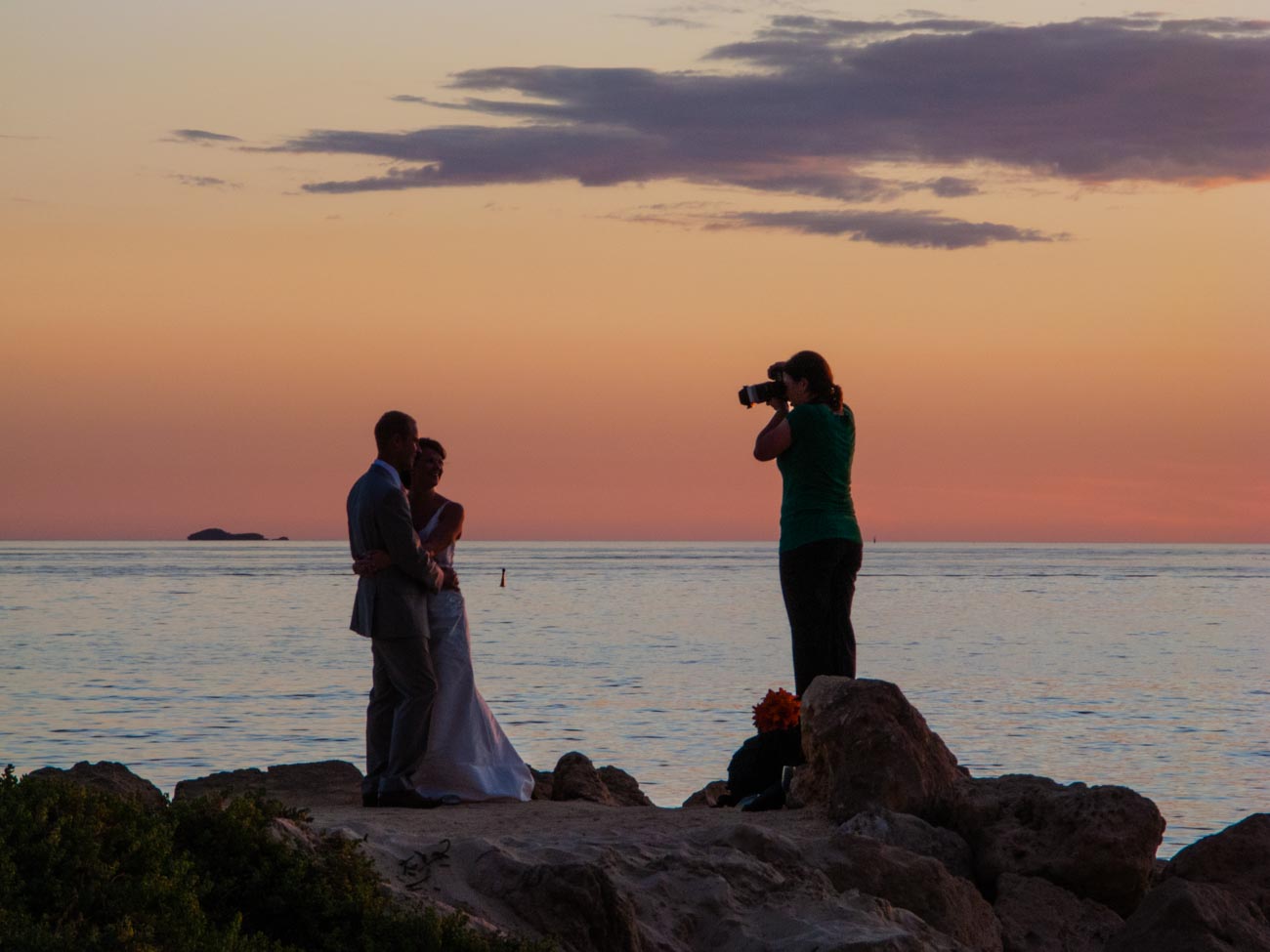
A wedding photographer and the bride and groom at South Beach in Fremantle, Western Australia
3 Editorial copyright
If you use a photo to make a point or tell a story. E.G. the images in this article are not advertising but are there to add substance to the article.
This is called Editorial.
Warning: This can be subjective so there are often exceptions to this.
4 Commercial copyright
When a photo is used to sell or market something then it can come under the banner of commercial use.
In other words, it focuses on the product or service you are selling. If you have a picture of a widget that you advertise on Craigslist with a price on it, then you must have permission from the photographer to use it for that purpose.
The same applies if you are using a photo to depict that this same widget will make life happier and better.
Even though you haven’t got a price it’s still considered that you are marketing this widget and using a photo to do it.
In this instance it’s considered commercial photography.
5 Copyright laws
Laws vary from country to country which makes it difficult if your markets are international.
So be careful when you are using photos for your marketing in a different country.
The info I posted here is based on the US and is very similar in most other countries.
6 Copyright can cover icons.
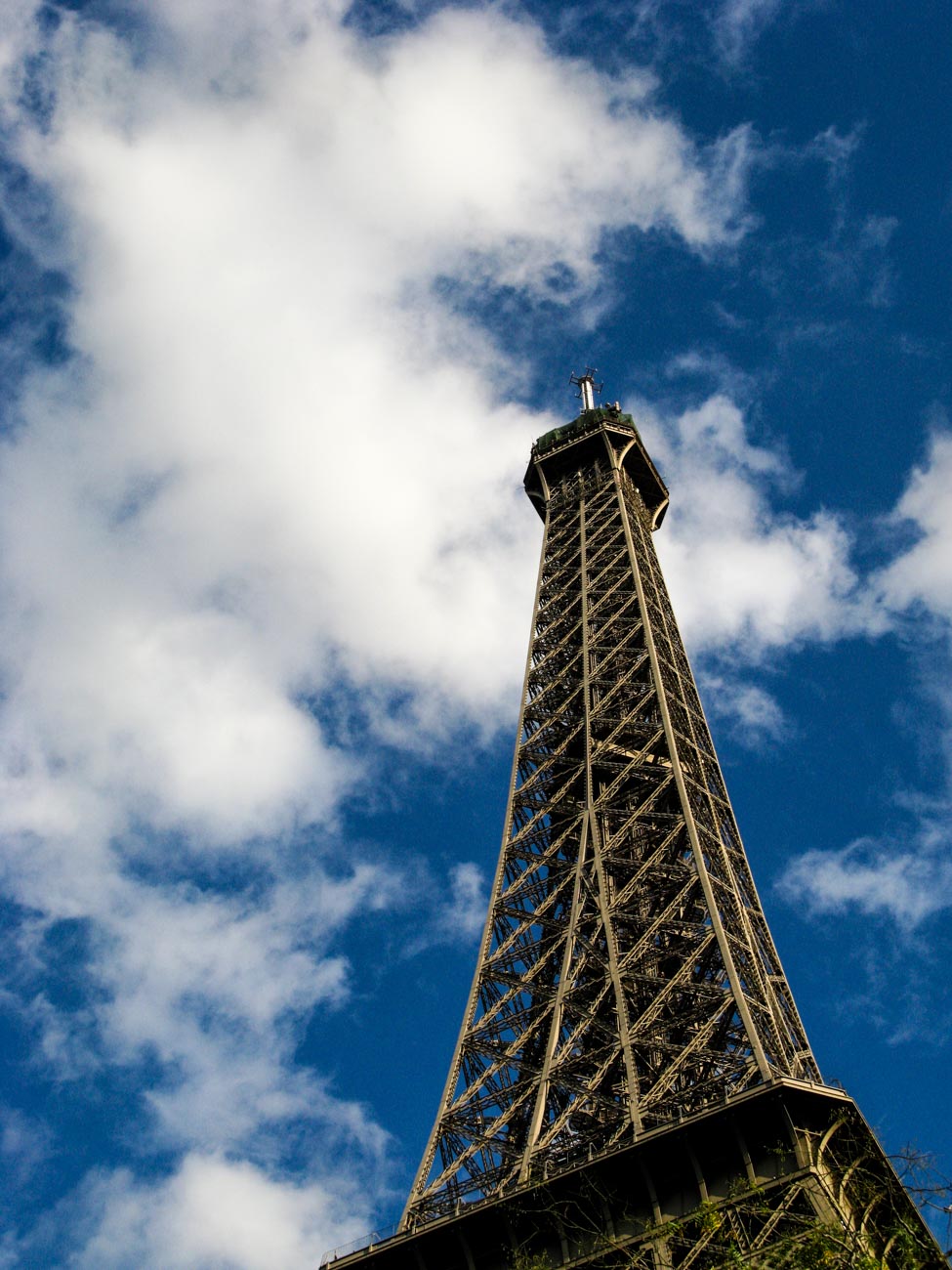
So, you’re in Paris and you take a great photo of the Eiffel tower.
It’s so good that you think you can use it for one of your marketing campaigns.
Well think again.
There are a lot of icons that you cannot use for your marketing even if you took the photo.
You need permission first.
There are places where you are banned from taking images, especially if you look like a professional. E.G using a tripod or DSLR.
The Eiffel Tower
7 Creative Commons
Creative commons is an alternative to rights managed photos.
Most of the photos on Flickr have Creative commons rights.
That means that you can use the photo for anything as long as you give credit to the creator. There are many different types of Creative Common licenses some of which exclude commercial use.
So if you use a photo with a creative commons licence, read the fine print.
8 Internet Photos
The web is awash with photos and there are thousands posted every day.
Each one has been taken by someone who owns the copyright.
If you ‘borrow’ a photo and put it on your site or use it for any purpose without permission you are taking a risk.
They can come looking for you and if they don’t actually sue you they can take up a lot of your time. Don’t do it.
Stock agencies will usually have their I’s dotted and T’s crossed so you shouldn’t have any issues there.
But it does pay to check.
Of course, you could pay for the use of a photo and find that it’s being used somewhere else.
That’s a common complaint that I hear about royalty free or sites that will supply free images.
There’s not much you can do about that except take you own.
10 Royalty free
Royalty Free Images are one-time payment for use.
The use/s can be stated on the agreement or they can be used for any purpose.
Either way they are not free.
Bonus Point:
Model Release
I could write another article on this one.
The only way to cover your arse (ass) is to get a model release from anyone in your photo. It’s good practice, regardless of whether you think you will use the photo for editorial or commercial use.
It’s not worth the risk
As you can see there’s a lot to it, so watch out for a follow up article in the future.
As usual please share with someone who would like to read this.
Please leave your comments below or you can send me an email via the contact page here
And now that you have got this far, keep scrolling down and subscribe to my newsletter where you will get exclusive info that I don’t publish publicly.
I’ve got some good stuff coming so don’t miss out.
To help provide free content and to cover costs of running the site I run some advertising on the site and engage in the use of some affiliate links. These affiliate links earn me a small commission on any purchases that anyone makes when they visit stores such as Amazon after clicking on one of our links.
These commissions help me to keep nickkatin.com growing.
I’ve eaten at lots of good or great restaurants (I’ve eaten at some pretty ordinary ones too but that is a story for another day).
And not once has it occurred to me to think that the equipment in the Chef’s kitchen must be fantastic!
I appreciate the fact that it’s the chef or chefs that created this meal that I found so enjoyable.
From the start of the dish to sourcing and delivery of raw materials to preparation, the cooking and assembling the meal, dishing the meal onto a plate and finally the delivery to your table, it just happens.
But nowhere on this path do we even consider what equipment they are using.
We trust that their systems in place will deliver to us their creation.
They may well have used the latest pan or cooker or have a great point of sale tablet.
They might well have great knives, to die for ovens or the latest work stations.
We, as the consumer, don’t care as long as the food has got to us in the time expected and is good or even great.
Why then as a photographer, Do I often have people say “WOW! You must have a great (or expensive) camera” when they look at my work.
As if it was the equipment that made the images that are they impressed by.
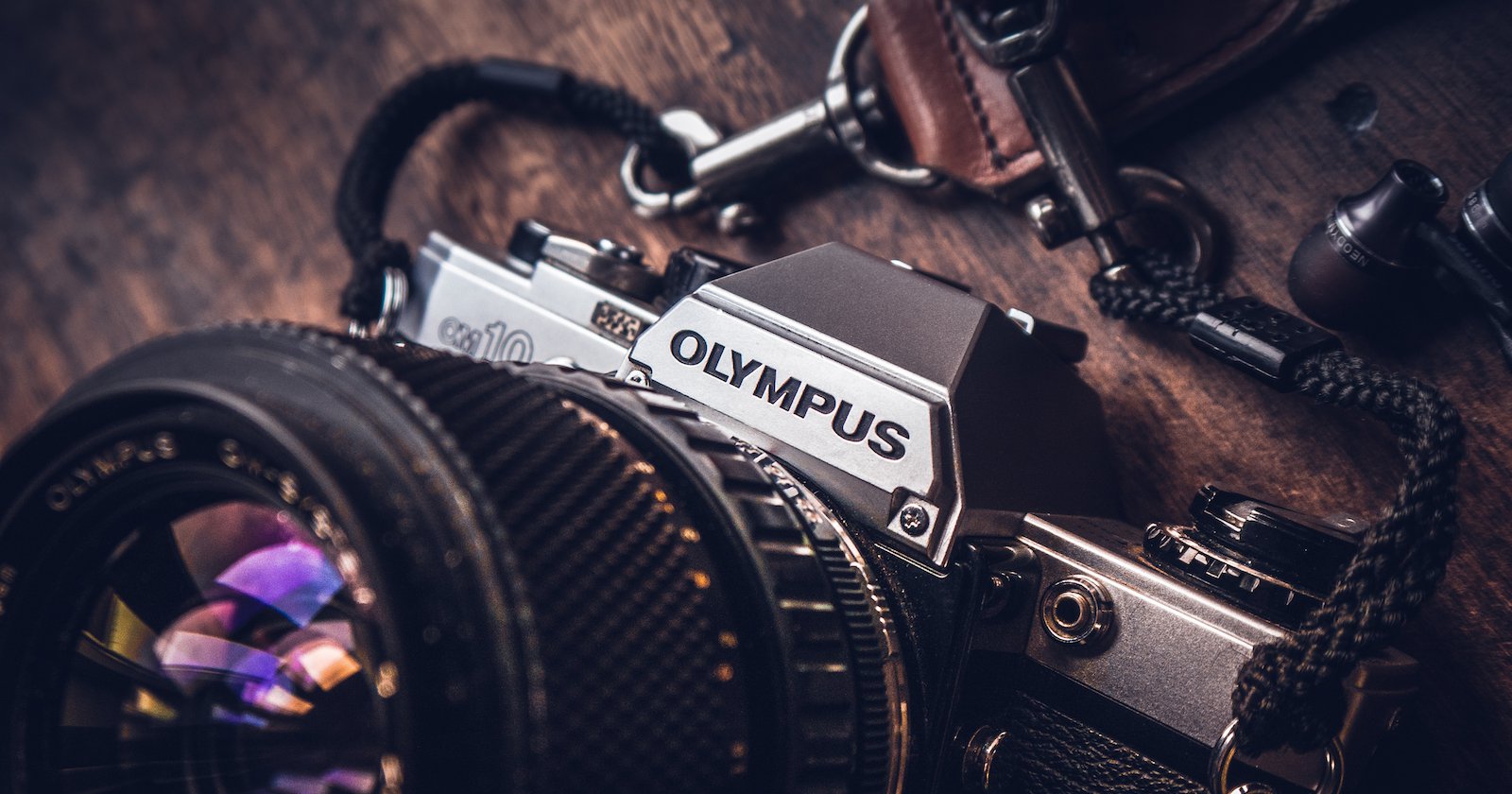
The best camera is the one you have with you.
If you’ve only got one device with you that can take photos whether it’s a phone or a DSLR – then that’s what you’ve got – period.
You can take great images with pretty much anything provided you know how.
Having an expensive camera is not directly proportional to the quality of the image.
I’ve heard it said amongst winemakers that you can make bad wine from great fruit but you can’t make a great wine from poor fruit regardless of the shiny expensive equipment you might have in the winery.
But, you can make great wine from great fruit without having the latest, greatest and most expensive equipment.
Well the same applies to a camera if you have good technique, a good eye and skill then you can make great images with any camera.
Even Stock agencies now accept images taken by mobile phones such as the iPhone or Samsung S series.
The reality is that the vast majority of ‘photographers’, who don’t rely on their cameras for use in specific genres, a simple, usable and light camera is more than enough when you know how to use it.
You see, even with all the right kit it’s easy to take an average photo.
Here’s an example of 2 images I took on a polar bear trip.
The fuzzy out of focus badly composed image on the right was taken with a Canon 5D Mk 11 with a pro 100-400mm telephoto lens.
The one on the left was taken with a soon to be traded in HTC one XL smartphone.
On both I was in the right place at the right time and for the first one I had all the time in the world but still managed to stuff it up.
You can take great photos with anything you just need to know the limitations of the camera you have.
Let’s take smartphone cameras.
Smartphone cameras struggle to take images that will blur or freeze motion.
They are hopeless in low light unless you have a tripod (and even then, it depends on the brand). Despite smartphone manufacturers best efforts phone they still can’t get the same bokeh that a camera with a interchangeable lens can.
It’s physics after all. But eventually smartphones will be able to provide the flexibility and quality of larger cameras.
But a DSLR or Mirrorless camera , can do all these things but you can’t carry it in a pocket or small bag
So, you play to its strengths not it’s weakness.
Use a smartphone for still shots in good light that don’t need that bokeh effect and you’ll have as good as image as you can get based on your ability.
So, there you have it.
Hopefully that helps you realise that you don’t need the latest and greatest camera to take some really good images for your marketing
They are some of the benefits you can get with right equipment. But to reiterate the image is only as good as the person with who has their finger on the shutter button.
To use another analogy, are drivers of Mercedes, Rolls Royce or Porsche cars any better drivers than you or me (assuming you are not one of them)? I think not.
I would be interested in your opinion.
Do you agree?
Did this help you gain some confidence in what camera you have?
Stock Photography and/or Visual content can be many things, like photos or images, infographics, videos, *Memes, screenshots and presentations.
There are others of course but these are the main ones.
*BTW don’t know what a Meme is then check out this site Memes.com
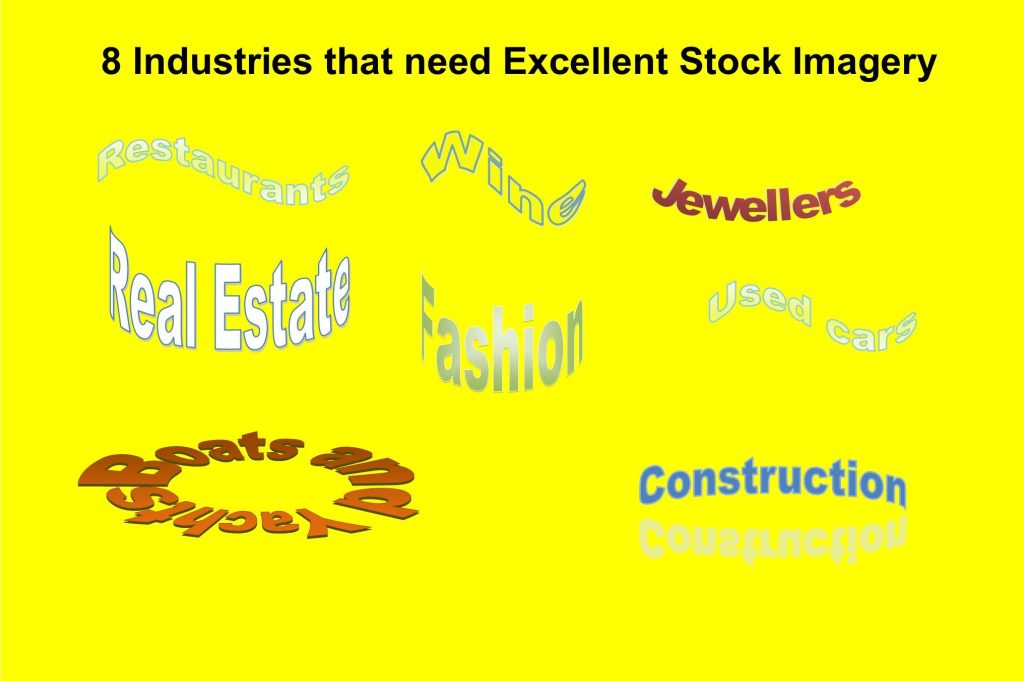
In this article, I will concentrate on what stock Photography means to eight industries.
So, off the top of my head some of these industries include real estate, boat or yacht sales, restaurants, commercial builders, used car dealers, viticulturalists, jewellers and fashion designers.
Of course, there are many others.
But what they all have in common is that they all need a constant flow of high quality images to market themselves and their products.
And that’s because the speed and ease of their sales is connected to the quality of their photograph
So, let’s look at why you need it for marketing from these selected industries point of view:
1 Real estate
It goes without saying that real estate is an extremely visual industry.
Without images of the property on offer, a real estate sales person is going to struggle to get anyone to come and look at any property.
A properties image should show its livability and its condition.
The quality of the images should be good enough to tempt anyone looking for a property into seeing the real thing.
Any property investor, whilst not wanting to live in the property wants to know it’s condition, so that they won’t be having to update or worse still renovate before anyone can move in.
Of course, this is not new, real estate has always published images of properties for sale.
From grand 5 or 6-page booklet or flyers or portfolios to the current on-line platforms, images of real estate have always been well presented (well, mostly).
It’s interesting that despite the on-line opportunities the flyer is still going strong.
Why is that? Well when the image is being displayed in print especially in a newspaper ‘type’ publication, the print the quality is often poor.
And a poor-quality print will exaggerate flaws.
Yes, that’s right a lot of Real Estate markets still use newspapers. So, agents back it up with good quality flyers.
So it’s essential to ensure the image quality is as high as possible.
2 Marine Vehicle sales
Haeding towards the Adriatic from Dubrovnik’s Marina
Once again selling a boat is a very visual process.
Each boat for sale can have up to 20-30 images portraying different angles and features.
As with real estate if you are going to buy a boat you need to see the condition it is in if it’s a used one.
For new ones, you need to be able see the features, benefits and comforts.
Boats have the luxury of usually of being able to be photographed on water so that you get that eye pleasing character.
3 Restaurants
Rather than rely on the self-appointed reviewer who posts images to whatever Social media platform they are on, it’s about time that restaurants took charge of their own images of their property and products.
A chef will spend hours creating a work of art to put on the table but the effect can be ruined by a poor image, whether it be by a well-meaning customer or by the restaurant management themselves.
There are two trains of thought on images of food.
One is to portray it as a work of art and the other is to make it mouth-watering and tempting.
Pictures of the restaurant itself also come into play.
Often potential customers will be tempted by the interior of a restaurant rather than the food. Images need to convey whatever character the restaurant is trying to portray whether it be a fine dining or home cooking.
4 Wine industry
Wineries are usually located in stunning parts of the world.
Rolling vine covered hills, some with a mountain backdrop.
Some are less dramatic but equally pleasing to eye.
Capturing the essence of the terroir of a wine should be easy.
Likewise, a bottle of wine with an attractive label is again, usually easy to capture.
The wine itself being poured into a glass can be tantalisingly mouth-watering.
When you take a sip of wine you are buying into the back story whether it be the wonderful landscape of the vines or the winery history.
Even the aesthetics of the how the wine is packaged can be attractive.
Or the type of scene that the winery wants you to consider like a moody wine bar or a garden on a sunny day.
Yes, the wine industry has lots of options to visual its marketing.
5 Jewellers
In the 21st century more and more jewellers are selling their creations online as well as through the shop front.
Not only are they finding that customers are coming to their shop after seeing a piece of jewellery online, in some instances customers will buy off their website.
Customers look up websites first, unless they know and trust the jeweller.
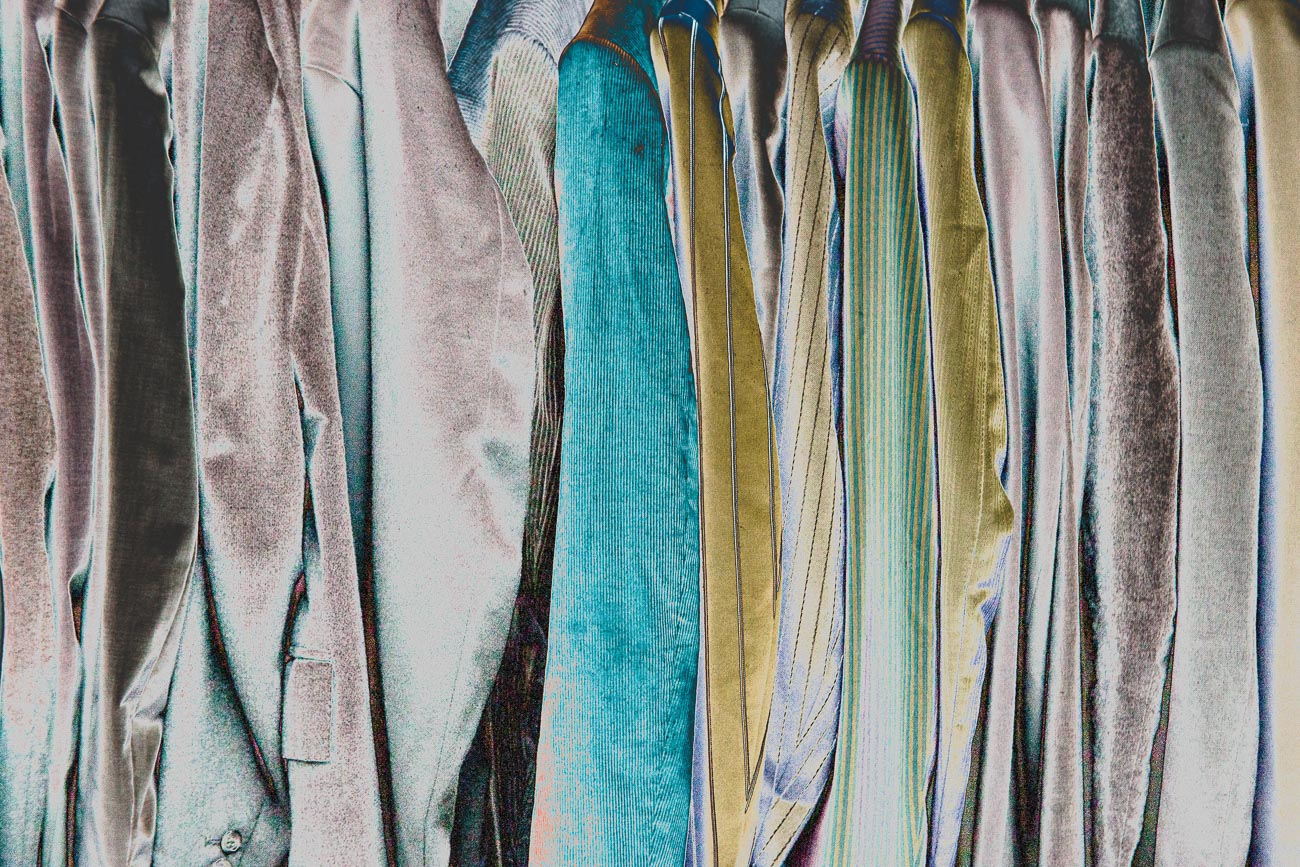
6 Fashion design
How do you get your new design out there? By the web of course but that’s not the only way I’m sure.
Designers have relationships with buyers and will send off images of their latest ideas to garner interest.
There is the other side to marketing fashion and that’s directly to the end user.
There are lots of roads to that end but all rely on great visuals.
Twenty years ago, the new designs were either first seen in a boutique or a fashion show or media coverage of a fashion show.
Now of course we can search the web for the latest fashions.
7 Used car dealers
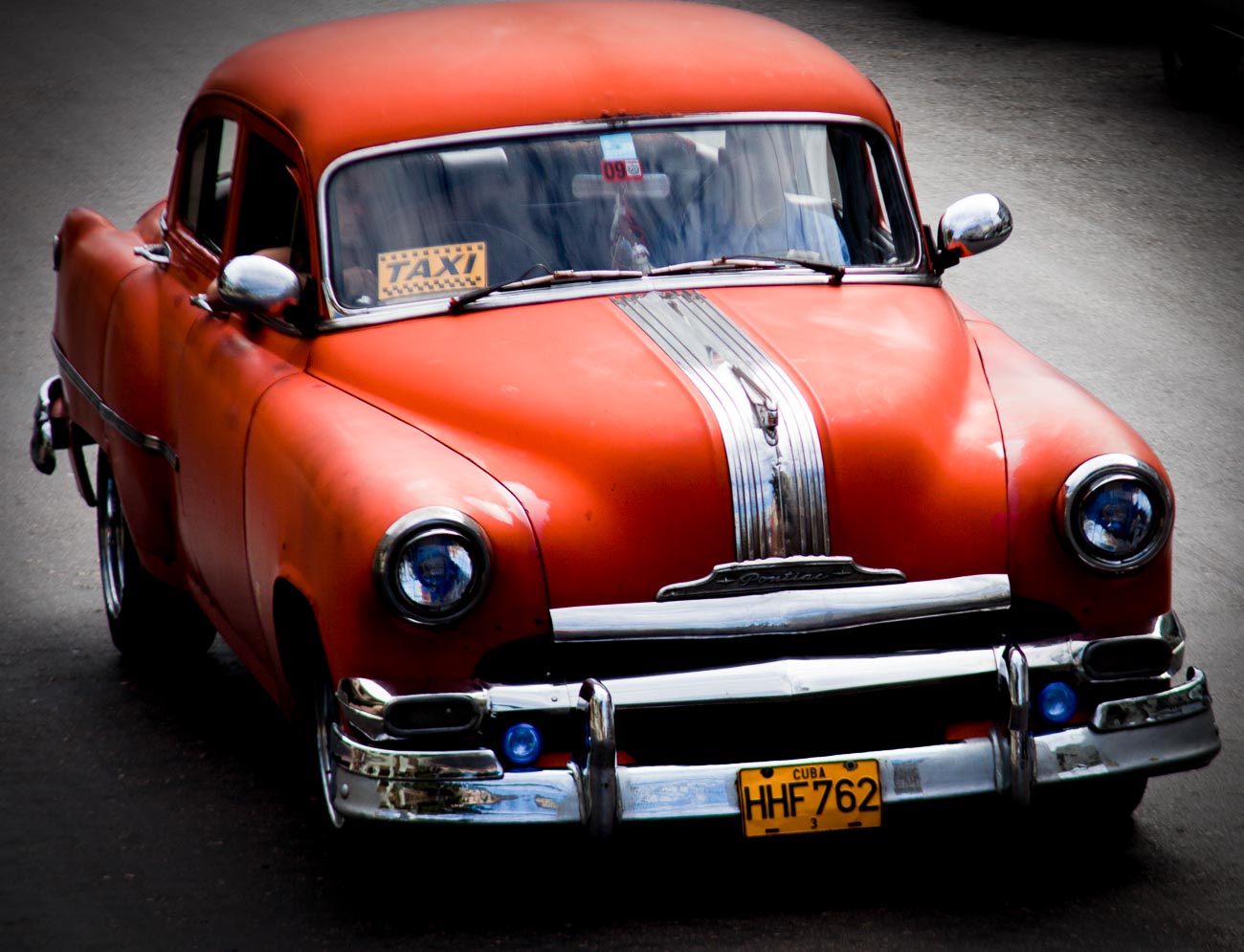
One of Havana’s many classic cars
I say used car dealers, because new car dealers usually have the car manufacturer provide them with quality images.
Car manufacturers pay big bucks to have top line professional photographers do a shoot on each new model release.
From a used car perspective, the cars are all individual and they need images that will stand out.
Most of the advertising with images is in print and/or online.
It is especially important when using print, to ensure the quality of the image is high. As I mentioned before, print as a rule, especially newspaper print, has poor reproduction.
8 Construction industry
For new property developments, images are used to sell off the plan properties like apartments or even new houses.
Often the property hasn’t been built yet so images must be taken of properties of similar design.
They are then edited (not a negative in itself) to depict a more lifelike image of what the future property would look like.
There are of course opportunities to take some great images of show houses or apartments if they have been built which is often the case.
A lot of this is now put on line.
Residential apartment developments often have their own website full of images that they will hope to catch the eye of any prospective purchasers.
So, to recap there are many different industries that need excellent Stock Photography.
The main ones that I have identified are:
1 Real Estate
2 Marine Vehicle sales
3 Restaurants
4 Wine industry
5 Jewellery
6 Fashion Design
7 Used Car dealers
8 Construction industry
I’m sure you can think of many more and I’d be interested to hear which ones that are out there that you think need excellent Stock Photography.
Just leave your comments in the section below
And by the way thanks for reading this.
Whilst you are at it why not enter your details in the box below to get a guide “Eleven easy ways to help you take your own stock photography” plus I have some great material coming up that will be exclusive to those who have signed up.
To bring you the content that you enjoy on this blog, I read extensively, some it from physical and digital books (I have 100’s) and some from different places from around the net.
After all I may be a photographer that’s been in sales and marketing for many years (too many some would say) but I certainly don’t know it all. And it’s good to keep abreast of new and different ways of achieving the end goal.
So, without further ado here’s a few stories and tips worth reading:
For all you Android lovers (me included – love my Samsung S7 shortly to be an S8 maybe).
This is quite a long and detailed post. The one app I would add is Lightroom which is quite good as a standalone but is really designed to be used with the desktop/laptop version.
Not forgetting the other major player that also begins with A – Apple. They’ve released a few videos on how to use the iPhone camera.
I’ve linked to Fortune’s article for a different take on it rather than Apple’s own site but you can click through.
Phil Schiller, Senior Vice President of Worldwide Marketing at Apple Inc, discusses the camera on the iPhone7 during an Apple media event in San Francisco, California, U.S. September 7, 2016. REUTERS/Beck Diefenbach –
Portrait photography is an important part of stock photography and if this is something you want to know more about then you can do know worse than watch one of Ed Gregory’s videos. This one has been promoted by Fstoppers:
BT (British Telecom) are, as the name suggests, a telecommunications company. They have very conveniently provided a few simple tips on taking photos indoors. Wonder how competitive they are?
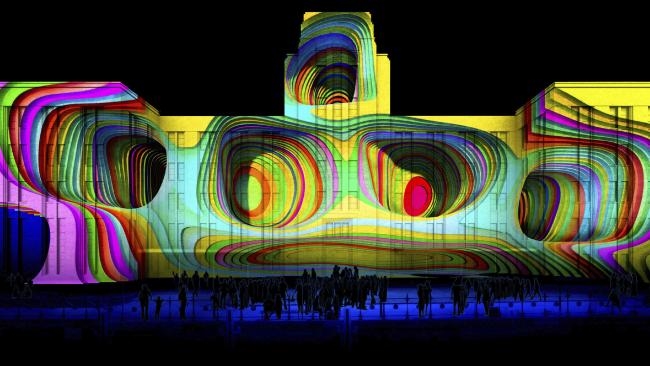
Nearer to home, my home that is, Sydney has just kicked off its Vivid Festival, an annual event of light and music. I was there a couple of years ago and it’s pretty spectacular. Sydney’s Daily Telegraph has helpfully put together some tips on how and where to photograph some of the displays. Even if you are not going to attend, there’s still plenty of useful info for you if you are likely to go to similar events or be exposed to some of the lighting effects that are on offer:
Now this is where you will learn how to show involvement in your stock photography.
So, what does “involvement” mean?
Well, there are many definitions but most mean being involved with or participating in something.
In the example of a product, this gives you the opportunity to show your subject being used by someone who is really involved.
They should be showing some emotion maybe enjoyment or surprise.
Some images can work better if there is more than one person.
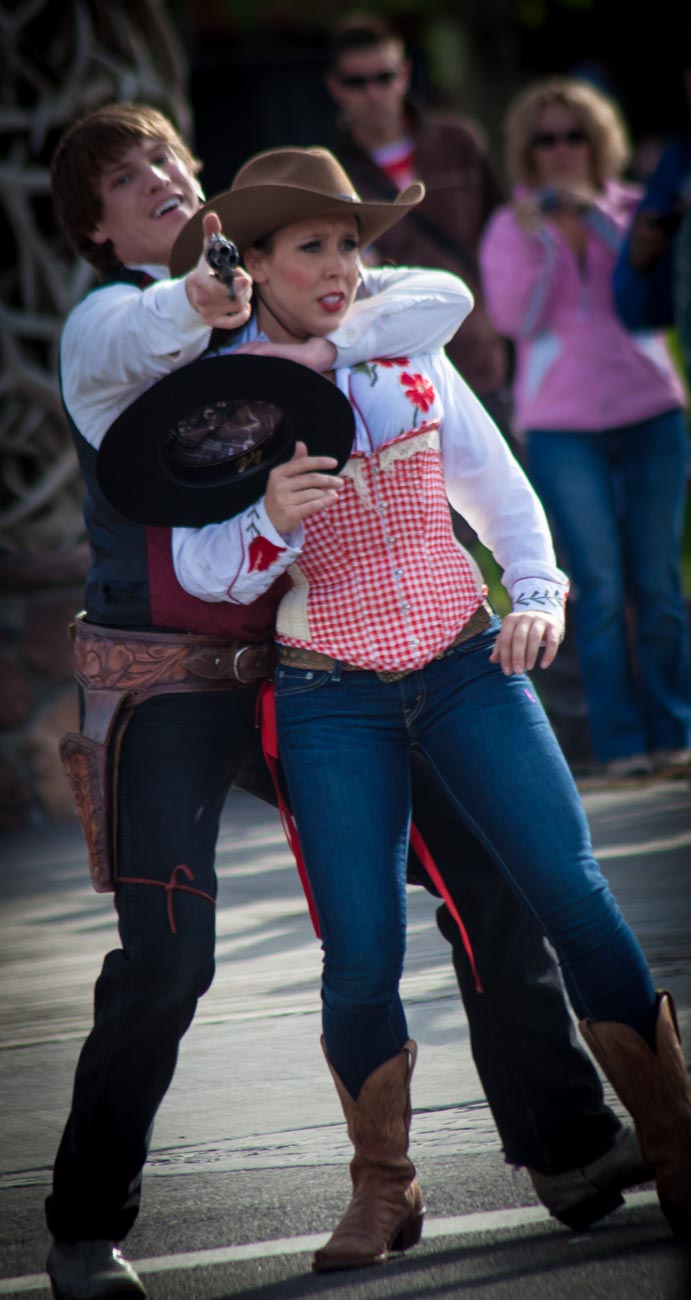
A reenactment at the Town square in Jackson Hole, Wyoming, USA
Remember it’s not a portrait you are after.
Even if you have a piece of clothing or Jewellery, much better to show people wearing it being active, even if it’s only reading a book.
There are 6 points that you may need to convey involvement.
These points are not necessary for every photo.
But if you have people in your stock photos it is best to use a least one or two of these to get your message across
Decide what story you really want to tell.
Answering this can mean answering these questions:
What am I trying to sell?
What will be the props?
Who are the characters?
What do I want them to do?
Gestures
Looking at the camera is a gesture that can bring authenticity
Gesture is all about body language.
After all with still photos the message can’t be verbal.
Sure, it can be text in the caption or on the image itself but that still needs to be supported by what’s
happening or not happening in the image itself.
So, you need to ask; does the gesture look authentic? Is it appropriate for your message?
Let’s say you want an image of someone who conveys power.
If you grab just anyone who has never been in a position of some power then unless they are a good actor and/or model then it may not appear authentic or real.
Likewise, if the message you want to convey is not about power then it’s not a good idea to have someone who looks like a powerful authority.
Interaction
Often you may want to show a couple or multiple models interacting.
Lets say you have a kitchen product, one model could be using it and interacting with someone else, who looks amazed at the results or could be helping or also using the product.
A couple walking in Saltwell Park in Gateshead near Newcastle in England
Passive involvement
Sometimes it’s not necessary to have models in action.
Maybe they are just looking on.
A view maybe of a scenic and beautiful tourist resort could have someone viewing it from a lookout is one example.
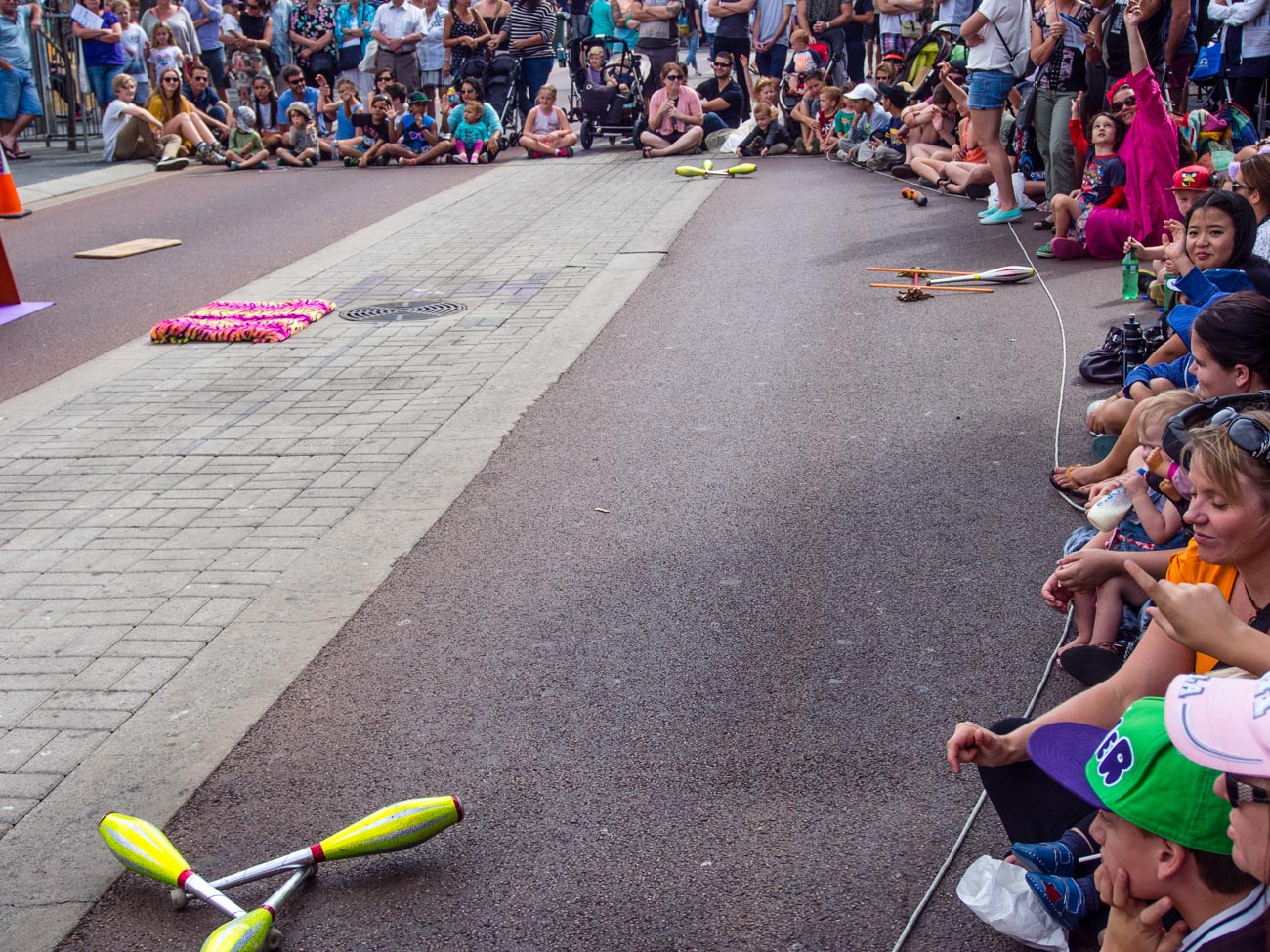
The street art act, Dream State Circus at the Street arts festival in Fremantle, Western Australia. the festival attracts over 100,000 spectators over the Easter long weekend.
Anticipate behaviour.
Ideally, you’ll know the model/s, so directing them into position shouldn’t be too much of a challenge.
However, if they are not professional models then they will not necessarily follow orders exactly.
But that can be an advantage. If you watch them closely, sometimes it can lead to better poses than you initially wanted. So, watch carefully and see how things unfurl.
Get close.
Some of the best stock photographers get in close. That’s called “filling the frame”.
Filling the frame takes out distractions and makes a better emotional connection with the viewer.
Conclusion
In conclusion, these are the factors that need to be considered to show involvement in your stock photos:
1 Decide what story you want to tell.
What story are you trying to tell to get your future customers attention?
2 Gestures
Gestures by real people go a long way to helping you get your message across
3 Interaction
It’s best to show real interaction between your models and your main subject
4 Passive involvement
Not all involvement needs to be active. A model can be an onlooker
5 Anticipate behaviour
Sometimes you can ‘go with the flow’ and try to anticipate how your models will behave
6 Get close.
Fill the frame. Get in close to show expressions and movement.
Thanks for reading this. It means a lot to me. It would mean even more if you would like to post any comments below.
Feel free to share this on via any of the platform buttons to the left or at the bottom.
And while you are at it, keep scrolling down to subscribe to my newsletter.
You will get exclusive info and my guide “Eleven easy ways to help you take your own stock photography”
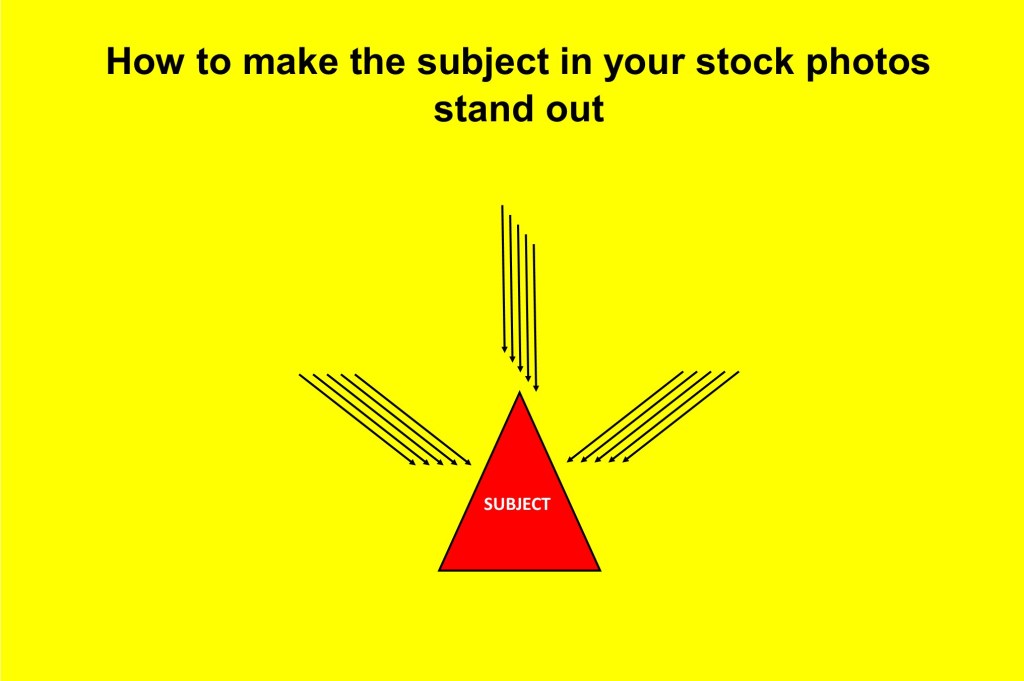
Now this where you will learn how to make the subject in your stock photos stand out.
There are 5 points that need to be considered and the first of these is:
Style
So, you are shooting your own stock photos. What’s your style going to be?
As the marketing guru that you are, you may try to have two styles. One for the actual business you are marketing and the other photographically, i.e. your point of view, how you see the world.
Be careful on both of these, having two styles can be in conflict.
If you are a business owner that is looking to get your product or service out there, then choose that as your main style.
Otherwise the photographer in you may get in the way. Remember why you are doing this. Don’t lose sight of the fact that you are seeking to create a piece of art that is going to help your business. Not a piece of art for the sake of creation.
Of course, everyone’s style is different.
Let’s say we have 2 photographers taking pictures of China as a travel destination.
One takes pictures that tell stories of how people live in China. Their photos give information and understanding of the Chinese culture.
The other photographer chooses to make China look attractive and appealing to visitors and tourists alike.
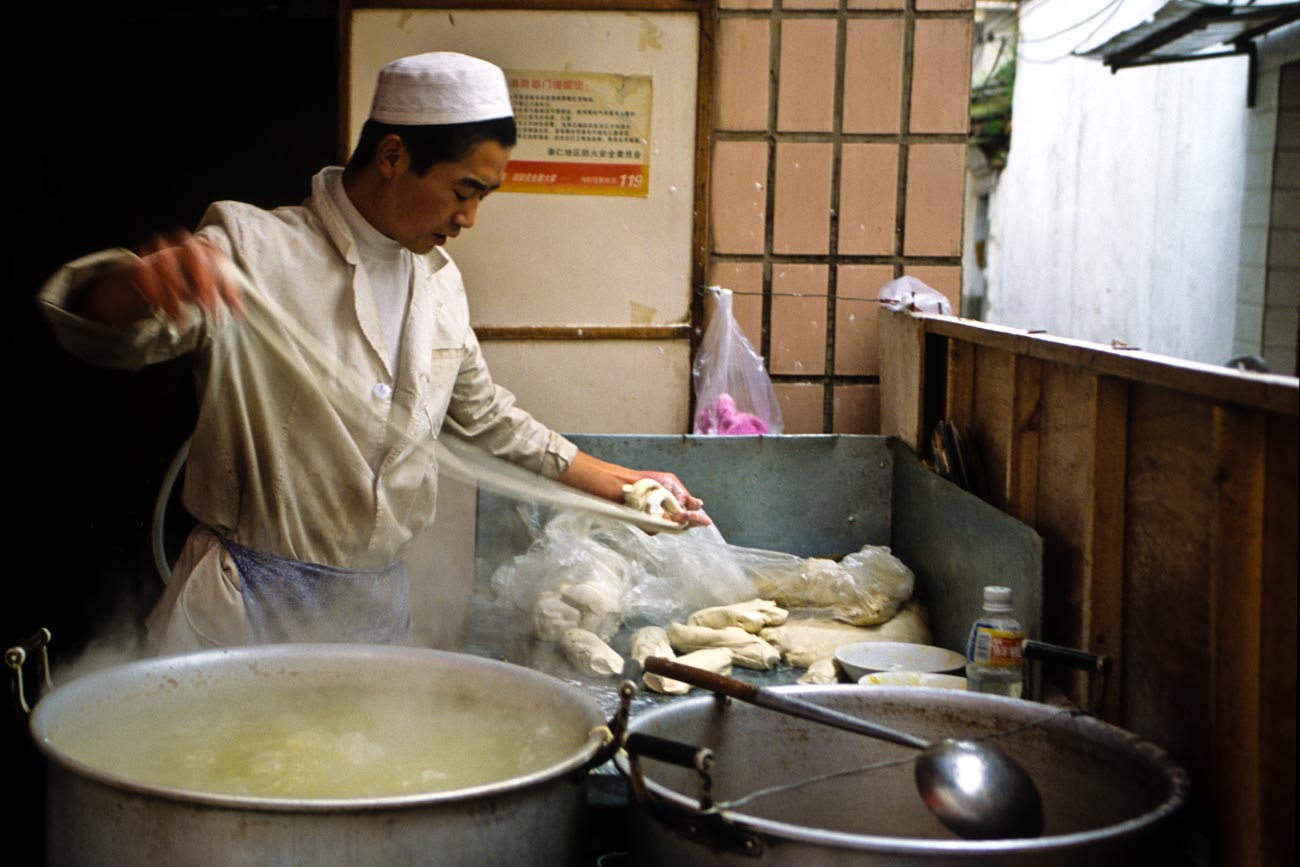
At a small restaurant in the Flowers and Birds Market on Jingxing Street in Kunming capital of the Yunnan province of China.
As you can see each of these photographers has a different way of looking at the same subject. That’s their style Concept
A concept is the idea or emotion that the photo represents. Your concept may be to depict how easy it is to use your service or even how to use your service. Or it may be how beautiful and attractive your product is. By product that can mean anything from a piece of jewellery to a travel destination.
Some common concepts can be:
Achievement, Teamwork, Competition, Values, Trust, Stability or Tradition plus many more.
Symbol
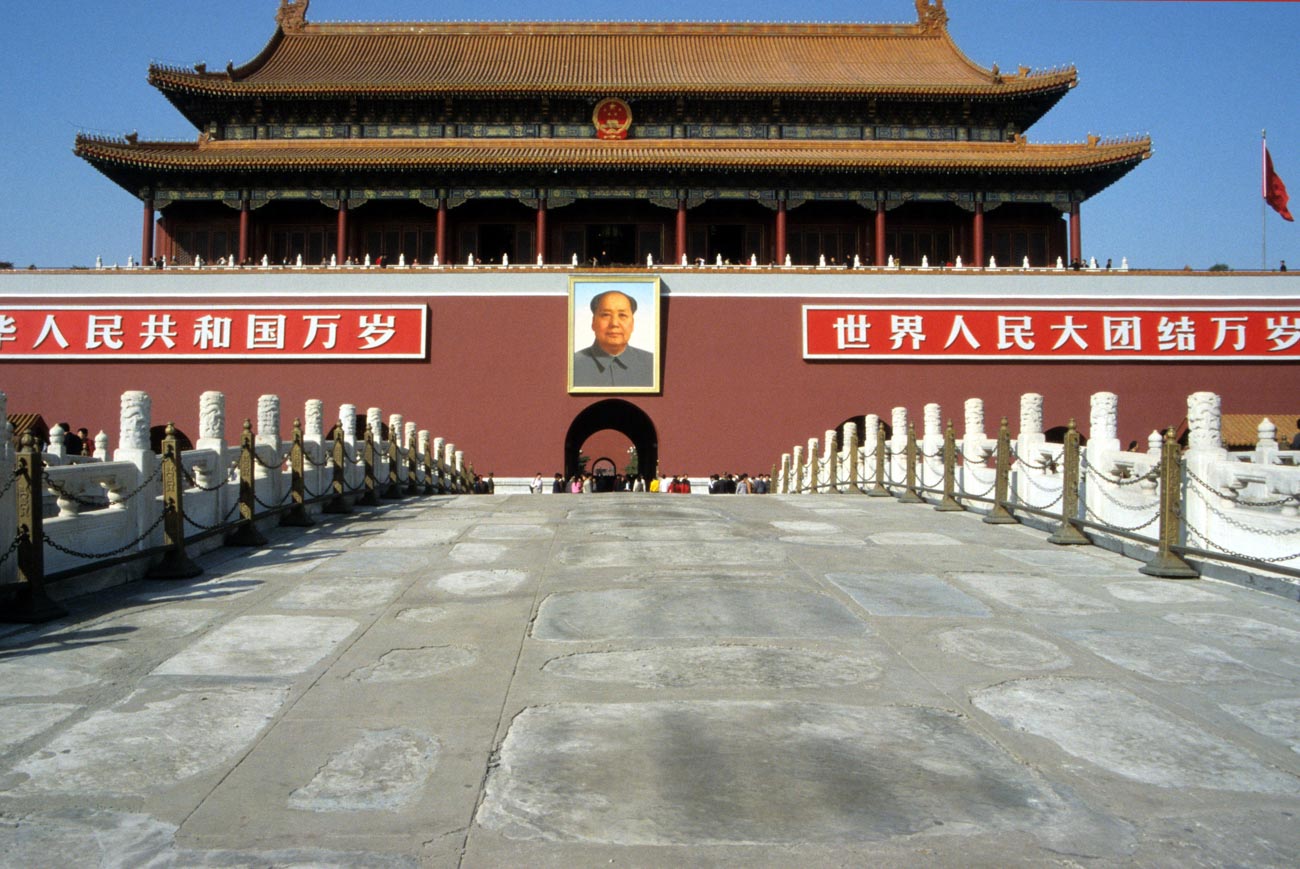
The symbol is how the concept idea or emotion is portrayed. Painters and Sculpturers have been using symbols for centuries. Have a think about the best symbol to use to get across your message. In the China example above you could incorporate some of China’s main tourist attractions or monuments as a symbol. Or if you had a piece of Jewelry then how it looks on your model would be a possible symbol
Tiananmen Square – Gate of Heavenly Peace
Often symbols are less obvious. Like some of these:
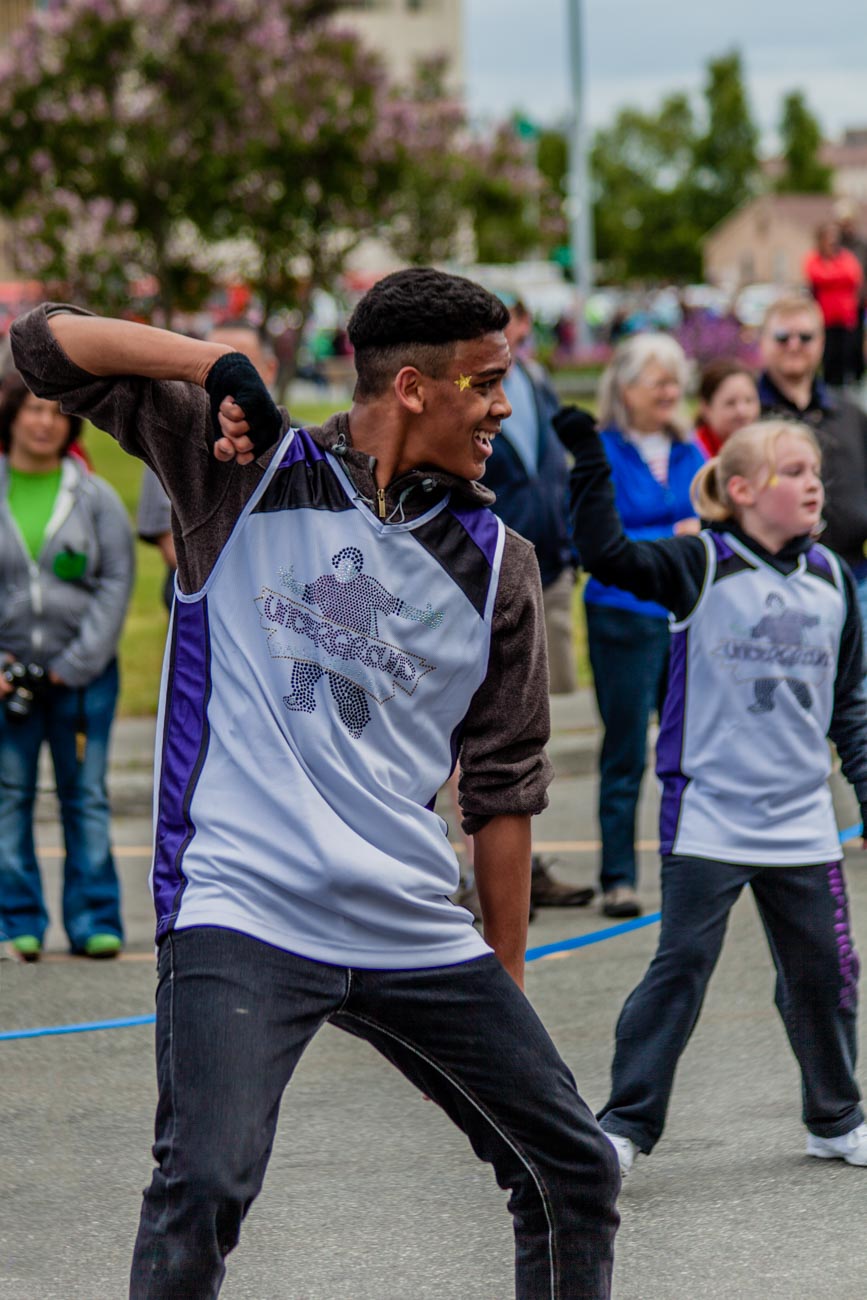
Sports may mean business competition or pushing to the limit
Shaking hands may mean cooperation, partnership, trust or honour
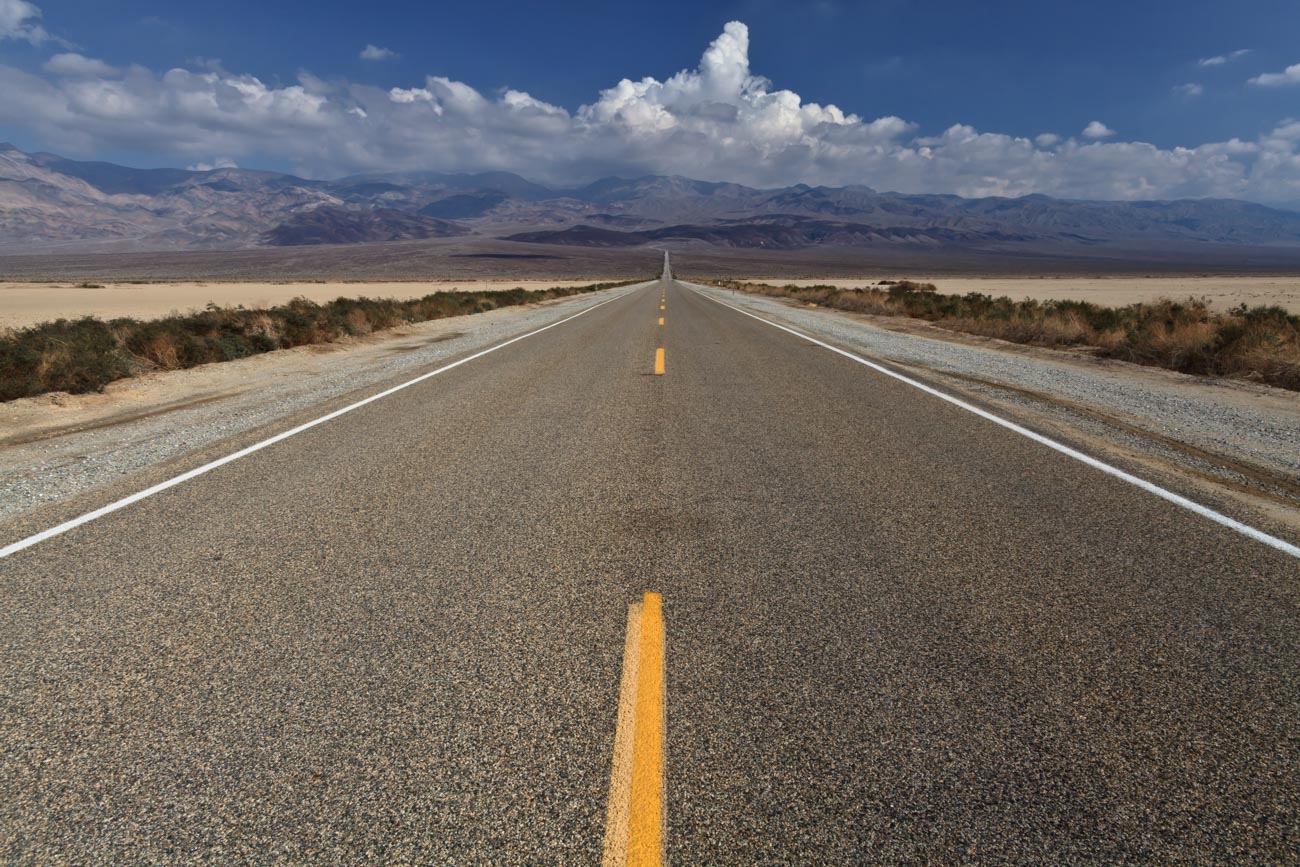
A road may mean straight & narrow, mystery, adventure or even the unknown
Death Valley NP California, USA
Subject matter
For you the subject matter is pretty much what you are looking to sell. That’s right sell. If you don’t show the product or service that you want someone to buy then you’re wasting your time. Ever watched an ad and wondered what the hell that was about? Sometimes that’s a deliberate ploy by the marketing company to capture your curiosity. More often than not it doesn’t work that well. I go back to the old KISS principle. Keep It Simple Stupid! You have less than a second to get your point across. Don’t waste it on some abstract idea that no one understands.
Central theme
All these items come together to give you your theme and the theme as I said in the previous paragraph should be bloody obvious. But (always a but) there nothing wrong in conveying a them that can interpreted in several different ways. It shows that the photos is interesting and can hold the viewer just a little bit longer to take in the full extent of your marketing message.
Conclusion
So in conclusion it’s important to think about these factors in a stock photo:
1 Style
What’s your style?
2 Concept
What’s the idea or emotion you want portrayed
3 Symbol
Once you have decided on the concept what symbol are you going to use to portray it
4 Subject matter
What are you selling? Make sure it doesn’t get lost in the story.
5 Central theme
Make the theme interesting so it holds your viewer longer than the nano-second we all seem to give an image to reveal itself.
Thank you for reading this article. If you know anyone who would enjoy it or find this useful please share. They’ll thank you for it.
And now that you have got this far, keep scrolling down and subscribe to my newsletter where you will get info not found elsewhere. I’ll even give a guide for your trouble.
You can share your stock photos and ask questions in the comments below. Just be open to different opinions.
Now this where you will learn how to use people in your stock photography.
First up – the Model
There are many innovative ways to use models you may not have thought of.
You’ve got your background ready or least you have an idea what background you are going to use.
The next step is to choose the model/s you are going to use.
Now if you have a big budget you can elect to use actual professional models but I’m going to assume that you are not on a big budget.
So, who do you choose?
Well that depends on what you are going to represent in your image.
Models can be anyone and from any walk of life. They could be neighbours, relatives, celebrities (if you know any well), schoolteachers, lifeguards, police officers, children, (be careful of this one, there are some paranoid parents out there) or just strangers in the street.
So let’s say you have an DIY product, then have a think of who you your audience is.
After all if it’s no good selecting someone they can’t relate to. Especially if they look like the sort of person who wouldn’t know how to spell DIY let alone do it .
We have a hardware chain, Bunnings, that always has its store staff on TV spruiking their general principles.
They are all middle aged or older because that’s the demographic that’s more likely to be involved in DIY.
But the other demographic they aim for is the younger crowd who may feel much better getting advice from someone with experience.
One thing you should ensure, is that whoever you select is interesting looking and appealing.
By all means if you can get a beautiful looking model go for it but that’s not necessary.
Position
Positioning under an ad as well as showing activity
Once you have your model you need to manoeuvre them in such a way that they are doing what you want.
You do not want posed portraits.
Generally speaking, you want to depict a snapshot in the life of someone using your product or service or representing your company.
Most of us find watching people doing something is more entertaining (hence all those the fitness videos on YouTube)
Background
Now is the time to think about where they are in relation to the background.
Are they in the way of something you want depicted? Do they have something ‘growing out of thier head’?
Try different angles before clicking that shutter button.
Or take a few snapshots with your phone and see if any of them work for you.
Lighting
Lighting is the next element to be aware of. Watch out for shadows across the face or over a part of the body that’s showing the product.
If you are using natural light and the sun is overhead, watch out for blown out highlights or very dark, almost black shadows.
Don’t get me wrong, you can use both blown out highlights and blacks quite effectively sometimes but more often than not you don’t want them.
If you are using artificial light then watch for shiny skin.
If you are using a flash try to tone it down a bit.
There are so many images out there that give the impression that of a deer in headlights because the flash is too powerful.
A better way is to use fixed lighting.
That can be from the lights you already have in the room or space through to specialist lighting products.
Activity
At one of London’s famous markets, Borough Markets where this girl seems to be enjoying handing out samples.
Now the important bit activity.
There is nothing more boring than having an image that shows someone doing nothing.
We, as humans like seeing what people are doing.
I once heard a quote from unknown source “Watching other humans was probably the first form of entertainment for early man”
And as a business you want the viewer to see what your models are doing.
The trick is to show it in a way that stands out.
One way is to show that they are engrossed in the activity or product for example.
As an example, take a look at car advertising.
Sure, a lot of their images are of cars but look closely and they nearly all have people in them.
They might be driving, or looking longingly at the car.
Some images have people walking past the car (or the car driving past them).
They have a couple on vacation with the car in the frame.
They might be at the beach or at a café.
They do that so that you can relate in some way.
And it works.
Does it make people want to rush out and buy a car?
Probably not, but it does cement the brand in the sub conscious and when they are ready to buy a car that business can be front of mind.
Or, when they are buying and they see these images the contact that they have made could pull them in that direction.
Model releases
Now for the fine print!
Model releases.
Do you need them?
If you are advertising, yes.
If you are using the model to depict an idea such as an editorial piece on your blog. Maybe not.
But my advice get one anyway and you’re covered.
So, what is a model release?
A basic definition is that it’s a written and signed agreement between you and the person you are photographing.
This agreement gives you as the photographer the right to photograph the model and use the subsequent image for the purpose you have stipulated.
I’ll go into this in more detail in a future post so subscribe below and get notified when it gets published.
So, to finish off let’s take a moment to revise the main points again:
We talked about 6 basic principle in using people for your stock photography
1 Choosing people
Models don’t need to be “models’ they can come from any walk of life
2 Positioning people
Avoid taking photos that are obviously staged
3 Background
Tweak your background, assuming that you have already chosen it, to suit the model
4 Lighting
Be careful about lighting. Ensure that there are no ‘blown out’ highlights or very dark shadows
5 Activity
Remember humans are much more interested in other humans being active.
6 Model release
Make it simple, get a model release for all your models.
I’ll leave it to you to decide if you sexy aunt or uncle need to fill one out.
Assuming you have read the whole article as you have got down this far I’d like to thank you for reading it.
And now that you have got this far, keep going and subscribe to my newsletter where you will get info not necessarily found elsewhere. I’ll even give a guide for your trouble.
You can share your portraits and questions in the comments below. Just leave your ego at the keyboard.
In this post, I listed Four Basic Elements of Stock photography and gave a brief description of each one.
Well in the next few weeks I’m gonna expand on each one. Then you, as a business owner can learn to take your own stock photos. Whilst it’s not easy initially, it is doable for almost anyone.
Even if you have no intention of taking your own, this is still a good guide to how good – nay great – stock images should be:
The first of these basic elements of stock is one that most will not even think about but is arguably the most important for a great image.
And that is – drumroll –
Background
In general, most backgrounds should be clear of any distractions and that means being ‘clean’ and simple.
Good backgrounds can vary in form but their prime importance is to highlight the main subject and purpose of an image.
A lot of backgrounds are bland, often either black or white. Some are blurred or out of focus.
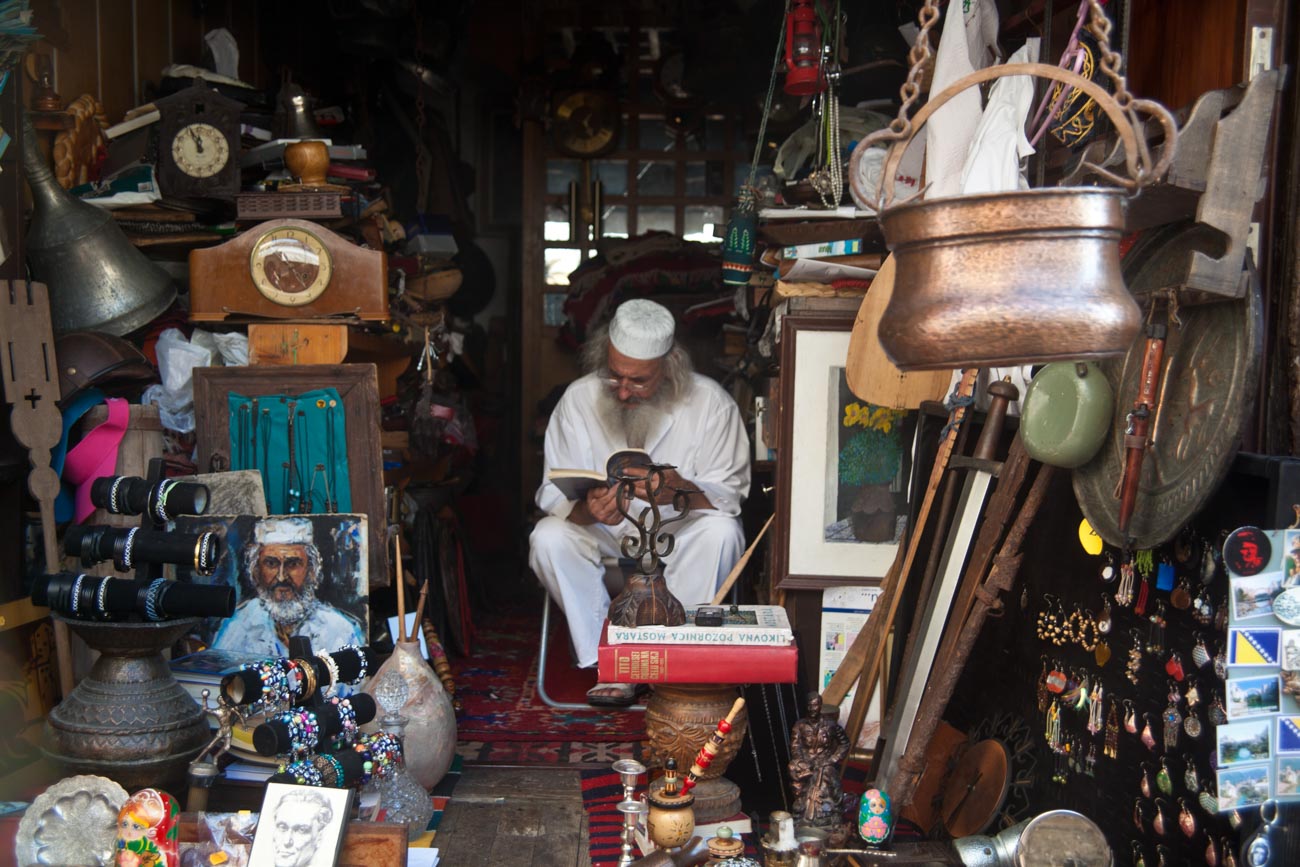
But, if you look at this image below you can see that the background is full of distractions. That’s because the subject matter is not just the shop seller but the stuff and trinkets all over the shop.
Taking the same scene with an out of focus background just wouldn’t be the same.
Genres
There are 100’s of genres of stock photos:
There’s Abstract, Aerial, Architectural, Conceptual, Conservation, Cloudscape, Documentary, Ethnographic, Fashion, Fine-art, Fire, Glamour, High-speed, Landscape, Nature, Photojournalism, Portrait, Selfie, Social documentary, Sports, Still life, Street, Underwater, Wedding and Wildlife to name but a few.
But rather than go through each one, we’ll pick out the most common types of background that a business owner will most likely need regardless of genres.
Let’s jot down some examples;
Staged backgrounds
Most product shots use a white or black background. There are lots of ways of creating either.
The simplest being the use of board like a matt board.
Of course if you are a master of photoshop you can take an image of your product on any background that contrasts with the product itself. Then do a quick select and create layer to put onto another background.
Another way is to position the product on a piece of glass with a black background so that it appears to be floating.
Bokhe backgrounds
The out of focus (it’s called bokhe) look is best with people shots so that the whole image looks more authentic. Why is that? Well if you look at another person your eyes will focus on them and something most of us don’t notice, make the background slightly out of focus. Slightly out of focus on an image doesn’t seem to have the same effect on the viewer as totally out of focus.
So, the photographer is trying get, to quote Wikepedia’s definition of Bokeh, “an aesthetic quality of the blur produced in the out-of-focus parts of an image produced by a lens”.
Other types of stock photos that use Bokhe are Abstract and Macro (e.g. flowers or small items like jewellry). A more left field genre that uses Bokhe is conceptual which is a type of photography that illustrates an idea.
Busy backgrounds
Most business photos usually have a slightly busy background to typify activity in the workplace and often include people as part of the scene.
If you are looking to show an activity e.g. making coffee in a cafe then you can get away with a fairly busy background. That can work well, so long as it doesn’t have distracting elements like bright colours or some other activities that take the eyes away from the main subject.
No background
In my years of learning photography, and I’m still learning by the way, the phrase of fill the frame was used in stock photography.
Filling the frame or zooming in, either by foot or by telescopic lens, to your subject matter is a great way of not having to worry too much about the background.
Stock agencies have tons of pictures that have filled that frame, with categories such as textures and abstract.
The benefits of these pictures is that sometimes you can also use them as a background which does mean a touch of post processing is required.
In the coming weeks I will create a basic background checklist which will help remind you of some of the items that we have just covered.
I cannot stress how important a good background is for a stunning image that will help you make more sales.
So as I said at the beginning, even if you are not going to take your own it’s vital you pay careful attention to the background of any image you are looking to use.
If you have any questions or comments about this post, please leave them in the comments section below.
Or feel free to contact me directly via my contact page
Sharing is caring as they say (although not sure who “they” are).
If there’s some people you know who may enjoy this or any other post on this site, please share with them.
So, you’ve had enough. You’ve spent hours trolling stock photography sites, looking around the web for any royalty free or creative commons images that will fit your business and your message.
Finally, you’ve said, stuff it! Let’s create our own, after all how hard can it be.
It’s a brave decision because it’s actually not that easy but, it can give you the image you’ve spent hours looking for.
So how do you go about it?
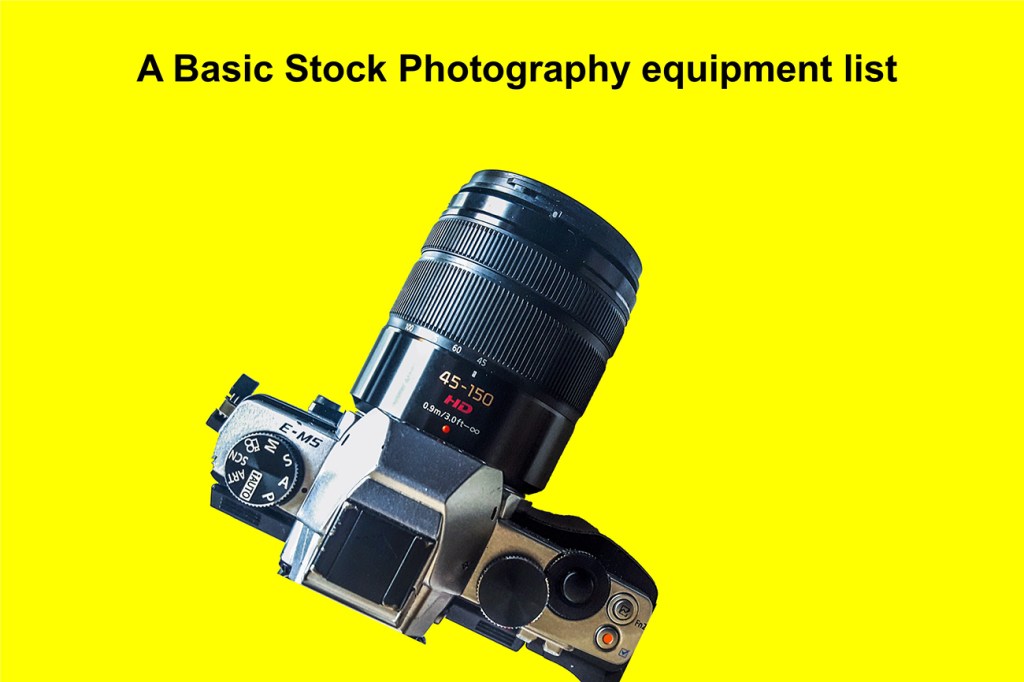
Well let’s forget the creative side for a moment, I’ll cover that in future posts. Let’s look at the second most important item and that’s equipment. Below is a basic stock photography list
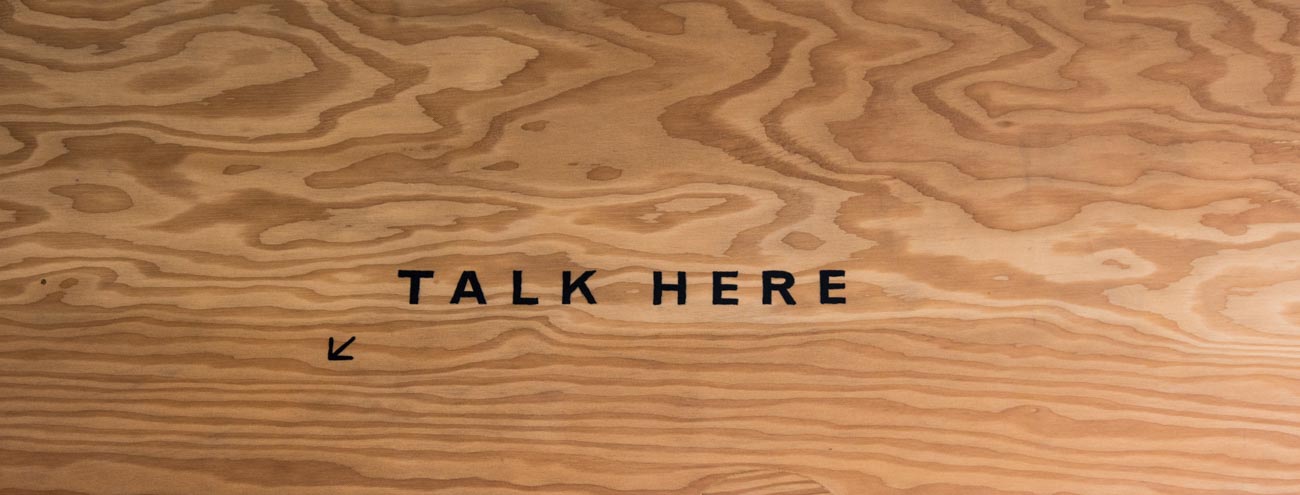
“Talk Here” can be used as stock photo for communication
Equipment
Whilst equipment is not everything. It’s a bit like wanting to drive a car you have to have one or at least access to one and then you start to learn.
Now I wouldn’t recommend you borrow the equipment, at least not all of it.
Where the car analogy differs is that it usually will take you a few minutes to adapt to the basics of a different car. Unless of course it’s a car from a different country that drives on the opposite side of the road, in which case that’s going to take a lot longer.
With a camera, there are similarities and different cameras of the same brand often have strong similarities.
But to speed up the learning process and then the shooting process, it’s best to stick with the same equipment if possible.
So, without further ado, here’s’ a list of what you need to get started:
Camera:
Yes, I know, that’s obvious.
There is a whole range of cameras out there.
To help guide you in choosing, I have written a series of posts called “A Guide to Camera Features”which you can download as a free pdf here.
My suggestion is to have either a DSLR or a Mirrorless, i.e. a camera that has interchangeable lens.
Small camera:
A few years ago, I would have said a compact camera but nowadays a good smartphone camera more than does the job.
Why do you need this as well? To take reference pictures to help stimulate creativity. To quickly record some visual ideas about your business that you can come back to.
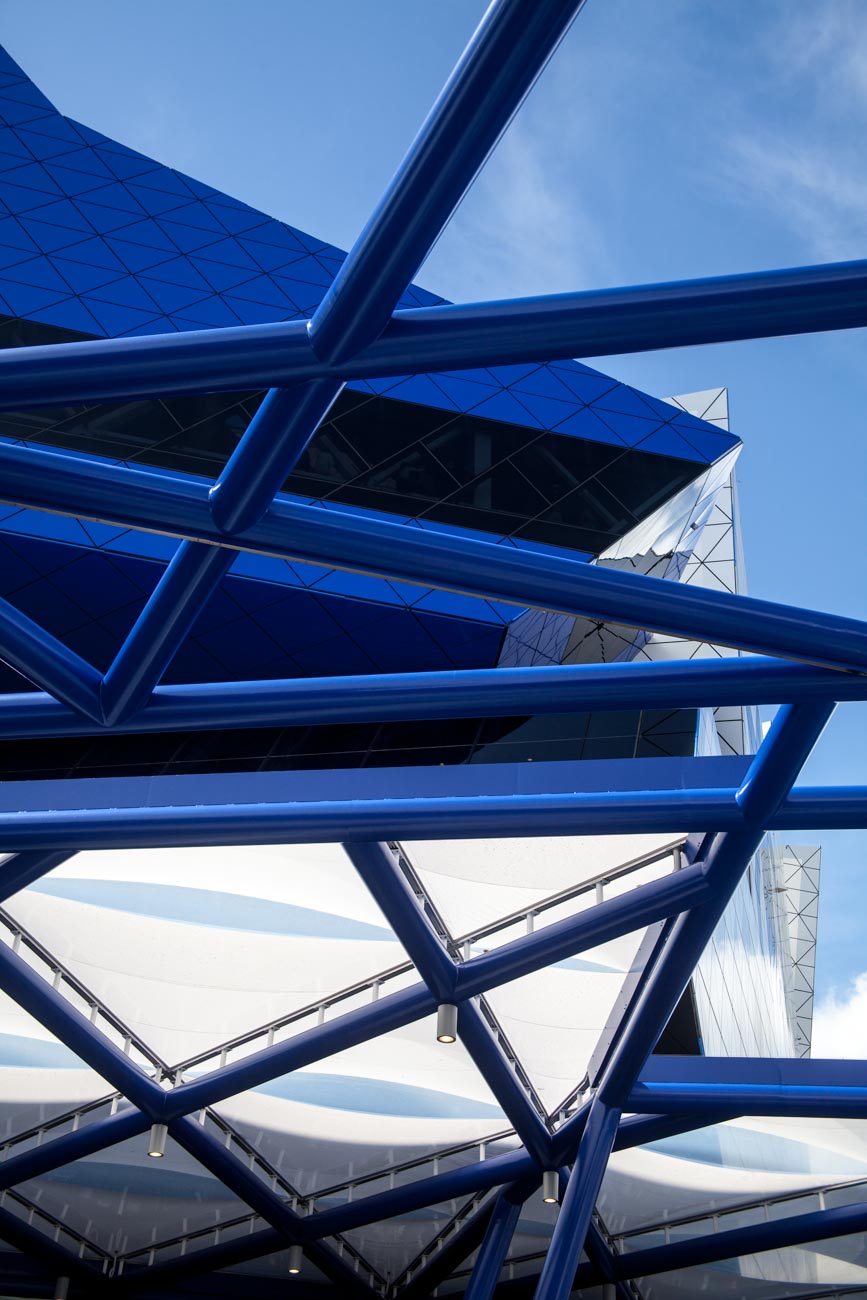
Architectural images are always good as stock photos
Lighting:
As with cameras there are countless lighting systems available. Your camera may have a flash but I would recommend that you have off camera lighting or flash.
A lot will depend on whether you intend taking images that will need artificial lighting.
Even you intend to use natural lighting there will be a situation where artificial lighting will be necessary, even if only for a special effect.
Tripod:
Keeping a camera still will be essential on some shots especially in the light is low.
Lens:
As I mentioned earlier if you have a camera that has interchangeable lens then you need a couple of lens at the least. Allrounders are the best way to go. In 35mm speak, 24-70mm and a 50-120mm or close to are good examples.
If you can stretch your budget to a prime lens, then a 50 or 100mm will give you nice crisp images.
Computer or Laptop:
Most people and businesses have at least one desktop or Laptop or something in between.
How much RAM and Processing Speed you need it will depend on the amount of post processing you want to do and what programs you will use.
I’ve found that having a SSD drive rather than a standard moving parts drive is worth the extra cost.
It’s like choosing between a motor bike or a pedal bicycle for speed! You’ll get there slowly on a bicycle but nowhere as quick as a motor bike will take.
Storage is cheap so make sure you have plenty of it.
Portable hard drives or NAS type storage always works well.
Monitor:
If you are using a laptop it’s worth investing in a good easy to calibrate monitor, so you can view and see your images as you want them to look.
Best size is around 22-26”. Bigger if you can afford it.
Accessories:
Some basic but necessary accessories would be SD or memory cards, spare camera batteries, camera bag, cleaning cloths and back up hard drives.
Good lighting can help spotlight products
Conclusion
Of course, buying photographic equipment can be a bit like a black hole.
But don’t let that scare you, what’ve I’ve listed above is the basics and even that could be cut back a bit.
It’s not the equipment that takes the photo it’s you and you can take excellent photos with even a basic smartphone camera.
Whilst the better camera equipment will give you increased quality in some circumstances, better equipment is more about having additional flexibility and options.
I hope I haven’t put you off because this is an investment in yourself and your business.
Taking some great and powerful images that compliment your brand can provide a huge return on investment, especially if you use them for marketing on the right platforms.
If you have any questions or comments about this post, please leave them in the comments section below.
Or feel free to contact me directly via my contact page
Sharing is caring as they say (although not sure who “they” is).
If there’s some people you know who may enjoy this or any other post on this site, please share with them.
Ever wondered how there are so many good stock photos out there? And how they got taken?
Have you also downloaded one and had to settle “for almost but not quite right”?
Maybe you’ve got fed up looking for the right one and just settled for something free and second rate.
Well, ‘you’ can take your own.
If you know your way around a camera or even a smartphone you can take the image
you need to display for your business.
Don’t get me wrong I’m not against stock photos. They have their place.
But most small businesses often can’t afford to use the good ones. So, they end up looking for free ones, which has a big cost in time, and then use them, more often
than not, for their online presence and a lot of these free ones are just not good enough.
In this article by Paul Suggett of the Balance. He uses the analogy of stock photography being
the “off the shelf clothing” and either your own or your photographer’s photos being the made to
measure that “fits you like it fits no one else”
Of course any Stock photo you use is not exclusive to you which can create other issues.
But you can take a leaf out of the stock photography industry and follow these rules to take
your own purpose taken image.
Most *stock photographers use these following elements when taking stock photography.
Four Basic Elements of Stock photography
1. Background
2. People (Model/S)
3. Subject
4. Involvement
Let’s break this down:
1. Background
Almost as important as the subject matter. Simplicity and Clarity are the keys here.
You want to ensure that the background doesn’t have distractions.
Choose a background that’s uncluttered and depicts the story that you want to tell.
For example, say you have a kitchen product, then use an actual kitchen or at least
have a background that looks like a kitchen.
The Kitchen needs to be a fairly bland kitchen with no other brands or appliances obvious.
Using contrast between the people, your subject and the background can give the image a
3-dimensional feel (without photo-shopping)
2. People (Model/S)
A vast majority of stock photos have people. People evoke emotion and interest.
In the Kitchen product example, ideally you would have someone using it.
Make sure they are posing naturally not as if this a family photo or portrait.
You want to convey the feel that you as the photographer are a fly on the wall and
not make it look staged.
If you are going to use the image for commercial or marketing use, ensure you get the model,
even if it’s your Aunt Amy, to fill out a model release. Just in case you fall out with the old girl
and she wants you to pay her in money instead of tea and scones later.
I will cover this issue in a later post. But it’s worth being flagged here.
3. Main subject
This is the main focal point of a stock image. You want it to shine out. Most products, and services are
meant to be used, worn or consumed. Like the Kitchen product show it in use.
But be careful! Don’t go overboard with the subject after all the story you are telling is what
benefit it will bring to your potential customer’s life.
If as another example, you are wine producer just taking images of your label or bottle is not
going to get you sales.
You could depict when is a good time to drink it. A Rose on a warm summers
afternoon, a Riesling matched with Thai food.
4. Involvement
This is gives the opportunity to show your subject being used by someone who is really involved.
They should be showing some emotion maybe enjoyment or surprise.
Some images can work better if there is more than one person.
In the kitchen product example, they could be using it and interacting with someone else,
who looks amazed at the results or else could be helping or also using the product.
Remember it’s not a portrait you are after. Even if you have a piece of clothing or Jewellery,
much better to show how people wearing it being active even if it’s only reading a book.
*By the way I have defined a stock photographers as a photographer that takes images for
certain markets. They are not taking images on behalf of a specific client




































 Katin Images Travel Photography