Katin Images Travel Photography

Travel Photos, Travel Photography Tips and Software

Category: africa

  • African shoestrings – Zambia Day Eighty Six Victoria Falls

    Apart from the shopping and of course the many energetic activities associated with the falls itself (like bungy jumping, white water rafting, absailing etc) there is one that takes you back to a long gone era of British colonialism; afternoon tea on the terrace of the Victoria Falls hotel. This colonial style building had for years been the centre for Europeans up until independence. It was here that local white farmers, townsfolk and well off visitors would gather for spot of ‘tiffin’. Certainly it has lost none of its atmosphere even if it has its colonial clientele. Nowadays well off tourists (mostly Americans) stay in its well-appointed and stylish rooms and budget tourists like us frequent it for afternoon or morning tea and if really feeling extravagant, dinner. Of course it does have prime position overlooking the Zambezi gorge just downstream from the falls.

    I couldn’t help imagining, as we ate our cucumber and smoked salmon triangular bite sized sandwiches, men and women in hats, striped jackets and full length full dresses playing croquet or just lazing around on the expansive and immaculate back lawn. Black waiters dressed in black trousers and white dinner jackets, hovered at our beck and call and delivered the three tier silver tray full of sandwiches, scones, finger cakes and on the side the obligatory tea. It was wonderful even though I don’t like cucumber or tea and cheap at an all you can eat price of US$4 each.

    Across the other side of the hotel is the train station, another relic of the Edwardian past. We had to catch a train here to Bulawayo the next day and we thought it a good idea to book. We had wanted to book a first class coupe, which sleeps just two but had to settle for a second class that sleeps three. Not a big issue we thought at the time. The train left at 5 pm the next day so we had 24 hours left in Vic. Falls.

    Despite the number of tourists that increase as the years go by there is still plenty of wildlife in and around Vic Falls. On our last visit we twice come across wild elephants whilst walking and cycling just outside of town and had also seen a family crossing the Zambezi upstream from the falls. This time round we saw plenty of elephants on a night time game drive and then the following morning we actually rode on some as well!

    Elephant riding is an experience not to missed. The Elephant camp is in a location too remote to find ourselves, so we were picked up and taken there early in the morning and given tea (again) and biscuits just in case we couldn’t survive a couple of hours without sustenance.
    Richard our tour leader introduced us to the elephants as their riders put them through a series of exercises. Fortunately we didn’t need to follow suit! Next it was time to jump on and that’s easy. A platform has been erected just for this purpose.
    Settling in behind the rider (they very wisely team novices like us with riders who really know what they’re doing) I thought how well cushioned the saddles are. Now I always thought that elephants were big heavy brutes that destroy everything in their path as they move around.
    Well that myth was destroyed within the first five minutes of riding! Incredibly they just glide through the bush effortlessly and quietly leaving no trace behind them. Apparently it’s the muscles in their feet that move around to cope with the weight displacement. So it’s just a steady swaying movement as we followed Richard who was on foot and carrying a rifle with both hands behind his neck. The rifle is for our protection just in case a lion or leopard gets too near. Even though he’s never had to use it yet he still believes it’s better to be on the safe side and that sounded like a pretty good practice to me.

    Richard was one of those “boy’s own” characters that seem so commonplace in the ex British colonial Africa. A tall, solidly built, good looking young man he spoke with that sort of cultured Zimbabwean English accent that’s also very close to the accent spoken by South Africans of British ancestry. He would have been born and brought up during Zimbabwe’s war of independence and most likely, as with so many others of his generation who stayed and toughed it out, he was taught how to fire a gun before he could read.

    My elephant was called Manna and my rider was Sopi. Sopi was quite chatty and told me that they had eight elephants in all. They use them in rotation and were purchased for Z$500 from a nearby park that were about cull these beautiful beasts. Most of them are males; it seems that their temperament is more suited to this type of work than females. Elephants live for around 60 – 70 years and during this time they will wear out four sets of teeth. After having seen them eat at the end of the ride I’m not surprised, they chew as if their lives depend on it which in fact I suppose is true. It’s partially because of their feeding habits that the ride is only one and a half hour long. Apparently they get rather anxious and twitchy when they get hungry so it’s wise to keep it short and let us off before hunger gets the better of them.

    The ride actually finished at a secluded spot where we also got fed but not until we helped the riders feed them. Both Sue and I bravely put our hands into our respective elephants mouths with some special feed which was their treat for being good little steeds (the feed not our hands). It actually wasn’t the hand I feared for the most, it was suffocation; their breath is terrible! But not quite bad enough to put me off my bacon and eggs!

    If you like this then hit “follow” on the side bar

    Dug out canoes at the Okavango delta in Botswana
    Dug out canoes at the Okavango delta in Botswana


  • African shoestrings – Zambia Day Eighty Five Victoria Falls

    We left Livingstone via the hostel shuttle that was masquerading as the back of a Ute and into Zimbabwe the next morning. The driver actually stopped at the border and took in our passports to the Zambian immigration office for stamping which was a bit disconcerting as a passport is considered the only thing that you should never let out of your possession. But he looked like a trustworthy soul and from the couple of grunts he had given us, he had this air of knowing what he was doing.

    A good thing about the backpacker hostels is their network. At each one you can usually book ahead for the next one and even further ahead. In Victoria Falls we had booked to stay at a place named with obviously a lot of thought, 357 Gibson Road. It was a quite comfortable place run and owned by a Dutch couple Hans (who else?) and Elizabeth, full of Aussie travelers and cheap, which in Vic. Falls is a rarity in this age of mass tourism. There’s always a reason why a place is cheap and 357 Gibson Road was no exception. It was 25-minute walk to the centre of town. Now if you’re staying in Rome, Paris, Sydney or even Perth that’s great. In a small town that’s a long walk.
    Fortunately Hans gave us and a couple of other Aussies, Greg and Leann, a lift via the local markets into town. Zimbabwe at that time and in fact as I write is in the process of having its currency nosedive into totally a dark void of worthlessness.
    Great if you’re a traveler from almost anywhere but not if you live there. You can almost always tell how much a country has lost confidence in its currency, the good old US$ starts to become the currency of tourism. Zambia had already made that transition, we paid for our accommodation in US$ even though we paid by credit card. As John one of the owners of Fawlty Towers put it “You just can’t rely on the Kwacha (Zambia’s currency) to be the same value tomorrow morning as it is today”. At that time 1500 Kwacha equalled one Aussie dollar or US$0.60. It cost us 8000Kwacha (US$3.00) to travel the 11 kilometre distance from the falls back to Livingstone in a taxi! So in Zimbabwe the A$ was only worth 25 Zimbabwe dollars but we still felt like millionaires in the local markets.

    Hans left us to wander around whilst he went about his normal business of purchasing his weekly supplies. These markets weren’t the usual stalls and stands but a dusty, rambling and poorly maintained open-air shopping centre.  There wasn’t a lot to look at except hairdressers. Every second shop seemed to be a hairdresser or a bitsa shop. You know one of those shops that sell a bit of this, that and anything else. It was at one of these shops that we all decided to stop and have Z$5.00 (US$0.12) cokes. We actually hadn’t planned to stop but we had to stay there until we had finished drinking so we could hand back the empties. Coke in most of these countries comes in the old coke bottles that have probably been around since it first came on the market early in the twentieth century. What worried me is whether the coke we drinking is that old as well!

    As we drank at this rather poor excuse for a milk bar, we did the usual story swapping that travelers do. It turned out Greg was from Perth and had just hitchhiked from Mozambique and somehow got caught up with a drunken driver who stopped at every bar on the 500 kilometre journey. Mozambique is apparently not the sort of place you walk away from a lift unless you have a few months to spare or worse still a gun! This story was to have a lot more relevance to us later on than we realised at the time.

    In the 4 years since we first visited Vic Falls it had changed a fair bit. Like any tourist town it always had its fair share of hotels and shops, now it had even more and a lot of them were more upmarket. It had even acquired the obligatory casino.

    One place that hadn’t been touched was an area nicknamed curio row. It’s here that you will find almost any type of African curio but in particular rhinos, hippos, African figures and any other shape considered popular, all carved from soapstone or wood. The trouble is there are so many of them that it’s hard to be convinced that guy selling them from his stall (often a just a chair in a small section of a crowded car park) actually made them himself or represents his local village. Somehow I get the impression that it all comes from a huge factory secretly hidden away in the bush. But I guess for these people all that matters is that they sell.

    And they do!…………. Tourists gobble them up and take them home and pepper them all round their home or put them aside and forget about them. In these times of globalisation you can find most of these goods in specialty shops in any big western city but usually at four or five times the price. So sometimes it’s often the price and the perception of negotiating a bargain with the seller, that attracts tourists rather than the quality or its origin. We as ‘discerning’ buyers found a small shopping centre around the back of the curio row and bought what we considered more original and quality goods (albeit at higher prices and no option to bargain) than what was on offer elsewhere.

    If you like this then hit “follow” on the side bar

    Victoria Falls from the Zambia side
    Victoria Falls from the Zambia side


  • African shoestrings – Zambia Day Eighty Four Livingstone

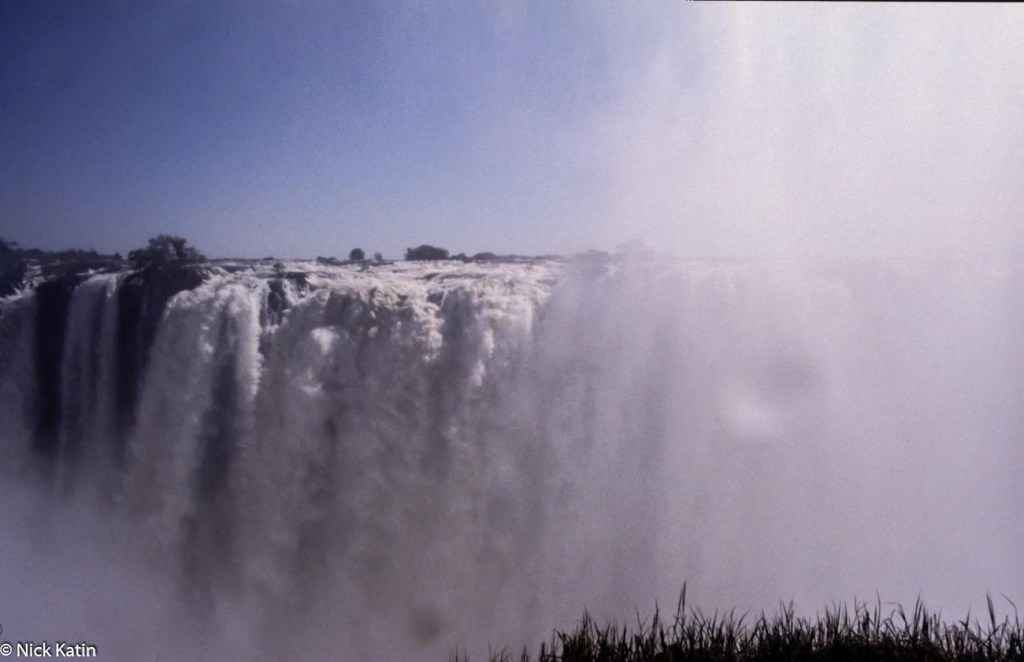
    Victoria Falls (known locally as “the mist that thunders”) is one of the great natural beauties of the world. A quirk of political geography has put just over half of the falls in Zambia but three quarters of the viewing area in Zimbabwe. Consequently the views from both countries are a lot different. After having been dropped off by the Fawlty Towers shuttle; we strolled into the Mosi-oa-Tunya National Park, where the Zambian viewpoints are located, past the many curio stalls that we decided we would look at later and straight into mist!

    Let me see if can set the scene for you…………… Imagine if you can the mighty Zambezi, a wide stretch of water, sweeping down from its source in North Western Zambia some 900 kilometres away, plunging down a 103 metre high and 1600 metre wide precipice into a narrow gorge which turns at right angles on the Zambia border into an even narrower channel and out into a slightly wider gorge as if unaffected by its trauma of the last 2 kilometres of its journey. From a huge wide open river, the Zambezi hits Victoria Falls and changes its identity into a body of water flowing through a series of narrow and deep gorges. The Zambian viewpoints are all at the point of convergence of water from the Zimbabwean side meeting water from the Zambian side and then somehow squeezing into that first narrow channel. It is here that great volumes of water thunders down and then rises up in the form of mist, hence the name “The mist that thunders” and then drenches everything in sight including us! Last time we had been there the water level had been a lot lower and we managed to stay relatively dry in comparison. This time we only succeeded in keeping the camera dry as we wondered from point to point beginning to look like drowned rats.

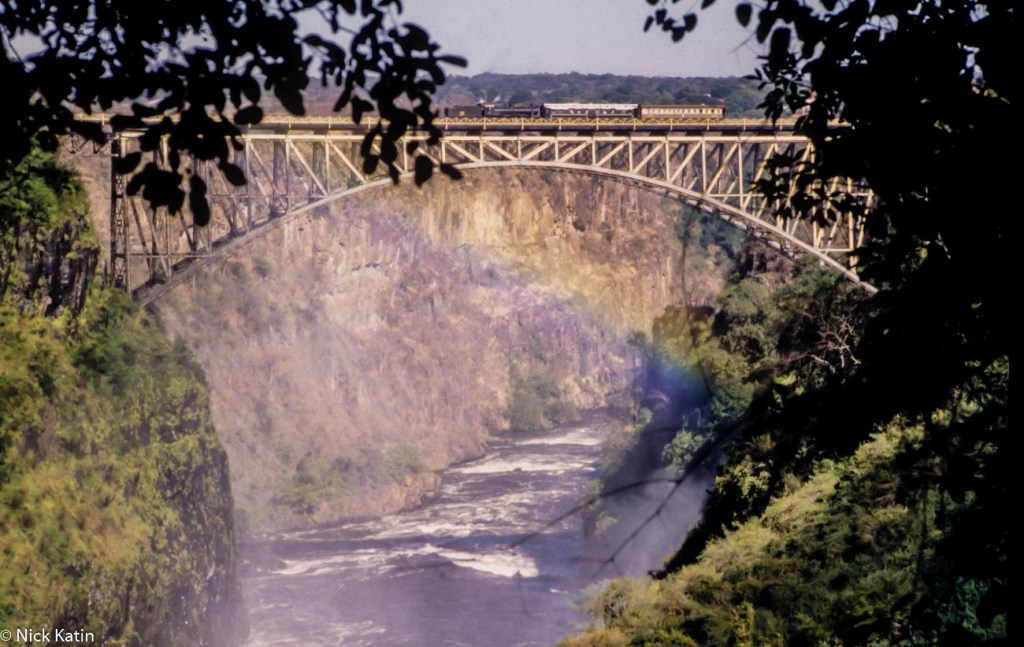
    When the rains have been good its estimated about 5 Million cubic metres of water per minute passes over the falls and I’m sure it was all falling on top of us! There’s one particular point called appropriately Knife Edge Bridge. It’s a wooden footbridge that crosses from the mainland to a tiny island in the Zambezi. Walking across is about as close as you get to walking through the falls itself. Needless to say we could see nothing but feel plenty. In the end we gave up and found a trail that led down to the water’s edge downstream of the falls. It was called Boiling Point and it’s here that you can see a great swirling mass of water resembling a watery black hole generated by the pounding that is happening a few 100 metres upstream. It’s also here that the best view of the Zambezi Bridge is to be had. It joins the two countries and hosts two sets of customs and immigration, a continuous human chain crossing both ways and Bungy Jumping.

    Look I hope that I’m not offending too many die-hard Bungy jumpers here but why? Why would anyone of sound mind and body attach an ankle to a glorified lackey band and jump off a 100 metre plus cliff, bridge or whatever, bounce up and down upside down for fun? A friend of ours did it and said that she had such an adrenalin rush that it stayed with her for a week. Well, let me tell you that’s one experience I’m happy to bypass. I get an adrenalin rush just from looking down (mind you that’s probably actually naked fear). Well anyway from our position I have to admit the jumpers looked spectacular jumping from the bridge. Small and almost insignificant against the backdrop of the huge gorge that houses both the bridge and the Zambezi but spectacular nonetheless.

    If you like this then hit “follow” on the side bar
    Victoria Falls and the Zambezi Bridge from the Zambia side
    Victoria Falls and the Zambezi Bridge from the Zambia side


  • African shoestrings – Zambia Day Eighty Three Livingstone

    We were now into the final day of the Audi tour and the final trip was from Kasane to Livingstone. Somehow five of us, plus Chris and our bags, managed to squeeze into an old beaten up left hand drive Nissan Sunny and drive to Kazungula where we crossed the Zambezi by ferry into Zambia. After the usual slow border control process we were met fortunately by one of Chris’s offsiders in a minibus that was able to take our bags. We mere humans continued on in the luxury Nissan along 60 kilometres of what we presumed was once upon a time a flat bitumen road surface that had now been reduced to an ‘African’ track of potholes punctuated by the odd short stretch of almost smooth bitumen.

    Our final destination was the quaintly and considering Chris was one of the owners, appropriately named Fawlty Towers backpackers in Livingstone. Actually it’s one of the better backpackers we had seen so far. It was like a mini resort without the poolside cocktail bar. A big private courtyard with a swimming pool was at the centre with most of the accommodation and functional rooms fronting it. A little of oasis of western culture in the heart of a very African town, somehow I felt that it had been designed to keep the residents away from the inquisitive locals.

    Actually Livingstone itself was quite a nice place. Its located 11 kilometres from Victoria falls itself as distinct from the Victoria Falls the town. Four years previous we had stayed a few days at Victoria Falls and had hired a couple of bikes so that we could ride across the border and see the Zambian side of the falls and visit Livingstone. We did the former but we were put off the idea of the latter by the bike hire guys. “You must make sure your wife is always in front of you and close to you otherwise those Zambians will kidnap her. Livingstone is a bad place”. Needless to say four years on, it was with some trepidation that we actually walked into the main part of town.

    We needn’t have worried! Whilst the Lonely Planet does actually mention incidents of the occasional walker being mugged between the falls and the town, there was certainly no indication of a wild town that was eyeing up every white female with a view of selling her at the local slave market. Mind you the Lonely Planet did mention the fact that due to the muggings bike hire had become popular which changed little as there were now reports of the odd cyclists being mugged. So even though the Zimbabweans probably laid it on thick there is apparently some truth to their warnings.

    Livingstone was until the 1970’s the centre for the falls but the Zimbabwean town of Victoria Falls started to become much more popular as Zambia itself struggled with its own political and economic problems. Nowadays its making a comeback for those wishing to escape the frenzied tourist activity and more recently the unsettling political and economic problems of its Zimbabwe neighbour.

    Mind you from a tourism prospective there isn’t a great deal to see in Livingstone itself so we contented ourselves with having lunch and a few beers with John & Alison at the rather colonial Pig’s head pub. We had a developed a sort of travelers friendship with John and Alison, probably because they were a couple like us and also because they too were heading in the same direction. John, as an Englishmen, was certainly pretty patriotic and for me that was honourable but more importantly it offered a good opportunity to bait him about his country’s pathetic imitation of a cricket team.

    The food at the Pigs head was nothing special but was almost five star in comparison to the Funky Monkey restaurant where our group had our farewell dinner that night. It was awful!

    If you like this then hit “follow” on the side bar

    Lilies at on the Okavango Delta In Botswana
    Lilies at on the Okavango Delta In Botswana


  • African shoestrings – Botswana Day Eighty Two Chobe

    Audi had arranged a local tour guide to take us on a game drive into Chobe that afternoon and then a game cruise along the Chobe River the next morning. Our new tour guide didn’t show for a while and in his absence, led by yours truly, we organised with the agents at Tebe camp, where we were staying, to swap the two tours around. After all, watching the sun go down on the water from a boat surrounded by animals sounded much more romantic than being stuck in a vehicle. Not too mention that early morning is a better time to go for a game drive.

    Andre had now left us and returned back to Ngepi. He had done all right for his first time; nothing had been too much trouble and had often bent over backwards to make us comfortable. Humble that he was he was also a nice guy with it. The poor bloke was also just a little bit emotional when he left.

    Our new guide was a different animal!

    Chris was an Ethiopian brought up in Sweden (we actually thought that he was bullshitting when he told us that but we found out much later that it was true). With his long platted Bob Marley look alike hair and a fairly relaxed and casual attitude to his job; he was also an ‘expert’. Now I know he’s meant to be an expert certainly as a tour guide but I mean he knew it all and there was no doubting that the most important thing in his life was whatever worked for Chris. Which is why he was not too happy that we had rearranged the schedule. But we held fast despite his efforts to convince us otherwise.

    The cruise was pretty bloody good!

    From the boat we could see elephants and buffalo on the shore and hippos in the water, watching us with those beady eyes that live just above the surface, not to mention the abundant bird life.

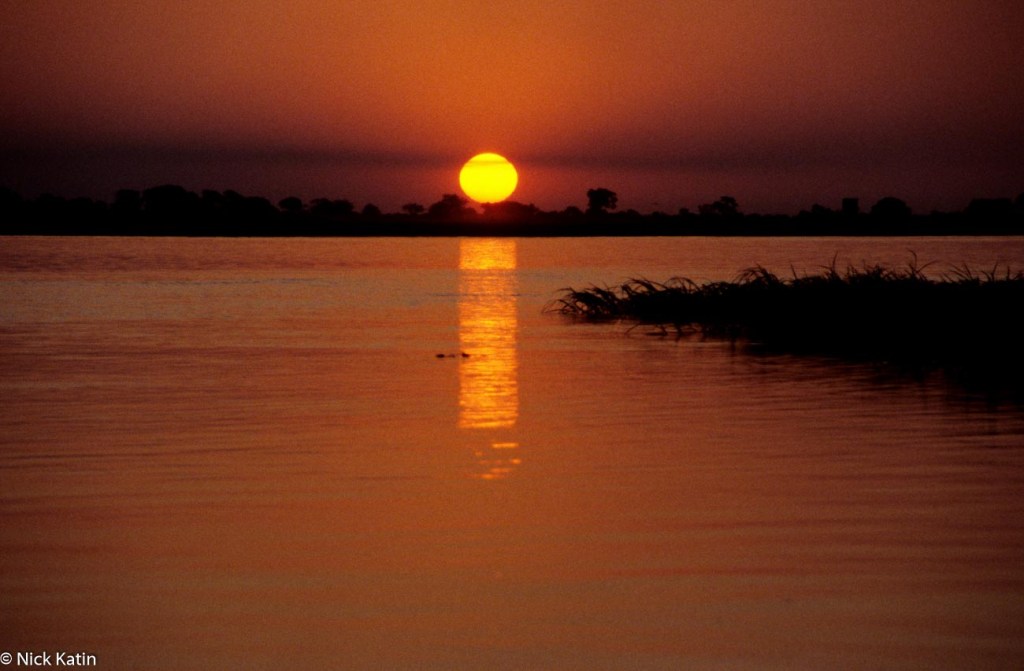
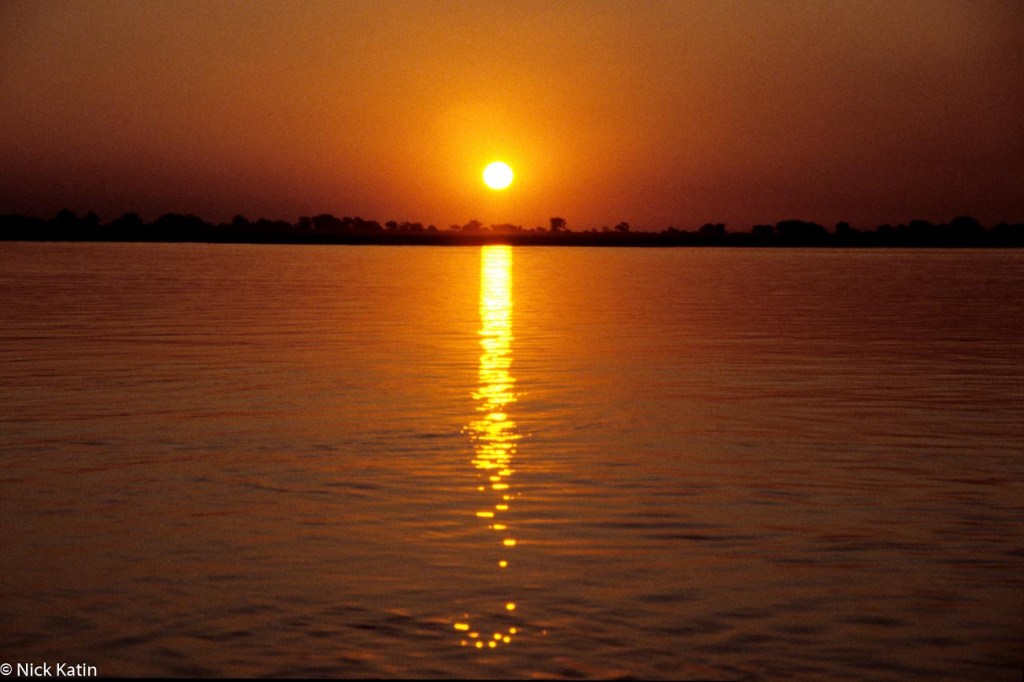
    The most impressive sight, though, was the sunset that seemed to happen just at the river edge. At home, in Perth, we get some pretty awesome sunsets over the ocean so when I say the Chobe sunset was pretty bloody good; I mean it ‘was’ pretty bloody good. I shot off a few shots after Sue had made the suggestion. One of these shots sits proudly on our dining room wall and when anyone remarks on it, Sue turns to me and says with great satisfaction “and you never wanted to take it!”

    Driving through Chobe early the next morning was a totally different affair. Safari trucks are open in the back and at 5.45 am it was bloody freezing. Obviously the animals thought so as well because none of them were anywhere to be seen. We drove around for around an hour along dusty sandy tracks with Chris barking instructions to the driver up front and scratching his head as to why we hadn’t seen anything yet. The night before despite our rearrangement of the final leg of the tour, he had promised us an abundance of wildlife and so far his promise seemed to be pretty empty. Two lionesses saved his embarrassment. They were chasing a squealing warthog 100 metres away across a water channel. We stopped and watched as the two got closer to their prey that was running at great speed first one way then another. I turned to look behind us and to my amazement saw another interested onlooker, another lioness, a mere five metres away peering around our vehicle in effort to see what her mates were up to. We had unknowingly parked right in front of her!

    After that the wildlife just kept coming! It was as if someone had sounded the wake up call because everywhere we went we saw something. A herd of buffalo chewing and nonchalantly looking at us quizzically, two hippos wondering around on the river bank, kudu and impala springing away as we neared.

    Back to the water channel and we just caught sight of two of the lionesses walking away into the bush. We drove on back towards to the park gates and our campsite and then suddenly around the next bend, as surprised as us, were all three lionesses walking across the track and within spitting distance of the truck.

    More buffalo and a crocodile were spotted near the waters edge and then reluctantly our time was up.

    Chris was crowing. “See, I said we would see lots this morning” he said in his sort of British, Swedish and African accent. My remainder that it was actually our idea to do this early morning game drive was totally ignored as he continued to crow all the way back to camp.

    If you like this then hit “follow” on the side bar
    Sunset on the Chove River in Chobe National Park, Botswana
    Sunset on the Chove River in Chobe National Park, Botswana


  • African shoestrings – Botswana Day Eighty One Chobe

    Eventually our time was up and we had to leave this pleasant existence. We were canoed back to the village of Jao in the early hours. This time we had the opportunity to wander around this traditional village, although I think the main aim was to get us to buy hand made baskets, not wander off on a photographic shoot that yours truly did. Actually the small quantity of baskets that were for sale had enormous price tags, so business was pretty poor for them that day. What was more interesting (baskets are way down my shopping list) was the way these people lived. Jao consisted of a collection of mostly reed or bamboo huts with thatched roofs but some of them were mud and others were constructed using tin cans as bricks held together by mud or dung. Most of these homes had an enclosed yard that we sneaked a look at, used for cooking and storing chickens and donkeys. One woman took a sharp looking garden hoe to her donkey that was getting to close to comfort to her toddler. This poor animal had scars from previous encounters and probably lived a life of misery, if a donkey can have such a thing.

    The children were fascinated by these white camera-carrying tourists and posed quite happily in fact almost insistently for our cameras. Some of them had runny noses and sticky eyes which made us think their health was still a long way from being as good as children of the west.

    We got back to Ngepi camp, after having to cram into the one motor boat with all our bags, camping gear and supplies when only one boat turned up, in the late afternoon.

    That night we had a ‘treat’; the dancers of the Mbuknshu people put on a show of traditional dancing. It was boring and repetitive and was far less entertaining than watching the antics of an overlander group who had arrived at the same time as us. It’s sort of like watching Neighbours (in fact most of them were Aussies and Kiwis). There were usual ructions created by clicks, one night stands and show offs. One guy was so ‘cool’ that he sat on the edge of the table, dressed immaculately to look so casual, drinking neat bourbon straight from the bottle. Yuk!

    We had our own ruction later that night as somehow I managed to spill kero from the lantern all over the floor of the tent. Within seconds we were out of that tent with our bags and then spent the next hour erecting another in the dark. To say that Sue was not amused is probably a bit of an understatement although she has dined out on it a few billion tedious times since!

    The next day we were headed through the infamous Caprivi Strip. Infamous because over the years the five tribes that make up the inhabitants, the Caprivians, of this narrow 500 kilometre long extension of Namibia, have from time to time created unrest in their demands for autonomy. This particular time there a lull in the friction and minus Klaus, Ingrid and Anna we drove the seven hour length of the strip without any incident apart from the bone jarring badly maintained roads.

    Our destination was Kasane in Northeastern Botswana. You might well be asking why didn’t we go straight from the delta to Kasane instead of back via Namibia. The easiest answer is I don’t know and don’t care. These guys obviously knew what they were doing and I for one was quite happy to follow their plan. However a quick look at a map of Botswana and Namibia explains all. Whist it’s a relatively short distance as the crow flies from the delta to Kasane it’s a bloody long way by road. A circumnavigation of central Botswana is required to get there by road.

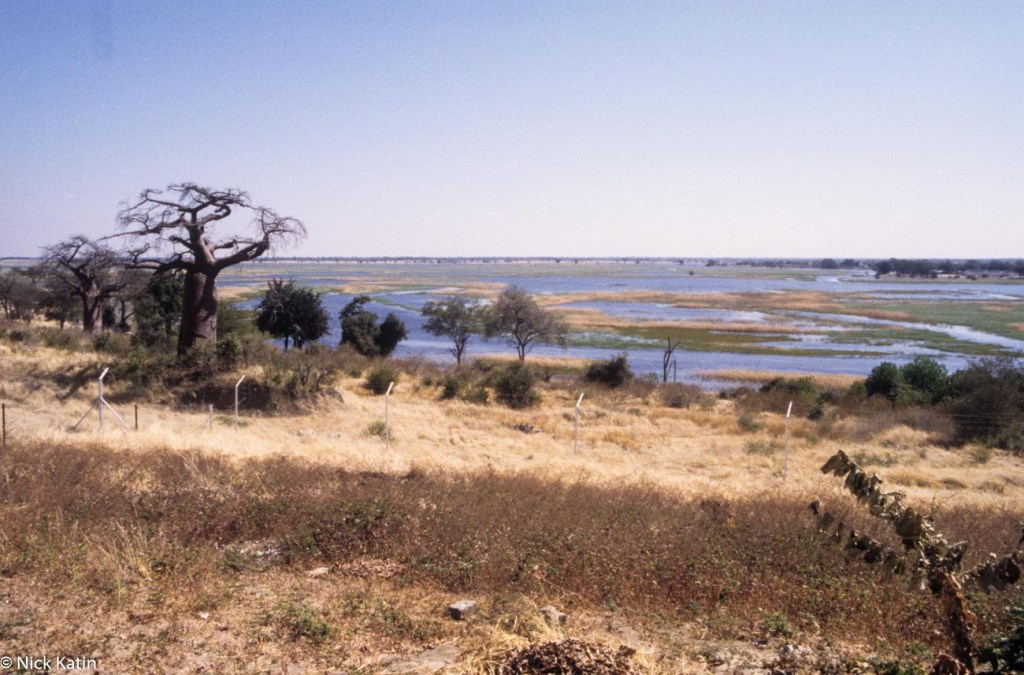
    Kasane actually sits close to the borders of four different countries. Botswana, Namibia, Zambia and Zimbabwe and more importantly is the gateway to Chobe National Park, one of the gems of African Game parks. This was going to be one of the highlights of our time in Africa. We had read a fair bit about Chobe and knew that it has probably the most varied wildlife in Africa on a setting that is as varied and scenic as it inaccessible. It was the inaccessible bit that convinced us to see it with a tour operator. Heavy-duty admission fee (US25.00 per person per day), heavy duty 4WD hire meant heavy-duty money.

    If you like this then hit “follow” on the side bar

    Sunset on the Chove River in Chobe National Park, Botswana
    Sunset on the Chove River in Chobe National Park, Botswana


  • African shoestrings – Botswana Day Seventy-Eight to Eighty Okavango

    The Delta itself reminded me of a vast flooded field with pockets of dirt that support large trees and palms. It actually consists of a maze of meandering channels, with dense masses of papyrus and other aquatic plants; many shallow, water-filled basins; and numerous islands, or elevated wooded areas that remain dry during flooding. The delta normally covers about 16,000 square kilometres, but this year the rains had been good and it was at its highest level for many years, which translated into covering a larger area than average.

    PT our Polar seemed to be the number one man when the number one man, who was a lot older than the other polars, didn’t go out, which was often. Our first experience of riding in the Mokoro was on the way to the next camp on a nameless island near Qokoqere, deep in the heart of the delta.

    In no time at all we reached the new camp. This time there are no facilities whatsoever, just a hole in the ground for a toilet and the water of the delta for washing. Once we had set up camp again we went back out in the Mokoro and stopped on an adjoining island. PT took us all for a walk and told us of how his people use the trees and plants, what animals and birds are around and the danger of crocs and hippos. Because the water was so high most of the animals had moved away to higher ground so all we saw apart from the odd croc were some Letchwe, a small water antelope that kept their distance.

    After lunch we went for a swim, well some of us brave enough did. It’s a bit scary knowing that we were in the same territory as a croc or hippo but we were assured that this particular spot was croc and hippo free. I did notice however that a couple of the polars were continually scouring the water for any gatecrashers.

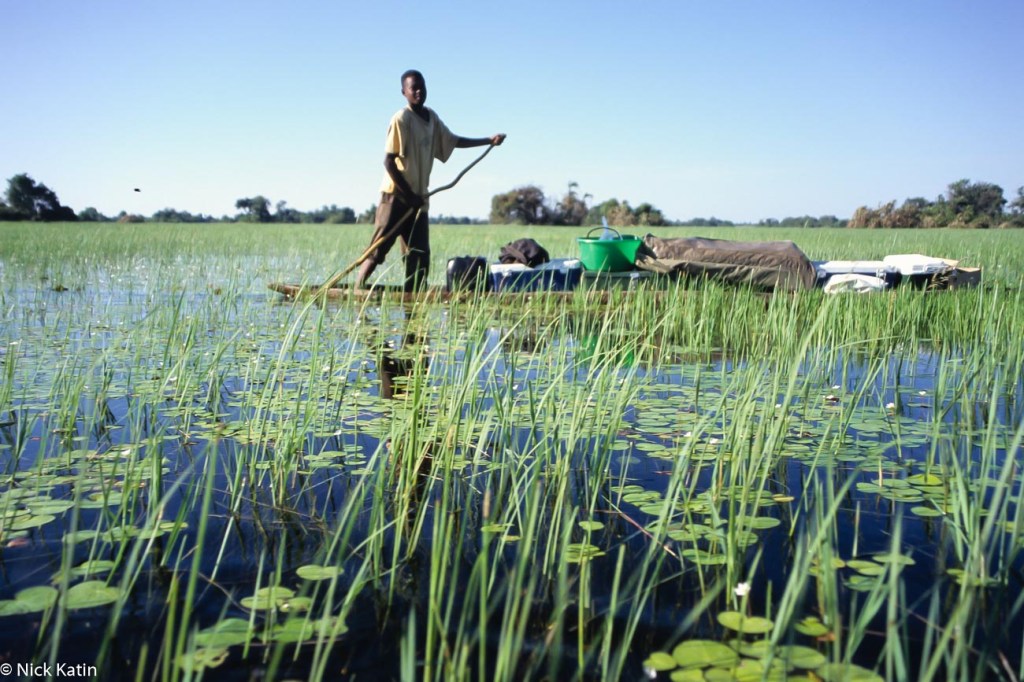
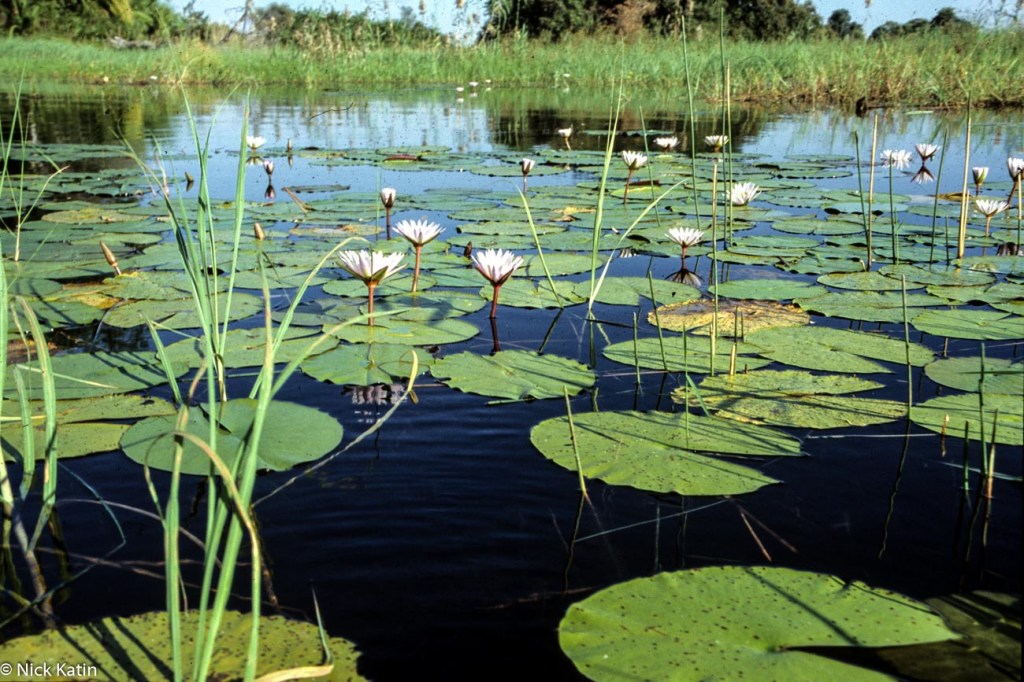
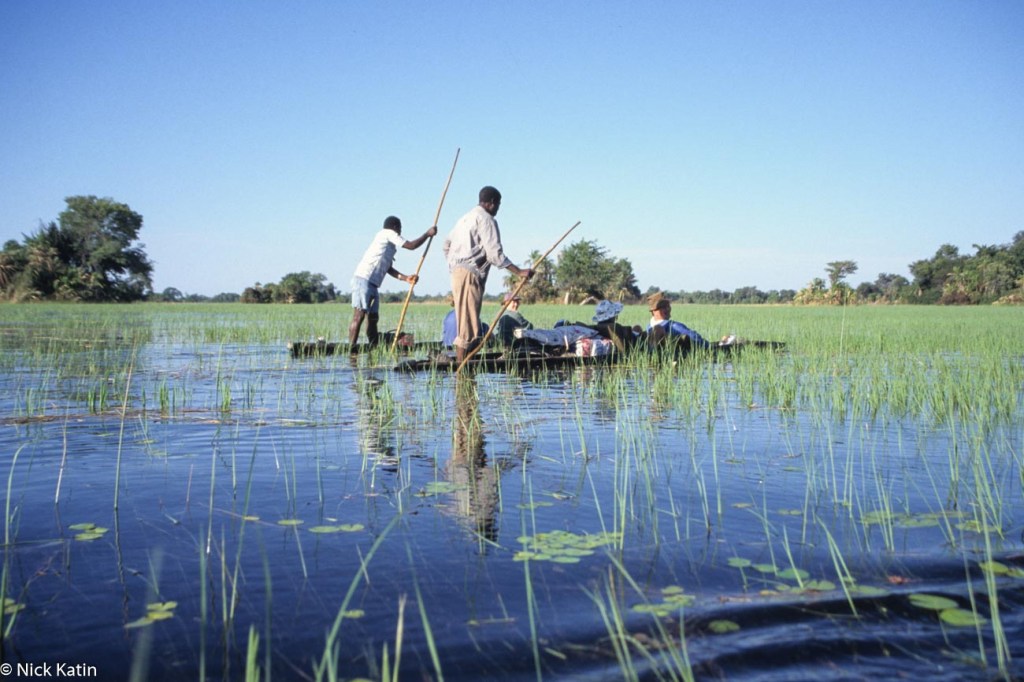
    For the next three days we had a set pattern, up early and out on the Mokoro, back for lunch, back out again after a siesta and the heat of the day to return at sunset. Travelling by Mokoro is a restful and mostly relaxing way to travel (apart from the odd pampas grass brushing our face and the zillions of insects). It just glides through the calm, crystal clear water without any noise, just a gentle splash of the pole as it too moves through the water pushing us on past the papyrus and water lilies that are dotted almost everywhere. Apart from the pole the only other noise is that of the polars chatting and laughing amongst themselves and the odd motor boat disturbing the serenity. We seemed to drift here and there in this water labyrinth, sometimes getting out for a walk or a swim or (as if we needed it) a rest.

    Occasionally these guys would get a bee in their bonnet about finding a particular bird or animal that we had been discussing the night before. We spent three hours one morning looking for Pel’s fishing owl and finally found one hiding in a densely leafed tree on a remote island. Then we spent the same afternoon searching for a Sititunga another antelope that was so rare and extremely shy that we never actually found one!

    Evenings were spent chatting and talking whilst waving away the persistent mosquitoes. These mosquitoes were not, we were assured, the malaria carrying variety, not that it mattered because the insect repellant that we used was capable of killing small animals at twenty paces.

    Andre and Annie did their very best to make us all comfortable and served us up basic but excellent fare.

    As I said before we were, apart from Klaus and Hilda, the oldest of the group by some years. The other four were all Uni. students taking time out and we became all reasonably friendly except for the ‘oldies’ who seemed to keep themselves aloof. Mind you they were only with us on the delta so I guess it probably wasn’t essential that they get to know us. It might have been though the fact that none of us had khaki safari suits and they felt the odd ones out.

    If you like this then hit “follow” on the side bar
    Polers on the makoros (canoe) in the Okavango delta, Botswana
    Polers on the makoros (canoe) in the Okavango delta, Botswana


  • African shoestrings – Botswana Day Seventy-Seven Okavango

    Whether it’s because of the high fees they charge tourists or their natural resources of diamonds, copper and nickel, all of which are mined extensively, Botswana is a relatively wealthy country. It has one of the fast growing economies in the world and its GDP per capita is the highest on the African continent outside of South Africa. None of this was apparent in Shakawe where we stopped to buy ice and other supplies. Dusty run down buildings and shacks were everywhere as were dusty rundown vehicles. Even the townsfolk looked a bit dusty and rundown and seemed to just wander or sit around fairly aimlessly.

    At Supopa we were meant to have two motor boats waiting for us but this is Africa and things don’t often run to plan, so we had to wait an hour or so before being guided onto one of them and our baggage loaded onto the other. About an hour into the three and a half hour journey our boat began to cough and splutter a few times and the second boat, now some distance away, returned to take some of the human baggage and hence lighten its load. We eventually made it to our destination, an island in the delta near the village of Jao, which we could just see from the distance.

    This campsite was in the process of being constructed by a few locals and another bloke from Audi, Brendan and was supposedly near completion but you could have fooled me. But it was just about habitable.

    By now there was ten in our group; Louise (a Pom), who had traveled with us from Windhoek, John and Ann (more Poms), Elizabeth (a yank), Klaus and Ingrid (Germans) and our guides Andre and his more experienced sister Anna. So the night was spent getting to know each other around the campfire. Of course with a South African there as well (Brendan) the topic of conversation never strayed far from Rugby Union and Cricket although we did have a friendly argument about the Southern Cross.

    To Australians and New Zealanders the Southern Cross is an important part of our psyche, it’s on our both our flags, is used extensively in official and commercial advertising and most of us know roughly where it is. But it’s by no means unique to Australia and New Zealand. It can be seen almost anywhere in the Southern Hemisphere all the year round and it’s pretty distinctive. Now I can understand people from the Northern hemisphere not knowing anything about it they can only see at certain times of the year low in the sky plus of course places like England are lucky to see any of the night sky. But Brendan, a budding tour guide, was under the woeful misapprehension that it couldn’t be seen outside of Australia. After much discussion I eventually fired up and marched him, followed by some of the others, away from the fire and pointed into the sky at the five stars that make up Southern Cross to put to bed that woeful misapprehension.

    The next morning our polars turned up one Mokoro short! We needed six not the five that were brought; two people to each boat and one for the luggage and supplies. After much hand waving and gesturing eventually one of the polars went back to Jao and found an extra Mokoro and Polar.
    Mokoros (otherwise known as dugout canoes) are carved from Ebony or the Sausage Tree and take around three months to make by hand. The forked pole the polars use are made from the Silver Terminilia tree and it’s this pole that in the hands of these guys enables the Mokoro to move quietly and effortlessly. Like the gondolieriers of Venice, these guys make it look so easy. Unlike the gondoliers of Venice the Mokoro is economic in design and whole lot less comfortable. A hard wooden plank was to be home for our rear ends for the next few days but we managed to get used to it.

    Only one of them had back rests and that was literally jumped into by Klaus and Hilda. They were to be fair, a lot older than even us, let alone the rest who once again were all young enough to make us feel parental again (grand parental in Klaus and Hilda’s case).

    You know you can pick people a mile off. I had Klaus picked as a bit of a know it all from the time we first met as he stood in his khaki safari suit puffing on his pipe on the bow of the motor boat, trying his best to look like Mr. ice-cool as the boat jumped up and down and spluttered from time to time. I can never quite understand why some tourists believe that buying and wearing the latest safari suits will enrich their time in Africa. I know all the blurb suggests you wear green or light brown clothing so that you don’t stand out when on a safari but 90% of that time is spent in a minibus or 4WD which stand out a lot more than we will, regardless of what we wear. In Uganda four years before, we came across two American ladies impeccably dressed in all ‘the gear’ plus polo hats. You can imagine what colour their clothes were after the jungle trek to find mountain gorillas. In fact I’ll swear blind that I heard some of the Gorillas laughing at them.

    If you like this then hit “follow” on the side bar

    Young Poler on a makoro (canoe) in the Okavango delta, Botswana
    Young Poler on a makoro (canoe) in the Okavango delta, Botswana


  • African shoestrings – Namibia Day Seventy-Six Botswana/Namibia

    At Rundu we saw for the first time since the Fish River now some 1200 kilometres south a riverbed that actually had water! The Okavango River separates Namibia from the infamous Angola and was at the time experiencing its highest water levels for fifteen years. Considering that no other river in Namibia, except for the Orange River that separates Namibia from South Africa, has water in it, this was a sight for sore eyes. Well every silver lining has a cloud! Ngepi camp is on the river about 50 kilometres east of Rundu and the only access road to the camp was flooded due to the high river level. This meant we had to leave our comfy minibus and wade the final stretch through the overflowing river, a river know to have the odd croc or two!

    The camp itself was a bush camp but with all the basic modern amenities in the form of open air toilets and showers separated by a bamboo walls and a pole barring the entrance to indicate if in use. Our tents had already been erected for us close to the riverbank, which was a lot steeper than where the road had passed it.

    We were briefed on the next 6 days by Neil and then Paul and then after dinner Neil again. Neither of them were actually coming with us, Neil, a South African was the manager and Paul an American had just returned from the delta. I actually took an instant dislike to Paul; he took a holier than thou attitude as he explained that the tour was a local community based tour. By that he meant that the polers (I’ll explain this later) all came from the same village and using them to canoe tourists around the delta was a good way of helping the local communities and villages. He was quite right of course but he didn’t have to be such a prick about it!

    We had heard that there were hippos and crocs in the Okavango but we didn’t expect to hear hippos chewing grass right outside our tents. Chomp! Chomp! They went all night or so Sue said the next morning. I slept through the whole thing!

    At 7.30 am we were shunted onto an overland truck to pass through the flooded road and then loaded back into our minibus to drive onto our next destination, Sapepo on the Okavango Panhandle in Botswana. Crossing into Botswana was unremarkable except for one thing the Namibian border post building was a shameful shack in comparison to the brand new buildings at the Botswana post. Botswana is an expensive place to visit when it comes to national parks and reserves. It costs around US$25.00 per day per person in park fees unless you are part of guided group i.e. Safari. By comparison Etosha cost US$3.00! The Botswana government’s rationale is that they don’t want the mass tourism of Kenya so they spend very little on infrastructure in the parks and charge high fees to restrict the number of visitors. From our experience trying to independently travel through Botswana is not easy either, especially on a tight budget. There are many obstacles, like extremely limited public transport, and gaining access to the parks and reserves, so the vast majority of tourists end up touring Botswana with tour operators who know the country; but don’t stay any longer than they have to. So I guess so far its only partially working!

    The Botswana/Namibia border was also the first place that we went through the passport swapping routine. This is not an illegal act of changing identity but simply changing nationality. So we gave Namibia our Aussie passport, that we had so far been using, for our exit stamp and Botswana our British passport for an entry stamp. Now bear with me why I explain why we did this. South Africa, Namibia and Botswana offer fee free visitors visas at the border for both Australian and British passport holders. Zambia charges British passport holders and Zimbabwe charges Australians however Zambia doesn’t charge anyone who enters the country with an official tour operator. This tour was going to leave us in Zambia from where we would cross the border into Zimbabwe. So why didn’t we just swap when we got to the Zimbabwe border? Well, a lot of third world countries don’t like this practice particularly if looks like it’s being done to avoid paying a fee (which it usually is of course). So it’s likely to be a lot less problematic if you choose to swap whilst in a group as the immigration officer is often too busy to check for an exit stamp from the adjoining country. As it happened the Namibian immigration officer did ask us on our way back a few days later, as to where our previous entry stamp into Namibia was. When we explained that we had used another passport he shrugged his shoulders and allowed us through. However as they don’t charge for visas I don’t suppose he cared.

    Unfortunately the last part of this grand plan let us down. We knew that Tanzania required you to purchase a visa but it was cheaper to purchase in advance when traveling independently and we also knew that it cost US$50 for a British passport and only US$10 for an Australian. So when we went to the Tanzanian embassy in Harare two weeks later we obviously produced our Australian passports for stamping. We were politely told that they could only stamp the passport that we had used to enter Zim on. But we could take our chances at the border post when we arrived although there were no guarantees. Having experienced problems before at a Tanzanian border post four years ago we paid up and shut up and thus ended up worse off than if we had just used our Aussie passports throughout, which being the patriots that we are, was our preferred option.

    If you like this then hit “follow” on the side bar
    Ngoma bridge Border on the Chobe River Botswana and Namibia
    Ngoma bridge Border on the Chobe River Botswana and Namibia


  • African shoestrings – Namibia Day Seventy five – Windhoek

    In most African towns and cities there are plenty of curio and souvenir shops, a lot of them tacky and often overpriced and Windhoek was no exception, we did however find tucked away in an old renovated warehouse that once housed a brewery, the Namibia crafts centre. This place sold only artifacts and souvenirs made by local Namibian communities and the profits go back into the community. We bought some bits and pieces from the one of the Namibia women’s communities and came away with that warm and fuzzy feeling that comes from knowing that you have helped people who have so much less than you. After all a lot of souvenirs and curios are often mass produced by large wealthy companies and sold in markets and small shops with the pretense that they have been hand made by the seller themselves. In some of the instances, this is achieved by the use of nothing more than slave labour. So it’s good to see that places like the Namibia crafts Centre, are beginning to appear more and more. So to all you future travelers I urge you to seek out these places and buy!

    Out last night at the Cardboard box was spent socialising. We met Andre, our driver for the Botswana tour that started the following day. Andre had only just started as a tour guide and as it turned out he remained with us for the all but the last day of the 6 day tour. A white Namibian he was a nice guy who like all novices made up for a lack of experience with lots of enthusiasm.

    We also met Sharon an attractive girl from somewhere in Queensland who was travelling around southern Africa on her own. Somehow or other an American called Jed (aren’t they all?) got into the conversation. He was a young guy also travelling on his own and was heading south whilst we were heading north so we swapped notes for a time. He of course had done everything and in comparison to us was travelling a lot ‘rougher’. Within ten minutes of the conversation it became pretty obvious that these two were in the process of starting a ‘romantic’ relationship and we were in the way. Sue, of course, spotted this first and tried to drag me away. I wasn’t going until I had extracted as much info as possible from Jed. Eventually we left our two lovebirds and made our way over to a young German bloke who bored us with tales of his travels in Australia.

    We set off at 6.30 am to start our tour of Botswana. Its run by a crowd called Audi camp who are basically logistics experts. They seem to take a bit of a tour here and another one there and make a complete package. I guess we had four components to our trip, the transport to Audi’s main camp Ngepi in Caprivi in the far north of Namibia, the Okavango Delta, Chobe National Park and transport to Livingstone in Zambia. All these components could be purchased separately but as we needed transportation to Zimbabwe (Livingstone is about 10 kilometres from Victoria Falls in Zimbabwe.), it suited our purpose to do it this way.

    We were actually an hour and a half late setting off because Andre had to pick up another traveler, Louise, from the station.

    It’s a long ten and a half hour drive and the most notable point was crossing the ‘red line’ between Grootfontein and Rundu. It’s actually a veterinary control fence. Livestock bred north of this fence are banned from being moved south or being sold overseas in order to prevent any spread of disease to the rich cattle farms of the south. But it’s much more than that. Namibia like most of South Africa is fairly westernised and I suppose could almost be classified as a first world country.

    Except for north of the red line.

    The change is as dramatic as it is sudden. We went from large open spaces punctuated by population centres of varying sizes to a world of traditional and tribal villages that dot the roadside. Clusters of mud and thatch houses, surrounded by reed or bamboo fencing, were populated by cattle, goats and other livestock wandering aimlessly and feeding by the side of the road. Women were gathering wood or water and then returning with their pickings on their head.
    This is the Africa most of us expect to see!

    If you like this then hit “follow” on the side bar

    The inhospitable Skelton Coast in Namibia
    The inhospitable Skelton Coast in Namibia


  • African shoestrings – Namibia Day Seventy four – Windhoek

    Spitkoppe is an attractively shaped mountain on the main drag between Swako and Windhoek (we were now heading back to Windhoek). Its been called the Matterhorn of Africa due to its similarity in shape. Well, maybe but it’s a bit like comparing Fish river Canyon with the Grand Canyon, once you’ve seen the real thing comparisons aren’t helpful.

    What was fascinating was the little community camp ground at the foot of the mountain. Run by the local women’s development corporation, it had a basic bar constructed of stone with a shady pergola attached and some half finished thatched chalets. The toilets were long drops stuck in the middle of the desert with shade cloth doors and hesian or bamboo walls, whilst the showers were similar in construction with gravity fed water. There were even some ‘natural’ camp sites quite away from the rest of the camp, which is why they must have been called ‘natural’; after all if you got up in the middle of the night for a pee only the most conscientious are likely to walk 200 metres to relieve themselves. We were tempted to stay there but decided against it, in order to make some time to our next destination, Gross-Barmen Hot Springs.

    Gross-Barmen was a MET resort and we were a bit concerned that as we hadn’t booked anything, it might be full. Well we shouldn’t have worried, even though it was late in the afternoon and a Sunday there was only one other site in use. We had an ablution block and a kitchen for our own exclusive use for the two nights that we stayed there.

    As the name suggests the main attractions were the baths. There were 2: one to put minerals into your body and the other to cook them out again and leave you looking like a red double decker London bus with skin as creviced as Mount Everest. Wow, that thermal bath was hot!

    These baths, in fact were the only attractions. We had only selected it as was within striking distance of Windhoek and we decided that it was a good place to ‘veg’ for a day.

    Our site was on the edge of the campsite and probably about 500 metres from the staff accommodation. On our second night, the staff decided to have a party, or at least that’s what it sounded like. So from about 10 pm till the early hours of the morning we treated to some popular African music, trouble was that it was all the same and I don’t mean it sounded all the same; it was the same! There was one particular song that was played over and over and over… We actually found out by hearing it again sometime later that it was Sum’Bulala by Brenda a smash hit in Southern Africa.

    We spent the next 3 nights back at the Cardboard Box in Windhoek. Our camping tour through Botswana didn’t start until Friday and as it was Tuesday when we left Gross-Barmen we had to cool our heels for 3 days. Werner came and picked up the hire car and was pretty good about the bill from Hennie. He did however charge us for a small crack in the windscreen and a broken gas light glass, the former happened on the road back from Sossusvlei as a Landcruiser coming in the opposite direction rounded a bend and chucked up most of the loose gravel between us. We really didn’t have a problem with either and I think, in a weird sort of way, we were quite sad to hand back the little Chico that we had become quite attached to.

    Apart from some sojourns into Windhoek we spent most of that time reading and deciding what we were going to do after the tour had finished.

    We spent a couple of hours following the Hofmeyer walk on the outskirts of the city. At least we thought we followed the walk until we came across a sign towards the end, pointing in a different direction. It didn’t matter too much, the point of the walk is too see elevated views of the cityscape and its surrounds and we had achieved that. We finished that off with an indulgence trip to Gathemann’s, a colonial style café famous for its great terraced outdoor area and lots of mouth-watering cakes and pastries. Unfortunately neither the cakes nor the coffee lived up to its reputation and we just had to be content with the activity of people watching from the terrace.

    If you like this then hit “follow” on the side bar
    A Cape Fur Seal at Cape Cross Seal colony in Namibia
    A Cape Fur Seal at Cape Cross Seal colony in Namibia


  • African shoestrings – Namibia Day Seventy Two – Swakopmund

    Our final day in Swako was actually spent in Walvis Bay, a small town, 30 kilometres south. We checked out of our comfy accommodation thinking we would find something in Walvis Bay, a decision we were later to regret.

    This little nondescript town was never actually colonised by the Germans. The British who controlled the Cape colony (South Africa) and laid claim to it in 1878 and didn’t let go of it until 1994, four years after Namibia’s independence. This natural harbour’s popularity is because it’s the only decent port north of Luderitz and south of Luanda in northern Angola and has been a very strategic political, defensive and commercial position to hold.

    Now Walvis Bay’s main attractions are its bird life, in particular flamingoes, and Dune 7.

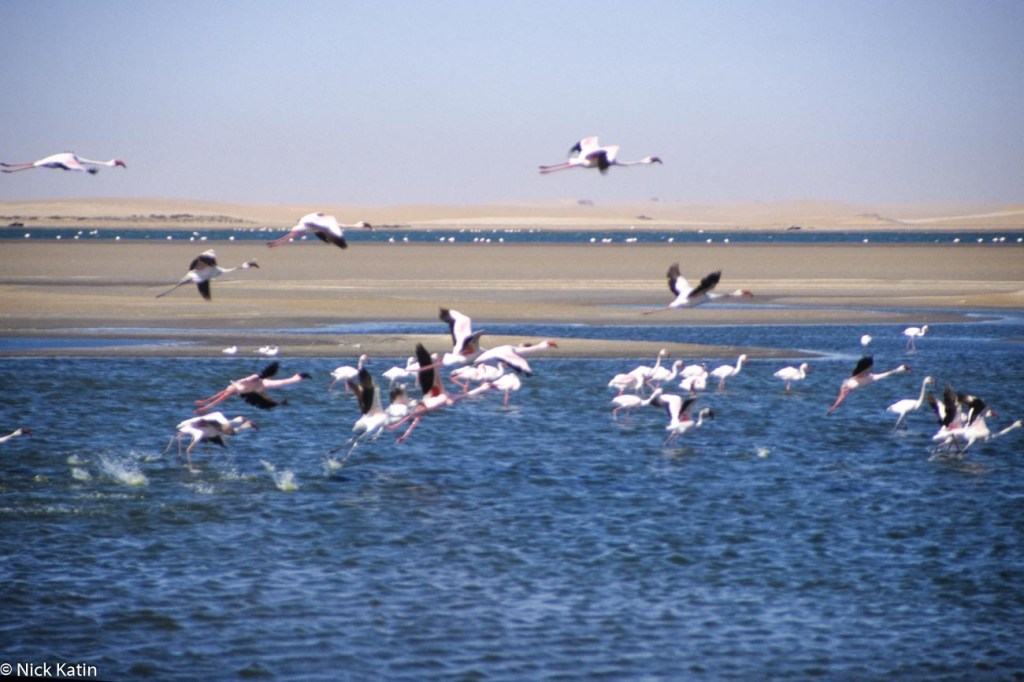
    Dune 7 is large stand-alone sand dune north east of the town that rises above the bleak landscape and overlooks the noisy goods train railway. The locals’ flock to it in their droves to walk, run, sandboard or simply sit at the picnic tables in its shadow eating sandy sandwiches or gritty sausages. The bird life on the other hand is much more interesting. The lagoon just to the south of the town is home to half of southern Africa’s flamingo population plus pelicans, gulls and plovers to name just a few. Close by is the Raft a pub/restaurant housed in a wooden building sitting on stilts over the water.  A couple of beers in there gave us a brief respite from the ever-increasing wind and in a rash moment we decided to return for dinner that night.

    I have to say that it was one of the most amazing dining experiences either of us had ever had. The meal was nice we had some of the local fish species, Kobaljai and Steenbras and it was all pretty good including the service. What stole the show were the flamingos! From where we were sitting we could see the floodlight water and all night there was this constant flow of flamingos walking back and forwards doing their best to imitate the huge walking box robots from the Stars Wars movies. These wonderfully colourful waders gave us a show neither of us will ever forget!

    What is forgettable however is the smelly cramped dog box of a unit we ended up staying in overnight back in Swako. We hadn’t managed to find anything cheap enough in Walvis Bay so we rang a place back in Swako without knowing what it was like. The women who answered the phone said yes it was free that night and the cost was N$100 plus $30.00 for laundry. OK I thought we don’t want any laundry done we’ll take it. What the laundry turned out to be was the cost of washing the bed linen after you had used it, assuming that you hadn’t brought your own. Well after sleeping the night in this matchbox with less facilities than a prison cell and having to listen to her winging about this that and anything else she happened to be an expert on, we told her to get stuffed, politely of course! Needless to say we headed out of there as soon as the sun was up.

    Every town or city has the Café, the place to be seen at and usually has a specialty or two. Swako was no exception. The Café Anton was a trendy, probably in some eyes pretentious, indoor/ outdoor café overlooking the main beach. After such a shitty night we thought we’d treat ourselves to morning tea in the shape of a couple of German pastries and (finally) some good coffee before heading out. No doubt about its popularity, the locals were arriving in droves for both coffee and pastries and breakfast. It was a fitting end to our stay in Swako. It had been the only place in Namibia where we could take time out to get our fix of some western culture.

    If you like this then hit “follow” on the side bar

    Flamingos at Walvis Bay in Namibia
    Flamingos at Walvis Bay in Namibia


  • African shoestrings – Namibia Day Seventy One – Swakopmund

    Everybody (that is mainly the white population) was friendly and seemed to have either German or Afrikaans accents. Wilma our landlady, a white Namibian of German heritage was a third generation Namibian, But she had been brought up to speak German in school and at home and spoke English with a strong German accent.

    Despite our immediate liking for Swako our second day turned out to be quite expensive. We had to send a fax relating to our house to Australia which cost the princely sum of N$31.50. Sue was still not feeling quite right so a trip to the doctor cost N$100 who immediately ordered a blood test (another N$36). Fortunately the blood test cleared Sue of Malaria, which was our main concern. But it didn’t answer the question as to why she was still feeling disorientated. The doc put it down to the Lariam that we were taking. It’s a strong anti malarial drug with a bad reputation for side effects such as disorientation, hallucinations, anxiety and nightmares. The last time we had taken it we had both experienced the latter two but this time I hadn’t experienced any side effects and up until Sue had been sick nor had she.

    We had been quiet happy just to laze around Swako for the couple of days that we were there but as always curiosity got the better of us. Swako is at the edge of the Namib Desert, so we had almost done a full circle on our tour of Namibia. This part of the desert holds a few surprises or so we were led to believe by the Lonely Planet and the Swako tourist office. That was enough for us and we were off having a look. In fact it was more of a ‘so what’ tour rather than a scintillating safari into the desert. I say ‘so what’ because unless you’re a botanist or a historian most of the items on the signposted Welwitschia drive mean very little. The Swako tourist office gave us a handout called “The Welwitschia Plains-a scenic drive” with thirteen numbered stone beacons to watch out for. Each of these beacons are positioned at places of interest along the drive. The first stop was at little cluster of lichen; the next was at a couple of bushes called the Dollar and the Ink. So far we’re yawning and wishing that we had stayed in bed.

    Oxwagon tracks remarkably preserved from decades ago and just as remarkably almost impossible to see were next and followed by something much more interesting, the Swakop valley moonscape. This dark brown and wheat coloured pitted and crated landscape was formed by 1000’s of years of erosion and is very much reminiscent of the moon’s landscape. Not that I’ve been there of course but those who know this sort of things say it is.

    Our interest began to wane again, as more lichen was sign posted. Apparently the lichen of the Namib Desert is the most extensive in the world. I suppose a botanist would find that fascinating but we’re still stifling those yawns. Our interest was rekindled by a much bigger expanse of moonscape. Created this time by a non-existent river cutting it’s way through softer material. Even my imagination was finding it hard to imagine any river flowing through this dry and inhospitable landscape.

    A heap of junk left behind by the South African army in 1915 was considered notable enough to be the next point of interest. Somehow I cannot see how even 85 year old broken bottles and rusting cans are a great tourist attraction!

    The next two beacons are not even worth us getting out of the car. A couple of ridges of Dolerite (what’s that I hear you say, forget it, it’s in the dictionary) were somewhere around.

    Then we had a small patch of vegetation dressed up as picnic spot. Apparently the river that I had trouble picturing earlier actually runs deep underground and in some spots is high enough for some trees and bushes to tap into.

    Speaking of vegetation, the Welwitschia drive is named after a unique ‘tree’ that has also been described as a living fossil. The next and penultimate stops are for these strange looking ‘trees’. They are apparently dwarf trees and are related to pine trees but you would never know that by looking at them. They look like straggly low lying semi tropical palms that have had a bad day. In fact if you saw one anywhere else you wouldn’t even stop to have a second glance. The point of interest is however that they somehow thrive in this hostile environment and are totally unique to the Namib Desert and get this; live for up to 1500 years.

    Our last stop on this spell binding drive was a let down after the Welwitschia. An abandoned iron ore mine from the 1950’s is really nothing but a hole in the ground.

    If you like this then hit “follow” on the side bar
    A Cape Fur Seal at Cape Cross Seal colony in Namibia
    A Cape Fur Seal at Cape Cross Seal colony in Namibia
  • African shoestrings – Namibia Day Seventy – Swakopmund

    Hentiesbaai is another fishing spot but it does have a sort of quaint character, (compared to Terrace Bay everything has character) with a decent looking beach and some ‘beachy’ looking houses with palm trees and lots of liquor shops. Hennie found us a cheap apartment next to his garage and the shopping centre.

    We had the luxury of a TV in this place and as it seemed like years since we had watched any, we just crashed in front of it.

    It was cable TV too except there was nothing much on. Most of it came from South Africa and watching South African TV is most disconcerting. They have this habit of changing languages continuously. We were watching their rugby equivalent of the footy show when the interviewer began to interview a rugby player in English. Problem was we could understand the interviewer’s questions but didn’t have a clue as to how the player answered as he was speaking in Afrikaans. Weird!


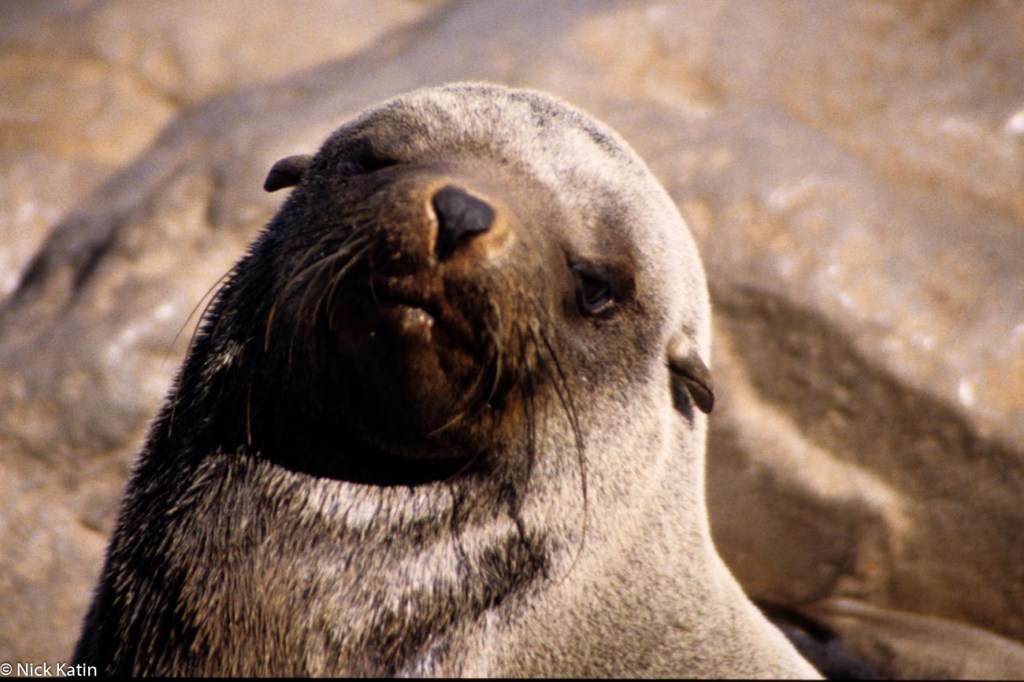
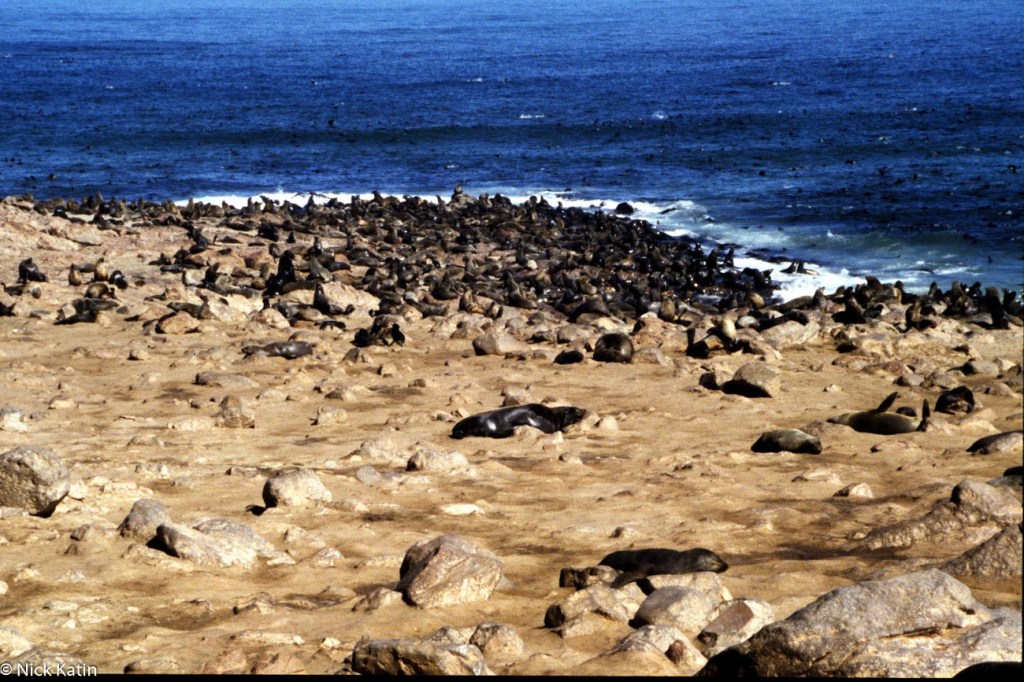
    Cape Cross is smelly. Not just a bit smelly but it stinks. The 100,000 Cape fur seals that call this home really know how to put visitors off. I’ve never seen so many seals! Big ones, little ones, dark ones and grey ones, old and young, male and female, some on the rocks or beach sunbaking, others in the water. Just a huge mass of blubber and seal shit! The Cape fur Seal is distinguished from other seals by the fact it has ears (with all the noise they were making I think they would be better off without them!). They are only found on the West Coast of Southern Africa, as they don’t migrate as a rule. They are quite big in size, the average male weighs around 187 kg but increases its weight to as much as 360 kg at the beginning of the breeding season due to the accumulation of food reserves in the form of blubber. It was for this reason that there are warning signs everywhere not to disturb the seals and cause them to stampede. These huge males can easily crush a small ten kg pup and it’s one of the main causes of the 27% mortality rate.

    Cape Cross itself was named after the cross that the Portuguese Diego Cao, the first European to set foot on the coast of Namibia, erected in honour of the Portuguese king. The original cross is actually in the Berlin museum but there are a couple of replicas erected in the same spot.

    This weird Namibian coastal climate played tricks with us all day. When we left Hentiesbaai in the morning and headed north it was really hot but as soon as we got we got to Cape Cross it cooled down about fifteen degrees. Driving back down through Hentiesbaai it was hot again and then as we approached Swakopmund (or Swako as it’s known by the locals) it cooled right down again

    Swako is a bigger more up market version of Luderitz. It’s a mixture of German, Western and African culture forced together onto the cold Atlantic and carved out of the desert. Its flat featureless topography has been brightened up by some colourful buildings and lots of German Bakerae’s and Bearhaus (bakeries and pubs) on almost every street. Along the promenade there’s these huge date palms on either side of the walkway with houses of varying colours and beach architecture sandwiched between the palms and the beach. German architecturally historic buildings were dotted along most streets in between the many restaurants and trendy curio shops. It felt good to back in western culture for a time. We didn’t camp here either. Why camp when you can stay for in a small, well equipped and centrally positioned self contained unit for N$100 (US$10) per night. Yup! We were going to like ‘Swako’!

    Cape Cross in Namibia is a colony of Cape Fur Seals
    Cape Cross in Namibia is a colony of Cape Fur Seals
  • African shoestrings – Namibia Day Sixty nine – Hentiesbaai

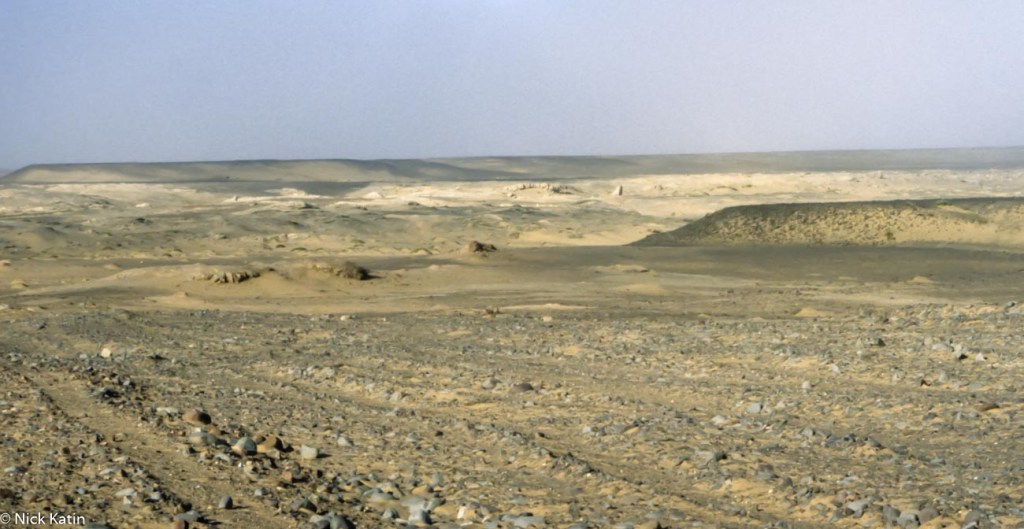
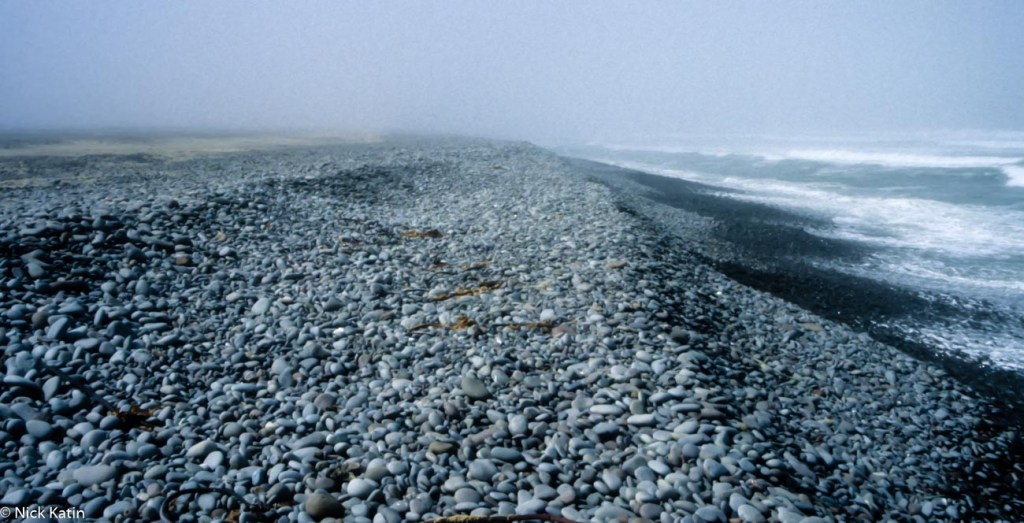
    Terrace Bay is desert, black stone beaches and a grey sick looking ocean that yielded an endless abundance of fish. This is serious stuff! A couple of guys caught 82 fish each one weighting around seven or eight kilos off the beach! I don’t know that much about fishing but I do know that there are few places left in Australia where you could get a catch like that without a boat.

    A few others must have caught a bucketload as well as it was being offered around (cooked that is) by one of the other groups at dinnertime.

    This group was led by the ‘knowitall’ you know the type, there’s one in every gathering or group. Even though they were speaking Afrikaans his body language and actions told us “I know it all and I’m going to tell you”.

    We were in the bar and he and his friends and family walk in and he just took over the bar. Frans, the barman, must hate arseholes like him just walking behind the bar and helping himself simply because they all arrived together and poor old Frans was a bit slow in keeping up.

    Relaxing for a day or so gave Sue a chance to recover, which she did although she still felt off colour. I was hoping that the bracing air and relaxation would clear up my catarrh but that still stuck to me so much so that in frustration I started a course of antibiotics that we had brought with us.

    The Skeleton park is infamous for its shipwrecks that dot the coast after hitting one of the treacherous sand banks and some bright spark thought the name ‘Skeleton’ was appropriate. It was one of these shipwrecks that got us into what we thought at the time was big trouble. Our next destination was Swakopmund some 350 kilometres south on the coast, via the Cape Cross seal colony. Bearing in mind our ‘reluctance’ to leave ‘Terrible’ bay, we set out early to ensure we had time.

    Well we made good time along the salt road to the park gate at Ugab and then turned off to see one of these shipwrecks. The road had another of these heavily corrugated surfaces that have you bouncing around everywhere and just moving forward at more than 30 kilometres an hour was a struggle. Suddenly a buzzer went off and the oil light flashed on the dash. We both said “Shit!” stopped and turned off the engine. Like any part time mechanic, I was quite capable of opening the bonnet and checking the oil. Plenty there! I checked to see if the filter was loose. No that was ok as far as I could tell. Now we’re in a hire car which is less than a year old and still covered by it’s warranty, somehow fiddling with it didn’t seem the right option without authority. After all it’s my credit card imprint they’ve got as a deposit. So we did the right thing and slowly drove back. It didn’t seem to mind if we drove it at 20 kilometres an hour.

    It took forever to get back to Ugab. There’s not a lot at Ugab in fact there’s not even a phone. Fortunately they did have a more modern method of communication than the pigeon, a two-way radio. The gatekeeper radioed the nearest mechanic in Hentiesbaai a small town some 137 kilometres away. His only option in these circumstances was to bring a tow truck.

    All we could do now was wait and wait! Eventually Hennie turned up around 3 hours later which I guess wasn’t too bad. He took a quick look at the car and then we loaded into the back of his truck whilst we both climbed into the front.

    Hennie was born and raised in Namibia and despite being white considered this was as much his country as anyone else. We talked about the fish, the up coming Rugby world cup (Namibia actually had a team entered) and life in general in Hentiesbaai. Hennie told us that there was around 200,000 whites in Namibia and then turned to us and asked “How many blecks ‘ave you goot in yoor ‘ountry?” When I replied that we had about 300,000 aboriginals. He looked at us and said “Thets nothin man, we got 3 million of them!”

    Of course it turned out that there was nothing wrong with the car other than a loose wire on the oil switch in the engine which had somehow shaken loose. It cost N$1235 (US$124.00) to get us picked up from Ugab and I had to break the news to Werner. “We’ve fixed the problem mate” I told Werner on the phone and proceeded to tell him about the oil switch. We had already rang him and told him what had happened and needed permission for Hennie to look at the car which Werner got from Volkswagen. “Thing is, it’s cost N$1235.00 and they want to know how you gonna pay for it?” There was a pause. Somehow I had this picture of Werner looking to the heavens and saying “why me”. Anyway we ended up paying for it on proviso that he would settle with us when we returned the car.

    If you like this then hit “follow” on the side bar

    The inhospitable Skelton Coast in Namibia
    The inhospitable Skelton Coast in Namibia