Katin Images Travel Photography

Travel Photos, Travel Photography Tips and Software

Tag: zambezi

  • African shoestrings – Mozambique Day One Hundred and One Bordertown

    With a GDP of only US$104 per person Mozambique is one of the poorest countries in the world. The Portuguese up and left in the mid 1970’s after decades of plundering the country and a fifteen year war of independence. They took with them valuable skills and capital reserves leaving behind nothing but chaos.

    A Marxist state eventuated and before long the cherished ideas of socialism had the country’s economy in tatters. A civil war that left 900,000 people dead, 1.3 million refugees and a countryside strewn with over 1 million unexploded land mines followed. Finally, in 1990 peace reigned and with the aid of the United Nations a democracy of sorts emerged. The economy is still dependent on foreign aid and its infrastructure is only now being rebuilt. Soon after our visit a devastating flood decimated the country setting back its efforts to rebuild.

    The Tete corridor is an area of Mozambique that juts out between Zimbabwe and Malawi. A lot of the guerrilla warfare during the civil war was staged here leaving behind a legacy of land mines and poverty. This is the area we needed to cross on this bus to get to Malawi.

    After several stops for police checks and simply to avoid the huge crater called potholes in the road we got to within 100 kilometres of the Malawi border and it was getting late!

    The Mozambique border post at Zobue apparently closes at 6 pm and there was some real concern that we might not make it.

    As we got closer there was an awful sound of clonking and scraping as the driver changed gears. Finally, as the bus began to climb a steep hill, it stalled and came to a standstill. It was almost dark as the driver restarted the engine and then attempted with no luck to select first gear. Some of us got off to lighten the load but that made no difference. As we got back on the driver rolled the bus back down the hill so that he could make a run back up in second gear. I shook my head in disbelief. We’re rolling backwards down a hill in the dark, in the middle of nowhere, in the infamous Tete corridor of Mozambique. If he goes off the road there’s a chance that a landmine could be waiting for us and then its ‘good night Irene’. In fact, we did meet a truck going up as we were going down but it overtook us without any mishap. Eventually we got going and the bus limped into Zobue sometime later. Of course the border was by now closed, although only just, and despite some animated conversation outside one of the border official’s house, it stayed that way.

    Then the fun began. Most of the travelers on the bus were apparently from Malawi, going home after doing a bit of shopping in Harare or having a break from working in Zimbabwe. They did not take kindly to this situation and I had to interfere to stop the bus driver from being lynched. They accused him of being in league with the town traders who they believed would profit from our enforced overnight stay. I can’t say I was convinced. The town wasn’t exactly busting with tempting designer label goodies or food stores. The hotel was full, which was just as well as it looked and smelt like the pits. The only place that appeared to be initially open was a small tin shack of a store that sold cold beer and by that time we sure needed a drink. Within a few minutes more tin shacks opened and vendors came to us with fruit, potato chips, drinks and various currencies.

    Initially the place was quite scary. Apart from the street sellers, there were street kids and other suspicious individuals hovered around, including a man with a rifle who was obviously guarding something but we were never able find out what. With Portuguese sounding to us just like Spanish, the whole town reminded us of one of those dusty, rundown Mexican or South American towns portrayed in the movies. All we needed was Clint Eastwood to ride in on a mule wearing a Mexican poncho and wide brimmed hat, cigar in mouth and the comparison would be complete.

    We spent the next six hours on the steps, watching our bags on the top of the bus, of what we think was the town hall within full view of the bus. It was one of the most bazaar experiences of my life sitting there guarding our bags from a distance, drinking beer, listening to Led Zeppelin (Jenny had a tape player) and playing cards whilst the man with the rifle wandered around looking for something to guard.

    Andy and Jenny told us of their search for land on the North Mozambique coast (when they eventually get there) for a tourist camp. Due to the bad roads and infrastructure, the only way to that part of Mozambique was via Malawi and they were set to meet up with other members of this venture in Blantyre, the only other major town in Malawi.

    Eventually sleep got the better of us and we returned to the bus to risk sleep and luggage stealing. Sleep was rather fretful, with snoring from half the passengers that were asleep and constant chatter from the other half that were not, adding to our rather cramped conditions.

    At first light I ran up to an overland truck that had also got there too late to cross the border, to see if we could get a lift. It was driven by a young woman from New Zealand, a relative neighbour, and the travelers were all women, a single guy’s paradise I thought. They were going as far as Dar es Salaam. This was our eventual destination and they would take us both for US$40 each. We were in business or so I thought. Our problem was getting our bags and the bus driver refused to offload them until we had crossed the border into Malawi. The bus somehow limped the kilometre between border posts and they then began to offload the baggage for the Malawi customs officials. The overlander was already there and I appealed to the driver to wait. She said they would and then promptly drove off never to be seen again!

    Footnote:

    Take control of your blog’s images now by signing up here to get “Eleven easy ways to improve your marketing photography”
    A free guide on how to start improving your images to help you take control of your marketing.
    That link again
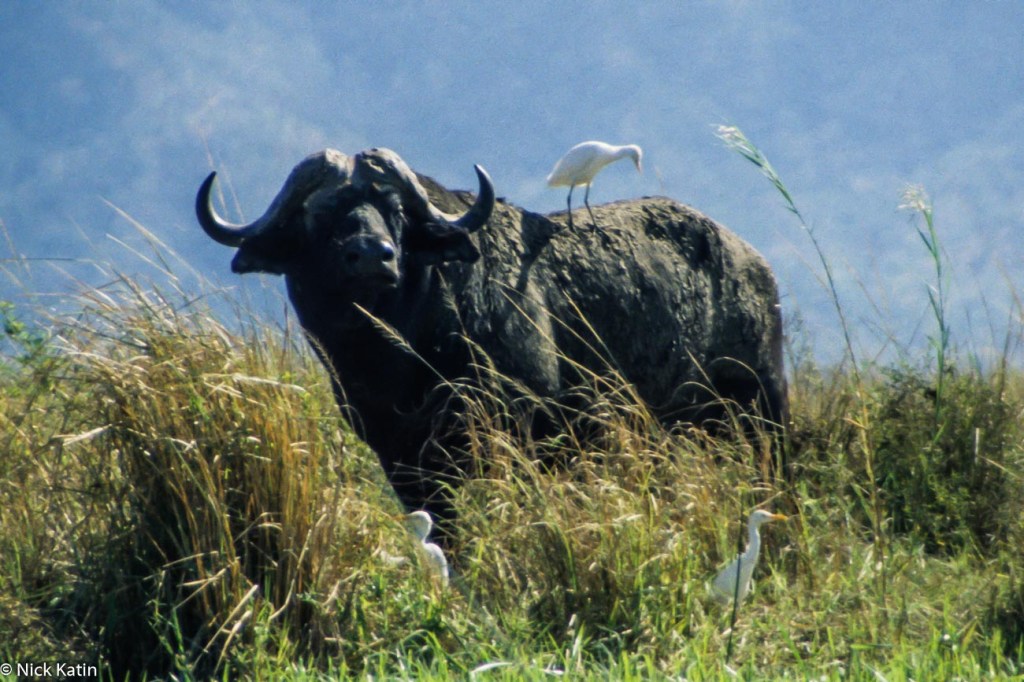

    Buffalo near the Zambezi River watching canoes in Zimbabwe
    Buffalo near the Zambezi River watching canoes in Zimbabwe


  • African shoestrings – Zimbabwe Day Ninety-Nine Zambezi River

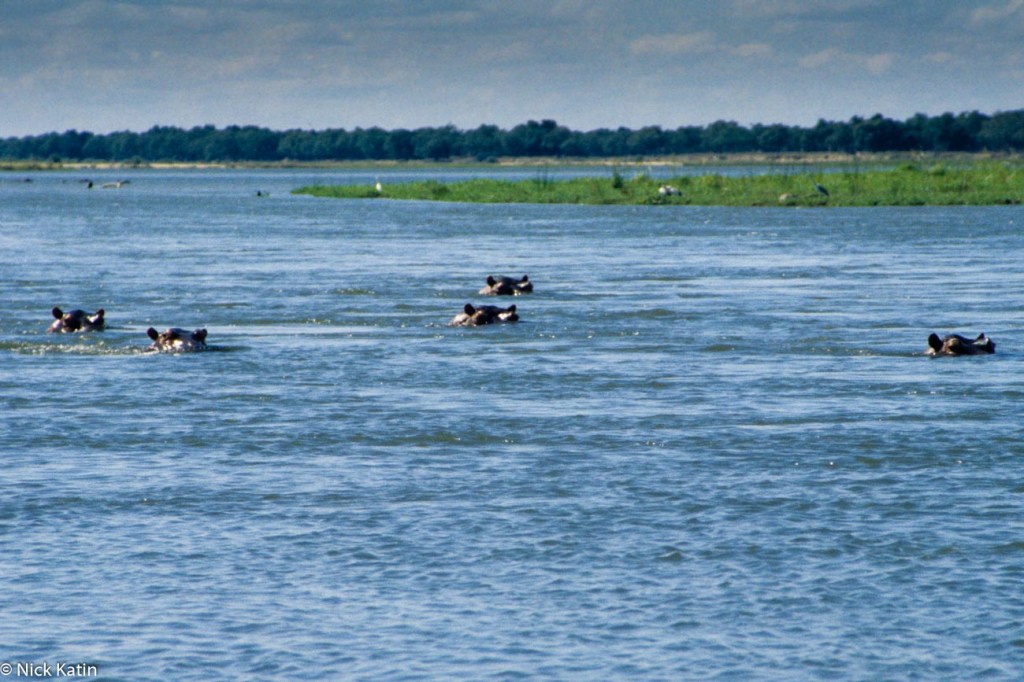
    Later that morning with us bringing up the rear as usual we were paddling alongside an island to avoid a pod of hippos.
    Suddenly a flurry of activity brings four hippos scurrying out of the bush and into the water just metres in front of Peter and Greg. They disappeared into deep water and four pairs of eyes popped up about twenty metres from us and watched as we tentatively crept past getting as close as we could to the bank.

    After such an exhausting morning (we had covered 20 kilometres as well) we were thankful for a stop for lunch and a couple of hours siesta followed by a swim in the shallows later in the afternoon under the watchful gaze of a few hippos.

    Still by the time we had got to our overnight stop at a deserted beach we were all pretty much exhausted and aching. The excellent food and some elephants strolling down to the water’s edge for a drink a mere 150 metres away soon resuscitated us.
    We were now in Mana Pools National Park and the hunting camps and other signs of humanity gave way to thorny bushveld and groves of Acacia and other trees. It was a full moon and as it rose it lit our campsite with a soft glow and turned a nearby perfectly formed thorny Acacia tree into a silhouette.

    The distant roar of a lion, the call of hyena and the munching of the hippos nearby seemed to be with us all during the evening and overnight. Despite our soreness, exhaustion and apprehension this was as good as it gets!

    Peter and Greg allayed our fears somewhat about hippos. Apparently like most wild animals they only attack only when they feel threatened. The stories of canoes being turned over are greatly exaggerated and usually caused by accident. In deep water a hippo may be right underneath the canoe and its occupants totally unaware, so if it decides to pop up and you’re in the way, bad luck!

    These guys seem to know their stuff. Peter was from the Shona, the most populous people in Zimbabwe and Greg was a young white guy from a farming family. When talking amongst themselves they spoke Shona. It seems that even though English is the official language Shona is more commonly spoken. They also told us of our biggest danger. “We (meaning Peter and I) will stand guard overnight to watch for Zambians paddling across from the other side. They ‘ave been known to raid a campsite and steal belongings from the tents and canoes whilst everyone slept.” Greg said.

    Great I thought, we have to watch out for crocs and hippos by day and thieving Zambians by night.

    Our final full day at 24 kilometres was a lot shorter and allowed us to leisurely enjoy the sun rising over the Zambezi.
    This was our best day!
    The river was mostly a series of tranquil channels and the wildlife was everywhere. Lots of hippos to be seen but none that were close enough to trouble us; a herd of elephants on the Zambian side; more elephants near our lunch spot; waterbuck, buffalo and impala also darted in around the national park edge, whilst little bee eaters probed small openings they had created as entrances to their nests inside the cliff face of the riverbank. But the piece ‘d’ resistance was yet to come. Swimming in a shallow channel we dried off and under Peters leadership we approached, by foot through the water, a large pod of hippos. We got within four metres of them as they watched us whilst closely bobbing up and down, ears flapping and noses snorting. They were watching us as warily as we were they. I snapped away around ten shots only to realise that I had the camera still set for a much dimmer light. By the time I reset, the hippos were almost completely submerged and moving away. Curses!

    Ten metres beyond them an elephant descended the bank and paddled across the deeper channel up ahead to join his mates strutting on a small island. Later that afternoon we stopped our paddling and drifted as we watched more elephants frolic in the water just in front of us. Peter was pretty keen on ensuring that we didn’t get too close but some other canoeists were foolishly a lot closer and came very close to having their canoes turned into firewood.

    Five kilometres on and it was time to set up camp for the last night on another sand island. First we had to navigate our way through a narrow channel with, you’ve guessed it, another pod of hippos in the way. No drama. Peter and Greg slapped their paddles against their canoes and off they went to safer waters.

    On dry land we were all busting and Sue managed to grab the spade before anyone else and headed off to an inconspicuous place. She was had been so absorbed with finding a hidden spot that it wasn’t until relief had come that she realised that there was a hippo lying on the bank asleep a mere five metres away. Any alien who had no prior knowledge of humanity would have gone away thinking what strange toilet rituals we have once he saw this mad women running towards us waving a spade with one hand and holding up her shorts with other!

    Footnote:

    Take control of your blog’s images now by signing up here to get “Eleven easy ways to improve your marketing photography”
    A guide on how to start improving your images to help you take control of your marketing.
    That link again

    Elephants in the Zambezi River walking across the river in Zimbabwe
    Elephants in the Zambezi River walking across the river in Zimbabwe
  • African shoestrings – Zimbabwe Day Ninety-Eight Zambezi River

    We got to the Bronte at 5.00 am the next morning ready and waiting for our guide Peter and his offsider Greg who both turned up at 6.00 am with a driver Showee.
    We were heading for Chirundu some seven hours drive away via Breakfast at Chinhoyi and picking up the final two other members of our group at Makuti, Peter and Susan. They were Aussies as well, like us travelling on a tight budget and (shock horror) were about our vintage.

    Chirundu is a small town set on the river and serves as a border post with Zambia. It’s here that the real business begins.

    A leisurely lunch was followed by a lesson on Canoeing and some tips about animal behaviour. This last topic made us all sit up and listen. “Iiif you are feced with hippo, den puddle towards shallow water und keep you distance. Iiif a hippo charges und turns oover de canooo den geet into anoother”.

    Great!

    I noticed that Peter (the Aussie) had some bad scratches on his legs and arms. “Oh that. We were charged by a hippo in Matusadona and I jumped into a very thorny bush” he said.

    This was getting worse!

    Now it was time to get on the water. The canoes were twenty-foot Canadian style (whatever that meant) and we climbed in after all our bags and supplies were loaded into the middle of the canoe. If this baby turned over not only would we get wet but so would all our belongings.

    That afternoon we covered 16 kilometres and it felt like 100! I had the rear seat so the art of steering was all mine to conquer and needless to say our progress was a series of zig zags along the fast flowing water.

    This part of the Zambezi is around 800 kilometres downstream of Victoria Falls and 140 kilometres from the eastern edge of Lake Kariba and the infamous Kariba Dam. I say infamous because when it was built in the 1950’s, nature (in the form of the god Nyaminyami according to the local Tonga tribe) did its damnedest to destroy the project with three unprecedented floods and a heat wave causing the deaths of many workers and severe damage to the work in progress.

    The river was wide with the seemingly uninhabited terrain of mountains and hills of Zambia on the north side and the steep riverbanks dotted with hunting camps of Zimbabwe on the south. In between both banks, islands of marshy wet lands split the river creating tranquil channels with lush grasses and lily like growth. With the current flowing with us it all seemed very easy at the beginning. But it didn’t take long to realise that I needed to get the hang of this steering quick smart to avoid the hippos that seemed to be lurking around every corner and the odd croc that lay patiently at the water’s edge.

    By the time we reached our destination a small sandy island a couple of hundred metres from the Zimbabwe side, we were ready to rest.
    As with the rest of trip there are no washing or toilet facilities here. A spade with a toilet roll at the water’s edge is as good as it gets.
    After we erected our tents around the dining table and the fireplace, Peter and Greg presented a feast fit for kings.
    Amazingly we had steak and fresh vegetables washed down with the local Myuku red.
    Add that to the good conversation and the odd snort of a hippo and roar of a lion and I felt like we were in paradise.

    Not so Sue.
    Her arms ached from the paddling, she was also concerned as to whether she could paddle the 38 kilometres the next day and she felt really worried about the hippos.
    We later attributed the latter to the malaria tablets, Lariam that we taking. One of its side effects is anxiety and as you can see there was plenty to get anxious about.

    If Sue was worried about hippos the day before then the morning doubled her fear. Soon after we set off we rounded the bend and the channel narrowed.
    Suddenly out from the tall grass on the left bank, rushed a huge hippo straight into the water towards the opposite bank.
    Steering and stopping a two berth canoe was still beyond Peter’s and my capabilities as first our canoe, then Peter and Susan’s jackknifed into the bank. We both came to a halt facing back the way we had just come, a few metres from where the guides were waiting patiently in their canoe.
    Peter (the guide) opened his hand, drew it down his face and took a deep breath. “OK” he said, “You can’t turn around here so you’ll both have to go back and turn around keeping as close as you can to this bank”

    Peter and Sue set off first and successful negotiated the turn. We (well actually me) didn’t do so well. We ended up with such a huge turning circle that before we knew it we were heading directly for the spot in the water where the hippo had last been sighted. There was nothing we could do except, as I yelled to Sue

    ” Paddle for fucks sake just paddle!”

    Which is exactly what we did as the canoe passed right over the top of the hippo as the others watching in amazement or was it amusement.

    Footnote:

    Take control of your blog’s images now by signing up here to get “Eleven easy ways to improve your marketing photography”
    A guide on how to start improving your images to help you take control of your marketing.
    That link again

    Hippos in the Zambezi River watching canoes in Zimbabwe
    Hippos in the Zambezi River watching canoes in Zimbabwe
  • African shoestrings – Zimbabwe Day Ninety-Three Masvingo Zimbabwe

    The next day was one of those days. Our early morning game drive yielded very little wildlife. It was our last opportunity to see wildlife in Hwange as we then commenced the 630 kilometre journey to Masvingo in the southeast. On the way out we flagged down by a ranger who asked us to drop off a couple of youngsters at the main road. No problem we thought. Except when we got to the main road they didn’t have a clue as to where they were. We obviously couldn’t leave them there and drive away with a clear conscience, so we ended up taking them into the actual town of Hwange 10 kilometres in the opposite direction, where they lived. This must have distracted me because it wasn’t until we had traveled a fair distance towards Bulawayo that we realised that we did not have as much fuel as I had thought. We found much to our dismay that there was not a single open petrol station between Hwange and Bulawayo. We were now sweating on whether we would have enough to reach Bulawayo. We did of course but as soon as I turned the key to drive off after gratefully refueling, you’ve guessed it, nothing happened. The battery lead had again come adrift. After again some basic repairs we were back on the road still sweating but these time about the battery lead. Worse still it was now getting late and that meant driving in the dark.

    So what, you say!……………… Well, driving in the dark in somewhere like Zimbabwe is a challenge. Firstly, once out of the cities and major towns there is very little street lighting. Secondly, there are lots of pedestrians on the road who are not easily visible as they mostly wear dark clothing and are obviously black skinned. Lastly, the other vehicles on the road had at best, blinding headlights and at worst none at all but most seemed to have only one headlight working which meant that it was impossible to tell whether the vehicle coming in the opposite direction was either a motorbike or a car on the wrong side of the road!

    Our intention had been to book a night at a place called Clovelly Lodge in Masvingo on our way. Do you think we could find a pay phone that worked? No! It wasn’t until we reached Masvingo itself that we managed to ring them, find out if they still had a room free and get directions. Needless to say we got there somewhat stressed and it didn’t help that we were immediately pushed into the dining room where dinner was now being served up (it was full board).

    Clovelly was run by Bruce and Iris an elderly English couple who basically felt that the current situation in Zimbabwe was becoming intolerable for any whites to stay. At the same time they were trapped. Their assets and money were now worth very little outside of the country and that made it very hard for them to leave. Now of course with all the recent publicity of white farms being hijacked by black war veterans, I often think of people like Bruce and Iris and wonder of they ever found a way out.

    By this time we had verbally booked a Canoe safari on the Zambezi to start in a few days time, so it was with great interest that we listened to a couple of German guys who were also staying there. They had just finished that same trip and had cut short their stay in Africa to fly home on account of one of them being badly bruised down one side of his body. Apparently they had been sleeping in their tent when a hippo trampled right over the top of the tent and poor old Klaus. Peter on the other hand slept through the whole thing and didn’t realise what had happened until the next morning when he awoke to see his mate writhing in pain and the tent collapsed and torn down one side. “What the fuck were you doing last night?” he had asked.

    We later found out that hippos have their own paths from land to water and if by chance you happen to be between a hippo and water on one of these trails then he (or she) is not going to politely side step around you. That is apparently what happened to these guys. Fortunately for us they had used a different safari company so we could hopefully presume that there was little chance of that happening to us.

    Now there was a reason we were in Masvingo. The town itself is just one of those typical small towns that can be found almost anywhere else with wide streets crisscrossing in the style of towns and cities established in the late nineteenth century. Its only real claim to fame is the general consensus that it was the first white settlement in Zimbabwe but that is not, in today’s political climate, much of a tourist attraction. What we were there for was not actually in Masvingo but 25 kilometres south. The Great Zimbabwe National Monument is one of Southern Africa’s greatest historical ruins.

    If you like this then hit “follow” on the side bar

    Two hippos grazing by the side of the Zambezi River in Zimbabwe
    Two hippos grazing by the side of the Zambezi River in Zimbabwe


  • African shoestrings – Zimbabwe Day Eighty Seven Bulawayo

    In Canada I was asked how Niagara Falls compared to Victoria Falls. I said bluntly that whilst the Zimbabweans had made a bit of a mess of the town the area around the falls was still protected and in a natural setting. Somehow the North Americans had turned the falls into a Disney meets nature theme park and built something ugly on almost every square inch of land around the falls.

    And that is the great thing about Victoria Falls. Surrounded by rainforest created from the mist that the falls generates, you can imagine that what you are seeing now is pretty similar to what David Livingstone saw when he stumbled across it in the mid 1800’s. As I explained previously last time we had been here the water level had been a lot lower. Now the falls were torrential and mist was everywhere, not enough to spoil the view as on the Zambian side but enough to get us wet again. Probably the most dramatic view is to be had from Cataract View. This requires a climb down a steep stairway into the gorge and it’s from here that we found the classic view found in all good coffee table books. There are many other view points along the path that parallels the falls. The closer ones were a waste of time but the ones further away enabled us to get a sense of scale and that’s when you realise how awesome this place is. Its as if there are billions of tiny droplets of water dropping 100 metres into the gorge, each one independent of each other and then coming together as one seething mass of water on impact at the bottom. We stood and watched this incredible creation of nature for sometime before leaving and finding somewhere to toss some fluid down into our abyss and watch the world cup cricket.

    We were a bit disappointed with our coupe on the train. We’re not sure whether it was the luck of the draw or the fact that we booked second class but we didn’t get the wood paneling, red velour upholstery and brass of a bygone era. Instead we got metal paneling and grey dull upholstery. Most trains in Zimbabwe run overnight on long journeys and run very slowly! It took ten hours to travel a distance of 439 kilometres or twice as long as it would have done by car. But we had, so we thought at the time, some good reasons to travel by train; it would save on accommodation, it was cheaper to hire a car in Bulawayo than Vic Falls and I liked trains. Whilst I’m not in the train spotter league, I find it quite comforting to sit or lie down listening to the rhythmic ‘clatter de clatter’. I was to be disappointed, just as we would nod off to the gentle swaying of the carriage the train would stop at some imaginary station in the middle of nowhere and then spent the next thirty minutes shunting. Add that to the fact that the doom and gloomers had been at us in Vic Falls, warning us to keep our windows locked to guard against straying arms that appear at stations and whip away your possessions and never to leave your coupe unattended, and you can see why we got very little sleep. To add insult to injury we discovered that hire cars cost the same in Bulawayo as they do in Vic Falls after all!

    Louise from Burkes Paradise Backpackers met us at the station at around 7 am and whisked us away to a reasonable size house on a reasonable size property away from the centre of town. Louise and her husband Colin were caretaker managers whilst the owner Alan Burke was away and whilst they were pretty helpful they were obviously new to the game. As with white South Africans white Zimbabweans were fearful for their future under the current regime. Certainly they had good reason, Zimbabwe’s economy was in tatters, inflation was out of control and there was no money to pay the souring national debt or anything else for that matter. Of course since we left the country it’s gone from very bad to chaotic with the well publicised grabs of white owned farms that have resulted in crop failures of massive proportions and therefore very little left to export. The Z$ is worth nothing outside of Zimbabwe, so those who choose to get out, leave with very little unless they were smart enough to have some investments overseas. To a lot of whites still there, Zimbabwe is their home and has been for a least a couple of generations so leaving the country is the last resort.

    Not that they’ve been there all that long. The remarkable Cecil Rhodes managed to obtain mining rights from the Ndebele tribe for his British South Africa Company as late as 1888. From then on the area that is now Zambia and Zimbabwe was settled by whites and the long running conflict between black and white that still continues today was born. Eventually after ten years of fighting between the Shona and Ndebele on one side and white settlers on the other, Southern Rhodesia started to push for self-government, which was eventually achieved in 1923. Thirty years later, along with Northern Rhodesia (present-day Zambia) and Nyasaland (present-day Malawi), it became part of the Federation of Rhodesia and Nyasaland. This federation lasted a mere ten years, when the other two countries obtained independence as Zambia and Malawi. Rhodesia, as it was now called, started negotiations on their independence. But with no plan to involve black Africans, the Poms rejected this proposal. Eventually the white government led by Ian Smith got pissed off by this and declared independence anyway. It wasn’t until 1980 after a lot of bloodshed, two different governments and Britain regaining control, that free elections were held. Robert Mugabe’s Zimbabwe African National Union-Patriotic Front (ZANU-PF) won the election easily and the rest as they say is history!

    If you like this then hit “follow” on the side bar

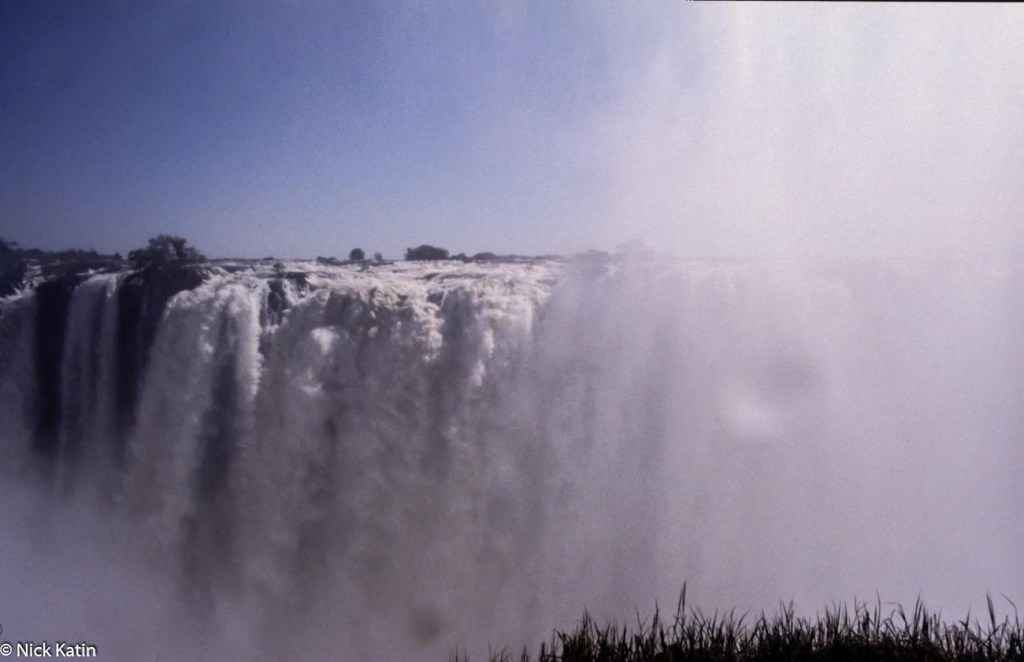
    Victoria Falls from the Zambia side
    Victoria Falls from the Zambia side


  • African shoestrings – Zambia Day Eighty Five Victoria Falls

    We left Livingstone via the hostel shuttle that was masquerading as the back of a Ute and into Zimbabwe the next morning. The driver actually stopped at the border and took in our passports to the Zambian immigration office for stamping which was a bit disconcerting as a passport is considered the only thing that you should never let out of your possession. But he looked like a trustworthy soul and from the couple of grunts he had given us, he had this air of knowing what he was doing.

    A good thing about the backpacker hostels is their network. At each one you can usually book ahead for the next one and even further ahead. In Victoria Falls we had booked to stay at a place named with obviously a lot of thought, 357 Gibson Road. It was a quite comfortable place run and owned by a Dutch couple Hans (who else?) and Elizabeth, full of Aussie travelers and cheap, which in Vic. Falls is a rarity in this age of mass tourism. There’s always a reason why a place is cheap and 357 Gibson Road was no exception. It was 25-minute walk to the centre of town. Now if you’re staying in Rome, Paris, Sydney or even Perth that’s great. In a small town that’s a long walk.
    Fortunately Hans gave us and a couple of other Aussies, Greg and Leann, a lift via the local markets into town. Zimbabwe at that time and in fact as I write is in the process of having its currency nosedive into totally a dark void of worthlessness.
    Great if you’re a traveler from almost anywhere but not if you live there. You can almost always tell how much a country has lost confidence in its currency, the good old US$ starts to become the currency of tourism. Zambia had already made that transition, we paid for our accommodation in US$ even though we paid by credit card. As John one of the owners of Fawlty Towers put it “You just can’t rely on the Kwacha (Zambia’s currency) to be the same value tomorrow morning as it is today”. At that time 1500 Kwacha equalled one Aussie dollar or US$0.60. It cost us 8000Kwacha (US$3.00) to travel the 11 kilometre distance from the falls back to Livingstone in a taxi! So in Zimbabwe the A$ was only worth 25 Zimbabwe dollars but we still felt like millionaires in the local markets.

    Hans left us to wander around whilst he went about his normal business of purchasing his weekly supplies. These markets weren’t the usual stalls and stands but a dusty, rambling and poorly maintained open-air shopping centre.  There wasn’t a lot to look at except hairdressers. Every second shop seemed to be a hairdresser or a bitsa shop. You know one of those shops that sell a bit of this, that and anything else. It was at one of these shops that we all decided to stop and have Z$5.00 (US$0.12) cokes. We actually hadn’t planned to stop but we had to stay there until we had finished drinking so we could hand back the empties. Coke in most of these countries comes in the old coke bottles that have probably been around since it first came on the market early in the twentieth century. What worried me is whether the coke we drinking is that old as well!

    As we drank at this rather poor excuse for a milk bar, we did the usual story swapping that travelers do. It turned out Greg was from Perth and had just hitchhiked from Mozambique and somehow got caught up with a drunken driver who stopped at every bar on the 500 kilometre journey. Mozambique is apparently not the sort of place you walk away from a lift unless you have a few months to spare or worse still a gun! This story was to have a lot more relevance to us later on than we realised at the time.

    In the 4 years since we first visited Vic Falls it had changed a fair bit. Like any tourist town it always had its fair share of hotels and shops, now it had even more and a lot of them were more upmarket. It had even acquired the obligatory casino.

    One place that hadn’t been touched was an area nicknamed curio row. It’s here that you will find almost any type of African curio but in particular rhinos, hippos, African figures and any other shape considered popular, all carved from soapstone or wood. The trouble is there are so many of them that it’s hard to be convinced that guy selling them from his stall (often a just a chair in a small section of a crowded car park) actually made them himself or represents his local village. Somehow I get the impression that it all comes from a huge factory secretly hidden away in the bush. But I guess for these people all that matters is that they sell.

    And they do!…………. Tourists gobble them up and take them home and pepper them all round their home or put them aside and forget about them. In these times of globalisation you can find most of these goods in specialty shops in any big western city but usually at four or five times the price. So sometimes it’s often the price and the perception of negotiating a bargain with the seller, that attracts tourists rather than the quality or its origin. We as ‘discerning’ buyers found a small shopping centre around the back of the curio row and bought what we considered more original and quality goods (albeit at higher prices and no option to bargain) than what was on offer elsewhere.

    If you like this then hit “follow” on the side bar

    Victoria Falls from the Zambia side
    Victoria Falls from the Zambia side


  • African shoestrings – Zambia Day Eighty Four Livingstone

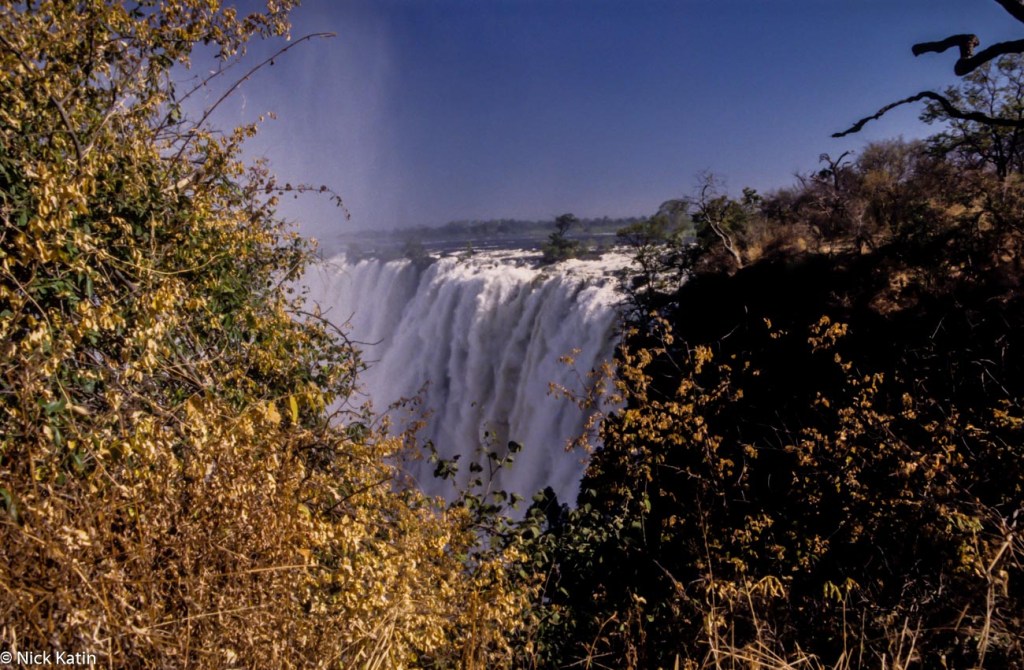
    Victoria Falls (known locally as “the mist that thunders”) is one of the great natural beauties of the world. A quirk of political geography has put just over half of the falls in Zambia but three quarters of the viewing area in Zimbabwe. Consequently the views from both countries are a lot different. After having been dropped off by the Fawlty Towers shuttle; we strolled into the Mosi-oa-Tunya National Park, where the Zambian viewpoints are located, past the many curio stalls that we decided we would look at later and straight into mist!

    Let me see if can set the scene for you…………… Imagine if you can the mighty Zambezi, a wide stretch of water, sweeping down from its source in North Western Zambia some 900 kilometres away, plunging down a 103 metre high and 1600 metre wide precipice into a narrow gorge which turns at right angles on the Zambia border into an even narrower channel and out into a slightly wider gorge as if unaffected by its trauma of the last 2 kilometres of its journey. From a huge wide open river, the Zambezi hits Victoria Falls and changes its identity into a body of water flowing through a series of narrow and deep gorges. The Zambian viewpoints are all at the point of convergence of water from the Zimbabwean side meeting water from the Zambian side and then somehow squeezing into that first narrow channel. It is here that great volumes of water thunders down and then rises up in the form of mist, hence the name “The mist that thunders” and then drenches everything in sight including us! Last time we had been there the water level had been a lot lower and we managed to stay relatively dry in comparison. This time we only succeeded in keeping the camera dry as we wondered from point to point beginning to look like drowned rats.

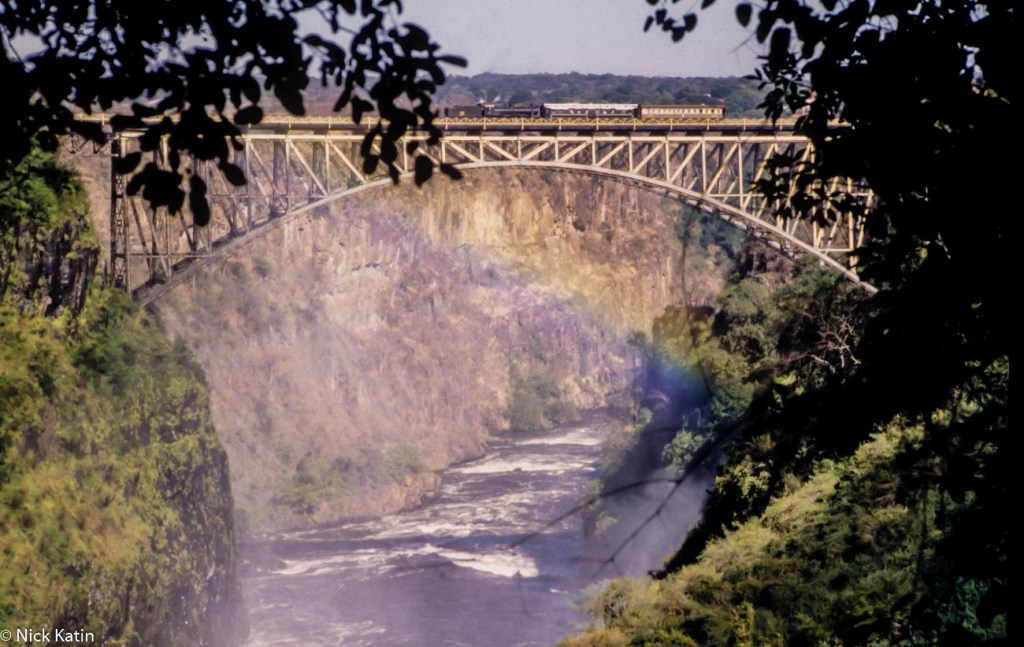
    When the rains have been good its estimated about 5 Million cubic metres of water per minute passes over the falls and I’m sure it was all falling on top of us! There’s one particular point called appropriately Knife Edge Bridge. It’s a wooden footbridge that crosses from the mainland to a tiny island in the Zambezi. Walking across is about as close as you get to walking through the falls itself. Needless to say we could see nothing but feel plenty. In the end we gave up and found a trail that led down to the water’s edge downstream of the falls. It was called Boiling Point and it’s here that you can see a great swirling mass of water resembling a watery black hole generated by the pounding that is happening a few 100 metres upstream. It’s also here that the best view of the Zambezi Bridge is to be had. It joins the two countries and hosts two sets of customs and immigration, a continuous human chain crossing both ways and Bungy Jumping.

    Look I hope that I’m not offending too many die-hard Bungy jumpers here but why? Why would anyone of sound mind and body attach an ankle to a glorified lackey band and jump off a 100 metre plus cliff, bridge or whatever, bounce up and down upside down for fun? A friend of ours did it and said that she had such an adrenalin rush that it stayed with her for a week. Well, let me tell you that’s one experience I’m happy to bypass. I get an adrenalin rush just from looking down (mind you that’s probably actually naked fear). Well anyway from our position I have to admit the jumpers looked spectacular jumping from the bridge. Small and almost insignificant against the backdrop of the huge gorge that houses both the bridge and the Zambezi but spectacular nonetheless.

    If you like this then hit “follow” on the side bar

    Victoria Falls and the Zambezi Bridge from the Zambia side
    Victoria Falls and the Zambezi Bridge from the Zambia side