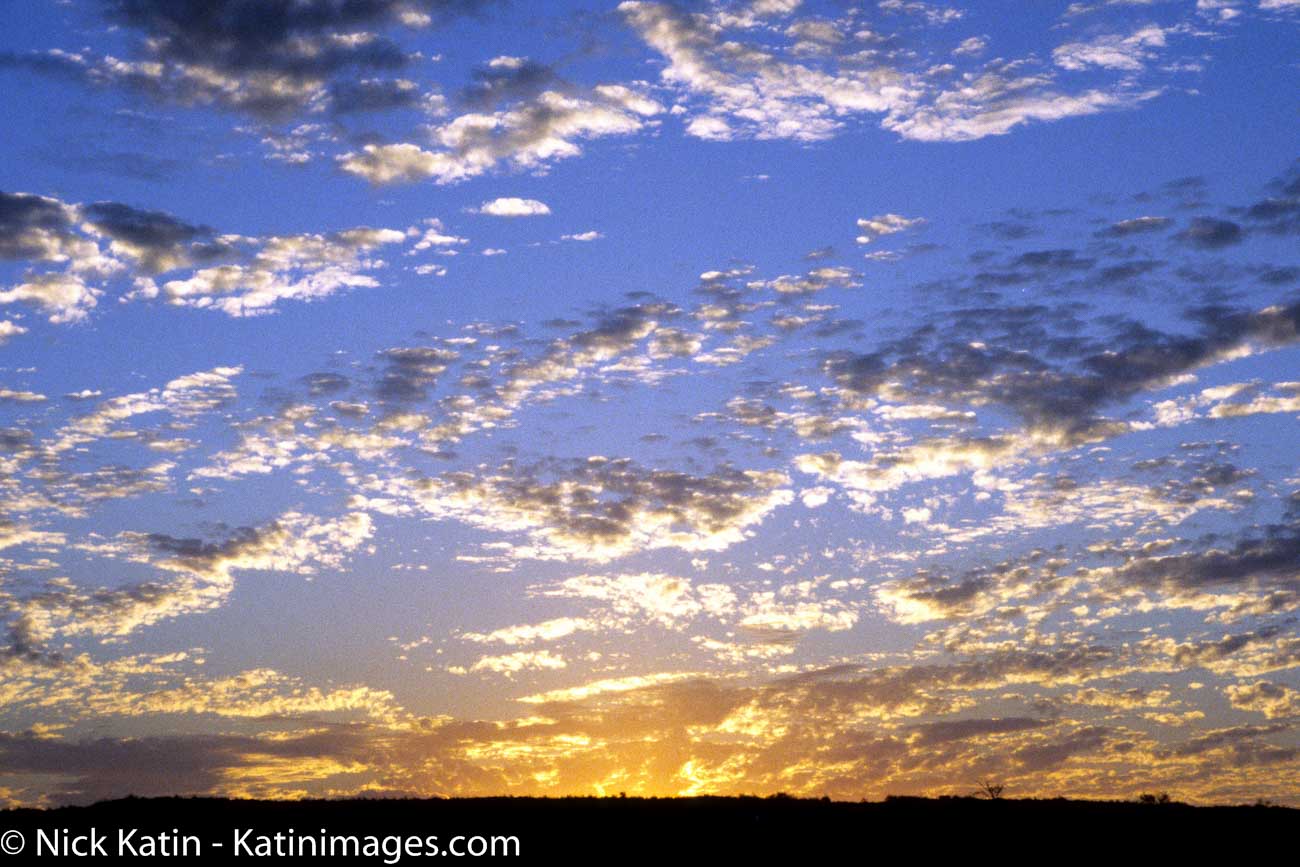
Sunset 1. Sunset in in Kruger NP South Africa. Click on the image for a larger view
Wildlife and to a lesser extent landscape photography has always been a captivating pursuit for me, a way to connect with the natural world and its magnificent creatures. During my recent adventures in South Africa, I decided to take my passion one step further by reinterpreting my wildlife and landscape photographs into fine art.
Once I had a selection of what I thought were good quality photographs, it was time to transform them into fine art. Post-processing is where the real magic happens. I used Luminar Neo to enhance colours, adjust tones, and add effects that would elevate the images from photographs to artworks.
Fine art is a personal expression, and I wanted to infuse each piece with my own unique perspective. These Images have been transformed into digital paintings, allowing me to add my artistic flair and creativity to the mix. All photos have had the same amount of post processing to show a specific style.
Transforming any genre of photography into fine art is a deeply gratifying journey. It allows you to not only capture the beauty of nature’s creations but also to share your own unique perspective and emotions with the world. Through observation, composition, post-processing, and a touch of personal creativity, I was able to breathe new life into some of my images, turning them into pieces that evoke emotions and opinions. Whether you’re a passionate photographer or a lover of art, I encourage you to explore this fascinating intersection of nature and creativity; you might just discover a new dimension to your passion.
Each image is only available for purchase 15 times and a separate certificate of authenticity will be provided to the purchaser. To order a print or digital image click on the image or contact me Go to Luminar Neo for more info on this creative AI software
Audi had arranged a local tour guide to take us on a game drive into Chobe that afternoon and then a game cruise along the Chobe River the next morning. Our new tour guide didn’t show for a while and in his absence, led by yours truly, we organised with the agents at Tebe camp, where we were staying, to swap the two tours around. After all, watching the sun go down on the water from a boat surrounded by animals sounded much more romantic than being stuck in a vehicle. Not too mention that early morning is a better time to go for a game drive.
Andre had now left us and returned back to Ngepi. He had done all right for his first time; nothing had been too much trouble and had often bent over backwards to make us comfortable. Humble that he was he was also a nice guy with it. The poor bloke was also just a little bit emotional when he left.
Our new guide was a different animal!
Chris was an Ethiopian brought up in Sweden (we actually thought that he was bullshitting when he told us that but we found out much later that it was true). With his long platted Bob Marley look alike hair and a fairly relaxed and casual attitude to his job; he was also an ‘expert’. Now I know he’s meant to be an expert certainly as a tour guide but I mean he knew it all and there was no doubting that the most important thing in his life was whatever worked for Chris. Which is why he was not too happy that we had rearranged the schedule. But we held fast despite his efforts to convince us otherwise.
The cruise was pretty bloody good!
From the boat we could see elephants and buffalo on the shore and hippos in the water, watching us with those beady eyes that live just above the surface, not to mention the abundant bird life.
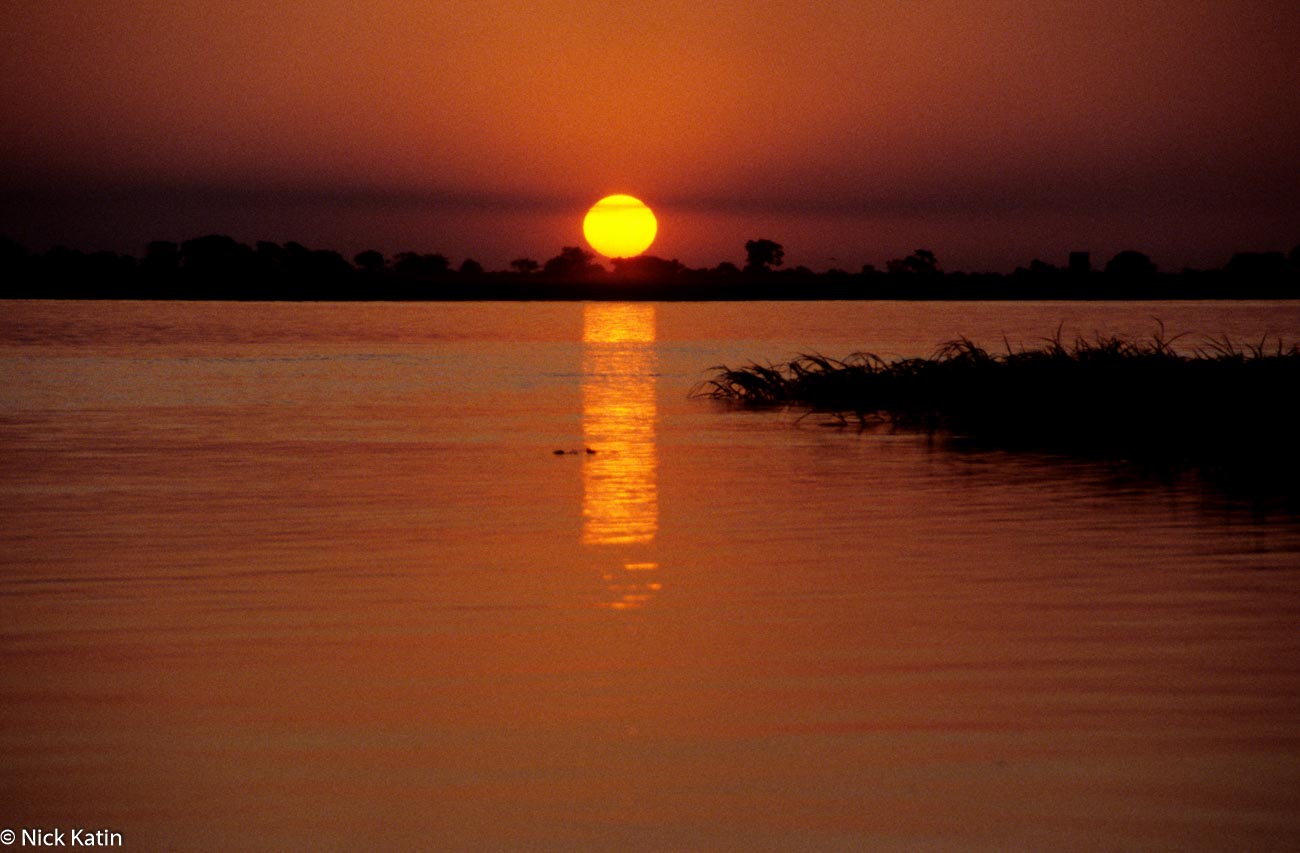
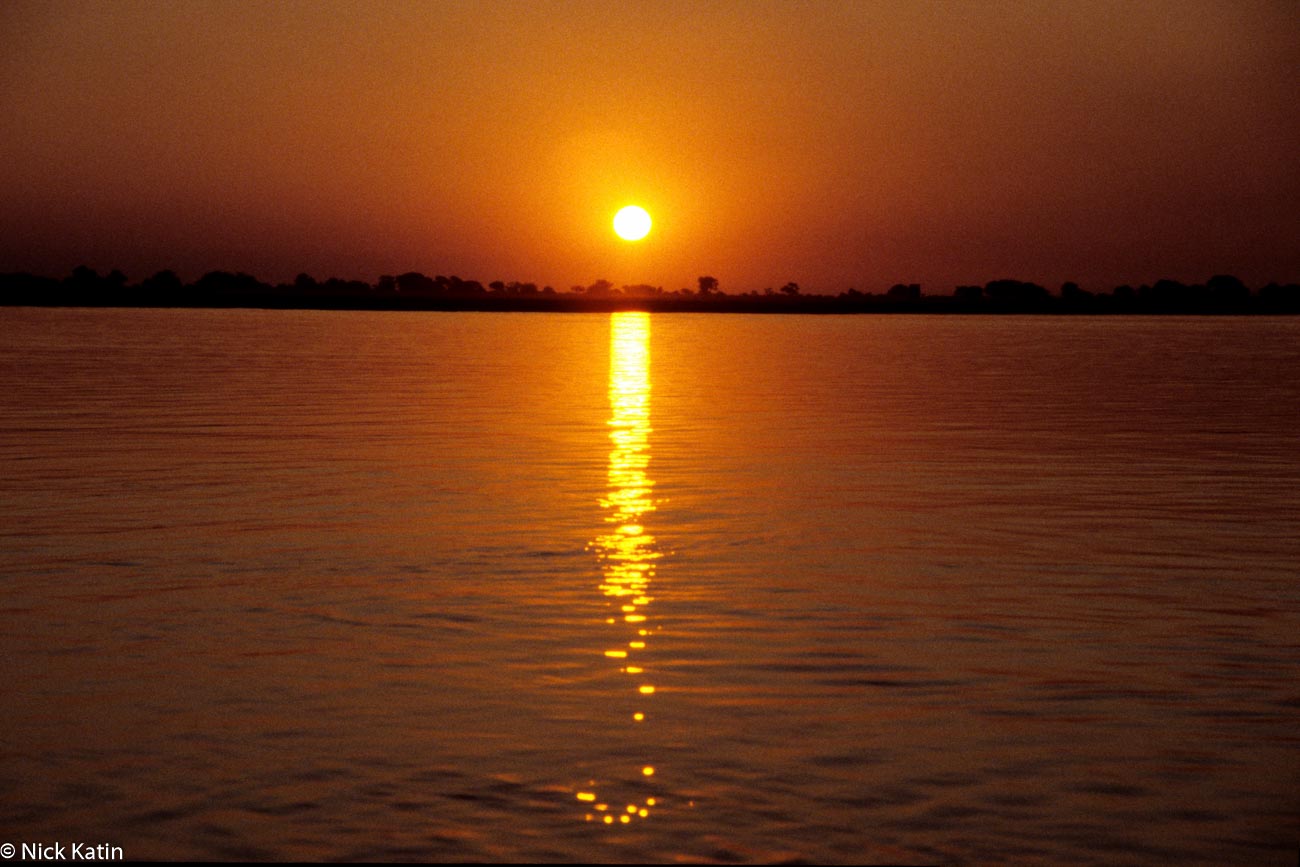
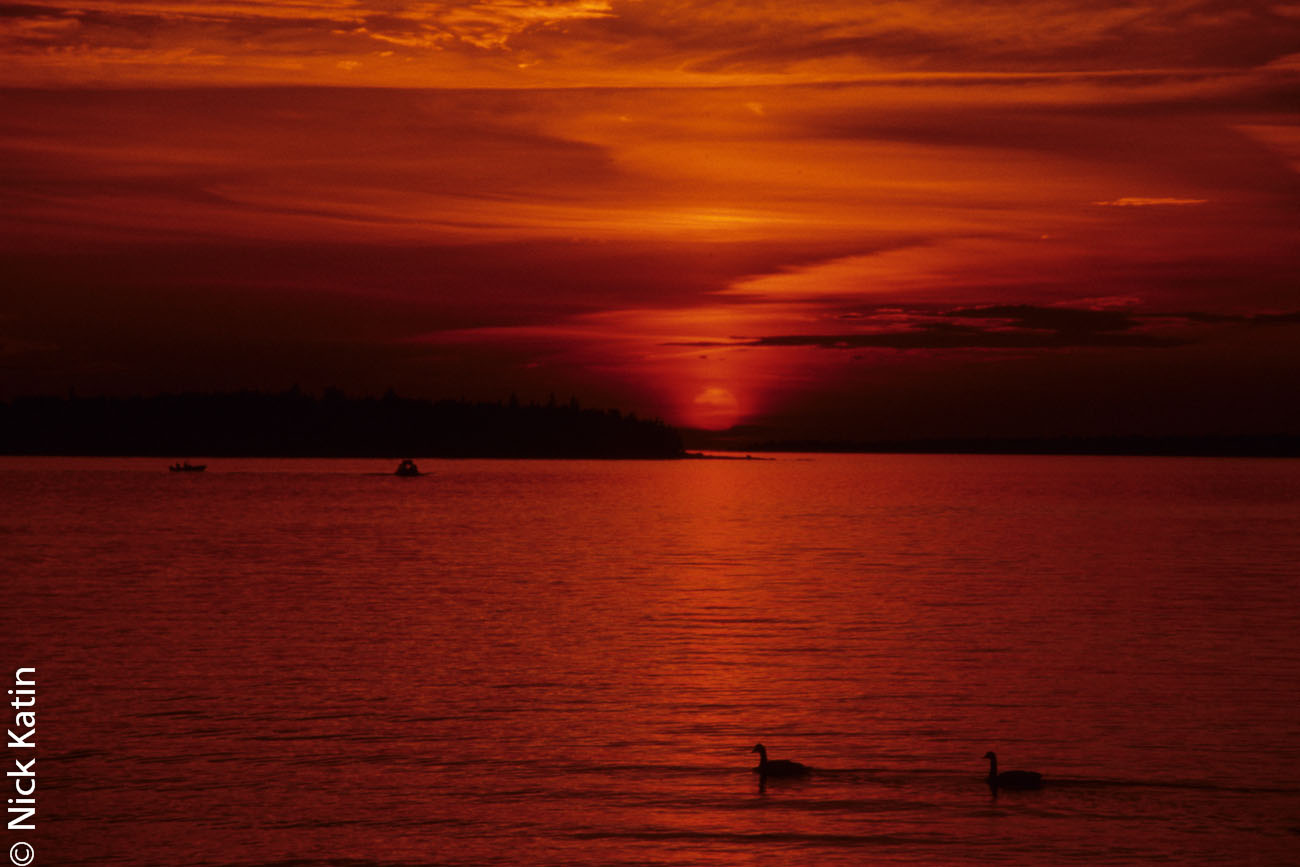
The most impressive sight, though, was the sunset that seemed to happen just at the river edge. At home, in Perth, we get some pretty awesome sunsets over the ocean so when I say the Chobe sunset was pretty bloody good; I mean it ‘was’ pretty bloody good. I shot off a few shots after Sue had made the suggestion. One of these shots sits proudly on our dining room wall and when anyone remarks on it, Sue turns to me and says with great satisfaction “and you never wanted to take it!”
Driving through Chobe early the next morning was a totally different affair. Safari trucks are open in the back and at 5.45 am it was bloody freezing. Obviously the animals thought so as well because none of them were anywhere to be seen. We drove around for around an hour along dusty sandy tracks with Chris barking instructions to the driver up front and scratching his head as to why we hadn’t seen anything yet. The night before despite our rearrangement of the final leg of the tour, he had promised us an abundance of wildlife and so far his promise seemed to be pretty empty. Two lionesses saved his embarrassment. They were chasing a squealing warthog 100 metres away across a water channel. We stopped and watched as the two got closer to their prey that was running at great speed first one way then another. I turned to look behind us and to my amazement saw another interested onlooker, another lioness, a mere five metres away peering around our vehicle in effort to see what her mates were up to. We had unknowingly parked right in front of her!
After that the wildlife just kept coming! It was as if someone had sounded the wake up call because everywhere we went we saw something. A herd of buffalo chewing and nonchalantly looking at us quizzically, two hippos wondering around on the river bank, kudu and impala springing away as we neared.
Back to the water channel and we just caught sight of two of the lionesses walking away into the bush. We drove on back towards to the park gates and our campsite and then suddenly around the next bend, as surprised as us, were all three lionesses walking across the track and within spitting distance of the truck.
More buffalo and a crocodile were spotted near the waters edge and then reluctantly our time was up.
Chris was crowing. “See, I said we would see lots this morning” he said in his sort of British, Swedish and African accent. My remainder that it was actually our idea to do this early morning game drive was totally ignored as he continued to crow all the way back to camp.
If you like this then hit “follow” on the side bar
Sunset on the Chove River in Chobe National Park, Botswana
Eventually our time was up and we had to leave this pleasant existence. We were canoed back to the village of Jao in the early hours. This time we had the opportunity to wander around this traditional village, although I think the main aim was to get us to buy hand made baskets, not wander off on a photographic shoot that yours truly did. Actually the small quantity of baskets that were for sale had enormous price tags, so business was pretty poor for them that day. What was more interesting (baskets are way down my shopping list) was the way these people lived. Jao consisted of a collection of mostly reed or bamboo huts with thatched roofs but some of them were mud and others were constructed using tin cans as bricks held together by mud or dung. Most of these homes had an enclosed yard that we sneaked a look at, used for cooking and storing chickens and donkeys. One woman took a sharp looking garden hoe to her donkey that was getting to close to comfort to her toddler. This poor animal had scars from previous encounters and probably lived a life of misery, if a donkey can have such a thing.
The children were fascinated by these white camera-carrying tourists and posed quite happily in fact almost insistently for our cameras. Some of them had runny noses and sticky eyes which made us think their health was still a long way from being as good as children of the west.
We got back to Ngepi camp, after having to cram into the one motor boat with all our bags, camping gear and supplies when only one boat turned up, in the late afternoon.
That night we had a ‘treat’; the dancers of the Mbuknshu people put on a show of traditional dancing. It was boring and repetitive and was far less entertaining than watching the antics of an overlander group who had arrived at the same time as us. It’s sort of like watching Neighbours (in fact most of them were Aussies and Kiwis). There were usual ructions created by clicks, one night stands and show offs. One guy was so ‘cool’ that he sat on the edge of the table, dressed immaculately to look so casual, drinking neat bourbon straight from the bottle. Yuk!
We had our own ruction later that night as somehow I managed to spill kero from the lantern all over the floor of the tent. Within seconds we were out of that tent with our bags and then spent the next hour erecting another in the dark. To say that Sue was not amused is probably a bit of an understatement although she has dined out on it a few billion tedious times since!
The next day we were headed through the infamous Caprivi Strip. Infamous because over the years the five tribes that make up the inhabitants, the Caprivians, of this narrow 500 kilometre long extension of Namibia, have from time to time created unrest in their demands for autonomy. This particular time there a lull in the friction and minus Klaus, Ingrid and Anna we drove the seven hour length of the strip without any incident apart from the bone jarring badly maintained roads.
Our destination was Kasane in Northeastern Botswana. You might well be asking why didn’t we go straight from the delta to Kasane instead of back via Namibia. The easiest answer is I don’t know and don’t care. These guys obviously knew what they were doing and I for one was quite happy to follow their plan. However a quick look at a map of Botswana and Namibia explains all. Whist it’s a relatively short distance as the crow flies from the delta to Kasane it’s a bloody long way by road. A circumnavigation of central Botswana is required to get there by road.
Kasane actually sits close to the borders of four different countries. Botswana, Namibia, Zambia and Zimbabwe and more importantly is the gateway to Chobe National Park, one of the gems of African Game parks. This was going to be one of the highlights of our time in Africa. We had read a fair bit about Chobe and knew that it has probably the most varied wildlife in Africa on a setting that is as varied and scenic as it inaccessible. It was the inaccessible bit that convinced us to see it with a tour operator. Heavy-duty admission fee (US25.00 per person per day), heavy duty 4WD hire meant heavy-duty money.
If you like this then hit “follow” on the side bar
Sunset on the Chove River in Chobe National Park, Botswana
Our destination was the Bernabe de la Bat Resort in the Waterberg Plateau Park (which sounds a lot more romantic than it is) some 300 kilometres south. We planned to see a couple of sights on the way, Lake Otijikoto and the Hobo Meteorite. Lake Otijikioto is one of the only two natural lakes in Namibia.
This important fact didn’t really make it any more interesting. It’s just a collapsed limestone cavern that later filled with water and the only things of interest was its aqua blue colour and the fact that at its deepest (estimated to be 55 metres) lived some rusting ammunition and artillery. In 1915 the Germans were retreating from the South Africans and decided that dumping their weaponry into the lake to prevent those nasty South Africans having it was a master stroke.
At least the lake was just off the main road.
Not so the Hobo Meteorite! According to the Lonely Planet it was about 25 kilometres west of Grootfontein, which was 63 kilometres east of Otavi making it 38 kilometres from Otavi and a 76 kilometre round trip for us as we passed through Otavi.
Easy! Well no, it was not! In fact the turn off, which was extremely hard to find, is a 76 kilometre round trip but the Meteorite itself was a 160 kilometre round trip!
I guess we could have accepted that had this great artifact from the sky been a sight that would change our lives or at least been mildly interesting. It looks just like a rock (its mostly iron) partially buried in the ground with a little bit of landscaping to make it look pretty. Sure there was some interesting information on a board nearby but nothing we couldn’t have looked up on the internet.
“So what did you expect?” I hear. I’m not sure but it was a long way to go for a lump of iron. If it had been green kryponite that glowed and changed colour, or throbbed like something from Star Trek, I would have been happy. But this thing just looked like something that had been found in another part of the country and brought here to make some extra cash and piss tourists like me off!
The Bernabe de la Bat ‘Resort’ is nestled in the shadow of the 50 by 16 kilometre sandstone Waterberg plateau that stands around 150 metres high.
The campsites were sheer luxury, grass. We hadn’t had grass since Daan Viljoen. No dust to find its way into your sleeping bag at night or blow into the tent by day. It was terrific.
We actually spent the afternoon of our only full day there cleaning the dust out of the car. Considering how small it was, it seemed to hold an awful lot of sand.
In Australia a big proportion of retirees, buy a caravan and do the round trip around Australia, sometimes for months, sometimes for years. In South Africa they head North to Zimbabwe, Zambia, Botswana and Namibia. Namibia is generally favourite amongst those from the Cape Town area. Here at Waterberg, we met three couples up from the ‘Cape’ travelling in convey. They were extremely friendly and helpful (even hanging up our washing whilst we were out walking).
Speaking of walking we followed the only decent length walk trail, outside of the couple of long distance trails, in the park to a spot called mountain view at the top of the plateau. It was not a long climb but it gave us a bit of a workout after the day of driving we had the day before. The views at the top were certainly worth it, we could see for miles across the scrubby plains interrupted by the odd decaying sandstone hill but probably the best view was of the plateau rim with its sheer sided red, orange and green rock and vegetation.
If you like this then hit “follow” on the side bar
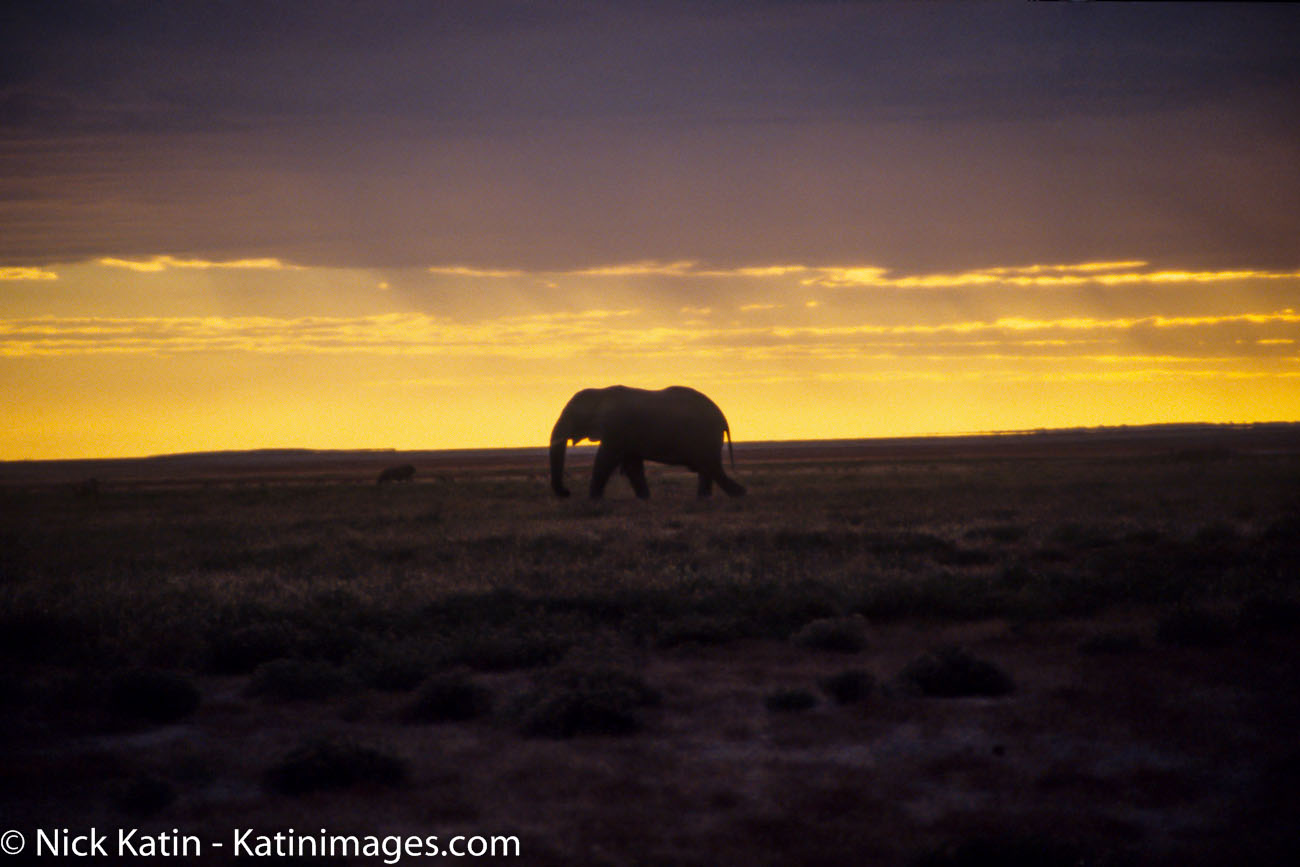
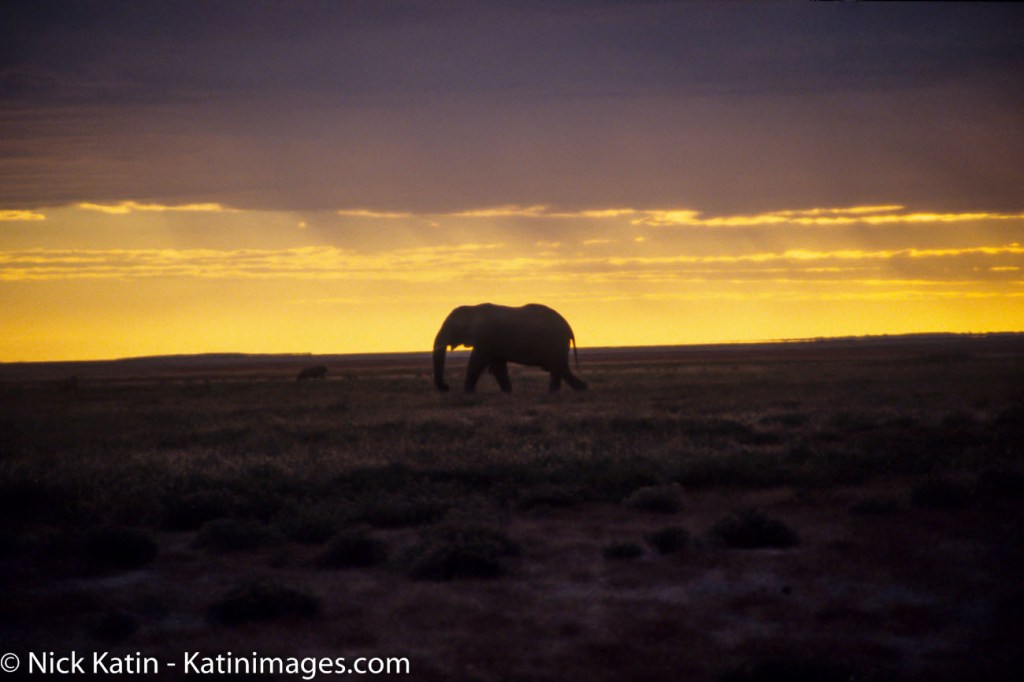
An elephant strolling through the scurb at sunset in Etosha national Park, Namibia
Sunday was the day we left Stellenbosch and made our way to Upington. The arrangement was for us meet with the tour group, who go by the rather colonial name of Livingstone Trails, at the Yeho Backpackers in Upington itself. It was now time to brave the local transport system. Up until now we had somehow managed to get from A to B in either a hire car or in the case of J’burg to Cape Town by plane. This trip meant we had to catch the train from Stellenbosch to Cape Town and there catch the Intercape Mainliner, one of the many long distance bus companies that cover South Africa and some its neighbours.
We had settled comfortably into that semi conscious state experienced by most train travelers until we just started to stop at a place called Bellville. The guy sitting opposite us said “Mister air you going to kip Town, ’cause if you are, you need to be on that train there and it leaves any minute”. He pointed to a train right next to us sitting waiting with the engine running. As he finished and the train came to a stop almost everyone in the train rushed off.
“Oh shit” Sue and I said collectively.
We grabbed our bags and followed the masses as they headed down the platform steps into the tunnel, back up again on the next platform and then straight onto the train seconds before it began to pull away. Breathless and sweating I asked the same guy where the train we had been on was going. “Back to Stellenbosch and there isn’t another train to Cape Town for about another hour” he added “It’s a Sunday, man, they always do this on a Sunday” We thanked him appreciatively and found a seat.
The bus ride was pleasant enough. As it was an overnight trip, we managed to get some sleep in between the hostess; a buxom blonde haired imitation of a German farm girl who we affectionately named ‘Big Bertie’, giving us coffee, rusks and biscuits and the odd stop to swap drivers and hostess. That intrigued me. I certainly don’t begrudge a change of staff for such a long journey (894 kilometres and ten hours) but these guys had a bed tucked away behind the luggage compartment that they had to share. As the first shift driver was quite thin and short I feared for his safety having to sleep next to ‘Big Bertie’. If the bus had to slam on the brakes, she could roll right over and flatten him!
If you like this then hit “follow” on the side bar
What was in regular service were the minibus taxis. If you have being paying attention you’d remember that I’ve mentioned these before.
These are generally run by black or more often or not in Cape Town, coloured South Africans and are mostly used by both these groups of people. They are of course found in almost any third world country in the world but they are particularly popular on the African continent.
At one time a white South African wouldn’t be seen dead on a minibus largely because there were restrictions on where they could operate but also because they had the Merc or BMW and didn’t need to use such transportation. Realistically I suppose a lot of them probably felt unsafe especially in some areas like the suburbs of J’burg. Except for some areas, multicultural Cape Town is considered a lot safer than J’burg and it’s now not unusual to see white travelers on these minibuses.
We didn’t know all this at the time, so when Andre told us that the best way to get into town was via minibus along the main street, it was with some apprehension that we waved down the first minibus that came along. We were the only whites in this crowded bus but none paid us any attention except the fare collector who grunted something at us that the guy sitting next to us interpreted as “that’ll be R2 each please”.
In one of these travel guides that focus on daredevil activities, like visiting war zones and terrorist training camps for kicks, I once read a list of all the most dangerous activities in the world. Riding in a minibus was way up there with swimming with crocodiles, bounty hunting and demonstrating in Tiananmen Square in Beijing.
This little tidbit of information flooded back to me as this sardine packed minibus swerved at breakneck speed around slower vehicles travelling in both directions before coming to a screeching stop to pick up any new or potentially new passengers that could be crammed in horizontally into all that air space above us.
We arrived safe and sound in the densely populated main minibus rank above the train station. People were everywhere, either being crammed in, waiting or like us shakily getting out. We had survived!
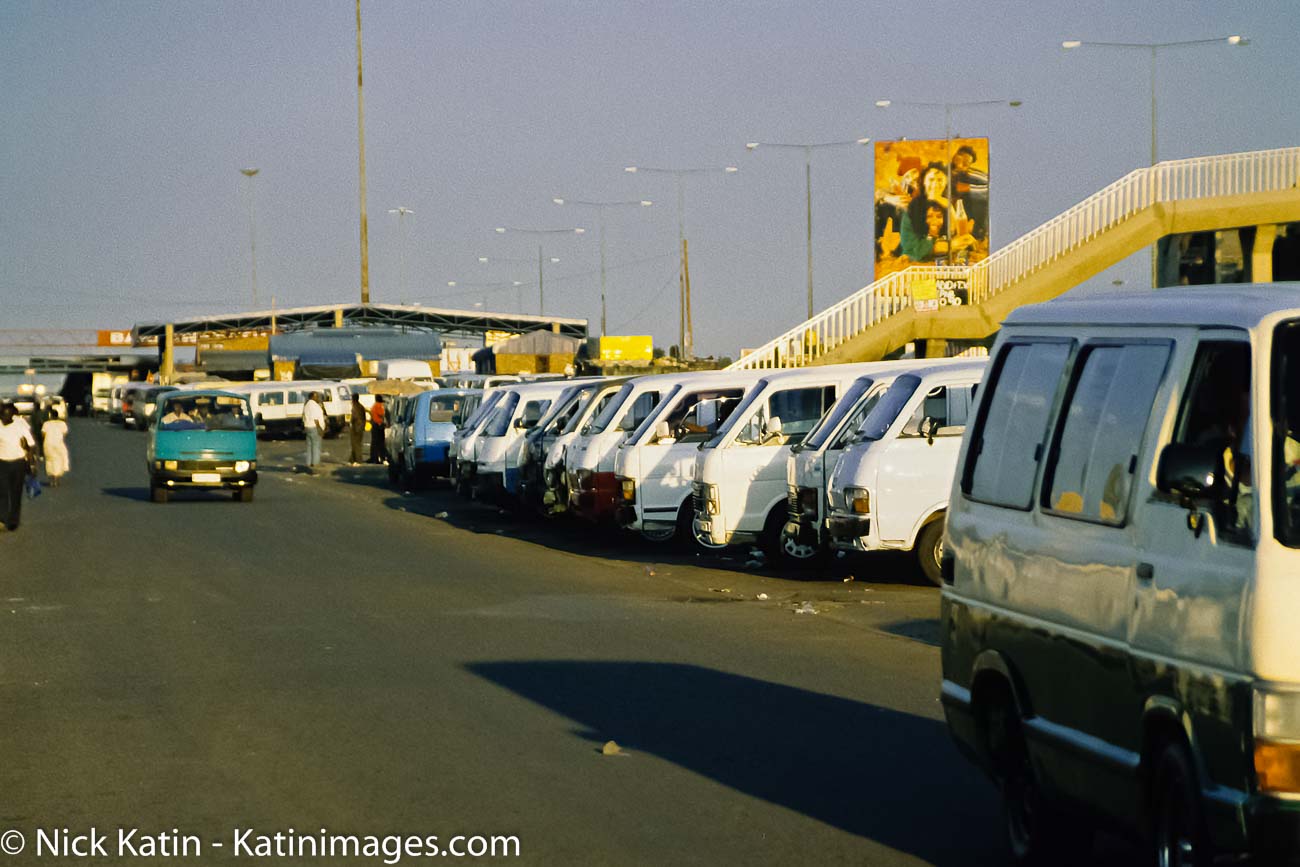
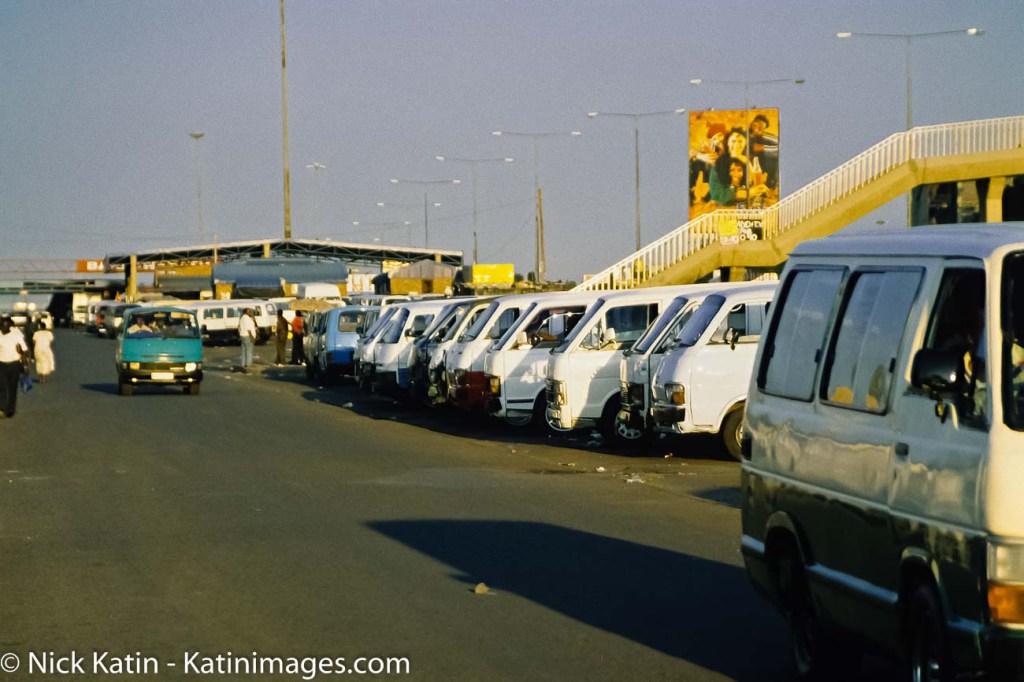
A Mini Van ‘depot’ in South Africa. Mini Vans are the most popular form of public transport in the urban areas of South Africa.
At Rustlers Valley Guest Lodge, we met the occupants, neighbours and anyone else who seemed to materialise from time to time (we were the only guests) at dinner that night.
There was Dale the local naturalist and loved snakes.
Birthday boy Carl couldn’t believe that I hadn’t heard of some permaculture guru from Australia. I didn’t like to admit that I didn’t even know what permaculture was, let alone have any idea of its personalities!
Then there was Bill who either had a hard life or he was old enough to have been dancing to Glenn Miller let alone Janis Joplin.
There were other refugees of the sixties as well but none as dominant as Frick.
Hippies have always maintained that everyone’s equal and there are no leaders in their ‘gangs’.
Well in this case Frick was without doubt the leader. He just had that look; I would call it the Charles Manson look but that sounds rather sinister. He had the long ponytail and beard and had a sort of holier than thou sort of presence.
When he looked at me I wasn’t sure whether he was going to bless me or offer me a joint! In fact he was actually the owner of Rustlers, so I guess he had some sort of commercial seniority.
Apparently he was a farmer going broke when he decided to build the lodge and change direction. How he became an aging hippie was not explained. Rustlers are famous, amongst those that care, for their music festivals. We know this because, after the initial polite conversation, the sole topic was the upcoming Easter festival, apparently a sort of South African mini Woodstock.
By the time our beds beckoned we knew all about running festivals and have since mercifully forgotten it all.
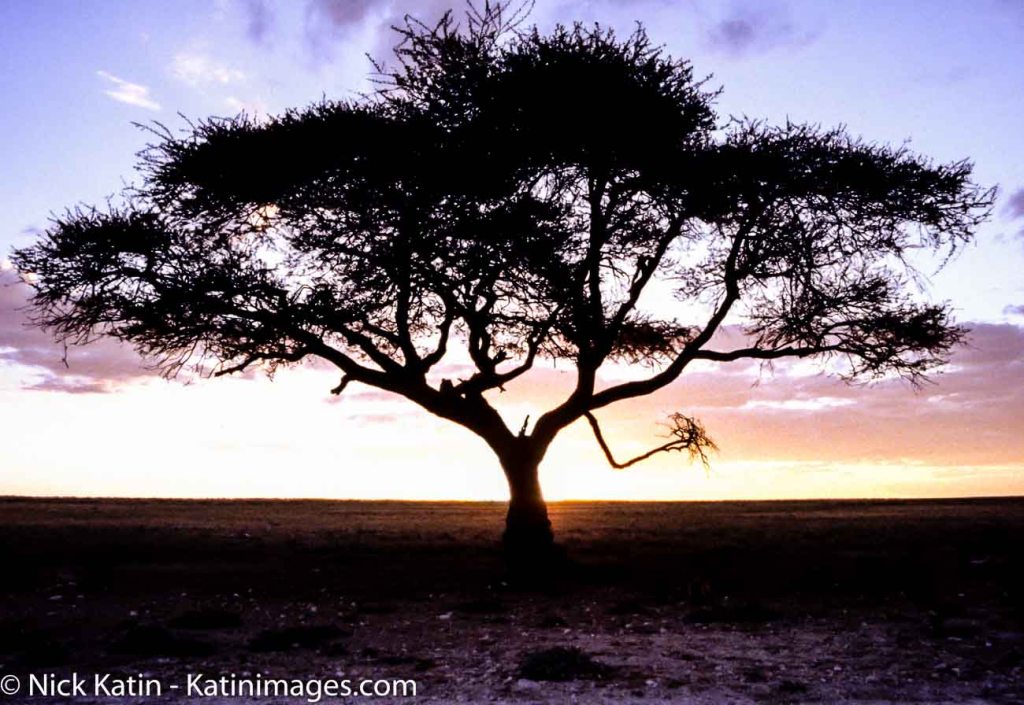
An Umbrella Thorn Acacia at sunset on the savannah of South Africa. It’s a native to Africa.
After overnighting in the Road Lodge Johannesburg Airport, we collected our wheels the next day and drove away from J’burg as quickly as we could.
One of the two most striking things about the roads in South Africa is the number of lunatics that drive on them! These lunatics in Mercs and BMWs and in dangerously overcrowded mini vans seem determined to run any one, who’s not as mad as they are, off the road. Literally as it happens.
The unwritten law in SA is for slower drivers to drive on the hard shoulder when being overtaken which on some roads is pretty scary as the other striking things are pedestrians that seem to want to share the hard shoulder as well! Almost every road no matter how far away from any town village or city seems to have a continuous stream of pedestrians walking along the hard shoulder and worse still some are on the road where there’s no hard shoulder.
So driving in SA is an ongoing series of choices. Do you knock over the pedestrian coming towards you or keep on the road and get terrorised by a potentially unstable BMW driver. Once they pass you, the hazard lights politely flash if you moved over or a hand waves a one or two finger salute at you if you didn’t!
We were actually heading for Lesotho and it’s about a day’s drive away from J’burg just to the border, so we thought we’d overnight somewhere within striking distance. Well we found somewhere all right. More about that next time.
A Mini Van ‘depot’ in Johannesburg in South Africa. Mini Vans are the most popular form of public transport in the urban areas of South Africa.
Last time we flew to South Africa via Qantas we were upgraded to business class. No such luck this time! We were once again mere mortals packed in with our fellow passengers into the Airline industry’s version of the mini.
Now that’s not to say that travelling economy with Qantas is a hardship. It’s not. In fact I think that they’re terrific. Good service, facilities, food and most importantly an unparalleled safety record makes any long haul flight reasonably comfortable. If that doesn’t get me a free flight nothing will!
But a long flight is a long flight and quite tiring.
Some eleven hours and two movies later we arrived at J’burg airport. Once ‘processed’ by the authorities we claimed our bags and moved out into the arrival lounge. We had been to J’burg before and sort of knew what to expect but nonetheless J’burg’s reputation as violent crime capital of the world makes you view everyone with a great deal of suspicion. In fact the biggest danger seemed to be the frustration caused by the ceaseless touting by reps of J’burgs many backpacker hostels. These guys hone in on anyone who looks even faintly potential. I think we got picked because it was such a quiet night and they were getting desperate.
We managed to eventually find our hotel shuttle, which was driven by a young white guy. I make a point of this because several years ago these ‘menial’ jobs were done by black or coloured people, never by a white person especially a young white person.
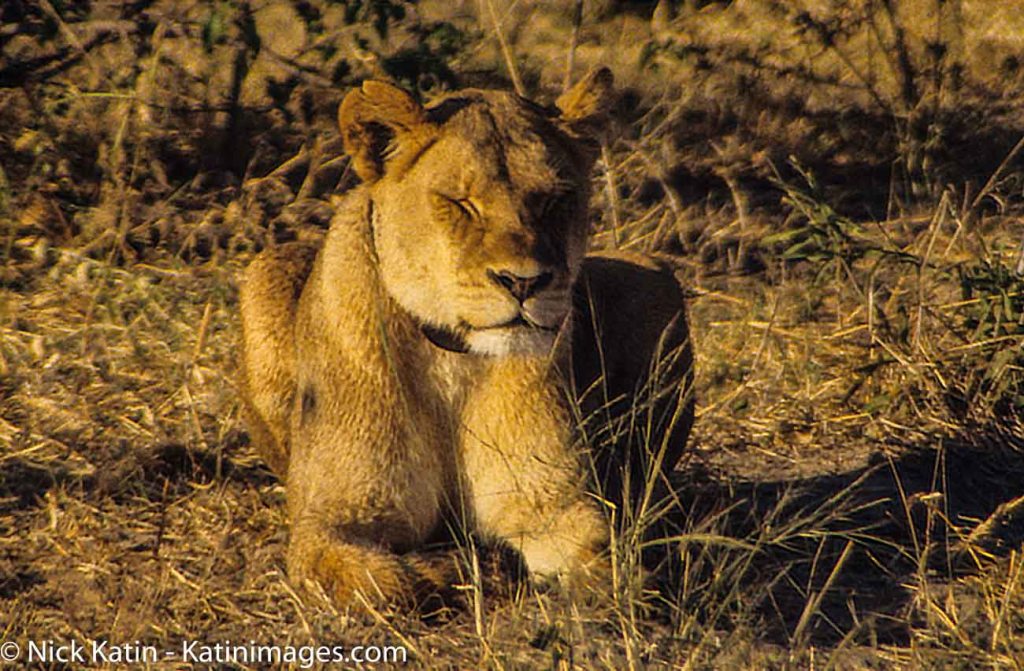
A lioness enjoys the late afternoon sun in Chobe National Park, Botswana
So with the flights books and with the aid of countless travel guides borrowed from the library, the internet and the scantiest of information from the few African countries tourist offices in Australia we plotted our route.
We gave ourselves 111 days to travel overland from J’burg to Dar es Salaam, see what we wanted to see and spend only an average US$100 a day, not each, but in total! We would stay in backpackers, youth hostels, cheap hotels and where possible camp. The latter was made a little difficult on account of the fact that we weren’t taking any camping equipment but as they say, there’s more than one way to skin a cat!
The only things we booked here in Perth were our first nights’ accommodation and ten days car hire in J’burg. There was a very important reason for pre booking both of these. Safety! J’burg is infamous for violent crime; the last thing we wanted to be doing when we arrived was wondering the streets looking for somewhere to stay or looking for a hire car. No, we just wanted to stay one night near the airport, pick up a car and get the hell out of there!
We booked the car through our travel agent and the accommodation through the Internet. Maybe it’s because of time constraints, security or lack of knowledge but it’s interesting that so many people still use travel agents. We found a cheap motel in the right location for half the cost of what our travel agent quoted.
An elephant strolling through the scurb at sunset in Etosha national Park, Namibia
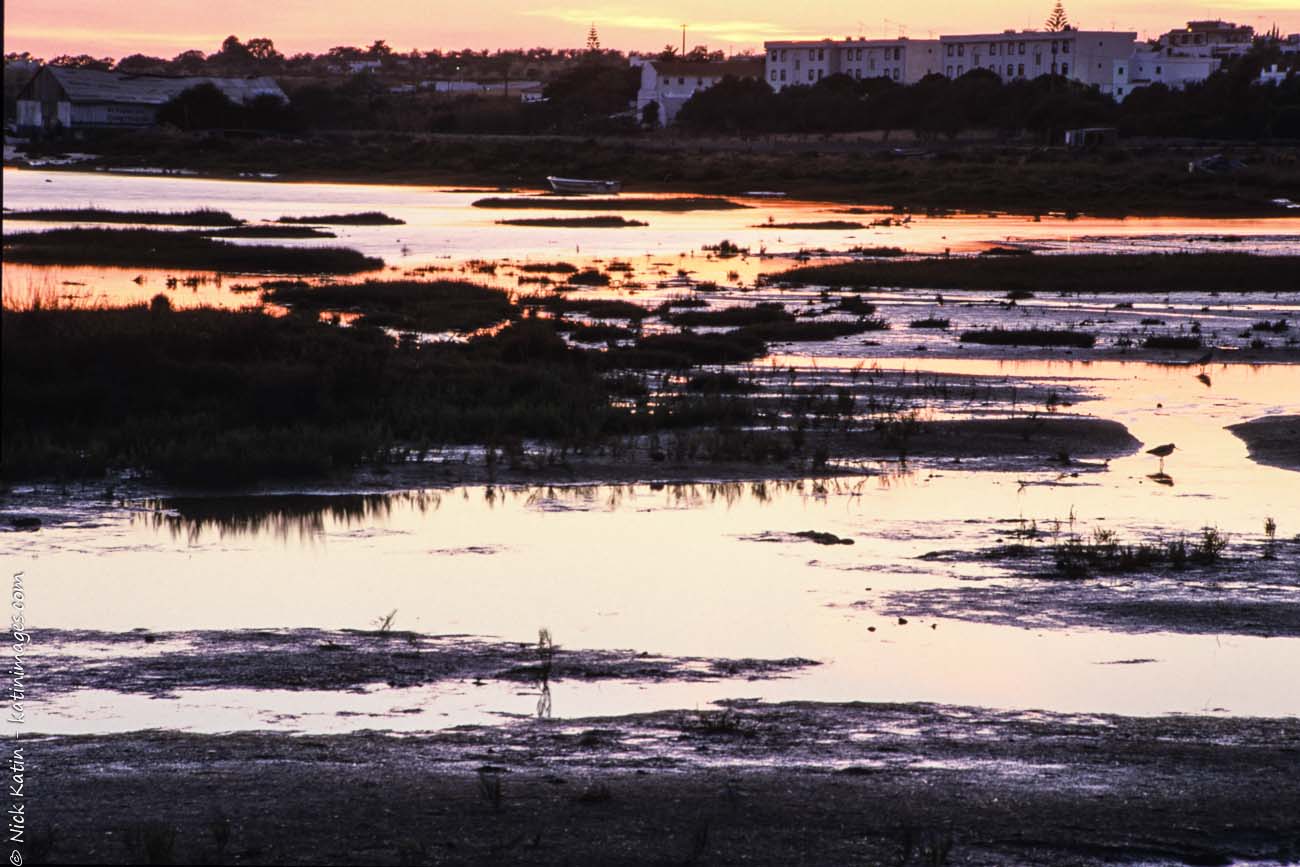
The Algarve region in Southern Portugal is a popular tourist spot for tourists looking for sun sand and good times.
But it has a quieter side as well particularly near it’s main town of Faro which is as Portuguese as it gets in this area.
Even though the area is well know for its sandy beaches and breathtaking cliffs, I couldn’t resist getting a different view of its coastline.
Coastal marshland at dusk near Faro in Southern Portugal
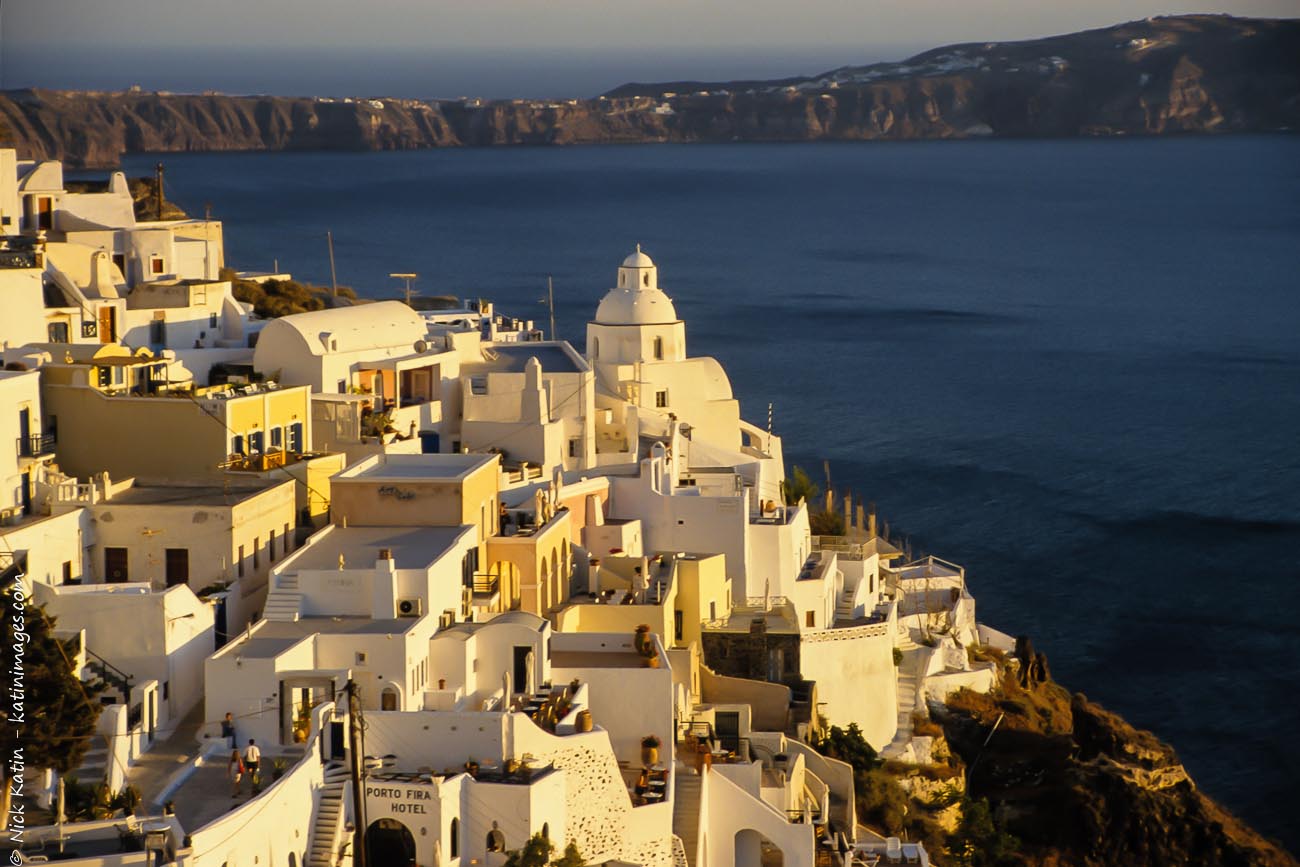
Everyone’s heard of Santorini and how it is one if not, the most beautiful of the Greek islands. Pictures, no matter how good, don’t do it justice.
The photo here of Fira the main town gives you an idea of its beauty.
Perched on top of a cliff overlooking the Caldera or volcanic ‘hole’ filled with sea water, it commands all before it.
Arriving by ferry is even more spectacular as you dock below Fira and then have to walk up the steep path to town. There are donkeys or mules that will transport you and your bags but I found that distracting from the whole experience of being there for the first time.
Can’t wait to go back!
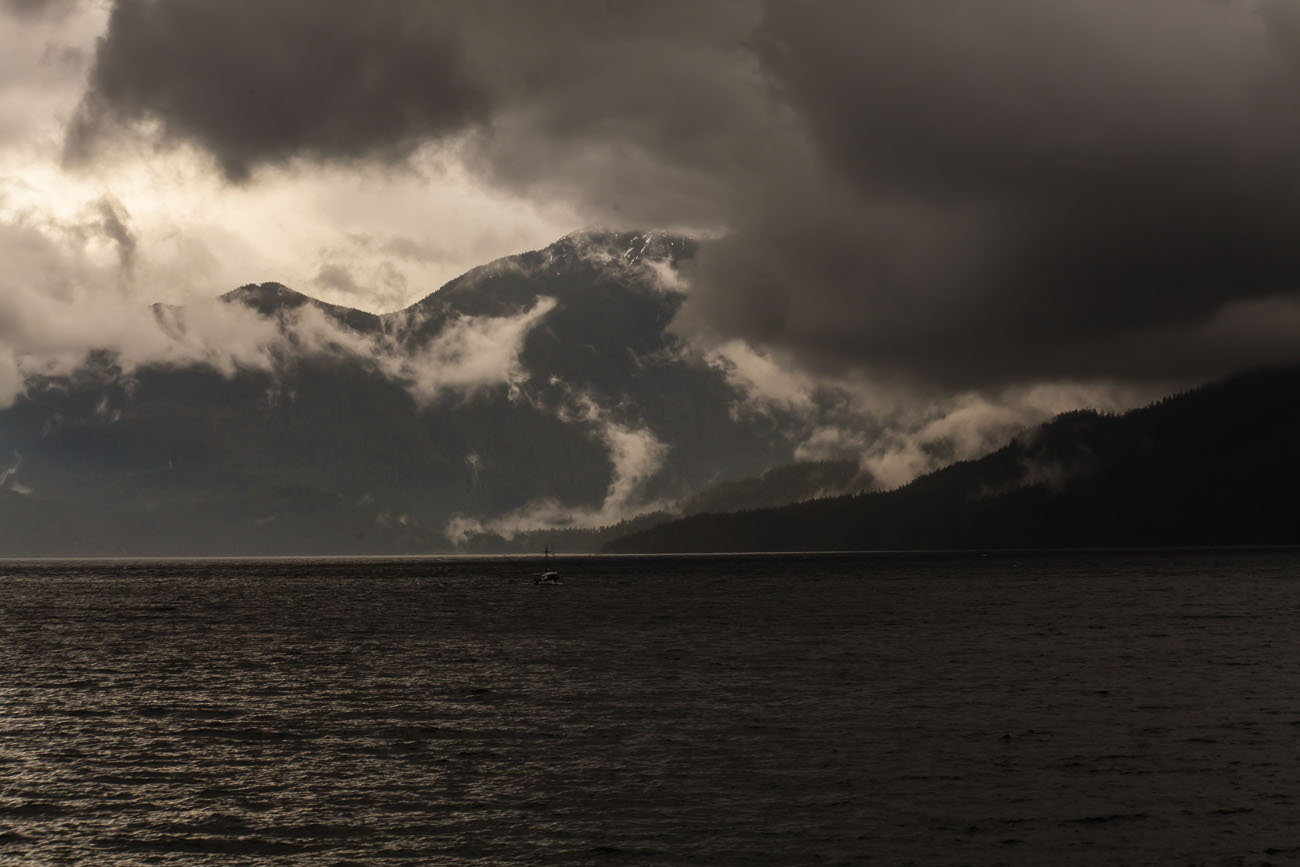
Last year I travelled the inside passage on the Alaska marine highway. Not on a cruise ship but on the ferry from Bellingham, near Seattle, to Alaska. More on that in the future. Came back with a lot of images which I am slowly working my way through. The weather was at best, pretty awful to begin with but it made for some interesting skies and scenery. This one is an example. Its not as it appears at first glance, black and white. 1/125 @ f11 100mm ISO100















 Katin Images Travel Photography