Katin Images Travel Photography

Travel Photos, Travel Photography Tips and Software

Tag: planning

  • Different types of Travel Photography

    Different types of Travel Photography

    In the previous post, “Introduction to Travel Photography,”
    I touched on the fact that there are several different types of travel photography.
    In this article we cover the different types and genres and how they apply to your future travels

    So, let’s go into more detail.

    The best way I find, is to break it down into destinations. By doing that you are preplanning what skills you need to learn or refresh for your upcoming or future trip.

    Let’s take an easy one. Europe

    What do we travel to Europe for?

    These are a few reasons:

    History
    Food
    Landmarks
    Landscapes
    Activities
    Sporting Activities
    Language
    Drink

    So each of these reasons will correlate to a different type of travel photography.

    Let’s take history:

    Interior shots of museums, Churches, Palaces and galleries are a few examples.
    To get some good shots you would need to get comfortable shooting in low light. By learning how to do this and how your equipment will perform will enhance your photography.

    Another genre for History would be architectural.
    Shooting some of the worlds’ most impressive buildings like Saint Peter’s at the Vatican are a must if you are travelling to Rome.

    Then of course there are battlefields from different wars over the ages.
    From Gallipoli to the Battle of Hastings to the trenches of World War I in Belgium. Most of these would be landscapes.

    We now have the theory behind using destinations to think about different types of travel photography.

    Destinations and different types of Travel Photography:

    Europe

    Landscapes, Architectural, Interior, Festivals, Lifestyle, Food and Drink, Street

    North America

    Landscapes, Architectural, Lifestyle, Nature, Wildlife, Street, Food and Drink, Wilderness

    Cowboy on bench In Santa Fe's plaza, New Mexico, USA
    Cowboy on bench In Santa Fe’s plaza, New Mexico, USA

    Asia

    Street, Food and Drink, History, Landscapes

    South America

    Landscapes, Architectural, Lifestyle, Nature, Wildlife, Street, Food and Drink, Wilderness

    Antarctica

    Wilderness, Landscapes

    Africa

    Wildlife, Landscapes, Street, Food and Drink, Wilderness

    Australia and New Zealand

    Nature, Landscapes, Street, Food and Drink, Lifestyle, Wilderness. Wilderness could be considered a part of Landscape. Yet there are some specific challenges that need to be considered when you are out in the remote areas.
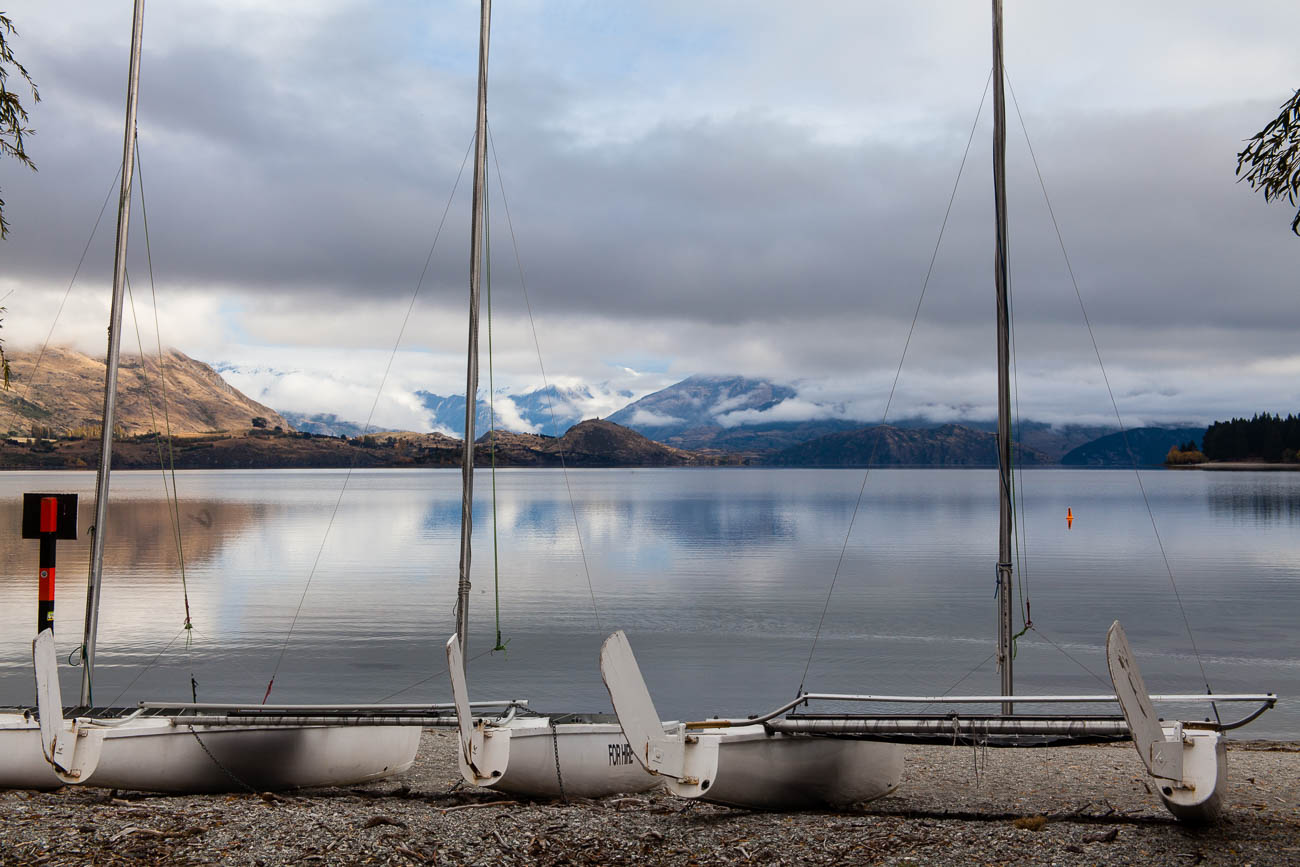
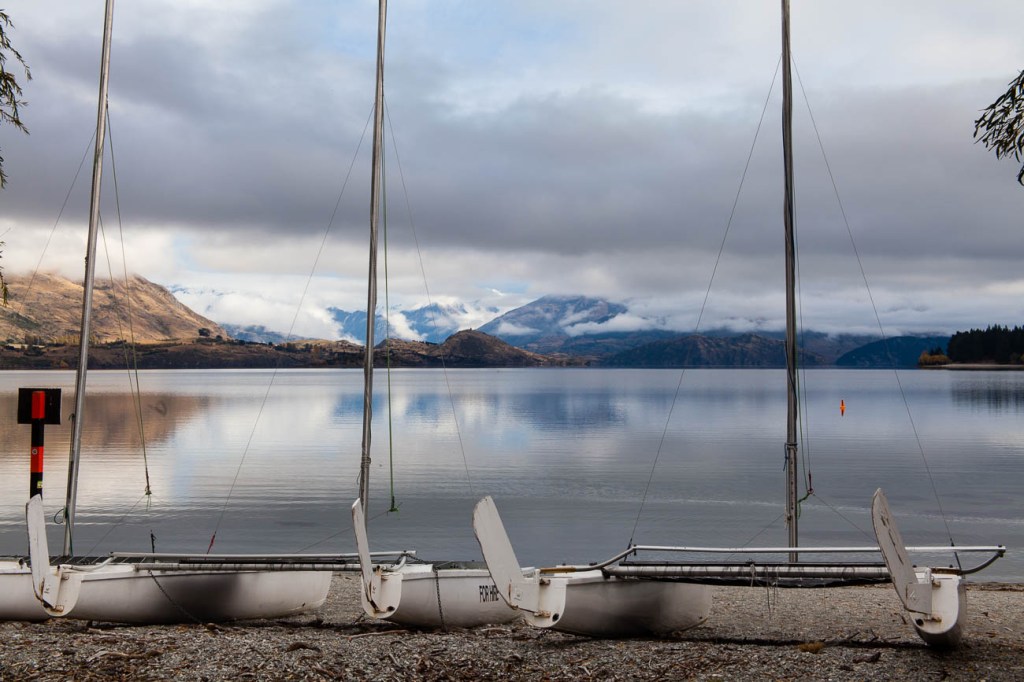
    Lake Wanaka New Zealand
    Lake Wanaka New Zealand

    I’ll go into more detail in future posts.

    But the trick is to look at the destination and then decide what sort of images are available and what you would like to take.

    For instance, if you were travelling to France, you may decide that you don’t want to take photos of the landscape as you are only going to be in a couple of cities like Paris and Lyon.
    But even in cities there can be opportunities to take landscape photos e.g. Jardin des plantes des Paris – the Botanical Gardens of Paris

    Choosing what to shoot

    As you can see there are many different types of travel photography.
    But what if you want to choose a few main ones? Which ones should you choose?

    Well if you go back to the list you can see a few that reoccur. Landscape, Architectural and Street are three that would set up any budding travel photographer with the building blocks to improve and learn new skills.

    It also depends on interests.
    If you are an outdoors sort of person and you intend spending time at travel destinations with wild open spaces then you may wish to concentrate on Landscape, Wildlife and Wilderness.

    Genres

    Breaking down these different types of travel photography into subjects is also useful:

    Landscape
    Mountains, Snow, Ice and Glaciers, Deserts, Coastal, Forests, Water,

    Wilderness
    Similar subjects to Landscapes. As I mentioned before, it’s not so much about the subjects but more about the logistics and specific challenges i.e. Extreme temperatures, Remoteness etc.

    Street
    Portraits, Daily Life, Streetscapes, Local Interactions, Traffic and Transport, Street Art

    Architectural
    Interiors, Building detail, Urban Landmarks, Skylines

    Nature
    Flowers, Forests, Lakes, Rivers, Weather, Sun and Moon

    Wildlife
    Animals, Insects, Birds, Reptiles, Marine Life, Habitat

    I could break down these genres and destinations even more but I don’t want your eyes glazing over.
    Just as you would plan your travel or holiday experience you also need to plan your photography beforehand.
    Working out what photos you will have the opportunity to take and which ones you want to take, will not only help you enjoy your experience but also bring home some ‘awesome’ photos.

    Summary

    So you can see that there are lots of different types of travel photography. These can be classified as genres but also working out what types of photos you will be taking at your destination plays a big part.
    Some of these genres e.g. Wilderness also have other challenges not necessarily related to the act of taking a photo.

    Research and Planning is essential

    But remember, if this feels too overpowering you can always just select some or one area to specialise in to begin with.

    Any questions then please contact me here 

    Feel free to share this to your social media of choice

    Just click on any of the images for a larger version and for other options

  • The Travel Photographer Destination Guide Part Two

    The Travel Photographer Destination Guide Part Two

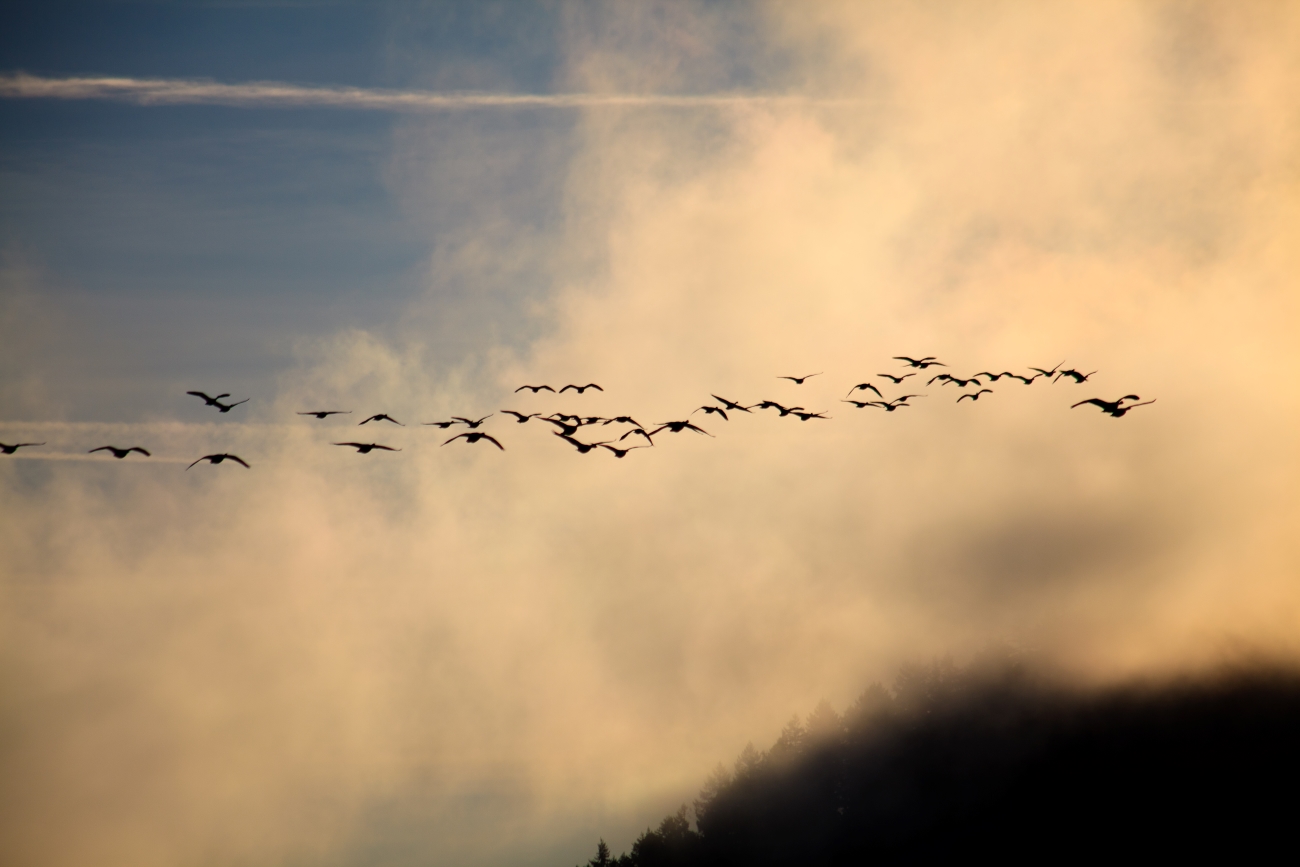
    Canadian Geese on the Umpqua river near Reedsport, Oregon, USA. Click on the image for a larger view


    In a recent post I discussed the Planning and Preparation for Travel Photos. Now we need to work out what we are going to do when we get there, hence The Travel Photographer Destination Guide Part One

    So let’s get into The Travel Photographer Destination Guide Part Two

    Reconnaissance

    As soon as you get there you should familiarise yourself with your destination. You can start this as soon as you start to travel to your accommodation or first stop.

    Talk to your driver about where you are and what areas you are passing through.

    Ask what the weather is going to be like during the time you are spending there.

    And don’t forget to work out where the sun sets and rises.

    Of course, a lot of this info is available online or via an app but there’s nothing like getting it from the horse’s mouth.

    Other information sources

    There are other important sources of information like the hotel reception or concierge.

    Then there are libraries and tourist information centres.
    Tour operators can be a huge resource of information. Even you are not going on a tour they will have flyers that details their itineraries. I’m currently planning a tour of Japan using an ad from a tour operator that has details on all the places on the tour.

    A great way of finding out where there are some great places to take photos are newsagents or souvenir shops. They almost always have postcards and calendars of the local areas
    Browse through them and take a note (it may have to be a mental one) of which places interest you and the photos taken.

    Not only are you on the lookout for places to photograph, don’t forget events like festivals, markets, shows, exhibitions etc.
    Some of these may not be advertised, so you need to ask around wherever you are.
    Places like coffee shops will have flyers or posters for what’s on.

    Some towns and cities have a free newspaper that are for events. For example, in Perth we have the X-Press that comes out once a week and has details of all the music events happening.
    And speaking of papers, most places still have community and mainstream print newspapers and magazines.
    Remember just because it’s not online doesn’t mean it doesn’t exist.

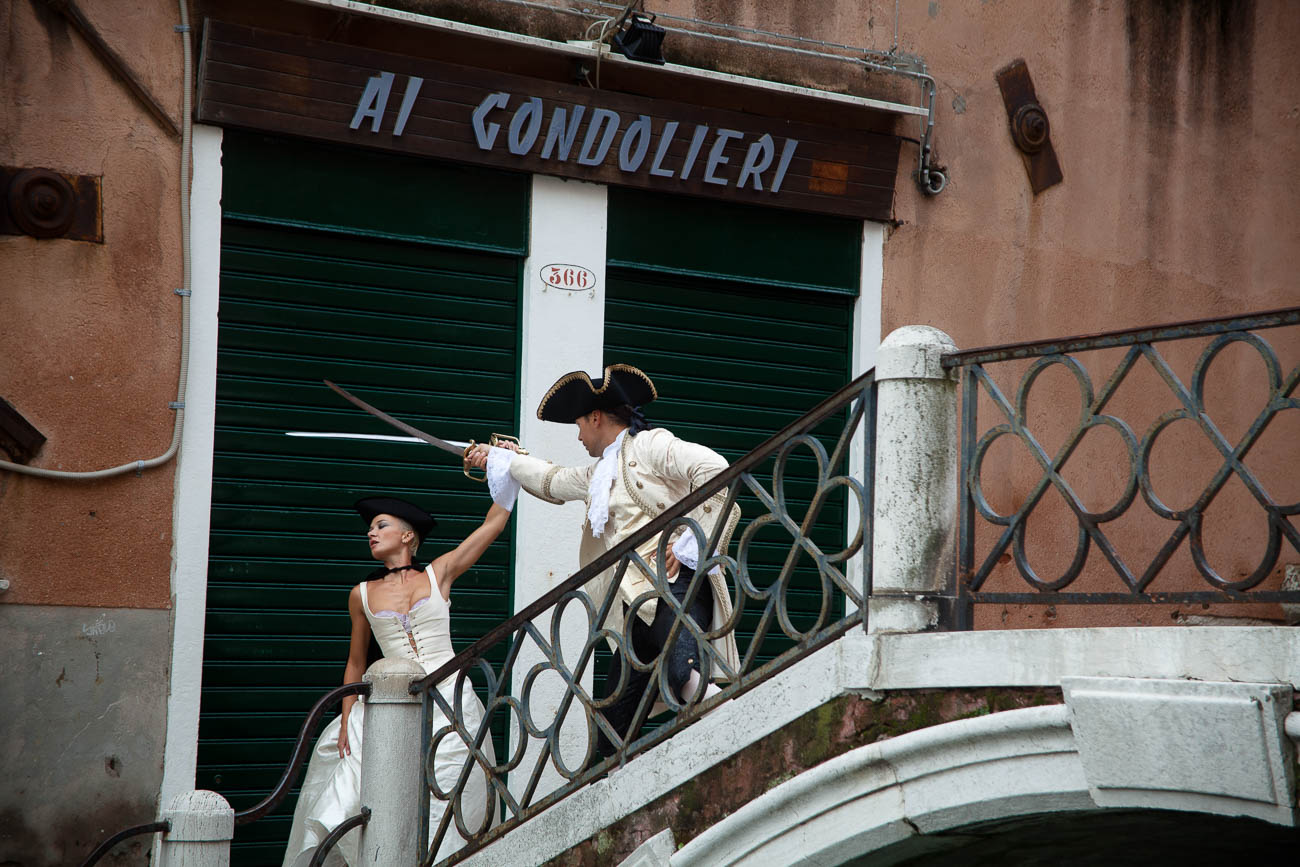
    Actors in costume in Venice.
    Actors in costume in Venice. Click on the above image to view a larger version and for other options
    Orientation

    Where practical it’s often worth doing a city walk tour or a hop on hop off bus to get you orientated.
    At the same time, you can take pictures along the way and then come back to specific spots with more time, later that day or at another time.
    Again, you are looking for opportunities to get some great shots. A tour will help you understand when’s a good time to capture some photos.
    If that’s too expensive and you’ve haven’t got wheels, then consider using public transport. There are often Bus or Subway routes that cover some of the major attractions.

    If money’s not a problem, a taxi or Uber is another option.
    Hiring a driver and a car can also be an option in some of the cheaper countries.

    Lookouts

    Another way of getting orientated is to track down vantage points like lookouts or viewpoints. Especially ones that overlook the area you are going to spend your time.
    Lookouts are usually but not always at the top of a hill.
    Some places have towers that have views.
    Often there are monuments built on high ground that offer some great views as well.

    You should be able to find out about these from your tourist literature or information office. However, sometimes they are not tourist spots and are for the locals. So, it may be worth asking, yes, you’ve guessed it, a local.

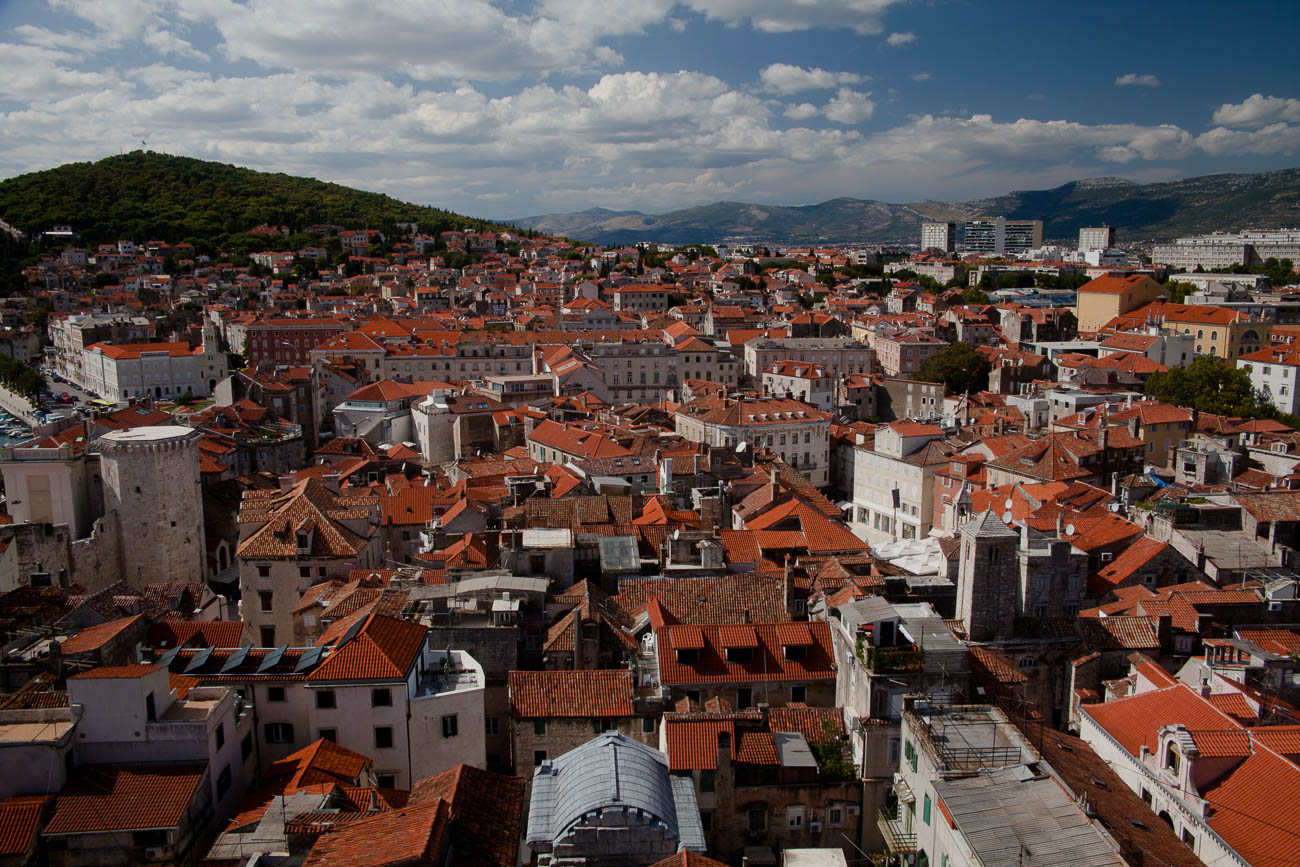
    Split, Croatia, from the Cathedral tower
    Split, Croatia, from the Cathedral tower . Click on the above image to view a larger version and other options

    Copyright

    Whilst you should have already done your homework on what icons have copyright restrictions, it’s worth double checking.
    Not everything on the internet is accurate or up to date.
    The last thing you want is a security guard or worse still, the police questioning you in public.

    Local culture

    Everywhere has its own culture. Whilst San Francisco may seem to be like Sydney on the surface, from a cultural point of view they are poles apart.

    Some cultures do not want you to take pictures of its citizens or icons. Make sure you know this well before firing away with your camera.

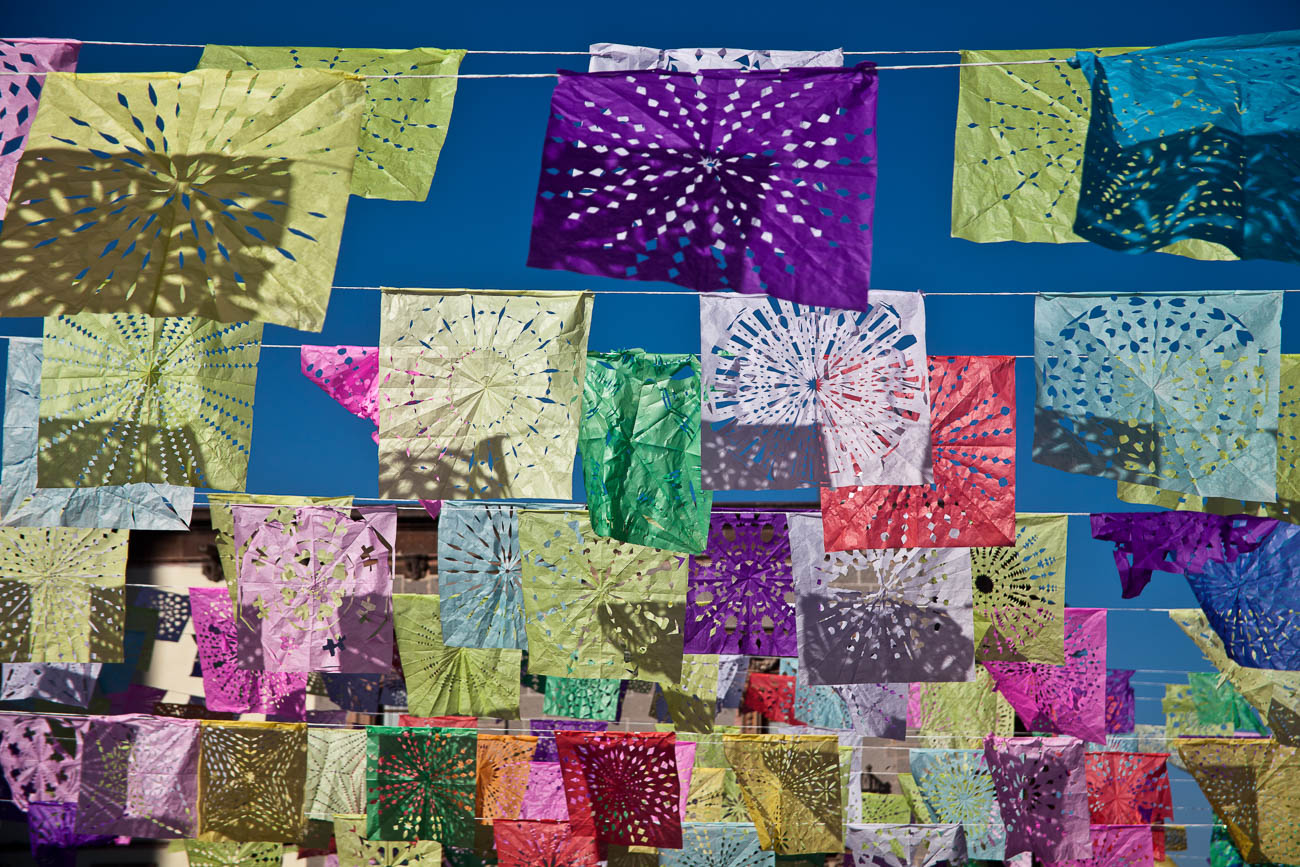
    Hanging festival Flags on the main street of San Miguel de Allende, Mexico
    Hanging festival Flags on the main street of San Miguel de Allende, Mexico. Click on the above image to view a larger version and other options

    Changing your plans

    This has no doubt happened to you as it has to me. You rock up to an iconic building only to find it’s draped in sheets because it’s being painted. Or it’s closed due to some restoration works.
    Last time we were in Dubai, there were four museums all closed, at the same time, due to renovations.

    Other issues can be a new road, rail, subway etc etc blocking off what you want to see.
    There’s not much you can do it about except be adaptable and flexible enough to change your plans at short notice.

    Sometimes these things can end up being a blessing in disguise. An alternative subject could end up being something much more photogenic and exciting.

    Having a routine

    In my Planning and Preparation for Travel Photos article I mentioned that you will need to take into account your fellow travellers.
    Whether they are family or friends and especially if they are not so enthusiastic about taking photos you need to involve them in your routine.
    So, having a routine is especially important with others around and is also a lot harder.
    There will be times of the day that you want to be out there snapping away. That may be late or early in the day to capture the ‘golden hour’ or to get some street shots. And that may well be the times of the day when your fellow travellers want to do something else.

    Before setting off

    Once you’ve worked out a routine, you need to ensure that you are always ready to go. Fluffing around trying to remember what you need to take with you when you go out won’t get you very far. It’s worth making a checklist of the items you need to have ready. One like this for instance:

    • Batteries charged from the day before
    • Memory cards backed up and replaced
    • Camera clean
    • Lens cleaned
    • Bag ready with all items
    • At least 16GB of memory ready to go
    • Cleaning cloth
    • Tripod
    • 24-100mm Lens
    • _ _ _ mm Lens
    • Settings on camera ready to go (more on this later)
    • Notebook and pen

    And that’s the basics. You could add in guide book, map and apps required downloaded.

    Setting off

    Having the camera ready to take advantage of any opportunity is essential.
    I will always have the lens on the camera that I think I will use.
    Additionally, I will also have the lens hood screwed on and the lens cap off with the camera turned on.

    Settings

    If you have been taking travel photos for a while you should have some standard settings for the type of photos you think you will take.
    As an example, if I were going to be walking around a city I would have my aperture set wide open e.g. F3.5 and the ISO set to auto.

    If I was going to take landscapes, then the aperture would be around f18 or above to get that long depth of field. The ISO would be set at 100 or 200 depending on the light conditions and I may even have a polarising filter fitted.

    As the Scouts say “be prepared”

    Taking care of you and your camera

    Your camera is precious but not as precious as you are. Be aware of your surroundings. Don’t step into the road to take photos without precautions.
    And stepping on people’s feet can often lead them to get pissed off.

    Trespassing is also something you need to avoid so that you are not wasting time in a police vehicle.

    And don’t forget your fellow travellers.
    Look out for them.
    Make sure you are not ignoring them.
    Get them involved even if they are not taking photos themselves. Everyone loves to see good photos so show them.
    No harm in showing off and there’s also no harm in asking for their opinion or advice either.

    But, yes, certainly take care of your camera.
    One thing I have learnt over the years is that lens scratch easily, cameras don’t like being dropped and electronics overall don’t seem to function better after getting wet.

    Back at the ‘ranch’

    So, you’ve had a good day! You reckon you’ve got some little rippers of photos and now it’s time to chill with a beer.
    Not yet!

    Just like the saying the sale isn’t finished until the moneys in the bank, the day’s photography is not finished until you’ve backed all your photos up at least every other day, if not every day.
    For this I am going to direct you to my article How to Back up your Travel Photos.

    Summary – Part two of Travel Photographer Destination Guide

    The first thing to do at your destination is a Reconnaissance, followed by getting as much information as possible.

    Orientation is also important and the best way to do that is to get up high and do some local tours either by foot or by bus

    Beware of local cultural and copyright sensitivities and restrictions

    Be prepared to change plans at a drop of a hat and don’t forget to include your fellow travellers, (especially your partner) in your plans

    It’s important to have a routine before setting off for the day. Make sure you have your camera equipment ready for use with all your settings back to your default for the type of photos you want to take.

    Out on location, be safe and be aware of your surroundings.

    Lastly, make sure you back up your photos at least every other night.

    Any questions? Please contact me here and/or please say hello at these places:
    Facebook: Twitter: Instagram: LinkedIn:

    Feel free to share this to your social media of choice
    Do you want to bring home great images from your travels? Want to stick ’em on your wall and share them?
    Sign up below
    be the first to get content that helps you with your Travel Photography

  • Different types of Travel Photography

    Different types of Travel Photography

    In the previous post, “Introduction to Travel Photography,”
    I touched on the fact that there are several different types of travel photography.
    In this article we cover the different types and genres and how they apply to your future travels

    So, let’s go into more detail.

    The best way I find, is to break it down into destinations. By doing that you are preplanning what skills you need to learn or refresh for your upcoming or future trip.

    Let’s take an easy one. Europe

    What do we travel to Europe for?

    These are a few reasons:

    • History
    • Food
    • Landmarks
    • Landscapes
    • Activities
    • Sporting Activities
    • Language
    • Drink

    So each of these reasons will correlate to a different type of travel photography.

    Let’s take history:

    Interior shots of museums, Churches, Palaces and galleries are a few examples.
    To get some good shots you would need to get comfortable shooting in low light. By learning how to do this and how your equipment will perform will enhance your photography.

    Another genre for History would be architectural.
    Shooting some of the worlds’ most impressive buildings like Saint Peter’s at the Vatican are a must if you are travelling to Rome.

    Then of course there are battlefields from different wars over the ages.
    From Gallipoli to the Battle of Hastings to the trenches of World War I in Belgium. Most of these would be landscapes.

    We now have the theory behind using destinations to think about different types of travel photography.

    Destinations and different types of Travel Photography:

    Europe

    Landscapes, Architectural, Interior, Festivals, Lifestyle, Food and Drink, Street

    North America

    Landscapes, Architectural, Lifestyle, Nature, Wildlife, Street, Food and Drink, Wilderness

    Cowboy on bench In Santa Fe's plaza, New Mexico, USA
    Cowboy on bench In Santa Fe’s plaza, New Mexico, USA

    Asia

    Street, Food and Drink, History, Landscapes

    South America

    Landscapes, Architectural, Lifestyle, Nature, Wildlife, Street, Food and Drink, Wilderness

    Antarctica

    Wilderness, Landscapes

    Africa

    Wildlife, Landscapes, Street, Food and Drink, Wilderness

    Australia and New Zealand

    Nature, Landscapes, Street, Food and Drink, Lifestyle, Wilderness. Wilderness could be considered a part of Landscape. Yet there are some specific challenges that need to be considered when you are out in the remote areas.

    Lake Wanaka New Zealand
    Lake Wanaka New Zealand

    I’ll go into more detail in future posts.

    But the trick is to look at the destination and then decide what sort of images are available and what you would like to take.

    For instance, if you were travelling to France, you may decide that you don’t want to take photos of the landscape as you are only going to be in a couple of cities like Paris and Lyon.
    But even in cities there can be opportunities to take landscape photos e.g. Jardin des plantes des Paris – the Botanical Gardens of Paris

    Choosing what to shoot

    As you can see there are many different types of travel photography.
    But what if you want to choose a few main ones? Which ones should you choose?

    Well if you go back to the list you can see a few that reoccur. Landscape, Architectural and Street are three that would set up any budding travel photographer with the building blocks to improve and learn new skills.

    It also depends on interests.
    If you are an outdoors sort of person and you intend spending time at travel destinations with wild open spaces then you may wish to concentrate on Landscape, Wildlife and Wilderness.

    Genres

    Breaking down these different types of travel photography into subjects is also useful:

    Landscape
    Mountains, Snow, Ice and Glaciers, Deserts, Coastal, Forests, Water,

    Wilderness
    Similar subjects to Landscapes. As I mentioned before, it’s not so much about the subjects but more about the logistics and specific challenges i.e. Extreme temperatures, Remoteness etc.

    Street
    Portraits, Daily Life, Streetscapes, Local Interactions, Traffic and Transport, Street Art

    Architectural
    Interiors, Building detail, Urban Landmarks, Skylines

    Nature
    Flowers, Forests, Lakes, Rivers, Weather, Sun and Moon

    Wildlife
    Animals, Insects, Birds, Reptiles, Marine Life, Habitat

    I could break down these genres and destinations even more but I don’t want your eyes glazing over.
    Just as you would plan your travel or holiday experience you also need to plan your photography beforehand.
    Working out what photos you will have the opportunity to take and which ones you want to take, will not only help you enjoy your experience but also bring home some ‘awesome’ photos.

    Summary

    So you can see that there are lots of different types of travel photography. These can be classified as genres but also working out what types of photos you will be taking at your destination plays a big part.
    Some of these genres e.g. Wilderness also have other challenges not necessarily related to the act of taking a photo.

    Research and Planning is essential

    But remember, if this feels too overpowering you can always just select some or one area to specialise in to begin with.

    Need some help with your travel photos?
    Enter your email in the box below and get content that’s not always posted on this site and a free guide to get you started

    Any questions then please contact me here 

    Feel free to share this to your social media of choice