Katin Images Travel Photography

Travel Photos, Travel Photography Tips and Software

Tag: National Park

  • African shoestrings – Namibia Day Sixty four – Waterberg Plateau Park

    Our destination was the Bernabe de la Bat Resort in the Waterberg Plateau Park  (which sounds a lot more romantic than it is) some 300 kilometres south. We planned to see a couple of sights on the way, Lake Otijikoto and the Hobo Meteorite. Lake Otijikioto is one of the only two natural lakes in Namibia.
    This important fact didn’t really make it any more interesting. It’s just a collapsed limestone cavern that later filled with water and the only things of interest was its aqua blue colour and the fact that at its deepest (estimated to be 55 metres) lived some rusting ammunition and artillery. In 1915 the Germans were retreating from the South Africans and decided that dumping their weaponry into the lake to prevent those nasty South Africans having it was a master stroke.

    At least the lake was just off the main road.
    Not so the Hobo Meteorite! According to the Lonely Planet it was about 25 kilometres west of Grootfontein, which was 63 kilometres east of Otavi making it 38 kilometres from Otavi and a 76 kilometre round trip for us as we passed through Otavi.
    Easy! Well no, it was not! In fact the turn off, which was extremely hard to find, is a 76 kilometre round trip but the Meteorite itself was a 160 kilometre round trip!
    I guess we could have accepted that had this great artifact from the sky been a sight that would change our lives or at least been mildly interesting. It looks just like a rock (its mostly iron) partially buried in the ground with a little bit of landscaping to make it look pretty. Sure there was some interesting information on a board nearby but nothing we couldn’t have looked up on the internet.
    “So what did you expect?” I hear. I’m not sure but it was a long way to go for a lump of iron. If it had been green kryponite that glowed and changed colour, or throbbed like something from Star Trek, I would have been happy. But this thing just looked like something that had been found in another part of the country and brought here to make some extra cash and piss tourists like me off!

    The Bernabe de la Bat ‘Resort’ is nestled in the shadow of the 50 by 16 kilometre sandstone Waterberg plateau that stands around 150 metres high.
    The campsites were sheer luxury, grass. We hadn’t had grass since Daan Viljoen. No dust to find its way into your sleeping bag at night or blow into the tent by day. It was terrific.
    We actually spent the afternoon of our only full day there cleaning the dust out of the car. Considering how small it was, it seemed to hold an awful lot of sand.

    In Australia a big proportion of retirees, buy a caravan and do the round trip around Australia, sometimes for months, sometimes for years. In South Africa they head North to Zimbabwe, Zambia, Botswana and Namibia. Namibia is generally favourite amongst those from the Cape Town area. Here at Waterberg, we met three couples up from the ‘Cape’ travelling in convey. They were extremely friendly and helpful (even hanging up our washing whilst we were out walking).

    Speaking of walking we followed the only decent length walk trail, outside of the couple of long distance trails, in the park to a spot called mountain view at the top of the plateau. It was not a long climb but it gave us a bit of a workout after the day of driving we had the day before. The views at the top were certainly worth it, we could see for miles across the scrubby plains interrupted by the odd decaying sandstone hill but probably the best view was of the plateau rim with its sheer sided red, orange and green rock and vegetation.

    If you like this then hit “follow” on the side bar
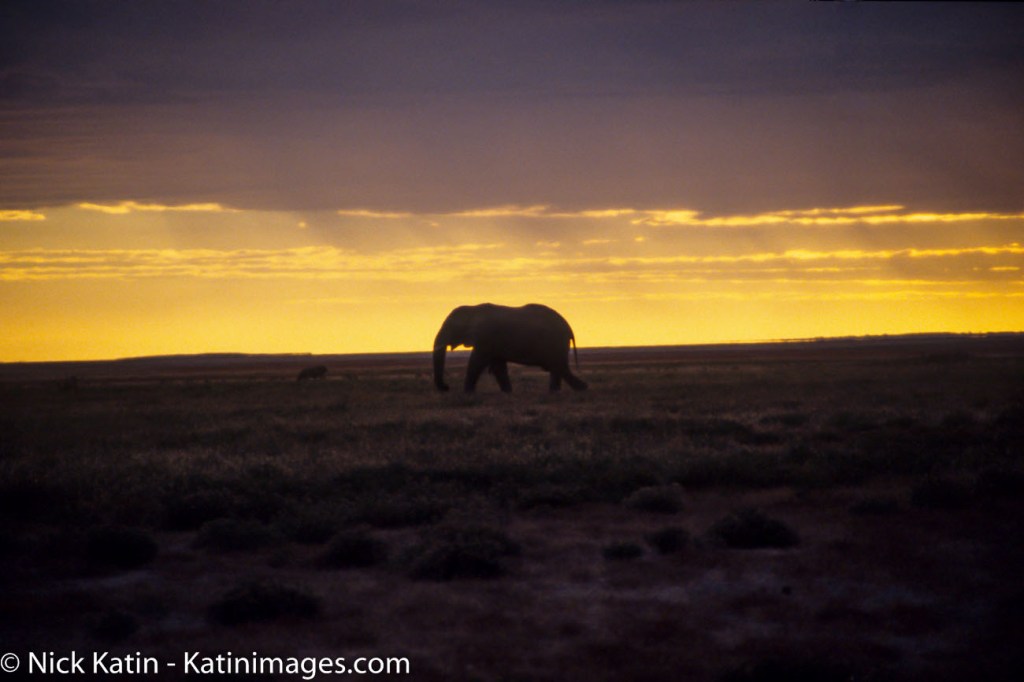
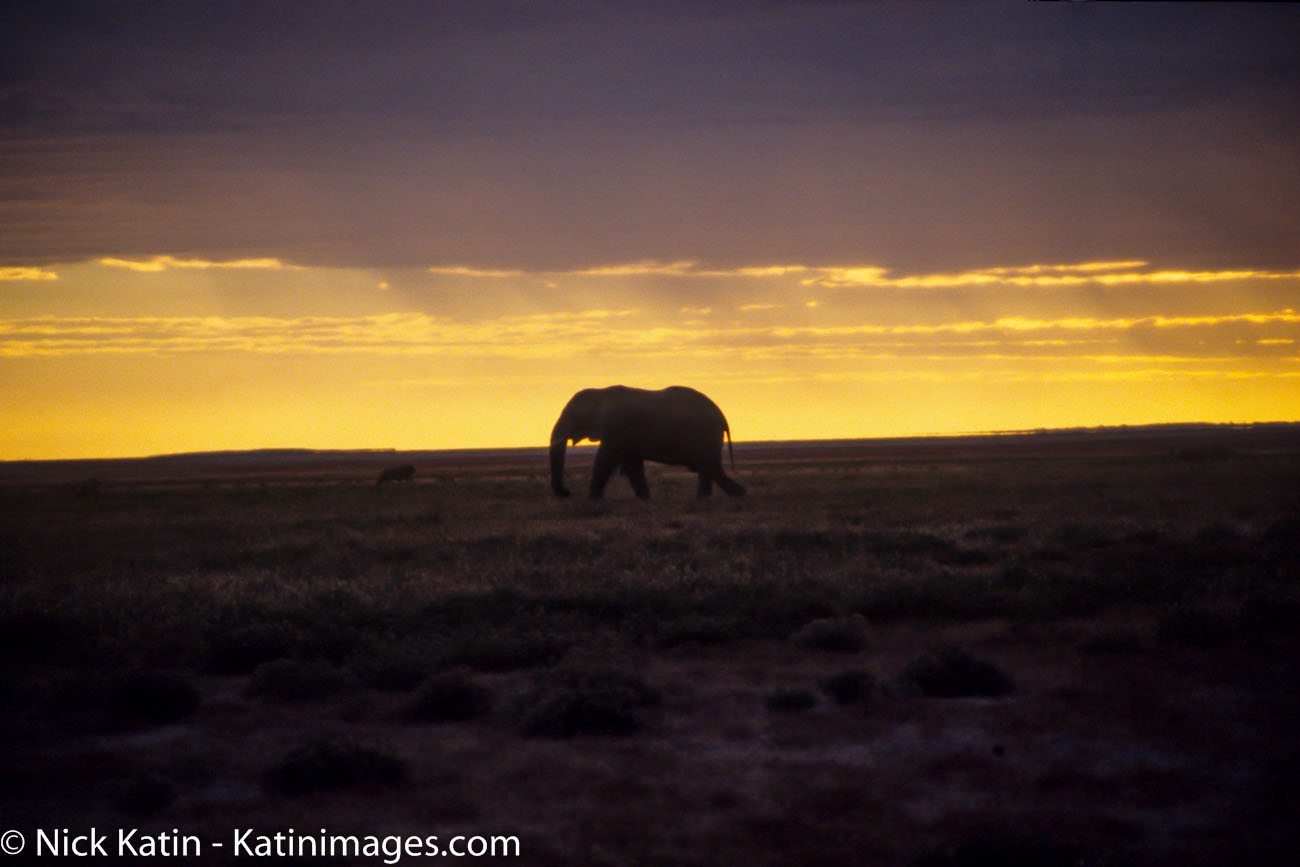
    An elephant strolling through the scurb at sunset in Etosha national Park, Namibia
    An elephant strolling through the scurb at sunset in Etosha national Park, Namibia


  • African shoestrings – Namibia Day Sixty three – Etosha NP

    We now on our way to Halali, the next rest camp that was 70 kilometres away, which should only have taken us around hour but this place was teeming with animals. Every waterhole had an abundance so we didn’t end up getting there until after midday some 4 hours later!
    This wildlife viewing slows you down!
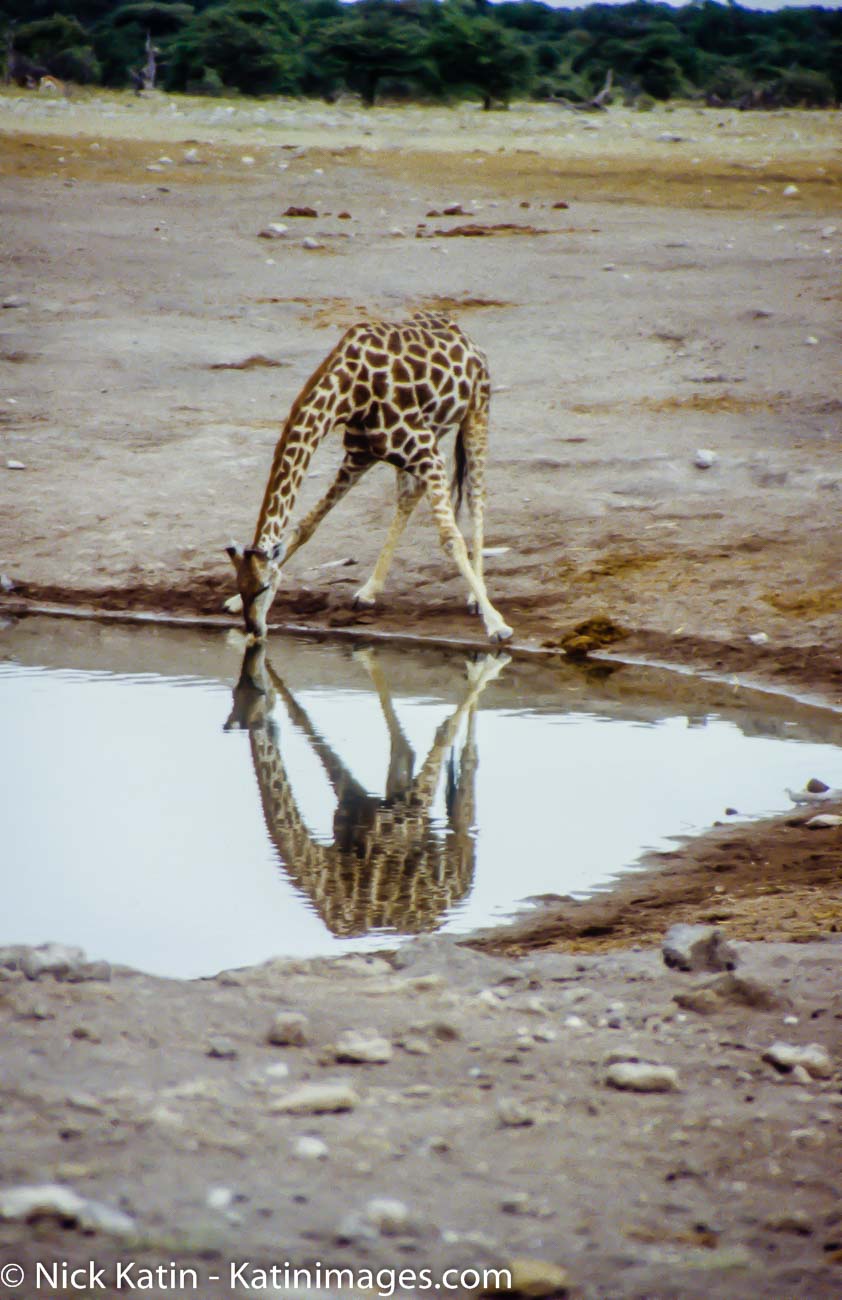
    But how can you hurry when a big herd of elephants turn up at waterhole that you’ve been watching for a few minutes or two or three giraffes bend over, legs splayed, to have a drink.

    At Halali we were back to camping after the dubious luxury of a chalet at Okaukuejo. It was fine, a bit dusty but there weren’t many other happy campers, so it was quite quiet.
    That was until an overlander with at least 20 people hanging off it parked next to us. Needless to say we didn’t get much sleep that night.

    Halali also had its own waterhole and that evening we saw a three black rhino again. We tried to work out whether it was the same three we had seen at Okaukuejo the previous evening. It seemed almost impossible that three rhino (one was a baby) would walk 70 kilometres in a day but who knows! As they lapped away at the water, a lioness and a couple of hyena appeared. They didn’t hang around long! One of the rhino continually went for them so that eventually they got the hint that they weren’t welcome to join the rhino family for a drink.

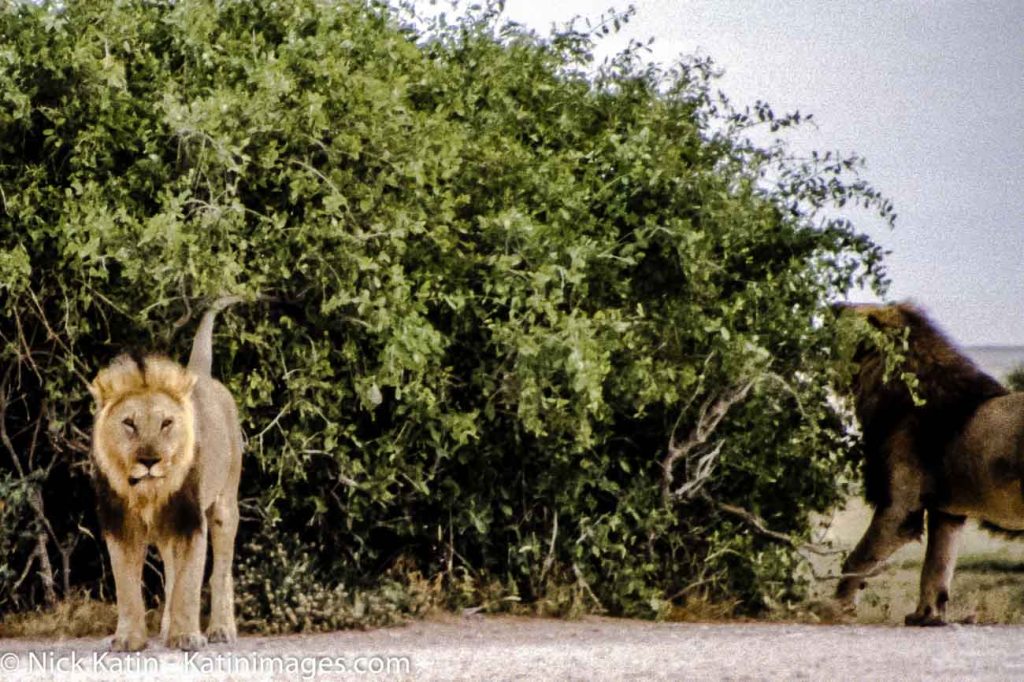
    Our morning game drive yielded more lions again. How boring! There were three males strolling down to Salvadora waterhole obviously thirsty and possibly hungry. We hung around for a while but they just found a shady tree and slept.
    Lions actually sleep or rest for around twenty-one hours a day, leaving just three hours to hunt and eat. It’s a little known fact that they actually have a very low kill hit rate but one decent kill can last them for almost a week. Of course these three guys probably weren’t thinking too much about actually hunting that’s a predominately female occupation. They actually looked like they were having a boy’s day out, a bit of strutting and a few drinks and whole lot of sleep.

    We had the same distracting problem getting to Namutoni the last of the rest camps in the afternoon, which again is 70 kilometres away.  Elephant, giraffe, gemsbok, etc all appeared from time to time at different water holes.

    Namutoni is home to the rather out of place Namutoni fort; a relic of German colonial days. Built in 1899 as an outpost for troops to control the Owambo people, it’s now tourist accommodation. In 1904 seven soldiers faced the impossible task of defending it against 500 warriors, needless to say they didn’t succeed.

    Namutoni had its own waterhole but for some reason it’s not as popular with the animals as the others at Okaukuejo and Halali, even though it’s a lot more picturesque. Still we couldn’t really complain we had seen a cheetah close up and fifteen giraffe on our late afternoon game drive earlier.

    It was time to leave Etosha. It really was an experience and great value for money in comparison to some of the other game parks in Africa. US$22.00 per day for a chalet and US$13.00 per day for a camp site including all the game viewing you can cram in during daylight hours is pretty good. Especially when generally speaking there’s so much game around.

    If you like this then hit “follow” on the side bar

    A giraffe takes time out to have a drink at a watehole in Etosha National Park in Namibia
    A giraffe takes time out to have a drink at a watehole in Etosha National Park in Namibia
  • African shoestrings – Namibia Day Sixty two – Etosha NP

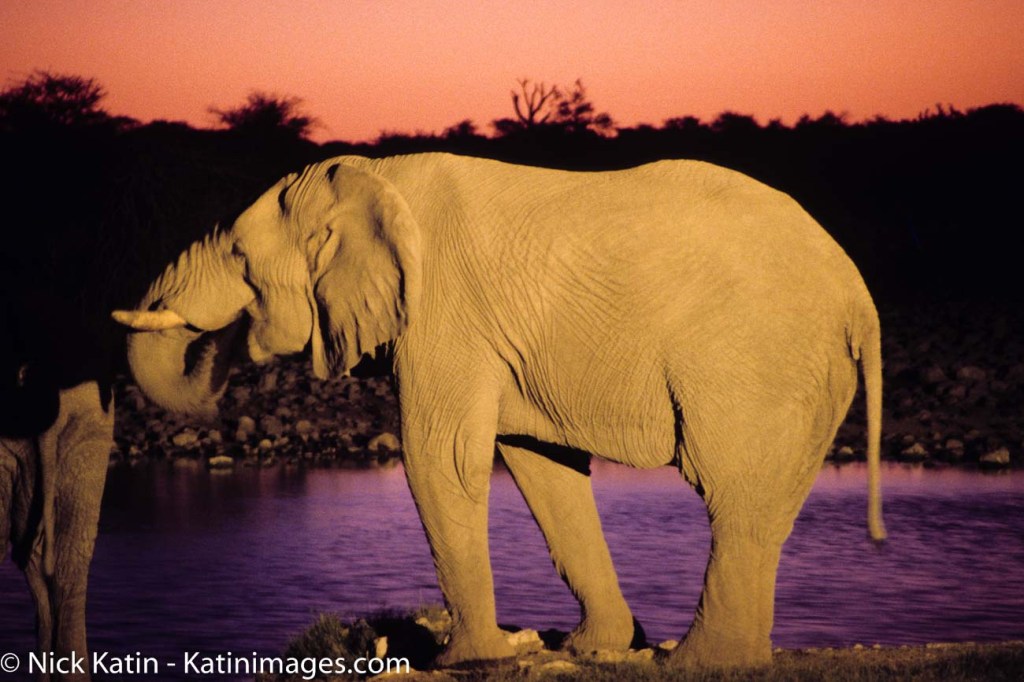
    Back at the camp we found a couple of seats by the illuminated camp water hole and waited for the show to start. As darkness came so did a herd of thirsty Elephants. They drank like there was no tomorrow. We thought that they would suck the water hole dry. But suddenly they all stopped and led by the boss bull all fifteen including five babies, trooped off, like a scene from Jungle Book, into the under growth and out of our sight.

    Later that night we were really privileged. Three black rhino sauntered down for a drink. Why were we privileged? Well the black rhino is probably the most famous endangered species in Africa. Due, mainly to poaching, there are a little over 3000 left after having a population of 60000 in 1970. It’s not my place to explain the mechanics of why these powerful beasts are exterminated ruthlessly for their horn so that the ‘misguided’ population of some Asian nations can use it for medicinal and aphrodisiac purposes. Nor is it my place to explain why the Yemeni insist that they must have daggers made of rhino horn.
    Suffice to say that due to both of these stupid ignorant beliefs a few ruthless businessmen make a fortune out of having a beautiful animal virtually wiped out from the surface of this planet and that sucks!

    Black rhino are also one of the ‘big five’. These five were the most prized ‘scalps’ by game hunters and if you think that’s just a relic of the past, then think again, there’s still plenty of opportunities on private land for game hunters to shoot defenseless animals for ‘sport’.

    Now the ‘big five’ are sought after for the best viewing. The other four are lion, leopard, buffalo and elephant and on that particular day we had seen three of them.
    For those of you thinking of game viewing in Africa, don’t knock yourself trying to see this group of animals. There is plenty of other wildlife to be seen that are just as enjoyable to watch. Game viewing is not a serious of ticks on a ‘to see checklist’ but an opportunity to watch Mother Nature at it’s wildest best.
    Anyway that’s enough winging and preaching for now.

    The next morning there was wildlife everywhere!………….. Giraffe, zebra, hyena, red hartebeest, impala and kudu to name just a few and then on then way back a huge bull elephant just ambling across the road just a few metres in front of us. It occurred to us at the same time that elephants have been known to charge if spooked, if this baby had turned on us this little ‘Chico’ would have been scrap metal within seconds.
    Needless to say I had the gear stick in reverse and the handbrake off, just as a precaution!

    The afternoon yielded different results. We went back to Okondeka hoping to see the same pride of lions. They were missing in action but what we did see was a male lion sitting in the shade of a thorny acacia tree, you know the ones, the trees that are shaped like an umbrella and are in almost every African sunset shot found in the glossy travel brochures.
    We didn’t realise that he was injured until he got up and strolled or rather limped away. We managed to follow him to his destination, a carcass that probably a few hours a go was live Zebra, going about his business of chewing a few blades of grass, before being brutally murdered for Monsieur lion’s dinner. Somehow the lion must have got injured during the kill, but that didn’t stop him chewing away and at the same time growling at the vultures and jackals who anxious to share the spoils.
    It was quite fascinating to watch. I felt like we were watching a discovery channel show!

    If you like this then hit “follow” on the side bar
    An elephant drinking at dusk at a camp waterhole in Etosha NP in Namibia
    An elephant drinking at dusk at a camp waterhole in Etosha NP in Namibia


  • African shoestrings – Namibia Day Sixty one – Etosha NP

    Before we left home the idea of picking up some casual work in Southern Africa had appealed. We emailed several lodges in Namibia and Botswana with no luck. However some of these lodges were quite helpful and invited us to drop in when we were in the area, hoping, of course, that we would stay as guests.

    One of these lodges was Camp Setenghi, who had an office in Outjo, the last decent sized town before Etosha. Wayne and Ilvia were genuinely friendly and interested in what we were doing and more than happy to offer advice with no strings attached. They still had no work and in fact warned us that it was illegal to work in Namibia without a work visa and that could lead to some unscrupulous employees taking advantage and basically ripping you off.

    We had actually already dismissed the idea of working in Africa. One of the pitfalls of middle age ‘backpacking’ is the fact that you are often parents as well. In our case our grown up sons were both working in London and we hadn’t seen either of them for quite a while. Working would have delayed any reunion, so it seemed a better idea to simply work for longer in England, where there appeared to be plenty of work and where we had no work visa issues.

    Etosha National Park is 22,000 square kilometres of animals!
    It doesn’t have the same international profile as Botswana’s Okavango Delta and Chobe, Kenya’s Maasai Mara or Tanzania’s Serengeti but it does have an abundance of wildlife that rivals any of it’s more famous counterparts.
    The name Etosha means ‘great white place’ after its main feature the mostly dry Etosha pan that is roughly 120 kilometres long and 72 kilometres wide and dominates the Park in area. Game viewing revolves mainly around the many natural and manmade waterholes that dot the southern edge of the pan. That’s not to say that game can’t be seen elsewhere, it’s just they’re the most likely spots.

    We stayed in a small chalet in Okaukuejo, the first rest camp. Each camp has a waterhole of it’s own and we were disappointed that our chalet with it’s hospital towels and décor wasn’t closer to it. But we soon forgot that and concentrated on the business of wildlife viewing.

    One of the beauties of Etosha is that it’s easy to self-game drive even in the little ‘Chico’. The roads are mostly gravel but are pretty firm so a 4WD is not required. As soon as we got settled in, we were off in search of wildlife.

    At the Okondelia waterhole there was an abundance. Zebra, Wildebeest, Gemsbok, Springbok, Jackals and the pièce de résistance, Lions, everyone’s favourite. We spotted one going for a kill and suddenly there were another seven, two females, one male and four young males, strolling down from the hill behind us towards the water hole to our front. Amazingly they just ambled around the five or six vehicles, that were all clambering for the perfect possie and photo, as if they weren’t there. One of them, a young male, got within 2 metres of the car and Sue nearly dropped the camera out of the window in her excitement.

    What incredible looking beasts they are, finely tuned, aerodynamically designed and perfectly shaped, they are nature at it’s handsomest. You can go to the best zoo’s in the world and see them up close but nothing beats seeing them on their own turf. In a zoo they are just a caged animal, here free to roam they are Lions! They have that spring to their step and sparkle in their eye. This is who they are!

    They all met up at the water hole for I suppose a bit of a sundowner. It was a great start marred only by some dickhead in a red Chico moving his car around to get a better shot at one of the other young males close to his car and frightening him in the process. He should have been dragged out of the car and literally thrown to the lions for dinner by the rest of us, who felt honoured enough just to sit still and experience mother nature at it’s best.

    If you like this then hit “follow” on the side bar

    Two lions hanging out together at Etosha National park in Namibia
    Two lions hanging out together at Etosha National park in Namibia
  • African shoestrings – South Africa Day Fourty seven – Kalahari

    On that subject, of food, these tours feed you well. Whether it is a budget tour like ours or a five star tour, the tour companies must drum into the tour leaders that the guests must eat. I can just hear them now “Never mind the spectacular scenery or the animals, the object here is for the tourists to eat at least three big meals a day, and if possible morning and afternoon tea and equally as important on time!”

    On one tour we did in Kenya the 4WD got bogged in sand in Lake Nakuru and despite our protestations our guide insisted that we get a lift with a passing vehicle so that we wouldn’t be late for lunch. It was a long lunch because he turned up 6 hours later, covered in mud from head to toe. We would have much rather stayed and given him a hand.
    In Uganda on a Gorilla safari we had a guide called Charles. Charles had a small straw picnic hamper that he spent a great deal of time arranging and rearranging after use so that all the crockery would fit in a certain way. Watching him go through this ritual for the first time it, was merely amusing, by the time we had our last morning or afternoon tea it was all we could do to prevent ourselves from breaking into absolute hysterics, as he fastidiously and obsessively arranged everything first one way then another until satisfied and then sighed, contented with his final arrangement. What didn’t occur to him was that we could have quite happily saved him all this pain and skipped morning and afternoon tea!

    Strangely enough most tourists remember the food they have on these trips more than the experience they had! How often do you hear “Oh and the food was wonderful/crap”
    Maybe the tour operators have a point!

    We had some unwanted visitors that night. Jackals, like the baboons in Golden Gate come in darkness and scavenge anything they can get at. We weren’t affected but a group of school kids who were sleeping under the stars had a torrid time as the jackals ran off with all their stuff and scattered it around the camp or worse took it into the bush.

    The next day was our last of the tour and that meant heading back to Upington, 160 kilometres away, 60 on gravel, slowly at first so that we could search for any game. But once again it appeared that the script had been ignored. We were all now thoroughly depressed and ready to give up.

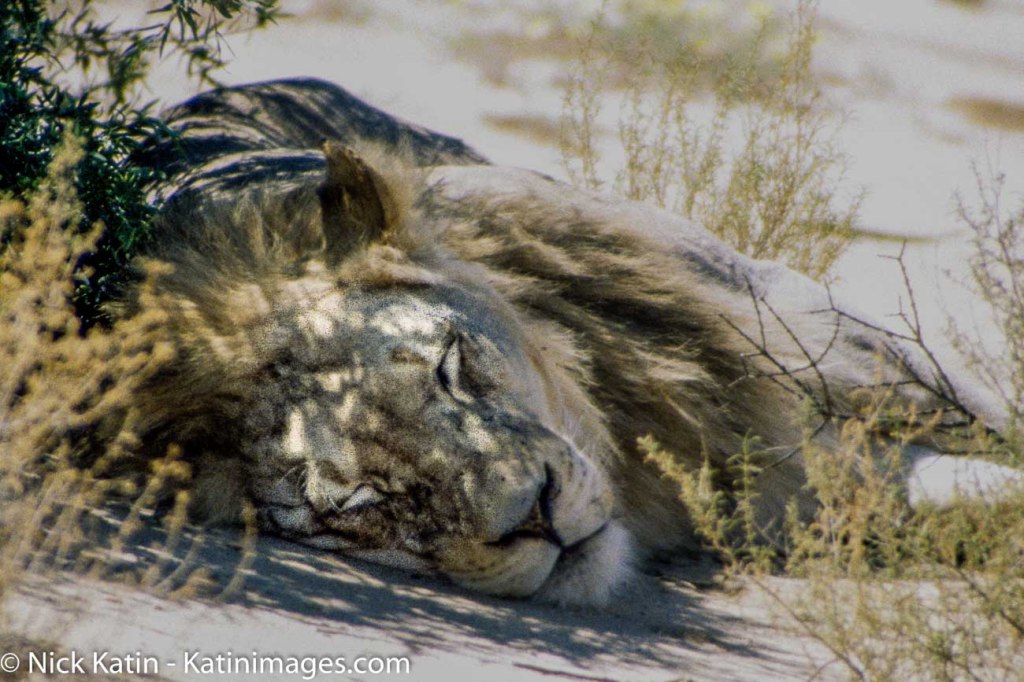
    Suddenly by the side of the road Roland exclaimed “Lion”. Sure enough right by the roadside lay two male lions asleep under a small but shady tree. The lions of the Kalahari are meant to be amongst the biggest in Africa and sure enough after seeing them up close, I can see why. They were big! They didn’t really entertain us apart from one of them standing up, moving 5 metres and plonking himself down again with a heavy thud before going back to sleep. But we didn’t care we had finished on a high and all of us had a bit of a smile on the dusty journey back to Upington.
    Mind you I think Rolands smile was more one of relief than joy. He had, at the beginning, dangerously bragged about how much game we would see in the park and felt personally responsible for any success or failure. Not that he should have done. Game watching is a bit like trying to win at the races; you can study the form but in the end it’s pretty much out of your control.

    If you like this then hit “follow” on the side bar
    A lion sleeps in the shade of an acacia tree in the Kalahari national park on the border of South Africa and Botswana
    A lion sleeps in the shade of an acacia tree in the Kalahari national park on the border of South Africa and Botswana
  • African shoestrings – South Africa Day Fourty six – Kalahari

    A night drive is a game drive, obviously, in the dark; well it was really in twilight as we set off just before sundown. The idea is to see lots of animals big and small as they cruised around in the coolness of dusk and then stop for a sundowner in the middle of nowhere. As it got darker so our reliance on the two spotlights grew and of course the obvious happened one of them blew. So the ten of us on the drive all had to squint into the dark to spot anything.
    We did actually see quite a few animals. But of course we didn’t see any of the more popular ones like lions, cheetah’s etc.

    Back at the camp we ate one of Roland’s culinary masterpieces under the light of plastic drink bottle covered candles.
    Now was the time for that beer as we got to know each other better.
    Simon & Hannah had just left school and were doing a bit of travelling before starting University in England. Alex, was visiting rellies in J’burg and I got the impression that they had shunted her onto this tour to get her out of their hair, she certainly was a little temperamental. Michelle was the quiet one. She had finished her Peace Corp stint in northern South Africa and this was her last days in Africa. Despite her quietness and the fact that she was American she had a great sense of humour. Well I think she did, she laughed at all my jokes.

    The tour kept rolling on, our next stop was the camp at Mata Mata, 127 kilometres north on a gravel road. The idea was to take it slow, have brekkie and lunch on the road and do a game drive at the same time.

    Well we saw heaps!

    Cheetahs and lions in the distance, black backed jackals, cape foxes, steenbok, gemsbok, wildebeest, springbok (these last our all from the antelope family) and the quaintly named long legged big bird, kori bustard.

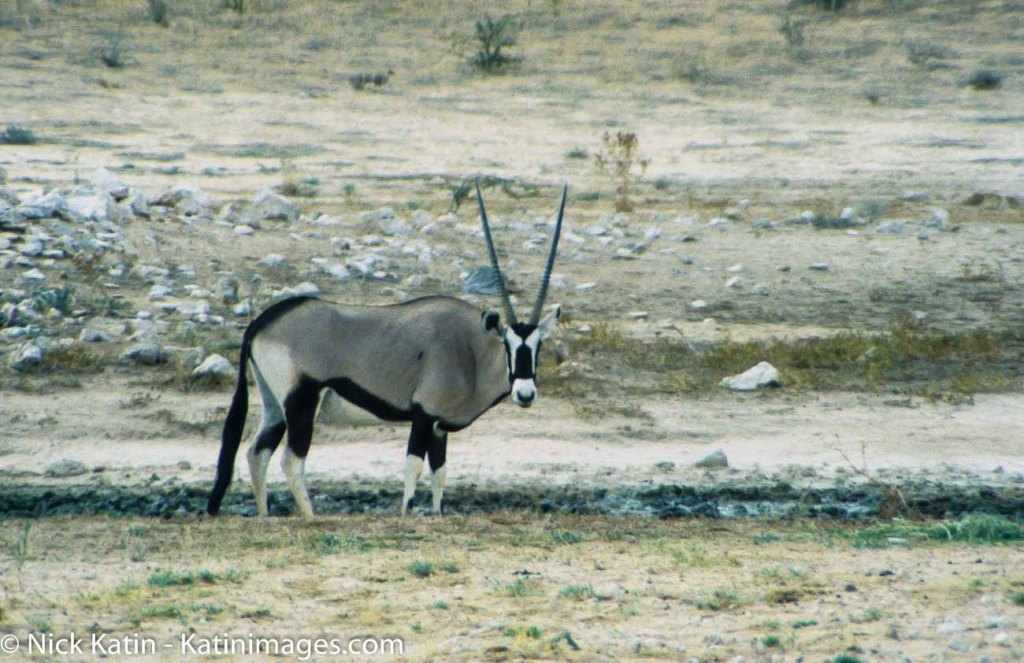
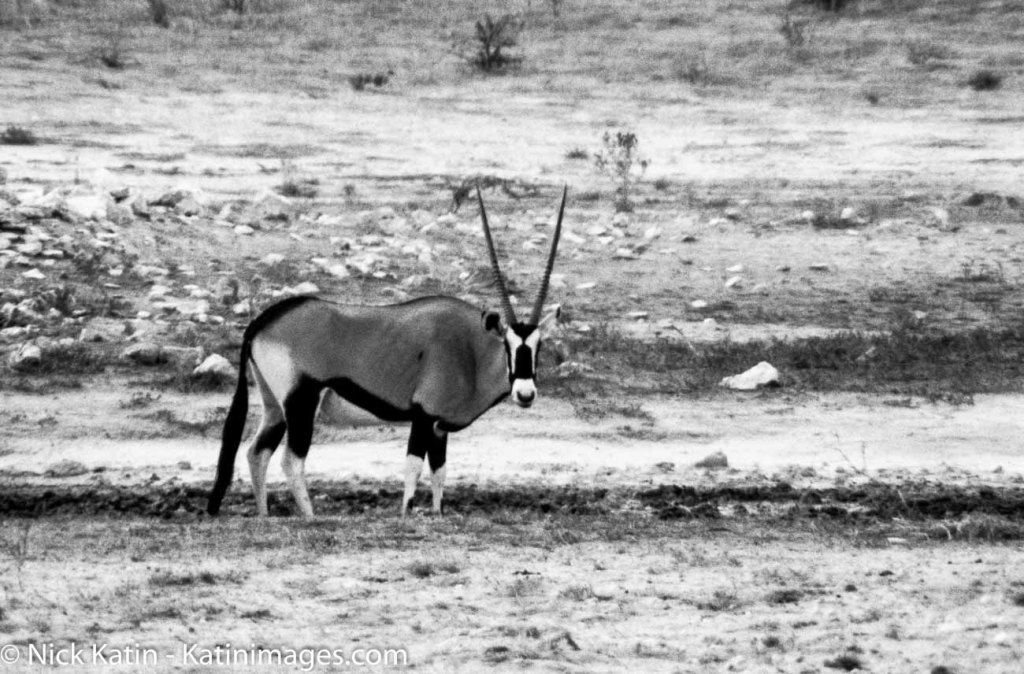
    The park was named after the Gemsbok, being quite common in the Kalahari. It’s a big animal at around 1.2 metres tall with striking fawn grey flanks, black legs and tail and metre high pointed horns. In my humble opinion, this is the most beautiful of all the antelope species found in Africa.

    The next day was pretty much the same format, as we drove on to Nossob, the last of the three camps, except the little critters must’ve sent out the message via the desert telegraph to hide when ever we came on the scene, because we saw virtually nothing.

    Nossob like Mata Mata was more basic than Twee Rivierien, but it did have an animal hide. Once again the animals didn’t read their scripts properly and forgot to come and see us. So we had to gain our entertainment from Roland who was busy being his industrious superhuman self. He was cooking spag bowl and fixing three punctures all at the same time. That night he told us stories of rangers cutting off their limbs to save their own lives after a predator attack in the bush. How he caught tick bite fever and was hospitalised for 9 weeks and how he had just recovered from a bout of Malaria which was really bad that year and had resulted in many deaths in central and eastern parts of South Africa. I think he has the philosophy of “never bugger up a good story for the facts”.

    Fortunately he told us these stories after we ate!

    If you like this then hit “follow” on the side bar

    A Gemsbok in the Kalahari national park
    A Gemsbok in the Kalahari national park
  • African shoestrings – South Africa Day Fourty five – Kalahari

    The Kalahari Gemsbok Park is the South African section of one of the largest protected areas in Africa. The other section being the Gemsbok National Park in Botswana together they contain two million hectares of dry semi-desert and desert land. Incredibly this area supports nineteen species of predators, 215 species of birds, countless antelope and the odd bushmen.

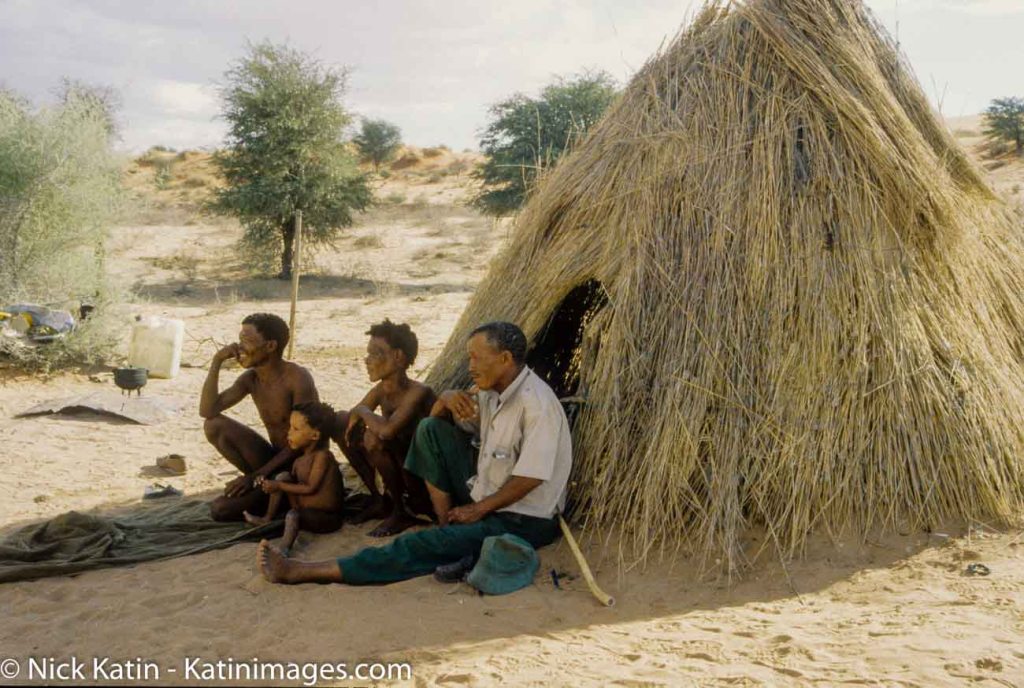
    Like most we had heard of “the Bushmen of the Kalahari” mainly through that crazy movie “The Gods must be Crazy”. To actually come across one, in fact a family, living (to a certain extent) how their ancestors did over many centuries was somewhat sobering.
    We came across them on our way to the closest and biggest of the three camps in the park, Twee Rivieren.
    Roland stopped and got out of the minibus, and in almost Crocodile Dundee fashion started a conversation with them in a mixture of San (Bushmen) and Afrikaans. I was impressed Roland knew his stuff. He crouched down with head of the family who wore nothing but a Springbok loincloth. His wife and his brother too wore loincloths and his small son was happy to wear nothing at all.
    Their home was a Tepee style grass house by the side of the road with just dirt floors and no other protection. To one side hung the family name in a small basic frame made from branches of one of the few trees that grew here. Against this frame rested a bow and arrow and the skull of a Gemsbok. To one side sat the shell of a Pangolin, a rare small animal that is almost entirely covered with brown, horny, overlapping scales and slightly resembles an Armadillo. According to the Bushmen they’re insides are really tasty and the shell if left outside their ‘house’ will bring good luck. The thought of catching one is enough to be put me off, I’m not sure I liked the look of those sharp scales and I’m certainly not into eating its insides, good luck or not!

    This though wasn’t poverty, this was people contentedly living life as they found it and were friendly and more than happy to pose for the five or so cameras that appeared with us as we too got out of the bus.
    In the past we have often been approached for payment by the ‘models’ when taking pictures. In this case they seemed so genuinely happy to pose that payment wasn’t an issue. Roland told us later that even though both the men worked for the National Park, money wasn’t really a big thing with them. All I can say is that they must be the only ones in the world!!

    Twee Rivieren was a welcome sight after the 240 kilometre ride from Upington. It’s a sealed road for about 180 and then becomes gravel for the rest. That makes for a hot dusty ride and now would have been a great time to wash down the dust with a tinny or two and a swim (there’s a swimming pool). But the camp had a night drive starting about 30 minutes after we arrived, so we had to rush to erect our tents and then be ready.

    If you like this then hit “follow” on the side bar
    The San people or Bushmen of the Kalahari.
    The San people or Bushmen of the Kalahari.
  • African shoestrings – South Africa Day Fourty two – Kalahari

    Sunday was the day we left Stellenbosch and made our way to Upington. The arrangement was for us meet with the tour group, who go by the rather colonial name of Livingstone Trails, at the Yeho Backpackers in Upington itself. It was now time to brave the local transport system. Up until now we had somehow managed to get from A to B in either a hire car or in the case of J’burg to Cape Town by plane. This trip meant we had to catch the train from Stellenbosch to Cape Town and there catch the Intercape Mainliner, one of the many long distance bus companies that cover South Africa and some its neighbours.

    We had settled comfortably into that semi conscious state experienced by most train travelers until we just started to stop at a place called Bellville. The guy sitting opposite us said “Mister air you going to kip Town, ’cause if you are, you need to be on that train there and it leaves any minute”. He pointed to a train right next to us sitting waiting with the engine running. As he finished and the train came to a stop almost everyone in the train rushed off.

    “Oh shit” Sue and I said collectively.

    We grabbed our bags and followed the masses as they headed down the platform steps into the tunnel, back up again on the next platform and then straight onto the train seconds before it began to pull away. Breathless and sweating I asked the same guy where the train we had been on was going. “Back to Stellenbosch and there isn’t another train to Cape Town for about another hour” he added “It’s a Sunday, man, they always do this on a Sunday” We thanked him appreciatively and found a seat.

    The bus ride was pleasant enough. As it was an overnight trip, we managed to get some sleep in between the hostess; a buxom blonde haired imitation of a German farm girl who we affectionately named ‘Big Bertie’, giving us coffee, rusks and biscuits and the odd stop to swap drivers and hostess. That intrigued me. I certainly don’t begrudge a change of staff for such a long journey (894 kilometres and ten hours) but these guys had a bed tucked away behind the luggage compartment that they had to share. As the first shift driver was quite thin and short I feared for his safety having to sleep next to ‘Big Bertie’. If the bus had to slam on the brakes, she could roll right over and flatten him!

    If you like this then hit “follow” on the side bar

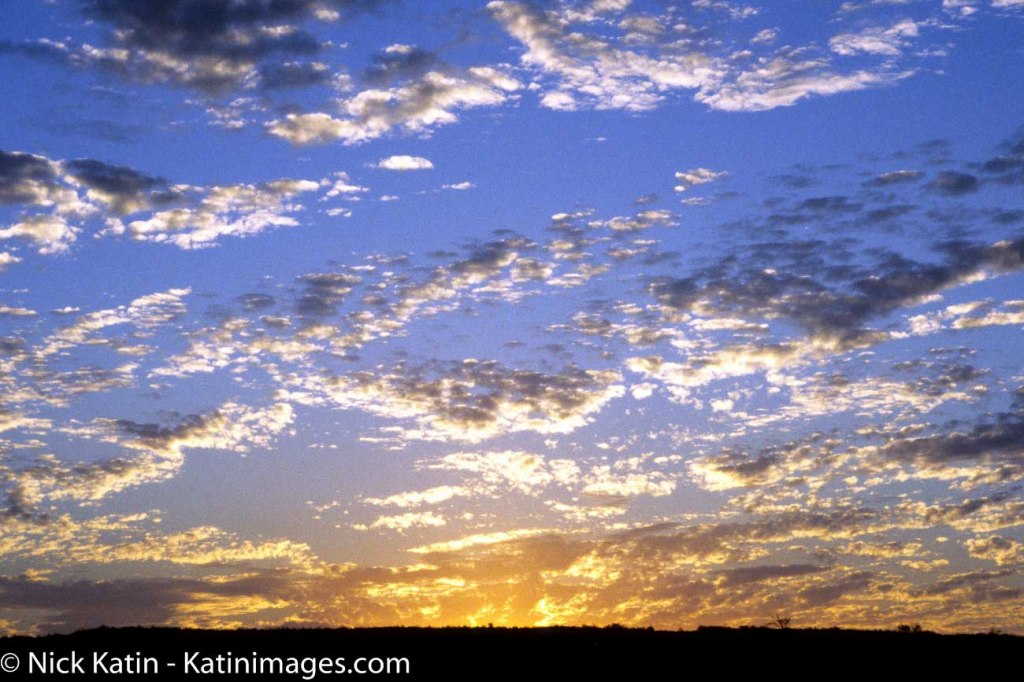
    Sunset over the Kalahari
    Sunset over the Kalahari
  • African shoestrings – South Africa Day Fourty – Stellenbosch

    The following day we ‘jumped ship’ and found a little apartment just out of town.
    Not that there was anything wrong with the Stumble Inn, it was just the noise from the other ‘guests’.
    I’d like to think that we haven’t we’ve lost touch with modern music but the repeated thumping of ‘techno’ music is not the best bedtime music as far as we were concerned.
    A young guy, John also from Perth, who was travelling around on his own, shared this opinion. In staying in the dorm, he was in a worse position than us and was getting fed up with being constantly disturbed as his fellow bedmates stumbled in and out of bed.
    Never really gave that much thought before. As a couple we always got a private room and had drawn a line in sleeping in a dorm. But anyone on their own is pretty well damned if they want privacy. They either pay more than double the cost for a double room (they are often more expensive per person than a dorm) or put up with sleeping in the same room as a load of strangers, have no privacy and in some circumstances be permanently on guard watching their belongings.

    Anyway we had enough of the Stumble Inn, we had lasted two nights, and for just a few more Rand we had a nice cosy little place tagged on onto someone’s house called “Kaveeltjie”. That someone was Gertie an extremely helpful and warm housewife with a couple of youngish kids. She picked us up at the tourist office in town and couldn’t do enough for us.

    One of the fascinating things about South Africa is the white Afrikaners. Most of these are descended from the original Dutch, German and French settlers and have been in South Africa since the seventeenth century. This is different from the whites of British heritage that have only been around since the nineteenth century. That in itself is interesting but what really fascinates me is that when you meet the Afrikaners is their own country they are totally different from your expectations. After all this is a race that is responsible for apartheid. A lot of these expectations are based on the media and those you meet in Australia who have left the country for good.
    Well we found them to be kind, friendly, warm and honest people. You almost get the feeling that they would give their lives for you. A lot of that comes from their strong religious beliefs, but I’ve met plenty of religious people over the years who will hardly acknowledge your existence let alone help you out in tight corner.
    These people also have an amazing attachment to their language, which for most of them is their first language, with English being used only whenever it’s really necessary.
    One particular lady we met on our first visit, actually pitied us for not being able to speak Afrikaans, saying it was such a shame that we were unable to use words that there was no equivalent for in English to describe the world around. At the time I wasn’t that convinced. But the more of these people I met the more I think there must be something in it. So many actually struggle to translate certain words from Afrikaans to English which tends to surprise as their English is usually so fluent.

    Any way Gertie fitted this mould, and was happy to give us a few pointers for our future travels and expeditions.

    If you like this then hit “follow” on the side bar
    A Gemsbok in the Kalahari national park in South Africa
    A Gemsbok in the Kalahari national park in South Africa
  • African shoestrings – South Africa Day one

    Last time we flew to South Africa via Qantas we were upgraded to business class. No such luck this time! We were once again mere mortals packed in with our fellow passengers into the Airline industry’s version of the mini.

    Now that’s not to say that travelling economy with Qantas is a hardship. It’s not. In fact I think that they’re terrific. Good service, facilities, food and most importantly an unparalleled safety record makes any long haul flight reasonably comfortable. If that doesn’t get me a free flight nothing will!

    But a long flight is a long flight and quite tiring.

    Some eleven hours and two movies later we arrived at J’burg airport. Once ‘processed’ by the authorities we claimed our bags and moved out into the arrival lounge. We had been to J’burg before and sort of knew what to expect but nonetheless J’burg’s reputation as violent crime capital of the world makes you view everyone with a great deal of suspicion. In fact the biggest danger seemed to be the frustration caused by the ceaseless touting by reps of J’burgs many backpacker hostels. These guys hone in on anyone who looks even faintly potential. I think we got picked because it was such a quiet night and they were getting desperate.

    We managed to eventually find our hotel shuttle, which was driven by a young white guy. I make a point of this because several years ago these ‘menial’ jobs were done by black or coloured people, never by a white person especially a young white person.

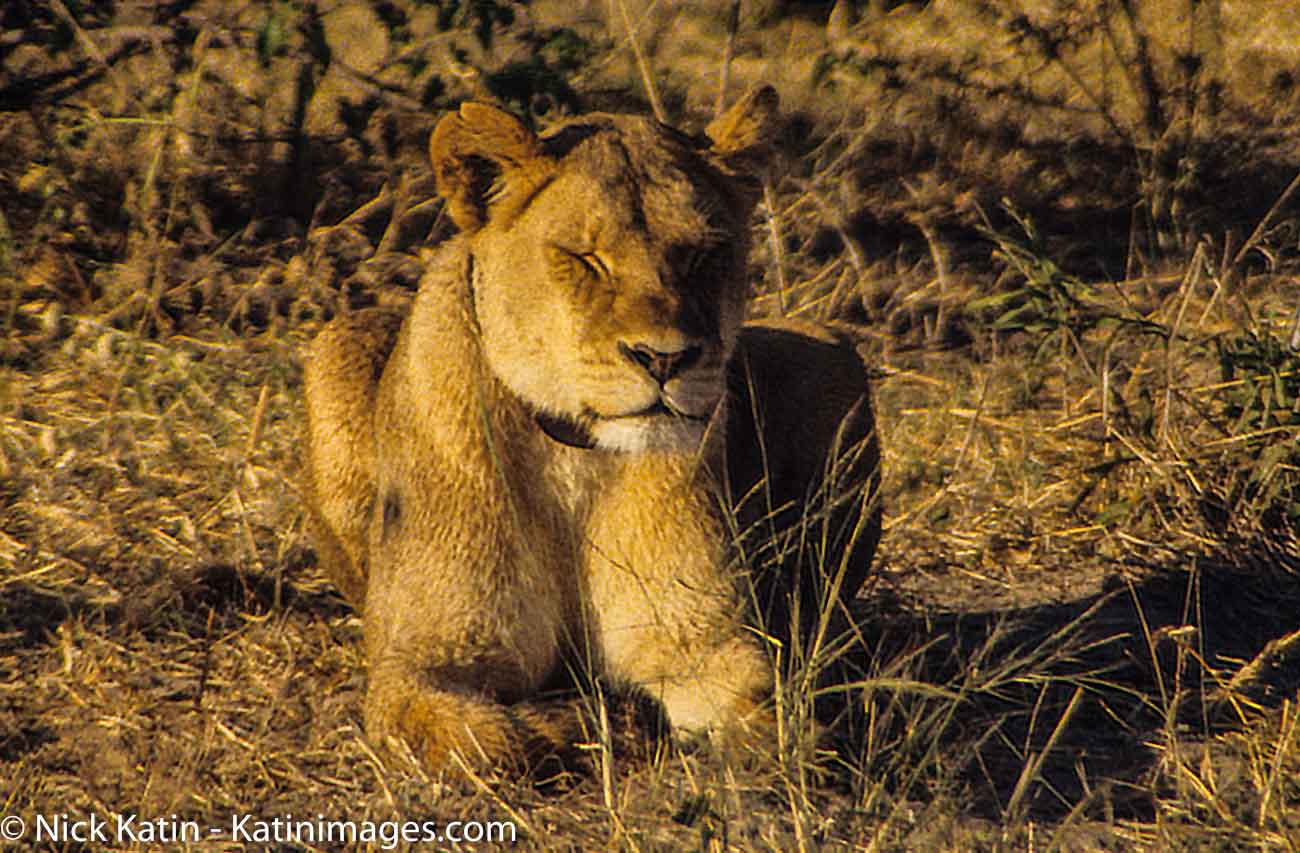
    A lioness enjoys the late afternoon sun in Chobe National Park, Botswana
    A lioness enjoys the late afternoon sun in Chobe National Park, Botswana
  • African shoestrings the plan part two

    So with the flights books and with the aid of countless travel guides borrowed from the library, the internet and the scantiest of information from the few African countries tourist offices in Australia we plotted our route.

    We gave ourselves 111 days to travel overland from J’burg to Dar es Salaam, see what we wanted to see and spend only an average US$100 a day, not each, but in total! We would stay in backpackers, youth hostels, cheap hotels and where possible camp. The latter was made a little difficult on account of the fact that we weren’t taking any camping equipment but as they say, there’s more than one way to skin a cat!

    The only things we booked here in Perth were our first nights’ accommodation and ten days car hire in J’burg. There was a very important reason for pre booking both of these. Safety! J’burg is infamous for violent crime; the last thing we wanted to be doing when we arrived was wondering the streets looking for somewhere to stay or looking for a hire car. No, we just wanted to stay one night near the airport, pick up a car and get the hell out of there!

    We booked the car through our travel agent and the accommodation through the Internet. Maybe it’s because of time constraints, security or lack of knowledge but it’s interesting that so many people still use travel agents. We found a cheap motel in the right location for half the cost of what our travel agent quoted.

    An elephant strolling through the scurb at sunset in Etosha national Park, Namibia
    An elephant strolling through the scurb at sunset in Etosha national Park, Namibia
  • African shoestrings the plan part one

    Early this century at the ripe old age of just over 45 we backpacked around South and East Africa on our way to an extended stay in Europe.

    The ‘plan’ was to travel from Johannesburg (J’burg) by land as far as maybe Kenya or Tanzania and fly on to London from there, allowing time for the TAB factor. TAB stands for “That’s Africa Baby” a common shrug used in times when a plan falls apart due to the many variables that are lacking in the African infrastructure or bureaucracy. For example a bus or even a plane failing to turn up (we had experienced an Air Zimbabwe flight being cancelled at the last minute on our previous visit due to one politician that needed to go shopping in London) or even a hotel being closed, you know the type of thing. So we were well aware of the potential for this factor to change our timing from time to time.

    After several visits later to see Tina our travel agent we finally came up with the ideal flight. We could fly Perth to J’burg and then Dar-es-Salaam in Tanzania to London via Paris by Air France. Wow! Paris was high up on the list of places to visit and the ideal place to start our proposed exploration of Europe. However we made one vital mistake, we didn’t book it there and then. When we went to book a few months later that flight had been stopped and we ended up booking the equivalent Qantas/British Airways flights that didn’t stop in Paris. But we did get a free internal flight in South Africa so the gods hadn’t completely deserted us.

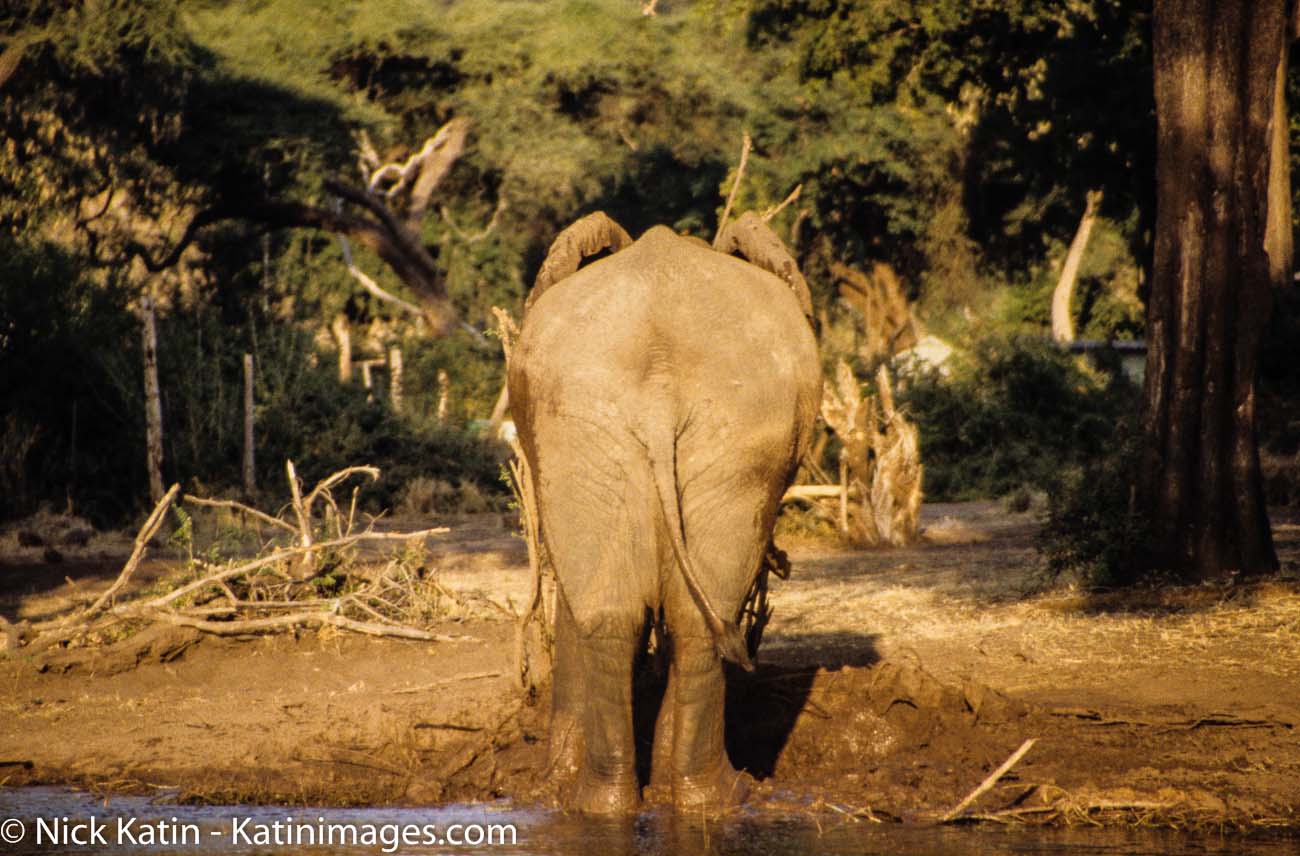
    An elephant shows us his rear end by the edge of Chobe lake in Botswana
    An elephant shows us his rear end by the edge of Chobe lake in Botswana
  • Photo tip no 3

    Cameras need light and when there’s not enough of it the picture taker has a couple of options. A tripod is the preferable option and I’ll cover that in another tip. So lets talk about ISO. In the days of film you couldn’t change the ISO easily  You had to change the film or using exposure compensation “push” or “pull” the film a couple of stops but you couldn’t change back again until you changed the film again. But now the ISO can be changed at a whim. All cameras, including compacts and smartphones these days, have an ISO setting. So there are two options. Have the ISO setting on auto which is fine for the majority of the time. But auto is usually set at a maximum of say 1600 which may not be high enough. Alternatively change the ISO setting to suit the conditions. E.g. in low light select a high ISO. However whilst the top end DSLR’s have amazing results from ridiculously high ISO’s there are some models where grain or noise becomes more pronounced the higher you go. So its worth taking a few images at various settings to see how your model performs at high ISO’s. Having said that grain does add mood to certain scenes. For now though, find that ISO setting!

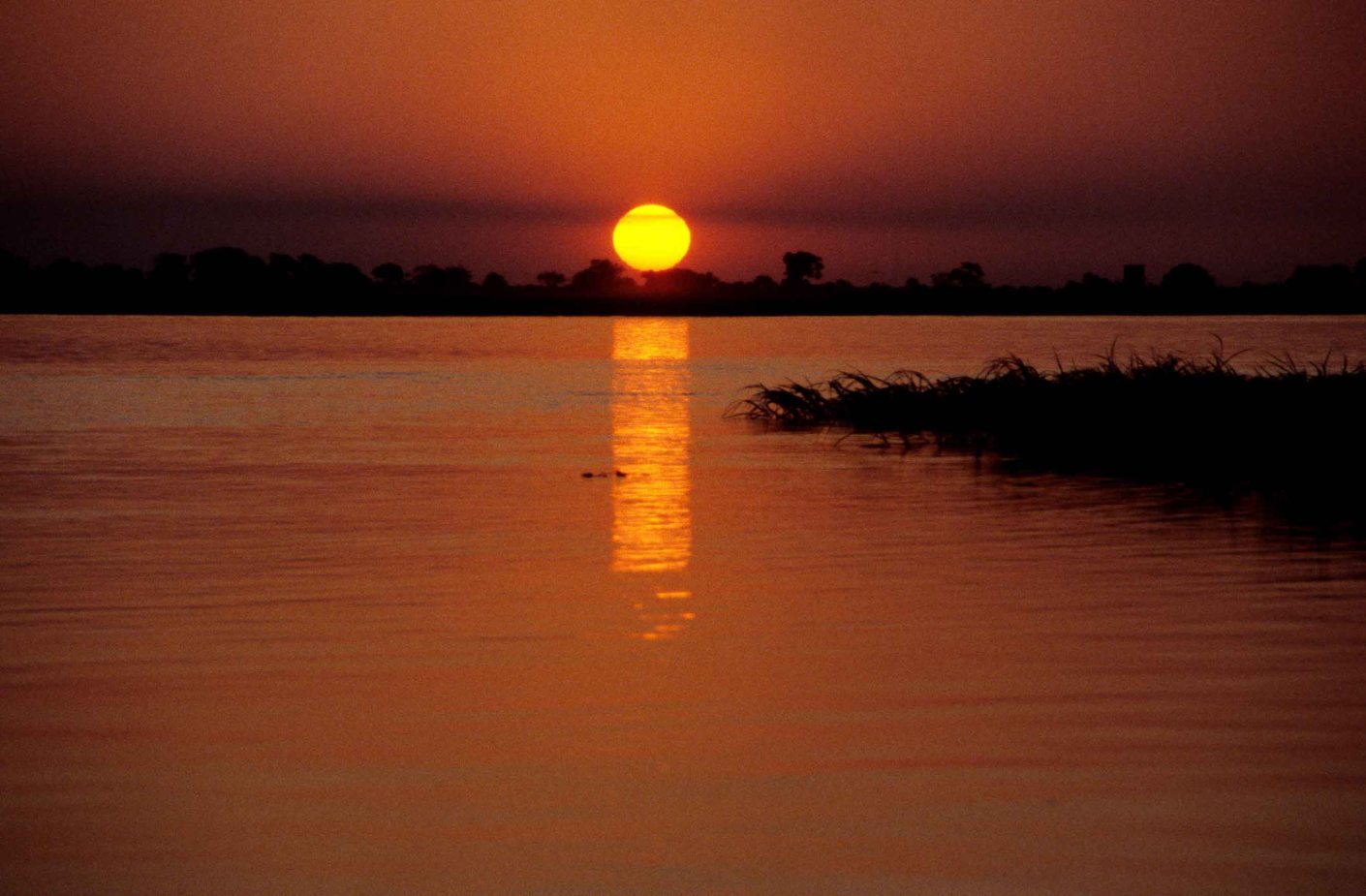
    Sunset on the Chobe river in Botswana ©2013 Nick Katin
    Sunset on the Chobe river in Botswana ©2013 Nick Katin

    To buy a print of this photo or licence or share this photo email or contact us

  • Another Half Dome Mountain in the famous Yosemite NP photo

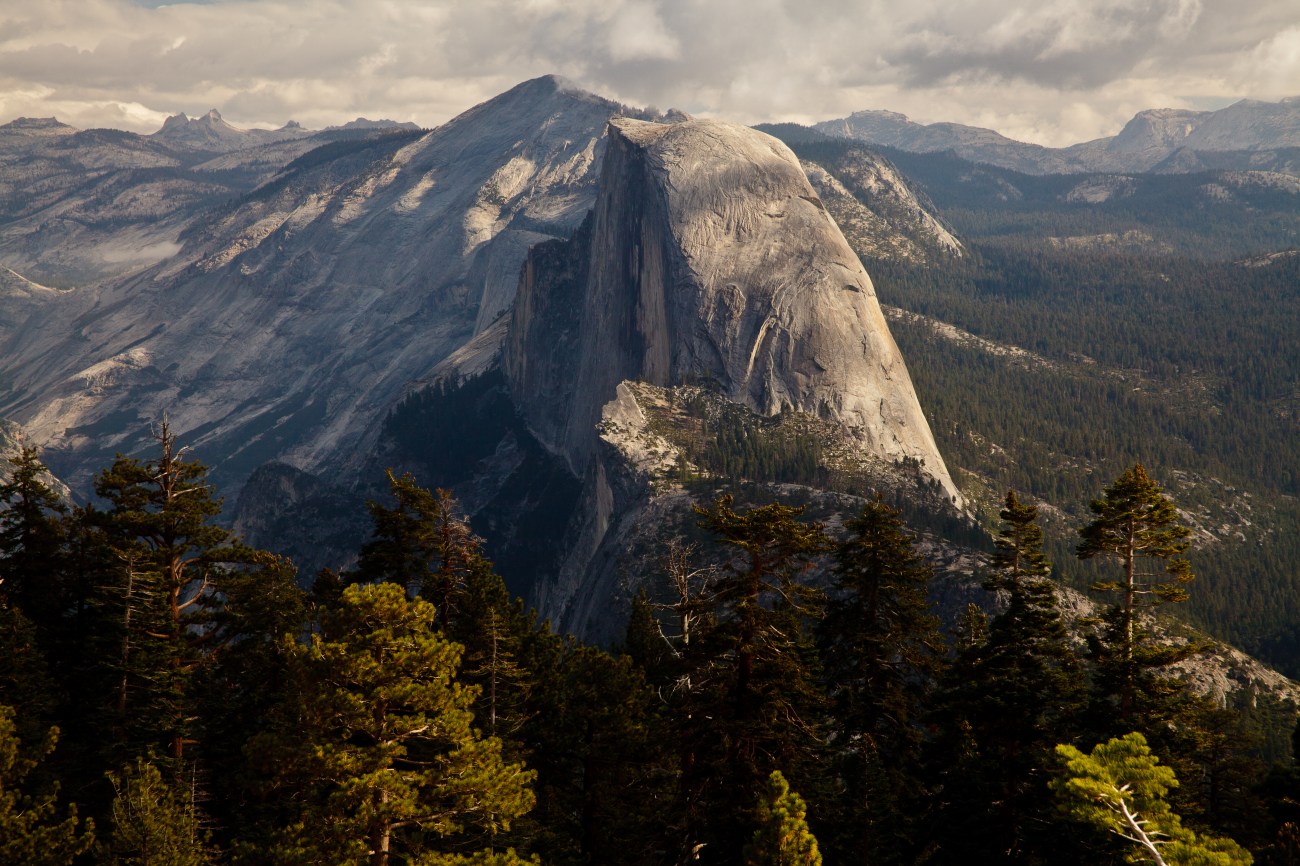
    Half Dome Mountain in the famous Yosemite NP photo © 2010 Nick Katin
    Half Dome Mountain in the famous Yosemite NP photo © 2010 Nick Katin

    Based on the last Half Dome photo I posted it looks like this is a pretty popular national park. I enjoyed every minute of being there. I took this one from a lookout near Glacier Point Road after a bit of hike around there. I thought I’d start sharing some of the techniques I use. I took this at 1/60 at F16 and a focal length of 52 mm and didn’t use a tripod.

  • Half Dome Mountain in Yosemite National Park

    Half Dome Mountain Yosemite NP California, USA © 2010 Nick Katin
    Half Dome Mountain at Yosemite NP California, USA © 2010 Nick Katin

    You may have noticed that i have been posting twice a week for a while now, except for last week when I forgot! Things just got away from me and next thing you know I’ve missed it.
    This is my take on the famous granite Half Dome mountain in Yosemite. It rises nearly 1500m  from the valley floor and is probably the most photographed mountain in North America, certainly in Yosemite and for good reason. I took around 20 different angles of this monument and I’m not sure I came up with anything much different than has gone before.