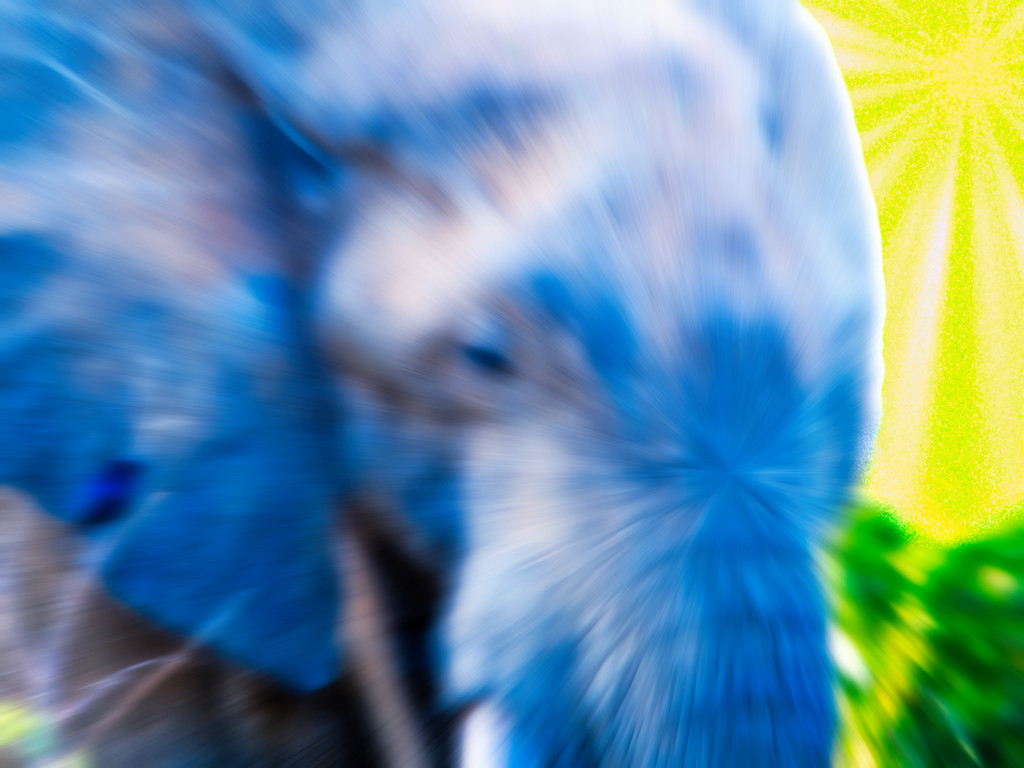
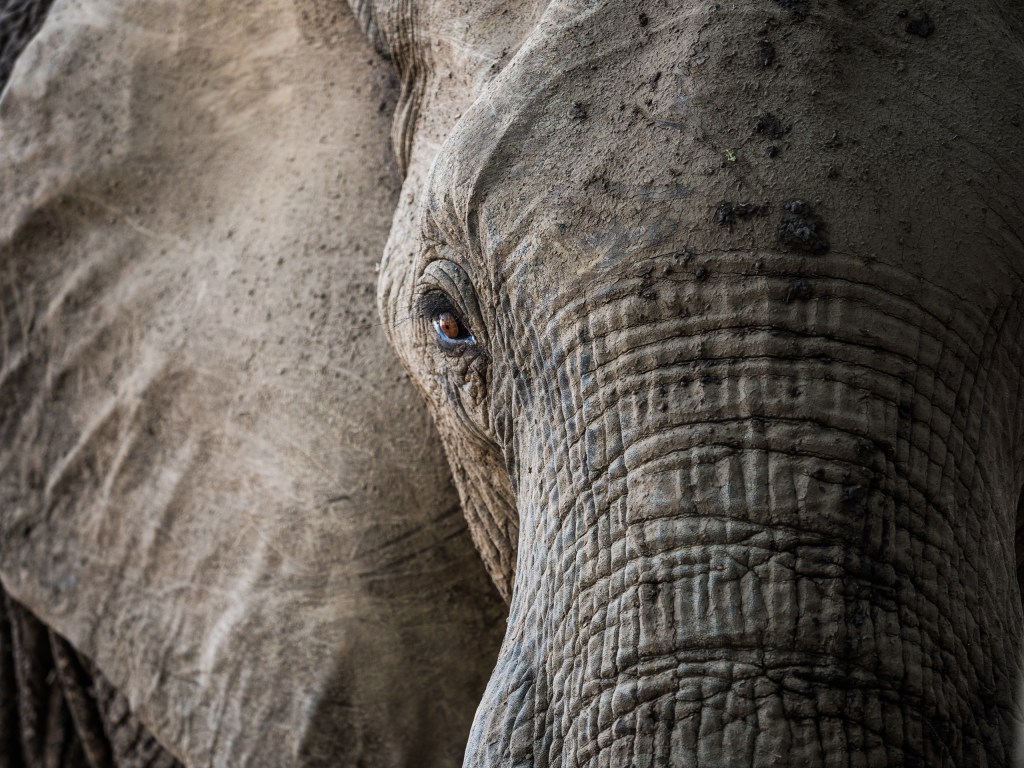
Elephant in Timbavati near Kruger NP South Africa. Click on the image for a larger view
Wildlife photography has always been a captivating pursuit for me, a way to connect with the natural world and its magnificent creatures. During my recent adventures in South Africa, I decided to take my passion one step further by reinterpreting my wildlife photographs into fine art.
Once I had a selection of what I thought were good quality wildlife photographs, it was time to transform them into fine art. Post-processing is where the real magic happens. I used Luminar Neo to enhance colours, adjust tones, and add effects that would elevate the images from photographs to artworks.
Fine art is a personal expression, and I wanted to infuse each piece with my own unique perspective. These Images have been transformed into digital paintings, allowing me to add my artistic flair and creativity to the mix.
Transforming wildlife photography into fine art is a deeply gratifying journey. It allows you to not only capture the beauty of nature’s creations but also to share your own unique perspective and emotions with the world. Through observation, composition, post-processing, and a touch of personal creativity, I was able to breathe new life into some of my wildlife photographs, turning them into pieces that evoke emotions and opinions. Whether you’re a passionate photographer or a lover of art, I encourage you to explore this fascinating intersection of nature and creativity; you might just discover a new dimension to your passion.
Each image is only available for purchase 15 times and a separate certificate of authenticity will be provided to the purchaser. To order a print or digital image click on the image or contact me Go to Luminar Neo for more info on this creative AI software
Elephant 1. Elephant in Kruger NP South Africa. Click on the image for a larger view
Wildlife photography has always been a captivating pursuit for me, a way to connect with the natural world and its magnificent creatures. During my recent adventures in South Africa, I decided to take my passion one step further by reinterpreting my wildlife photographs into fine art.
Once I had a selection of what I thought were good quality wildlife photographs, it was time to transform them into fine art. Post-processing is where the real magic happens. I used Luminar Neo to enhance colours, adjust tones, and add effects that would elevate the images from photographs to artworks.
Fine art is a personal expression, and I wanted to infuse each piece with my own unique perspective. These Images have been transformed into digital paintings, allowing me to add my artistic flair and creativity to the mix.
Transforming wildlife photography into fine art is a deeply gratifying journey. It allows you to not only capture the beauty of nature’s creations but also to share your own unique perspective and emotions with the world. Through observation, composition, post-processing, and a touch of personal creativity, I was able to breathe new life into some of my wildlife photographs, turning them into pieces that evoke emotions and opinions. Whether you’re a passionate photographer or a lover of art, I encourage you to explore this fascinating intersection of nature and creativity; you might just discover a new dimension to your passion.
Each image is only available for purchase 15 times and a separate certificate of authenticity will be provided to the purchaser. To order a print or digital image click on the image or contact me Go to Luminar Neo for more info on this creative AI software
In the days of film, the only form of back up was to guard your film and slides as if you’re life depended on it. Nowadays with digital imaging there are many ways of backing up your photos.
So, follow me along as I give you some ideas on how to back up your travel photos.
History of Back up
The term back up only really became used when computers began to take over the world.
With paper you could make copies and file them off-site.
As we all switched from paper to digital, Business’s started to have tape, then floppy disks followed by CD’s for backups of the day’s work.
Now you have back up servers some of which are in the cloud.
Photography back up
Before digital, you were able to have extra copies made of photographic prints and file them somewhere else.
Not so with negatives and slides. Well that’s not strictly true, you could get copies, but it was expensive. It was not until digital came along that we began to realise that we had the option to back up all our precious photos. We could even do it retrospectively, if we had plenty of time or money, by scanning film and slides.
In those early days the floppy disk and then later the CD or DVD were the main back up mediums. But as with film and slides we all ended up with boxes of DVD’s. Whilst smaller than boxes of Slides and Negatives they still took up some room.
Let’s take a look at what options we have now.
Direct backup to a Laptop or Computer
The simplest and most convenient way is to connect directly to a Laptop or computer. This is done via the cable, now mostly a USB-C, that each camera manufacturer supplies to a laptop or computer. Once you have it on the computer you are free to copy it anywhere else. All camera manufacturers give you that option. The main disadvantage is that some of the cables supplied are not usually off the shelf if you lose them. Additionally, some of the older camera ports tend to be non-standard or at best not common.
Memory Cards
When you take an image with a digital camera it sits on the memory card that you have in the camera. With a smartphone that image will generally sit on the phone’s internal drive. However, you can change it to sit on a microSD, if that’s available.
Memory cards can also be used to back up your photos either via a computer or in some camera models.
How does that work?
Well you remove the memory card from the camera and insert into either a computer memory card port or a card reader that plugs into the computer. Likewise, the same applies with a blank memory card. Once both cards are loaded you copy from one to the other.
Backing up in camera is usually confined to some of the more high-end cameras. These now come with two memory card slots that you can use to either extend the memory or use the second slot as back up. When the latter is set, each time you take an image, it not only sits on the first memory card but also on the second.
Another option is to transfer it in camera periodically but that can be dangerous if you forget to do it.
The system of using memory cards as a backup medium is not used that often unless you are looking to immediately back up and that’s your only option.
One recommendation I would make is to use something similar with a smartphone.
Smartphone backup
With a smartphone, the potential to lose it or drop it is much higher than a camera. I would suggest a microSD if that’s easily removable (otherwise you will lose it with the Smartphone!)
Another option is a small flash drive that can be attached, usually through the charging port. Why would we need to do that when we all rely on the cloud to backup our photos on a smartphone? Services like Google Photos, or iCloud work well when you have connectivity. But what about when you don’t have connectivity?
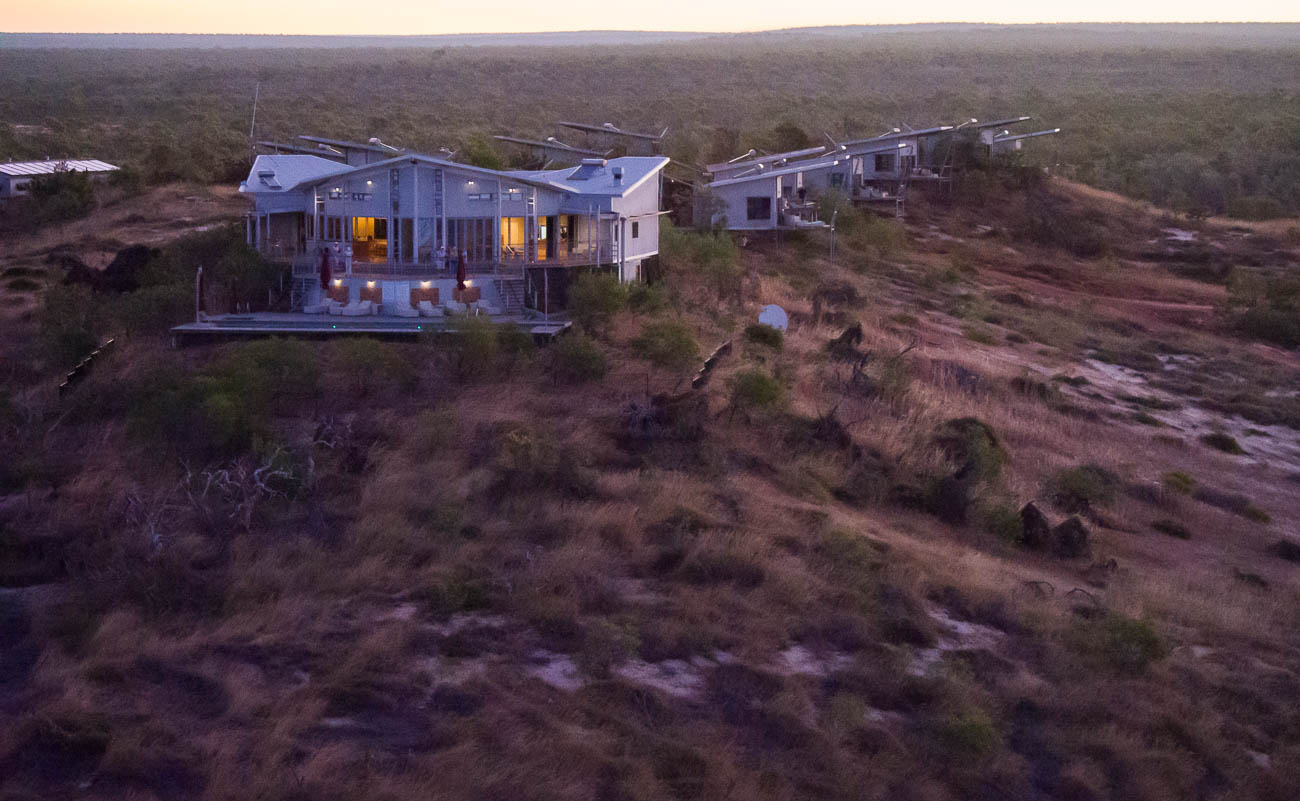
A few years ago I stayed a few days in a remote resort called Berkley River Lodge in the Kimberley region of Western Australia.
There was no phone signal at all and WIFI was limited to 50m from the reception hut. We were on a helicopter trip heading back to the resort. One of the other guests was taking pictures of the sunset with an iPhone when he lost it out of the window. I might add that the phone wasn’t his, it was his partners! We had also all been warned not to take your phone too close to the window during the flight as, you’ve guessed it, it could get sucked out. Anyway, apart from looking like a Kangaroo in headlights, he lost the phone. All the photos that they had taken in the last few days were only on that phone. And as they had no way of backing them up other than using iCloud they were lost with the phone.
Berkley River Lodge from the air
Lesson from that is not to rely on the cloud as back up for smartphones or indeed anything else.
If you have another device like a tablet, then you can set up a hotspot that will enable you to transfer or copy your files to the Tablet. But if you are likely to be without the tablet and have no connectivity, then a Mobile flash drive is a no brainer.
WIFI SD cards
An option to standard Memory Cards are WIFI cards. Even if your camera has Wi-Fi capability this still allows you to back up your images to another device.
If you have a fairly new camera, then chances are it will have WIFI capability anyway, so you can backup via WIFI without a special WIFI Memory Card.
However, in both these instances the issue is space. Most Smartphones or tablets are around 128GB and if you are shooting RAW over a 2-3-week period it doesn’t take long to max out. For example, last year at a African Game Park I shot around 64GB of RAW and JPEG images.
Physical back up devices
There are a lot of devices out there that you can use to back up your photos. Most of them are portable hard drives
There is the basic hard drive that you plug into a laptop or some tablets. You then copy the files to the hard drive via the Laptop or Tablet
Some hard drives have a SD Slot for your memory card. You insert the card and it automatically copies to the drive. So, in theory you don’t need another device. Yet, unless you plug into another device you are not going to know whether it has backed up all your photos correctly.
Another option is the wireless Hard Drive. This is like a hybrid. They have SD slots as well as having the option to wirelessly copy images via the hotspot I mentioned before. This has the same disadvantage of not being able to see what images have been copied across. Although some do allow you to view the contents of the drive from a smartphone or tablet as well as a computer.
Then there are hard drives that have a screen that lets you view the images even if they are RAW.
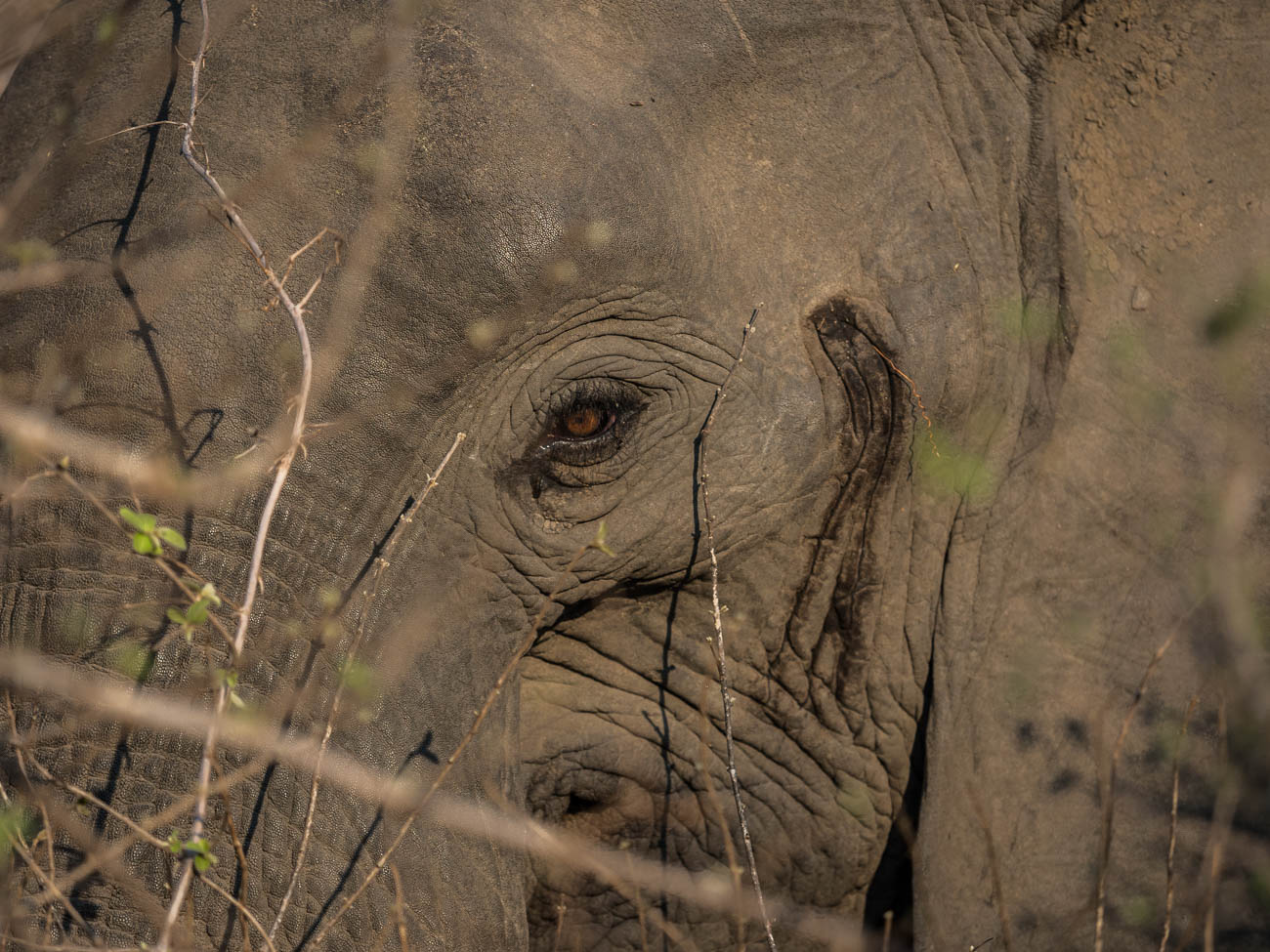
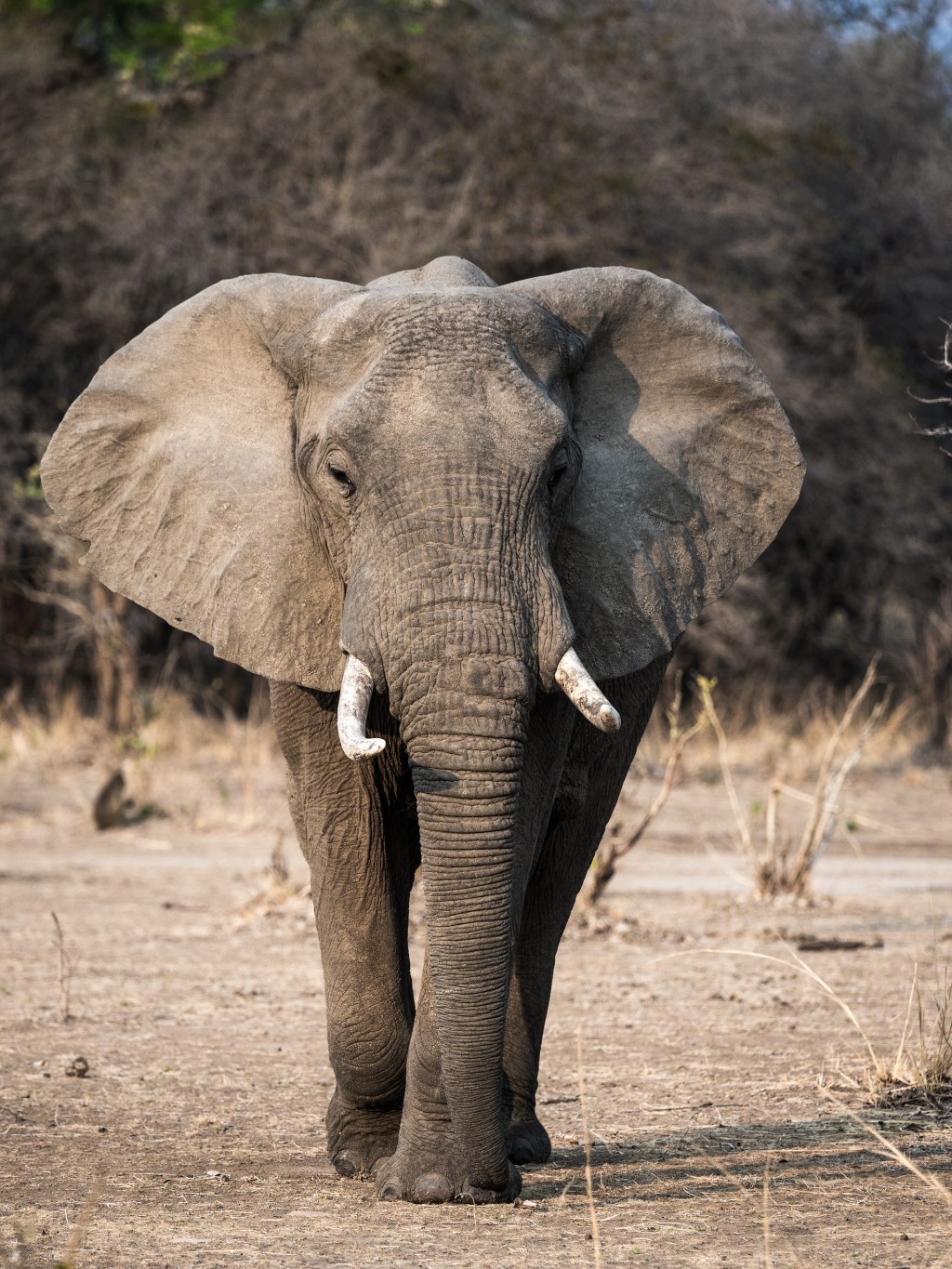
African Elephant in South Luangwa NP, Zambia. Click on the image to view a larger version and for other options
Hard drive types
Lately hard drives come in two types, HDD mechanical Hard Disk Drives or SSD Solid State Drives. The differences are basically that SSD’s are faster but more expensive. In a computer or laptop then I would go to an SSD every time. With portable hard drives, where there is only data being stored, then it’s really a personal preference.
How many cloud services are there now? There’s Apple’s iCloud, Microsoft OneDrive, Dropbox, Box, Google Drive, Crashplan, Backblaze, Carbonite and there are the Photo Sharing Sites (more on that below).
Of course, all cloud backup services depend on the internet. So if you are travelling, you are relying upon there being an internet connection. That is often beyond your control.
There is much better connectivity than there was 5 years ago and I’m sure that there it will improve even more. But as I mentioned earlier there is always somewhere that the internet is not connected.
Even with an internet connection, the bandwidth or speed can be poor. Meaning that the time taken to upload your photos can be long and arduous, and therefore frustrating.
Using the cloud
Whether you use the cloud or not is dependent on a couple of things:
One is the Camera equipment. For instance, a Smartphone has inbuilt cloud capability and relies heavily on there being an internet connection. That is either by the phone signal e.g. 5/4G or a wireless connection. On the other hand, unless you have a 2-3-year-old camera, then there is every chance that the camera you have will not have Wi-Fi capability. Even a lot of the new ones only allow you to upload to a phone or tablet from which you then have upload to the cloud.
The other reason is the interface and ease of use. I haven’t tried all these services, but of the ones I’ve used, iCloud and Dropbox seem to me to have the best interface and ease of use.
Cloud cost and security
There is one further reason and that is price. Prices vary so much with specials and add-ons that comparing them is likely to be totally inaccurate by the time you might read this.
The other thing to consider is security. I hesitate to say it but using the likes of the big guns like Microsoft, Apple or Google does give a sense of security, compared with the smaller players. That may well be false. But it’s worth asking a few questions. I.E. where are their servers? What happens to the data if a server goes down or heaven forbid the company disappears?
What do I use? OneDrive. Why because Microsoft gives me 5TB with my Office 365 subscription.
Photo Sharing Sites
The other cloud-based storage systems are Photo Sharing sites. These are likes of Flickr, Smugmug, Google Photos, Pixbuf , Photobucket, 500PX, My Portfolio, Amazon Prime Photos plus a few others. These add a bit more to the concept of back up. Usually it’s a subscription service that allows you to view and share all your photos. Some even have their own social media interface meaning you can browse other user’s photos and comment or share.
Flickr was the first of these and now has been gobbled up by the expanding Smugmug.
Take a look at my site on Smugmug to get an understanding.
Unlike the straight cloud backup services, some of these sites don’t support all file types. So, if you are looking for a complete solution to house and view your RAW files for example, do your due diligence.
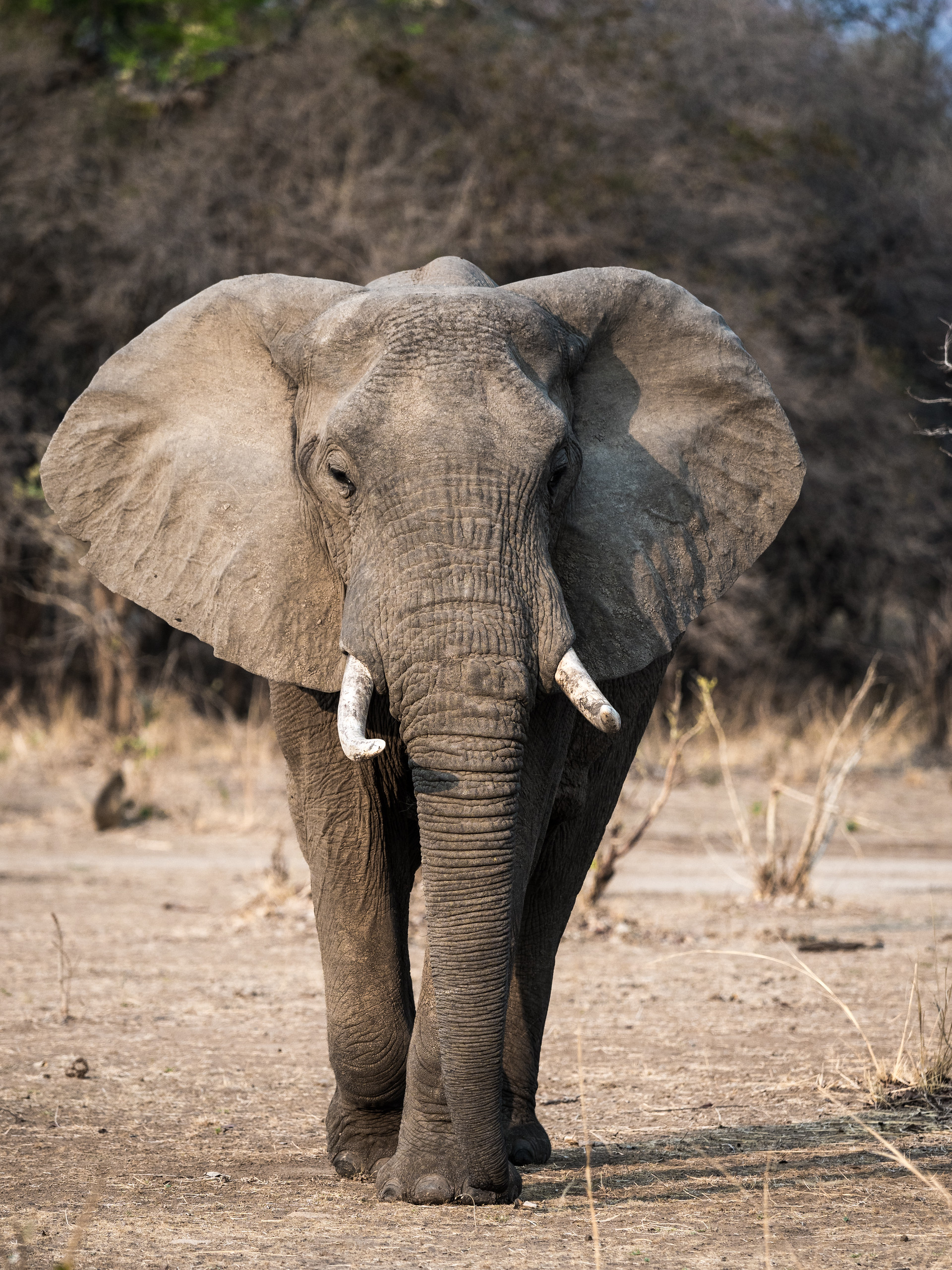
African Elephant in South Luangwa NP, Zambia. Click on the image to view a larger version and for other options
How to back up your travel photos – at home
We’ve covered a broad summary of what there is out there to back up your travel photos whilst you are on the move.
What about when you get home? All of the above apply to your home base as well.
But you can also add in Desktop Drives
Desktop Hard drives
Desktop Drives used to be fixed to one certain location. But with the growth in portable hard drive storage, the fixed and portable are overlapping.
Most of us these days have Laptops instead of desktop computers which gives us freedom to work pretty much anywhere. So, plugging in a portable hard drive as not only an expansion to the laptop storage, but also as a backup is easy.
For the fixed you have three main types.
Standard hard drives that connect via USB or Apple’s Lightning and have their own power supply.
Cloud based drives that connect into a network also called NAS (Network Attached Storage) This is different to the cloud services mentioned earlier. These are hard drives that are physically in your space but can be accessed remotely via an internet connection. They also come with a power plug for an independent power supply
The last type is called a RAID system (redundant array of inexpensive disks) that also have their own cloud. This is a trickier system to manage and install. Basically, it is several hard drives usually in multiples of 2 that back each other up. Where it can be confusing is the many different set up combinations available. It’s a way of ensuring that should one back up drive fail then there is always another one that has identical data, so that you can sleep easy.
What I use
Now I think it’s time for me to give you my system.
On the road
Depending on the duration and the reason for the trip, I will carry either one or two SSD Drives, my surface pro and a memory card reader. I also now carry, since seeing the guy at Berkeley River lose an iPhone, a portable flash drive that fits my Samsung S10.
How do I use them?
I am fortunate that my Olympus OMD1 MKII has dual memory card slots, so I use one of these memory cards as back up. Additionally, every evening or at least every couple of evenings, I back up one of the memory cards to both SSD’s. If I have been diligent enough to clear the hard drive on my surface before travelling, I back up to my surface as well.
I back up my Samsung S10 to my surface if I am confident that I have good internet for the cloud back up to my OneDrive service. If I ‘m unsure of the connectivity, then I will back that up to my portable flash drive and later the surface.
I have used the iPad Pro as back up in the past. But due to the number of apps it has, it only has a small amount of spare storage compared to the surface.
How to back up your travel photos – Summary
Back up is a relatively new concept in the photographic world. It has only been around since the advent of Digital photography
There are many forms of back up for the travel photographer
Memory cards can be used for short term back up
Smartphone Cameras rely on cloud services, which can be unreliable when travelling.
A flash drive or microSD is a more reliable medium
New cameras can upload photos via different WI-FI systems to the cloud but only via another device
There are many different hard drives that can be used as back up devices.
They can be like small computers with their own screens and flexible connectivity.
Speaking of Cloud back up, the number of services available is huge. So, you need to select carefully before using one of these to ensure it meets your needs and security
Photo sharing sites like Flickr and Smugmug can also provide a level of back up for your photos
Then we get into the heavy duty physical hard drives. These use sophisticated software and multiple drives that you can create your own cloud with.
Later that morning with us bringing up the rear as usual we were paddling alongside an island to avoid a pod of hippos.
Suddenly a flurry of activity brings four hippos scurrying out of the bush and into the water just metres in front of Peter and Greg. They disappeared into deep water and four pairs of eyes popped up about twenty metres from us and watched as we tentatively crept past getting as close as we could to the bank.
After such an exhausting morning (we had covered 20 kilometres as well) we were thankful for a stop for lunch and a couple of hours siesta followed by a swim in the shallows later in the afternoon under the watchful gaze of a few hippos.
Still by the time we had got to our overnight stop at a deserted beach we were all pretty much exhausted and aching. The excellent food and some elephants strolling down to the water’s edge for a drink a mere 150 metres away soon resuscitated us.
We were now in Mana Pools National Park and the hunting camps and other signs of humanity gave way to thorny bushveld and groves of Acacia and other trees. It was a full moon and as it rose it lit our campsite with a soft glow and turned a nearby perfectly formed thorny Acacia tree into a silhouette.
The distant roar of a lion, the call of hyena and the munching of the hippos nearby seemed to be with us all during the evening and overnight. Despite our soreness, exhaustion and apprehension this was as good as it gets!
Peter and Greg allayed our fears somewhat about hippos. Apparently like most wild animals they only attack only when they feel threatened. The stories of canoes being turned over are greatly exaggerated and usually caused by accident. In deep water a hippo may be right underneath the canoe and its occupants totally unaware, so if it decides to pop up and you’re in the way, bad luck!
These guys seem to know their stuff. Peter was from the Shona, the most populous people in Zimbabwe and Greg was a young white guy from a farming family. When talking amongst themselves they spoke Shona. It seems that even though English is the official language Shona is more commonly spoken. They also told us of our biggest danger. “We (meaning Peter and I) will stand guard overnight to watch for Zambians paddling across from the other side. They ‘ave been known to raid a campsite and steal belongings from the tents and canoes whilst everyone slept.” Greg said.
Great I thought, we have to watch out for crocs and hippos by day and thieving Zambians by night.
Our final full day at 24 kilometres was a lot shorter and allowed us to leisurely enjoy the sun rising over the Zambezi.
This was our best day!
The river was mostly a series of tranquil channels and the wildlife was everywhere. Lots of hippos to be seen but none that were close enough to trouble us; a herd of elephants on the Zambian side; more elephants near our lunch spot; waterbuck, buffalo and impala also darted in around the national park edge, whilst little bee eaters probed small openings they had created as entrances to their nests inside the cliff face of the riverbank. But the piece ‘d’ resistance was yet to come. Swimming in a shallow channel we dried off and under Peters leadership we approached, by foot through the water, a large pod of hippos. We got within four metres of them as they watched us whilst closely bobbing up and down, ears flapping and noses snorting. They were watching us as warily as we were they. I snapped away around ten shots only to realise that I had the camera still set for a much dimmer light. By the time I reset, the hippos were almost completely submerged and moving away. Curses!
Ten metres beyond them an elephant descended the bank and paddled across the deeper channel up ahead to join his mates strutting on a small island. Later that afternoon we stopped our paddling and drifted as we watched more elephants frolic in the water just in front of us. Peter was pretty keen on ensuring that we didn’t get too close but some other canoeists were foolishly a lot closer and came very close to having their canoes turned into firewood.
Five kilometres on and it was time to set up camp for the last night on another sand island. First we had to navigate our way through a narrow channel with, you’ve guessed it, another pod of hippos in the way. No drama. Peter and Greg slapped their paddles against their canoes and off they went to safer waters.
On dry land we were all busting and Sue managed to grab the spade before anyone else and headed off to an inconspicuous place. She was had been so absorbed with finding a hidden spot that it wasn’t until relief had come that she realised that there was a hippo lying on the bank asleep a mere five metres away. Any alien who had no prior knowledge of humanity would have gone away thinking what strange toilet rituals we have once he saw this mad women running towards us waving a spade with one hand and holding up her shorts with other!
Footnote:
Take control of your blog’s images now by signing up here to get “Eleven easy ways to improve your marketing photography”
A guide on how to start improving your images to help you take control of your marketing. That link again
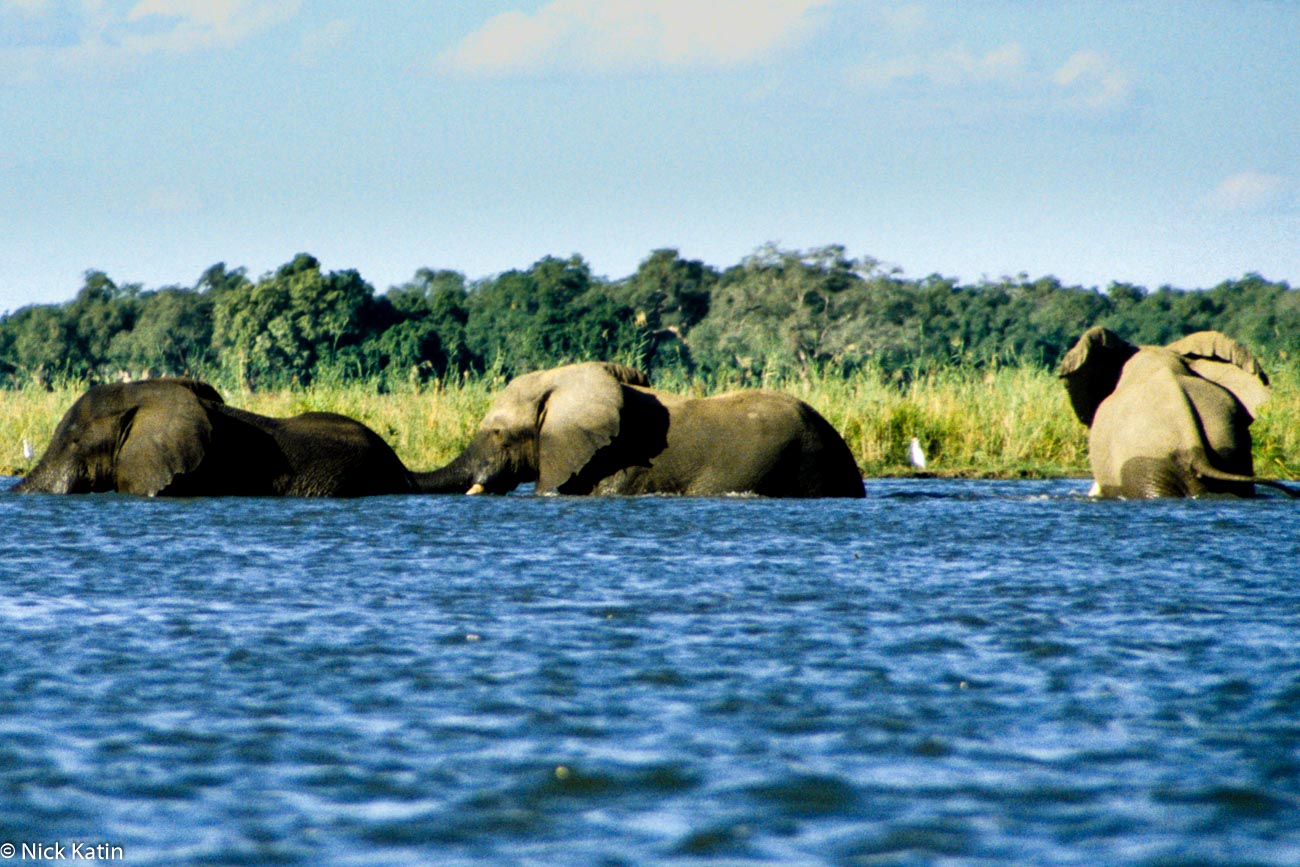
Elephants in the Zambezi River walking across the river in Zimbabwe
The restaurant at Main Camp, run down or not was excellent value for money. Waiters in white tuxedos with gleaming teeth and pens poised ready to take orders were at our beck and call. This was not five star but it had the sort of character that only Africa has. A sort of colonial outdoor setting with smells of fresh cooking, candlelit tables and a quiet hubbub of guests enjoying the experience. Occasionally we would here the roar of a lion or the laugh of a hyena. This was so good that we could forgive the preoccupation black African waiters have with whisking your empty plate away almost at the same time as the cutlery hits the empty porcelain. The one thing the Europeans must have instilled in these guys was to ensure that nobody sat at a restaurant table with an empty plate or cup in front of them. “Never mind carrying out maintenance on rail carriages, lodges, roads or even vehicles just make sure there’s no empties left on the table!”
Trouble is this obsession is starting to spread. Even in Australia young waiters are doing the same thing. What happened to being allowed to leisurely play with your spoon in an empty cup or at least wait until other diners at your table had finished?
Sinamatella camp is 120 kilometres away, two thirds of which is a sealed road but at least a third of that is the usual tar between the potholes. In fact the unsealed section was a lot better than the majority of the sealed section. We decided to take our time and maybe have a game drive at the same time. Initially the animals seemed to be their usual shy selves; then at a waterhole we spotted two leopards, a male and female. The female was nervous and disappeared pretty smartly. The male on the other hand was totally unfazed and nonchalantly crossed the road in front of us, even having the gall to stop and look at us before disappearing into the scrub. At the next waterhole we spotted six elephants in convoys of three. From then on we seemed to see something new at every waterhole. The next 50 kilometres was spent concentrating on avoiding the potholes, so for all we knew there could have been a pride of lions nearby and we wouldn’t have known.
The pièce de résistance came at Modava dam 14 kilometres from Sinamatella. There were three or four hippo standing out of the water, which is rare to see especially during the middle of the day, followed shortly after by two white rhino coming down to the water for a drink. A South African couple in the hide told us these two had apparently only just been released into Hwange from Matobo. This retired South African couple were driving around Southern Africa having a great time with their Landcruiser and camping gear. What a way to spend your retirement!
Sinamatella itself is a lot smaller than main camp and is spectacularly sited on top of an outcrop or mesa (flat topped hill) with 180 degree views for as far as you can see. The restaurant and chalets all back onto a great view of the lower flats and the Sinamatella River where from time to time a distant elephant or giraffe would stop and chew the low thorny scrub. It was a lot drier here so there was fewer waterholes and pans for the animals, making game harder to spot.
As at main camp they conduct guided walks. This time we were the only takers and Ndlovu, our guide, set up a good pace as we set off down the face of the hill. Ndlovu was short on words in comparison to Douglas but there was no doubting his eyes. He spotted a baby giraffe close by and took us as close as he could to an elephant that, as always, was munching away. Elephants spend most of their waking time munching and are also the vandals of the African wildlife social chain. Everywhere they go they leave a trail of destruction as they tear of branches and knock down trees with their powerful trunks and tusks.
The restaurant at Sinamatella was called the Elephant and Dassie and was equally as good as the Waterbuck at Main camp. Here though we had quite a number of uninvited guests looking for a free feed, honey badgers. Honey badgers are small mammals that resemble the badger in size, shape, and habits, but apparently are a lot more aggressive and like eating honey as well as bees and animal flesh. These things scurry around the restaurant looking for scraps and then up and over the lodges at night as the pitter patter of their feet awoke us from time to time.
If you like this then hit “follow” on the side bar
Main camp is’ as the name suggests’ the centre of Hwange. It has most of the facilities, accommodation and the National Park office. It was here that we had to check in and try and organise our spare night.
The female official was not exactly helpful. “Yus we cun give you anuther lodge for dat night” After establishing that meant we had to change lodge I asked whether we could stay in the same lodge instead of changing. “Noo. Thaat is noot possible” There was no point in pursuing the issue further she wasn’t going to be any more helpful and that was that. She wouldn’t even give us the key to our first lodge until 2 pm. ‘Rules are rules’ in African government.
We consoled ourselves with a beer in the rather tired Waterbucks head and then attempted to find a picnic spot.
The road we took was so bad that we gave up after a while but then came face to face with a herd of elephants that came perilous close to the car. Hwange has one of the largest populations of elephants in the world at around 30,000 and most of them seem to be crossing the road right in front of us.
You know sometimes I can’t help myself, I just had to get a little bit closer to get that ‘great’ shot. It began to occur to me that we might be a little too close when one of the elephants turned and looked us rather menacingly and made to charge us. That was it, I was in reverse and began to move backwards so fast that the elephant was impressed enough to change his mind and went back to his herd. These guys are to be taken very seriously!
The lodge was quite comfortable if somewhat (like everything else) rundown. It was completely self contained with a bedroom, kitchen, bathroom and lounge. It even had a braai and a shady veranda. Better still we had a cleaner who came in to make the beds and do the dishes. But the best thing was that it was so cheap. US$4 per night! At that price rundown or not it was a bargain.
Hwange covers 14,600 square kilometres of hot, dry and dusty scrub interspersed with clumps of umbrella acacia trees and dotted with a few waterholes. It’s at these waterholes that most of the wildlife congregate, so most of us just drive from waterhole to waterhole looking for the most exciting wildlife we can find.
It’s sort of strange how we can become blasé so quickly about the wildlife that we do see. Everyone wants to see the big cats and rhinos.
At Nyamandhlovu (Nya to its visitors) Pan there is a platform where visitors get out of their car and sit for a while. Here we saw almost everything we had seen before wildebeest, kudu, giraffe and even elephants and still we wanted more.
We visited this spot again the next day but had to return back to camp when I noticed a nail in one of the tyres. Repairing and replacing tyres was a big enough business in Hwange to justify having a permanent workshop there, so getting it fixed was not a problem.
In the afternoon we returned to Nya and after an hour or so we got back into the car, turned the key and got nothing but a click. Now picture the scene we’re in the middle of an African wildlife park where the only time you can get out of the car is to quickly climb onto the platform and we’ve broken down. My first reaction was to get out of the car to have lift the bonnet. My second reaction when Sue pointed out that I could be risking my life in doing this was panic and then I got out of the car and lifted the bonnet but with my attention very much on the landscape around me rather than the slumbering piece of metal below me.
Fortunately there was an armed guard who we hadn’t seen nearby and he made his presence known by coming over and without a word just stood guard close to the car. The problem was the battery lead had come loose from the terminal connection and with my limited tool kit and my great versatility as a mechanic, I had it up and running in no time.
Back at main camp we washed down a ‘coldie’. Actually it wasn’t a beer but a gin and tonic. Gin was so cheap at US$1.00 for half a bottle that we thought we could save a little bit of money. Trouble was a gin and tonic without ice was like having a warm beer, it just wasn’t the same so that idea was abandoned after while and we went back to beer which at least we could have cold and was still only around US$0.80 each.
That afternoon we went on a guided walk to the nearby Sedina Pan and back. Douglas our guide had good sense of humour and led us through the bush to the pan where we sat and watched in the hide for a while. Whilst peering through slot in the hide Douglas pointed towards one end of the pan. “What dooo yoou see my friend?”
“What should I be seeing?’ I replied thinking that there was a lion or something equally as interesting.
“Oh I don’t know. My eyes are not sooo goood”
What was the point in having a guide whose “eyes are not so good”? We were relying on him to spot those animals that us mere tourists never spot!
The other two other couples on the walk were from France and USA. I’ve come to the conclusion that yanks who go overseas must all have training before they leave because they all seem act the same way. Once again they wore the obligatory designer label safari gear, were loud and this time had a video camera that they talked to. That was irritating. We would be watching quietly for some wildlife when behind me would come the murmur “heere we ‘re watching quietly for some anemals in Seedona Paan” I’m sure whoever watched that video was bored shitless! I shushed him and neither of them spoke to us again until the end of the walk.
Later we saw both couples having dinner together in the Waterbuck restaurant ignoring us as we walked past. Some people are just so petty!
As it turned out Douglas didn’t actually need his eyes. On the way back we walked across a grassy plain full of zebra, wildebeest, jackals, baboon, giraffe and incredibly two kudu having a scrap within a couple of metres of us.
If you like this then hit “follow” on the side bar
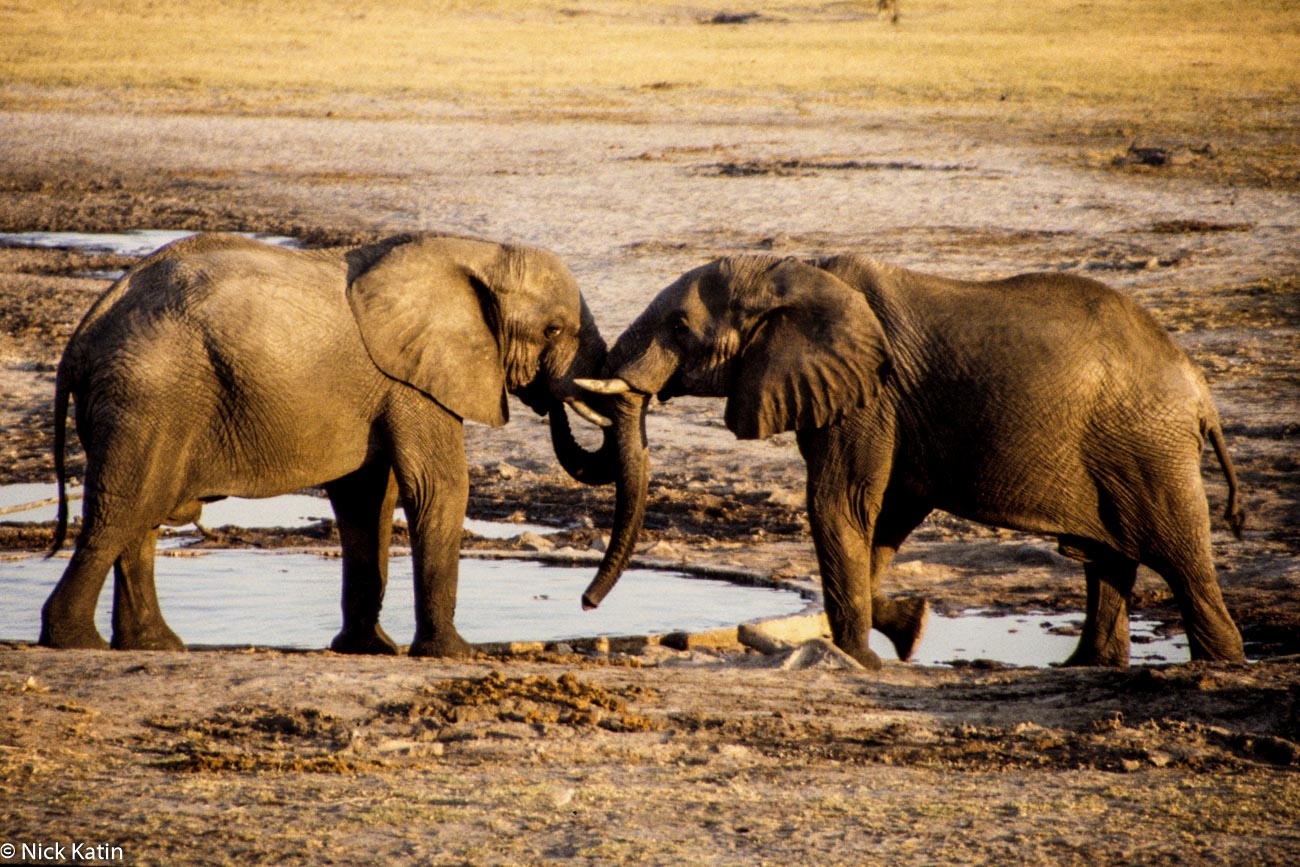
Two elephants mixing it up at a Hwange NP waterhole in Zimbabwe
Our destination was the Bernabe de la Bat Resort in the Waterberg Plateau Park (which sounds a lot more romantic than it is) some 300 kilometres south. We planned to see a couple of sights on the way, Lake Otijikoto and the Hobo Meteorite. Lake Otijikioto is one of the only two natural lakes in Namibia.
This important fact didn’t really make it any more interesting. It’s just a collapsed limestone cavern that later filled with water and the only things of interest was its aqua blue colour and the fact that at its deepest (estimated to be 55 metres) lived some rusting ammunition and artillery. In 1915 the Germans were retreating from the South Africans and decided that dumping their weaponry into the lake to prevent those nasty South Africans having it was a master stroke.
At least the lake was just off the main road.
Not so the Hobo Meteorite! According to the Lonely Planet it was about 25 kilometres west of Grootfontein, which was 63 kilometres east of Otavi making it 38 kilometres from Otavi and a 76 kilometre round trip for us as we passed through Otavi.
Easy! Well no, it was not! In fact the turn off, which was extremely hard to find, is a 76 kilometre round trip but the Meteorite itself was a 160 kilometre round trip!
I guess we could have accepted that had this great artifact from the sky been a sight that would change our lives or at least been mildly interesting. It looks just like a rock (its mostly iron) partially buried in the ground with a little bit of landscaping to make it look pretty. Sure there was some interesting information on a board nearby but nothing we couldn’t have looked up on the internet.
“So what did you expect?” I hear. I’m not sure but it was a long way to go for a lump of iron. If it had been green kryponite that glowed and changed colour, or throbbed like something from Star Trek, I would have been happy. But this thing just looked like something that had been found in another part of the country and brought here to make some extra cash and piss tourists like me off!
The Bernabe de la Bat ‘Resort’ is nestled in the shadow of the 50 by 16 kilometre sandstone Waterberg plateau that stands around 150 metres high.
The campsites were sheer luxury, grass. We hadn’t had grass since Daan Viljoen. No dust to find its way into your sleeping bag at night or blow into the tent by day. It was terrific.
We actually spent the afternoon of our only full day there cleaning the dust out of the car. Considering how small it was, it seemed to hold an awful lot of sand.
In Australia a big proportion of retirees, buy a caravan and do the round trip around Australia, sometimes for months, sometimes for years. In South Africa they head North to Zimbabwe, Zambia, Botswana and Namibia. Namibia is generally favourite amongst those from the Cape Town area. Here at Waterberg, we met three couples up from the ‘Cape’ travelling in convey. They were extremely friendly and helpful (even hanging up our washing whilst we were out walking).
Speaking of walking we followed the only decent length walk trail, outside of the couple of long distance trails, in the park to a spot called mountain view at the top of the plateau. It was not a long climb but it gave us a bit of a workout after the day of driving we had the day before. The views at the top were certainly worth it, we could see for miles across the scrubby plains interrupted by the odd decaying sandstone hill but probably the best view was of the plateau rim with its sheer sided red, orange and green rock and vegetation.
If you like this then hit “follow” on the side bar
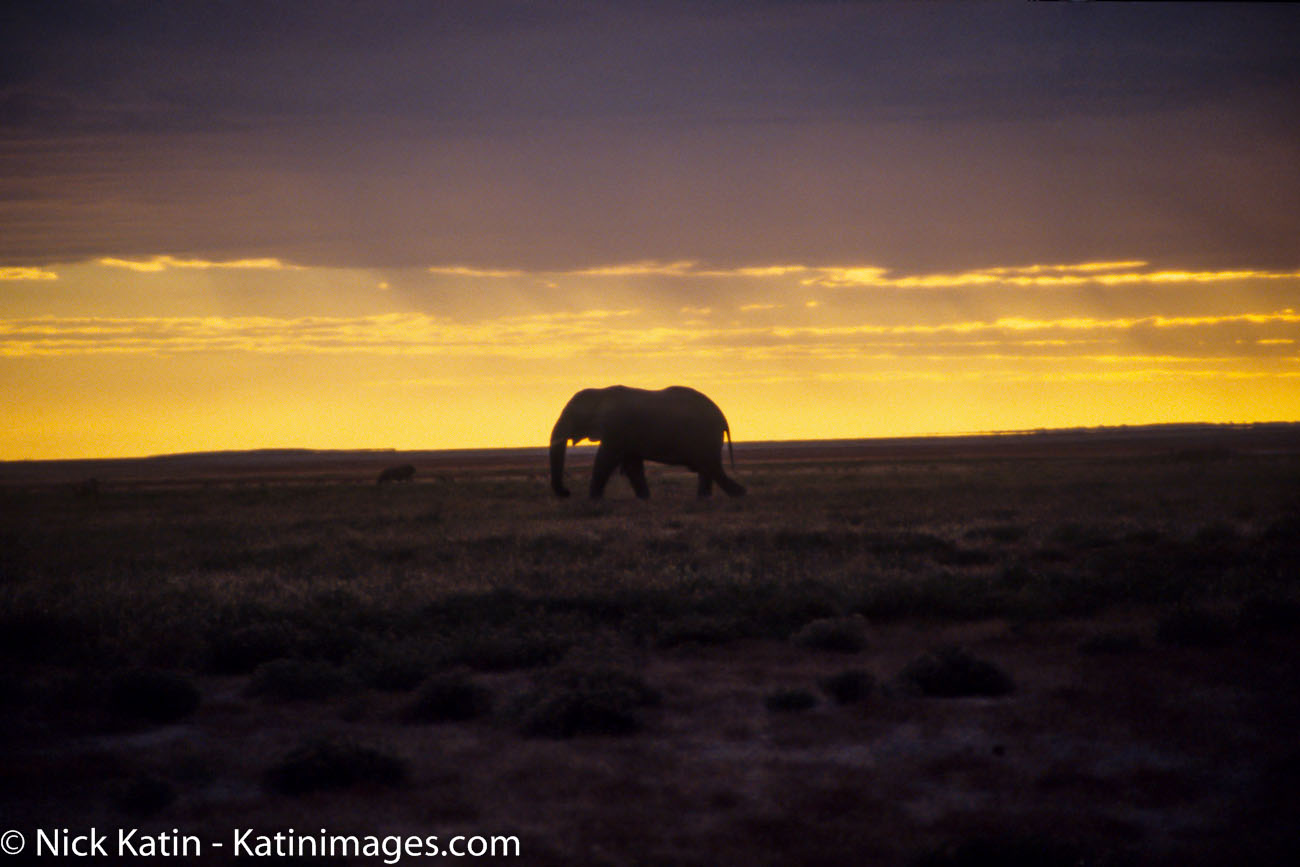
An elephant strolling through the scurb at sunset in Etosha national Park, Namibia
Back at the camp we found a couple of seats by the illuminated camp water hole and waited for the show to start. As darkness came so did a herd of thirsty Elephants. They drank like there was no tomorrow. We thought that they would suck the water hole dry. But suddenly they all stopped and led by the boss bull all fifteen including five babies, trooped off, like a scene from Jungle Book, into the under growth and out of our sight.
Later that night we were really privileged. Three black rhino sauntered down for a drink. Why were we privileged? Well the black rhino is probably the most famous endangered species in Africa. Due, mainly to poaching, there are a little over 3000 left after having a population of 60000 in 1970. It’s not my place to explain the mechanics of why these powerful beasts are exterminated ruthlessly for their horn so that the ‘misguided’ population of some Asian nations can use it for medicinal and aphrodisiac purposes. Nor is it my place to explain why the Yemeni insist that they must have daggers made of rhino horn.
Suffice to say that due to both of these stupid ignorant beliefs a few ruthless businessmen make a fortune out of having a beautiful animal virtually wiped out from the surface of this planet and that sucks!
Black rhino are also one of the ‘big five’. These five were the most prized ‘scalps’ by game hunters and if you think that’s just a relic of the past, then think again, there’s still plenty of opportunities on private land for game hunters to shoot defenseless animals for ‘sport’.
Now the ‘big five’ are sought after for the best viewing. The other four are lion, leopard, buffalo and elephant and on that particular day we had seen three of them.
For those of you thinking of game viewing in Africa, don’t knock yourself trying to see this group of animals. There is plenty of other wildlife to be seen that are just as enjoyable to watch. Game viewing is not a serious of ticks on a ‘to see checklist’ but an opportunity to watch Mother Nature at it’s wildest best.
Anyway that’s enough winging and preaching for now.
The next morning there was wildlife everywhere!………….. Giraffe, zebra, hyena, red hartebeest, impala and kudu to name just a few and then on then way back a huge bull elephant just ambling across the road just a few metres in front of us. It occurred to us at the same time that elephants have been known to charge if spooked, if this baby had turned on us this little ‘Chico’ would have been scrap metal within seconds.
Needless to say I had the gear stick in reverse and the handbrake off, just as a precaution!
The afternoon yielded different results. We went back to Okondeka hoping to see the same pride of lions. They were missing in action but what we did see was a male lion sitting in the shade of a thorny acacia tree, you know the ones, the trees that are shaped like an umbrella and are in almost every African sunset shot found in the glossy travel brochures.
We didn’t realise that he was injured until he got up and strolled or rather limped away. We managed to follow him to his destination, a carcass that probably a few hours a go was live Zebra, going about his business of chewing a few blades of grass, before being brutally murdered for Monsieur lion’s dinner. Somehow the lion must have got injured during the kill, but that didn’t stop him chewing away and at the same time growling at the vultures and jackals who anxious to share the spoils.
It was quite fascinating to watch. I felt like we were watching a discovery channel show!
If you like this then hit “follow” on the side bar
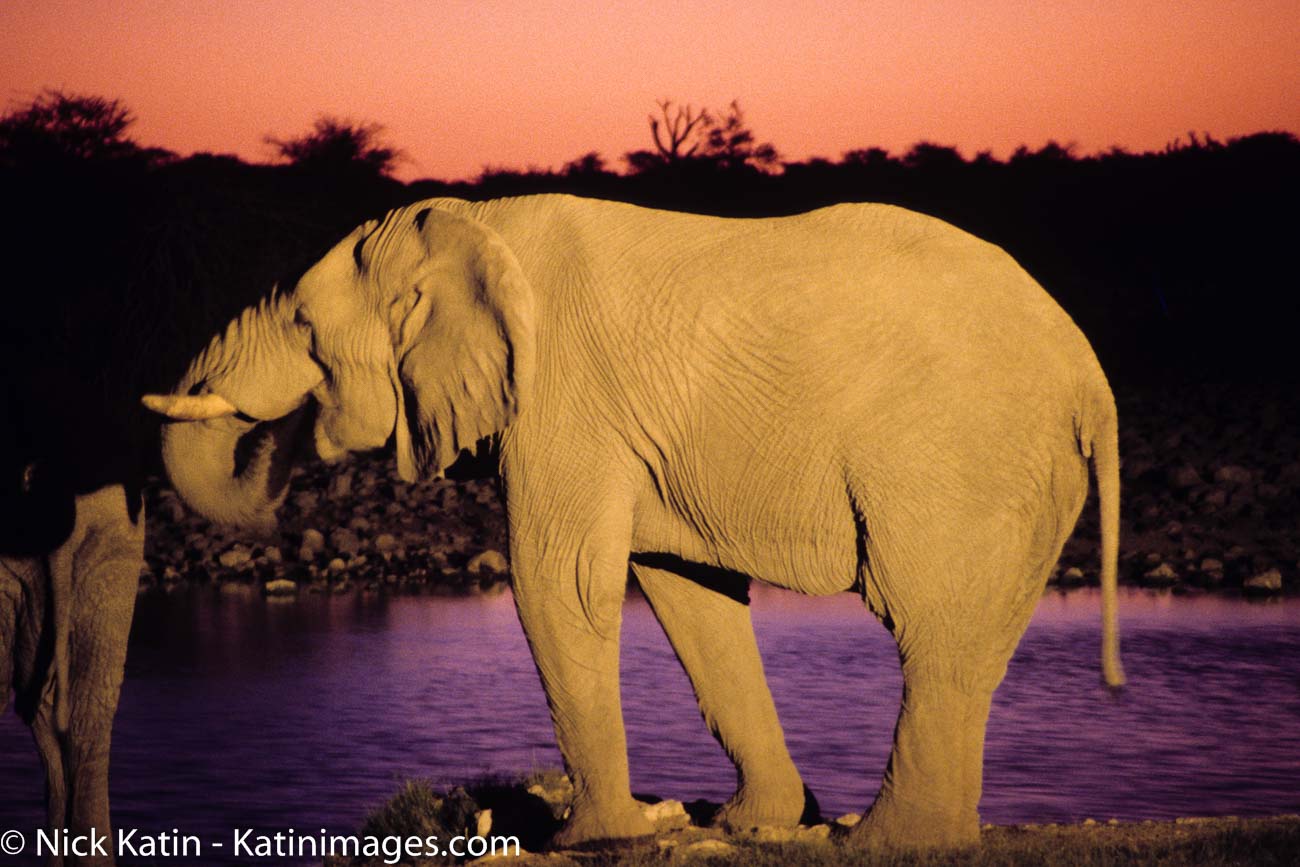
An elephant drinking at dusk at a camp waterhole in Etosha NP in Namibia
So with the flights books and with the aid of countless travel guides borrowed from the library, the internet and the scantiest of information from the few African countries tourist offices in Australia we plotted our route.
We gave ourselves 111 days to travel overland from J’burg to Dar es Salaam, see what we wanted to see and spend only an average US$100 a day, not each, but in total! We would stay in backpackers, youth hostels, cheap hotels and where possible camp. The latter was made a little difficult on account of the fact that we weren’t taking any camping equipment but as they say, there’s more than one way to skin a cat!
The only things we booked here in Perth were our first nights’ accommodation and ten days car hire in J’burg. There was a very important reason for pre booking both of these. Safety! J’burg is infamous for violent crime; the last thing we wanted to be doing when we arrived was wondering the streets looking for somewhere to stay or looking for a hire car. No, we just wanted to stay one night near the airport, pick up a car and get the hell out of there!
We booked the car through our travel agent and the accommodation through the Internet. Maybe it’s because of time constraints, security or lack of knowledge but it’s interesting that so many people still use travel agents. We found a cheap motel in the right location for half the cost of what our travel agent quoted.
An elephant strolling through the scurb at sunset in Etosha national Park, Namibia
Early this century at the ripe old age of just over 45 we backpacked around South and East Africa on our way to an extended stay in Europe.
The ‘plan’ was to travel from Johannesburg (J’burg) by land as far as maybe Kenya or Tanzania and fly on to London from there, allowing time for the TAB factor. TAB stands for “That’s Africa Baby” a common shrug used in times when a plan falls apart due to the many variables that are lacking in the African infrastructure or bureaucracy. For example a bus or even a plane failing to turn up (we had experienced an Air Zimbabwe flight being cancelled at the last minute on our previous visit due to one politician that needed to go shopping in London) or even a hotel being closed, you know the type of thing. So we were well aware of the potential for this factor to change our timing from time to time.
After several visits later to see Tina our travel agent we finally came up with the ideal flight. We could fly Perth to J’burg and then Dar-es-Salaam in Tanzania to London via Paris by Air France. Wow! Paris was high up on the list of places to visit and the ideal place to start our proposed exploration of Europe. However we made one vital mistake, we didn’t book it there and then. When we went to book a few months later that flight had been stopped and we ended up booking the equivalent Qantas/British Airways flights that didn’t stop in Paris. But we did get a free internal flight in South Africa so the gods hadn’t completely deserted us.
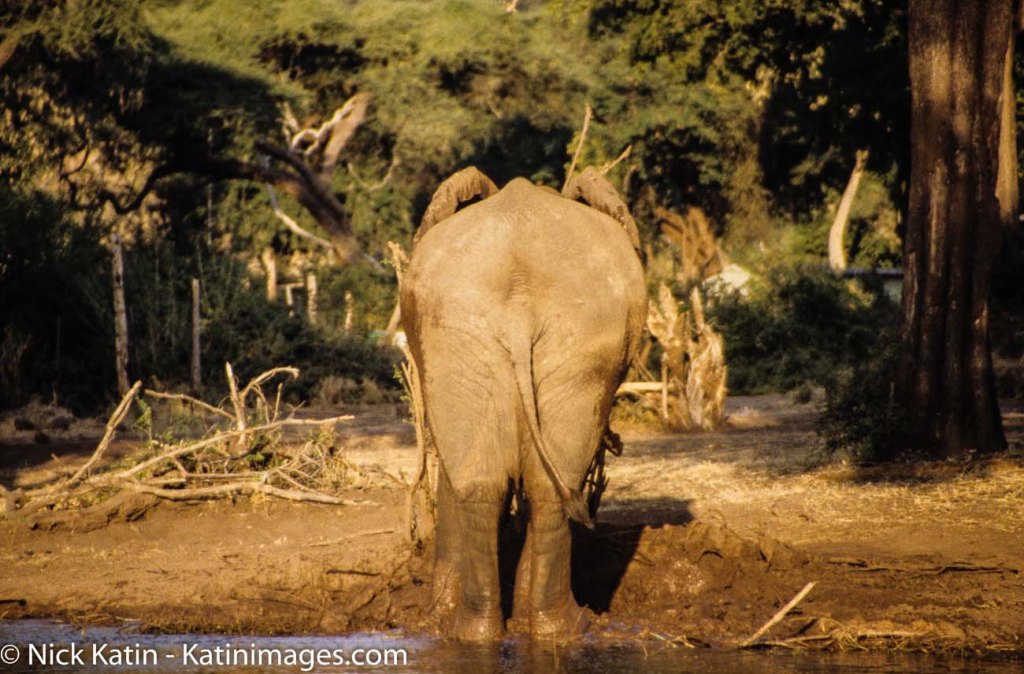
An elephant shows us his rear end by the edge of Chobe lake in Botswana
















 Katin Images Travel Photography