Katin Images Travel Photography

Travel Photos, Travel Photography Tips and Software

Tag: camera equipment

  • Travel Photography guide to Japan Part Two Kyoto and Hiroshima

    Travel Photography guide to Japan Part Two Kyoto and Hiroshima

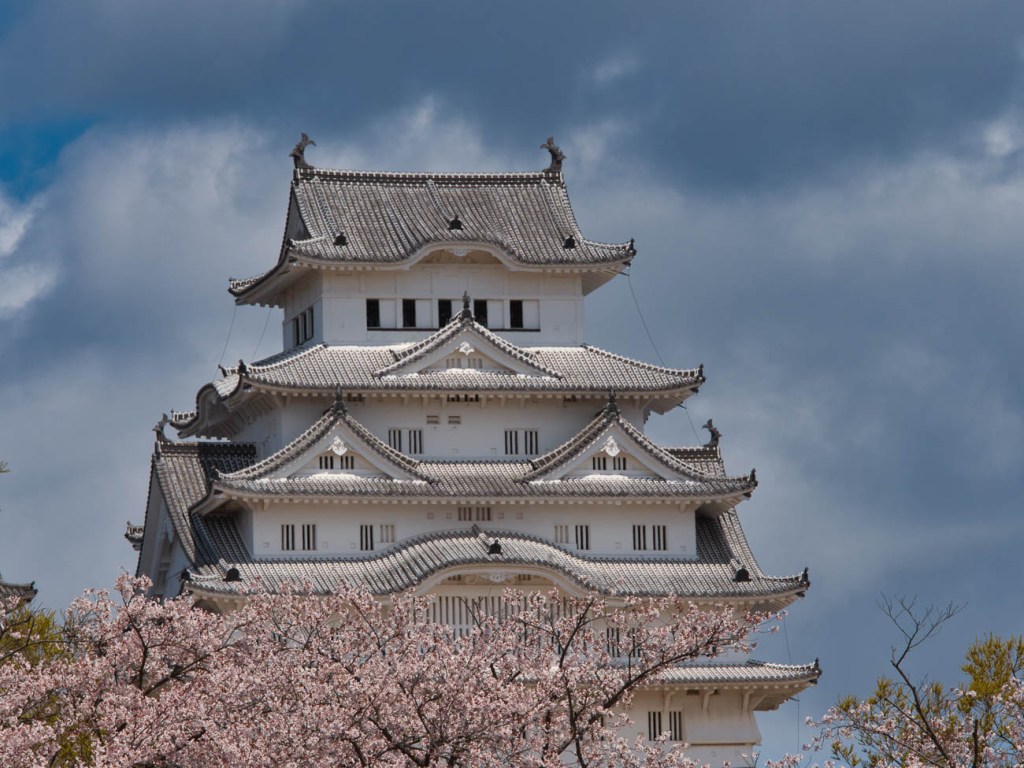
    Himeji Castle and Cherry Blossoms, Himeji, Japan. Click on the image for a larger view

    Travel Photography guide to Japan Part Two Kyoto and Hiroshima

    In part two of this travel photography guide to Japan we go to Kyoto, Hiroshima and a couple of points in between as well as some general items to photograph.
    As I mentioned in Travel Photography guide to Japan Part one you need to make sure you are prepared. If you haven’t read that article, I suggest you, at the very least, go and read the first section.

    What will you see that you might want to photograph?

    I travelled from Tokyo south to Mountains, Hiroshima and a few points in between before getting back to Tokyo.

    The area I covered has a wide variety of different subjects.

    This area, I’m led to understand is similar, with exceptions, to the rest of the country.
    The following is by no means exhaustive. It’s the subjects that I found interesting from a photographic point of view. Others may have a different opinion.

    I’ve only selected three items from each area that have some degree of photographic interest.

    Kyoto

    Kyoto is probably Japan’s jewel in the crown. It’s Paris or New York but on a much smaller scale.

    Because of this you most certainly won’t be alone in wanting to capture all it has to offer. The tourists are many and the crowds are big but don’t let that put you off.

    Kyoto is awesome!

    Before I start on my suggestions on what to photograph. Let me suggest to you something not to photograph.
    Geisha Girls!
    Around the corner from Miyako Odori one of the theatres used for Geisha Dances we saw tourists at their worse.
    The girls had finished their show and were walking out to either other shows or to live their own lives. Still in full dress they had cameras shoved into their faces and some were obviously distressed by this aggressive behavior.

    I didn’t get any photos of them because of that and the fact that these aggressors were in the way!
    So leave them be when there are lots of tourist around.
    You will just be compounding the problems for all of us.

    Onto my suggestions of what to photograph.

    Ponto-Cho area

    Ponto-Cho is a small pedestrian street alongside the main canal and whilst it’s pretty during the day when the cherry Blossoms are out, it comes alive a night.
    The whole area is a fairyland of atypical Japanese buildings and narrow streets, especially across the canal in Gion.
    The best time to take images is at dusk or after dark. So you will need to make some compromises on whether you risk ‘soft’ images due to camera shake or have a bit of graininess in there, some of which can be removed later.
    It’s really all about architecture, people and culture.

    Fushimi Inari-Taisha

    South of the city itself is a little gem of a vast shrine complex.
    There around 10000 shrine gates (torii) that straddle the paths that lead up the mountain to different shrines.
    All are painted in Vermillion Red and you can spend hours here photographing different angles of the architecture of the gates, shrines, graveyards and other buildings.
    You may also get lucky and see priests conducting ceremonies at the actual shrines.

    Torii shrine gates at the Fushimi Inari-Taisha complex in Kyoto, Japan
    Torii shrine gates at the Fushimi Inari-Taisha complex in Kyoto. Click on the image for a larger view.

    Arashiyama Monkey Park Iwatayama

    I’ve put this in to give some variety.
    Architecture, people and culture are great but sometimes you need a break from photographing these subjects.
    And what better way than to photograph Snow Monkeys.
    It’s a steep climb up to where most of them are but you also get the bonus of some great views across Kyoto when you get there..

    So, it’s wildlife and landscapes form the Monkey Park.

    Additionally there is also the famous Golden Temple but you won’t have much time to photograph that as they move you through pretty quickly so I’ve left it out.
    But it’s still worth a visit.

    Himeji

    A day trip from Kyoto or a stopover on the way to somewhere else, Himiji is all about the castle.
    The outside of the Castle is extremely photogenic and if you catch it on a clear day it’s a sight for sore eyes.
    The interior is not so photogenic, so you are better off zooming in to capture small points of interest.

    Next door is Koko-En, reconstruction of a Samurai quarters.
    Well worth a visit as it’s all about gardens and culture.

    Nara

    Again, a day trip from Kyoto.
    Its main attraction is Todai-ji a temple which houses the great Buddha.
    There are other sights and there is around 1200 deer there as well.
    So it’s really all about architecture, culture and little bit of wildlife if can’t help yourself and want to take pictures of bambi.
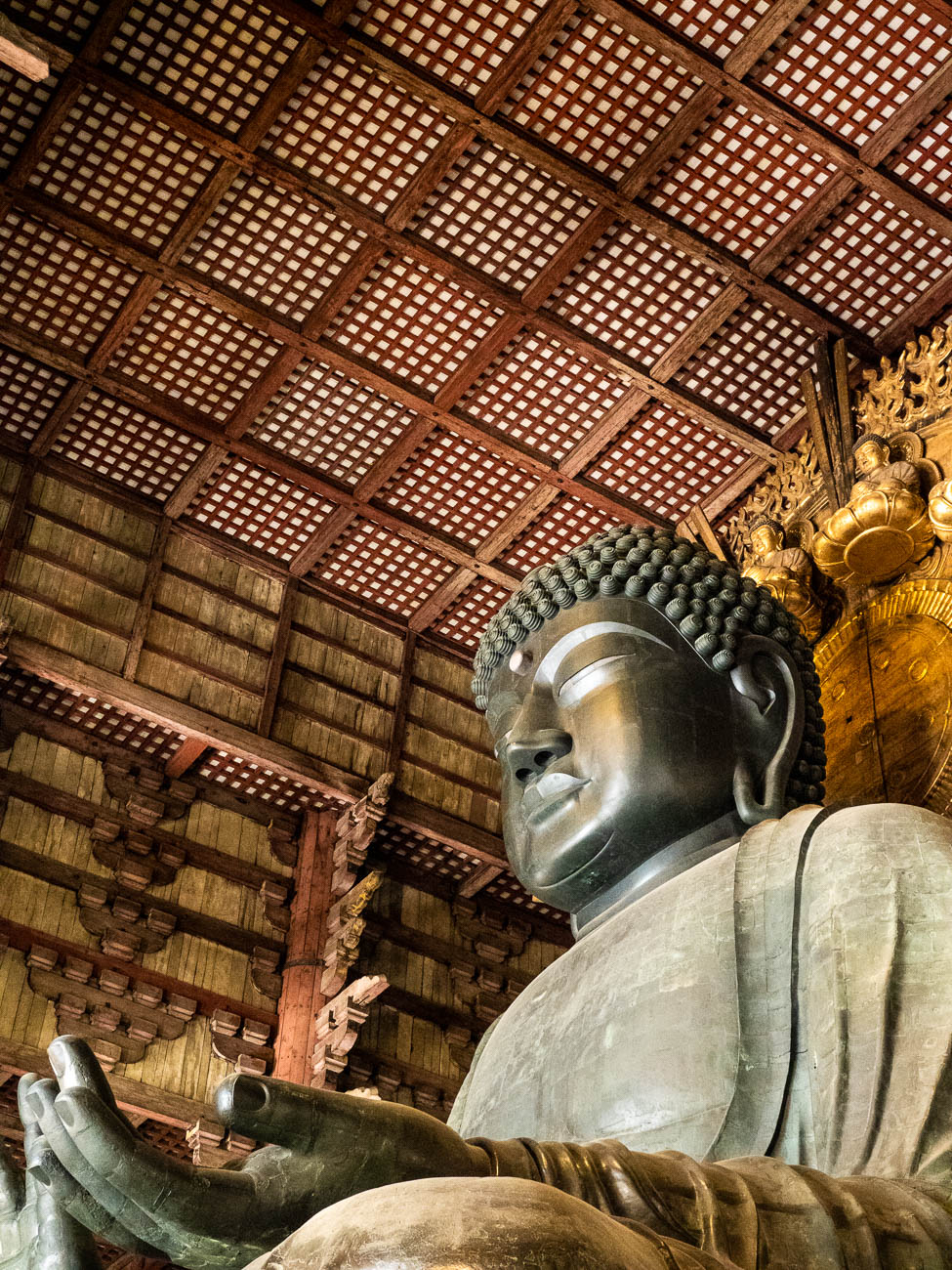
    The great Buddha stature in the Todai-ji Temple at Nara, Japan
    The great Buddha stature in the Todai-ji Temple at Nara. Click on the image for a larger view

    Hiroshima

    There is lots to see and do in Hiroshima. But I’ve concentrated on 2 sights

    Peace memorial Park and surrounds

    Photography aside this is a sobering and confronting area.
    There are a few memorials in the park and a museum.
    There is also what’s left of a building called Atomic Bomb Dome.
    Light is important here as the area lends itself to dawn and dusk light.
    That’s not to say you can’t take pictures during the rest of the day as there is plenty of shade from the trees in the park.

    Miyajima

    A lengthy ferry ride from Hiroshima is the island of Miyajima one of Japan’s most popular tourist spots.
    There are lot activities available there but from a photography subject point of view, there are two main attractions.

    1. The Torii (shine gate) that sits in the water.
      Depending on what time of day you get there, you may well have to queue to take the popular front on view.
      Take that one but also look for side views and reflections.
    2. Misen at 530M is the Mijajima’s highest spot and you can get there via ropeway and a bit of a hike.
      Terrific views of the ocean and mountain ranges beyond are worth the trouble.

    After you finished go find the Miyajima Brewery.
    Great beer with water views and nice food.

    Summary for Travel Photography Guide to Japan Part Two Kyoto and Hiroshima

    1. Kyoto is Japan’s tourist equivalent to Paris, New York or London with some much diversity
    2. Himeji and Nara make for great photographic stopovers.
    3. Hiroshima is a thought provoking and promotes a different type of photography. Don’t forget to get to Miyajima

      Make sure you check out the Lonely Planet guide to Japan and the Japan Visitor Centre for some great travel info.

    Thanks for reading this article

    Do you see yourself taking some great travel photos that you can share or display?
    Or can you see yourself reliving your travel experience by bringing home some emotive travel photos?
    Maybe you aspire to getting your travel photos published.

    If one or all of these is YOUR goal, I can help. Sign up in the box below to subscribe to my exclusive Travel Photo Tips Newsletter.
    Remember if you want to take great travel photos

    • that you can share and display.
    • that help you relive your travel experience
    • that give you a chance to have your travel photos published
      then sign up below and subscribe to my exclusive Travel Photo Tips Newsletter.
  • Travel Photography guide to Japan Part one Intro, Tokyo and Mt Fuji

    Travel Photography guide to Japan Part one Intro, Tokyo and Mt Fuji

    Mount Fuji. For a larger view click on the image

    Travel Photography guide to Japan Part one Intro, Tokyo and Mt Fuji

    Earlier this year I visited Japan for the first time, and I was knocked out. Not literally but WOW! what a place!

    I will follow up with more articles on photographing Japan

    Let’s start with a bit of prep.

    This is not intended to be a travel guide but a few tips on what, where and how to photograph some of the areas of Tokyo and Mt Fuji areas of Japan.

    What to take

    I’m not going to repeat what I said in Planning and Preparation for Travel Photos

    but I will highlight some of the things I recommended there as they are important.

    Depending on where you are travelling, I would recommend you take the following:

    Everywhere:

    • Camera Body or Compact Camera with Optical Zoom Lens
    • Lots of empty memory cards.
    • It’s one of the most photogenic countries in the world regardless of what time of year you go. Take lots of 32GB Memory cards you’ll need them.
    • More than one charged battery for the same reason as having lots of memory cards. Have one in the camera and 2 charged spares
    • A lens cloth
    • Filters, if you use them, particularly Polarisers and Neutral Density,

    If you intend using only a smartphone you will need lots of storage. See How to Back up your Travel Photos. to see the best ways to back up a Smartphone.

    You also need to be aware that, with only a smartphone, you won’t have the flexibility to get shots of a lot of what Japan has to offer.

    Cities

    There’s lots of subject matter in Japanese cities.
    So depending on your interests you need the following, if you have them.
    If you don’t, put them on your wish list if you have plenty of time:

    • People and Street – 50 or 80MM Prime Lens plus a 28-150mm Telephoto
    • Journalistic or lifestyle – 80 or 100mm Prime Lens plus a Telephoto Lens of 28-150mm
    • Architectural – 24-100mm Telephoto and a 35 or 50mm ‘Fast’ Lens i.e. F1.2 or 2.4.
    • Restaurants, Bars etc. – For low light plated food, a wide angle or 50mm lens with a large maximum aperture of F1.2 or 2.4.

    Outside of cities

    • Landscapes – Tripod and a 24mm Wide-Angle plus a Telephoto with a minimum focal length of 100mm
    • Culture – 80 or 100mm Prime Lens plus a Telephoto Lens of 28-150mm

    Again, this is a wish list. If you only have a telephoto because you have a compact camera, or you can’t afford a prime lens then you can get by.
    A Telephoto Lens plus an 80mm Prime Lens ticks the 80/20 rule.

    What will you see that you might want to photograph?

    I travelled from Tokyo south to Mountains, Hiroshima and a few points in between before getting back to Tokyo.
    The area I covered has a wide variety of different subjects.
    This area, I’m led to understand is similar, with exceptions, to the rest of the country.

    The following is by no means exhaustive. It’s the subjects that I found interesting from a photographic point of view. Others may have a different opinion.

    I’ve only selected three items from each area that have some degree of photographic interest.

    Tokyo

    Tokyo is everything you expect and more. It would take a lifetime to discover everything it has to offer

    Shinjuku Station

    The World’s busiest transport hub where nearly 4 Million plus passes through every day. Here it’s worth watching and waiting to get some good people shots.

    Shibuyu Junction

    It’s humanity at its most compressed as literally thousands of people cross the junction every day.
    At its busiest nearly a thousand people cross at one time.
    Again, it’s people but don’t expect to get portraits it’s way too crowded for that.

    Tsukiji Market

    Like food? Like to take food close ups and people involved with serving it and cooking? Then Tsukiji is the place. Food is also pretty good if you want to put down and rest your overworked camera.

    A boat of Tuna and Otoro served up in Tokyo's Tsukiji Market
    A boat of Tuna and Otoro served up in Tokyo’s Tsukiji Market. Click on the image for a larger view and other options

    Mount Fuji

    Away from the madness that is Tokyo, Mount Fuji is usually viewed from 2 sides:

    Kawaguchi-Ko

    The centre of the area called Fuji Five Lakes, Kawaguchi-Ko is a very busy place and the town itself is ok. What it’s famous for is the views of Mount Fuji.
    There are 2 well know photos locations of Mt Fuji and both are near Kawaguchi-Ko.

    Fuji-Sengen-jinja is known for the photos of the shrine with the backdrop of Mt Fuji.

    Mt Fuji from the famous shrine of Fuji-Sengen-jinja
    Mt Fuji from the famous shrine of Fuji-Sengen-jinja Click on the image for a larger view and other options


    On the north side of Lake Kawaguchi-Ko is another famous spot to capture Mt Fuji and its reflection on the lake. Sadly, it was too windy when I was there, so I couldn’t replicate that shot.

    Hakone

    Whilst the view of Mt Fuji from Hakone is not so well known.
    It’s much smaller (and quieter) than Kuwaguchi-Ko and the views are much more varied.

    Take the Hakone circuit which is a combination of different transport modes such as cable car, ship, narrow-gauge rail, gondola and bus.
    On this circuit you will see lots of different scenery and some small towns all of which provide ample reward for the travel photographer. More info can be found here

    Watch out for the next article on Japan:
    The Travel Photography guide to Japan Part two Kyoto and Surrounds

    In the meantime check out the Lonely Planet guide to Japan and the Japan Visitor Centre

    Summary for Travel Photography Guide to Japan Part One Intro, Tokyo and Mt Fuji

    1. Japan has that WOW factor that you want to make sure you capture with your travel photos
    2. You need plenty of Battery Power and Storage
    3. To give you the best opportunity to take some great photos you need more than just a smartphone.
    4. A removable lens camera will do that for you
    1. Tokyo has many, many interesting a diverse attractions but you can’t see them all
    2. Mt Fuji is as spectacle in the flesh as it looks. Take lots of shots from different locations and angles.

    Do you see yourself taking some great travel photos that you can share or display?
    Or can you see yourself reliving your travel experience by bringing home some emotive travel photos?
    Maybe you aspire to getting your travel photos published.

    If one or all of these is YOUR goal, I can help. Sign up in the box below to subscribe to my exclusive Travel Photo Tips Newsletter.

    Remember if you want to take great travel photos

    • that you can share and display.
    • that help you relive your travel experience
    • that give you a chance to have your travel photos published
    • then sign up below and subscribe to my exclusive Travel Photo Tips Newsletter.
  • Tips for travelling with Camera Equipment

    Tips for travelling with Camera Equipment

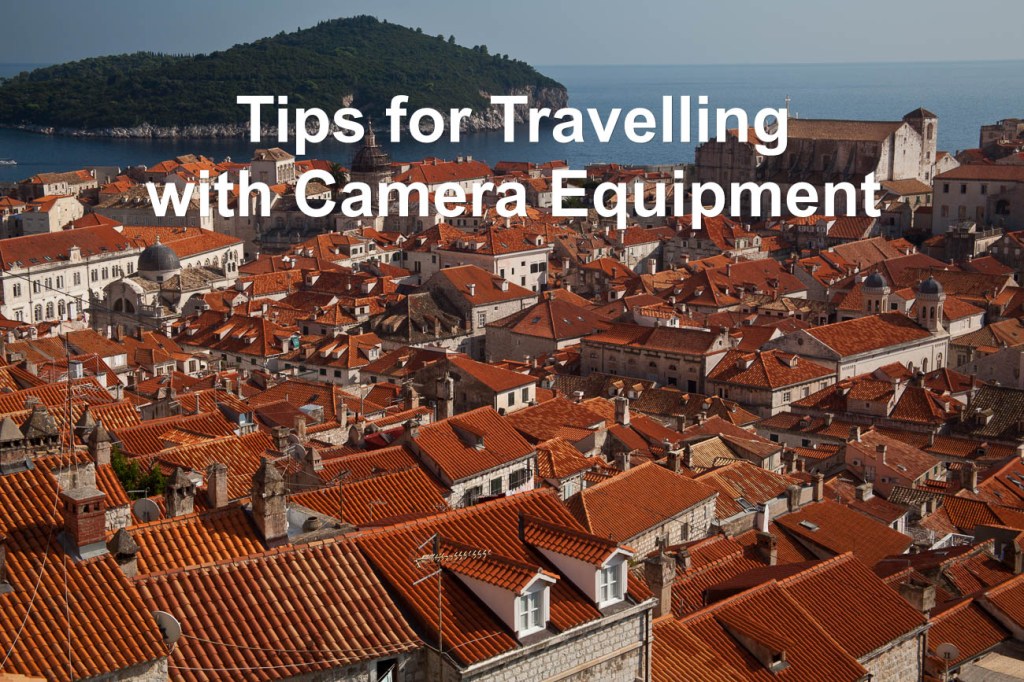
    Rooftops of Dubrovnik’s old town. click on the image for other views

    If you are off on some travels soon and you want to ensure that you make best use of photographic opportunities you will discover, it’s worth having a plan. Especially about the Camera Equipment you are going to take with you.

    I cover this is a number of posts:

    The Travel Photographer Destination Guide Part One

    The Travel Photographer Destination Guide Part Two

    Planning and Preparation for Travel Photos

    However, it’s always worth getting other perspectives.

    Tips for travelling with Camera Equipment
    Rooftops of Dubrovnik’s old town. Used extensively in the Game of Thrones TV series. Click on the image for a larger view

    This episode of the podcast TWIP (This Week in Photo) is called “Why you be trippin”. In it Frederick the host, is joined by 2 travel photographers, frequent-flyer Jeff Cable and globe-trotting photographer Giulio Sciorio.
    They discuss what camera equipment to take with you, and what to leave at home.
    They also reveal some secret packing tips that may just change the way you think about luggage!

    Do you see yourself taking some great travel photos that you can share or display?

    Or can see yourself reliving your travel experience by bringing home some emotive travel photos?

    Maybe you want to get your travel photos published.

    Tips for travelling with Camera Equipment
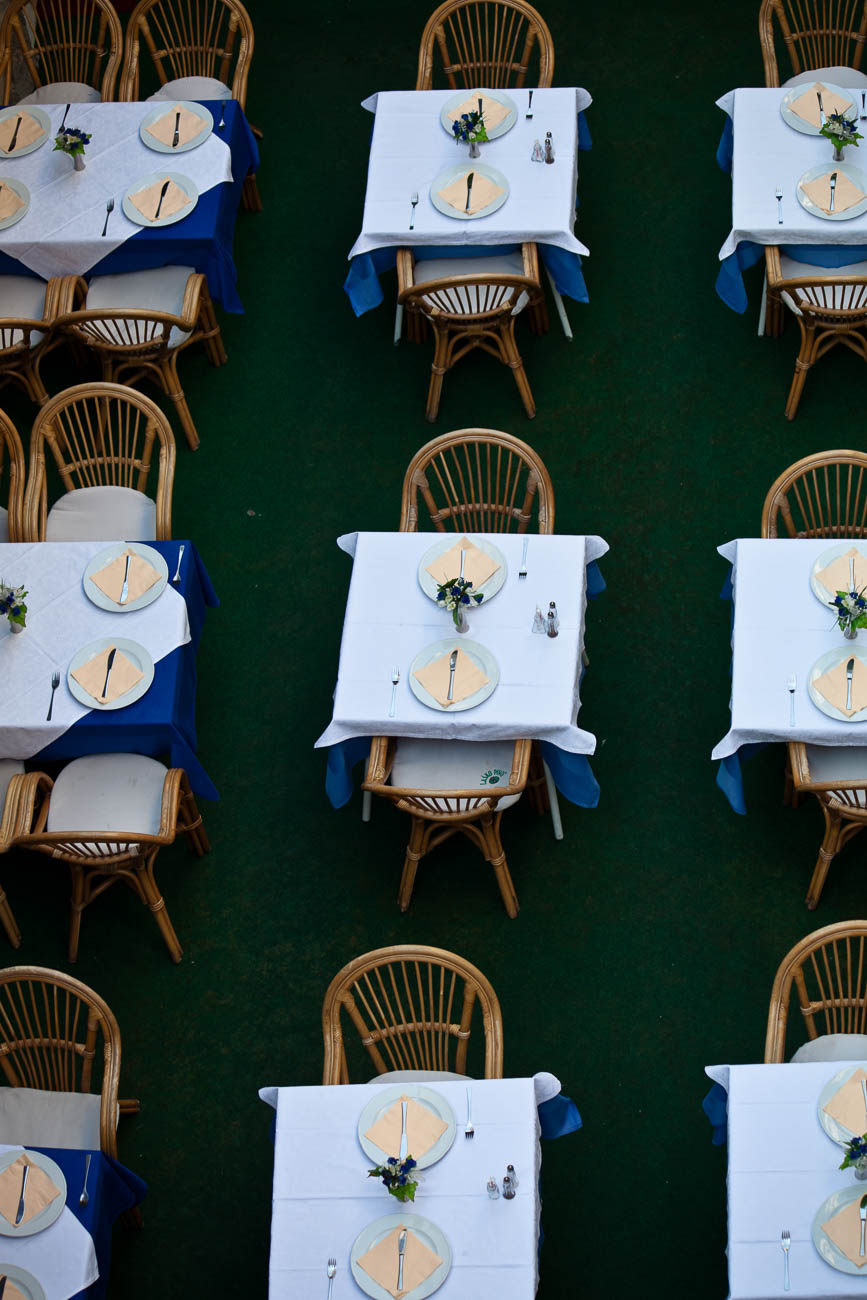
    An aerial view of a cafe and it’s tables settings in Dubrovnik, Croatia. Click on the image for a larger view

    If one or all of these is YOUR goal, I can help.

    If you go to the form below you can sign up and get my free eBook “9 ways to improve your Travel Photography”.

    At the same time, you will also subscribe to my Travel Photo Tips Newsletter which is exclusive to those who have signed up.

    Remember if you want to take great travel photos

    • that you can share and display.
    • that help you relive your travel experience
    • give you a chance to have your travel photos published

    Then subscribe to my Travel Photo Tips Newsletter and for your trouble get my eBook “9 ways to improve your Travel Photography”

    Any questions then please write your comments below or contact me here

    Now that you’ve got down this far can I ask a favour?

    Please share this with anyone who is going on a trip and wants to take and bring back some great travel photos.

    You’ll not only be doing both them and me a favour.