Katin Images Travel Photography

Travel Photos, Travel Photography Tips and Software

Tag: aperture

  • Learn how to use aperture priority in 15 minutes

    Learn how to use aperture priority in 15 minutes


    You’ve got the new beaut camera or maybe you dusted off an old one that you’ve had for a couple of years and instead of using your smartphone, you thought you would use this for your marketing images. After all you have enough of searching for stock photos that just aren’t what you need.

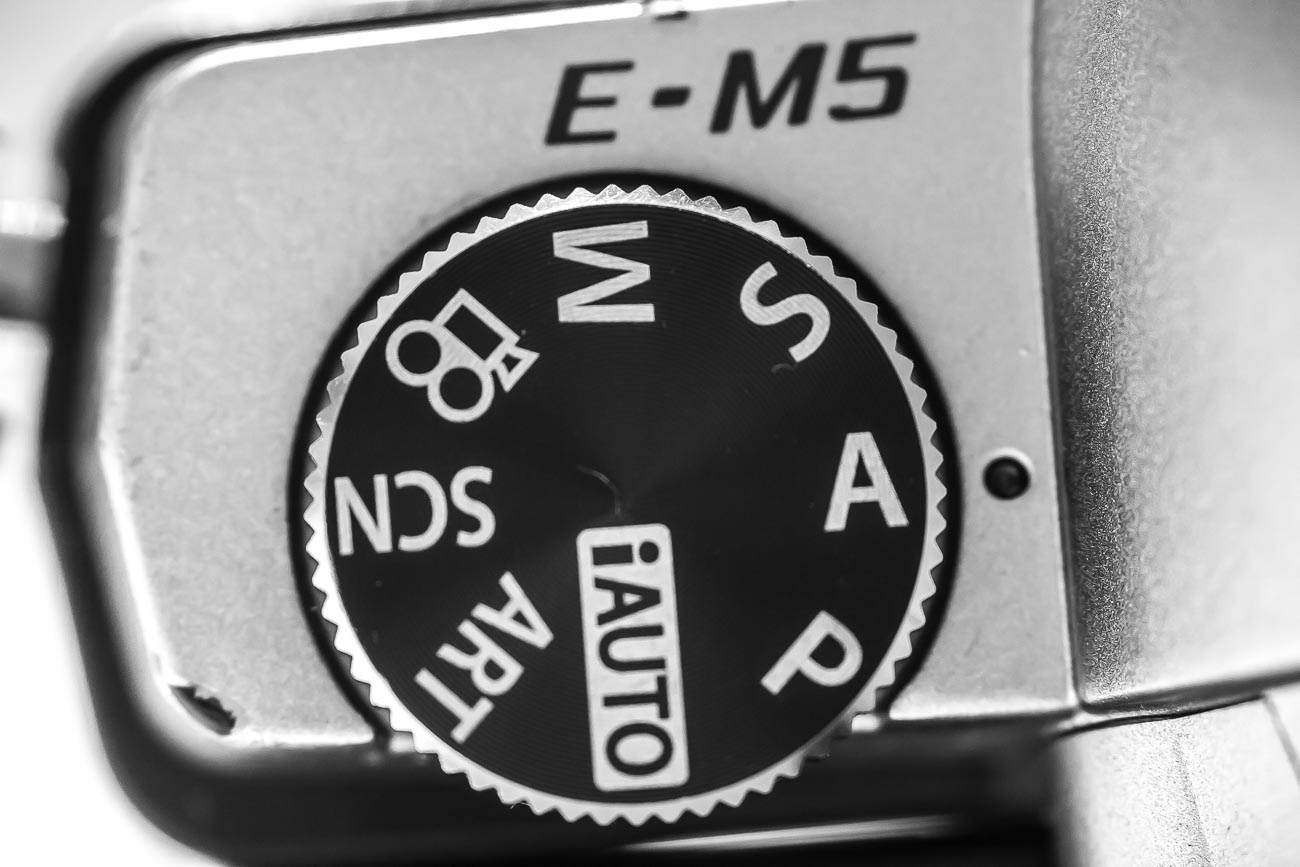
    After looking at this camera you realise there’s a dial on it that says A, P, S and P and maybe a couple of other items like the picture of a video camera, auto or some other sign that gives you choices to select a genre. But you’ve heard that the best way to shoot is to use “A’. But what is A?

    Well it’s Aperture priority. Now to refresh your memory on what aperture is I’ll send you off to have a quick read of these 2 articles.

    10 Vital Facts about Camera Aperture

    Understanding the 3 points of the exposure triangle

    So now you’ve done that or at least scanned it. Lets’ go forward

    A stands for Aperture – yes, you’ve worked that out. Great!

    Aperture is measured in f-numbers. An f-no. or f-stop is the size of the aperture and by moving that dial you control it.

    Usually the numbers relate to a stop and each stop represents twice the preceding value and half the next higher value. So, if the number was 1 then the next number would be 2 and then the next number would be 4 and so on.

    In f-nos they look like this:

    f/2.8, f/4, f/5.6, f8, f11, f16, f/22 which is slightly different from what I just told you and that’s because it works in the amount of light it lets in. f/4 lets in half as much light as f/2.8, f/5.6 lets in half as much light as f4, f/8 lets in half as much light as f5.6 and so on.

    It is arguable that changing the Aperture setting is the best or at least one of the best ways to be creatively in control with the final image that you want.

    So why would you want that? Well from a creative control point of view it gives you options.

    Options like how much you have in focus;

    Basically, as you look at a subject or scene you can set the F-no. so that you can decide what you want in focus. That could be just the subject or everything you can see within the frame.

    How does it do that? Well I won’t go into the physics too much as you’re here to learn quickly and I don’t want you to get bogged down in detail.

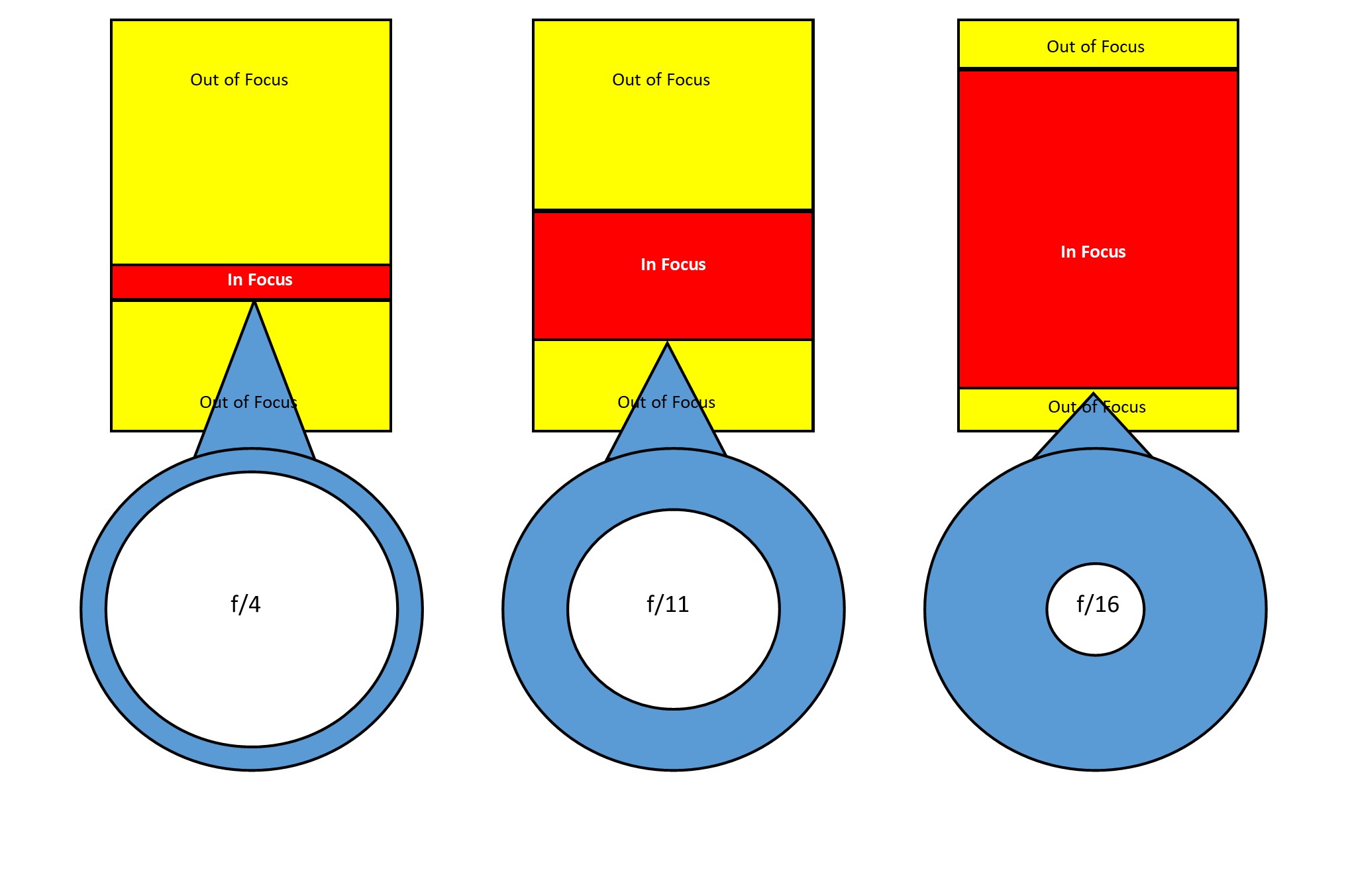
    In simple terms, the bigger the hole or aperture the less of the scene in front of the camera from front to back is in focus.

    And that is called the Depth of Field (DOF).

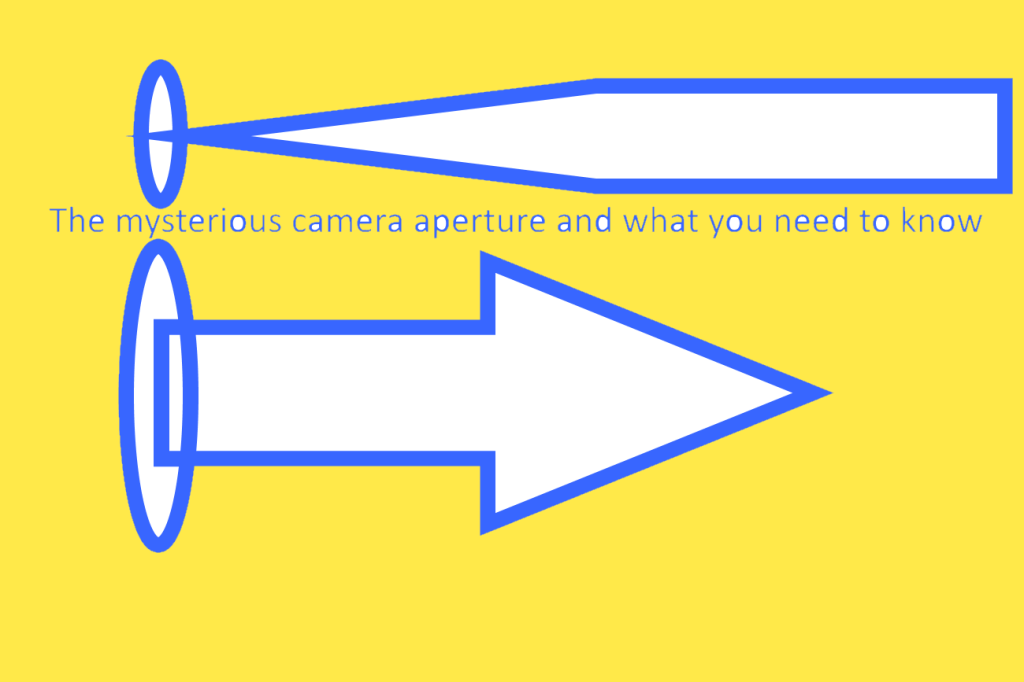
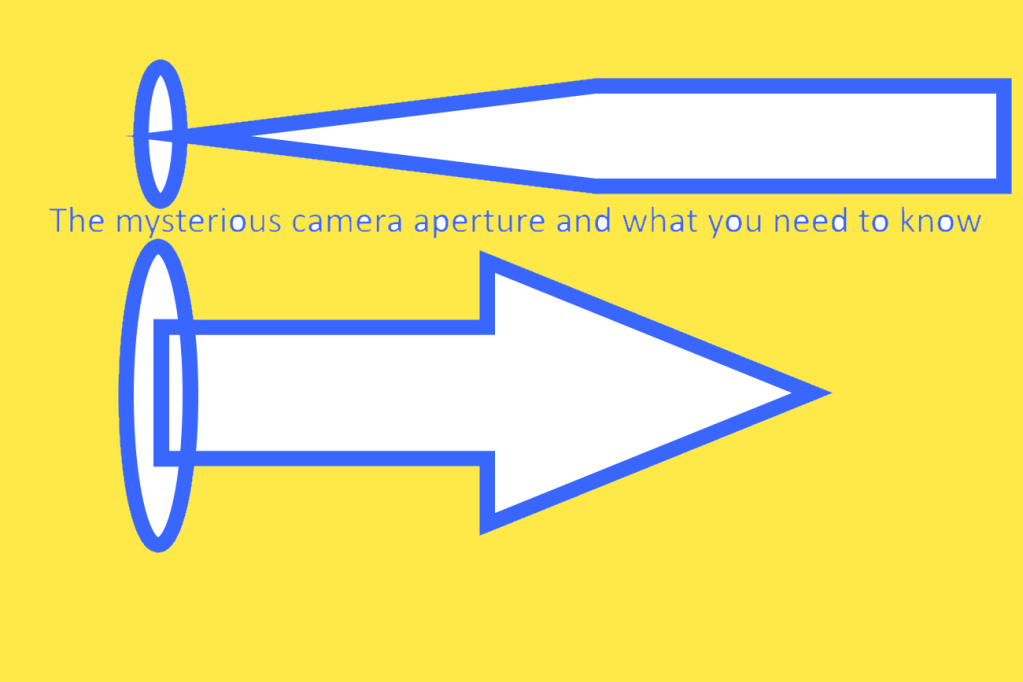
    Let’s look at this infographic that shows the differences in f-no in a plan or overhead view:
    Learn how to use aperture priority in 15 minutes

    The left-hand side shows a shallow DOF due to a small f-no or a large aperture. The amount in focus is quite narrow. Whilst if we go to the right-hand side the amount in focus is significantly greater.
    If I added another diagram to the far right showing an even smaller aperture then the amount in focus would extend out to infinity. I didn’t want to confuse you though.

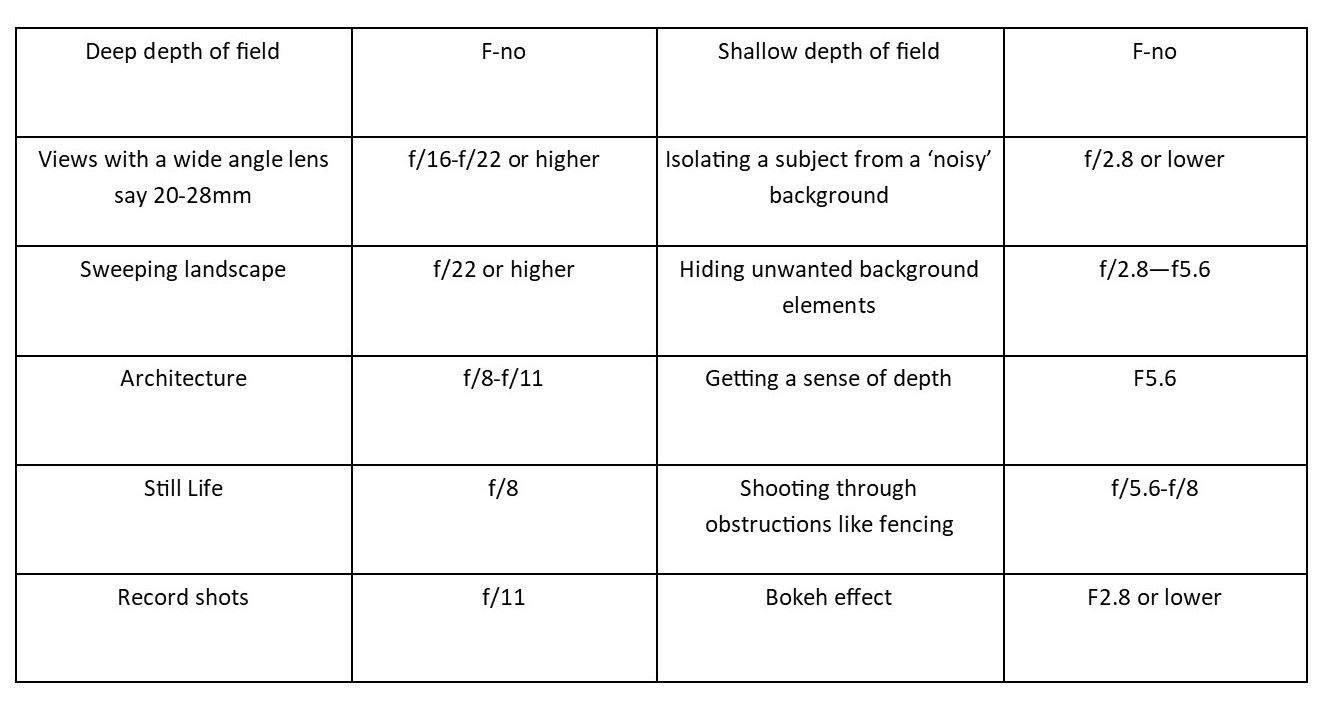
    So, let’s look at when you would use this with this little chart:


    Learn how to use aperture priority in 15 minutes

    OK enough from me, now it’s down to you.

    1 Grab that camera, turn it on and take off the lens cap!

    2 Get a bottle or a can or vase (the subject)

    3 Now go outside

    4 Mount ‘the subject’ on a table or some support

    5 Find that dial that has “A” on it and find the dial that you use to adjust it.

    6 If you have a zoom lens make sure it’s between 50mm and 100mm (35mm equivalent).

    7 Now take three shots:

       1 At Ff2.8 or lower if your camera goes that low. You may find that you can’t go as low as that due to the lens you have. So, in that case just go with the lowest setting.

       2 At f/11

       3 At f/22. If possible, this shot should have a long background.

    Because ideally you want the same background, having a big garden or living in an apartment with a view are the ideal locations.
    But you could just go to the nearest park and take all three there.

    Compare the shots to see the differences and then play around with different focal lengths as that can make also change the DOF.

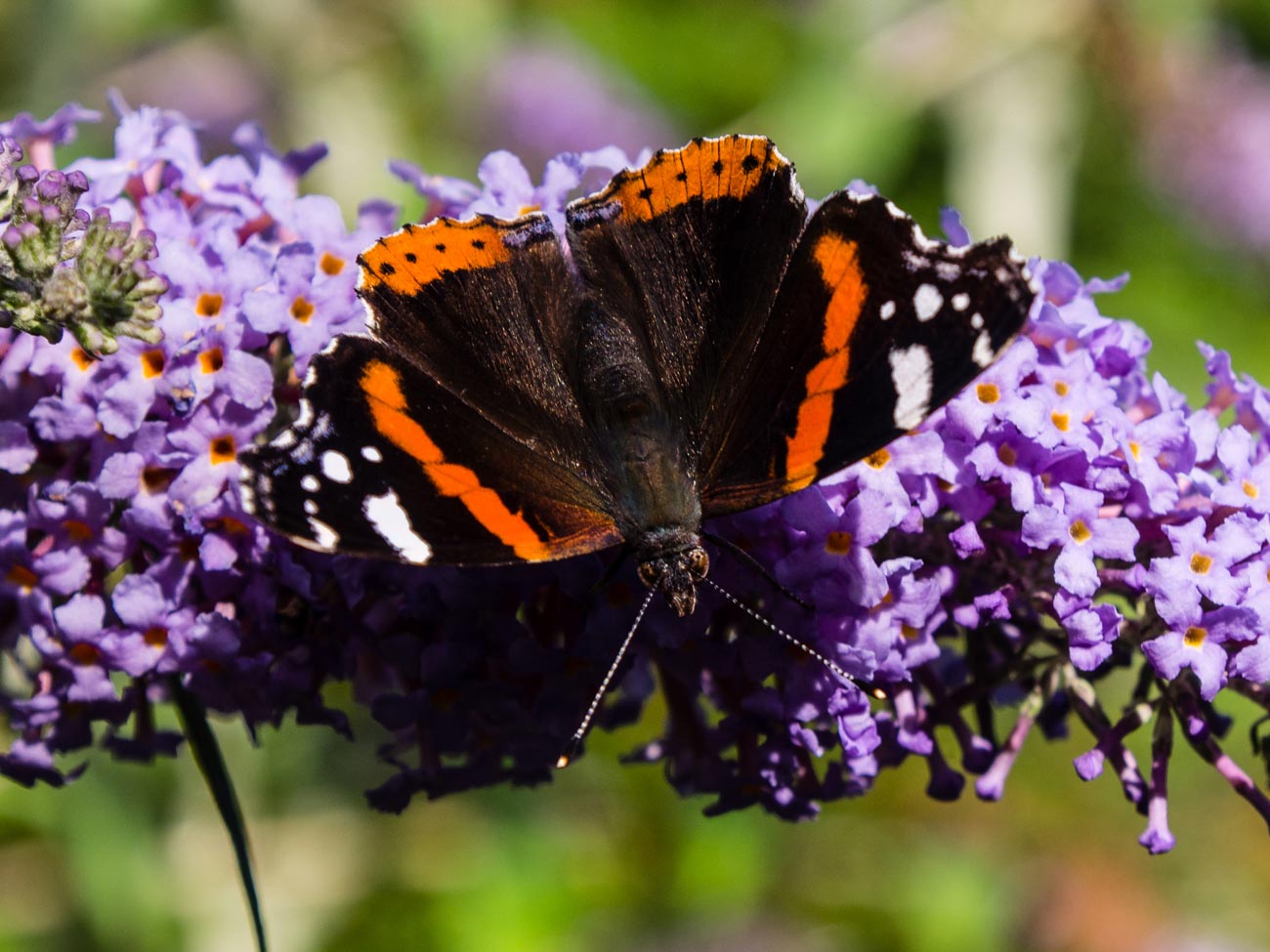
    See these examples:
    f/5.6
    Learn how to use aperture priority in 15 minutes
    f2.8

    It’s best, if possible, to compare images on a monitor or at least a tablet.

    Voila, you should now have an understanding of how to use the A or Aperture setting.

    All in all, that should have taken you around 15 minutes (not counting any travelling time).

    As an aid to this I have a simple checklist for you to download.

    Just pop your name and email in the box below and it will magically appear in your inbox.


  • How to get ahead of your competition – get good images

     How to get ahead of your competition – get good images


    I am the image maker,

    So, sang The Kinks in Ordinary People in 1975

    As a photographer and someone who has been involved in sales and marketing as a profession, I shake my head at the way some business’s view the use of images in marketing.

    Because image is everything!!

    I’ll say that again; “image is everything!!”

    It’s no longer about what your product is, it’s now about what your product looks like and represents, and that means image.

    Which is why my most recent post is How to get ahead of your competition – get good images

    One of the questions I get asked is “what the hell is the camera aperture and why do I need to know about it?”

    10 Vital Facts about Camera Aperture

    If that’s a question you have been pondering, then hopefully I’ve nailed it for you in

    10 Vital Facts about Camera Aperture

    With today’s technology, I can tailor make these newsletters to suit you specific interests or needs.

    So, to help me help you (is that a double object or something?) I’d be grateful if you can answer the following:

    What’s your real pain when it comes to marketing?

    What’s your number one challenge when it comes to Photography?

    What else is a challenge for you in marketing and/or photography?

    Just let me know in the comments section below or email via the contact page.

    As always please share and talk to you next week

  • Understanding the 3 points of the exposure triangle

    Understanding the 3 points of the exposure triangle

    So, what is the exposure triangle?

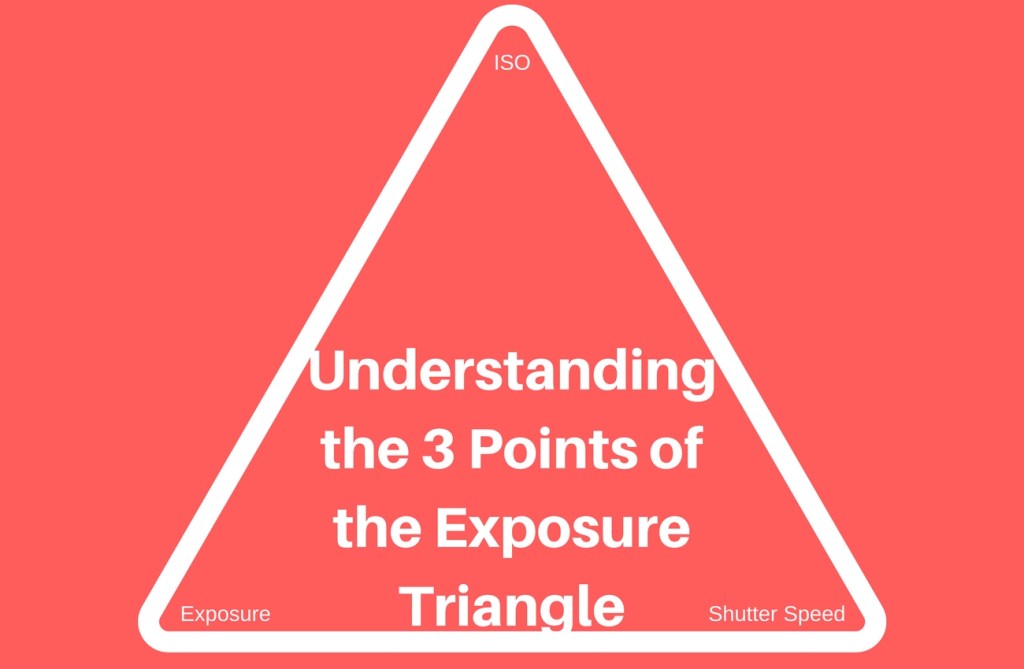
    Well the exposure triangle is the relationship between aperture, shutter speed and ISO.
    Each one affects the other.

    OHM’s Law

    Remember Ohm’s law? Well if you don’t (I’m not even sure they teach it at school these days).
    It’s basically an electrical equation V Volts (power) = R Ohms (resistance) x I Amps (current) and if you change one you change the other.
    If you know the power and the resistance then by changing the equation to Volts ÷ Ohms = Amps, you can work out the current (amps).

    Understanding the 3 points of the exposure triangle

    It’s the same for the exposure triangle.

    The Three Points of the Exposure Triangle

    1. Aperture

    Aperture is a hole that lets light in. The bigger the hole the more light you let in.
    What does that mean?
    It means the smaller the hole the more in focus – the bigger the hole the less in focus.

    Let’s say you took a picture with a setting of F2.4. Because the size of the hole is inversely proportional to its setting that’s a large hole. The subject will be in the focus but the background will be blurry.

    But if you took a picture with a small hole e.g. a setting of F22. then everything will be in focus. That’s not strictly true as the amount in focus starts at the point at which you are focusing the camera out towards, potentially, infinity. 

    2. Shutter speed

    This is an easier one to grasp.
    As with the aperture, the longer the shutter is open the more light you allow in.
    Shutter speeds are measured in fractions of second to seconds.
    So, a shutter speed setting of 1/100 is one hundredth of a second or .001. A setting of 5 is 5 seconds.
    However, the effect is totally different from the aperture. A fast shutter speed will generally freeze motion e.g. sports. Whilst a slow shutter speed will blur motion e.g. a fluid looking waterfall.

    3. ISO

    ISO stands for International Organization for Standardization and in the film days was an indicator of how sensitive to light a film was.
    An ISO 400 film was 4 times as sensitive to light than a ISO 100 film.
    On digital cameras that sensitivity is for the camera sensor. When the ISO is increased or decreased you are in effect, making the camera sensor more or less sensitive to light.
    ISO 100 being the least sensitive whilst ISO 25600 plus is the most sensitive.

    Practical Example

    So, there you have the three points of the exposure triangle.

    I’ve already mentioned how each one affects the other but let’s see how that affects, for example, Product photography and look at a couple of specific examples.

    OK, so we’ve got this new beaut product that we want to take to the market place and we want to create some really cool images to use for marketing.
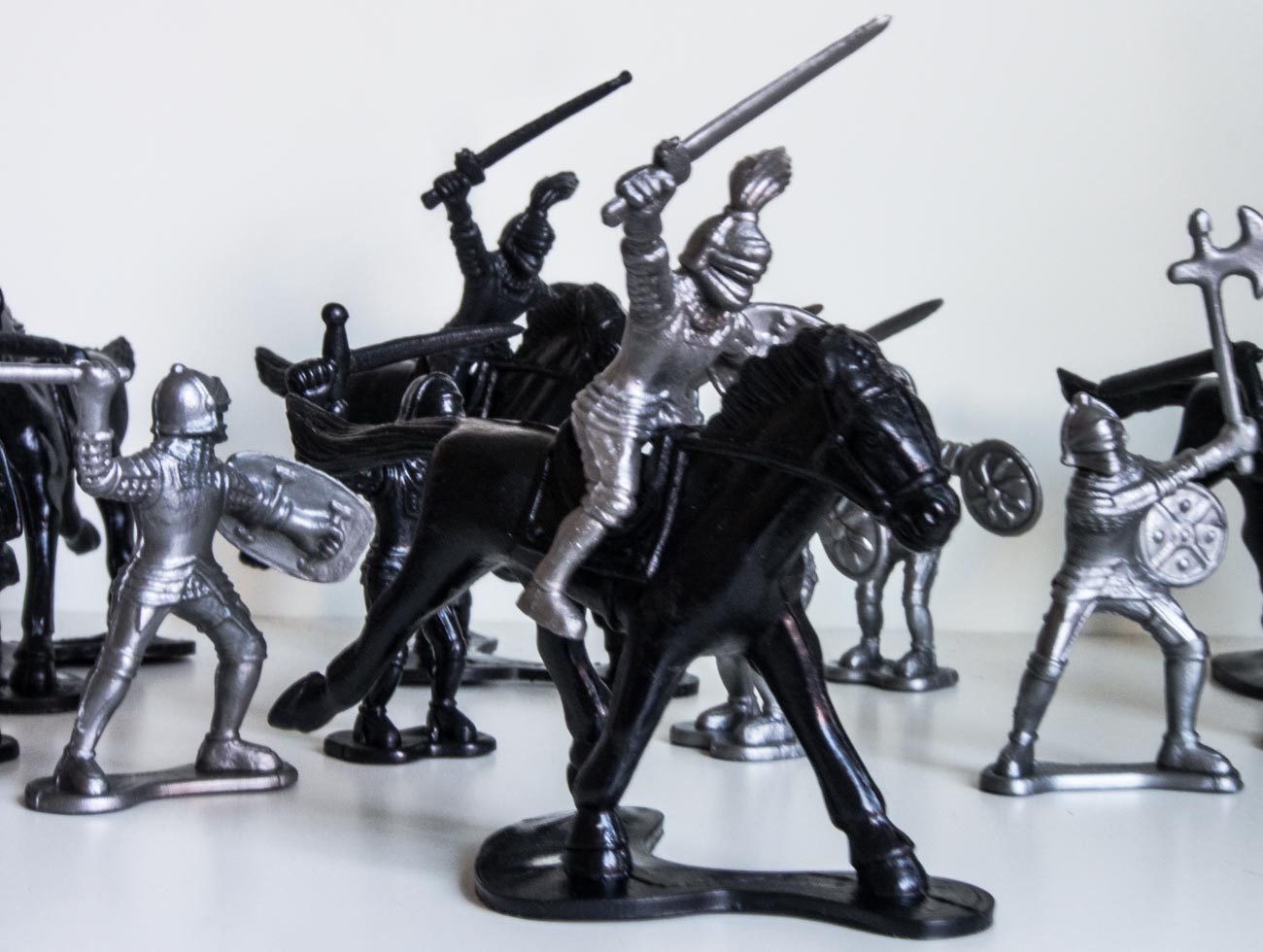
    Let’s say it’s this toy soldier
    We’re taking the picture inside which is fairly bright, even though we’re using just natural light. To make sure we get a properly exposed image we are going to take a couple at different settings.

    Understanding the 3 points of the exposure triangle

    The first image has an aperture of f5 and a ISO of 800 whilst the camera has calculated the shutter speed.
    You can see everything is in focus and the light looks fairly normal.
    But look closely and you’ll see that it looks a bit soft e.g. slightly blurred?
    That’s because the shutter speed is too low at 1/20 which means I couldn’t hold it still enough.

    Understanding the 3 points of the exposure triangle

    The second image had an aperture of f1.2 and a ISO of 2000. Here you can see that the soldier is in focus whilst the background is blurred (bokeh).
    That’s a fairly common way for ensuring that the spotlight is on the product and not distracted by the back ground.

    Because of the high ISO the shutter speed is 1/200 which means the image is much sharper.
    That’s because the shutter speed is now 10 times as fast and is a bit more forgiving.

    As an aside if you think you can hold a camera still regardless, think again. Our hands move without us knowing.

    [mailerlite_form form_id=7]

    However, the disadvantage of having a high ISO is that the image could have noise which may or may not be an issue.

    As a rule of thumb, with newer cameras the higher the maximum ISO setting on the camera the less likely noise will occur at lower settings. E.G. The OMD1 MKII Mirrorless Camera that I have, has a maximum setting of 25600. Realistically I don’t really see any noise in an image until around 1000. Compare that with my Galaxy S8 Smartphone Camera that has a maximum ISO of 800. With this one I notice noise at around 400 ISO

    Of course, there are ways of reducing or getting rid of noise in post-production with software like Adobe Lightroom. So, it’s not that a big issue.

    Below are two examples of noise from two different cameras.

    Understanding the 3 points of the exposure triangle
    Understanding the 3 points of the exposure triangle

    There you have it, that’s the exposure triangle.

    Did you understand all that? I’m happy to clarify anything you’re not sure of.
    Just post in the comments section below. Don’t be shy.

    Thanks for reading this article

    There must have been something that piqued your interest.

    Is it that you see yourself taking some great travel photos that you can share or display?

    Or is it you can see yourself reliving your travel experience by bringing home some emotive travel photos?

    Maybe you aspire to getting your travel photos published.

    If one or all of these is YOUR goal, I can help.

    If you sign up in the box below you’ll get my free eBook “9 ways to improve your Travel Photography”. At the same time, you will also subscribe to my Travel Photo Tips Newsletter.

    Remember if you want to take great travel photos

    •   that you can share and display.

    •   that help you relive your travel experience

    •   give you a chance to have your travel photos published

    then sign up below and subscribe to my Travel Photo Tips Newsletter and for your trouble get my eBook “9 ways to improve your Travel Photography”

    [mailerlite_form form_id=7]

    Any questions then please write your comments below or contact me here and please say hello at these places:

    FacebookTwitterInstagramLinkedIn:


  • 10 Vital Facts about Camera Aperture

    10 Vital Facts about Camera Aperture

    10 Vital Facts about Camera Aperture

    The aperture of a camera is the centre of the photographic universe.
    Well maybe, the other centre as some would argue, is the shutter.

    No matter, let’s continue as if we haven’t heard Mr ‘some would say’ and show you 10 Vital Facts about Camera Aperture.

    The Aperture and the Heart

    The aperture is pretty much like the human heart, not at a lot goes on in the body without it.

    With your heart, almost everything you do relies on the heart beating at all. Then it needs to beat the correct rhythm to ensure what you want to do can be done.

    It’s often how fast your heart beats that will determine how quickly you can run/walk/cycle up that hill for example.

    So, it is with the aperture.

    If that’s not set properly then the image you get is not what you were expecting.
    Therefore that you won’t be happy with the end result. Especially if the subject you may never get the opportunity to photograph again. 

    So, what’s the 10 Vital Facts about Camera Aperture?

    1. The aperture is hole that allows light into the camera sensor that dictates the end result.
    2. It’s adjustable. You increase or decrease the hole size to get the effect you want.
    3. The amount of light the aperture lets in affects your ability to keep the camera still enough to get a crisp shot.
    4. Contrary to the general belief it’s the aperture not the auto or manual focus that is a major factor in what is in focus and what is not
    5. Aperture is measured in f stops. Confusingly for anyone just getting acquainted with it the lower the number the bigger the hole or opening.
    6. Each f stop doubles the size of the aperture when reduced or halves it when increased.
    7. Depth of field (DOF) is controlled by the Aperture
    8. A large DOF F22 reduces the aperture opening and puts everything in focus from the point of focus to infinity
    9. A small DOF F1.8 increases the aperture opening and just puts the closest item focused on in focus.
    10. The lens you use affects the lowest aperture setting. You may have one lens that will have a minimum setting of f1.8 whilst another could be f4.5

    So why do you need to worry about those 10 Vital Facts about Camera Aperture?

    Well if you are using auto on your camera, you don’t!

    But if you want just a small degree of control then adjusting the aperture is a good place to start.
    Of course, there are filters (and apps for the smartphone users) that you can use to give you some basic creative control.
    But even the best don’t offer the sort of creative control that you can get by understanding how aperture works.


    For example

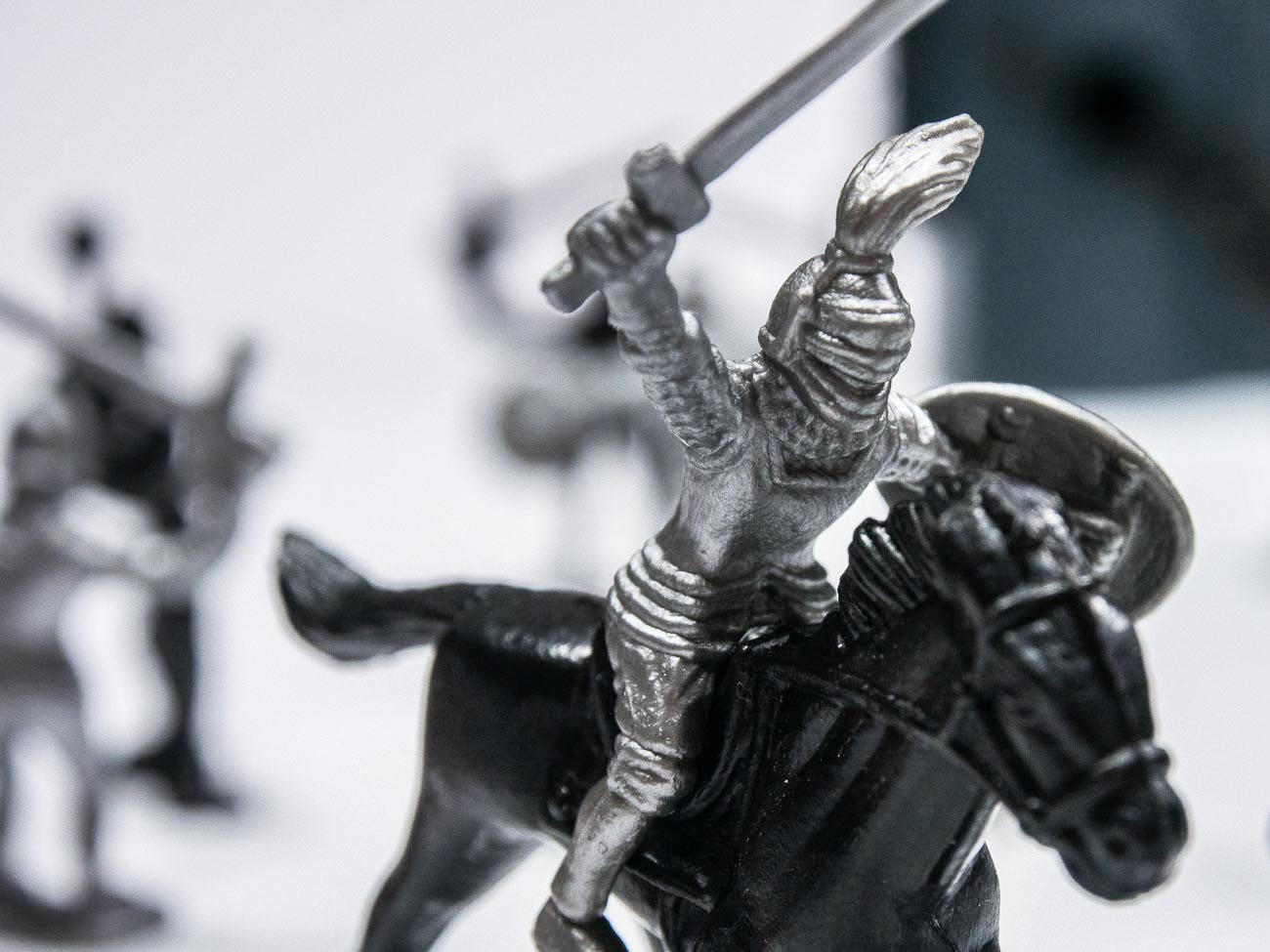
    This shot of a toy soldier was taken with a large aperture (small f-stop).
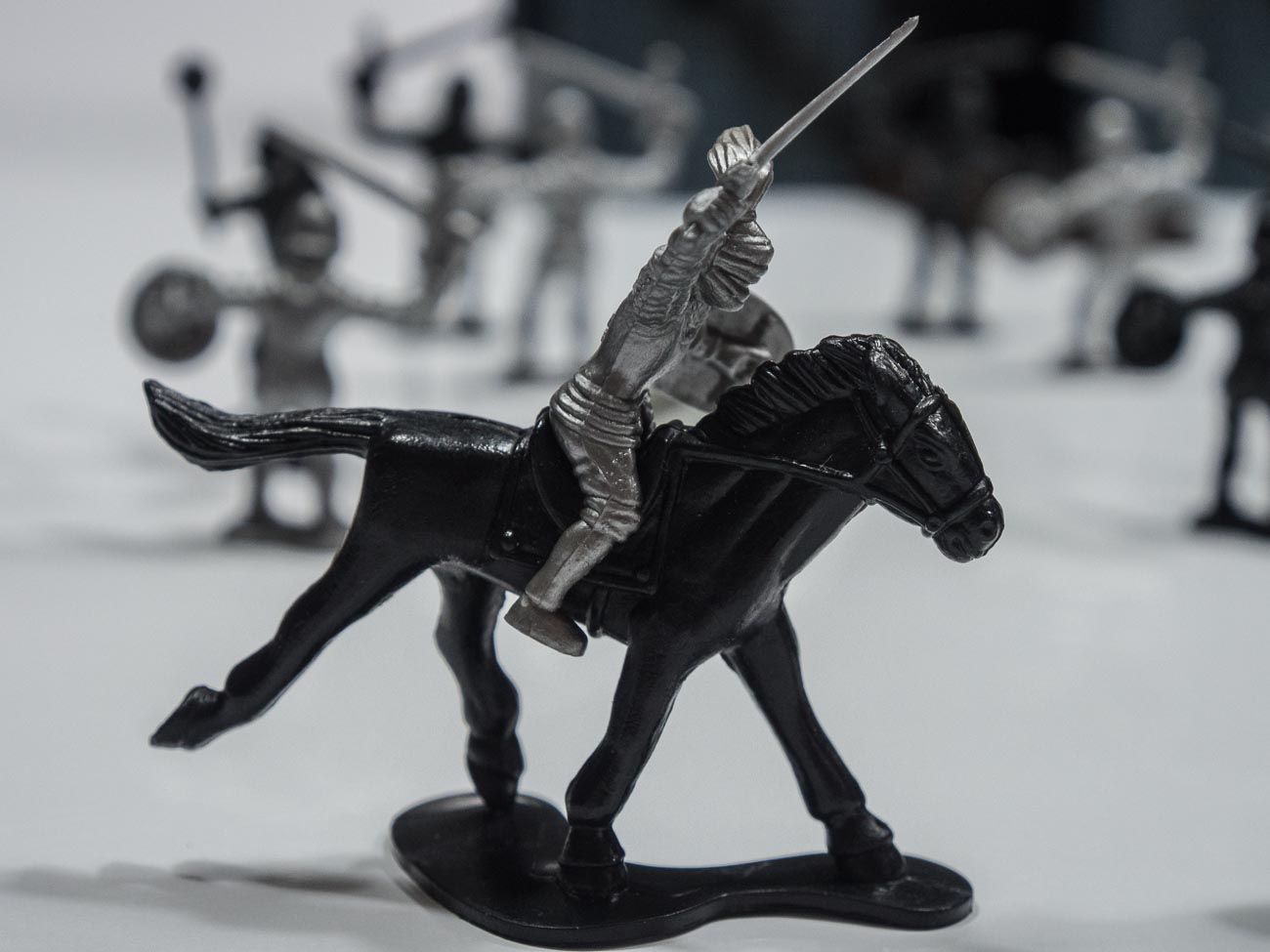
    The shot just below was taken with a small aperture (large f-stop).

    If we look at the uses for a small DOF (refer to no 9 above), then you could take an image of, say, someone you came across in your travels. Or it can be anything from a piece of Jewellery to food in the market place.

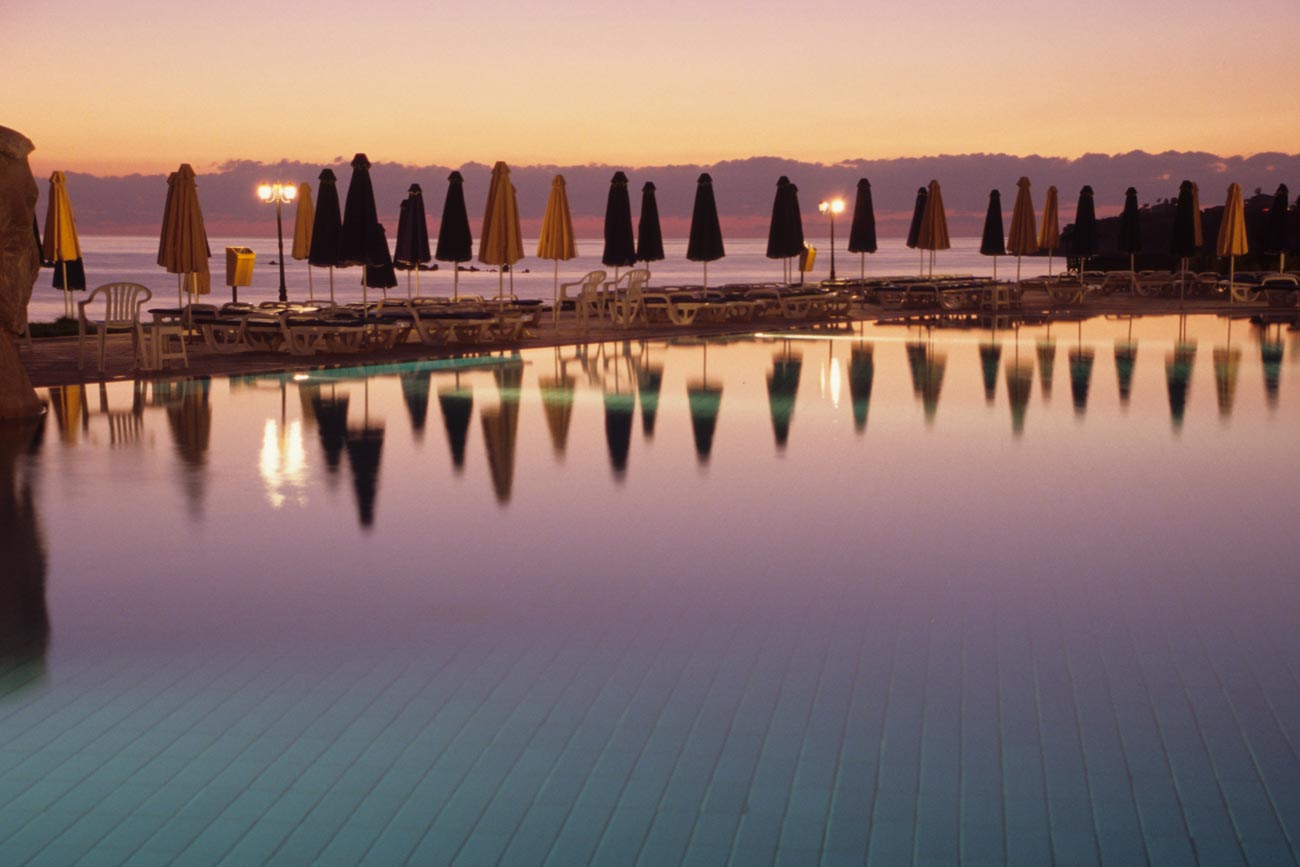
    The main pool at dusk at the Capital Coast Resort in Cyprus

    On the other hand, you could take a wide angle shot with a large DOF (no 8 above) of a building or a landscape with everything in focus with a small aperture.


    Hope you enjoyed reading this post and found it useful

    Please share if you did. Subscribe to nickkatin.com to get my weekly newsletter for exclusive content and to keep[ up to date.

    You’ll get a free e-book for just entering your email on the form below

    [mailerlite_form form_id=7]

    Let me know if you want me to expand or clarify anything.
    For some further reading check out:
    Understanding the 3 points of the exposure triangle
    and
    Learn how to use aperture priority in 15 minutes

    What other challenges do you have with photography and marketing?

    Leave your comments below.


  • The essential feature to have on your camera

    The essential feature to have on your camera

    This follows on from my previous post Why selecting a new camera is like selecting a new date (or TV).

    Over the next few weeks I’m going to suggest some essential features you need to consider having when you are in the market for a new camera or even mobile phone with a camera.

    At the end of each feature I’ll give a rating out of 10 – 10 being must have.

    At the end of the series if you haven’t had time to read them all then you can scroll to the bottom of the last in the series and get all four in a PDF.

    When we were in the market for a new TV, we discussed all the different features and benefits with retailers and become absolutely confused by salespeople in different shops telling us something different about the same TV.

    For example, one would say this TV doesn’t have Freeview plus whilst another would say that it does.

    In the end I researched on each manufacturers website and even rang them to ensure that the information I had gathered was accurate.

    After doing that we went and bought the TV we wanted.

    So what about the features and benefits of a new camera?
    Well compared to TV’s I think there way more things to think about and personally I believe that there are too many features that are just not needed!

    So over the next few weeks I’m going to suggest some essential features you need to consider having when you are in the market for a new camera or even mobile phone.

    At the end of each feature I’ll give a rating out of 10 – 10 being must have.

    At the end of the series a free cheat sheet for will be available for you to have on hand when you need it.

    So let’s start with absolute must!!

    Mechanical Exposure controls
    Usually on most cameras there are a P, A, S and M modes.

    However, on small compacts there usually is only a P mode and on smartphone cameras, even the best ones, they don’t yet have the option to adjust the exposure the “old fashioned way”.

    So what’s with the “old fashioned way”? Well without going into a great deal of details on how a camera works, I’ll explain:

    All cameras have an aperture and a shutter. Both allow light into the sensor but differently. The aperture allows in light by changing the size of its hole, the shutter allows in light by the speed of its movement.

    Having the option of being able to control both or at least one of these is one of the keys to getting great photography.

    So what do all these letters mean?

    P stands for program and is basically a slightly more sophisticated way of shooting in auto.
    The camera decides which aperture and shutter speed to use but you can also weigh in by using what’s called in the industry “shift”.

    A stands for aperture priority and S stands for shutter priority.
    In both these modes you control one whilst the other one is controlled by the camera. Most pro photographers depending on their specialisation will shoot in aperture priority.

    M is where you have complete control you set both the aperture and the shutter speed and is not something a beginner would dabble in until they have goCamera_0216_017t some experience with the other modes.

    Confused?

    Let’s simplify. Basically if you want to take a photo of a product with all the background blurred than you would need to adjust the aperture.

    If on the other hand you want to take a photo of movement, say one of your dance students practicing or performing then you would more than likely want to adjust the shutter to capture the type of movement you want.

    So It’s really handy to have that degree of control.

    What’s that you say?

    You’re only beginning so you just need auto.

    That’s fine however I would suggest that if you really want to create images that represent your brand then at some time in the future you will need a greater degree of control.

    One additional control that goes hand in hand with exposure is ISO adjustment.

    In fact the aperture, shutter speed and ISO are called the exposure triangle.

    That is to say that adjustment of one affects the other two.

    With each camera manufacturer trying to outdo each other, the ISO on a top end DSLR can now be adjusted to over 400,000 which is crazy, as now the camera can take pictures in the dark!

    When you change your ISO setting, you’re adjusting your camera’s sensitivity to light.

    ISO settings are normally anywhere from 100 to 10,000 (or higher), and these numbers have a direct relationship with the device’s sensitivity and therefore the aperture and shutter speed, so a lower setting means you need more light whilst a high setting needs less.

    Rating: A or S is 10/10

    So did you understand all that? I’m happy to clarify anything you’re not sure of.
    Just post in the comments section below. Don’t be shy.
    While you are at it why not subscribe for future updates here.
    You’ll get my free guide “Eleven easy ways to improve your marketing photography”.