Katin Images Travel Photography

Travel Photos, Travel Photography Tips and Software

Tag: antelope

  • African shoestrings – Zimbabwe Day Ninety-Seven Harare

    Possum Lodge had such a quaint name for a backpackers hostel that we felt we had to stay there. We ended up in a small (and I mean small) wooden cabin in the back yard listening to something that is described as ‘Techno’. The main bar and recreation areas are outside and not that far away from our cabin consequently we could hear everything as if we were actually there at the bar and it was horrendous. I’m sorry but call me out of touch, old fashioned or just plain ignorant but I cannot for the life of me see how anyone can enjoy this type of sound (its not music).
    Its mind numbing headache material that’s produced by people with little or no musical talent (if they have its well-hidden) on electronic devices and computers not on musical instruments. Fortunately for us it was eventually changed to rap (see I’m not that single-minded) and then even better turned off at 11.30 pm.

    We had a whole day in Harare to do a couple of chores. The next four days were to be spent canoeing the Zambezi and then we would return to Harare where we would catch a bus to Lilongwe the capital of Malawi, which meant having to cross the infamous Tete corridor in Mozambique. So chore number one was getting a transit pass from the Mozambique embassy, a three-day visa that allowed you just enough time to get to Malawi.

    Just before getting in the long queue we thankfully discovered that we needed two passport photos instead of the one we had been led to believe was required. We found a stall around the corner that obviously does a roaring trade in passport photographs of tourists who like us have been caught short and then have to pay through the nose for them.

    Back to the embassy and half way through the hour and half queue we discovered that unlike every other embassy this one only accepts local currency not US currency.
    I left Sue in the queue and went off to find the nearest bank or ATM and after a sweaty search eventually found one about a couple of k’s away and got back just as Sue was about to be served by a grumpy and unhelpful official. Later that day we returned to queue for another half hour to pick up our passport that we had somewhat nervously left behind for them to stamp.

    Chore number two was visiting the Goliath safaris office in the slick looking Bronte Hotel. There we reluctantly paid for the canoe safari and made the final arrangements with the two very friendly and helpful girls that manned the office.
    They also helped us organise a taxi to bring us from the backpackers to the Bronte in the early hours of the next morning to get picked up for the safari. The Bronte looked that good that we decided to treat ourselves to a bit of luxury and book a room for a couple of nights there when we got back. We just needed a rest from backpackers and camping to remind ourselves of what we were missing.

    Chore number three was booking the bus to Lilongwe at Possum Lodge.

    Chore number four was buying a torch and a few supplies for the next few days and chore number five was trying unsuccessfully to find a guide book on Zanzibar.

    The final chore was checking our e-mail at Possum Lodge which was so painfully slow that you wondered whether it would have been quicker to use the old fashioned lick the stamp method.

    Somewhere in between all these chores we found a great little restaurant called the The House Café in a small shopping centre not far from the Bronte and bumped into John and Alice (our companions on the Audi camp trip through Botswana) for the second time in twenty four hours. The first was at Possum lodge the night before.

    Footnote:

    Take control of your blog’s images now by signing up here to get “Eleven easy ways to improve your marketing photography”
    A free guide on how to start improving your images to help you take control of your marketing.
    That link again
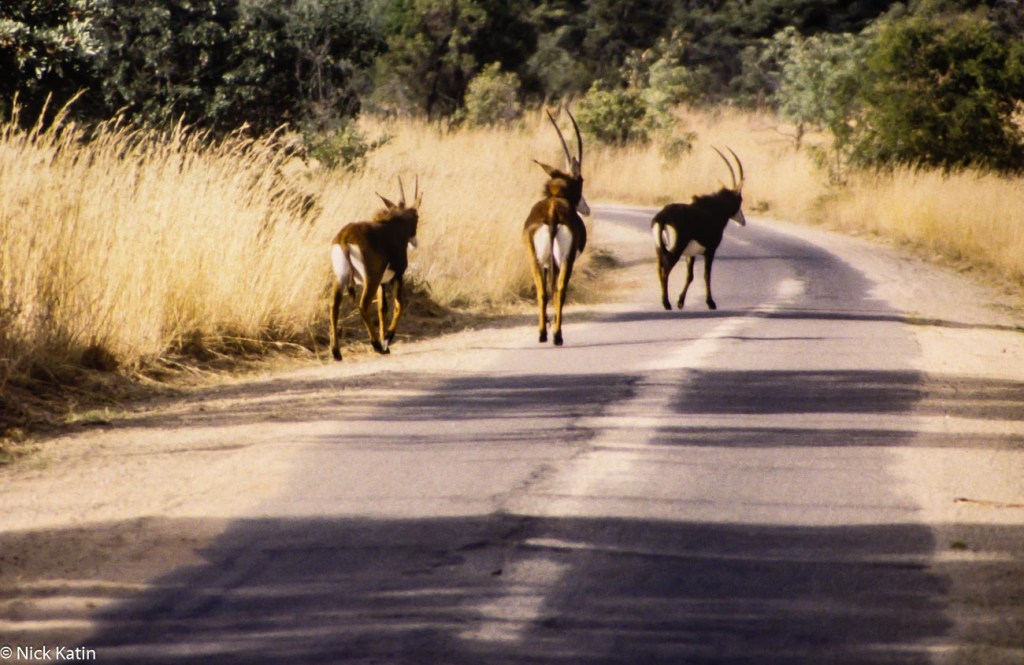
    Sable walking on the park road in Matobo NP Zimbabwe
    Sable walking on the park road in Matobo NP Zimbabwe
  • African shoestrings – Namibia Day Fifty six – Namib desert

    Dan Viljoen is a good place for hiking or even just casual walking. We sauntered along the 3 kilometre Wag-n-Bietjie trail to the Stengal Dam enjoying the twittering of birds and the gentle breeze and then at the dam watching a lone wildebeest and a family of warthogs go about their business.
    The park has plenty of game, none of which are at all dangerous. On the game drive we did after the walk, we spotted Mountain Zebra’s, Gemsbok, Springbok, Red Hartebeest, Kudu and two Wildebeest standing on a cliff edge with a backdrop of Windhoek in the distance.
    Coming from a country such as Australia where the wildlife is on the whole small in size and nocturnal in nature, it’s mind-blowing how much wildlife you can see on this continent. Even more mind-blowing is the thought of how much more there must have been before the arrival of Europeans, who brought hunting and poaching and the destruction of the animal’s habitat. Fortunately most African governments have recognised that preservation of these magnificent beasts is important not only to the environment but also to tourism and have set aside large areas for them to roam freely and safely.

    The Rooibes trail we followed the next morning was around 6 kilometres longer and was a good little hike through green hills covered in scrub brush and small acacia trees with panoramic views across to Windhoek before following a river bed. The final couple of kilometres let it down; taking us through a neglected part of the park that was overgrown and speckled with dumped used tyres. We’ve encountered several good walks in the past that have been spoilt by the last stretch. Its almost as if the track designer lost interest two thirds of the way and just ordered the trail builders to find the quickest and most convenient way back. Still it was a good walk and once again we saw plenty of wildlife.

    I managed to get hold of Werner, the car hire owner ,so that we could do something about the gaslight that wouldn’t work. We met him back in Windhoek at the Maerua shopping centre, Windhoek’s and probably Namibia’s biggest. We swapped lights did a bit of food shopping and headed out to our next destination, the Naukluft Camp in the Namib Naukluft National Park.

    The road to Rehobeth was 100 kilometres of flat bitumen and even in our little toy car we could get up a head of steam. What slowed us down considerably was the 130 kilometres of gravel road to Naukluft. We had, to be fair, been warned. Werner had told us to keep the windows closed to prevent dust getting in but driving in mid 30’s heat without air conditioning and no fresh air was just too much. From hereon in we knew that most of the roads we needed to use would be gravel so we had to get used it and if that meant driving with the windows down and sharing the car with grit, well too bad! So by the time we got to Naukluft we were just a little hot and dusty.

    If you like this then hit “follow” on the side bar

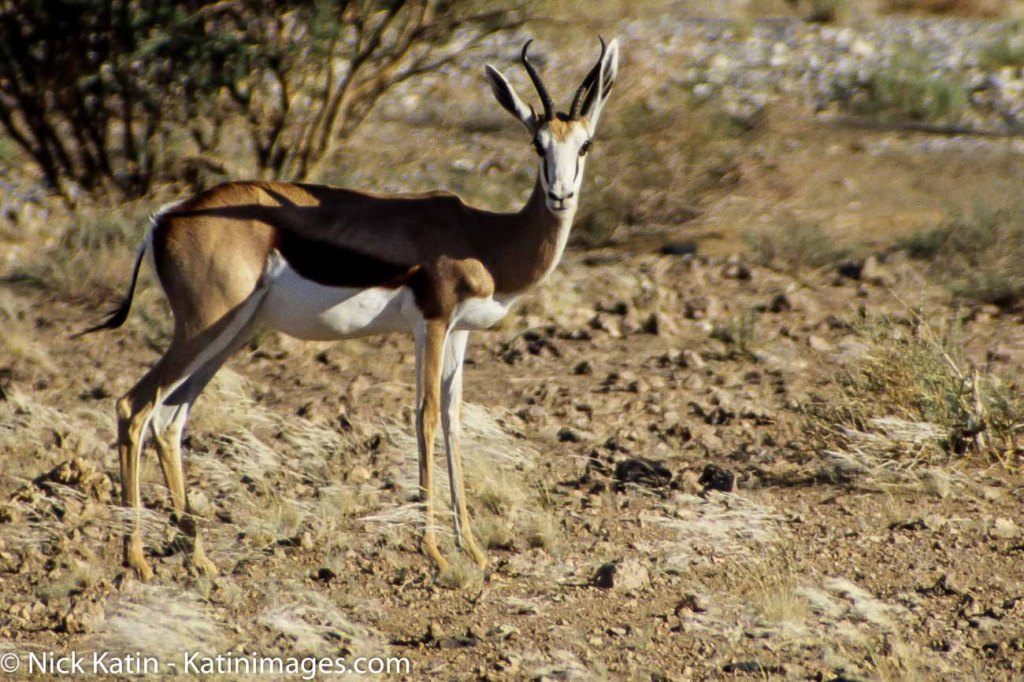
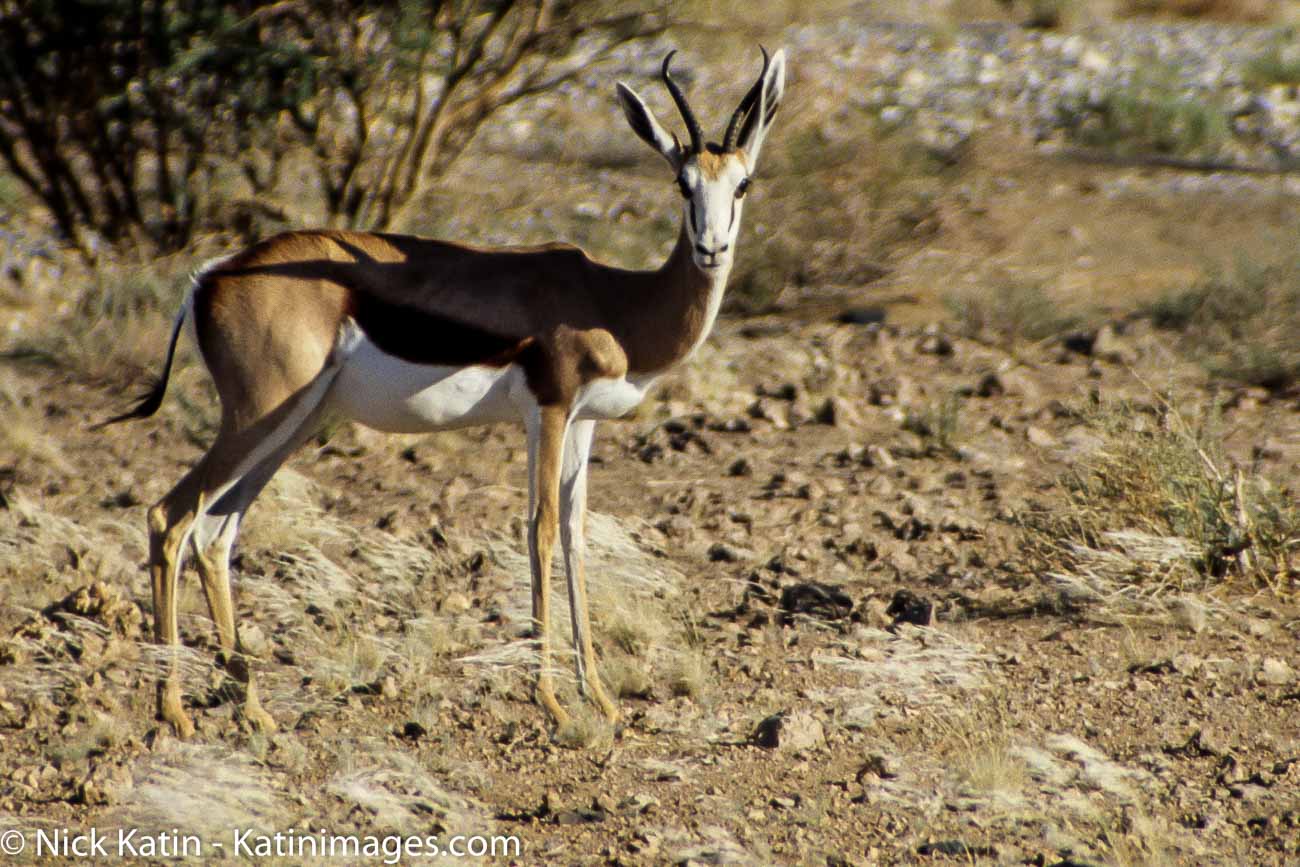
    It is extremely fast and can reach speeds of 100 km/h and can leap 4m through the air. The common name "springbok" comes from the Afrikaans and Dutch words spring = jump and bok = male antelope or goat.
    It is extremely fast and can reach speeds of 100 km/h and can leap 4m through the air. The common name “springbok” comes from the Afrikaans and Dutch words spring = jump and bok = male antelope or goat.
  • African shoestrings – South Africa Day Fourty six – Kalahari

    A night drive is a game drive, obviously, in the dark; well it was really in twilight as we set off just before sundown. The idea is to see lots of animals big and small as they cruised around in the coolness of dusk and then stop for a sundowner in the middle of nowhere. As it got darker so our reliance on the two spotlights grew and of course the obvious happened one of them blew. So the ten of us on the drive all had to squint into the dark to spot anything.
    We did actually see quite a few animals. But of course we didn’t see any of the more popular ones like lions, cheetah’s etc.

    Back at the camp we ate one of Roland’s culinary masterpieces under the light of plastic drink bottle covered candles.
    Now was the time for that beer as we got to know each other better.
    Simon & Hannah had just left school and were doing a bit of travelling before starting University in England. Alex, was visiting rellies in J’burg and I got the impression that they had shunted her onto this tour to get her out of their hair, she certainly was a little temperamental. Michelle was the quiet one. She had finished her Peace Corp stint in northern South Africa and this was her last days in Africa. Despite her quietness and the fact that she was American she had a great sense of humour. Well I think she did, she laughed at all my jokes.

    The tour kept rolling on, our next stop was the camp at Mata Mata, 127 kilometres north on a gravel road. The idea was to take it slow, have brekkie and lunch on the road and do a game drive at the same time.

    Well we saw heaps!

    Cheetahs and lions in the distance, black backed jackals, cape foxes, steenbok, gemsbok, wildebeest, springbok (these last our all from the antelope family) and the quaintly named long legged big bird, kori bustard.

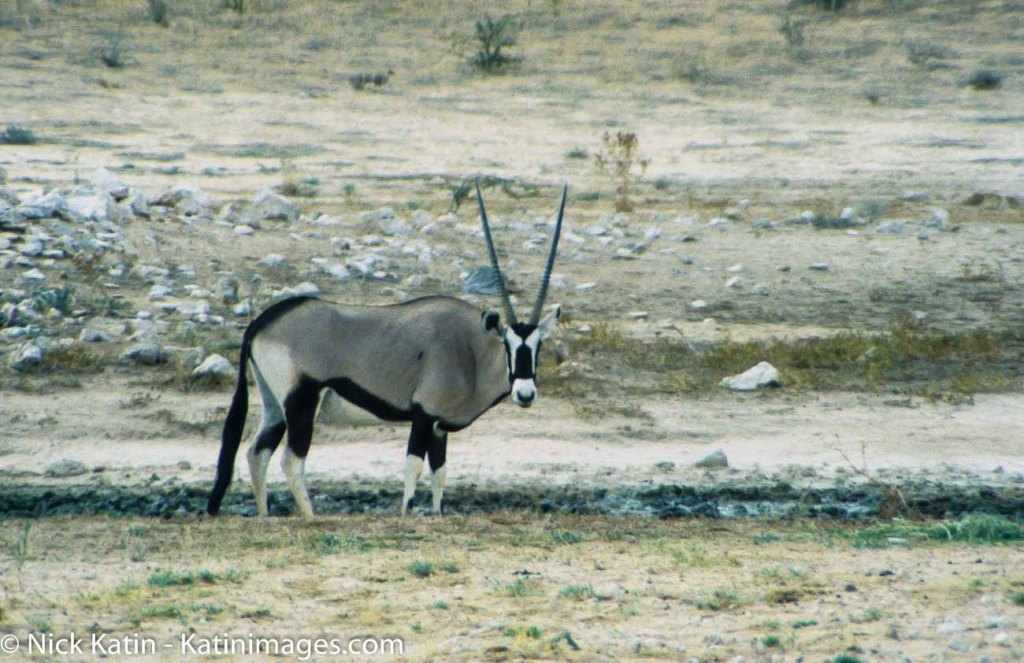
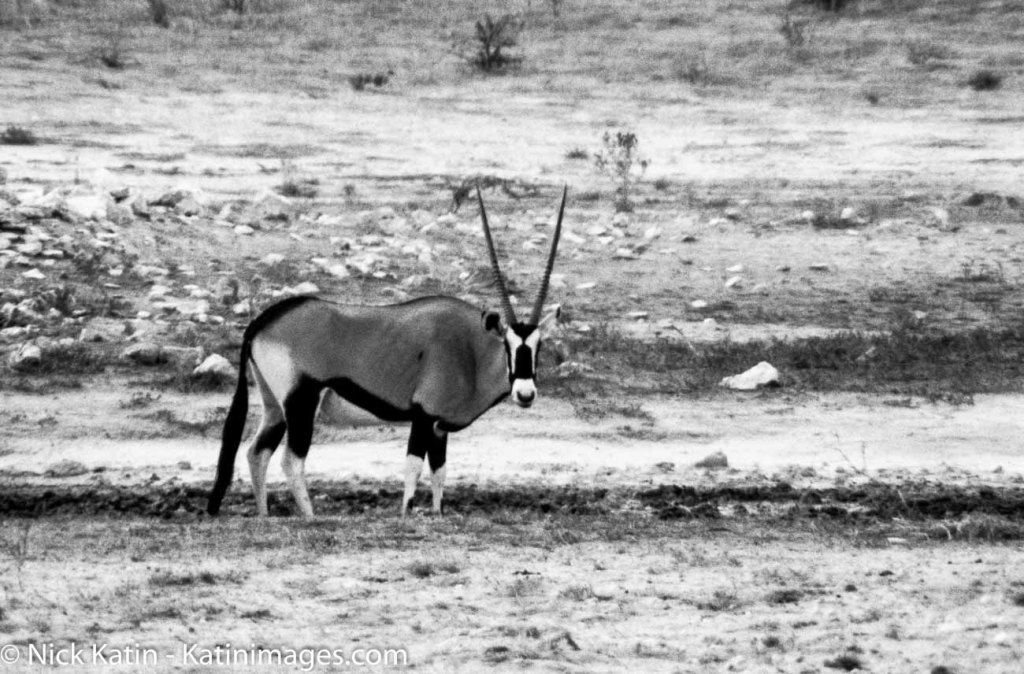
    The park was named after the Gemsbok, being quite common in the Kalahari. It’s a big animal at around 1.2 metres tall with striking fawn grey flanks, black legs and tail and metre high pointed horns. In my humble opinion, this is the most beautiful of all the antelope species found in Africa.

    The next day was pretty much the same format, as we drove on to Nossob, the last of the three camps, except the little critters must’ve sent out the message via the desert telegraph to hide when ever we came on the scene, because we saw virtually nothing.

    Nossob like Mata Mata was more basic than Twee Rivierien, but it did have an animal hide. Once again the animals didn’t read their scripts properly and forgot to come and see us. So we had to gain our entertainment from Roland who was busy being his industrious superhuman self. He was cooking spag bowl and fixing three punctures all at the same time. That night he told us stories of rangers cutting off their limbs to save their own lives after a predator attack in the bush. How he caught tick bite fever and was hospitalised for 9 weeks and how he had just recovered from a bout of Malaria which was really bad that year and had resulted in many deaths in central and eastern parts of South Africa. I think he has the philosophy of “never bugger up a good story for the facts”.

    Fortunately he told us these stories after we ate!

    If you like this then hit “follow” on the side bar

    A Gemsbok in the Kalahari national park
    A Gemsbok in the Kalahari national park
  • African shoestrings – South Africa Day Fourty four – Kalahari

    The plan had been to get to Augrabie Falls and camp there the night but it was a good 2-3 hours drive away and now it was too late. “So” said Roland “we’ll sleep the night in the dorm and head out early tomorrow”.
    He must have seen the look on Sue’s face, because he came up to us and said quietly “I’ve organised a double room for you two, m’dear”.

    That evening it was the Roland show! He’s an excellent cook and his yarns entertained us all. Apparently he’s done it all, played Rugby union for South Africa, seen some terrifying incidents involving Lions, Cheetahs and Leopards in his normal role of Kruger National Park ranger and lived a life that was reminiscent of some of the more famous novels about growing up in Africa.

    Roland’s dominance of the evening was interrupted by Katrina, another, in fact the only other guest at Yeho’s (do you call people staying at backpacker hostels, guests?). Katrina hailed from J’burg and was one of those ‘try hard’ hippies that are to be found running new age shops where relaxation music and the tinkling of wind chimes are designed to calm you enough to get out your credit card.

    She had just spent several days, finding herself in the Kalahari Desert! Well the Kalahari is roughly 700,000 square kilometres of red soil, sand dunes and very little vegetation and more importantly virtually uninhabited and uninhabitable. So the chances of you finding yourself are pretty high as you won’t find anyone else and unless you know what you are doing, your time with your newly found self will be extremely short! Katrina had never done anything like this before and had somehow survived and sat very satisfied with herself.
    Each to their own I suppose – not something I would do.

    We got to Augrabie Falls early enough for Breakfast. The name Augrabie is the Namaqua word “for place of great noise”. The Namaqua inhabit the north west corner of the Northern Cape and are one of the main Khoikoi tribes in South Africa, a people who were arguably one of the first inhabitants in the Cape.

    Augrabie Falls is on the Orange River and has over time carved its way through a rocky landscape and plunges down into rocky and almost lunar landscaped gorge below. The amount of water flowing down this almost vertical giant water slide is amazing considering it had been dry recently. After heavy rainfall the falls rise up along the sides of the gorge. That must be some spectacle!

    After seeing Mother Nature at its best we moved onto to see wine making at its worse. The Orange River Wine Cellar is nothing but a cheap bulk wine producer that fills bottles instead of casks and flagons. The wines tasted like flat coke!

    Still it was interesting how they had managed to carve these huge vineyards out of such an arid landscape. They couldn’t have done it without being so close to the Orange River and using the water to permanently irrigate the vines. They claim they are the second biggest individual wine producers in the world. Based on the amount of vines they had spread around, I for one wasn’t going to argue (that is apart from the fact that place seemed full of big beefy guys that looked like they had swapped punches with the best of them on the rugby pitch).

    If you like this then hit “follow” on the side bar

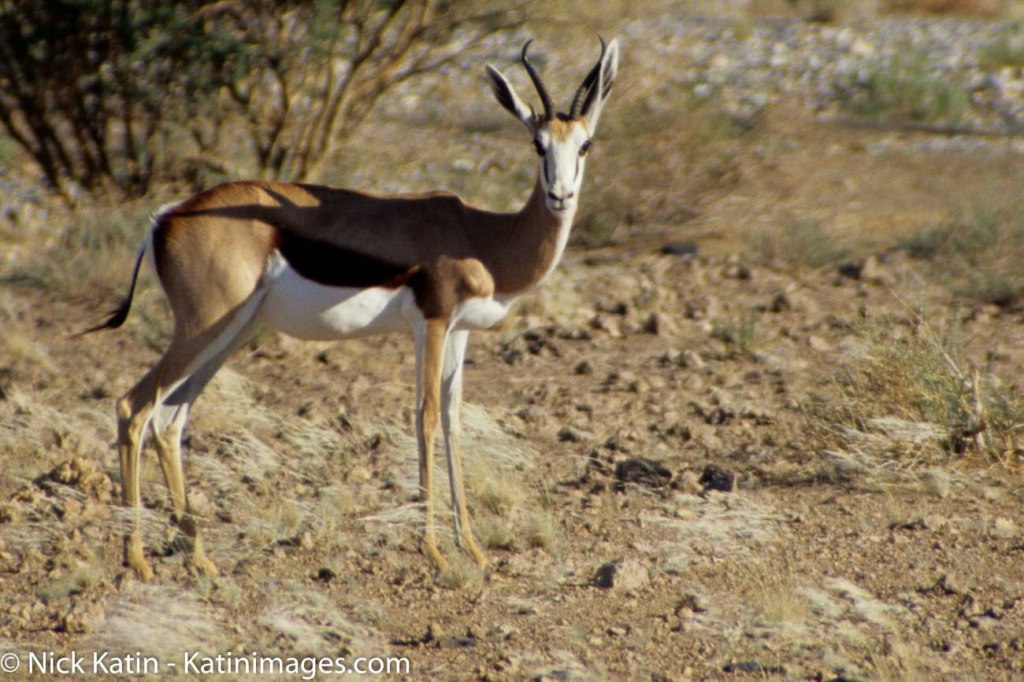
    Springboks are extremely fast and can reach speeds of 100 km/h and can leap 4m through the air. The common name "springbok" comes from the Afrikaans and Dutch words spring = jump and bok = male antelope or goat.
    Springboks are extremely fast and can reach speeds of 100 km/h and can leap 4m through the air. The common name “springbok” comes from the Afrikaans and Dutch words spring = jump and bok = male antelope or goat.
  • African shoestrings – South Africa Day Fourty – Stellenbosch

    The following day we ‘jumped ship’ and found a little apartment just out of town.
    Not that there was anything wrong with the Stumble Inn, it was just the noise from the other ‘guests’.
    I’d like to think that we haven’t we’ve lost touch with modern music but the repeated thumping of ‘techno’ music is not the best bedtime music as far as we were concerned.
    A young guy, John also from Perth, who was travelling around on his own, shared this opinion. In staying in the dorm, he was in a worse position than us and was getting fed up with being constantly disturbed as his fellow bedmates stumbled in and out of bed.
    Never really gave that much thought before. As a couple we always got a private room and had drawn a line in sleeping in a dorm. But anyone on their own is pretty well damned if they want privacy. They either pay more than double the cost for a double room (they are often more expensive per person than a dorm) or put up with sleeping in the same room as a load of strangers, have no privacy and in some circumstances be permanently on guard watching their belongings.

    Anyway we had enough of the Stumble Inn, we had lasted two nights, and for just a few more Rand we had a nice cosy little place tagged on onto someone’s house called “Kaveeltjie”. That someone was Gertie an extremely helpful and warm housewife with a couple of youngish kids. She picked us up at the tourist office in town and couldn’t do enough for us.

    One of the fascinating things about South Africa is the white Afrikaners. Most of these are descended from the original Dutch, German and French settlers and have been in South Africa since the seventeenth century. This is different from the whites of British heritage that have only been around since the nineteenth century. That in itself is interesting but what really fascinates me is that when you meet the Afrikaners is their own country they are totally different from your expectations. After all this is a race that is responsible for apartheid. A lot of these expectations are based on the media and those you meet in Australia who have left the country for good.
    Well we found them to be kind, friendly, warm and honest people. You almost get the feeling that they would give their lives for you. A lot of that comes from their strong religious beliefs, but I’ve met plenty of religious people over the years who will hardly acknowledge your existence let alone help you out in tight corner.
    These people also have an amazing attachment to their language, which for most of them is their first language, with English being used only whenever it’s really necessary.
    One particular lady we met on our first visit, actually pitied us for not being able to speak Afrikaans, saying it was such a shame that we were unable to use words that there was no equivalent for in English to describe the world around. At the time I wasn’t that convinced. But the more of these people I met the more I think there must be something in it. So many actually struggle to translate certain words from Afrikaans to English which tends to surprise as their English is usually so fluent.

    Any way Gertie fitted this mould, and was happy to give us a few pointers for our future travels and expeditions.

    If you like this then hit “follow” on the side bar

    A Gemsbok in the Kalahari national park in South Africa
    A Gemsbok in the Kalahari national park in South Africa
  • African shoestrings – South Africa Day Seventeen

    On our first visit to South Africa in 1996, we had very briefly skirted the Drankesberg ranges and had promised ourselves that we would return some day.
    The Drakensberg is located mostly in South Africa and snakes down the central eastern side of South Africa, for about 1125 kilometres, and then teeing off to allow a smaller range, the Malutti to join it from the west before forming the eastern boundary of Lesotho.

    Golden Gate Highlands National Park lies in the foothills of the Malutti and has some of the most striking scenery that I have ever seen.
    The R711 cuts a path straight through the middle of it and we were greeted by two huge orange and green sandstone hills on either side of the road peering down at us.
    This was our kind of place, a sort of Alps but in miniature with lots of walk tracks, game drives, bird watching and comfortable and cheap accommodation. We stayed in a Rondavel, a circular shaped hut, that were fully self contained, comfortable and cheap.

    Despite it’s beauty we actually only spent one night there.
    In 24 hours we managed to do a couple of walks, a couple of game drives, spend some time at the bird hide and sleep!
    The game drives consist of a couple of circular drives in an area set aside for game. Now we’ve been on game drives before and in our experience the best ones tend to be more difficult to get to and well controlled. So our expectations weren’t high and sure enough we drove around peering with screwed up eyes at anything that resembled a living object.
    But as is often the case all we managed to see were a few Springbok, an antelope similar to a deer but with a prominent black stripe along its flank, and some great views of the mountains around.

    Springboks are extremely fast and can reach speeds of 100 km/h and can leap 4m through the air. The common name "springbok" comes from the Afrikaans and Dutch words spring = jump and bok = male antelope or goat.
    Springboks are extremely fast and can reach speeds of 100 km/h and can leap 4m through the air. The common name “springbok” comes from the Afrikaans and Dutch words spring = jump and bok = male antelope or goat.