Katin Images Travel Photography

Travel Photos, Travel Photography Tips and Software

Blog

  • African shoestrings – South Africa Day Thirty-four – Cape Town

    Table Mountain was next on our agenda but that was tomorrow’s challenge in the meantime we had to get back and eat!

    Largely because of its multiculturalism Cape Town is considered the gastronomic capital of Southern Africa. There are lotss of restaurants and cafes of all descriptions and price tags.

    In Observatory there were several with lip licking menus in which we could have quite happily whiled away a couple of hours.
    Andre in one of his monologues had recommended “A moment of madness” a darkly lit tiny and intimate two storey restaurant with a unique sort of smokers lounge and a small skinny black skinned waiter we nicknamed ‘lurk’ after the Adams family character. He had this way of plodding up and down the creaky stairs and then pausing to catch his breath that just cracked us up.
    Sue’s first order had been a salad of some description and he plodded downstairs to the kitchen with our order. A few minutes later he plodded back up to tell us that she couldn’t have that as they didn’t have any. Sue reordered and off he went reappearing later with the dish that Sue had first ordered but minus our cutlery.
    With a sigh he trudged down stairs and back up, …….. pause for breath… with our cutlery but no napkins, another sigh, another plod down and then up, …. ..pause… and we were happy. In fact we were so happy we were almost in hysterics and waited till he disappeared back down stairs again before falling off our chairs laughing and then using the nicely pressed napkins to wipe our eyes.
    The food from what I remember was pretty good, (I think we had fish of some description) the atmosphere with Louis Armstrong in the background was great but Lurk stole the show.
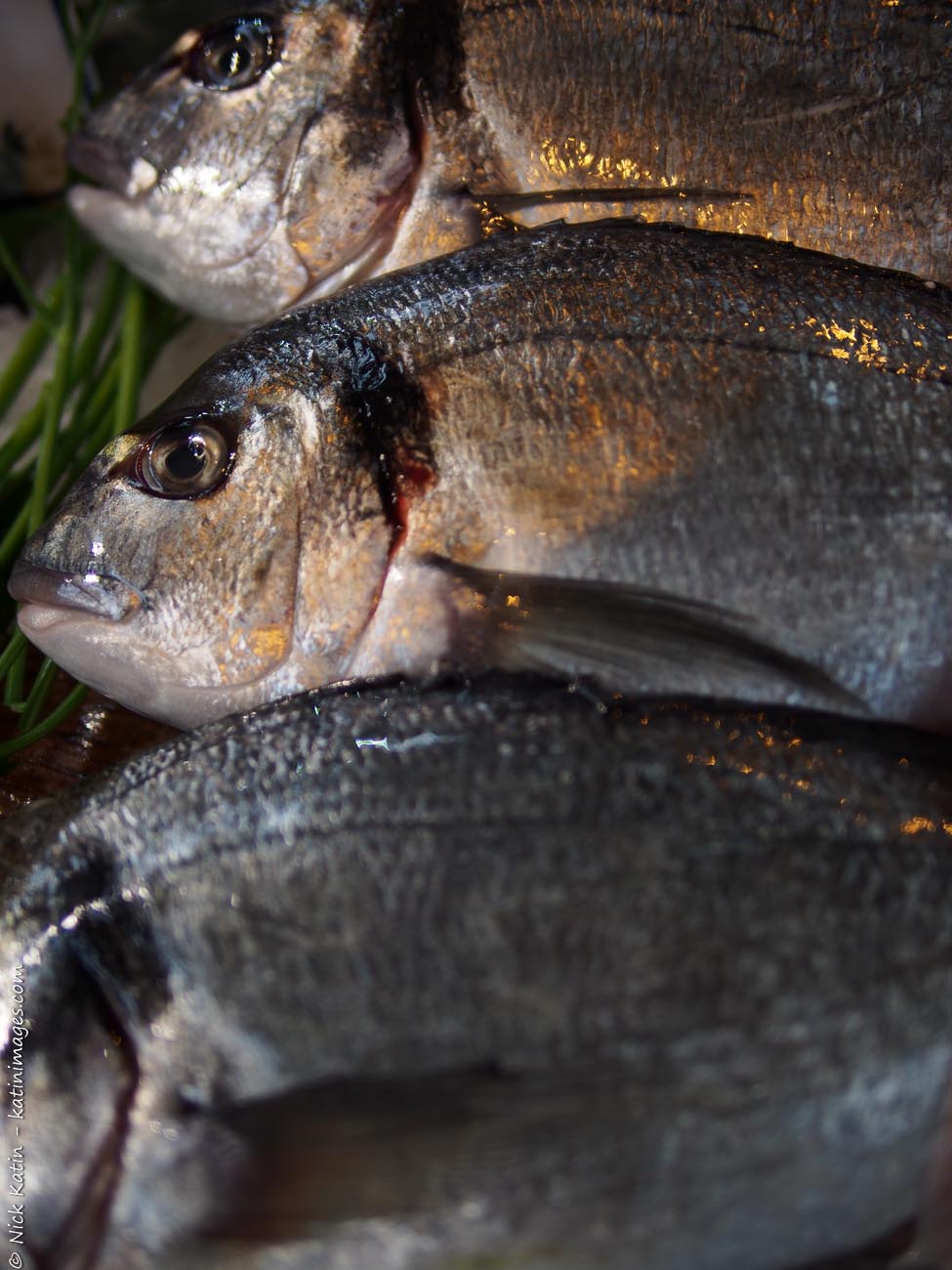
    Fish at one of London's famous markets, Borough Markets which is devoted entirely to food.
    Fish
  • African shoestrings – South Africa Day Thirty-three – Robben Island Cape Town

    Another pretty interesting guy whom unfortunately we didn’t get around to meet was Nelson Mandela. We did however get to meet someone who served time with him on Robben island a small former prison island 11 kilometres north west of Cape Town.

    Eugene was his name and he served seven years on Robben Island for his part in a student anti-apartheid demonstration in 1983. He was still there but this time as a guide.

    Mandela spent twenty-six years as a political prisoner there and certainly in the earlier years had to overcome some pretty harsh treatment to survive.
    In the 1960’s they were only allowed one visit of 30 minutes and one heavily censored letter every six months.
    For around thirteen years Mandela and others were made to work with picks and shovels in a lime quarry where the heat and blinding glare in summer could eventually kill or blind.

    In the 1980’s the authorities eventually softened under international pressure and stopped hard labour, allowing education of selected subjects to university level.

    The prison itself however is not what you expect. The layout is pretty similar to any other high security prison found in the western world, you know, small cells, high walls, a cramped exercise yard and barbed wire everywhere. For effect life size cardboard cut outs of past prison guards are strategically placed around the prison corridor and yards. These guys are pretty lifelike, at first glance I wondered what this guy in the uniform with a gun was guarding! From what Eugene was saying I was glad that they were only cardboard, their reputation as cruel and harsh was apparently well justified. Beatings and other acts of violence were all in a day’s work. And yet the main gate to the prison gives no hint to these brutal facts. Written above it in Afrikaans is “ONS DIEN MET TROTS” that means “We serve with pride”.

    The known history of the island dates back some 400 years and has been used as a fishing base, a whaling station, a hospital, a mental asylum, a civilian prison, a military base, a political prison and now finally a museum.
    It’s as a museum that it seeks to be as Mandela puts it “a symbol of the victory of the human spirit over political oppression; and for reconciliation over enforced division.”

    The island itself has little natural beauty to mention although it does have the odd gemsbok and springbok around and the views of Cape Town and its spectacular Table mountain backdrop are worth the admission price alone.

    Table Mountain in Cape Town from Robben Island former prison of Nelson Mandela
    Table Mountain in Cape Town from Robben Island former prison of Nelson Mandela
  • African shoestrings – South Africa Day Thirty-two – Cape Town

    Back in the guest house we learned what we had suspected that morning, Andre was a ‘know it all’ who liked to give you the benefit of his wisdom and experience in as many words as possible regardless of whether you asked for it or not.
    In fact listening to him politely, trying hard to stifle an epidemic of yawns wasn’t a shared duty as Sue somehow seemed to have a good reason to go to our room and would leave me stranded and bombarded by all this trivia, opinions and ‘expertise’.
    What did make us both chuckle was Andre’s insistence on stating “and that’s all there is to it” after every statement or monologue. After hearing it so many bloody times I can’t believe that we actually took this up as a catch cry as for the rest of our travels through Africa. We must have been brainwashed! For the life of me I cannot remember anything else that Andre said; but I do remember the fact that 90% of Andre’s commentaries were about the New South Africa.

    Henry on the other hand was far more interesting!
    Henry was a twenty-one year old black Student from Zambia studying at Cape Town University, South Africa’s and probably Africa’s best university and he was lodging at the guest house. Tall, lanky with tight cropped hair like so many of his generation, he was articulate and extremely mature for his age and spoke with some knowledge of the world today.

    That’s what’s so good about travelling, you meant the most interesting people in sometimes the most unexpected surroundings.

    We chatted to this guy in the kitchen as we both prepared our evening meals. He told us of his home near Lusaka in Zambia and how when he drove there from Cape Town, a journey of over 2000 kilometres, he could almost smell it as he crossed the border and first spots the Zambezi escarpment with now only 150 kilometres to go.
    His father was, we gathered an important government official and they wanted for little, except a university of quality close by, hence the 4000 kilometre round trip every time he went home.

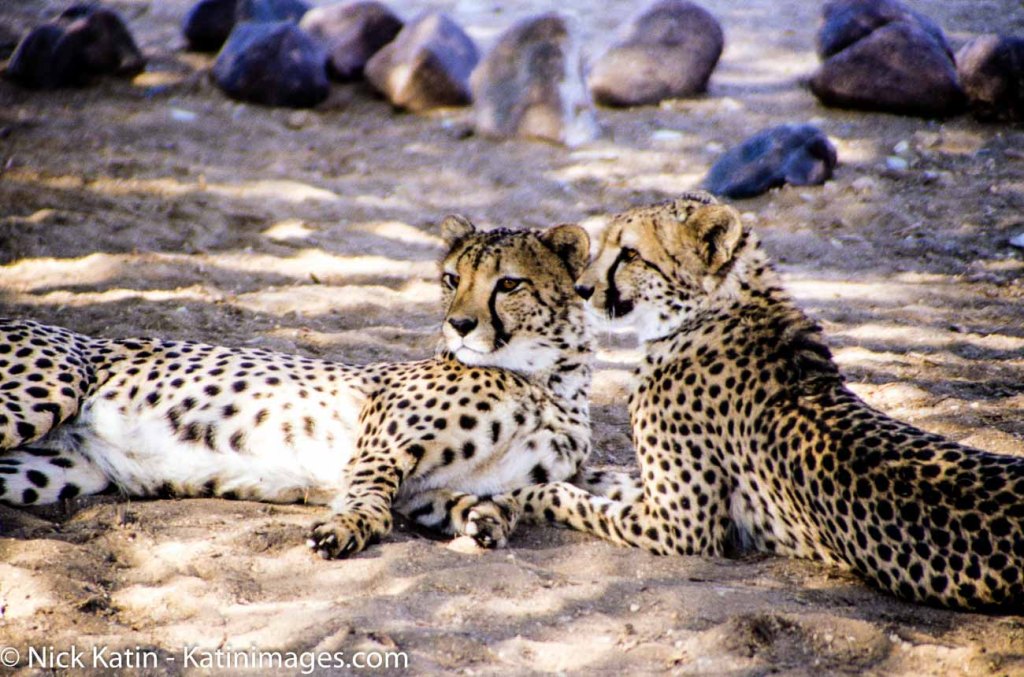
    Two cheetahs watch pensively in the Cheetah Outreach Project in South Africa
    Two cheetahs watch pensively in the Cheetah Outreach Project in South Africa
  • African shoestrings – South Africa Day Thirty-one – Cape Muslim quarter Cape Town

    You know Cape Town is really a very beautiful place. It’s up there with the likes of Sydney, Rio de Janeiro and San Francisco as places of natural beauty. With the Atlantic Ocean on its western and northern sides and the brooding presence of Cradle Mountain to the south, it’s in a great location.
    Of course location doesn’t mean that the city itself is necessarily a great place to be.
    I suppose on a scale of one to ten I would rate it around five or six. It’s much like any other New World city, lots of people going about their daily business, with the usual social problems like homelessness fairly evident in the form of beggars and glue sniffing street kids.
    It does have of course quite a history, being first settled in 1652 by the Dutch. And they have managed to retain a lot of the Architecture that sprung up in the first 200 years or so. Unfortunately most of it is quite boring!

    We did a walk tour to explore some of these ‘attractions’ and the only attractive buildings were the Dutch Cape SA museum and the president’s house.
    What was fascinating was the Cape Muslim Quarter. It’s mainly inhabited by descendants of slaves or political prisoners from the Dutch East Indies and you’ve guessed it, they are mostly Muslim. Here we found cobbled streets, mosques and flat roofed colourful houses. We also found that there was no one there, well at least no other tourists! This made us quite uncomfortable, after all, most guidebooks advise you not to go into deserted areas as this makes you a mugging potential. Personally I didn’t think we had anything to worry about but I was still grateful to enter the relative safety of the Bo-Kaap museum a building furnished as a nineteenth century Muslim home where we finally found two other tourists, looking equally as nervous.

    Needless to say we survived the rest of the Cape Muslim quarter and found our way to ‘the Company Gardens’ six hectares of botanical gardens that were originally Jan van Riebeecks vegetable garden planted soon after the first settlement. Jan van Riebeeck, for those of you who don’t know, lead the initial settlement back in 1652 and from all accounts was instrumental, in his time there, in establishing the Cape colony against all odds.

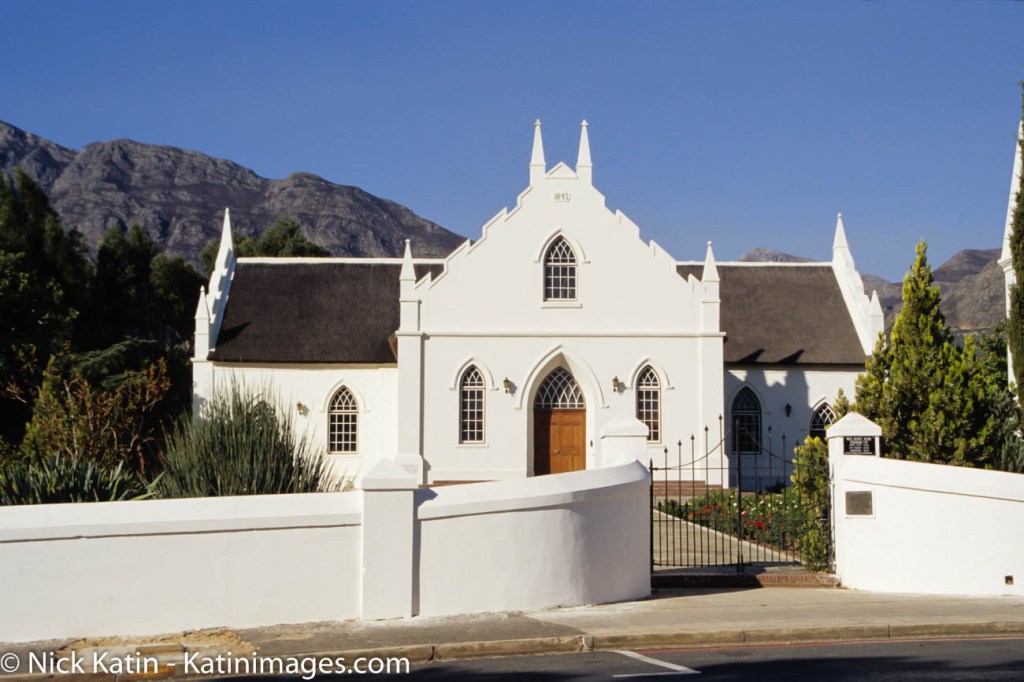
    Dutch Reformed Church, in Franschhoek, South Africa
    Dutch Reformed Church, in Franschhoek, South Africa
  • African shoestrings – South Africa Day Thirty – Cape Town

    What was in regular service were the minibus taxis. If you have being paying attention you’d remember that I’ve mentioned these before.
    These are generally run by black or more often or not in Cape Town, coloured South Africans and are mostly used by both these groups of people. They are of course found in almost any third world country in the world but they are particularly popular on the African continent.
    At one time a white South African wouldn’t be seen dead on a minibus largely because there were restrictions on where they could operate but also because they had the Merc or BMW and didn’t need to use such transportation. Realistically I suppose a lot of them probably felt unsafe especially in some areas like the suburbs of J’burg. Except for some areas, multicultural Cape Town is considered a lot safer than J’burg and it’s now not unusual to see white travelers on these minibuses.

    We didn’t know all this at the time, so when Andre told us that the best way to get into town was via minibus along the main street, it was with some apprehension that we waved down the first minibus that came along. We were the only whites in this crowded bus but none paid us any attention except the fare collector who grunted something at us that the guy sitting next to us interpreted as “that’ll be R2 each please”.

    In one of these travel guides that focus on daredevil activities, like visiting war zones and terrorist training camps for kicks, I once read a list of all the most dangerous activities in the world. Riding in a minibus was way up there with swimming with crocodiles, bounty hunting and demonstrating in Tiananmen Square in Beijing.

    This little tidbit of information flooded back to me as this sardine packed minibus swerved at breakneck speed around slower vehicles travelling in both directions before coming to a screeching stop to pick up any new or potentially new passengers that could be crammed in horizontally into all that air space above us.

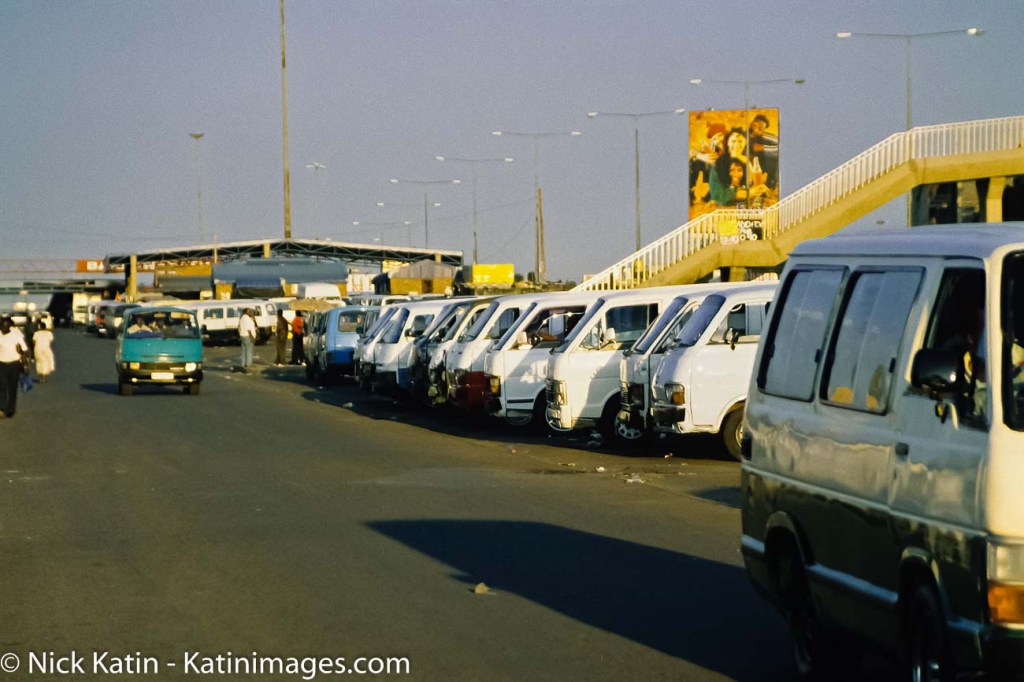
    We arrived safe and sound in the densely populated main minibus rank above the train station. People were everywhere, either being crammed in, waiting or like us shakily getting out. We had survived!

    A Mini Van 'depot' in South Africa. Mini Vans are the most popular form of public transport in the urban areas of South Africa.
    A Mini Van ‘depot’ in South Africa. Mini Vans are the most popular form of public transport in the urban areas of South Africa.
  • African shoestrings – South Africa Day Twenty-nine

    We left J’burg for Cape Town the next day via a domestic South African airways flight.

    We had been to Cape Town before but we had felt that hadn’t done it justice, so this visit was to ‘see’ the place properly. Last time we had stayed in a pleasant Bed & Breakfast near the city centre. This time we were going to stay in a backpackers of which like J’burg there were many. Expecting to be hassled by their touts at the airport, we hadn’t bothered to book ahead. Guess what? The only touts we saw were for taxis. After a three or four phone calls to different hostels we soon realised why. They were all full!

    It was a long weekend and Cape Town was almost booked. I say almost because eventually we found a backpackers that had a double room and they paid for the shuttle from the airport to take us there, saving us R30 each.
    Unfortunately that was not as much to our advantage as we initially thought, we were now obligated to stay at least one night. The Cat and Moose was we thought at the time about as bad as it gets. The landlady led us to a dingy little room with threadbare carpet, paper thin linen and the sort of musty damp and putrid smell that makes you want to vomit! Worse still we had to walk through a dorm for access and it was across an alleyway from the TV area where a little blonde haired prick full of bullshit (we had met him earlier) had the sound loud enough for people in the next suburb to hear.

    Needless to say we were out of there the next day!

    With the help of the tourist office we found the colourful Observatory guesthouse in a suburb called, you guessed it, Observatory, a trendy uni student area. I say colourful because the rooms all had loud colour schemes and the owner, Andre and his manager, Gregory, were both pretty camp. This sorted added a certain ambience to the place and was cheap, clean, quiet and comfortable. But here’s the rub…..we were no longer within walking distance from the city centre and apparently public transport as we know it, was virtually non existent.

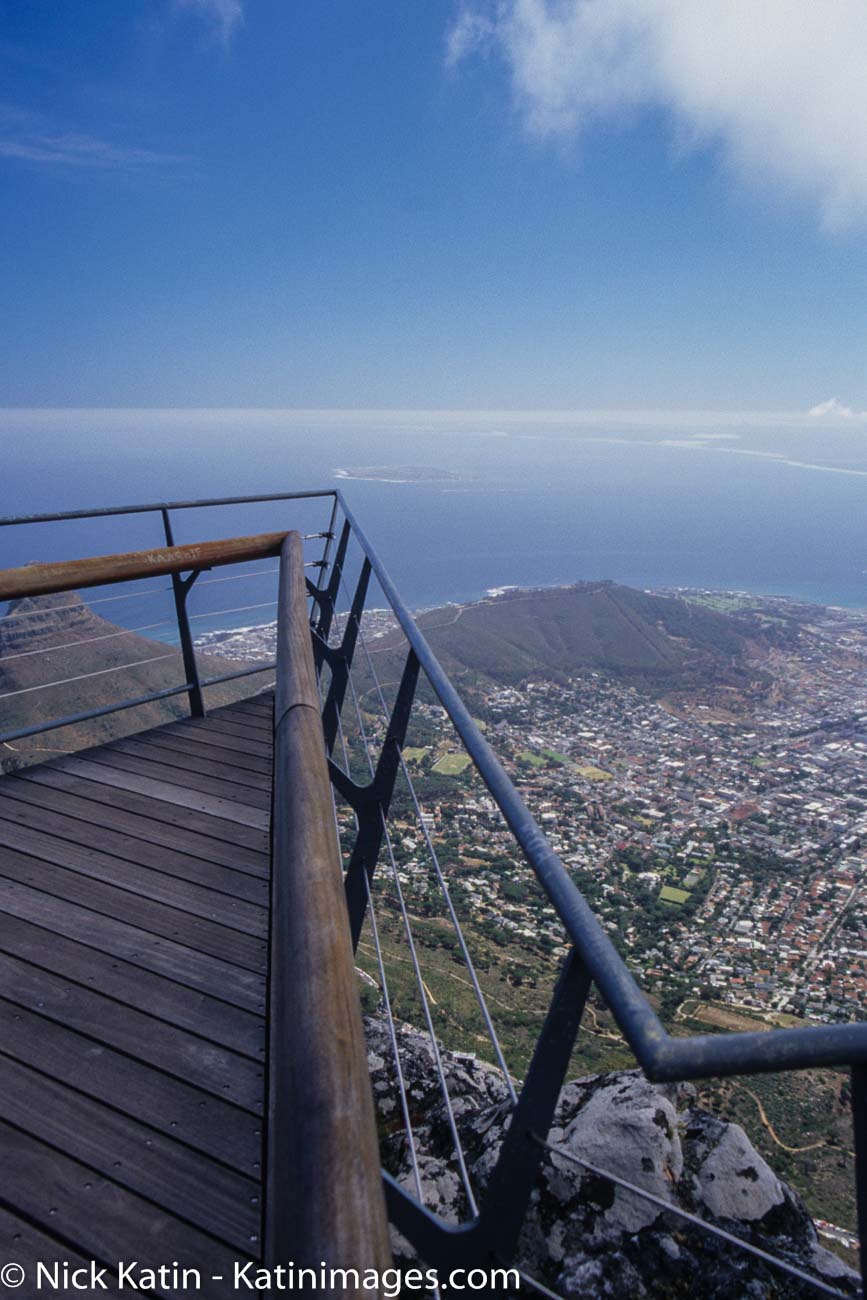
    Cape Town from the Aerial Cableway lookout on Table Mountain .
    Cape Town from the Aerial Cableway lookout on Table Mountain .
  • African shoestrings – South Africa Day Twenty-eight

    Next stop was the first of two shebeens. A shebeen is basically a township bar that until recently were illegal and like the rest of the world there are shebeens and there are shebeens.
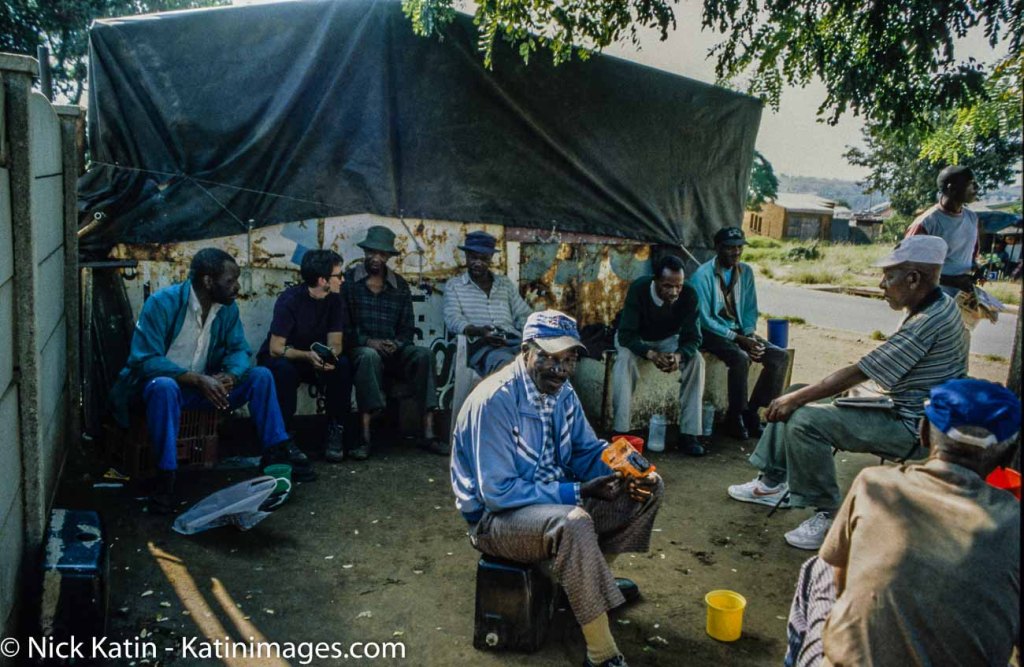
    This first one was a kiosk on a small patch of land that serves beer, for R1.30 a litre, made from Sorghum or maize and is meant to taste like porridge to the uninitiated. We bought a litre, tasted it. ……..Yuk! It was a lot worse than we had imagined so we gave it to the shebeen’s ‘customers’, who were sitting outside under a big tree, contemplating the world.

    We sat with them and talked for a while. These guys are all unemployed and were well into their 50’s and seemed to be just waiting for something to come along. Some were well qualified, one was an electrician, another was a fitter but as Nic said “they’ve just given up on life”. Nonetheless they were pretty jovial and we laughed and joked with them until it was time for us to go.

    The second shebeen was just a like a pub with a pool table and music which apart from the clientele and the location, could have been a bar in any other part of the world. No maize beer here, these drinkers were getting into cans of Castle at R4.00 or bourbon and coke and other spirits. Outside the shebeen was an open-air barbers surrounded by hundreds of white minibus’s. So here, you could get pissed, get a haircut and get a lift home. Too easy!!

    Nic also took us to a few famous and infamous landmarks like Willie Mandela’s house, Nelson Mandela’s former house before his imprisonment in 1963 and Archbishop Tutu’s house. None of these houses were anything less than comfortable middle class size homes and like all the accommodation everywhere seemed clean and tidy. Not so the streets and open spaces. Plastic bags were everywhere, caused, Nic told us, mainly through an inadequate rubbish collection service.

    Actually I’m not sure I believed him.
    Three years ago whilst travelling around South Africa, plastic bags seemed to be part of the landscape, a bit like multi coloured birds flocking to the ground and then spasmodically taking off.
    In one particular incident we had accidentally taken a wrong turn and ended up driving through a notorious black township near Port Elizabeth for what seemed like 3 days (actually it was 30 minutes). Apart from the sheer terror we experienced (“I’m not fucking stopping for anyone even if they’re bloody lying on the road” I had said at the time), my other memory is of these thousands of plastic bags that seemed to float aimlessly along the rather bleak landscape.

    A Shebeen (bar) in the heart of Soweto in Jburg, South Africa
    A Shebeen (bar) in the heart of Soweto in Jburg, South Africa
  • African shoestrings – South Africa Day Twenty-seven

    Our first stop was the “poor end of town” which in size is the smallest part of Soweto but also by far the most densely populated.
    We were taken into a small two room “house”.
    I say house loosely because it was no bigger than two decent size tin sheds found in any Australian suburb. This shack had two rooms, walls and a roof of corrugated iron and floors of metal panels on top of what was probably just mud. Looking around, every other ‘dwelling’ was the same with about two or three metres between them where vegetables were grown, washing was hung and occasionally a communal chemical toilet or a water tap was available.
    None of these places had running water, sewerage or indeed electricity. The only form of heat was a small wood burning stove also used for cooking.

    But the most remarkable thing about this shack were the tenants. Somehow a family of eleven lived here! Mum, Dad and nine kids aged between one and 20 years old.
    Mum told us that there’s no work for anyone much and because there’s no such thing as dole in South Africa, Dad picks up a little bit of money from “Piecework”, odd jobs here and there.
    She earns a little bit of money from telling fortunes and knitting and selling hats. Fortunately they don’t have to pay rent. Mum was surprisingly, articulate and intelligent. Why was I surprised? I don’t know, I had never met anyone in this position before.

    I was equally surprised that she was also cheerful, optimistic and quite accepting of her lot in life and happy to give us a first hand account. As we had in Lesotho we reflected on how much we have and how little these people have in comparison. In Lesotho it seemed different, they were poor but content. Here this was just a brave face and it’s so frustratingly close to not only white affluent suburbs but black ones too! This eventually got the better of us and we gave Nic some money later to pass on to this women who had been good enough to allow us into her home.

    Mother and child in Soweto in the shadows of Soweto's upmarket and large homes are residential tin shacks. Soweto, South Africa.
    Mother and child in Soweto in the shadows of Soweto’s upmarket and large homes are residential tin shacks. Soweto, South Africa.
  • African shoestrings – South Africa Day Twenty-six

    The main reason that we had elected to stay in J’burg the extra night was to see Soweto.

    Soweto you say! Why would anyone want to see such a notoriously dangerous place?

    Well, most tourists visiting South Africa regardless of budget have minimal contact with black South Africans. Very few get to visit black townships or satellite towns because of their reputation or lack of opportunity.
    Hotels and all levels of accommodation, tour companies and other tourist facilities are still in the main, owned and run by white South Africans and generally black South Africans tend to keep their distance particularly from white tourists.
    Not surprisingly Soweto has had the biggest media coverage and for most represents South Africa at its worse. It has in reality, been a war zone ever since that fateful day in June 1976 when many black students were killed by police in a march against the use of the Afrikaans language in black schools.
    So to see such an infamous place is to observe black South Africa.

    Of course we were not stupid enough to go in on our own. Soweto is now a tourist attraction, so there are a number of tours that are run chiefly by black South Africans.

    Like most people I expected to see squalor and poverty on a large scale and it stopped me in my tracks to see that parts of Soweto were just like any other middle class suburb in the world. Nic Mbewe, our guide and Padwana his driver lived all their lives in Soweto and as he explained “There are basically three types of housing in Soweto, upper for the educated with good jobs who are moving out because they can, middle for those with jobs and the poor end of town for those who have nothing”.
    To be contuined………

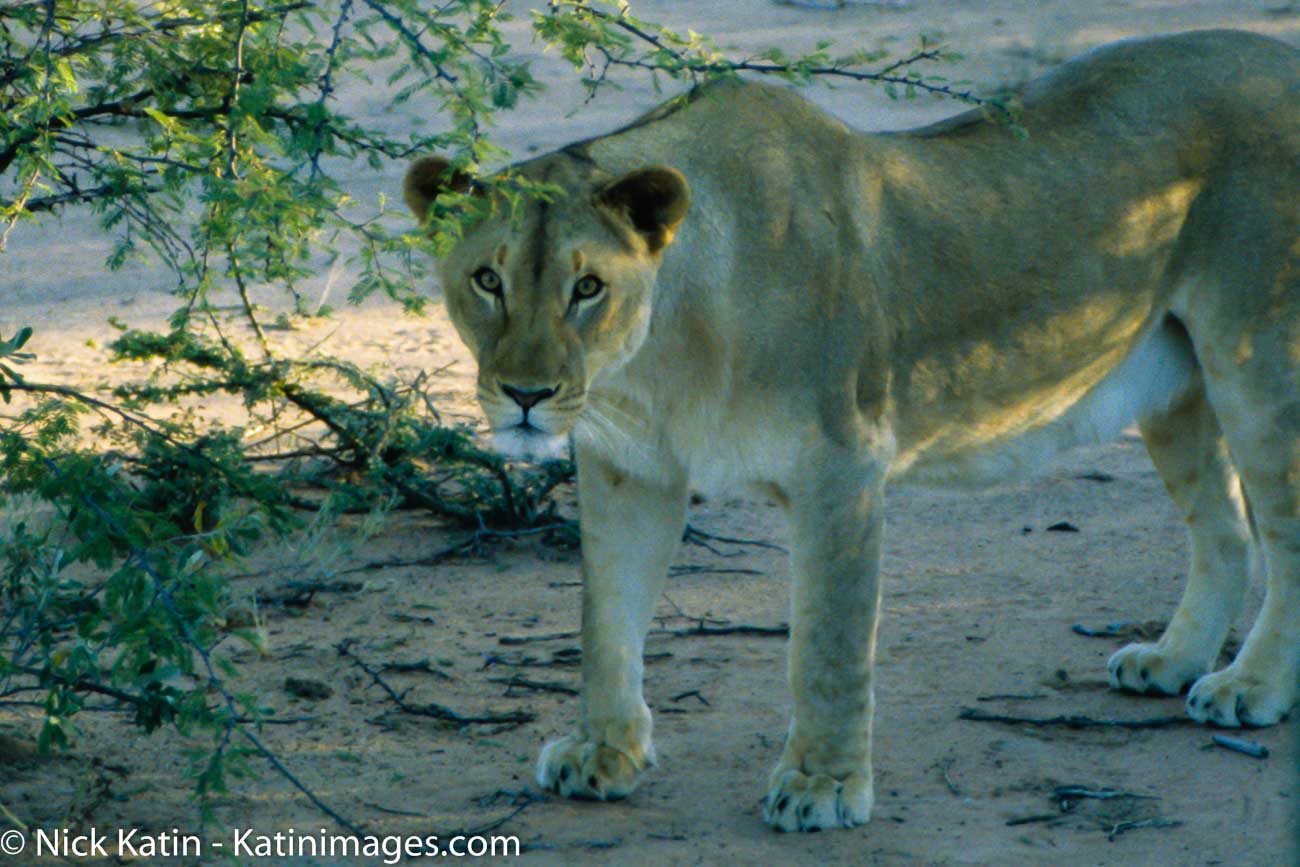
    A lioness underneath bush peers at it's potential prey in Namibia
    A lioness underneath bush peers at it’s potential prey in Namibia
  • African shoestrings – South Africa Day Twenty-five

    The hostel itself was an old large rambling single storey house with hand me down furniture spread haphazardly around the place,………… lounge chairs, torn dining chairs and card tables that had all seen better days and a large garden.
    Sounds all right doesn’t it? Well I did miss out one important fact. It backed onto the runway. It didn’t take too many jumbo jets to fly over to work out why it was called the Airport backpackers!
    Gerard was actually the owner and due to his Aussie manager being away, the manager as well.
    A white South African in his late 30’s or so, Gerard just likes to drink and talk and without doubt is a wealth of information on travel in Africa.
    Mind you, as Gerard’s bar was outside in the garden, conversations were often interrupted by the take off or landing of 747 or something similar. The noise was deafening initially until strangely enough you got used to it.
    What fascinated me more were the clientele; an Israeli couple who were not together, so they kept saying anyway, helping Gerard in slow motion; two Scottish girls who spent the day sun-baking and were never far from each others side; a Sri Lankan family, who never left the place and seemed to spend all their time cooking and washing and finally a Norwegian man in his late sixties with a much younger Thai wife, who just seemed to hover all the time in the background.
    The last couple had houses in both Norway and Thailand and he was a retired engineer, the last person you would be expecting to backpack around Africa.
    They were waiting to catch the ‘Baz’ bus to Victoria Falls in Zimbabwe. Now the Baz bus is one of those innovations born from the principle, necessity is the mother of invention. Clearly aimed at the backpacker market it’s a hop on hop off bus that runs between J’burg and Cape Town with several side routes and of course it’s relatively cheap. We toyed with the idea of using it ourselves except for one important detail, it didn’t go anywhere we were going!

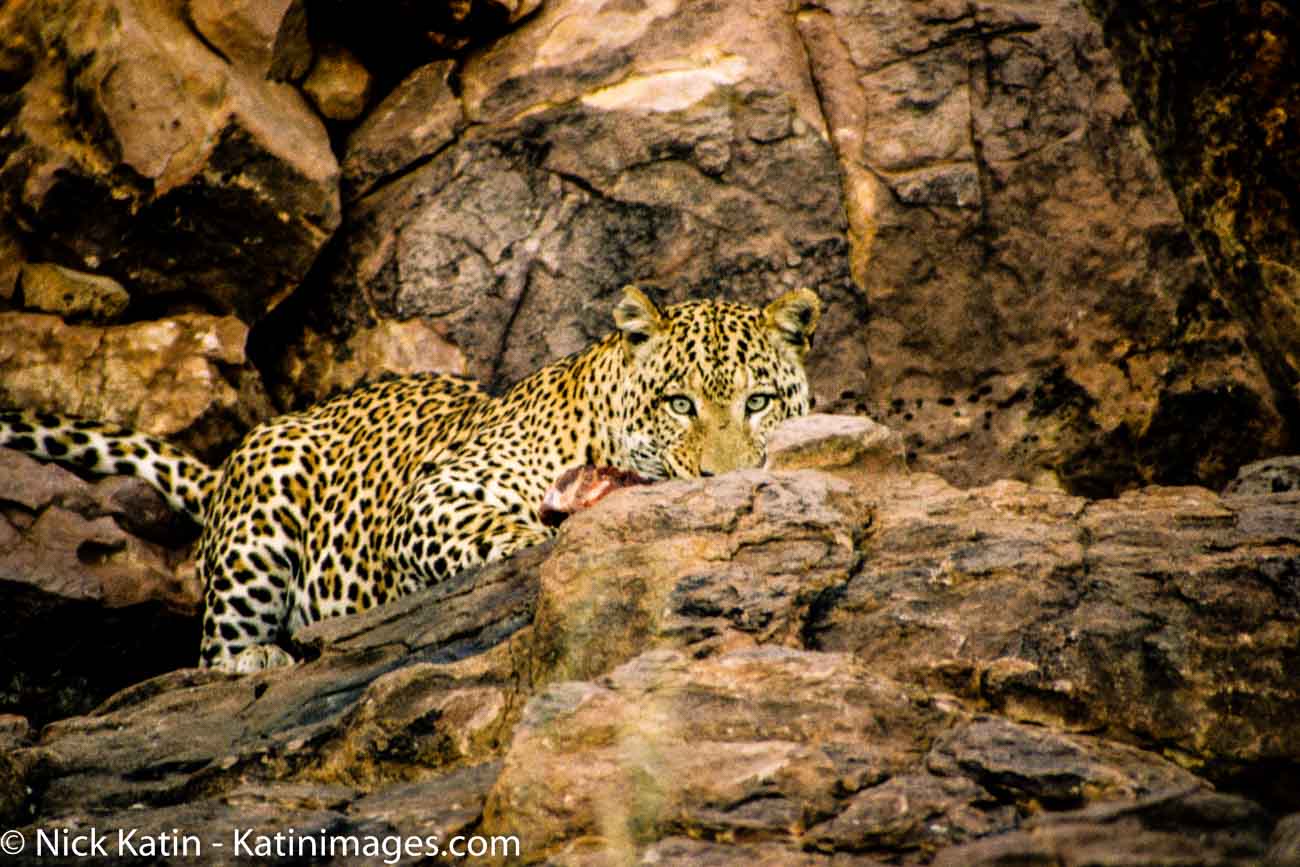
    A leopard eats it's prey amongst the rocks in Central Namibia
    A leopard eats it’s prey amongst the rocks in Central Namibia
  • African shoestrings – South Africa Day Twenty-four

    It was as the guy from Budget was driving away that a rather worrying thought crossed my mind.
    What if he wasn’t a Budget employee and had just easily hoisted a car from two unsuspecting and naïve tourists! The fact that he was standing in the Budget car park with a Budget jacket might mean nothing; that could have been part of the ‘sting’. I decided that I would take an aggressive approach if it turned out I was not paranoid.

    “Why let a car thief stand in your car park with your uniform on was going to be my approach”, I was going to take it up to them!

    I was awoken from my absurd fantasy by more of these backpacker hostel touts ceaselessly badgered us to stay in their hostels.Apparently since the end of apartheid in 1994 there have been numerous hostels sprouting up in the more popular tourist spots especially J’burg and Cape Town.
    I don’t how many there are in J’burg but It appeared that each one had a tout at the airport.

    As it happened we had booked a night in the ‘Airport backpackers’ before flying to Cape Town on our freebie flight.
    This was our first experience of a backpackers and we had been strangely comforted by the fact that the female voice on the other end of the phone had been Aussie when we booked a few days before.
    So when Gerard picked us up at the airport in old beaten up VW golf and proceeded to apologise for the damp in our room, dropping the price of the room by 20%, our comfort was soon replaced by some trepidation.
    This was heightened by the fact that we had to wait whilst Gerard seem to spend rather a long time getting it ready before allowing us to move in.

    Actually our room wasn’t that bad, the only pieces of furniture were a soft, uneven bed and a rickety wardrobe. The smell of damp caused by a leaking shower next door was just about tolerable.

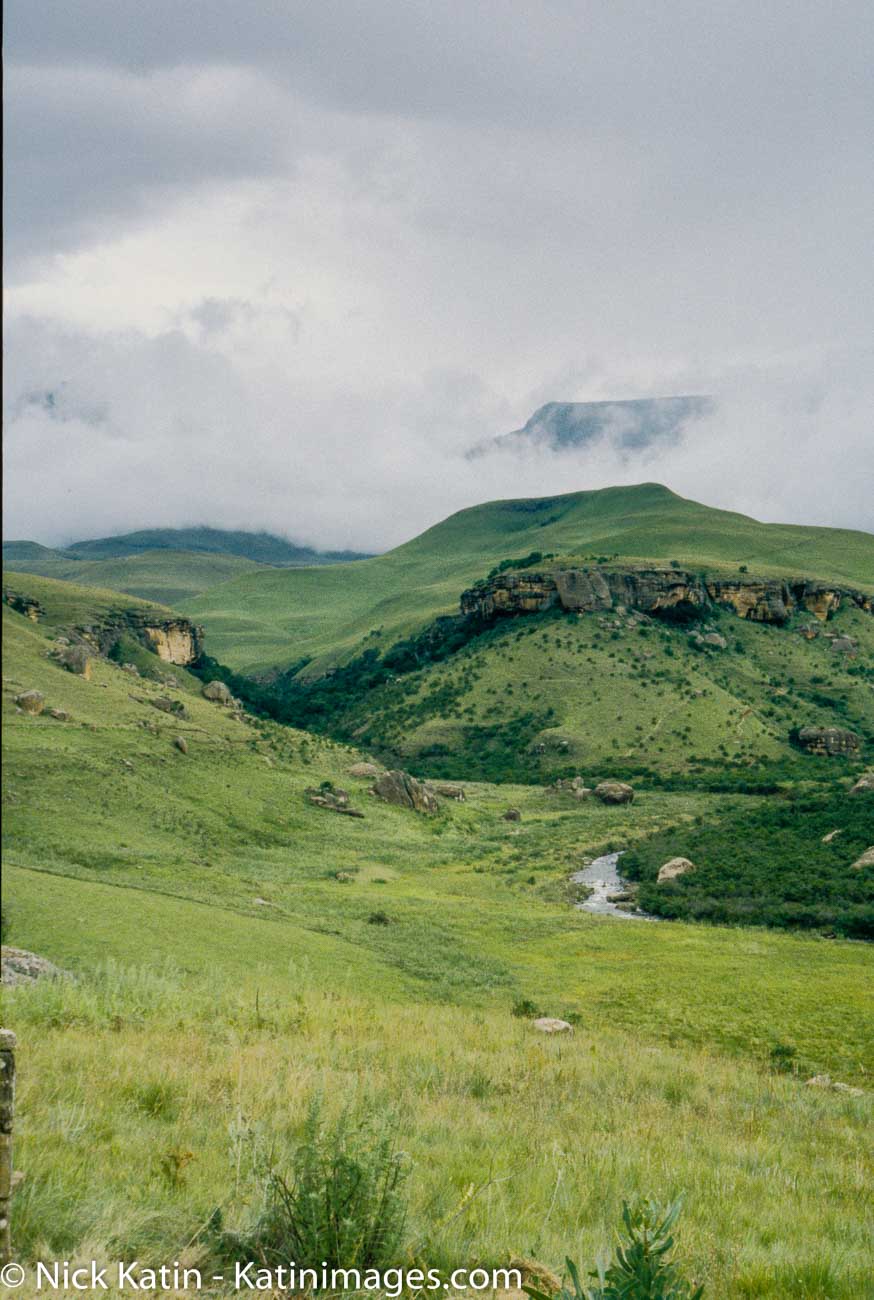
    Lying at the southern end of the central Drakensberg Giant’s Castle, which gets its name from the outline of the peaks and escarpment that combine to resemble the profile of a sleeping giant, is essentially a grassy plateau that nestles among the deep valleys of this part of the Drakensberg.
    Lying at the southern end of the central Drakensberg Giant’s Castle, which gets its name from the outline of the peaks and escarpment that combine to resemble the profile of a sleeping giant, is essentially a grassy plateau that nestles among the deep valleys of this part of the Drakensberg.
  • African shoestrings – South Africa Day Twenty-three

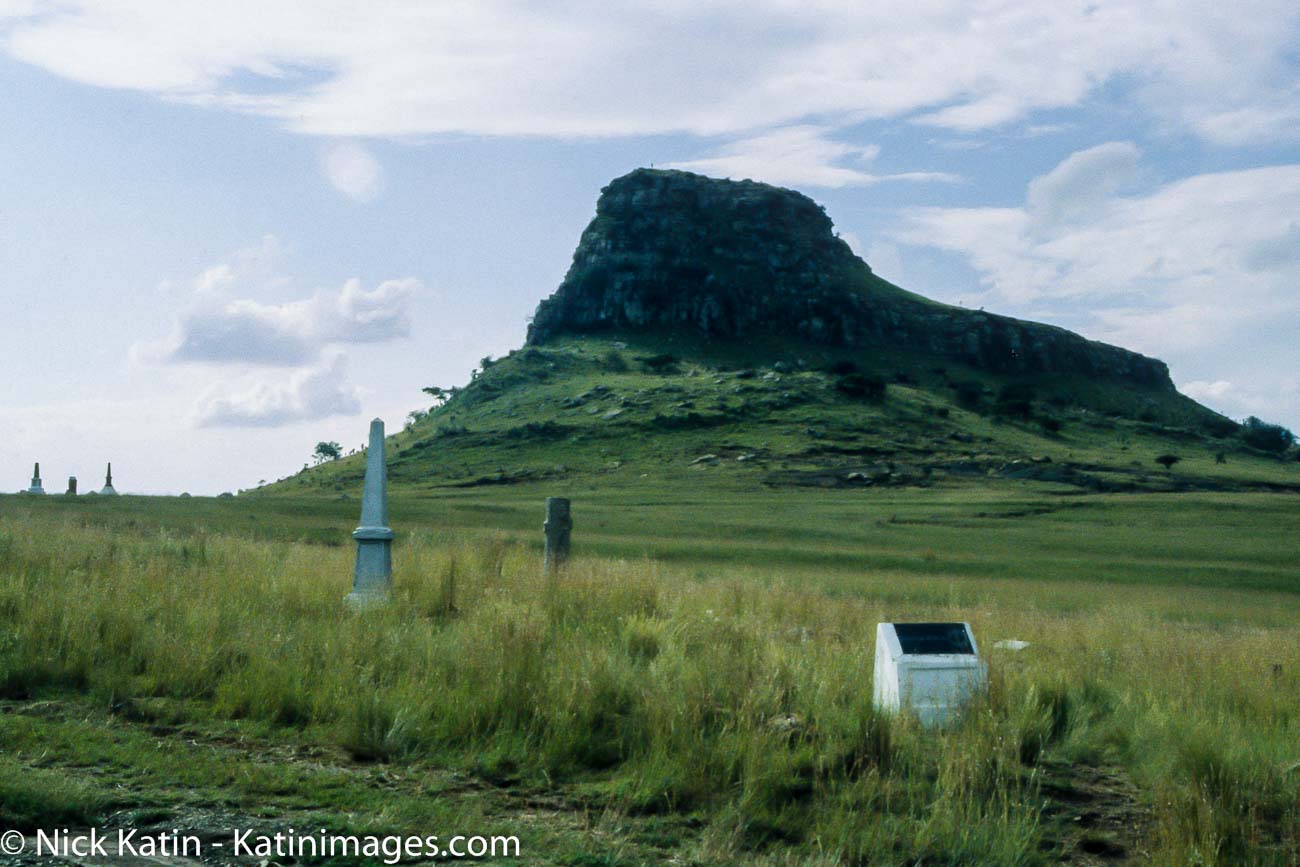
    We found the Isandlwana battlefield quite eerie and moving. Monuments and unmarked graves in the form of stone cairns (piles of small rocks and stones for anyone that doesn’t know what a cairn is) dot the base of the hill, marking spots where they believe certain events or deaths took place.
    There is a memorial to the Zulu dead but somehow we didn’t really get the feeling that the local Zulu population hold this site as sacred, cattle and rustlers just strolled across the field without any reverence to the memorials around them.

    For those history buffs I didn’t mention the other two wars that were fought in this area, namely the first war of independence and the Anglo Boer war.
    Both of these wars were fought between the British and the Afrikaners or Boers and eventually led to the British having complete control of South Africa, despite a crushing defeat in the former.
    It was in the Anglo Boer war that the first ever concentration camps were used, this time by the British, who imprisoned Boer women and children 26,000 of whom died in the camps.

    Ironically the Boers regained control of South Africa, this time peacefully, through the ballot box in 1910 and only relinquished it in 1994, again through the ballot box in the country’s first multi racial election.

    At this stage we were still 360 Km’s from J’burg and had to drop the hire car back to the airport the next morning. So after staying the night in rondavel on a rather strange property called Carla Mai we headed out early to J’burg.

    Now you most of you who’ve ever hired cars would know that you are meant to return them with a full tank. At J’burg airport this was a hassle! We had tried unsuccessfully to find one close to the airport and thought there’s bound to be one there. Do you think we could find one! ………..No!

    After circling, getting lost and losing our sense of direction, we gave up and somehow managed to find the Budget car park and office. There they have stewards who guide you to a parking spot and one of these guys very obligingly jumped in the car and took us to the nearest fuel station 30 seconds away! Following this he dropped us off at the international terminal and took the car back to Budget.

    Lying at the southern end of the central Drakensberg Giant’s Castle, which gets its name from the outline of the peaks and escarpment that combine to resemble the profile of a sleeping giant, is essentially a grassy plateau that nestles among the deep valleys of this part of the Drakensberg.
    Lying at the southern end of the central Drakensberg Giant’s Castle, which gets its name from the outline of the peaks and escarpment that combine to resemble the profile of a sleeping giant, is essentially a grassy plateau that nestles among the deep valleys of this part of the Drakensberg.
  • African shoestrings – South Africa Day Twenty-two

    In the middle to the end of nineteenth century a large group of Afrikaners, (descendants of the original, mainly Dutch, French and German settlers) trekked their way their way from the Cape after the British took control of the Cape colony. This was called the Great Trek.
    When they got to Natal they found the Zulu’s here and after trying to negotiate for some land ended up fighting them.

    Now the British were also there and they had already claimed the land but started to feel threatened by a build up in Zulu numbers, eventually, you’ve guessed it, another war, called unimaginatively the Anglo-Zulu war, broke out.
    Two famous battles were fought in this war, Isandlwana and Rorke’s drift.

    Four years ago we stayed in Dundee and visited both the local Talana museum, a resource of information and displays about all the battles and events of these wars, and the scene of Rorke’s drift. The heroic effort by 139 British soldiers to hold off 4000 Zulu’s was immortalised by the movie Zulu. It starred Michael Caine and Stanley Baker and we loved it, henceforth our desire to see the real thing! It’s one of those places that requires a lot of imagination.
    None of the original buildings are there and the grassland that was there at the time has been overrun by scrub due to years of overgrazing. But the museum, available literature and markers that are dotted around go some way towards transporting you back into time.

    Now the whole reason for us coming back to this area was to see the other Battlefield, Isandlwana.
    What happened at this hill a few hours before the Battle of Rorke’s Drift was horrific. I won’t bore you with the complex maneuvers that took place beforehand except to say in summary that the British had issued an ultimatum demanding this, that and the other, which the Zulu’s ignored, triggering off a British invasion of Zululand. The British centre force accidentally stumbled on the main Zulu force at Isandlwana, which spoilt the Zulu’s plan for a surprise attack. So they attacked anyway and in two hours 20,000 men surrounded the British and annihilated 1400 of the 1800 British soldiers. Some of the survivors found their way to Rourke’s Drift and helped fortify the position together with the small force that had been left there to guard a river crossing and supplies.

    The Isandlwana battlefield where the Zulus destroyed 80% of the British forces in Kwazulu-Natal in South Africa
    The Isandlwana battlefield where the Zulus destroyed 80% of the British forces in Kwazulu-Natal in South Africa
  • African shoestrings – South Africa Day Twenty-one

    What Giant’s castle is really known for is its 5000 Bushmen Rock Paintings and the twelve species of Antelope and from our experience it’s a lot easier to see the former than the latter. With one of the park rangers we went to Main cave, one of the two sites open for viewing. He pointed out and interpreted a lot of the paintings that date from early man through to as recent as one hundred years ago, just before the bushman left this area forever.

    From Main Cave we followed the River walk alongside the quaintly named two Dassie Stream. Dassies are small animals that resemble giant hamsters and are about the size of a large domestic cat and seem to be everywhere in Southern Africa. Somebody with a fertile imagination spread a story about their closest relative being an Elephant!

    Back to the pub at White Mountain lodge. We got talking to Peter, a young white teacher there with a school group. He actually was one of the few that wasn’t thinking of leaving South Africa despite the fact that educational standards for all students were slipping fast due to a chronic lack of funds. Peter had relations in Australia and had been to Perth so he knew the alternatives. I wondered as we talked whether he would change his mind if/or when he has kids.

    South Africa is a land of undeniable natural beauty, it has the mountains, beaches, gorges and desert, it also has an abundance of wildlife, plus of course a fascinating cocktail of cultures. But one of its greatest attractions is its colourful history.

    In an area centered around the quiet farming town of Dundee in the province of Kwazulu-Natal, lies the Battlefield Route. This self guided tour takes in attractions historical events and obviously battles in this pretty part of the country. It was here that incredibly four wars were fought in the middle to the end of nineteenth century. More on that next week

    Lying at the southern end of the central Drakensberg Giant’s Castle, which gets its name from the outline of the peaks and escarpment that combine to resemble the profile of a sleeping giant, is essentially a grassy plateau that nestles among the deep valleys of this part of the Drakensberg.
    Lying at the southern end of the central Drakensberg Giant’s Castle, which gets its name from the outline of the peaks and escarpment that combine to resemble the profile of a sleeping giant, is essentially a grassy plateau that nestles among the deep valleys of this part of the Drakensberg.
  • African shoestrings – South Africa Day Twenty

    The accommodation at Royal Natal was more than we wanted to pay so we took our chances on the road.
    Peering through the gloom we knocked on several doors of motels and B & B’s all of which were full!
    Eventually we managed to find a huge chalet at a rather sterile Drakensville Resort. This place was a holiday village full of suburban fibro homes and unfriendly people. I felt like we were back in the 50’s in one of those American suburbs that are the scene for a horror or serial killer movie but without the pumpkins.

    This was definitely a white man holiday camp! There was not at a black face to be seen!
    What was to been seen however were little weevils in the bag of rice we bought at the shop there. Either added for flavour or it had been on the shelf for a while we took it back and ended up with another bag which guess what, also had weevils.
    We gave up trying to cook a rice dish went to bed and left early the next morning.

    By contrast White mountain lodge is a quaint resort with white thatched roof cottages and cabins overlooking a large lake with lots of physical activities like canoeing and walking and less strenuous ones like the pub to keep guests occupied. Needless to say the latter was were we ended up that night after spending the day at Giant’s castle game reserve.

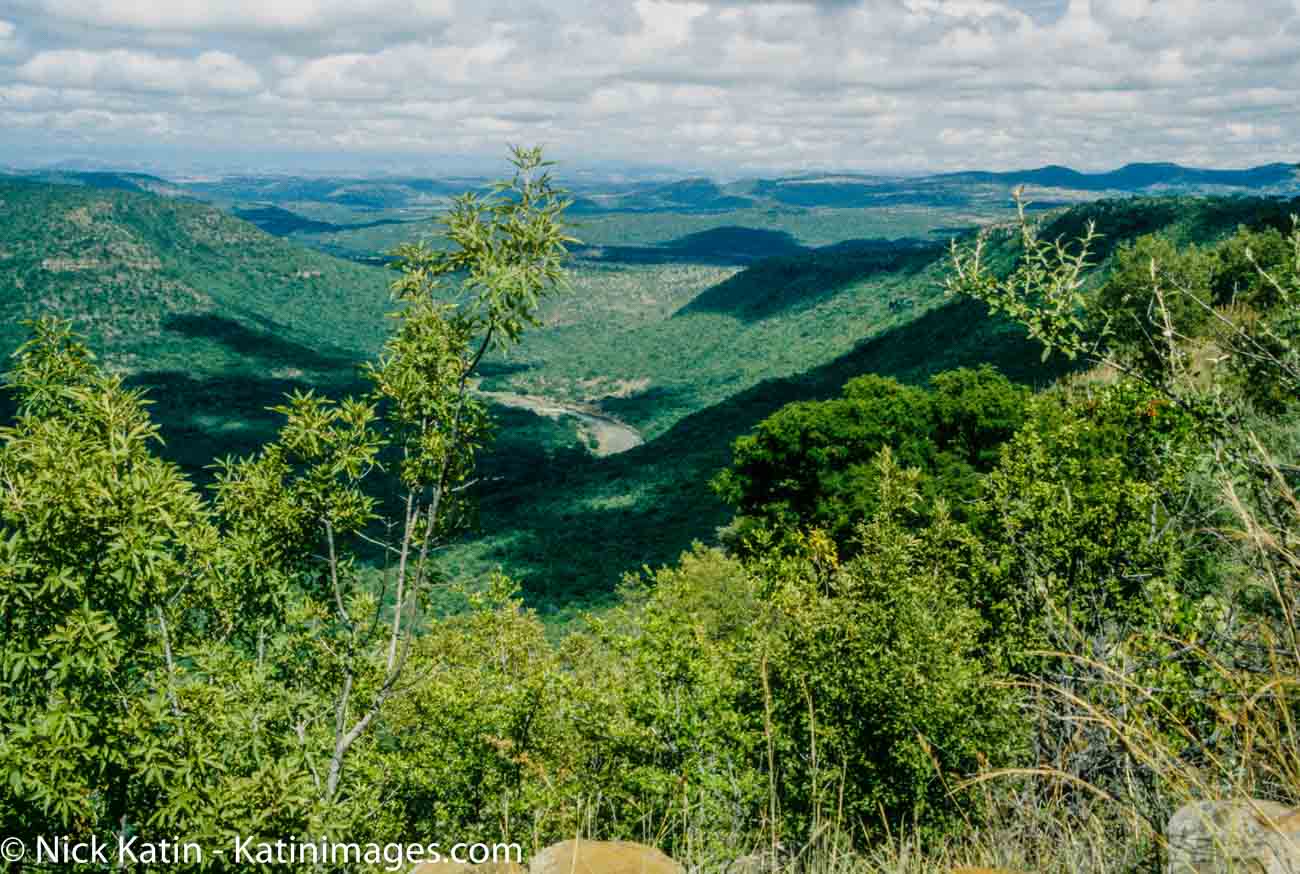
    Named after one of the highest peaks in the park, this is real high country with the highest mountain in the Drakensberg, the 3409 metre Injasuti Dome, located here. It’s not as spectacular as Royal Natal but it is quite awe inspiring. Huge perfectly curved peaks of various sizes covered in grassland dominate the landscape, particularly at the eastern and southern borders of the park. Down in the valleys the landscape is covered in walking tracks and fast flowing rivers.

    Lying at the southern end of the central Drakensberg Giant’s Castle, which gets its name from the outline of the peaks and escarpment that combine to resemble the profile of a sleeping giant, is essentially a grassy plateau that nestles among the deep valleys of this part of the Drakensberg.
    Lying at the southern end of the central Drakensberg Giant’s Castle, which gets its name from the outline of the peaks and escarpment that combine to resemble the profile of a sleeping giant, is essentially a grassy plateau that nestles among the deep valleys of this part of the Drakensberg.