Katin Images Travel Photography

Travel Photos, Travel Photography Tips and Software

Category: africa

  • African shoestrings – South Africa Day Twenty-four

    It was as the guy from Budget was driving away that a rather worrying thought crossed my mind.
    What if he wasn’t a Budget employee and had just easily hoisted a car from two unsuspecting and naïve tourists! The fact that he was standing in the Budget car park with a Budget jacket might mean nothing; that could have been part of the ‘sting’. I decided that I would take an aggressive approach if it turned out I was not paranoid.

    “Why let a car thief stand in your car park with your uniform on was going to be my approach”, I was going to take it up to them!

    I was awoken from my absurd fantasy by more of these backpacker hostel touts ceaselessly badgered us to stay in their hostels.Apparently since the end of apartheid in 1994 there have been numerous hostels sprouting up in the more popular tourist spots especially J’burg and Cape Town.
    I don’t how many there are in J’burg but It appeared that each one had a tout at the airport.

    As it happened we had booked a night in the ‘Airport backpackers’ before flying to Cape Town on our freebie flight.
    This was our first experience of a backpackers and we had been strangely comforted by the fact that the female voice on the other end of the phone had been Aussie when we booked a few days before.
    So when Gerard picked us up at the airport in old beaten up VW golf and proceeded to apologise for the damp in our room, dropping the price of the room by 20%, our comfort was soon replaced by some trepidation.
    This was heightened by the fact that we had to wait whilst Gerard seem to spend rather a long time getting it ready before allowing us to move in.

    Actually our room wasn’t that bad, the only pieces of furniture were a soft, uneven bed and a rickety wardrobe. The smell of damp caused by a leaking shower next door was just about tolerable.
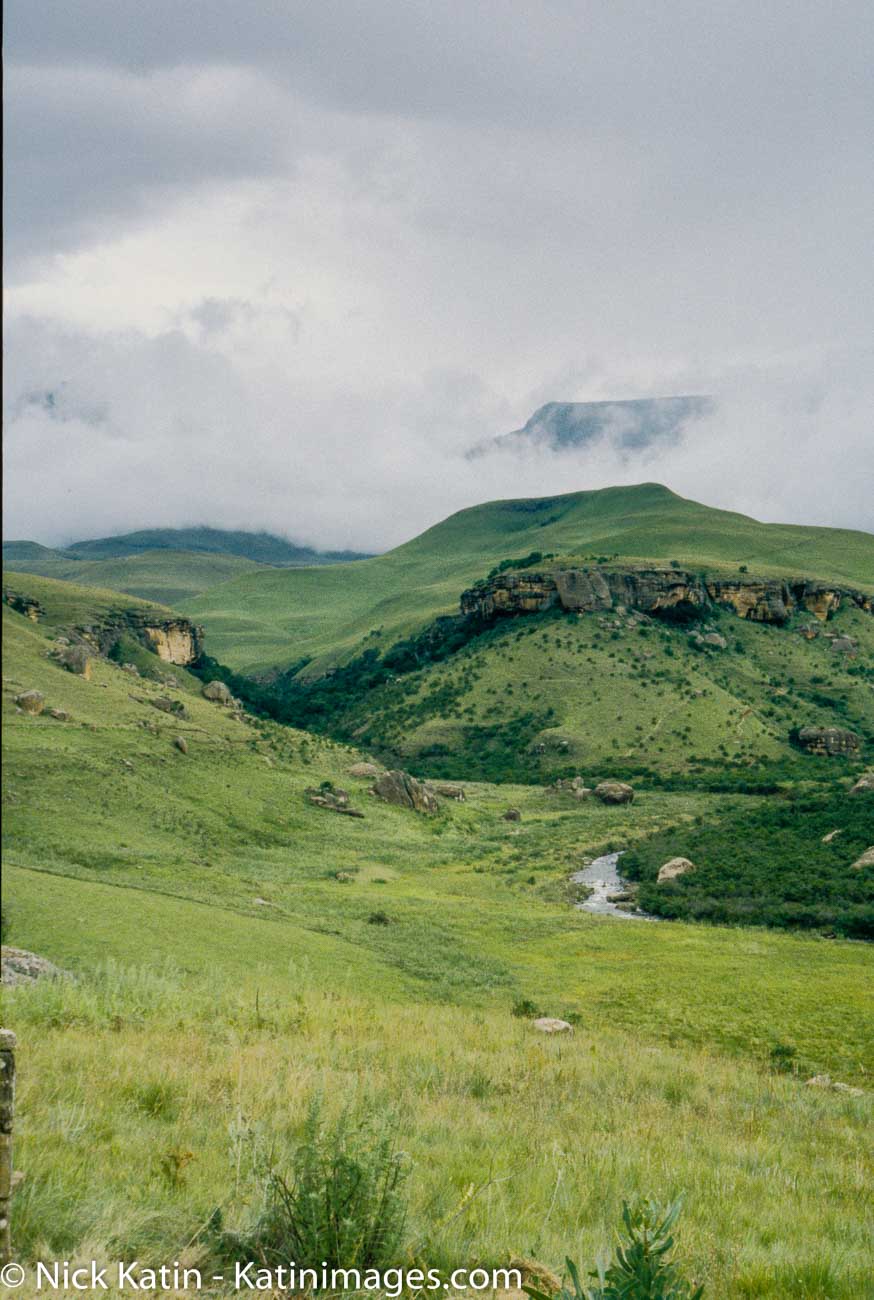
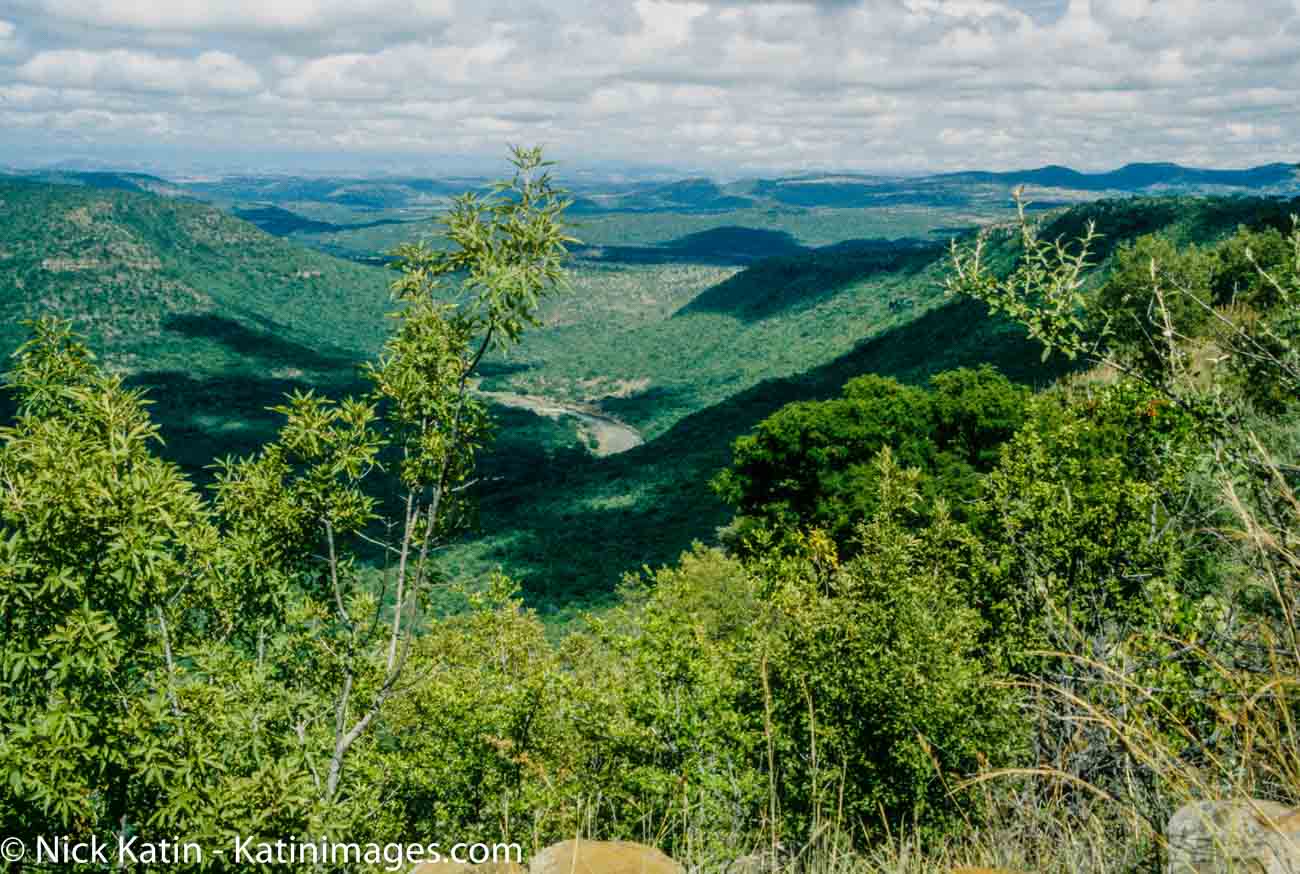
    Lying at the southern end of the central Drakensberg Giant’s Castle, which gets its name from the outline of the peaks and escarpment that combine to resemble the profile of a sleeping giant, is essentially a grassy plateau that nestles among the deep valleys of this part of the Drakensberg.
    Lying at the southern end of the central Drakensberg Giant’s Castle, which gets its name from the outline of the peaks and escarpment that combine to resemble the profile of a sleeping giant, is essentially a grassy plateau that nestles among the deep valleys of this part of the Drakensberg.
  • African shoestrings – South Africa Day Twenty-three

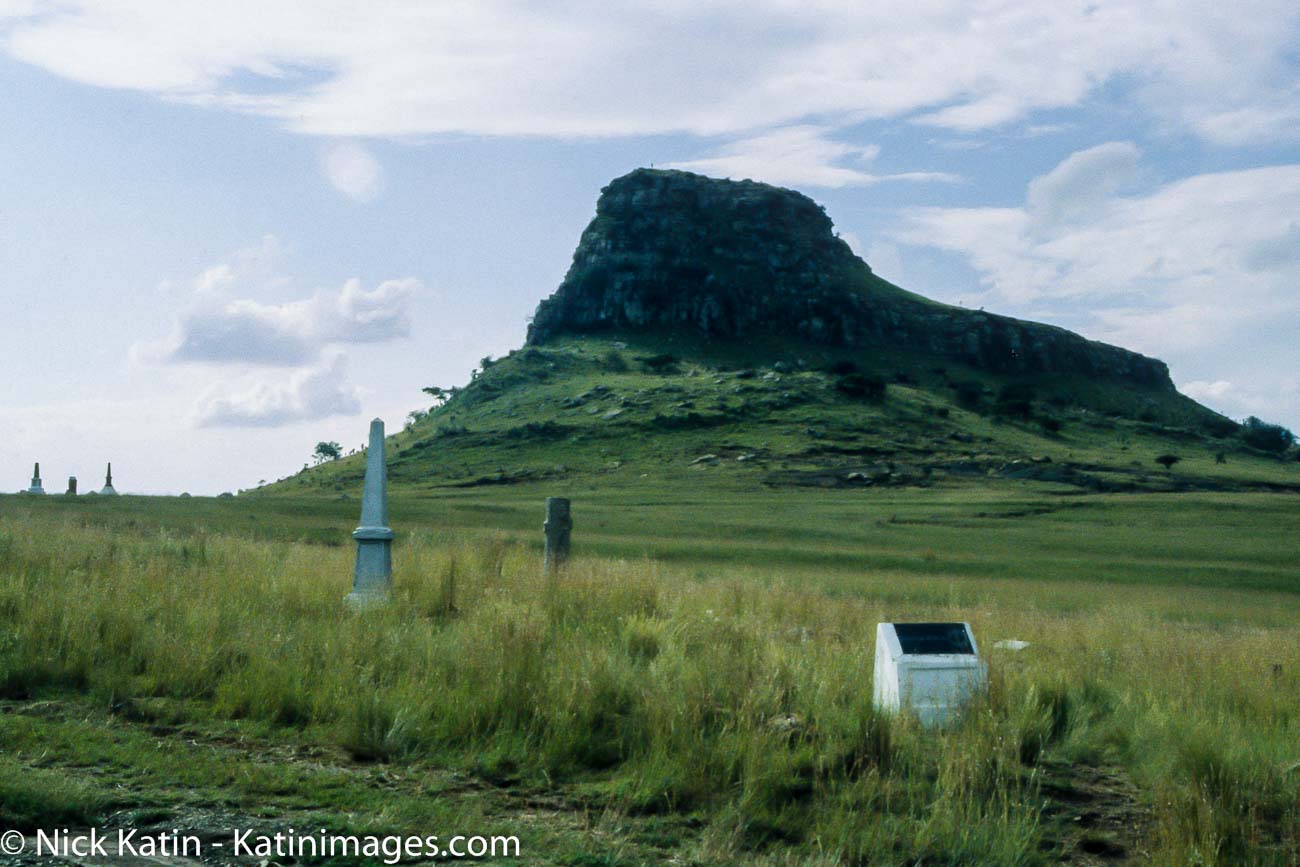
    We found the Isandlwana battlefield quite eerie and moving. Monuments and unmarked graves in the form of stone cairns (piles of small rocks and stones for anyone that doesn’t know what a cairn is) dot the base of the hill, marking spots where they believe certain events or deaths took place.
    There is a memorial to the Zulu dead but somehow we didn’t really get the feeling that the local Zulu population hold this site as sacred, cattle and rustlers just strolled across the field without any reverence to the memorials around them.

    For those history buffs I didn’t mention the other two wars that were fought in this area, namely the first war of independence and the Anglo Boer war.
    Both of these wars were fought between the British and the Afrikaners or Boers and eventually led to the British having complete control of South Africa, despite a crushing defeat in the former.
    It was in the Anglo Boer war that the first ever concentration camps were used, this time by the British, who imprisoned Boer women and children 26,000 of whom died in the camps.

    Ironically the Boers regained control of South Africa, this time peacefully, through the ballot box in 1910 and only relinquished it in 1994, again through the ballot box in the country’s first multi racial election.

    At this stage we were still 360 Km’s from J’burg and had to drop the hire car back to the airport the next morning. So after staying the night in rondavel on a rather strange property called Carla Mai we headed out early to J’burg.

    Now you most of you who’ve ever hired cars would know that you are meant to return them with a full tank. At J’burg airport this was a hassle! We had tried unsuccessfully to find one close to the airport and thought there’s bound to be one there. Do you think we could find one! ………..No!

    After circling, getting lost and losing our sense of direction, we gave up and somehow managed to find the Budget car park and office. There they have stewards who guide you to a parking spot and one of these guys very obligingly jumped in the car and took us to the nearest fuel station 30 seconds away! Following this he dropped us off at the international terminal and took the car back to Budget.

    Lying at the southern end of the central Drakensberg Giant’s Castle, which gets its name from the outline of the peaks and escarpment that combine to resemble the profile of a sleeping giant, is essentially a grassy plateau that nestles among the deep valleys of this part of the Drakensberg.
    Lying at the southern end of the central Drakensberg Giant’s Castle, which gets its name from the outline of the peaks and escarpment that combine to resemble the profile of a sleeping giant, is essentially a grassy plateau that nestles among the deep valleys of this part of the Drakensberg.
  • African shoestrings – South Africa Day Twenty-two

    In the middle to the end of nineteenth century a large group of Afrikaners, (descendants of the original, mainly Dutch, French and German settlers) trekked their way their way from the Cape after the British took control of the Cape colony. This was called the Great Trek.
    When they got to Natal they found the Zulu’s here and after trying to negotiate for some land ended up fighting them.

    Now the British were also there and they had already claimed the land but started to feel threatened by a build up in Zulu numbers, eventually, you’ve guessed it, another war, called unimaginatively the Anglo-Zulu war, broke out.
    Two famous battles were fought in this war, Isandlwana and Rorke’s drift.

    Four years ago we stayed in Dundee and visited both the local Talana museum, a resource of information and displays about all the battles and events of these wars, and the scene of Rorke’s drift. The heroic effort by 139 British soldiers to hold off 4000 Zulu’s was immortalised by the movie Zulu. It starred Michael Caine and Stanley Baker and we loved it, henceforth our desire to see the real thing! It’s one of those places that requires a lot of imagination.
    None of the original buildings are there and the grassland that was there at the time has been overrun by scrub due to years of overgrazing. But the museum, available literature and markers that are dotted around go some way towards transporting you back into time.

    Now the whole reason for us coming back to this area was to see the other Battlefield, Isandlwana.
    What happened at this hill a few hours before the Battle of Rorke’s Drift was horrific. I won’t bore you with the complex maneuvers that took place beforehand except to say in summary that the British had issued an ultimatum demanding this, that and the other, which the Zulu’s ignored, triggering off a British invasion of Zululand. The British centre force accidentally stumbled on the main Zulu force at Isandlwana, which spoilt the Zulu’s plan for a surprise attack. So they attacked anyway and in two hours 20,000 men surrounded the British and annihilated 1400 of the 1800 British soldiers. Some of the survivors found their way to Rourke’s Drift and helped fortify the position together with the small force that had been left there to guard a river crossing and supplies.

    The Isandlwana battlefield where the Zulus destroyed 80% of the British forces in Kwazulu-Natal in South Africa
    The Isandlwana battlefield where the Zulus destroyed 80% of the British forces in Kwazulu-Natal in South Africa
  • African shoestrings – South Africa Day Twenty-one

    What Giant’s castle is really known for is its 5000 Bushmen Rock Paintings and the twelve species of Antelope and from our experience it’s a lot easier to see the former than the latter. With one of the park rangers we went to Main cave, one of the two sites open for viewing. He pointed out and interpreted a lot of the paintings that date from early man through to as recent as one hundred years ago, just before the bushman left this area forever.

    From Main Cave we followed the River walk alongside the quaintly named two Dassie Stream. Dassies are small animals that resemble giant hamsters and are about the size of a large domestic cat and seem to be everywhere in Southern Africa. Somebody with a fertile imagination spread a story about their closest relative being an Elephant!

    Back to the pub at White Mountain lodge. We got talking to Peter, a young white teacher there with a school group. He actually was one of the few that wasn’t thinking of leaving South Africa despite the fact that educational standards for all students were slipping fast due to a chronic lack of funds. Peter had relations in Australia and had been to Perth so he knew the alternatives. I wondered as we talked whether he would change his mind if/or when he has kids.

    South Africa is a land of undeniable natural beauty, it has the mountains, beaches, gorges and desert, it also has an abundance of wildlife, plus of course a fascinating cocktail of cultures. But one of its greatest attractions is its colourful history.

    In an area centered around the quiet farming town of Dundee in the province of Kwazulu-Natal, lies the Battlefield Route. This self guided tour takes in attractions historical events and obviously battles in this pretty part of the country. It was here that incredibly four wars were fought in the middle to the end of nineteenth century. More on that next week

    Lying at the southern end of the central Drakensberg Giant’s Castle, which gets its name from the outline of the peaks and escarpment that combine to resemble the profile of a sleeping giant, is essentially a grassy plateau that nestles among the deep valleys of this part of the Drakensberg.
    Lying at the southern end of the central Drakensberg Giant’s Castle, which gets its name from the outline of the peaks and escarpment that combine to resemble the profile of a sleeping giant, is essentially a grassy plateau that nestles among the deep valleys of this part of the Drakensberg.
  • African shoestrings – South Africa Day Twenty

    The accommodation at Royal Natal was more than we wanted to pay so we took our chances on the road.
    Peering through the gloom we knocked on several doors of motels and B & B’s all of which were full!
    Eventually we managed to find a huge chalet at a rather sterile Drakensville Resort. This place was a holiday village full of suburban fibro homes and unfriendly people. I felt like we were back in the 50’s in one of those American suburbs that are the scene for a horror or serial killer movie but without the pumpkins.

    This was definitely a white man holiday camp! There was not at a black face to be seen!
    What was to been seen however were little weevils in the bag of rice we bought at the shop there. Either added for flavour or it had been on the shelf for a while we took it back and ended up with another bag which guess what, also had weevils.
    We gave up trying to cook a rice dish went to bed and left early the next morning.

    By contrast White mountain lodge is a quaint resort with white thatched roof cottages and cabins overlooking a large lake with lots of physical activities like canoeing and walking and less strenuous ones like the pub to keep guests occupied. Needless to say the latter was were we ended up that night after spending the day at Giant’s castle game reserve.

    Named after one of the highest peaks in the park, this is real high country with the highest mountain in the Drakensberg, the 3409 metre Injasuti Dome, located here. It’s not as spectacular as Royal Natal but it is quite awe inspiring. Huge perfectly curved peaks of various sizes covered in grassland dominate the landscape, particularly at the eastern and southern borders of the park. Down in the valleys the landscape is covered in walking tracks and fast flowing rivers.

    Lying at the southern end of the central Drakensberg Giant’s Castle, which gets its name from the outline of the peaks and escarpment that combine to resemble the profile of a sleeping giant, is essentially a grassy plateau that nestles among the deep valleys of this part of the Drakensberg.
    Lying at the southern end of the central Drakensberg Giant’s Castle, which gets its name from the outline of the peaks and escarpment that combine to resemble the profile of a sleeping giant, is essentially a grassy plateau that nestles among the deep valleys of this part of the Drakensberg.
  • African shoestrings – South Africa Day Nineteen

    The most popular walk in the park is the Gorge walk. Talk to any South African who has been here and they will have almost certainly hiked the Gorge track.
    About a year later we worked with a South African in England and his reaction was “You’ve done the gorge walk! I can’t believe it!” Anyone would think we had kidnapped Nelson Mandela and dragged him with us!

    Anyway I don’t know what all the fuss is about. Even at a 22.5 kilometres roundtrip it’s an easy track that starts in the middle of the park and ends at the Amphitheatre.
    However with little time and brooding dark thunderstorm clouds hovering above us we set off to do this walk in an afternoon. There was another South African couple (they’re everywhere) who we followed then eventually led, that were looking nervously at the thickening and darkening clouds. “She’ll be right, Mate” I said encouragingly as we past them for what seemed to be the tenth time. The problem with that theory was that it wasn’t shared by what seemed to be an army of Black Africans who were all going in the opposite direction.
    They had been maintaining the trail and I suppose might have been knocking off for the day.

    The walk itself was great! We skirted ridges, climbed gentle grassed hills, passed through small patches of rainforest, crossed creeks and the river Tugela before popping up at the gorge itself.
    And that was where we had to stop!
    We had run out of time.
    If we carried on into the gorge we would have been faced with crossing the fast running Tugela a number of times plus hoisting ourselves out of the gorge using a chain ladder; all of which would have slowed us down. So with darkness probably only a couple of hours away we did the sensible thing and turned back.
    All the way back we grumbled to ourselves that we should have gone on and to hell with the circumstances. We stopped grumbling about 5 minutes out of the park when the heavens opened, the sky lit up and bellowed. In 5 seconds flat we couldn’t see a thing!

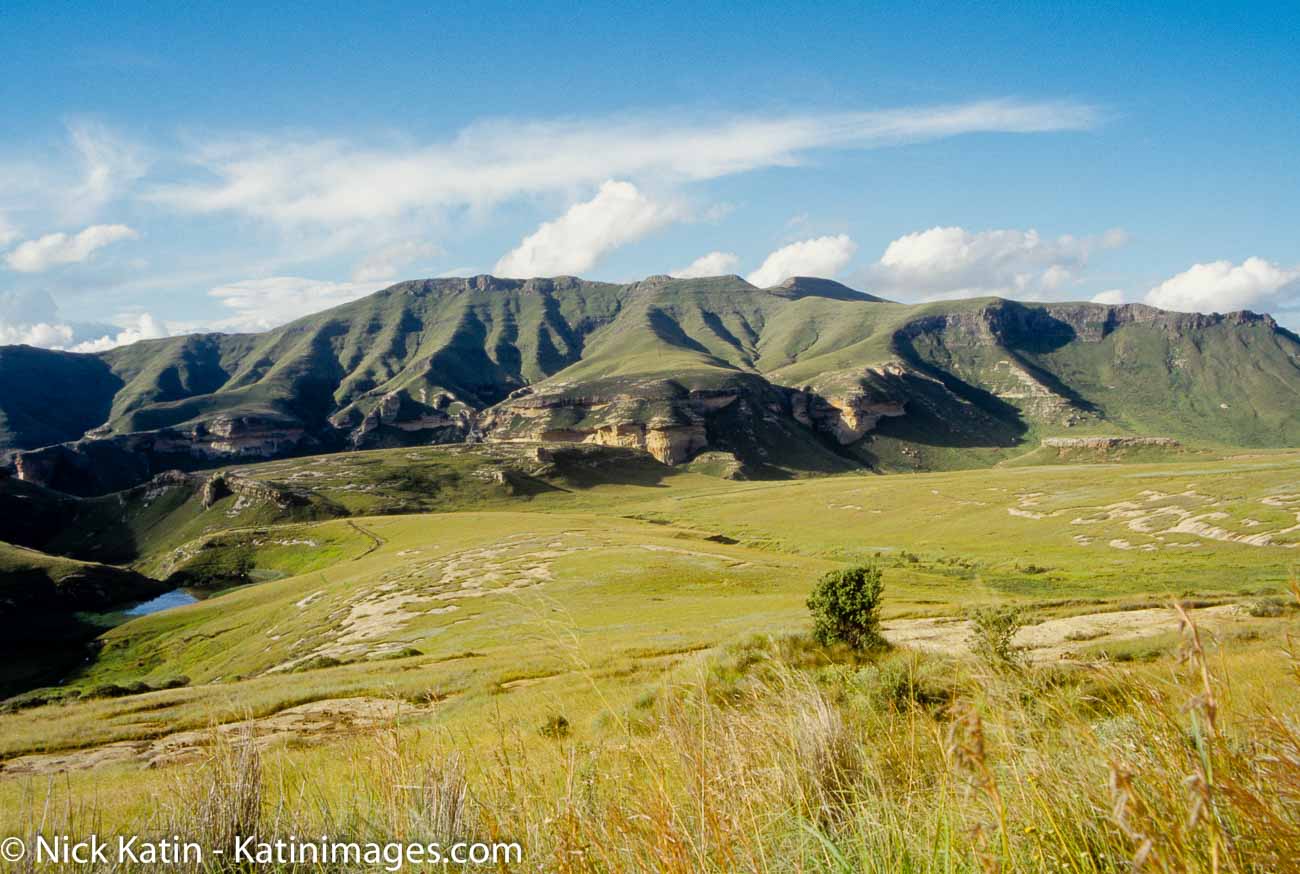
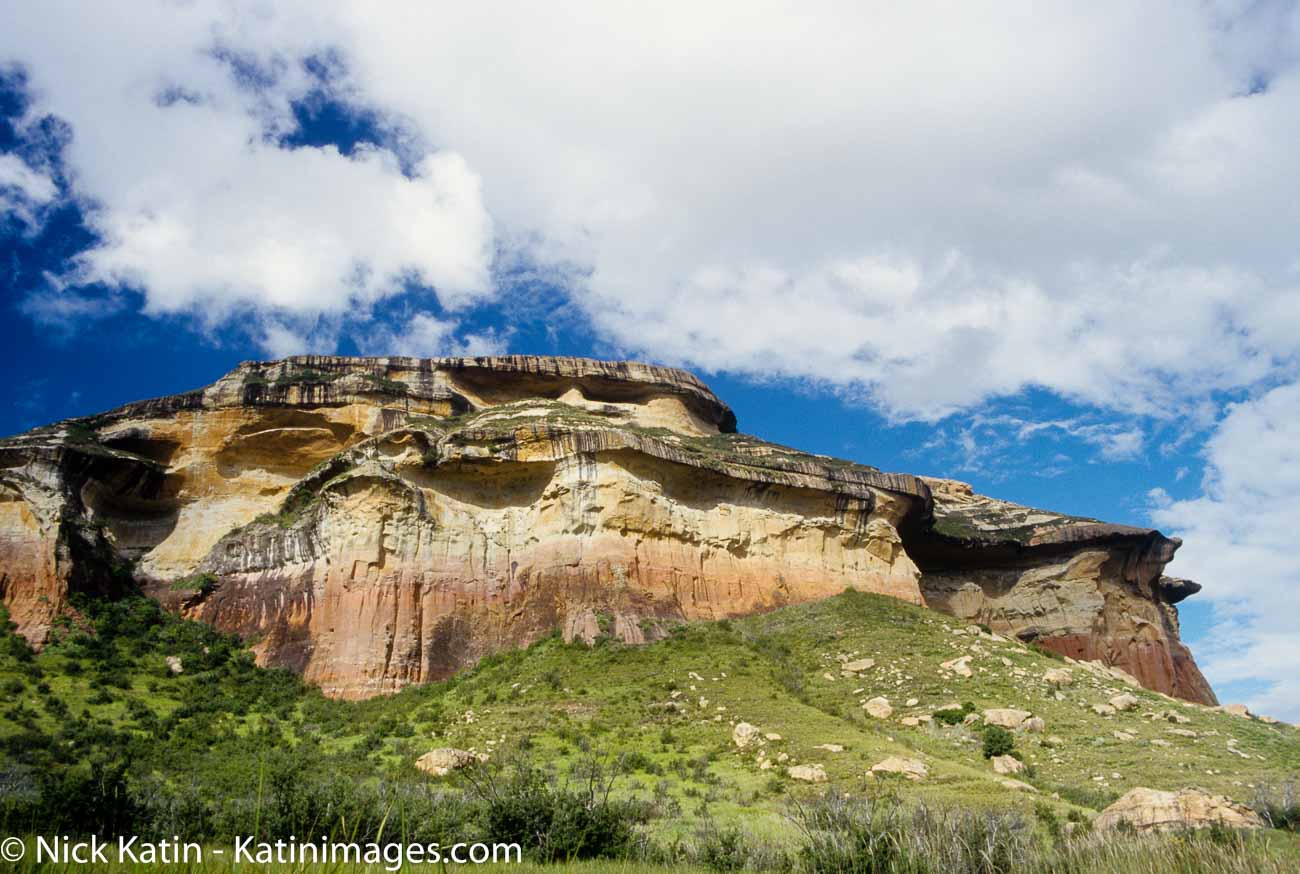
    Some of the scenery found in the Golden Gate National Park in the Drakensberg ranges in Soth Africa
    Some of the scenery found in the Golden Gate National Park in the Drakensberg ranges in South Africa
  • African shoestrings – South Africa Day Eighteen

    Being in Southern Africa we did however see lots of Baboons.
    Let me rephrase that we actually heard them first as they went from rubbish bin to rubbish bin, in the early hours of the morning, scavenging at whatever scraps were to be had. They left crap everywhere and they were still dining on the fruits of their spoils when we got up.
    I noticed that no one made any attempt to ‘sho’ them away, this was apparently for a good reason, “they’re bloody vicious little pricks,” said the South African guy staying in the next hut. “Baboons are a problem all over Southern Africa” he continued “most parks have baboon proof bins to prevent all this mess”.

    He and his wife were up from Durban some 300 kilometres south for a few days and like nearly all white South Africans we came across seemed to know someone in Perth.
    Back in the last days of Apartheid a lot of whites left for Australia and either settled in Sydney or Perth.
    Perth attracted a lot due simply to its proximity to South Africa and with a similar beach life style, it has a lot in common with Durban. In fact there was a saying “will the last one leaving for Perth please turn out the lights”.

    Royal Natal National park is the Drakensberg. Huge jagged peaks form the spectacular and well known “Amphitheatre”. Looking like the bottom row of perfectly level teeth (you know the ones, the actress’s from ‘Days of our Lives’ all have them) with an incisor, Mount Amery (3143 metres and Sentinel (3165 metres, standing at either end, this wall of rock dominates the park. It has a mythical look about it that makes you think that beyond it lies a different world waiting to be discovered.
    Well actually there is, Lesotho!

    Some of the scenery found in the Golden Gate National Park in the Drakensberg ranges in Soth Africa
    Some of the scenery found in the Golden Gate National Park in the Drakensberg ranges in South Africa
  • African shoestrings – South Africa Day Seventeen

    On our first visit to South Africa in 1996, we had very briefly skirted the Drankesberg ranges and had promised ourselves that we would return some day.
    The Drakensberg is located mostly in South Africa and snakes down the central eastern side of South Africa, for about 1125 kilometres, and then teeing off to allow a smaller range, the Malutti to join it from the west before forming the eastern boundary of Lesotho.

    Golden Gate Highlands National Park lies in the foothills of the Malutti and has some of the most striking scenery that I have ever seen.
    The R711 cuts a path straight through the middle of it and we were greeted by two huge orange and green sandstone hills on either side of the road peering down at us.
    This was our kind of place, a sort of Alps but in miniature with lots of walk tracks, game drives, bird watching and comfortable and cheap accommodation. We stayed in a Rondavel, a circular shaped hut, that were fully self contained, comfortable and cheap.

    Despite it’s beauty we actually only spent one night there.
    In 24 hours we managed to do a couple of walks, a couple of game drives, spend some time at the bird hide and sleep!
    The game drives consist of a couple of circular drives in an area set aside for game. Now we’ve been on game drives before and in our experience the best ones tend to be more difficult to get to and well controlled. So our expectations weren’t high and sure enough we drove around peering with screwed up eyes at anything that resembled a living object.
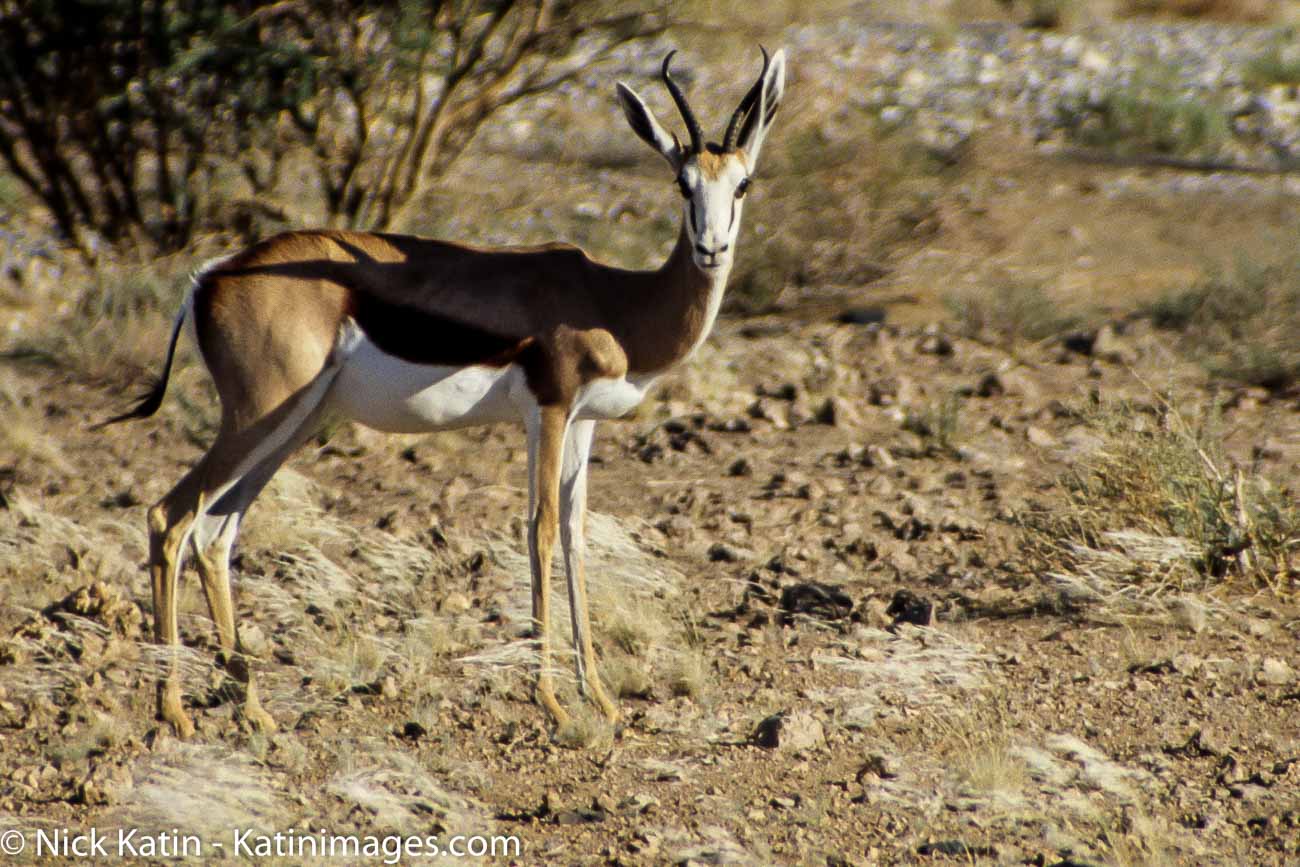
    But as is often the case all we managed to see were a few Springbok, an antelope similar to a deer but with a prominent black stripe along its flank, and some great views of the mountains around.

    Springboks are extremely fast and can reach speeds of 100 km/h and can leap 4m through the air. The common name "springbok" comes from the Afrikaans and Dutch words spring = jump and bok = male antelope or goat.
    Springboks are extremely fast and can reach speeds of 100 km/h and can leap 4m through the air. The common name “springbok” comes from the Afrikaans and Dutch words spring = jump and bok = male antelope or goat.
  • African shoestrings – South Africa Day Sixteen

    The rest of our journey in Lesotho passed without incident as we passed the odd town, which appeared more western than those we had seen in the Malealea area, but still dusty and neglected and yet somehow thriving and functional!
    As it was Sunday a lot of the locals tend to dress in their best clothes and we were treated to men in their shiny black suits and women in colourful dresses wondering along the road on their way to or from somewhere or other.

    The Buthe border post was a lot quieter than Maseru Bridge however we still had get out of the car and go to the Lesotho passport control for a stamp, go back to the car, drive across the border, get out of the car, go to the South African passport office for another stamp and get asked a question or two and then finally get back in the car and drive past customs officials who normally just look at you suspiciously. Today however we were pulled over and our passport and car registration nos. duly noted by a rather stern and non-communicative official.

    Now back in South Africa the difference is almost startling, no longer are there numerous villages clinging to the roadside. If there are any they are usually hidden away from the road. Where in Lesotho there are either signs of erosion or intensive tracts of crops, here the countryside is in the main, relatively unscarred.

    The previous white apartheid regime seemed to always create two towns, the white dominated main town centre and its white suburbs and about 5 kilometres away the black dominated satellite. This is, of course, all changing but the evidence is still there as the population both black and white grapple with the changes necessary to evolve into a fair and equitable society. Nowhere is the difficulty more obvious than a place called Clarens, about 40 kilometres north of Buthe Buthe.

    Clarens is trendsville! Curio shops and cafes jostle for your attention along the single short main street. You could have been anywhere in the western world. White South Africans from the bigger towns around strolled and stopped for lunch or a drink enjoying their day out. There was not a black face to be seen. For us after just ‘roughing’ the last week in Lesotho, it was timely if somewhat culturally disturbing. We had a nice lunch in “Bruce’s Pub” and then moved on.

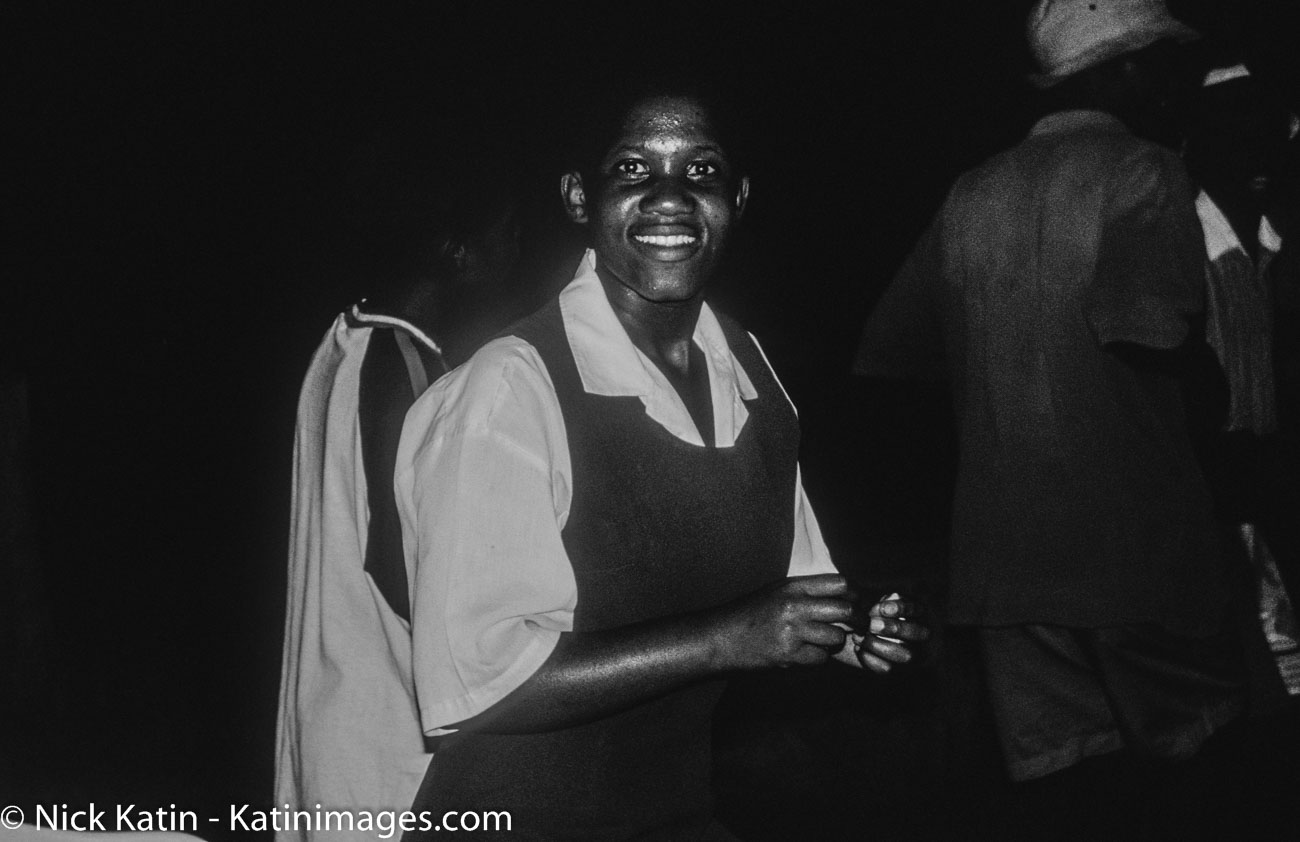
    A singer from the Basotho children's choir near Malealea, Lesotho
    A singer from the Basotho children’s choir near Malealea, Lesotho
  • African shoestrings – Lesotho Day Fifteen

    That tricky river crossing was the final challenge and can you believe it wee stopped for lunch about ten minutes from there!
    We just wanted to get it over and done with!
    David & Clement had been unable to talk to each other as much because of David having to spend a fair amount of time controlling the now impatient and eccentric Black Label. So we figured that they wanted to have a final ‘chat’ before heading home.
    The crossing was actually no big deal going back. This time we were climbing the steeper side of the gorge and it’s a lot more comfortable looking up than down. For me riding a sure-footed and obedient pony made a big difference.

    We got back at around 1.30 pm and despite feeling dirty and dusty we headed for the bar and stayed there for the rest of the afternoon.

    The next day we headed out back to South Africa.

    The road was pretty much the same until we reached Maseru.
    To avoid the city centre we had to travel along the eastern outskirts. Even though we had been assured that there was no danger by almost everyone, this area seemed uncomfortably close to the spot where all the rioting had happened 6 months ago. We passed several buildings that had been gutted by fire or looting and appeared to be sitting there unused and ignored.
    But we never felt threatened by the many people who were going about their business not in the least bit interested in two potentially nervous white tourists.

    What did make us uncomfortable was a lone policeman standing in the road waving us down. You hear lots of stories of corrupt African police officials extorting money from helpless tourists in exchange for not impounding their vehicle, luggage, children or anything else that’s worth them confiscating.
    He examined the tax disc on the front of the car very closely as if it was strange flaw in the windscreen. His face lit up on viewing my Australian drivers licence and said beaming, “Aha, from Australia! Kangaroo!” We laughed with him at this obviously witty and perceptive comment not realising at the time that this was going to be repeated many times by what seems now to be an army of officials, bureaucrats, tour guides, hotel workers and any other smart arse that inadvertently wanted to piss us off!
    He waved us on politely still beaming at his joke.

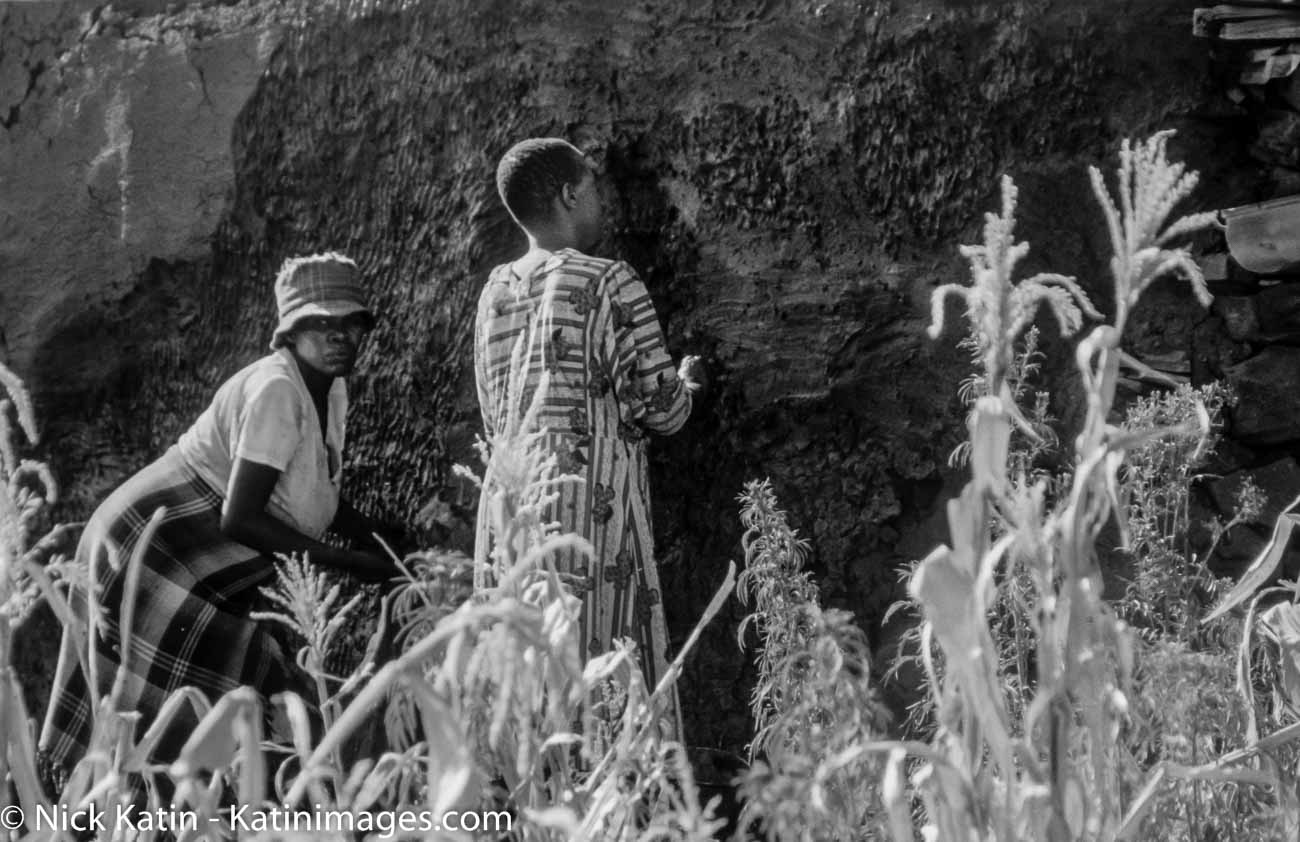
    Women cleaning the outside of a mud hut near Malealea Lesotho
    Women cleaning the outside of a mud hut near Malealea Lesotho
  • African shoestrings – Lesotho Day Fourteen

    The next morning we awoke just before daylight after an eventful night.
    Thunderstorms had followed us there and dumped rain on us just as we arrived the day before. They had cleared for a while but came back overnight and the heavy rain found its way through the opening in the hut that passed for a window.
    Not only that but the front door seemed content to allow itself to be pushed around by the wind creaking or banging loud enough to wake us.
    This was also the first night that we had slept in our new super duper -2°C sleeping bags. Comfy they were, cold they weren’t. We both boiled and spent the night tossing the top off as we fried and then back on again as we froze a few moments later.

    So we awoke the next morning grouchy. I was ready to give that damn pony of mine a piece of my mind, if even it so much looked like going off the track. But events had already got ahead of me. Black Label had been demoted! David now rode him and I rode David’s steed Black Cat.

    Now Black Cat was my sort of horse, this bloke was strong, sure footed, docile and to my surprise obedient. He obeyed my every command, something I had never experienced in an animal, or come to think of it in a human, before.

    The journey back was, despite aching limbs, muscles and rear end, (I never realised how many muscles are used in riding), very pleasant.
    Gentle descends and ascends into valleys of green, cradled by perfectly formed grass covered hills and mountains of varying shapes and sizes.
    Occasionally we would see the odd cluster of thatched roofs in the distance, perched on a small plateau or down in a valley. Despite being kept at arm’s length from the villages we still saw plenty of traffic on the track.
    Unlike the hordes of pedestrians in South Africa these people seemed to have a destination or purpose for their travel. Men and boys on ponies were herding livestock; women on foot were carrying firewood or crops.

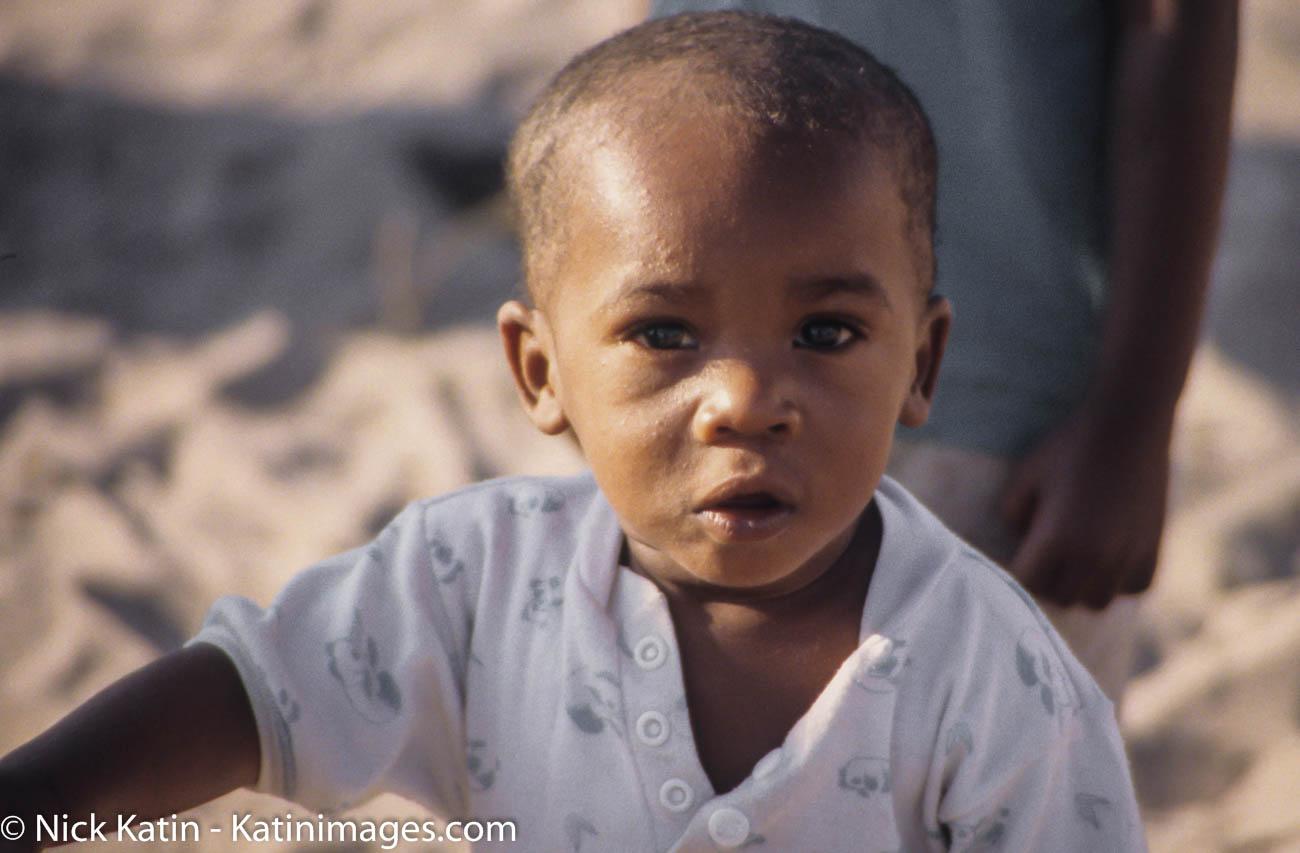
    Young Boy looks at the camera in a small village in Botswana
    Young Boy looks at the camera in a small village in Botswana
  • African shoestrings – Lesotho Day Thirteen

    David & Clement talked incessantly amongst themselves in SeSotho. To us of course it was rabble of noise punctuated by frequent loud hearty African laughs. What they were talking about was anyone’s guess.
    Normally on these treks, one guide is enough for six people but as we and Olive and Petra had booked separately somehow we had ended up with a guide each. We think it was more to create employment rather than any real need for two guides.
    So I guess these two guys were making use of the opportunity of having a real conversation whilst working, instead of having to continually talk to ‘dumb’ tourists.

    They did stop talking when we came across a store in the middle of nowhere. Not another building or village was to be seen. But what silenced David and Clement were the big mouthfuls of beer they took from the couple of cans of Castle purchased from this place.

    Our destination was the village of Ribaneng, famous for its falls and where our “five star” rondavels awaited us.
    Well I guess almost anywhere can look five star after a day in the saddle.
    Basically it was a mud hat with about ten mattresses on its spartan and dusty floor and a couple of gas rings with a gas bottle. Lighting was five star candles and BYO torches and our toilet was the long drop variety located down the end of a vegetable garden in a small wooden hut.

    The falls itself was almost out of view and was according to Clement an easy two hour return “stroll”.
    Guided by yet another David, we brushed rather uncomfortably through rough vegetation, jumped and hopped from one huge boulder to another and slipping on the many small stepping stones along and around the river.
    It’s at this point that I would like to describe to you a wonder, a creation of nature so beautiful that it brought tears, a spectacular feast for our eyes but I can’t.
    It’s not that it’s indescribable nor that it’s too wonderful for words, well it was just a waterfall and after the struggle to get there it was just not the spectacle that we had hoped for. It was, well, sort of nice, nice and boring.
    And with that we struggled back to camp.

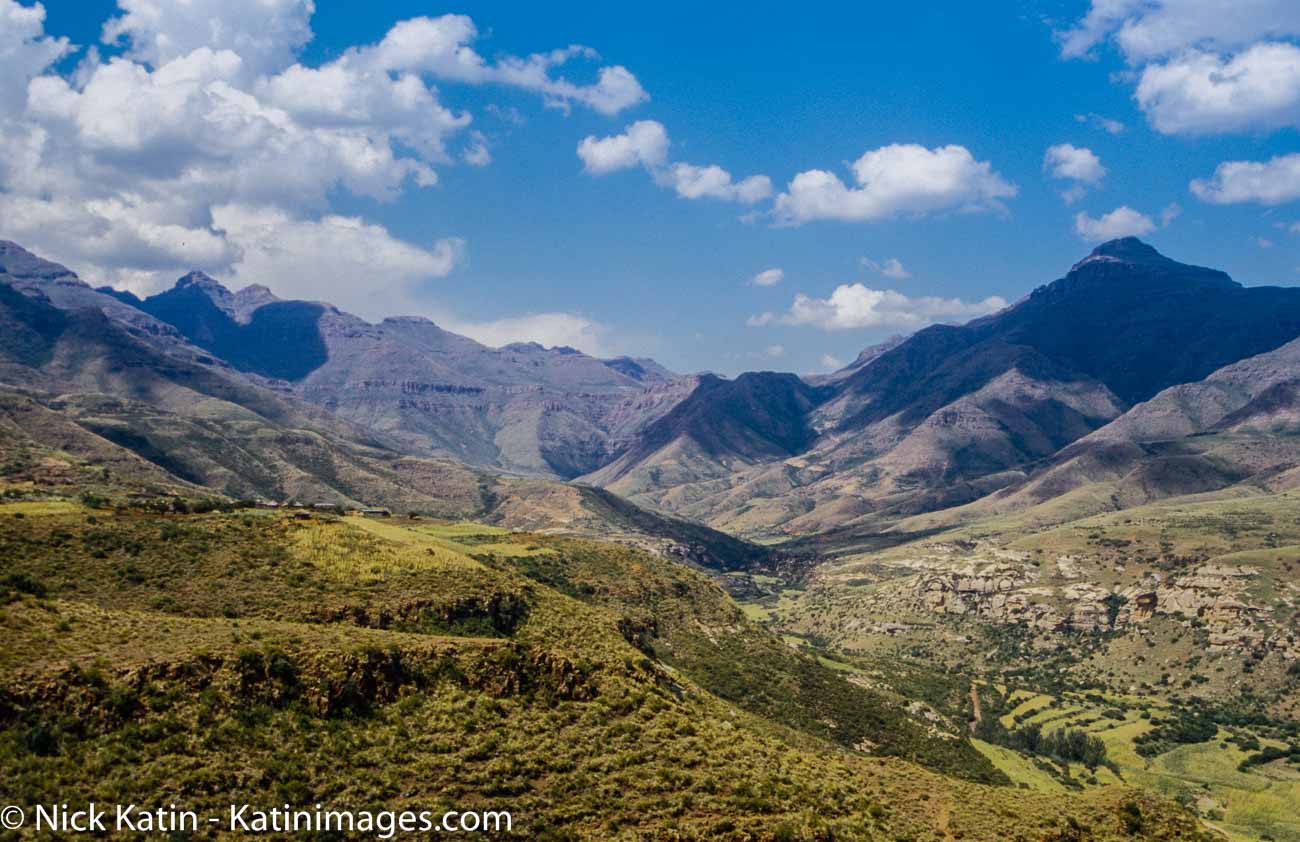
    Maloti Mountains of Lesotho in the early afternoon light.
    Maloti Mountains of Lesotho in the early afternoon light.
  • African shoestrings – Lesotho Day Twelve

    Somehow we made progress until we reached the river crossing about an hour in.
    In fact it wasn’t actually the river crossing that was the problem, it was the steep, narrow, rocky path that zig zaged down the side of a small gorge at an angle that would make you think twice about walking down there, let alone ride a pony, that had me spooked. Black Power stumbled down at her almost standstill pace whilst Black Label wanted to go down at breakneck speed and consequently was forever trying to overtake.
    Well let me tell you there was absolutely no room for overtaking and it took a lot of “wooing” and pulling in the reins to keep him back. Far below I could see Sue and Olive patiently waiting with David. Clement was with us trying to speed up Black Power, slow down Black Label and hold onto the packhorse. Eventually we made it down physically unscathed but mentally frazzled.

    The rest of the journey was a lot easier and I was able to relax a bit and take in the view without fear of my psychopathic pony deciding to crack on to Black Power and take us both down some steep ravine (Clement came up with the idea of keeping Black Power behind us rather in the front).

    The scenery was pretty much the same as we had experienced on our previous days walk. A continuous range of high country surrounding us, it seemed as if it we would have to climb great heights to go forward but somehow that never seemed necessary, there was always a low pass to take us through the mountains.

    There were plenty of villages too. I couldn’t help thinking that the Basotho people lived in a country that has a GDP of US$ 2255.00 per person and yet they appeared to live their lives quite happily. By comparison, Namibia has a GDP of US$8190.00 per person and the USA a GDP of $ 53,000 per person!

    When we passed the villages or just the odd traveller they all said hello and gave us that broad watermelon grin that you just couldn’t help but return. They seemed so content and peaceful! Maybe a good GDP is not as important as economists of the western world would have us believe.

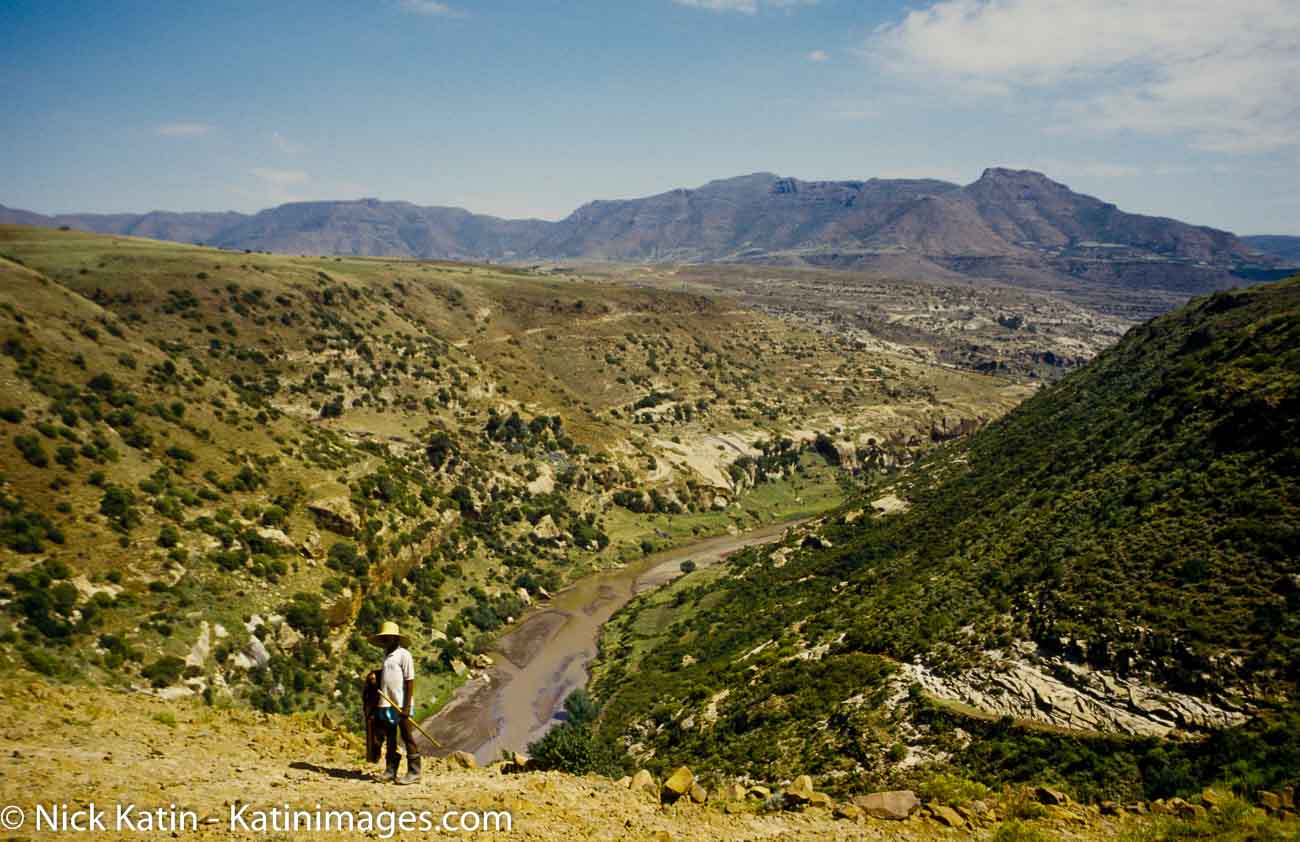
    A sheep herder stands overlooking a gorge in the Maloti Mountains of Lesotho.
    A sheep herder stands overlooking a gorge in the Maloti Mountains of Lesotho.
  • African shoestrings – Lesotho Day Eleven

    The Pony trek itself was something else.
    Now as corny as it sounds, I always get the dude horse.
    I once rode a horse that flatly refused to go anywhere, another time, a horse that would only go in one direction, home, which is fine at the end of a ride but is a bit inconvenient at the beginning!
    The last four legged animal I had ridden was a mule in the Grand Canyon and she was the only one that slipped and stumbled, generally near the edge of a trail where there was not much else between you and the rocky ground some 600 metres below.
    These ponies however are different; they’re Basotho ponies.
    The Basotho pony is the result of cross breeding small Javanese and full sized European Horses. Strong, sure-footed and docile it has been a popular mode of transport for many villagers, particularly in the highlands, since the early nineteenth century and now used for tourists in several places in Lesotho.

    Strong, sure footed and docile were words that seemed heaven sent if only it were true of Black Label, the pony that was selected for me by Mick.
    Sure it was strong but it was also disobedient, frisky and clumsy. My wife, Sue’s pony, Fox was good, as was Olive’s pony. Olive and Petra, two young German girls (well a lot younger than us anyway) were our companions together with two local guides Clement and David (a different one) and a packhorse or is it a packpony?
    Anyway Petra’s pony, Black Power was even worse than mine. Slow, stubborn, disobedient and almost paranoid, if a pony can be such a thing, of having her arse smelt at any opportunity by Black Label. I was bringing up the rear behind Petra and Black Label just couldn’t help himself. Even after Clement changed the order so that Petra was two ponies in front, Black label would make a beeline for Black Power’s rear end. The matter was made even worse by Black Power’s stubborn insistence to go at a speed half that of everyone else.

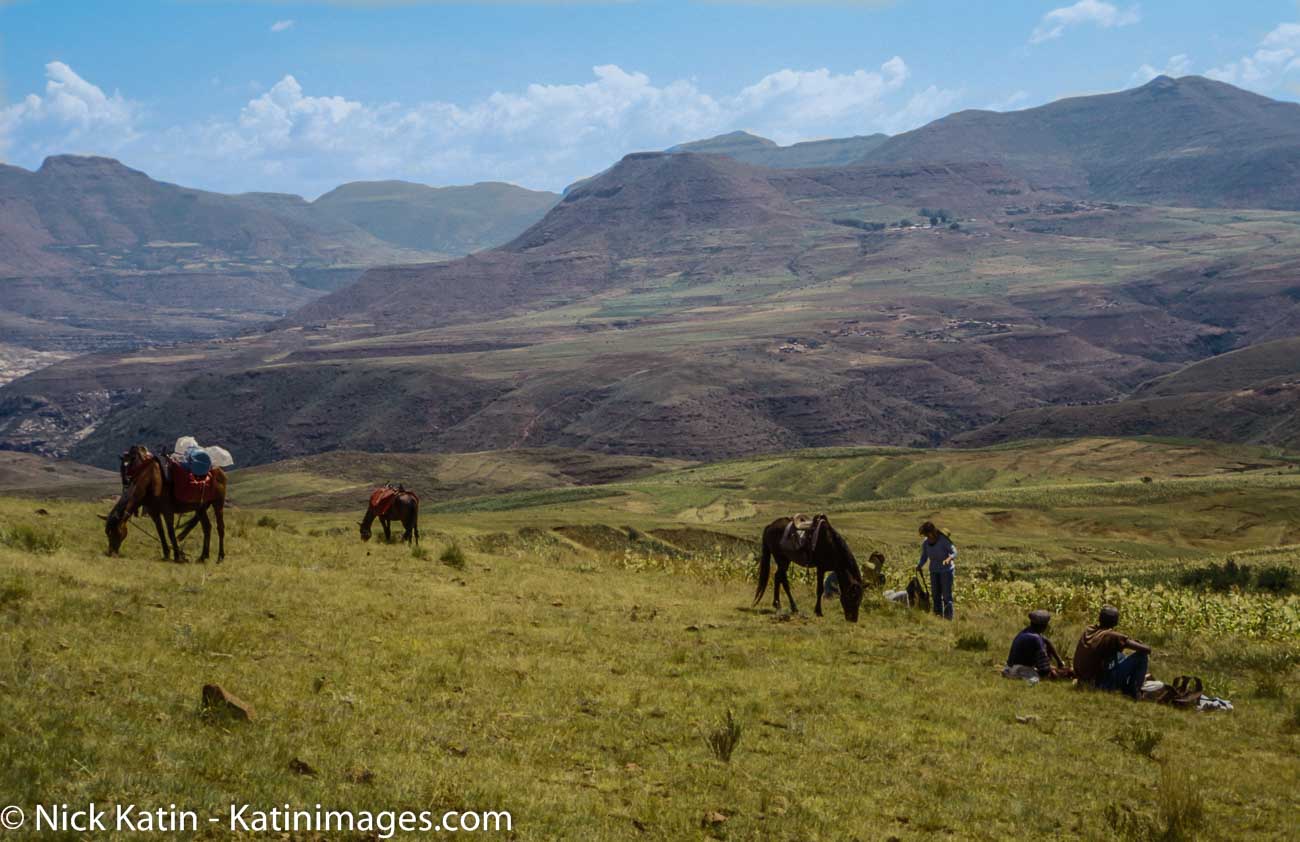
    Ponies and Riders take a break with the backdrop of the Maloti Mountains of Lesotho.
    Ponies and Riders take a break with the backdrop of the Maloti Mountains of Lesotho.
  • African shoestrings – Lesotho Day Ten

    That night the local Basotho children’s choir performed for us. It was quite stirring stuff. They sung songs of peace and hopefulness with a great deal of emphasis on finding a solution for the poverty and a drug problem that was, surprisingly, becoming more prevalent amongst their youth.
    They were followed by the local band that played on what can only be described as DIY instruments. David our guide from the morning walk played the drums, an inner tyre tube stretched over a small metal drum with pieces of metal strung together acting as symbols.
    The music itself was just OK but watching these guys make any sort of rhythm from this collection of tip rubbish was amazing.

    Amongst the other spectators, supposedly sharing this experience were a group of ‘overlanders’.
    For the uninitiated overlanders is a nickname for tourists generally in the 20 to 30 year old age group who travel in a large truck with usually around 20 others, a driver and leader, camping and other equipment of various uses and food. These groups usually travel great distances and their trips can take from three weeks to several months depending on the itinerary. Some for instance will travel from London to Cape Town!
    Now we’ve seen these groups before and were in fact tempted to join one before arriving and probably for a lot of single people it’s a good way to travel. What had made us go cold on the idea was a description of trip that someone (I forget who) gave us.
    Apparently a lot of people tend to travel this way to either get pissed or to get laid or both.
    Now maybe some of you reading this are saying what’s wrong with that? Well, that’s fine if you don’t interfere with anyone else who doesn’t share the same sort of cultural enlightenment.
    In this particular situation there were two or three who actually didn’t care much about anyone else in the audience. They strutted around the place with their puny fat torsos exposed for us all to admire (sadly they were all male), bottle in hand, making a fair bit of noise and not the least bit interested in the entertainment!
    The quality of tourists is just not what it used to be.

    Basotho children's choir in Malealea, Lesotho singing for guests.
    Basotho children’s choir in Malealea, Lesotho singing for guests.