Katin Images Travel Photography

Travel Photos, Travel Photography Tips and Software

Tag: Water

  • African shoestrings – Namibia Day Seventy Two – Swakopmund

    Our final day in Swako was actually spent in Walvis Bay, a small town, 30 kilometres south. We checked out of our comfy accommodation thinking we would find something in Walvis Bay, a decision we were later to regret.

    This little nondescript town was never actually colonised by the Germans. The British who controlled the Cape colony (South Africa) and laid claim to it in 1878 and didn’t let go of it until 1994, four years after Namibia’s independence. This natural harbour’s popularity is because it’s the only decent port north of Luderitz and south of Luanda in northern Angola and has been a very strategic political, defensive and commercial position to hold.

    Now Walvis Bay’s main attractions are its bird life, in particular flamingoes, and Dune 7.

    Dune 7 is large stand-alone sand dune north east of the town that rises above the bleak landscape and overlooks the noisy goods train railway. The locals’ flock to it in their droves to walk, run, sandboard or simply sit at the picnic tables in its shadow eating sandy sandwiches or gritty sausages. The bird life on the other hand is much more interesting. The lagoon just to the south of the town is home to half of southern Africa’s flamingo population plus pelicans, gulls and plovers to name just a few. Close by is the Raft a pub/restaurant housed in a wooden building sitting on stilts over the water.  A couple of beers in there gave us a brief respite from the ever-increasing wind and in a rash moment we decided to return for dinner that night.

    I have to say that it was one of the most amazing dining experiences either of us had ever had. The meal was nice we had some of the local fish species, Kobaljai and Steenbras and it was all pretty good including the service. What stole the show were the flamingos! From where we were sitting we could see the floodlight water and all night there was this constant flow of flamingos walking back and forwards doing their best to imitate the huge walking box robots from the Stars Wars movies. These wonderfully colourful waders gave us a show neither of us will ever forget!

    What is forgettable however is the smelly cramped dog box of a unit we ended up staying in overnight back in Swako. We hadn’t managed to find anything cheap enough in Walvis Bay so we rang a place back in Swako without knowing what it was like. The women who answered the phone said yes it was free that night and the cost was N$100 plus $30.00 for laundry. OK I thought we don’t want any laundry done we’ll take it. What the laundry turned out to be was the cost of washing the bed linen after you had used it, assuming that you hadn’t brought your own. Well after sleeping the night in this matchbox with less facilities than a prison cell and having to listen to her winging about this that and anything else she happened to be an expert on, we told her to get stuffed, politely of course! Needless to say we headed out of there as soon as the sun was up.

    Every town or city has the Café, the place to be seen at and usually has a specialty or two. Swako was no exception. The Café Anton was a trendy, probably in some eyes pretentious, indoor/ outdoor café overlooking the main beach. After such a shitty night we thought we’d treat ourselves to morning tea in the shape of a couple of German pastries and (finally) some good coffee before heading out. No doubt about its popularity, the locals were arriving in droves for both coffee and pastries and breakfast. It was a fitting end to our stay in Swako. It had been the only place in Namibia where we could take time out to get our fix of some western culture.

    If you like this then hit “follow” on the side bar
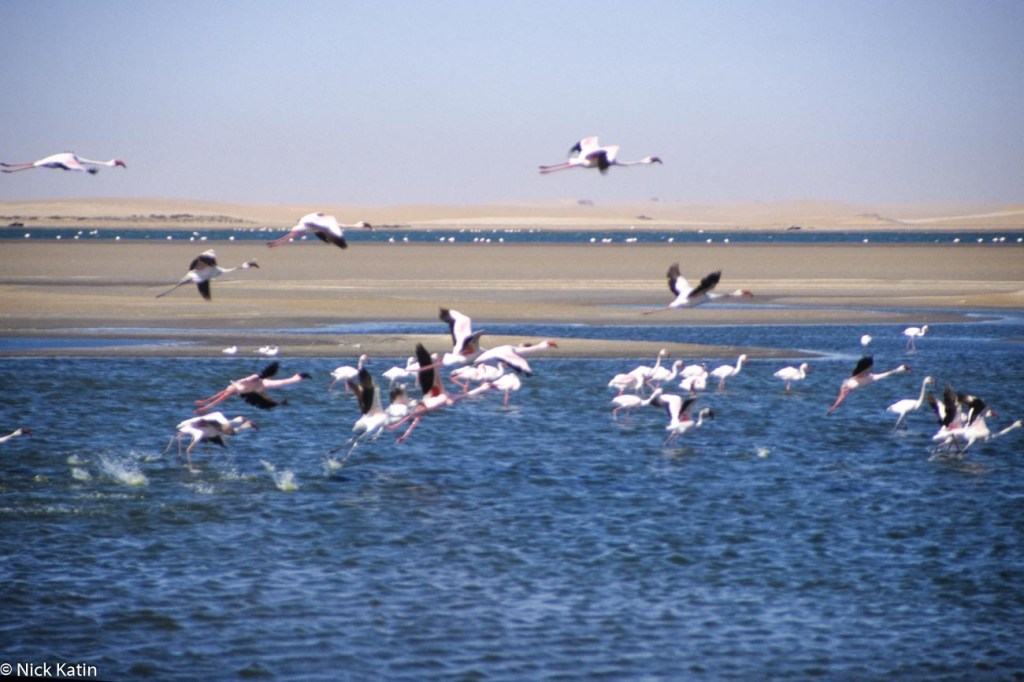
    Flamingos at Walvis Bay in Namibia
    Flamingos at Walvis Bay in Namibia


  • African shoestrings – Namibia Day Seventy One – Swakopmund

    Everybody (that is mainly the white population) was friendly and seemed to have either German or Afrikaans accents. Wilma our landlady, a white Namibian of German heritage was a third generation Namibian, But she had been brought up to speak German in school and at home and spoke English with a strong German accent.

    Despite our immediate liking for Swako our second day turned out to be quite expensive. We had to send a fax relating to our house to Australia which cost the princely sum of N$31.50. Sue was still not feeling quite right so a trip to the doctor cost N$100 who immediately ordered a blood test (another N$36). Fortunately the blood test cleared Sue of Malaria, which was our main concern. But it didn’t answer the question as to why she was still feeling disorientated. The doc put it down to the Lariam that we were taking. It’s a strong anti malarial drug with a bad reputation for side effects such as disorientation, hallucinations, anxiety and nightmares. The last time we had taken it we had both experienced the latter two but this time I hadn’t experienced any side effects and up until Sue had been sick nor had she.

    We had been quiet happy just to laze around Swako for the couple of days that we were there but as always curiosity got the better of us. Swako is at the edge of the Namib Desert, so we had almost done a full circle on our tour of Namibia. This part of the desert holds a few surprises or so we were led to believe by the Lonely Planet and the Swako tourist office. That was enough for us and we were off having a look. In fact it was more of a ‘so what’ tour rather than a scintillating safari into the desert. I say ‘so what’ because unless you’re a botanist or a historian most of the items on the signposted Welwitschia drive mean very little. The Swako tourist office gave us a handout called “The Welwitschia Plains-a scenic drive” with thirteen numbered stone beacons to watch out for. Each of these beacons are positioned at places of interest along the drive. The first stop was at little cluster of lichen; the next was at a couple of bushes called the Dollar and the Ink. So far we’re yawning and wishing that we had stayed in bed.

    Oxwagon tracks remarkably preserved from decades ago and just as remarkably almost impossible to see were next and followed by something much more interesting, the Swakop valley moonscape. This dark brown and wheat coloured pitted and crated landscape was formed by 1000’s of years of erosion and is very much reminiscent of the moon’s landscape. Not that I’ve been there of course but those who know this sort of things say it is.

    Our interest began to wane again, as more lichen was sign posted. Apparently the lichen of the Namib Desert is the most extensive in the world. I suppose a botanist would find that fascinating but we’re still stifling those yawns. Our interest was rekindled by a much bigger expanse of moonscape. Created this time by a non-existent river cutting it’s way through softer material. Even my imagination was finding it hard to imagine any river flowing through this dry and inhospitable landscape.

    A heap of junk left behind by the South African army in 1915 was considered notable enough to be the next point of interest. Somehow I cannot see how even 85 year old broken bottles and rusting cans are a great tourist attraction!

    The next two beacons are not even worth us getting out of the car. A couple of ridges of Dolerite (what’s that I hear you say, forget it, it’s in the dictionary) were somewhere around.

    Then we had a small patch of vegetation dressed up as picnic spot. Apparently the river that I had trouble picturing earlier actually runs deep underground and in some spots is high enough for some trees and bushes to tap into.

    Speaking of vegetation, the Welwitschia drive is named after a unique ‘tree’ that has also been described as a living fossil. The next and penultimate stops are for these strange looking ‘trees’. They are apparently dwarf trees and are related to pine trees but you would never know that by looking at them. They look like straggly low lying semi tropical palms that have had a bad day. In fact if you saw one anywhere else you wouldn’t even stop to have a second glance. The point of interest is however that they somehow thrive in this hostile environment and are totally unique to the Namib Desert and get this; live for up to 1500 years.

    Our last stop on this spell binding drive was a let down after the Welwitschia. An abandoned iron ore mine from the 1950’s is really nothing but a hole in the ground.

    If you like this then hit “follow” on the side bar

    A Cape Fur Seal at Cape Cross Seal colony in Namibia
    A Cape Fur Seal at Cape Cross Seal colony in Namibia
  • African shoestrings – Namibia Day Seventy – Swakopmund

    Hentiesbaai is another fishing spot but it does have a sort of quaint character, (compared to Terrace Bay everything has character) with a decent looking beach and some ‘beachy’ looking houses with palm trees and lots of liquor shops. Hennie found us a cheap apartment next to his garage and the shopping centre.

    We had the luxury of a TV in this place and as it seemed like years since we had watched any, we just crashed in front of it.

    It was cable TV too except there was nothing much on. Most of it came from South Africa and watching South African TV is most disconcerting. They have this habit of changing languages continuously. We were watching their rugby equivalent of the footy show when the interviewer began to interview a rugby player in English. Problem was we could understand the interviewer’s questions but didn’t have a clue as to how the player answered as he was speaking in Afrikaans. Weird!


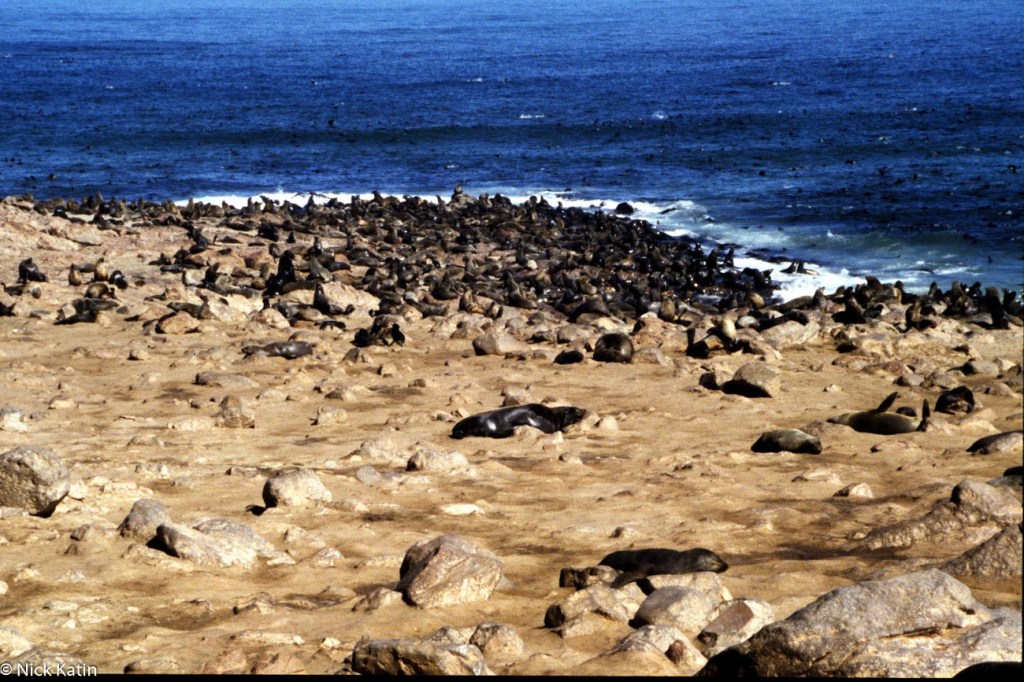
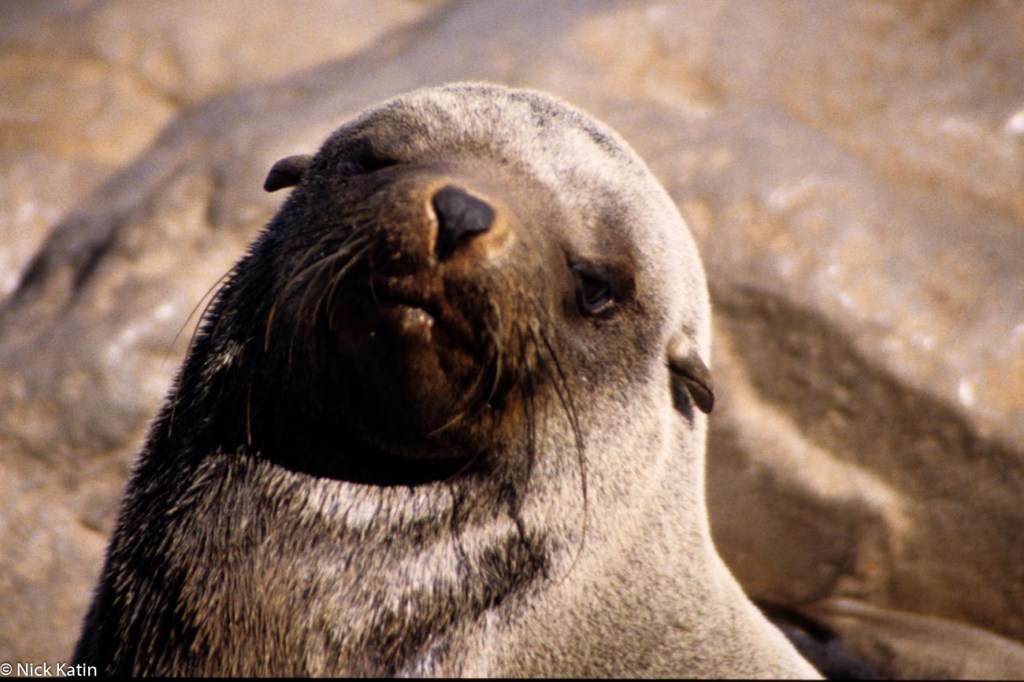
    Cape Cross is smelly. Not just a bit smelly but it stinks. The 100,000 Cape fur seals that call this home really know how to put visitors off. I’ve never seen so many seals! Big ones, little ones, dark ones and grey ones, old and young, male and female, some on the rocks or beach sunbaking, others in the water. Just a huge mass of blubber and seal shit! The Cape fur Seal is distinguished from other seals by the fact it has ears (with all the noise they were making I think they would be better off without them!). They are only found on the West Coast of Southern Africa, as they don’t migrate as a rule. They are quite big in size, the average male weighs around 187 kg but increases its weight to as much as 360 kg at the beginning of the breeding season due to the accumulation of food reserves in the form of blubber. It was for this reason that there are warning signs everywhere not to disturb the seals and cause them to stampede. These huge males can easily crush a small ten kg pup and it’s one of the main causes of the 27% mortality rate.

    Cape Cross itself was named after the cross that the Portuguese Diego Cao, the first European to set foot on the coast of Namibia, erected in honour of the Portuguese king. The original cross is actually in the Berlin museum but there are a couple of replicas erected in the same spot.

    This weird Namibian coastal climate played tricks with us all day. When we left Hentiesbaai in the morning and headed north it was really hot but as soon as we got we got to Cape Cross it cooled down about fifteen degrees. Driving back down through Hentiesbaai it was hot again and then as we approached Swakopmund (or Swako as it’s known by the locals) it cooled right down again

    Swako is a bigger more up market version of Luderitz. It’s a mixture of German, Western and African culture forced together onto the cold Atlantic and carved out of the desert. Its flat featureless topography has been brightened up by some colourful buildings and lots of German Bakerae’s and Bearhaus (bakeries and pubs) on almost every street. Along the promenade there’s these huge date palms on either side of the walkway with houses of varying colours and beach architecture sandwiched between the palms and the beach. German architecturally historic buildings were dotted along most streets in between the many restaurants and trendy curio shops. It felt good to back in western culture for a time. We didn’t camp here either. Why camp when you can stay for in a small, well equipped and centrally positioned self contained unit for N$100 (US$10) per night. Yup! We were going to like ‘Swako’!

    Cape Cross in Namibia is a colony of Cape Fur Seals
    Cape Cross in Namibia is a colony of Cape Fur Seals
  • African shoestrings – Namibia Day Sixty nine – Hentiesbaai

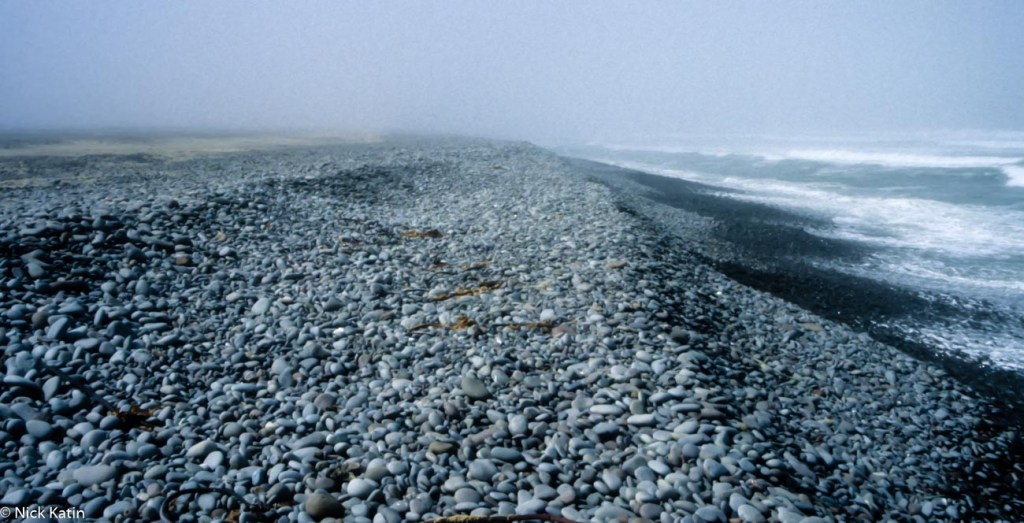
    Terrace Bay is desert, black stone beaches and a grey sick looking ocean that yielded an endless abundance of fish. This is serious stuff! A couple of guys caught 82 fish each one weighting around seven or eight kilos off the beach! I don’t know that much about fishing but I do know that there are few places left in Australia where you could get a catch like that without a boat.

    A few others must have caught a bucketload as well as it was being offered around (cooked that is) by one of the other groups at dinnertime.

    This group was led by the ‘knowitall’ you know the type, there’s one in every gathering or group. Even though they were speaking Afrikaans his body language and actions told us “I know it all and I’m going to tell you”.

    We were in the bar and he and his friends and family walk in and he just took over the bar. Frans, the barman, must hate arseholes like him just walking behind the bar and helping himself simply because they all arrived together and poor old Frans was a bit slow in keeping up.

    Relaxing for a day or so gave Sue a chance to recover, which she did although she still felt off colour. I was hoping that the bracing air and relaxation would clear up my catarrh but that still stuck to me so much so that in frustration I started a course of antibiotics that we had brought with us.

    The Skeleton park is infamous for its shipwrecks that dot the coast after hitting one of the treacherous sand banks and some bright spark thought the name ‘Skeleton’ was appropriate. It was one of these shipwrecks that got us into what we thought at the time was big trouble. Our next destination was Swakopmund some 350 kilometres south on the coast, via the Cape Cross seal colony. Bearing in mind our ‘reluctance’ to leave ‘Terrible’ bay, we set out early to ensure we had time.

    Well we made good time along the salt road to the park gate at Ugab and then turned off to see one of these shipwrecks. The road had another of these heavily corrugated surfaces that have you bouncing around everywhere and just moving forward at more than 30 kilometres an hour was a struggle. Suddenly a buzzer went off and the oil light flashed on the dash. We both said “Shit!” stopped and turned off the engine. Like any part time mechanic, I was quite capable of opening the bonnet and checking the oil. Plenty there! I checked to see if the filter was loose. No that was ok as far as I could tell. Now we’re in a hire car which is less than a year old and still covered by it’s warranty, somehow fiddling with it didn’t seem the right option without authority. After all it’s my credit card imprint they’ve got as a deposit. So we did the right thing and slowly drove back. It didn’t seem to mind if we drove it at 20 kilometres an hour.

    It took forever to get back to Ugab. There’s not a lot at Ugab in fact there’s not even a phone. Fortunately they did have a more modern method of communication than the pigeon, a two-way radio. The gatekeeper radioed the nearest mechanic in Hentiesbaai a small town some 137 kilometres away. His only option in these circumstances was to bring a tow truck.

    All we could do now was wait and wait! Eventually Hennie turned up around 3 hours later which I guess wasn’t too bad. He took a quick look at the car and then we loaded into the back of his truck whilst we both climbed into the front.

    Hennie was born and raised in Namibia and despite being white considered this was as much his country as anyone else. We talked about the fish, the up coming Rugby world cup (Namibia actually had a team entered) and life in general in Hentiesbaai. Hennie told us that there was around 200,000 whites in Namibia and then turned to us and asked “How many blecks ‘ave you goot in yoor ‘ountry?” When I replied that we had about 300,000 aboriginals. He looked at us and said “Thets nothin man, we got 3 million of them!”

    Of course it turned out that there was nothing wrong with the car other than a loose wire on the oil switch in the engine which had somehow shaken loose. It cost N$1235 (US$124.00) to get us picked up from Ugab and I had to break the news to Werner. “We’ve fixed the problem mate” I told Werner on the phone and proceeded to tell him about the oil switch. We had already rang him and told him what had happened and needed permission for Hennie to look at the car which Werner got from Volkswagen. “Thing is, it’s cost N$1235.00 and they want to know how you gonna pay for it?” There was a pause. Somehow I had this picture of Werner looking to the heavens and saying “why me”. Anyway we ended up paying for it on proviso that he would settle with us when we returned the car.

    If you like this then hit “follow” on the side bar
    The inhospitable Skelton Coast in Namibia
    The inhospitable Skelton Coast in Namibia
  • African shoestrings – South Africa Day Thirty-seven – Rhodes Memorial Cape Town

    Just up the road from Observatory, we found the Rhodes Memorial. A little gem of a place!

    Cecil John Rhodes, founder of the famous De Beers Diamond Company and British Empire builder had a big influence on the way Southern Africa was carved up politically in the nineteenth century. He was Prime Minister of the Cape Colony from 1890-95 but by then he had already made his fortune through Kimberley Diamond Mines and a huge Gold strike near J’burg.
    He established British Colonial power in Rhodesia (later Zimbabwe), Northern Rhodesia (Zambia) and Bechuanaland (Botswana) to name but a few.
    Mind you he profited personally from these ventures as he established a few more gold mines on the way.

    Strangely enough he’s probably better known for the Rhodes scholarship. Something he established by way of his will devoting most of his wealth to this noble cause. The scholarship even today still sends winners from countries other than Great Britain to study at Oxford University.
    From an Australian point of view the most (in)famous winner was the then beer swilling Bob Hawke, arguably it’s most popular Prime Minister ever.

    Well they’ve built a memorial to this guy (Rhodes, not Hawke) on the slopes of Devil’s Peak. It’s a bit like a mini coliseum, all columns and bronze statues of Lions bordering impressive bluestone granite steps that lead to a bronze bust of Rhodes. Really over the top stuff!

    We found out about this place from a couple of white University students who we chatted to on one of our many minibus trips. We’re harden pro’s now. That same bus was also driven by, much to our surprise, a white guy, so times are definitely changing.

    Actually they said that the little café next to it was worth a visit. In fact it was almost more fascinating than old Rhodes. To coin a phrase “it was just so colonial”. Wicker chairs and small round tables were scattered around the garden.
    Nothing scattered about the young white waiters though, about six of them stood guard at the front of the garden, in their gleaming white shirts and black bow ties, waiting to pounce on unsuspecting prospects. It was the sort of place that had this been England or even Australia, would have made your wallet tremble. But this is South Africa and even our pitiful dollar made it real value for money. Mind you we only had coffee and cake!

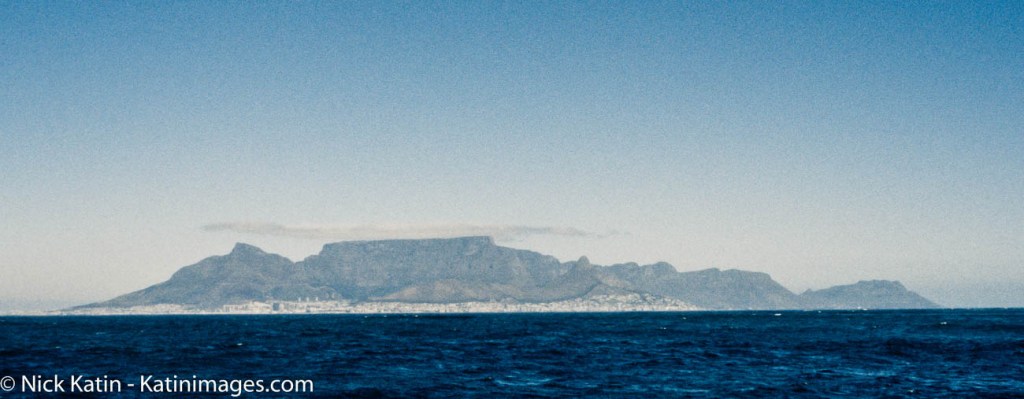
    Table Mountain in Cape Town from Robben Island former prison of Nelson Mandela
    Table Mountain in Cape Town from Robben Island former prison of Nelson Mandela


  • African shoestrings – South Africa Day Thirty-six – Cape of Good Hope

    We got an even closer look at the Cape the next day after picking up a cheap hire car from the unknown (to us anyway) Atlantic Car Hire. The plan was to explore the peninsula for the day and drop off the car in Stellenbosch, centre of the South Africa’s wine industry and some 40 odd kilometres away and still be within the free 150 kilometre mileage. What we didn’t realise was that drop off and pick up mileage were also included so we ended up having to fork out more money at the end of it than we had budgeted for!

    Nonetheless the Cape Peninsula is a beautiful spot. This is white man country, large two storey houses, apartment blocks and trendy little village’s front onto the white sandy beaches on both sides of the peninsula.
    No black or coloured townships here, just Cappuccino’s, designer labels and more BMW’s and Merc’s.
    Along the western side the famous Chapman’s Peak Drive is up there with the rest of the world’s great scenic drives. Carved into solid rock, this winding 10 kilometres of bitumen has several lookout points to avoid accidents caused by sightseers slowing down to admire the panoramic scenery at every bend. I’m not sure that worked. Cars screech to snail pace as they suddenly realise that they want to stop at the lookout they are in the process of passing!

    Somehow that day we managed to visit the World of Birds and Groot Constania the Southern hemisphere’s oldest winery, follow Chapman’s Peak Drive, tour the windy Cape of Good Hope Nature Reserve and explore the trendy the St. Tropez of South Africa, Clifton.

    We finished up having fish & chips from ‘Fish & Chips at the Rack’ in Hout Bay supposedly “the Capes best Fish and Chips” and then somehow finding our way back to the guesthouse in the dark with an extremely basic map.

    The Cape of Good Cape, a rocky headland on the Atlantic coast of the Cape Peninsula, South Africa.
    The Cape of Good Cape, a rocky headland on the Atlantic coast of the Cape Peninsula, South Africa.


  • African shoestrings – South Africa Day Thirty-three – Robben Island Cape Town

    Another pretty interesting guy whom unfortunately we didn’t get around to meet was Nelson Mandela. We did however get to meet someone who served time with him on Robben island a small former prison island 11 kilometres north west of Cape Town.

    Eugene was his name and he served seven years on Robben Island for his part in a student anti-apartheid demonstration in 1983. He was still there but this time as a guide.

    Mandela spent twenty-six years as a political prisoner there and certainly in the earlier years had to overcome some pretty harsh treatment to survive.
    In the 1960’s they were only allowed one visit of 30 minutes and one heavily censored letter every six months.
    For around thirteen years Mandela and others were made to work with picks and shovels in a lime quarry where the heat and blinding glare in summer could eventually kill or blind.

    In the 1980’s the authorities eventually softened under international pressure and stopped hard labour, allowing education of selected subjects to university level.

    The prison itself however is not what you expect. The layout is pretty similar to any other high security prison found in the western world, you know, small cells, high walls, a cramped exercise yard and barbed wire everywhere. For effect life size cardboard cut outs of past prison guards are strategically placed around the prison corridor and yards. These guys are pretty lifelike, at first glance I wondered what this guy in the uniform with a gun was guarding! From what Eugene was saying I was glad that they were only cardboard, their reputation as cruel and harsh was apparently well justified. Beatings and other acts of violence were all in a day’s work. And yet the main gate to the prison gives no hint to these brutal facts. Written above it in Afrikaans is “ONS DIEN MET TROTS” that means “We serve with pride”.

    The known history of the island dates back some 400 years and has been used as a fishing base, a whaling station, a hospital, a mental asylum, a civilian prison, a military base, a political prison and now finally a museum.
    It’s as a museum that it seeks to be as Mandela puts it “a symbol of the victory of the human spirit over political oppression; and for reconciliation over enforced division.”

    The island itself has little natural beauty to mention although it does have the odd gemsbok and springbok around and the views of Cape Town and its spectacular Table mountain backdrop are worth the admission price alone.

    Table Mountain in Cape Town from Robben Island former prison of Nelson Mandela
    Table Mountain in Cape Town from Robben Island former prison of Nelson Mandela
  • African shoestrings – South Africa Day Twenty-nine

    We left J’burg for Cape Town the next day via a domestic South African airways flight.

    We had been to Cape Town before but we had felt that hadn’t done it justice, so this visit was to ‘see’ the place properly. Last time we had stayed in a pleasant Bed & Breakfast near the city centre. This time we were going to stay in a backpackers of which like J’burg there were many. Expecting to be hassled by their touts at the airport, we hadn’t bothered to book ahead. Guess what? The only touts we saw were for taxis. After a three or four phone calls to different hostels we soon realised why. They were all full!

    It was a long weekend and Cape Town was almost booked. I say almost because eventually we found a backpackers that had a double room and they paid for the shuttle from the airport to take us there, saving us R30 each.
    Unfortunately that was not as much to our advantage as we initially thought, we were now obligated to stay at least one night. The Cat and Moose was we thought at the time about as bad as it gets. The landlady led us to a dingy little room with threadbare carpet, paper thin linen and the sort of musty damp and putrid smell that makes you want to vomit! Worse still we had to walk through a dorm for access and it was across an alleyway from the TV area where a little blonde haired prick full of bullshit (we had met him earlier) had the sound loud enough for people in the next suburb to hear.

    Needless to say we were out of there the next day!

    With the help of the tourist office we found the colourful Observatory guesthouse in a suburb called, you guessed it, Observatory, a trendy uni student area. I say colourful because the rooms all had loud colour schemes and the owner, Andre and his manager, Gregory, were both pretty camp. This sorted added a certain ambience to the place and was cheap, clean, quiet and comfortable. But here’s the rub…..we were no longer within walking distance from the city centre and apparently public transport as we know it, was virtually non existent.

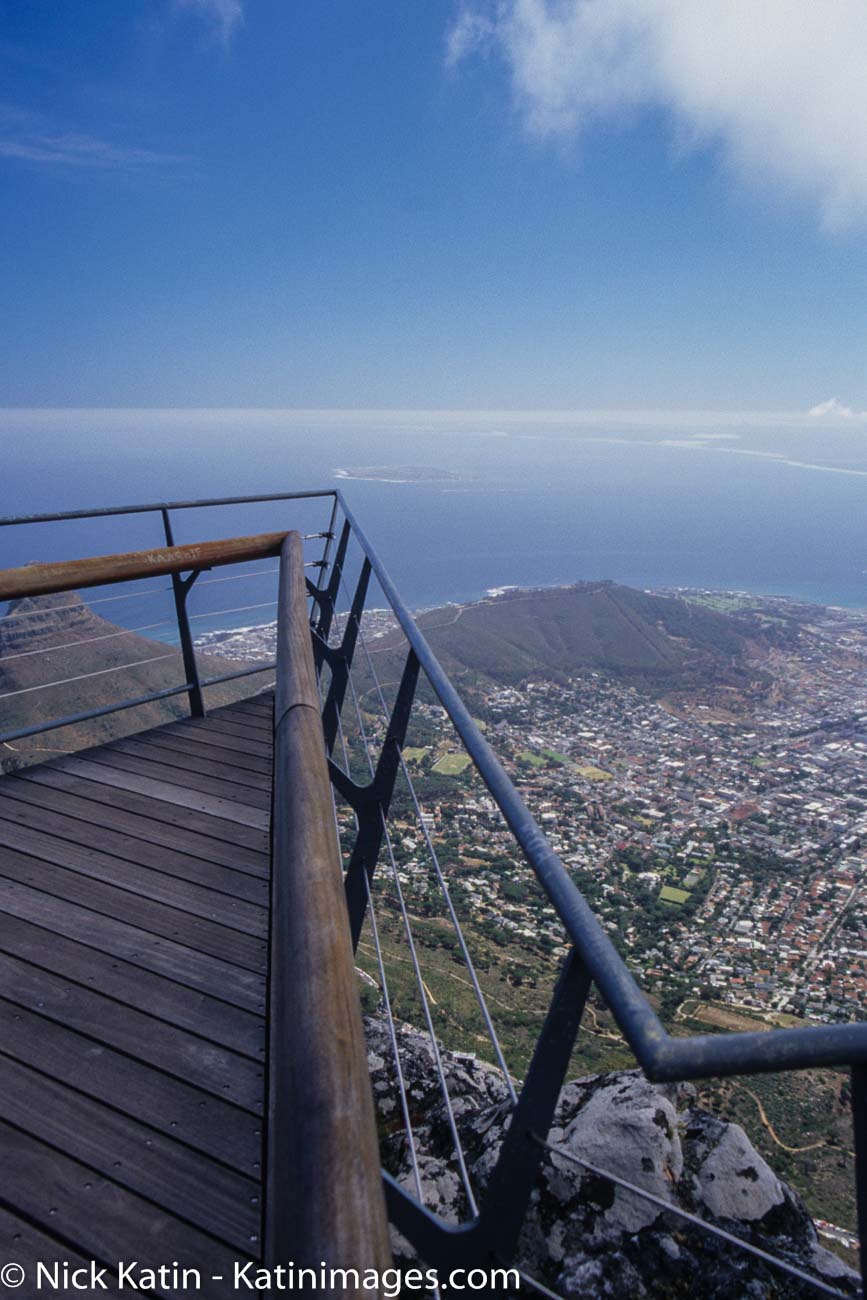
    Cape Town from the Aerial Cableway lookout on Table Mountain .
    Cape Town from the Aerial Cableway lookout on Table Mountain .
  • Restaurant widow in Matilda Bay Perth

    I guess we all complain about where we live at one time or another. As some of you know i live in Perth Western Australia and like everyone else you become blasé about your surroundings. Matilda Bay is a small bay that is a part of the Swan River and from there you get a great view of the City and river.
    Near the water’s edge is a restaurant, café and a couple of Yacht clubs. In fact, for those yachting aficionados, the famous Royal Perth Yacht Club is one of these. RPYC was the Club that won the America’s cup in 1983 after the New York Yacht club had successfully defended it for 132 years, the longest winning streak in sporting history.
    This image is a bit abstract but you can see the yachts in the reflection.

    Reflections from the restaurant at Matilda Bay part of Perth's Swan River in Western Australia
    Reflections from the restaurant at Matilda Bay part of Perth’s Swan River in Western Australia


    To see a larger image or to see purchase options click on the image

  • Sawyer Glacier in Alaska

    Prior to visiting Alaska I had seen plenty of glaciers but always in mountain regions. I had never seen a Glacier that flowed out to water.
    About 72 km’s from Juneau is Tracy Arm fjord. 48 km long and with one-fifth of it’s area covered in ice as well as, during the summer, it has a considerable amount of floating ice ranging from hand-sized to pieces as large as a three-story building.
    This ice comes from the twin Sawyer Glaciers which are about 500 metres across and ‘calves’ off chunks of ice as tall as the aforementioned three story building.
    For more pictures of Tracy Arm go to Alaska

    The Sawyer Glacier at the end of Tracy Arm on the Gastineau Channel, Alaska
    The Sawyer Glacier at the end of Tracy Arm on the Gastineau Channel, Alaska

    To see a larger image or to see purchase options click on the image

  • Cruise ships near Ketchikan Alaska

    Far from being a one horse town, Ketchikan is a six cruise ship town. These mammoth floating hotels dock at the port right at the heart of the town. Ship visitors stroll down the gang ways straight into souvenir shops, restaurants, bars, and tourist attraction vendors.
    Apart from people watching, at least when the cruise ships are there, there is actually much to see within walking distance of the Ketchikan cruise ship docks, including the shops along quaint and picturesque Creek Street, with its historic buildings overhanging a crystal-clear, salmon-filled stream.
    Set amongst the lush Tongass rainforest, surrounded by magnificent peaks, waterfalls, and glaciers, there’s a fair bit for the nature lover as well, assuming they have longer to spend there than the average cruise ship stay of five or six hours.
    Once these people movers have moved on, the town is very quiet and the shops close all most immediately!

    Docked Cruiseships at Ketchikan on the Alaska marine highway and inside passage.
    Docked Cruiseships at Ketchikan on the Alaska marine highway and inside passage.

    To see a larger image or to see purchase options click on the image

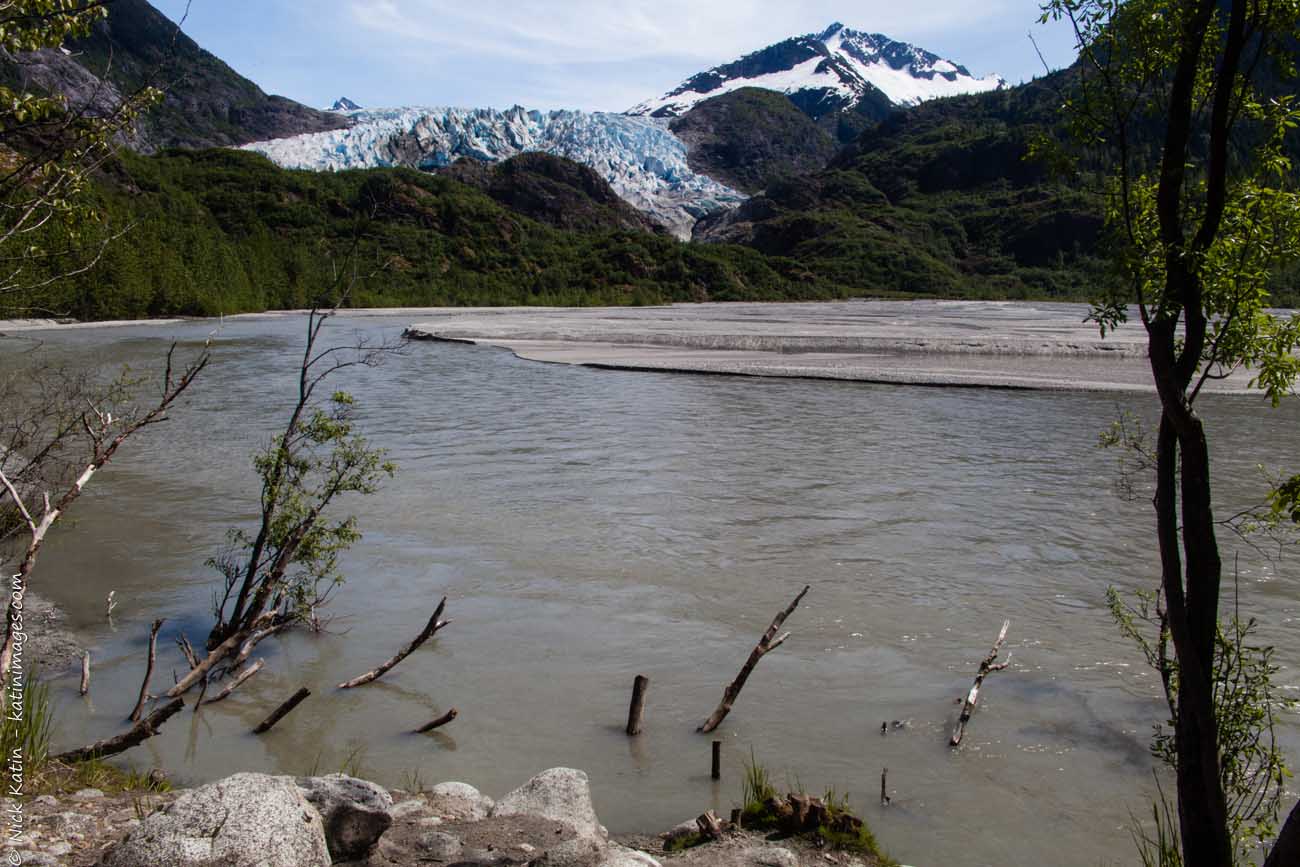
  • Herbert Glacier near Juneau, Alaska

    The capital of Alaska, Juneau, is a beautiful small city set on a salt water channel and surrounded by magnificent alpine peaks. It’s is a nature lovers paradise, with great shops, restaurants, and the only glacier, the Mendenhall, within the municipal limits of any city.
    The Herbert Glacier is about a 5 hour round trip by foot (about half the time by bike) along  the obviously named Herbert glacier trail. The trail starts around 40 km or 25 miles from Juneau, .The glacier is part of the Juneau Icefield, which contains the the glaciers Eagle,Taku and the famous impressive previously, mentioned Mendenhall.
    It has the appearance of being in the middle of nowhere and it is relatively speaking. But this is Alaska and that means adventurers, locals and tourists are everywhere during it’s short summer. Well worth the effort to visit!

    Herbert Glacier near Juneau, Alaska. A smal Glacier that's part of the Juneau Icefield
    Herbert Glacier near Juneau, Alaska. A small Glacier that’s part of the Juneau Icefield

     To see a larger image or to see purchase options click on the image

  • Plaza de España -Seville, Spain

    Built for the Spanish-American Exhibition of 1929, the Plaza de España is one of Seville’s top tourist attractions and why wouldn’t it be! With stunning architecture, inticate tiling and a calming semi circular lake, its just the place to go for a restful afternoon in the sun (provided it’s not too hot – Seville can have bitingly hot summer days).
    One of it’s more modern claims to fame is that it has been used as a filming location. Scenes for the famous Lawrence of Arabia were shot here and the building was used as a location in the Star Wars movie series — Star Wars Episode I: The Phantom Menace (1999) and Star Wars Episode II: Attack of the Clones (2002).
    I still have I have 10 free subscriptions from Zinio to give away. To enter visit zinio choose a magazine title and send me your first and last name and email address and if you want, send me your website address via the contact page or email. For more info go to Zino competition.

    The Plaza de España, Spain Square, in English is a plaza located in the Parque de María Luisa, in Seville, Spain
    The Plaza de España, Spain Square, in English is a plaza located in the Parque de María Luisa, in Seville, Spain
  • Zinio – win a magazine subscription

    I have recently been looking at Zinio a digital magazine service. They have what looks to be thousands of digital magazines at low prices. I looked at the travel and photography sections and they have publications such as Lonely Planet, Conde Nast, AFAR, Photo Plus and Shutterbug.
    Now they have this new Z-Pass – YOU CAN READ WHAT YOU WANT WITH Z-PASS ON ANY DEVICE, GET 3 MAGAZINES FOR $5/MONTH WITH NO COMMITMENT AND YOU CAN TRY IT FOR 1 MONTH FREE
    see Z-Pass for more info:

    300x250_zpassTo entice you to visit the site I have 10 free subscriptions to give away. To enter visit zinio choose a magazine title and send me your first and last name and email address and if you want send me your website address via the contact page or email. Just tell me whether the image below was taken in summer or winter.
    The first 10 correct entries will win a subscription of their choice.

    Local fishing boat heading through fog to sea from Whittier, Alaska, USA
    Local fishing boat heading through fog to sea from Whittier, Alaska, USA

    To see a larger image or to see purchase options click on the image

  • Blue ice in Tracy Arm Alaska

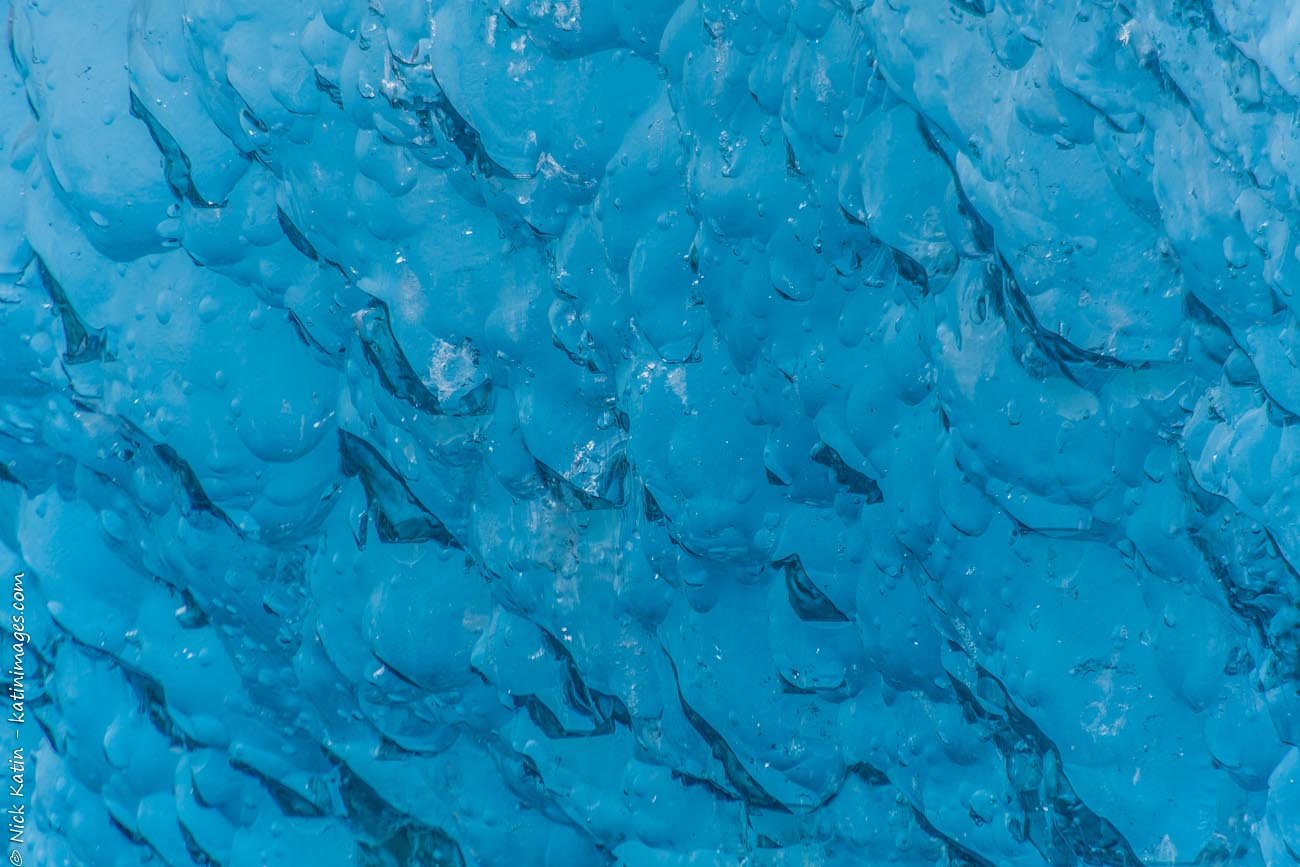
    Ice calving is the breaking off of big chunks of ice at the edge of a glacier. It is the sudden release and breaking away of a mass of ice and often makes a huge cracking noise.
    This is a close up of floating piece of ice that had only moments before come away from the huge Sawyer glacier found at the end of Tracy Arm located off the Gastineau Channel south of Alaska’s capital Juneau
    Whilst I had seen Glaciers before in the mountains to see one at the water’s edge and changing in front of my won eyes was pretty amazing!

    New ice after Calving at the Sawyer Glacier in Tracy Arm on the Gastineau Channel, Alaska
    New ice after Calving at the Sawyer Glacier in Tracy Arm on the Gastineau Channel, Alaska

    To see a larger image or to see purchase options click on the image.