Ellery Lake, near Tioga pass, Yosemite NP California.
One Tioga Road’s highlights within and outside Yosemite. It’s a memorable and dramatic ascent up Lee Vining Canyon from the Mono Valley to the High Sierra meadow at the park’s Tioga Pass entrance, with a waterfall and two lakes for eye candy along the way. This one is Ellery Lake, one of the high points ar 3200M Approx.
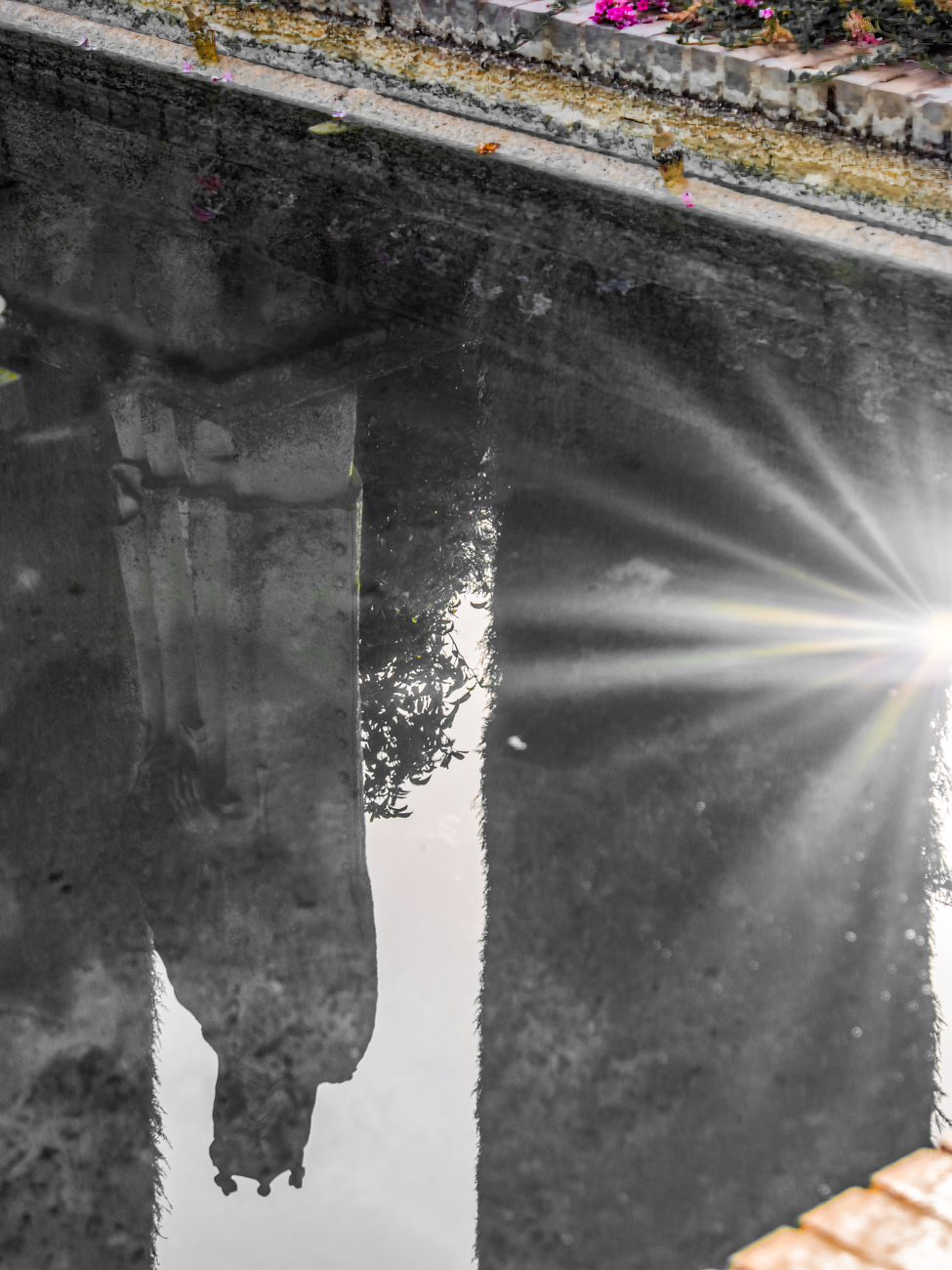
The pond at the Alcázar de Los Reyes Cristianos in Córdoba, Spain with a reflection of the statue of Christopher Columbus.
The Alcázar de Los Reyes Cristianos or Castle of the Christian Monarchs is refelection of the areas history. Roman and Visigoth ruins lie side by side with Arabic remains in this magnificent building, which was once the favourite residence of the different rulers of the city.
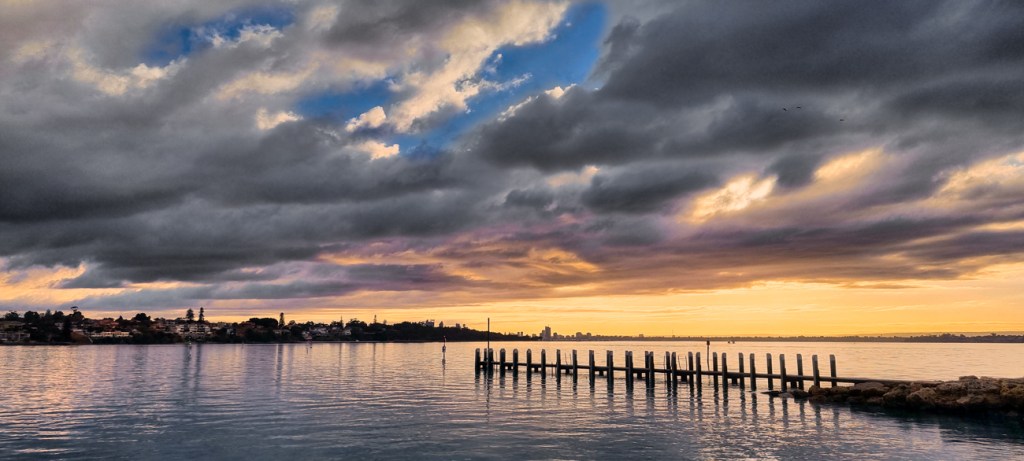
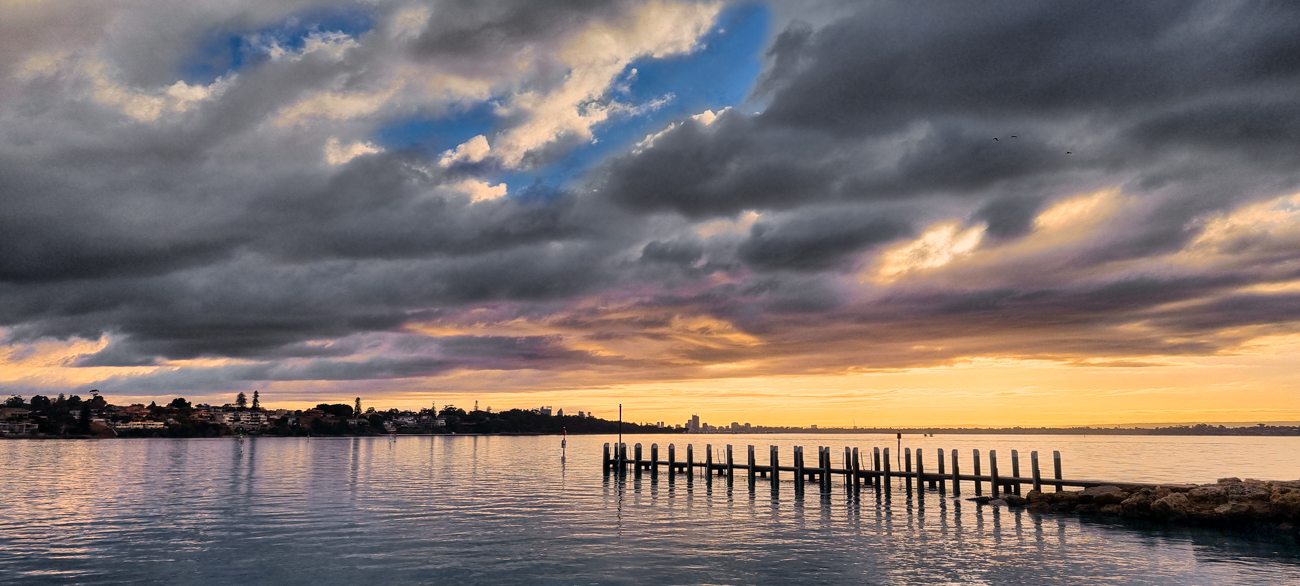
Sunrise at Point Walter a picnic spot on the Swan River near Fremantle in Western Australia.
On a recent bike ride past this popular picnic spot I saw this superb sunrise. As we rode close to the jetty I couldn’t resist grabbing my smartphone and capturing it. The Swan River has some beautiful spots along it’s North and South Banks. Perth has such clear skies and bright light so it’s always best to capture these sort of scenes during the magic times of sunrise or sunset.
Lake Wanaka on the south Island of kiwi land. Apparently the good citizens of the nearby town of Wanaka are one of the happiest in the world. Click on the image to see a larger view
And so the events leading to bus ride from hell number three started to unfold. The bus wasn’t due to arrive until 11.30 pm but Leonard, who was not as friendly and as obliging now that we were leaving, would only give us a lift to Mzuzu at 12.30 in the afternoon and charged us for the privilege. So the three of us (Stephan and Lucy were also coming, except Lucy decided that she wasn’t ready to leave at that time and would get the bus later whilst Stephan obligingly took her bag with us) plus two other locals crammed into the back of this small Ute. After another bone jarring journey we were dropped off at the Mzuzu hotel where the porter helpfully checked in our bags whilst we killed time in the town. We had lunch at the Sombrero restaurant and wondered as aimlessly as possible around the markets. It was here that we found a tape of ‘Brenda’ the instigator of the song that had been buzzing around in our heads ever since that sleepless night in the Gross Barmen camp in Namibia. It must have finally brain washed us because we actually bought the damn thing!
Back at the hotel we settled down in the bar to watch the cricket world cup until the game got rained off and we decided that we might as well have a decent feed here at the hotel.
Stephan is a big bloke who, we had noticed, likes his tucker. So when our meals arrived first – all looking quite respectful in quality and quantity, his mouth was watering. However, the look on his face, when what can only be described as a sample of a mini pizza, was put in front of him was priceless. He shook his head in absolute disbelief and sent it back, replacing it with the curry hoping it that it came in the same or bigger portion as Lucy had. Fortunately for the rather confused waiter, it did.
We caught a taxi to the bus station with all our bags and waited there with three other tourists for three hours. At around 12.30 am the bus eventually turned up and then all hell let loose. From the shadows all the other passengers moved as one towards the bus. People on the bus were trying to get off to go to the toilet and stretch their legs whilst what seems like the population of Malawi was trying to get on. Stephan used his bulk to push his way through the madding crowd with us following in his wake and eventually we get on. But there was nowhere to sit! The bus had obviously been overbooked and we had a choice, stand and travel or get off and wait a couple of days for the next one like one of the other tourists was doing. Well we stayed on and I stood with our bags around my feet and only one of my feet actually on the floor, rubbing rear ends with a sizeable local woman and hanging on for dear life. Eventually the bus moved on and the journey for the next five and half hours will remain forever etched into my memory. The recent heavy rains and flooding had damaged a lot of the roads and once again the bus spent valuable time trying to avoid or simply running straight through potholes. At one time both Sue and I incredibly fell asleep whilst standing up for just a few seconds of escape from this nightmare. Its 36 hours to Dar and somehow the thought of travelling like this put us into denial. Surely people would get off on the way and we would end up sitting.
We reached the Tanzania border just after dawn and without much fuss we were allowed to pass into our last African country of the journey.
Even though we were assured by the driver and his sidekick that there would be seats for everyone from hereon as a lot were getting off; the thought of travelling another 30 hours standing up was too painful to contemplate and we looked for an alternative during the hour or so stop.
It was Stephan who came up trumps. A group of five preachers from Malawi were travelling to Dar for a conference. They would take us on condition that we pay some of the cost of fuel and change some local currency into US$, which they badly needed to pay the horrendous vehicle transit fees that Tanzania had imposed on them at the border. They had a four seater Toyota Hilux Ute and the only room for all of us was in the tray! We didn’t deliberate too long; at least we would be sitting down and would most likely get there well before the bus. We later found out that the bus got to Dar an hour later but had to sit on the outskirts of the city for five hours because of a midnight to dawn city curfew on large vehicles.
So we got in and somehow the four of us managed to cram amongst the preachers and our bags and we were off. It was a long trip. Lucy and Stephan jumped out at Mbeya from where they were making their way elsewhere and we continued on with another 880 kilometres to go. All in all it wasn’t too uncomfortable and we were out in the fresh air.
We soon came to realise why these guys had been so anxious to have us along…………. they had no money! The fees they had to pay at the border was an unbudgeted expense and had wiped them out, so we ended up having to pay for most of the fuel. At first I felt cheated but then I thought well we’re helping them as much as they’re helping us. Maybe their master will look after us a bit better next time we attempt to travel by local transport.
Watching the scenery and the towns and villages go past from the rear was an interesting experience for that length of time (we had our backs to the cab). It was typical African rural countryside. Dusty villages and towns were dotted along the road with crops of tobacco, coffee and various others dominated the terrain. At one stage the scenery changed to that of the high country, small streams, rainforest and mountains as we passed through the Rubeho and Ulunguru Mountains before ascending down towards the coast where Dar es Salaam sits. Just on the outskirts of the Dar we were diverted down what seemed to be an endless, very dark unsealed road that made us very nervous. Our apprehension was justified half way along when a skinny shadow suddenly appeared on the back of the Ute and was obviously looking to pinch one of the bags. The speed of my reaction surprised me as much as it did him. I lunged with my foot and made enough contact and noise to frighten him off. The old heart was pumping well at that moment.
Eventually at 1 am we reached the city and then spent the next half an hour trying to find a hotel we had booked. These guys really didn’t know Dar at all and eventually we gave up and settled for any hotel. The Starlight Hotel was not the best value for money. It was tired and grotty and for US$50 it was a rip-off but by that time we really didn’t care and just wanted to find a safe bed.
Footnote:
Get more traffic to your blog! Let me help you take, edit and publish your images now by signing up here to get “Eleven easy ways to improve your marketing photography”
A free guide on how to start improving your images to help you take control of your marketing. That link again
So the very next day we went into Mzuzu to find out for sure. The information we were getting in Nkhata bay was unreliable and sketchy.
Stephan had a saying “Africa wins again” well that’s exactly how you could describe the sum result of the next eight hours in Mzuzu.
We were getting a lift in the back of Leonard’s Ute but due to the remarkable fact that it had run out of petrol before it had even moved we were delayed for a while. Eventually we were dropped off at the main Post Office in Mzuzu. Nearby there was a bus depot where we asked for directions to the bus station where the office of TVC, the Dar es Salaam bus operator, was located. The guy offered us a lift in his bus that was about to start its journey. Half an hour later we were still sitting there and decided to get out and walk the 500 metres (he had said that it was a least two or three kilometres).
At TVC’s office, which incidentally was also a hairdressers and beauticians, we found out from the couple of guys in there that they were sure there was a bus Thursday but to ring later to confirm.
We were still toying with the idea of flying to Dar so off we went to the Air Malawi office in the Hotel Mzuzu, the closest premises Mzuzu has to a three star hotel let alone a five star. There the rather impatient ‘customer service officer’ told us that flights to Mbeya (at a mere 500 kilometres away and the first major town in Tanzania) had been discontinued LAST WEEK! But we could take either a flight back down to Lilongwe and up to Mbeya for US$225 each, which he was happy to tell us had just gone up or a flight to the town of Karonga (180 kilometres away but still in Malawi) for US$53 each. Neither of these options were really much good as we would still have to get some form of land transport to Dar or pay another few hundred dollars to fly. Thanks for nothing!
Whilst we were at the hotel we thought we may as well change some money. This was also a waste of time, as they didn’t have any cash, so we had to walk back to the bank and queue for half an hour.
One of the reasons that we needed money was to help bail out the resort. We had been approached the day before to pay some of our bill so that the resort could afford to stock up on beer and food. As we mostly ate and drank there it seemed like this was in our best interests.
Despondent we caught a minibus that as well as looking like it should be condemned and probably not good enough to be wrecked for parts, packed us in like sardines and took one and half hours.
Back in Nkhata Bay we phoned TVC from the travel agents. No there was no bus on Thursday after all but there was definitely a bus on Saturday night.
Thoroughly depressed we drowned our sorrows at Njaya, watching the Aussies beat Zimbabwe and reflected on Stephan’s “Africa wins Again!”
We spent the next two days strolling into town, eating, drinking and just lazing around on the beach. On one day we watched our laundry being washed in the lake and dried flat on the sand by Fraser an entrepreneurial young man, who on reflection charged a lot more than a coin operated washing machine.
The only chore we did was to visit the local doctor to obtain some ‘cleansing’ tablets for Bilharzia. Apparently you can take these pills that make you feel like shit for a day or so but cleanse your body of any of these little worms that carry the disease. We never actually used them but visiting a local doctor’s surgery was certainly an eye opener. The surgery itself was tucked away behind some houses and the main supermarket. So get to it we had to follow a small footpath through several private gardens. The doctor’s rooms consisted of two rooms, the consultation room equipped with a basic examination, table desk and a chair and the pharmacy equipped with just a table. All the medication was sealed in bags and small containers sitting on this table. The doctor was helpful and did say that Nkhata Bay was Bilharzia free but we decided to err on the side of caution. It cost us nothing for the doctor’s consultation and very little for the tablets we required. We felt that we had somehow denied the locals medication simply to save a few dollars. (The same service and tablets in London would have cost a small fortune).
We did mix a little with the others but it became fairly clear that Stephan and ourselves were no longer part of the ‘inner circle’. The problem seemed to stem from my comments about some ‘friends’ of Lucy’s who in between bouts of dope induced blankness told us of their far-fetched plans to build a lodge around another bay. I innocently said after they wobbled away that they didn’t know what the hell they were doing (I’m easily irritated by anyone who loses control of their faculties due to excessive drugs or alcohol). Lucy obviously took offence and contradicted me and I left it there. What Stephan’s crime was I don’t know nor did I care much.
We spent our final day mooching around town and attempting to pick up two shirts and two sarongs that we were having made. I say attempt because we had been unable to get these items made by the same tailor as the first one (he was too busy) and we had to settle for Kenny. It became clear to us that Kenny liked a drink or two. The day before we had checked on his progress and the smell of stale alcohol was everywhere, even so he had promised us that they would be ready on time and at that stage in the game it was too late to change tailors…………. Well, we went to pick them up and he had a made a real mess of it. He hadn’t finished for a start and had stitched the shirts with the wrong colour cotton, one of Sue’s sarongs had not been even started and the material for the other had been turned into a shirt! The sum result was that Kenny (again smelling of alcohol) paid us for the shirt material and replaced the material for the sarongs from another market stall but we had no shirts or sarongs. For some strange reason I actually felt sorry for him and until stopped by Sue and Stephan I was quite prepared to just walk away and leave him the material. After all it had cost very little. But as they said it was the principle.
Footnote:
Take control of your blog’s images now by signing up here to get “Eleven easy ways to improve your marketing photography”
A free guide on how to start improving your images to help you take control of your marketing. That link again
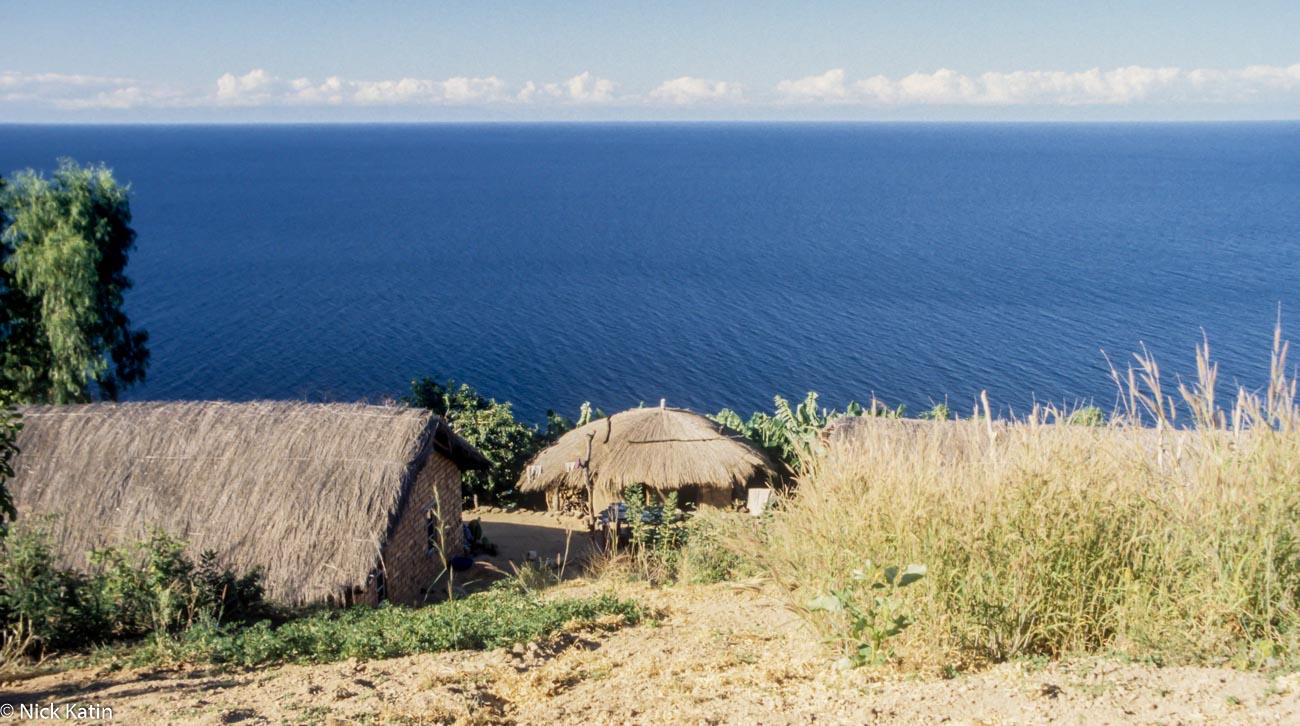
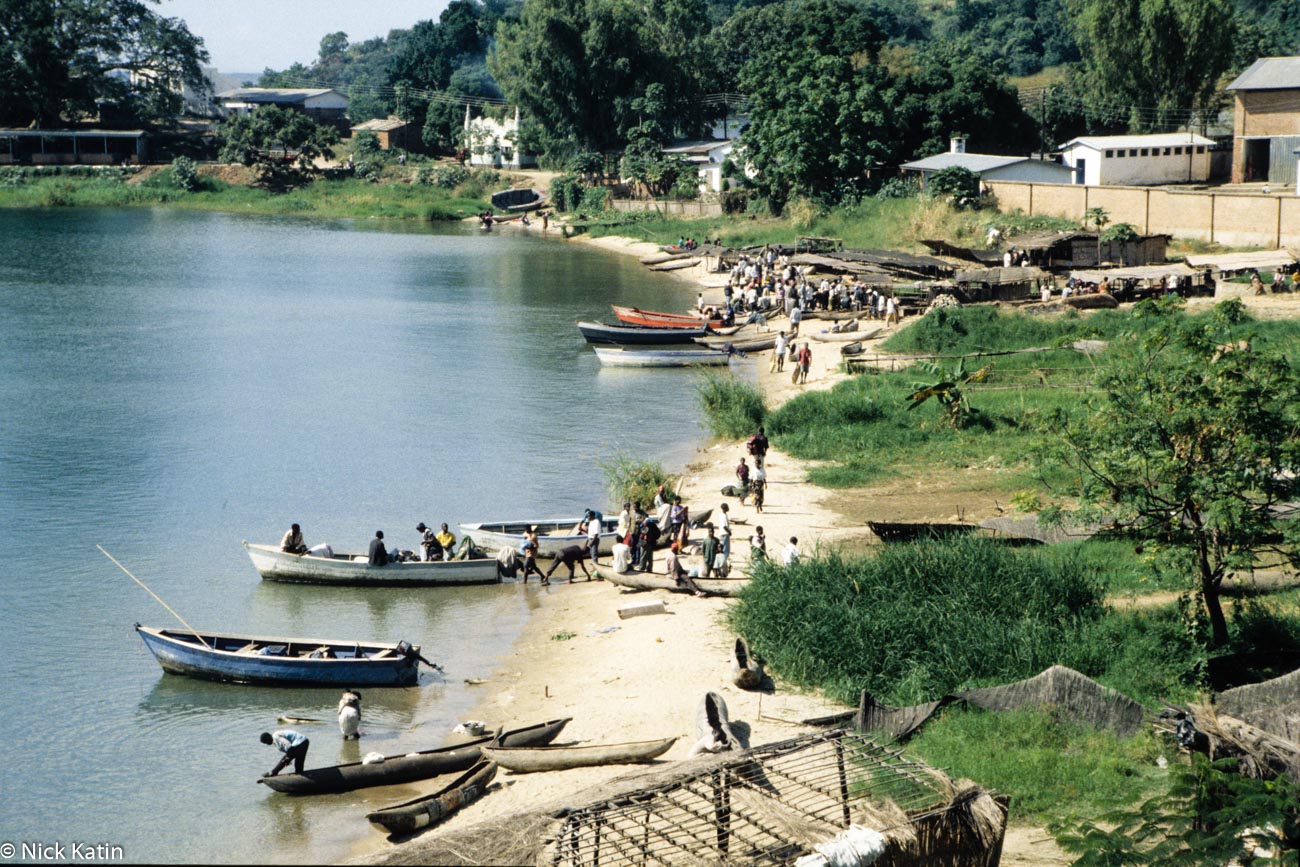
Small cluster of huts on Lake Malawi’s eastern shore
No sooner than had we settled in and despite our fatigue, we were out exploring. We came across a couple that we had met in Chimanimani, Patricia and Jonathan. Patricia was a short attractive French girl who liked to talk whilst Jonathon was her antithesis, tall, balding, quiet and English. They too were staying here and told us that the Njaya resort next door was probably nicer but a lot noisier.
We went to see for ourselves. Run by an English couple, it had a sort of up market backpacker hostel feel to it. But it did have a great bar high on the hill overlooking Lake Malawi and it had a satellite TV. By now the world cup cricket was well under way and as we going to crash here for a few days, we could allow ourselves the luxury of being couch potatoes for periods of time.
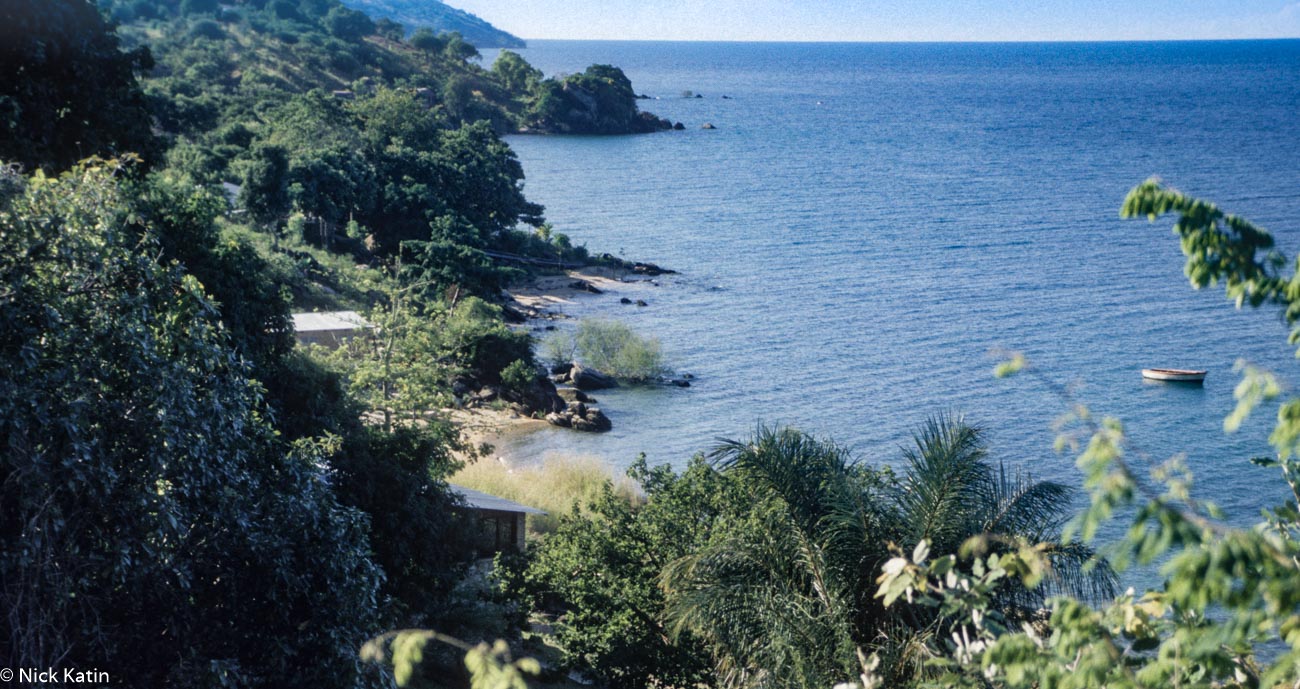
Lake Malawi is an awesome sight……….. Taking up one fifth of Malawi its located in the Great Rift Valley and forms a natural border with Tanzania in the north and Mozambique in the south. It is about 500 kilometres long and an average of about 48 kilometres wide. The area of the lake has been estimated at 27,785 square kilometres and its surface is a surprising 472 metres above sea level. Looking at it from the shore or even from the Bar of the Njaya resort it seems to have that slight concave surface of a large body of an ocean as if it were hugging the contour of the earth (which it is of course). It looked so tempting in the hot humidity of the afternoon. But there was one thing holding us back. Bilharzia!
Bilharzia is a disgusting disease. It’s not the disease itself that is so bad, although it’s pretty serious, but the way it’s caught! Its carried in freshwater by minute worms that initially live in a certain type of snail and then after an increase in numbers hit the water ready for any poor unsuspecting humans.
It will then enter through the skin and find its way to the intestines and bladder and from then on it’s all downhill. It’s found in slow moving bodies of water like the shallows of rivers and streams and lakes. There has been a long debate as to whether it exists in Lake Malawi and the bottom line is that it does in some parts. However, we decided to risk it on the basis that we were assured that the area around Nkhata Bay was clear of these horrible little bleeders. It did actually make sense. One look at the small swell and waves that seemed to continuously wash the beach meant that water was moving and the absence of reeds where the host snails were found was also comforting. So I took the plunge!
That night at the restaurant we met the other two residents. Stephan, a Swede who had been travelling all over the world for around five years (three in Australia) and Lucy another Pom. The six of us were the only guests in the resort and for the next few days we saw a lot of each other.
Nkhata Bay was a smaller quieter lakeside version of Blantyre. Ramshackle building and stalls lined the dusty streets that became small paths in and out of small pockets of more ramshackle buildings and stalls. Banana sellers were everywhere offering their produce for almost next to nothing in western currency.
As the others had been there longer they had already acquainted themselves with some of the more extrovert individuals of the tourist curio trail. We meet Chester, Comfort and Shosho amongst countless other sellers. Shosho to his credit showed us how to play the local game of Boa a game similar to checkers played on an indented board with Mahogany seeds. Later in the day he found us on the beach and chatted with us all the time hoping, we would buy some of his wares.
We also met Happy, Happy and Fraser, three young boys who were selling home made postcards. That’s the key to these people they wanted to learn about you and practice their English but most of all they wanted to sell you something.
I arranged to have a shirt made for the ridiculous price of US$2.
And that’s all there was to do in this tranquil place. Browse, eat, drink and swim.
The next day (Tuesday) we decided that whilst this might be a little bit of paradise it was time to move on and get to Zanzibar. We found out that there was a bus leaving to go to Dar es Salaam that night from Mzuzu. So after another eventful day of doing nothing, we said our good byes to the others in our regular lunch spot, the beautifully located Safari Restaurant and headed back to pack and leave. By the time we had walked back we had changed our minds at least four times. I felt that we were acting out that song that goes “should I stay or should I go”. In the end we decided to stay and would see if there was a bus any earlier than Saturday. We were just not ready to face yet another bus ride especially a much longer one than the last two.
Footnote:
Take control of your blog’s images now by signing up here to get “Eleven easy ways to improve your marketing photography”
A free guide on how to start improving your images to help you take control of your marketing. That link again
So hang on tight, Bus ride from hell two starts now!
We arrived at the bus station at 5 pm for a 5.30 pm departure. This dusty, grimy, polluted bus station was not quite as threatening as Harare. There were lots of people floating around, and almost as many security guards. Music blared from the PA system and even at that time of day the market stalls that surrounded the station were doing a roaring trade.
At 7.30 pm the bus finally arrives and then all hell let loose. No orderly queue here just chaos as everyone attempts to get onto the bus at the same time with bags, pillows, blankets, box’s, small children and heaven forbid, babies. Any thoughts of having a reserved seat are blown out of the water. Another bus turned up, so thinking we were smart we attempted to board that one but were turned back by the bureaucratic driver who unconvincingly pointed out that our tickets said we should be on the other bus.
“But there’s no room on that bus” we countered.
He just repeated the fact that his bus was not our bus.
That was the final straw for Sue. She marched onto the first bus, cleared all the staff belongings from the front seat and shouting at anyone in the way that this was where we were going to sit. The rest of the passengers and staff were stunned into submission as we chucked our bags on the floor in front of us and sat down.
They had never seen a wild white woman before……….. usually we were so polite and accepting.
That’s not to say that we now had the best seats in the bus. We had to sit with our legs elevated on top of our bags, resting on the handrail in front, not the most comfortable position for a long bus ride but at least we had seats away from the congestion of the rest of the bus (the isle was crammed full of bags, boxes and other belongings). Plus we had full possession and sight of our bags. The doubt in our minds about the security of having bags stowed away in the luggage hold or on the roof were confirmed by the rest of the passengers.
Not one of them had their belongings where they couldn’t keep an eye on them.
At around 8.30 pm the bus took off and we had been going for just over an hour we were stopped at the first of five police roadblocks that we were to pass through before reaching our final destination.
Two police officers carrying AK 47’s over their shoulders, ordered us all off and went to search the bus and our bags. The reaction to this was not cooperative.
After a lot of arguing and discussion we eventually had no choice and an hour later we resumed our travels. The rest of the journey was an ongoing frustration at the speed at which we were going. Either the bus was heavily overloaded or it wasn’t man enough for the job, because it just about crawled up every hill (and in Malawi there’s nothing but hills). On some stretches we could have walked faster!
Eventually we got to the bus station at Mzuzu at around 9.30 am, some four hours late and managed to meet our next challenge finding a bus to take us to Nkhata Bay.
We found what’s known to travelers to third world countries as the chicken run bus. It was exactly like the local buses you see portrayed in the movies. Full with locals carrying on just about anything you could imagine. Bags of seed, wood, fruit, ordinary luggage and yes, of course, chickens. We sat with our bags on our laps and watched our knuckles turn white from gripping tightly anything we could hang onto as the bus weaved its way at a speed that was just a wee bit fast down the winding potholed road to Nkhata Bay.
As it sped past banana plants and maize fields, I did manage to notice that every inch of land appeared to be cultivated. Even the steep hillsides were terraced with various crops. In between there were small clusters of straw huts with their chimneys masquerading as a hole in the roof smoking. It was a cold morning in the highlands of Mzuzu.
It was a lot warmer in Nkhata Bay and we were thankful to get there in one piece. We now had to find our way to Chikale Beach Resort a couple of kilometres south. When we got off the bus a young local approached to see if we wanted a lift. Thinking that he wanted to take us to another hotel or resort we declined and with our backpacks on we summoned up some energy and marched in the general direction of Chikale Beach. A few moments later he was back.
“Where are yoou gooing?” he asked
“Chikale beach resort”
“I am Leenard, de manager. I will take yoou dar.”
This guy had to be no older than 21 but despite this and our initial concern that this was a potential mugging we jumped into the back of his Ute, too tired to really care. We had to share the Ute with a couple of crates of beer and a couple more passengers but it sure beat walking with all our belongings on our back.
The resort was pretty basic with thatched cottages grouped around a tree-lined beach and the bar/restaurant right on the beach. Each cottage had double bed and its own bathroom, which as far as we concerned after the experience of the last few days was heaven! All this for 600 kwacha (US$10) per night.
Footnote:
Take control of your blog’s images now by signing up here to get “Eleven easy ways to improve your marketing photography”
A free guide on how to start improving your images to help you take control of your marketing. That link again
With a GDP of only US$104 per person Mozambique is one of the poorest countries in the world. The Portuguese up and left in the mid 1970’s after decades of plundering the country and a fifteen year war of independence. They took with them valuable skills and capital reserves leaving behind nothing but chaos.
A Marxist state eventuated and before long the cherished ideas of socialism had the country’s economy in tatters. A civil war that left 900,000 people dead, 1.3 million refugees and a countryside strewn with over 1 million unexploded land mines followed. Finally, in 1990 peace reigned and with the aid of the United Nations a democracy of sorts emerged. The economy is still dependent on foreign aid and its infrastructure is only now being rebuilt. Soon after our visit a devastating flood decimated the country setting back its efforts to rebuild.
The Tete corridor is an area of Mozambique that juts out between Zimbabwe and Malawi. A lot of the guerrilla warfare during the civil war was staged here leaving behind a legacy of land mines and poverty. This is the area we needed to cross on this bus to get to Malawi.
After several stops for police checks and simply to avoid the huge crater called potholes in the road we got to within 100 kilometres of the Malawi border and it was getting late!
The Mozambique border post at Zobue apparently closes at 6 pm and there was some real concern that we might not make it.
As we got closer there was an awful sound of clonking and scraping as the driver changed gears. Finally, as the bus began to climb a steep hill, it stalled and came to a standstill. It was almost dark as the driver restarted the engine and then attempted with no luck to select first gear. Some of us got off to lighten the load but that made no difference. As we got back on the driver rolled the bus back down the hill so that he could make a run back up in second gear. I shook my head in disbelief. We’re rolling backwards down a hill in the dark, in the middle of nowhere, in the infamous Tete corridor of Mozambique. If he goes off the road there’s a chance that a landmine could be waiting for us and then its ‘good night Irene’. In fact, we did meet a truck going up as we were going down but it overtook us without any mishap. Eventually we got going and the bus limped into Zobue sometime later. Of course the border was by now closed, although only just, and despite some animated conversation outside one of the border official’s house, it stayed that way.
Then the fun began. Most of the travelers on the bus were apparently from Malawi, going home after doing a bit of shopping in Harare or having a break from working in Zimbabwe. They did not take kindly to this situation and I had to interfere to stop the bus driver from being lynched. They accused him of being in league with the town traders who they believed would profit from our enforced overnight stay. I can’t say I was convinced. The town wasn’t exactly busting with tempting designer label goodies or food stores. The hotel was full, which was just as well as it looked and smelt like the pits. The only place that appeared to be initially open was a small tin shack of a store that sold cold beer and by that time we sure needed a drink. Within a few minutes more tin shacks opened and vendors came to us with fruit, potato chips, drinks and various currencies.
Initially the place was quite scary. Apart from the street sellers, there were street kids and other suspicious individuals hovered around, including a man with a rifle who was obviously guarding something but we were never able find out what. With Portuguese sounding to us just like Spanish, the whole town reminded us of one of those dusty, rundown Mexican or South American towns portrayed in the movies. All we needed was Clint Eastwood to ride in on a mule wearing a Mexican poncho and wide brimmed hat, cigar in mouth and the comparison would be complete.
We spent the next six hours on the steps, watching our bags on the top of the bus, of what we think was the town hall within full view of the bus. It was one of the most bazaar experiences of my life sitting there guarding our bags from a distance, drinking beer, listening to Led Zeppelin (Jenny had a tape player) and playing cards whilst the man with the rifle wandered around looking for something to guard.
Andy and Jenny told us of their search for land on the North Mozambique coast (when they eventually get there) for a tourist camp. Due to the bad roads and infrastructure, the only way to that part of Mozambique was via Malawi and they were set to meet up with other members of this venture in Blantyre, the only other major town in Malawi.
Eventually sleep got the better of us and we returned to the bus to risk sleep and luggage stealing. Sleep was rather fretful, with snoring from half the passengers that were asleep and constant chatter from the other half that were not, adding to our rather cramped conditions.
At first light I ran up to an overland truck that had also got there too late to cross the border, to see if we could get a lift. It was driven by a young woman from New Zealand, a relative neighbour, and the travelers were all women, a single guy’s paradise I thought. They were going as far as Dar es Salaam. This was our eventual destination and they would take us both for US$40 each. We were in business or so I thought. Our problem was getting our bags and the bus driver refused to offload them until we had crossed the border into Malawi. The bus somehow limped the kilometre between border posts and they then began to offload the baggage for the Malawi customs officials. The overlander was already there and I appealed to the driver to wait. She said they would and then promptly drove off never to be seen again!
Footnote:
Take control of your blog’s images now by signing up here to get “Eleven easy ways to improve your marketing photography”
A free guide on how to start improving your images to help you take control of your marketing. That link again
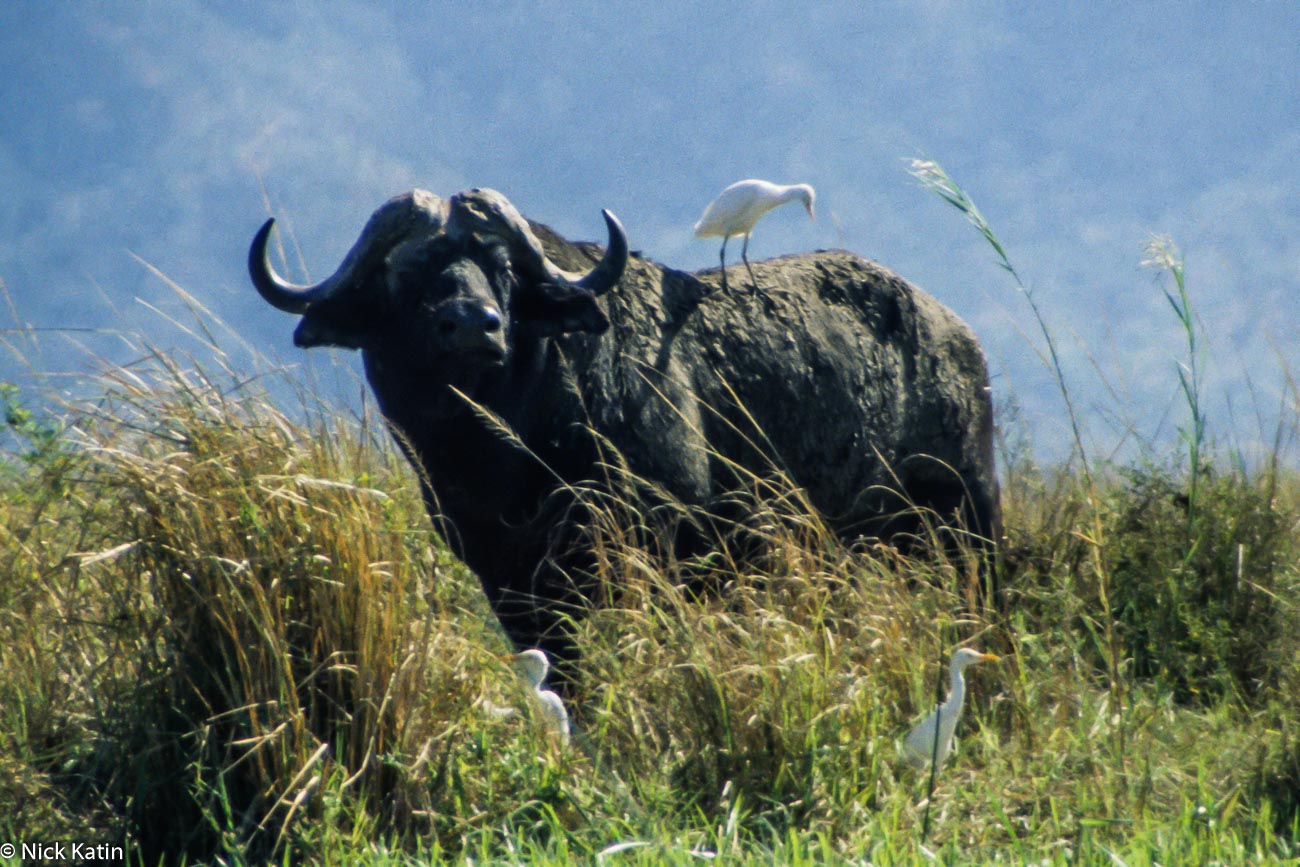
Buffalo near the Zambezi River watching canoes in Zimbabwe
Our last session of paddling was a mere 6 kilometres to our final destination, Nyamepi Camp in Mana Pools National Park. All in all we had paddled a total of 58 kilometres and by the time we had finished we all felt strong and confident enough to have gone on for another three days. When we were asked later on what had been the best thing we had seen and done whilst travelling this always comes to mind. It had been one of the greatest experiences of our lives!
We were back in Harare at around 10 pm and settled into our very ordinary (especially at the price of US$65 per person) room in the annex of the Bronte Hotel. This was meant to be our treat but the room was tired and old and really was no more comfortable than an average priced motel found in anywhere in the western world. What was nice about the Bronte was the hotel lobby and gardens and we made sure that we fully enjoyed having our breakfast, a drink in the afternoon and a coffee after dinner in the tropical colonial style gardens. Dinner was actually the best event of the day (we had spent a good few hours at the Tanzania embassy obtaining our visas). The Italian Restaurant Fat Mama’s in the Russell Hotel was obviously the local white and ex-pats hangout and I could see why. Great food, great atmosphere and great prices!
The next few days were taken up with transport and what I call the bus rides from hell! What follows next is reality but not necessarily typical of public transport in this part of the world. Of all the people we met during our travels we were the only ones who seemed to cop the experiences that I’m about to describe. It just seemed to happen to us!
Bus ride from hell number one started with a pick up at our hotel, early the next morning, by the bus company Ute to take us the Mbare bus station across town. On his way (in fact out of his way) the driver went via Possum lodge and picked up two other unsuspecting white passengers.
The bus station was chaotic and frightening. People came from everywhere grabbing at our bags and us. Someone grabbed one of our bags and with me still hanging onto it, led us onto the bus and then asked for our passports. What then confused us was another guy sitting further down the bus also asking for our passports and at the same time shouting “Watch your bags, watch your passports, watch everything!”
This guy was obviously in charge and we held onto the passports until we reached him. The other guy mysteriously disappeared and there was no doubt in my mind that had we relinquished our passports to him that would have been the last we would have seen of them.
Once we found our seats we could see the chaos and crap outside the bus. I say crap because the diesel fumes were noxious and those working in the area had paper filters fitted over their mouths and noses.
The seats we had were one row from the back and directly behind the other white couple who seemed to have handled the situation a with lot more cool than we had. Our bags were on the seat behind and we had three seats all to ourselves. This wasn’t going to be so bad we thought as eventually the bus got going. But that was as good as it got! Fifteen minutes later it stopped at the bus depot to pick up double the amount of passengers and probably triple the amount of luggage. There is a rule in Africa; don’t allow your bags to sit on the roof of any vehicle ’cause there’s a big chance you won’t see them again. Even the locals hang onto their bags. This time despite our protests we knew we had no choice; there was hardly enough room for all the passengers let alone the bags.
I got out of the bus and stood and watched as they loaded the bags on to roof. The only other white guy, Andy stood next to me. Andy was a Zimbabwean and his girl friend Jenny was from South Africa.
“So what happens now” I asked
“I dunno” he said
“You’re the local”
“Yeah but I’ve never traveled on one of these before”
The bus driver, conductor and other helpers finished covering the bags with a huge tarp and tying it all down and we were beckoned back onto the bus.
Oh well I thought not much we can do now as we got back onto the bus.
We had now lost our spare seat to a small quiet man who spent most of the time dozing. His head flopped about as if connected to his body by a rubber neck and often ended up on my shoulder. We westerners are funny like that we cringe at someone encroaching on our space. I had to keep shrugging him off and I swear that if I had some rope I would have tied his head to the back of the seat.
The bus actually set off at 8.15 surprisingly only one and half hours late. It didn’t take long for part of the tarp to come away and start flapping against the side of the bus and on our first refreshment stop it was retied well enough to last around fifteen minutes before it started flapping again.
After that stop we acquired a rather sinister looking uniformed man who checked a few passports and then disappeared and then reappeared half an hour later to collect a Z$70 ‘border fee’ from everyone. It was the last of our Z$ and I had the feeling that we were being ‘had’ especially when no receipt was forthcoming even when asked for. This fee was apparently to ease the pain going through the Mozambique border post.
At the Nyamapanda border our passports were collected by this bloke and he made a sort of half hearted inspection of our bags before giving our passports and presumably money to the Mozambique officials. We had to wait around for about an hour whilst all this ‘officialdom’ was dealt with.
This was the pits.
The Zimbabwe side was not too bad but the Mozambique post was an old dilapidated shack with a couple of holes in the ground masquerading as public toilets a few metres away. They stunk! The stench was almost visible from 10 metres away.
The whole area was full of persistent moneychangers, curio sellers, drink sellers and sellers of anything else they could rip you off with. It was the first of only two times that we were glad to get back onto the bus.
Footnote:
Take control of your blog’s images now by signing up here to get “Eleven easy ways to improve your marketing photography”
A free guide on how to start improving your images to help you take control of your marketing. That link again
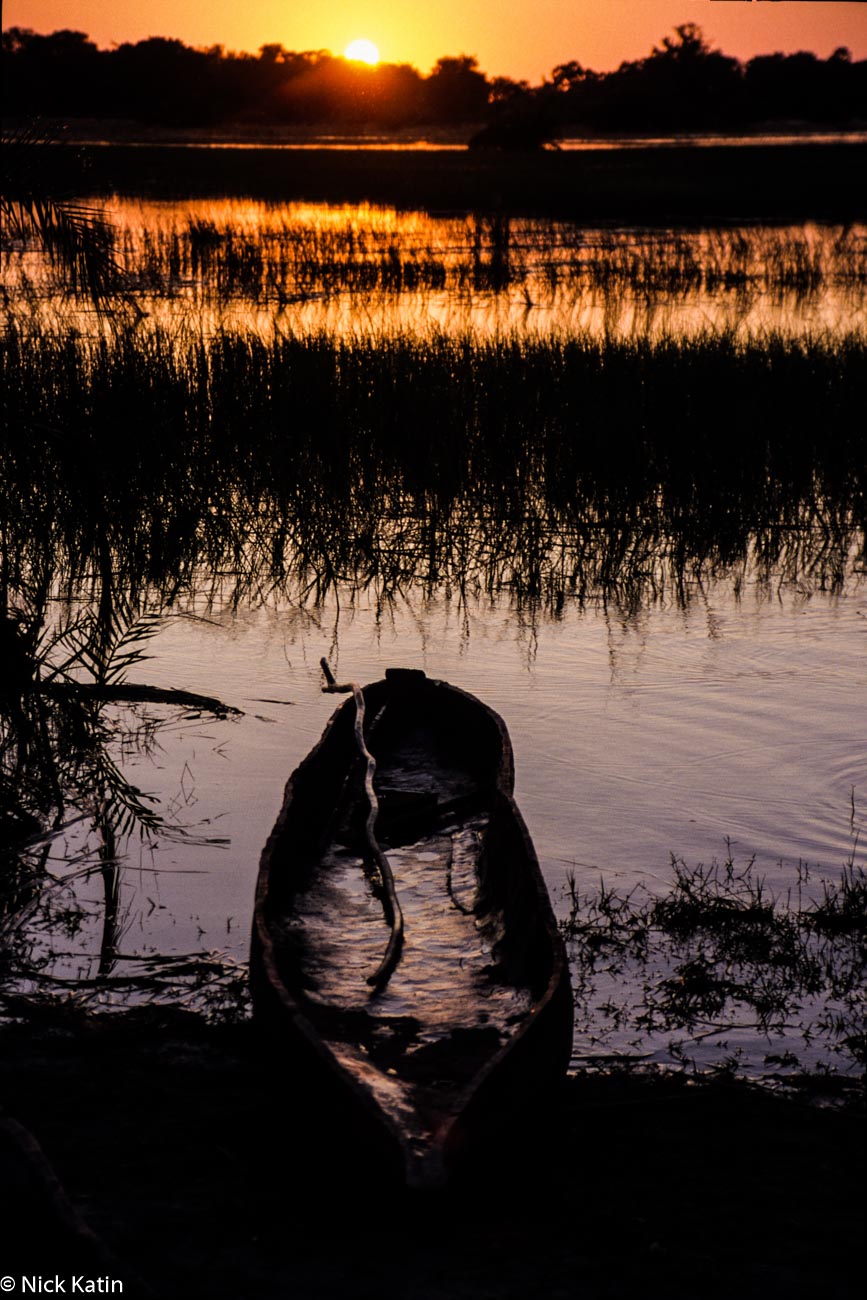
Happier times -Dug out canoes at the Okavango Delta In Botswana

















 Katin Images Travel Photography