
Tag: National Park
-
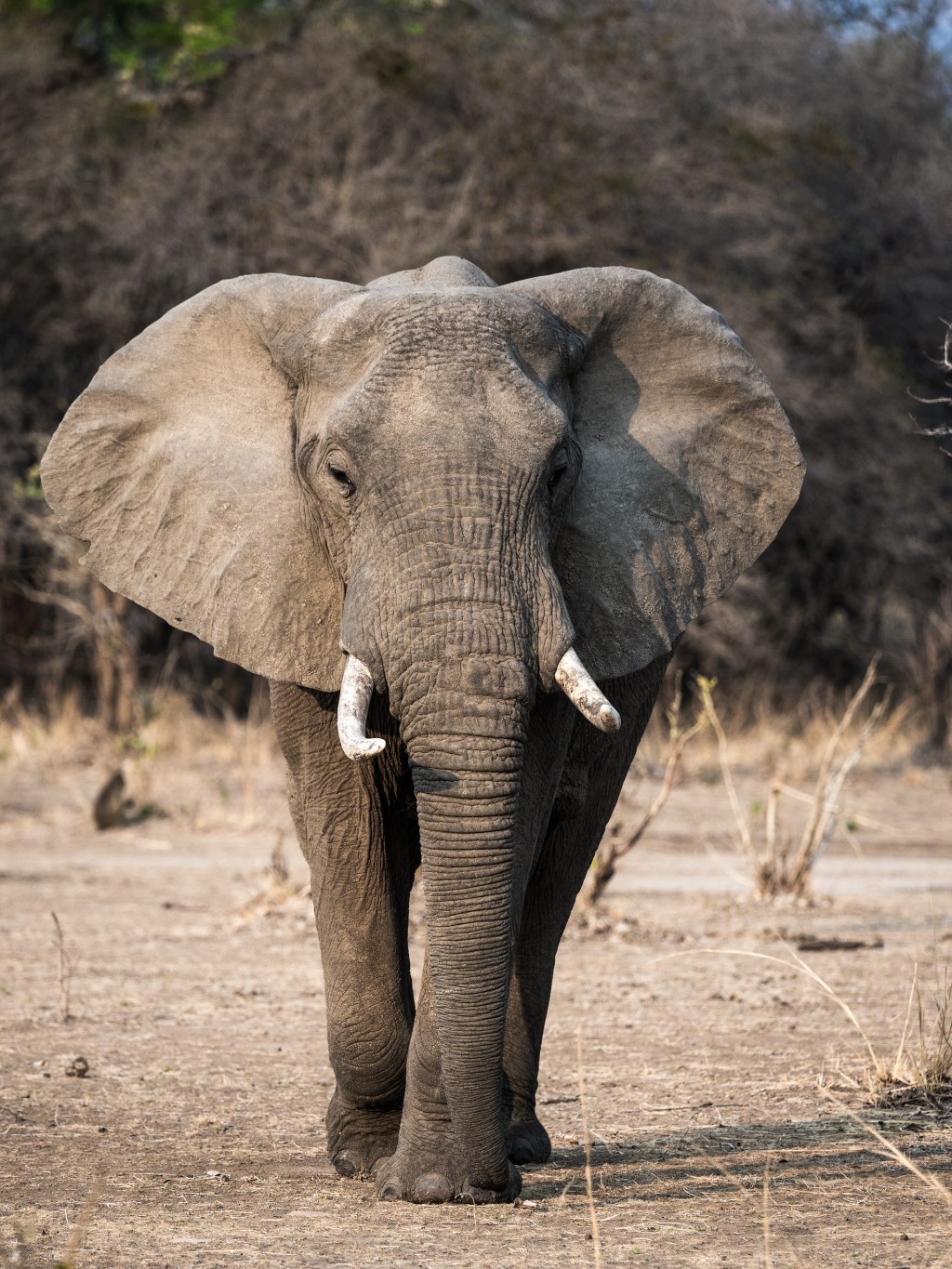
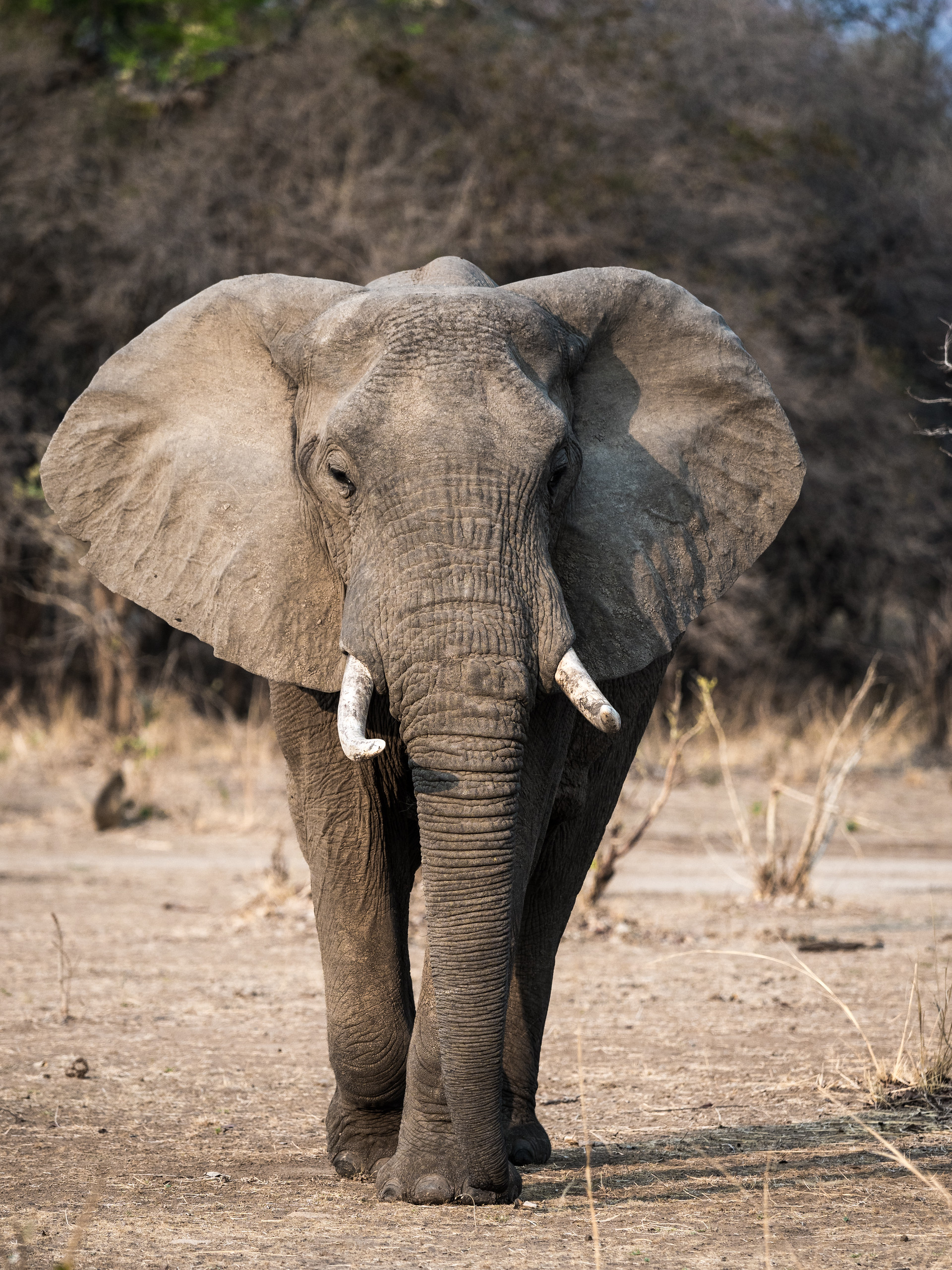
Standing African Elephant
African Elephant in South Luangwa NP Zambia. Click on the image for a larger view -
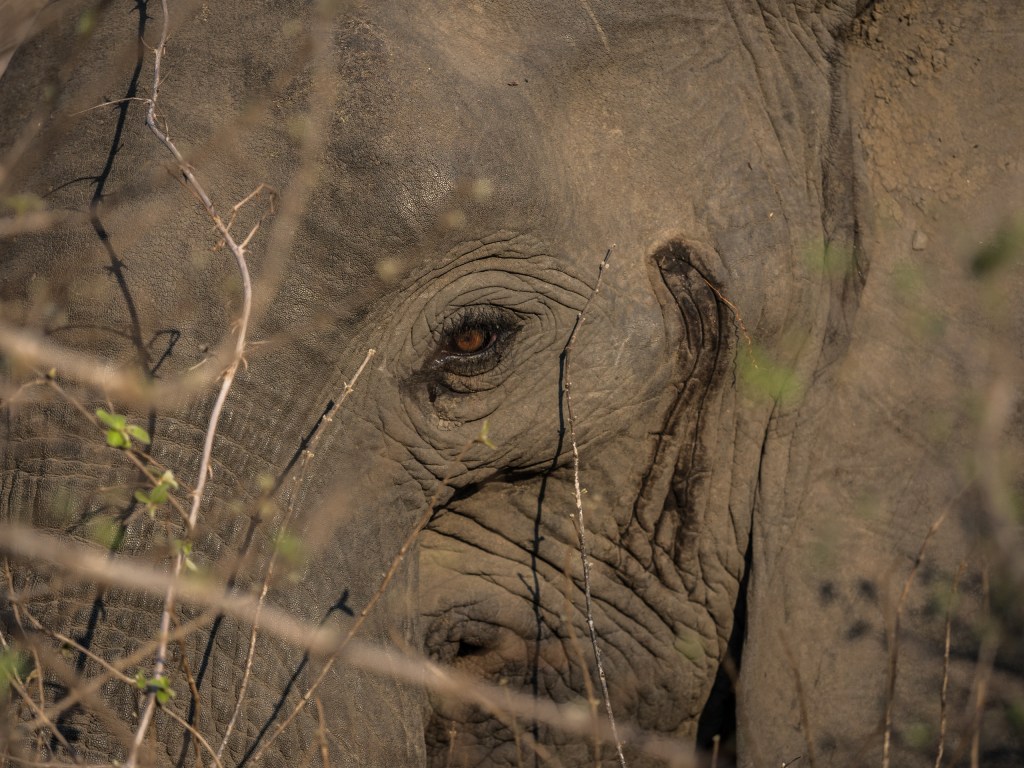
Another African Elephant
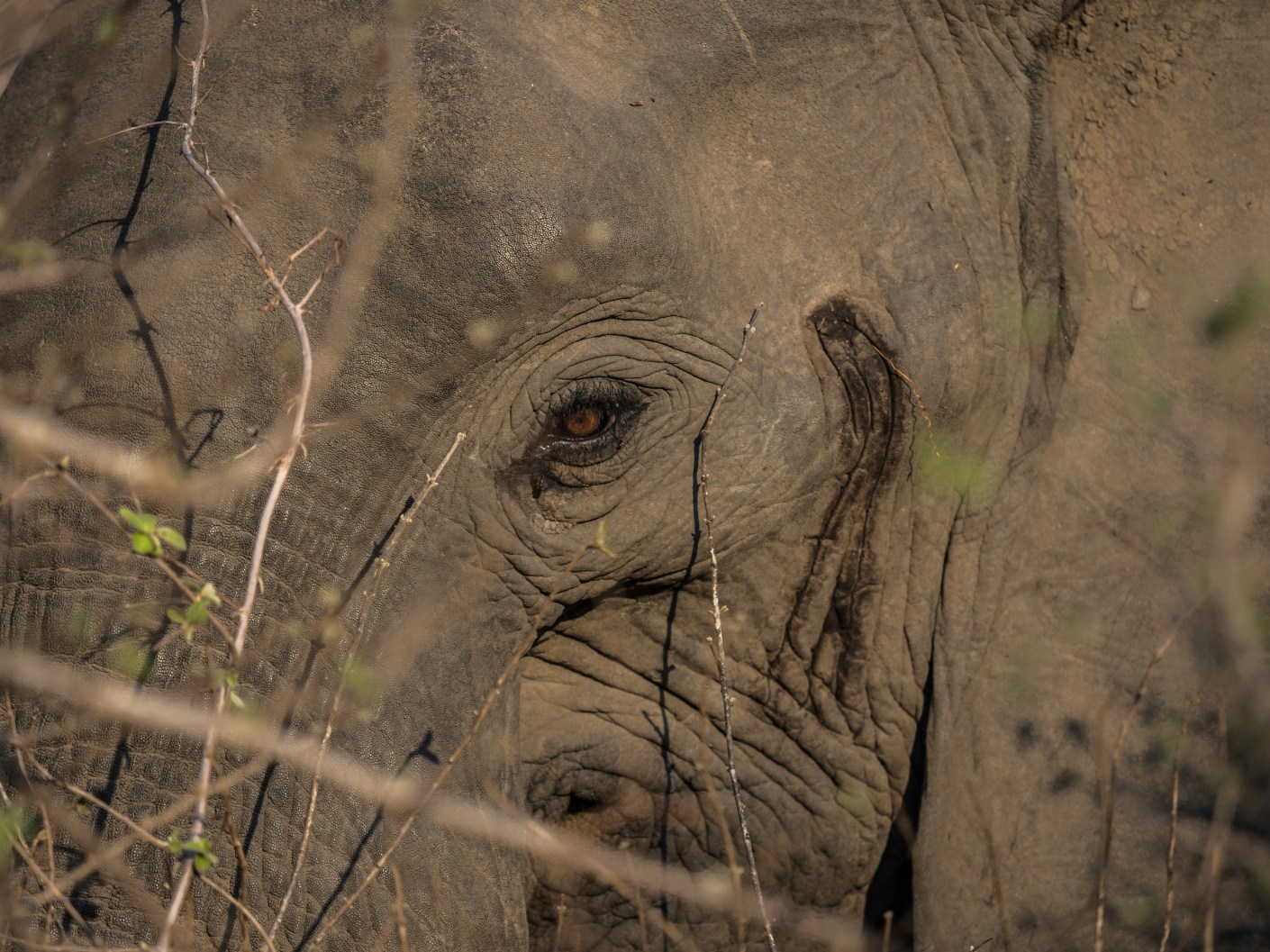
African Elephant in South Luangwa NP, Zambia. Click on the image for a larger view. Share this:
-
El Castillo the Pyramid, Chichen Itza, Mexico
Planning and Preparation for Travel Photos

El Castillo the pyramid, at Chichen Itza, Mexico. Click on the image to view a larger version and for other options Share this:
-
African shoestrings – Zimbabwe Day One Hundred Harare
Our last session of paddling was a mere 6 kilometres to our final destination, Nyamepi Camp in Mana Pools National Park. All in all we had paddled a total of 58 kilometres and by the time we had finished we all felt strong and confident enough to have gone on for another three days. When we were asked later on what had been the best thing we had seen and done whilst travelling this always comes to mind. It had been one of the greatest experiences of our lives!
We were back in Harare at around 10 pm and settled into our very ordinary (especially at the price of US$65 per person) room in the annex of the Bronte Hotel. This was meant to be our treat but the room was tired and old and really was no more comfortable than an average priced motel found in anywhere in the western world. What was nice about the Bronte was the hotel lobby and gardens and we made sure that we fully enjoyed having our breakfast, a drink in the afternoon and a coffee after dinner in the tropical colonial style gardens. Dinner was actually the best event of the day (we had spent a good few hours at the Tanzania embassy obtaining our visas). The Italian Restaurant Fat Mama’s in the Russell Hotel was obviously the local white and ex-pats hangout and I could see why. Great food, great atmosphere and great prices!
The next few days were taken up with transport and what I call the bus rides from hell! What follows next is reality but not necessarily typical of public transport in this part of the world. Of all the people we met during our travels we were the only ones who seemed to cop the experiences that I’m about to describe. It just seemed to happen to us!
Bus ride from hell number one started with a pick up at our hotel, early the next morning, by the bus company Ute to take us the Mbare bus station across town. On his way (in fact out of his way) the driver went via Possum lodge and picked up two other unsuspecting white passengers.
The bus station was chaotic and frightening. People came from everywhere grabbing at our bags and us. Someone grabbed one of our bags and with me still hanging onto it, led us onto the bus and then asked for our passports. What then confused us was another guy sitting further down the bus also asking for our passports and at the same time shouting “Watch your bags, watch your passports, watch everything!”
This guy was obviously in charge and we held onto the passports until we reached him. The other guy mysteriously disappeared and there was no doubt in my mind that had we relinquished our passports to him that would have been the last we would have seen of them.
Once we found our seats we could see the chaos and crap outside the bus. I say crap because the diesel fumes were noxious and those working in the area had paper filters fitted over their mouths and noses.
The seats we had were one row from the back and directly behind the other white couple who seemed to have handled the situation a with lot more cool than we had. Our bags were on the seat behind and we had three seats all to ourselves. This wasn’t going to be so bad we thought as eventually the bus got going. But that was as good as it got! Fifteen minutes later it stopped at the bus depot to pick up double the amount of passengers and probably triple the amount of luggage. There is a rule in Africa; don’t allow your bags to sit on the roof of any vehicle ’cause there’s a big chance you won’t see them again. Even the locals hang onto their bags. This time despite our protests we knew we had no choice; there was hardly enough room for all the passengers let alone the bags.
I got out of the bus and stood and watched as they loaded the bags on to roof. The only other white guy, Andy stood next to me. Andy was a Zimbabwean and his girl friend Jenny was from South Africa.
“So what happens now” I asked
“I dunno” he said
“You’re the local”
“Yeah but I’ve never traveled on one of these before”
The bus driver, conductor and other helpers finished covering the bags with a huge tarp and tying it all down and we were beckoned back onto the bus.
Oh well I thought not much we can do now as we got back onto the bus.
We had now lost our spare seat to a small quiet man who spent most of the time dozing. His head flopped about as if connected to his body by a rubber neck and often ended up on my shoulder. We westerners are funny like that we cringe at someone encroaching on our space. I had to keep shrugging him off and I swear that if I had some rope I would have tied his head to the back of the seat.
The bus actually set off at 8.15 surprisingly only one and half hours late. It didn’t take long for part of the tarp to come away and start flapping against the side of the bus and on our first refreshment stop it was retied well enough to last around fifteen minutes before it started flapping again.
After that stop we acquired a rather sinister looking uniformed man who checked a few passports and then disappeared and then reappeared half an hour later to collect a Z$70 ‘border fee’ from everyone. It was the last of our Z$ and I had the feeling that we were being ‘had’ especially when no receipt was forthcoming even when asked for. This fee was apparently to ease the pain going through the Mozambique border post.
At the Nyamapanda border our passports were collected by this bloke and he made a sort of half hearted inspection of our bags before giving our passports and presumably money to the Mozambique officials. We had to wait around for about an hour whilst all this ‘officialdom’ was dealt with.
This was the pits.
The Zimbabwe side was not too bad but the Mozambique post was an old dilapidated shack with a couple of holes in the ground masquerading as public toilets a few metres away. They stunk! The stench was almost visible from 10 metres away.The whole area was full of persistent moneychangers, curio sellers, drink sellers and sellers of anything else they could rip you off with. It was the first of only two times that we were glad to get back onto the bus.
Footnote:
Take control of your blog’s images now by signing up here to get “Eleven easy ways to improve your marketing photography”
A free guide on how to start improving your images to help you take control of your marketing.
That link again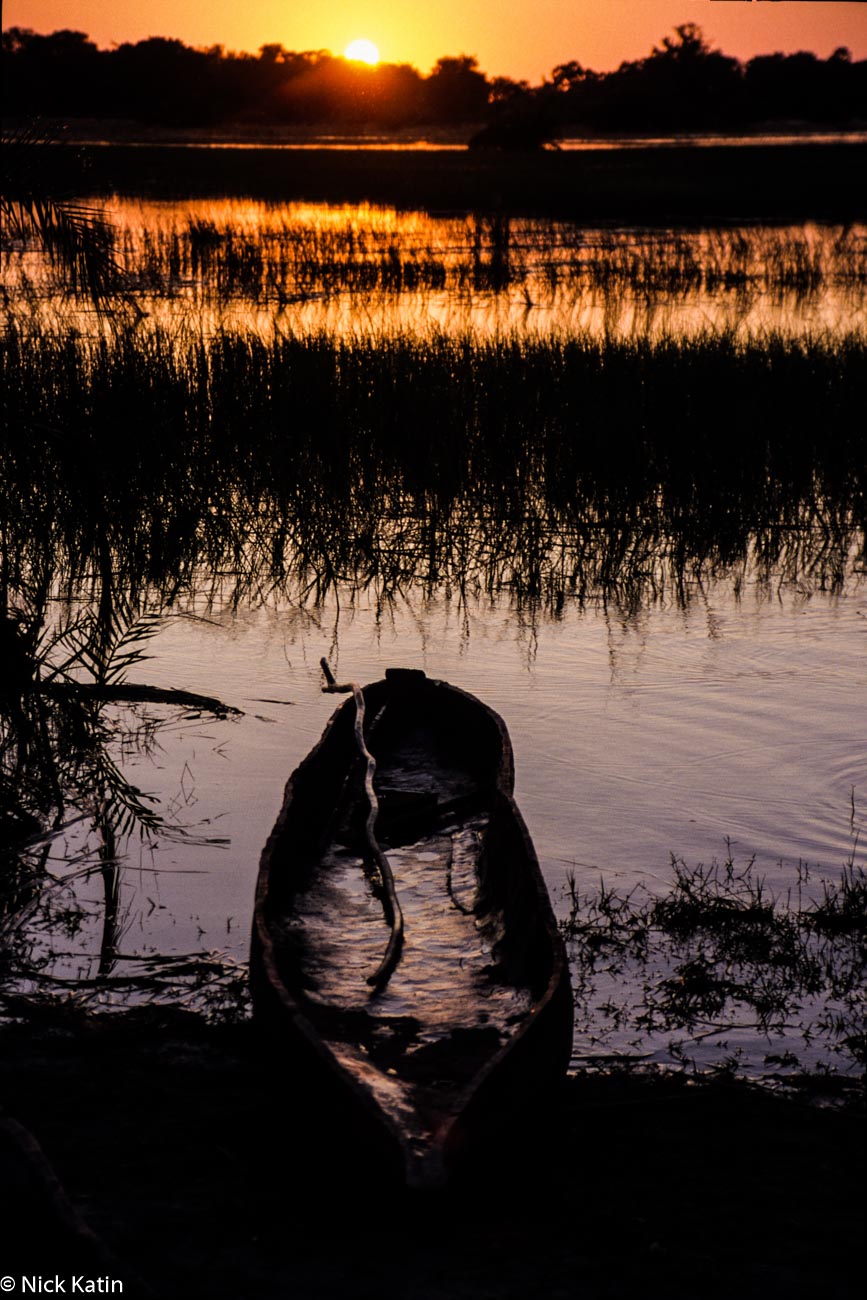
Happier times -Dug out canoes at the Okavango Delta In Botswana Share this:
-
African shoestrings – Zimbabwe Day Ninety-Seven Harare
Possum Lodge had such a quaint name for a backpackers hostel that we felt we had to stay there. We ended up in a small (and I mean small) wooden cabin in the back yard listening to something that is described as ‘Techno’. The main bar and recreation areas are outside and not that far away from our cabin consequently we could hear everything as if we were actually there at the bar and it was horrendous. I’m sorry but call me out of touch, old fashioned or just plain ignorant but I cannot for the life of me see how anyone can enjoy this type of sound (its not music).
Its mind numbing headache material that’s produced by people with little or no musical talent (if they have its well-hidden) on electronic devices and computers not on musical instruments. Fortunately for us it was eventually changed to rap (see I’m not that single-minded) and then even better turned off at 11.30 pm.We had a whole day in Harare to do a couple of chores. The next four days were to be spent canoeing the Zambezi and then we would return to Harare where we would catch a bus to Lilongwe the capital of Malawi, which meant having to cross the infamous Tete corridor in Mozambique. So chore number one was getting a transit pass from the Mozambique embassy, a three-day visa that allowed you just enough time to get to Malawi.
Just before getting in the long queue we thankfully discovered that we needed two passport photos instead of the one we had been led to believe was required. We found a stall around the corner that obviously does a roaring trade in passport photographs of tourists who like us have been caught short and then have to pay through the nose for them.
Back to the embassy and half way through the hour and half queue we discovered that unlike every other embassy this one only accepts local currency not US currency.
I left Sue in the queue and went off to find the nearest bank or ATM and after a sweaty search eventually found one about a couple of k’s away and got back just as Sue was about to be served by a grumpy and unhelpful official. Later that day we returned to queue for another half hour to pick up our passport that we had somewhat nervously left behind for them to stamp.Chore number two was visiting the Goliath safaris office in the slick looking Bronte Hotel. There we reluctantly paid for the canoe safari and made the final arrangements with the two very friendly and helpful girls that manned the office.
They also helped us organise a taxi to bring us from the backpackers to the Bronte in the early hours of the next morning to get picked up for the safari. The Bronte looked that good that we decided to treat ourselves to a bit of luxury and book a room for a couple of nights there when we got back. We just needed a rest from backpackers and camping to remind ourselves of what we were missing.Chore number three was booking the bus to Lilongwe at Possum Lodge.
Chore number four was buying a torch and a few supplies for the next few days and chore number five was trying unsuccessfully to find a guide book on Zanzibar.
The final chore was checking our e-mail at Possum Lodge which was so painfully slow that you wondered whether it would have been quicker to use the old fashioned lick the stamp method.
Somewhere in between all these chores we found a great little restaurant called the The House Café in a small shopping centre not far from the Bronte and bumped into John and Alice (our companions on the Audi camp trip through Botswana) for the second time in twenty four hours. The first was at Possum lodge the night before.
Footnote:
Take control of your blog’s images now by signing up here to get “Eleven easy ways to improve your marketing photography”
A free guide on how to start improving your images to help you take control of your marketing.
That link again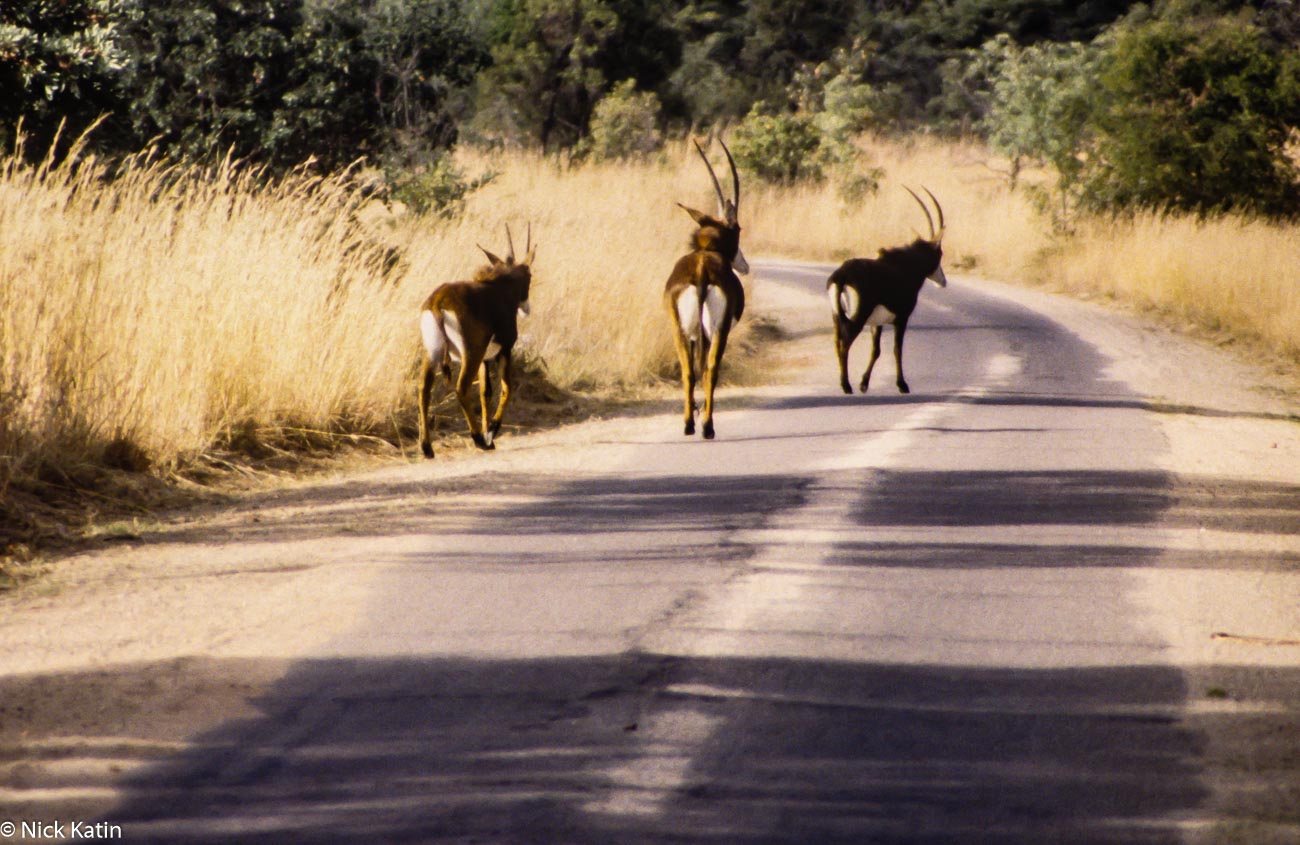
Sable walking on the park road in Matobo NP Zimbabwe Share this:
-
African shoestrings – Zimbabwe Day Ninety-Six Harare
We moved on the next day to an area called the Vumba Mountains around 250 kilometres to the north. This small area of high country also borders Mozambique and is much more green and lush than Chimanimani. In fact it’s reminiscent of the Dandenong ranges near Melbourne with its eucalypts, rhododendron and tree ferns. We booked into the Ndunda Lodge, an inexpensive thatched lodge nestled amongst the trees and surrounded by manicured lawns and bushy gardens that housed a multitude of bird life. The Botanical gardens are the big attraction in the Vumba. They overlook the Bvumba valley and the surrounding mountains and are expertly manicured outside of the thick rainforests. The forests themselves have lots of trails that allow closer contact with nature. As we strolled around we had the distinct feeling that we were being watched.
The Samango Monkey is as elusive as they are rare. They are unique to the Eastern Highlands and have this birdlike call and it was these little buggers that kept a watchful eye on our movements. No doubt it wasn’t just us that attracted our attention, we had a four-legged companion. Gypsy was the lodge sheepdog and for some reason known only to herself, wanted to lead us through the gardens stopping occasionally to look around as if to say “hurry up I haven’t got all day, you know”
But without doubt the best attraction in the area is Tony’s Coffee Shoppe. It serves nothing but coffee and cakes. I don’t know why but I expected Tony to be white. Maybe its because the concept is mainly a western rather than an African indulgence or maybe it’s the name Tony. Either way Tony and his waiters were dressed in bow ties and long white aprons and served each table as if it were in a fine dining restaurant. The cakes were absolutely terrible! Rich, gooey and laced with alcohol we pigged out and washed it down with coffee spiked with chocolate. Is that gross or what!
Another long drive took us to Harare, capital of Zimbabwe and the drop off point for the hire car that had somehow managed to get us there without further problems and despite all the extra weight we were carrying from our indulgence at Tony’s.
As far as historians can tell the Shona were the first inhabitants of this area and called it Ne-Harawa after one of their chiefs. It actually means “The One Who Does Not Sleep” which is quite an apt name for a now bustling metropolis. The poms arrived in the late nineteenth century and as is their way decided to settle here and construct a few buildings and called it Fort Salisbury again after one of their chiefs the British prime minister of the time Robert Cecil the Marquis of Salisbury. What Ho!
At independence in 1980 it was renamed Harare a sort of anglised variation on the original. Now of course it is like most other Southern Africa cities a mix of western and African culture. High rise office buildings, shopping centres and colonial buildings dominate the landscape with two large African markets offering the usual bargains and rip off’s.
We have a general aversion to most cities but Harare wasn’t so bad. Mind you we had been there before. At that time we had an overnight in the Sheraton courtesy of our travel agent. What I remember most about that stay was the power cut to the whole city fifteen minutes after we landed and at the same time as the bags were being wheeled out on a two large flat baggage trolleys (no automatic carousel here). With the aid of a fellow Aussie traveler’s torch we managed too locate our bags before anyone else decided to add to their collection of bags.
This time our arrival was by road and relatively uneventful until we dropped off the hire car. The attendant there had our credit card imprint and whilst we were there, phoned for authorisation only to be denied. We left it with him and went on to our accommodation. We rang him some time later and he had still no luck. In the end he sent his offsider to us with the existing credit card docket and a new one for a different card which I signed and all was well.
We didn’t think anything of it. In a place like Africa the lines of communication are often interrupted and mistakes are frequent.
However we did attempt to use the original card another time and came across the same problem. We were now down to our backup visa and we didn’t know why! It wasn’t until we reached England some 4 weeks later that we realised why. Two items appeared on our statement that we knew nothing about. The first was an additional transaction from the service station in Bulawayo that we had used on our way to Masvingo, the second was for A$1629.11 paid to the Amabhantu Safari Coy in Bulawayo. This last one was a worry we had never heard of the company; never bought anything for that amount and had not been anywhere in Bulawayo at the time of the transaction. Obviously these transactions had taken us over our credit limit and hence the authorisation rejections.
To the Commonwealth banks credit they acted quickly and cancelled both amounts and referred it to their fraud department and that was the last we heard of it.Footnote:
Take control of your blog’s images now by signing up here to get “Eleven easy ways to improve your marketing photography”
A guide on how to start improving your images to help you take control of your marketing.
That link again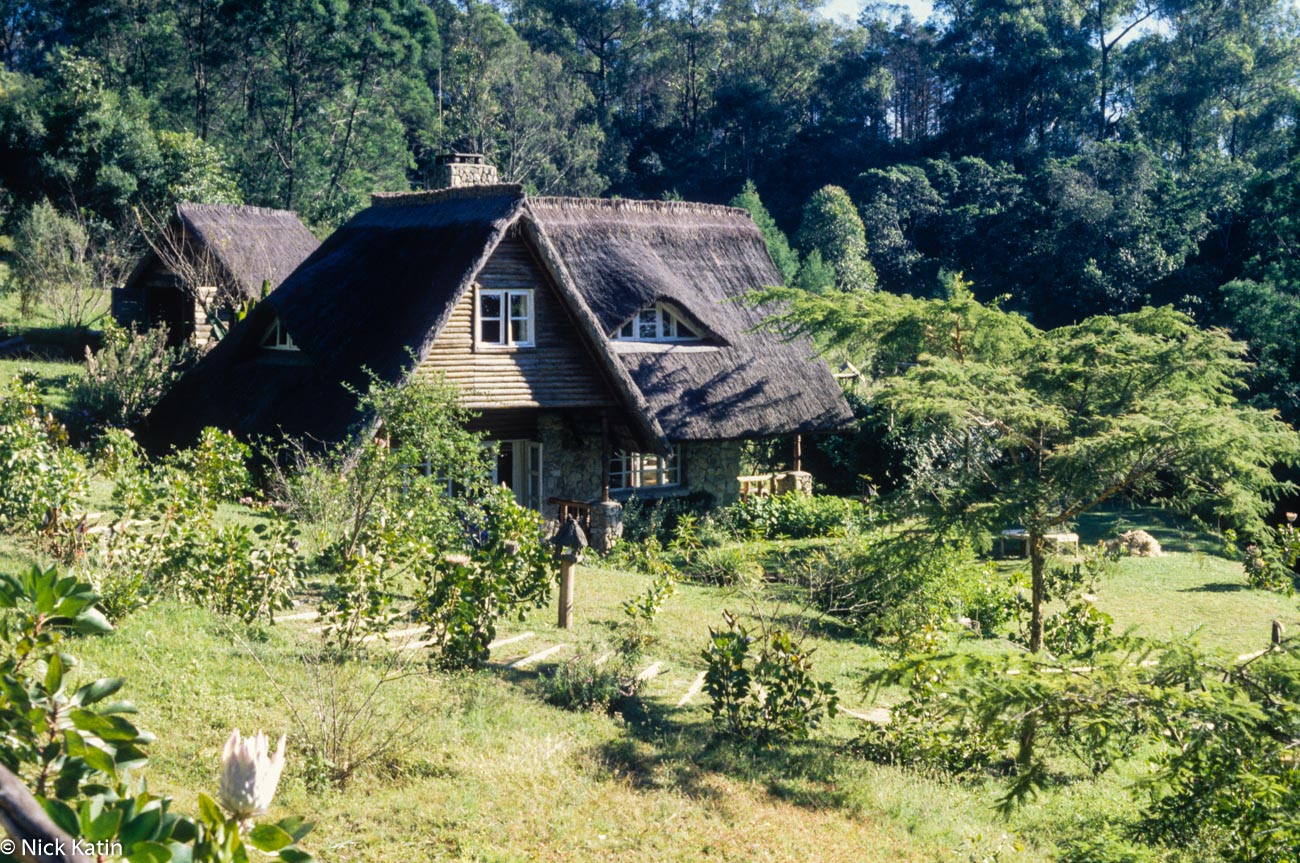
Tony’s coffee house in the Vumba in Zimbabwe Share this:
-
African shoestrings – Zimbabwe Day Ninety-One Hwange
Main camp is’ as the name suggests’ the centre of Hwange. It has most of the facilities, accommodation and the National Park office. It was here that we had to check in and try and organise our spare night.
The female official was not exactly helpful. “Yus we cun give you anuther lodge for dat night” After establishing that meant we had to change lodge I asked whether we could stay in the same lodge instead of changing. “Noo. Thaat is noot possible” There was no point in pursuing the issue further she wasn’t going to be any more helpful and that was that. She wouldn’t even give us the key to our first lodge until 2 pm. ‘Rules are rules’ in African government.
We consoled ourselves with a beer in the rather tired Waterbucks head and then attempted to find a picnic spot.
The road we took was so bad that we gave up after a while but then came face to face with a herd of elephants that came perilous close to the car. Hwange has one of the largest populations of elephants in the world at around 30,000 and most of them seem to be crossing the road right in front of us.
You know sometimes I can’t help myself, I just had to get a little bit closer to get that ‘great’ shot. It began to occur to me that we might be a little too close when one of the elephants turned and looked us rather menacingly and made to charge us. That was it, I was in reverse and began to move backwards so fast that the elephant was impressed enough to change his mind and went back to his herd. These guys are to be taken very seriously!
The lodge was quite comfortable if somewhat (like everything else) rundown. It was completely self contained with a bedroom, kitchen, bathroom and lounge. It even had a braai and a shady veranda. Better still we had a cleaner who came in to make the beds and do the dishes. But the best thing was that it was so cheap. US$4 per night! At that price rundown or not it was a bargain.
Hwange covers 14,600 square kilometres of hot, dry and dusty scrub interspersed with clumps of umbrella acacia trees and dotted with a few waterholes. It’s at these waterholes that most of the wildlife congregate, so most of us just drive from waterhole to waterhole looking for the most exciting wildlife we can find.
It’s sort of strange how we can become blasé so quickly about the wildlife that we do see. Everyone wants to see the big cats and rhinos.
At Nyamandhlovu (Nya to its visitors) Pan there is a platform where visitors get out of their car and sit for a while. Here we saw almost everything we had seen before wildebeest, kudu, giraffe and even elephants and still we wanted more.We visited this spot again the next day but had to return back to camp when I noticed a nail in one of the tyres. Repairing and replacing tyres was a big enough business in Hwange to justify having a permanent workshop there, so getting it fixed was not a problem.
In the afternoon we returned to Nya and after an hour or so we got back into the car, turned the key and got nothing but a click. Now picture the scene we’re in the middle of an African wildlife park where the only time you can get out of the car is to quickly climb onto the platform and we’ve broken down. My first reaction was to get out of the car to have lift the bonnet. My second reaction when Sue pointed out that I could be risking my life in doing this was panic and then I got out of the car and lifted the bonnet but with my attention very much on the landscape around me rather than the slumbering piece of metal below me.Fortunately there was an armed guard who we hadn’t seen nearby and he made his presence known by coming over and without a word just stood guard close to the car. The problem was the battery lead had come loose from the terminal connection and with my limited tool kit and my great versatility as a mechanic, I had it up and running in no time.
Back at main camp we washed down a ‘coldie’. Actually it wasn’t a beer but a gin and tonic. Gin was so cheap at US$1.00 for half a bottle that we thought we could save a little bit of money. Trouble was a gin and tonic without ice was like having a warm beer, it just wasn’t the same so that idea was abandoned after while and we went back to beer which at least we could have cold and was still only around US$0.80 each.
That afternoon we went on a guided walk to the nearby Sedina Pan and back. Douglas our guide had good sense of humour and led us through the bush to the pan where we sat and watched in the hide for a while. Whilst peering through slot in the hide Douglas pointed towards one end of the pan. “What dooo yoou see my friend?”
“What should I be seeing?’ I replied thinking that there was a lion or something equally as interesting.
“Oh I don’t know. My eyes are not sooo goood”
What was the point in having a guide whose “eyes are not so good”? We were relying on him to spot those animals that us mere tourists never spot!
The other two other couples on the walk were from France and USA. I’ve come to the conclusion that yanks who go overseas must all have training before they leave because they all seem act the same way. Once again they wore the obligatory designer label safari gear, were loud and this time had a video camera that they talked to. That was irritating. We would be watching quietly for some wildlife when behind me would come the murmur “heere we ‘re watching quietly for some anemals in Seedona Paan” I’m sure whoever watched that video was bored shitless! I shushed him and neither of them spoke to us again until the end of the walk.
Later we saw both couples having dinner together in the Waterbuck restaurant ignoring us as we walked past. Some people are just so petty!As it turned out Douglas didn’t actually need his eyes. On the way back we walked across a grassy plain full of zebra, wildebeest, jackals, baboon, giraffe and incredibly two kudu having a scrap within a couple of metres of us.
If you like this then hit “follow” on the side bar
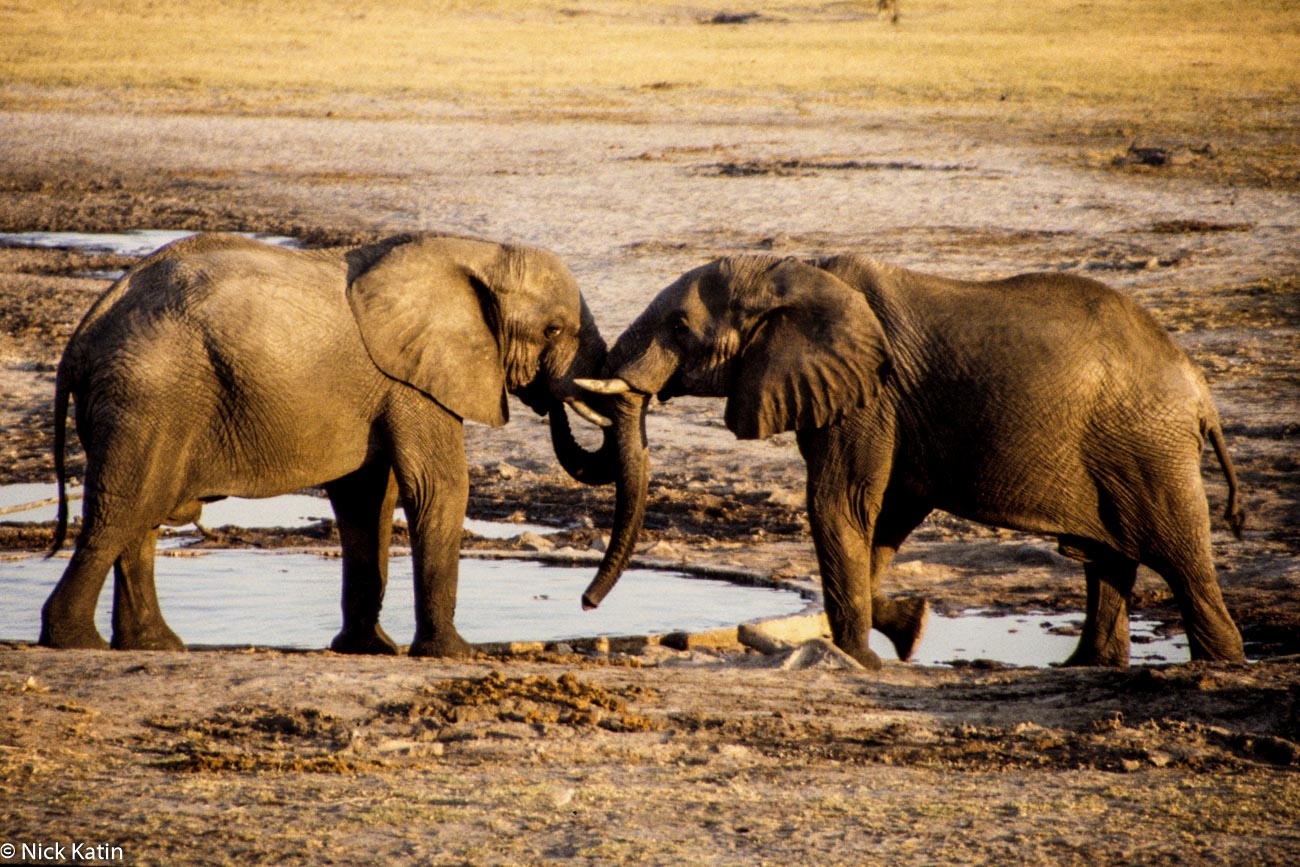
Two elephants mixing it up at a Hwange NP waterhole in Zimbabwe Share this:
-
African shoestrings – Zimbabwe Day Ninety Bulawayo
Cecil Rhodes is buried at a spot he called the “view of the world” but is also called Malindidzimu (dwelling place of the benevolent spirits). So taken was he with what could be seen at the top of this granite mountain that he nominated this place as his last resting place. It’s an eerie place, as the huge boulders that mark the spot appear to be positioned by Rhodes himself. He was a powerful man but somehow his power did not stretch that far.
On the way back to Bulawayo we stopped off at Tshabalala Wildlife Sanctuary. Admission is free if you paid to see Matobo on the same day.
Its an excellent park as there are no predators and we could get out of the car and just stroll around the many giraffes, impala and zebra to name just three. Our only fear was of being accidentally kicked by a giraffe due to their inability to see us beneath its torso and we being such a long distance away from their head. They are soooo tall!
The following day just the two of us (Mark and Nicky left for Harare via the overnight train the previous evening) visited the Khami ruins.
Zimbabwe has several ruins dotted around the southwest and central parts of the country, the origins of which are often shrouded in mystery and varying theories. I can honestly say that Khami ruins did not leave me with lasting memory of mystique or intrigue. It’s a rather neglected and run down and the trail guide written and published by The National Museums and Monuments of Zimbabwe was ten years old and ventured very little on the taxing subject of who built this mini city. Like the Lonely Planet, it suggests that the Torwa people inhabited it until ousted by the much more powerful Rozwi who attempted to destroy Khami and from the looks of it needn’t have bothered as recent neglect seems to have done a much better job. The most recent theory given to us by Burkes Louise was the possibility that Indians from the Asian sub-continent might have been the original builders and architects.
The ruins are divided into two different areas, the hill complex and the southern area. The most notable thing about the latter was its proximity to a really smelly reservoir. The hill complex on the other hand is not as spread out and had a concentration of stone walls and terracing surrounding it on quite a prominent mount. On the hill itself are tiers of huts or at least the remains of them. This apparently was the home of Mambo king of the Torwa; where he lived with his entourage. I guess it was interesting but not enough to keep us there too long.
Across town in the opposite direction and around 24 kilometres from Bulawayo is Chipangali Animal Orphanage. This centre for injured, sick and ‘homeless’ animals was on our list of must see’s. It looks more like a zoo than a wildlife sanctuary. There were lots of cages and enclosures housing the various animals like lions, leopards, rhino, hyenas, and even crocs and snakes to name a few. Lots of these animals are perfectly fit but could not survive if returned to the wild. For instance, once a lion has had close contact with humans it loses its fear of man and becomes a risk to both man and itself. Chipangali also has breeding programs for cheetahs and rhino, so there were large enclosures for both of these animals. What always amazes me is how these places keep going. Obviously under resourced and running out of space somehow they seem to just soldier on and make the best of a bad thing. If I had one criticism it was there was very little info on why individual animals were there. Something like: “Petra (the lioness) was shot by a poacher and rescued by Tarzan, who traveled for three days carrying her to safety. She now has made a full recovery but has developed this habit for pounding her chest with her front paws and hence cannot be released back into the wild.”
We goofed! As I said earlier we passed Hwange National Park by train to get to Bulawayo just because we wanted to travel in a train and we were under the delusion that hire cars were cheaper in Bulawayo than Vic Falls. As we now know, the train ride was a disappointment and hire cars cost pretty much the same. So now we had to back track 330 kilometres each way. It’s a long drive too, three and half hours to be exact to arrive at Main camp.
If you like this then hit “follow” on the side bar
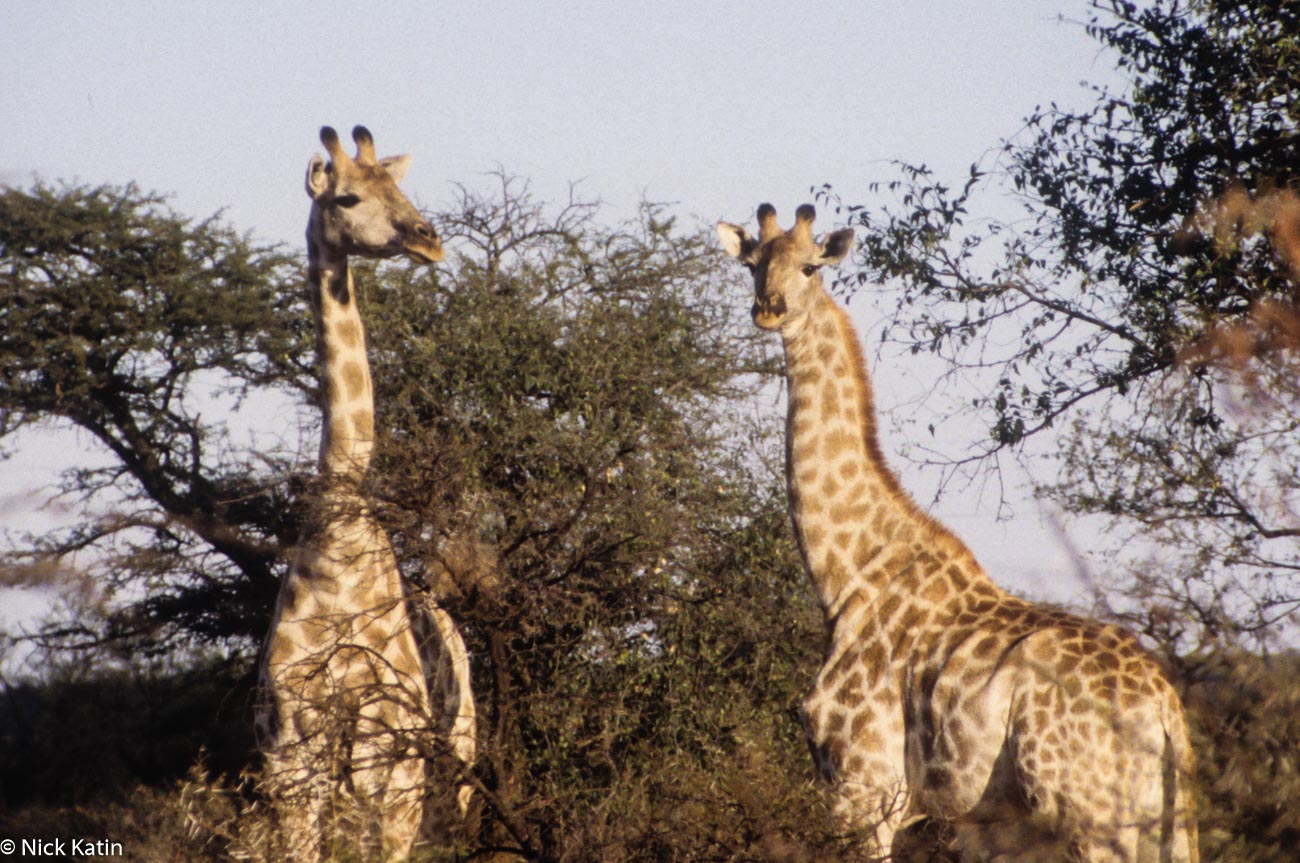
Giraffe at the “on foot” Tshabalala NP in Zimbabwe Share this:
-
African shoestrings – Zimbabwe Day Eighty Nine Bulawayo
We had some neighbours in a tent at Burkes, Mark and Nicky. Mark was Irish and Nicky was Welsh a powerful combination. As we got to know each other Sue and I started to discuss our home, Perth and I noticed that both of them had gone into a sort of trance and their eyes began to moisten. Were they on drugs I wondered or maybe mentally ill. No, nothing so sinister. Apparently they had met each other in Perth and had such a great time during their six month stay there that us prattling on about how good it was just brought tears to their eyes.
Perth was one of the many places that they had been, South America, the Himalayas and India to name but three, all of which we had targeted sometime in the future. These guys were getting around on the smell of old guidebook. Their budget made ours look like the national account of a small country. Somehow they managed to spend only US$1000 per month between the two of them. We were by then exceeding our original budget of A$100.00 (US$60.00) a day by the handsome tune of 25% almost double the amount Mark and Nicky were spending and we thought we were doing well! The fact is that they actually missed out on a few things simply because they didn’t want to spend the money. They wouldn’t for example hire a car, so unless an attraction was accessible by public transport, which a lot of sights in Southern Africa are not, or a budget tour then they missed out. Similarly, if the entry fee was high then they would not go or only one would go. They also carried their own tent and managed to camp pretty much everywhere and like us eat out of supermarkets. Personally I think that we are often in these places possibly only once in our lives and to miss experiencing or seeing something simply because of mere money is missing the point. But that’s their decision. They did contribute to the cost of our hire car for a day so that they could come with us to see Matobo National Park.
Matobo is around 34 kilometres south of Bulawayo and is one of Zimbabwe’s great Parks. Matobo means ‘bald heads’ and was so named by Mzilikazi, king of the Matabele who with his people arrived in the early nineteenth century, fleeing the ruthless Zulu king Shaka. Mzilikazi was referring to the impressive granite peaks that dominate the majority of the park. Some of these peaks are sacred to the African people and supposedly even just to point to them brings bad luck.
Of course like so many places in Southern Africa the San people were there first. There are hundreds of caves dotted all around the park that house ancient rock paintings.
The white man also has left some history. Cecil Rhodes is buried in a grave hewn out of rock at the summit of one of the granite peaks. Baden-Powell was inspired during a visit to this area to form the Boy Scout movement and its national training grounds are located in Matobo.
But we were there to see animals. The largest part of Matobo is taken up by the Whovi Game Park and it’s here that mainly white and some black rhino have been reintroduced and are thriving thanks mainly to armed guards that deter poachers. Of course there are lots of other game including the elusive leopard and the ever present variations of antelope. In fact, it’s meant to have the largest concentration of leopards and also black eagles in the world. Needless to say we didn’t see either. What we did see were a family of white rhino (mum, dad and two little ones) lumbering along the road side by side just in front of us as we turned a bend and applied the brakes to bring us to a jarring halt. Not that we hadn’t been jarred through to the bones up until now; the road was a typically bitumen or dust between the potholes track that we now almost routinely encounter.
Rhino are such ugly and at the same time beautiful beasts. They move with an ease that contradicts their size but look patently dumb! Of course the latter may because they can’t see, they rely on sound and smell to keep them on their guard against any unfriendlys. It is possible to tell the difference between a black and a white rhino. The white rhino has a wide mouth, somehow over the years the word ‘wide’ has been became white, and stands around 2 metres tall, weighs around 1.5 tonnes and is quite docile. The black rhino has a vertical mouth with a triangular shaped lip, stands around 1.5 metres tall, weighs around 1 tonne and is the most aggressive of the two. A Kruger ranger once told us that a white rhino is a grazer and the black is a browser. Why I remember this has nothing to do with the subject but more to do with the way that this Afrikaans speaking guy pronounced his ‘R’s. They seemed to roll around in his mouth, dig down into his throat come back up through his nose, back into his mouth and sound like a cross between a cat’s purr and a lion’s roar. But I digress. For those of you who haven’t worked it out yet a grazer chomps at the vegetation at ground or low bush level and browser, not wanting to hurt their back, intelligently chomps at the vegetation at head height, i.e. larger bushes and small trees.
Despite these white rhino being quite docile we decided to stay a safe distance away. It did occur to me whilst slowly following them down the road that had they turned around and decided to charge, I would not have the luxury of being able to do a three point turn. Reversing at high speed along this minefield of a road was probably more dangerous than standing our ground. Of course the rhino weren’t the least bit interested in us they were quite happy going for a family walk along the road until I think even they got fed up with the potholes and disappeared into the thick bush. We saw more rhino towards the end of the day but not before seeing hippos and crocs hanging out at the Mpopoma dam and a few giraffes from the distance. In this area of the park there are two viewing platforms and picnic spot where you can get out of the car. The view from one of these platforms is as typical of the African Savannah as you will find. A grassy plain dotted with clumps of umbrella acacia trees, single umbrella acacia trees stood away from these groups as if exiled, spread before us. In the distance we could see a couple of giraffes that were casually wondering across towards their lunch whilst we ate ours and watched Africa play out its life.
If you like this then hit “follow” on the side bar
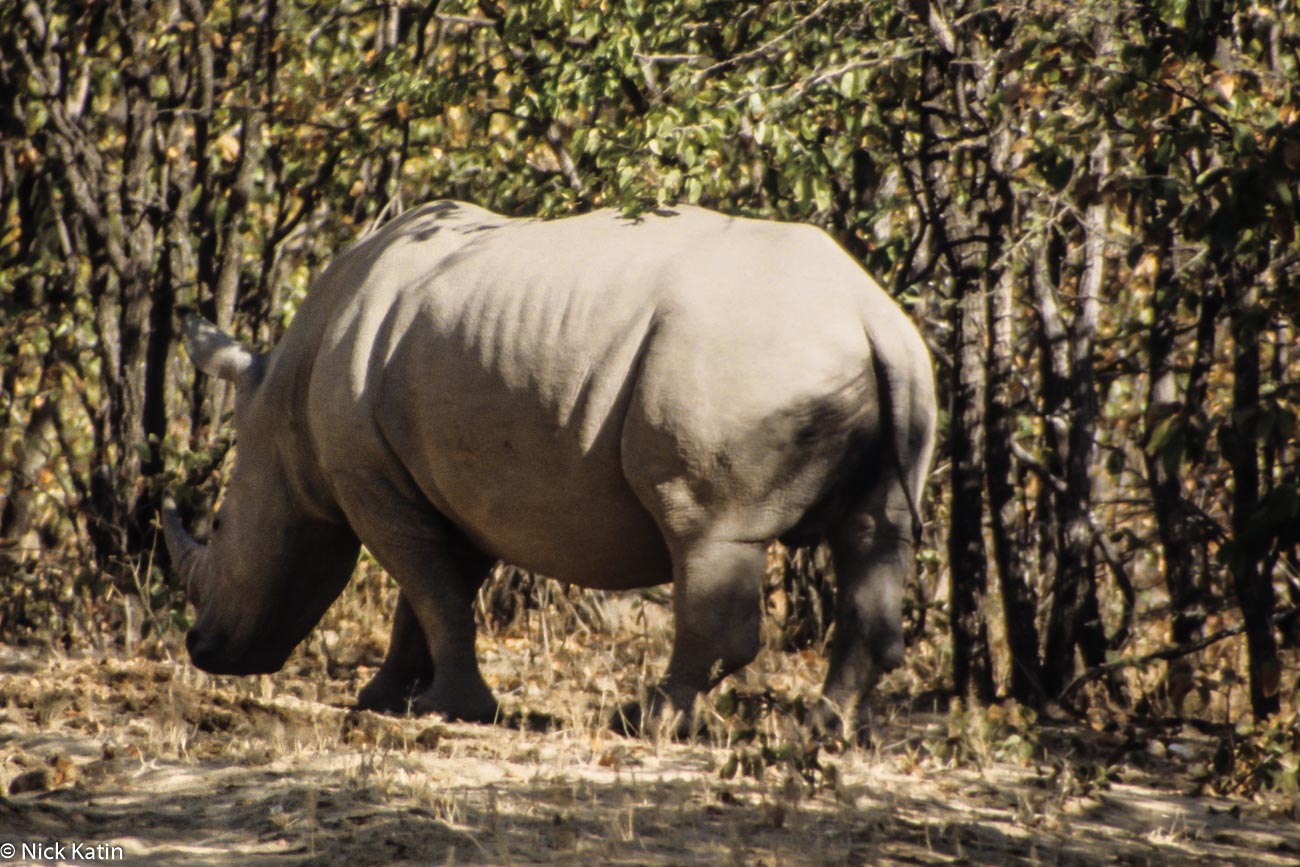
Rhino in Matobo NP Zimbabwe Share this:
-
African shoestrings – Zambia Day Eighty Three Livingstone
We were now into the final day of the Audi tour and the final trip was from Kasane to Livingstone. Somehow five of us, plus Chris and our bags, managed to squeeze into an old beaten up left hand drive Nissan Sunny and drive to Kazungula where we crossed the Zambezi by ferry into Zambia. After the usual slow border control process we were met fortunately by one of Chris’s offsiders in a minibus that was able to take our bags. We mere humans continued on in the luxury Nissan along 60 kilometres of what we presumed was once upon a time a flat bitumen road surface that had now been reduced to an ‘African’ track of potholes punctuated by the odd short stretch of almost smooth bitumen.
Our final destination was the quaintly and considering Chris was one of the owners, appropriately named Fawlty Towers backpackers in Livingstone. Actually it’s one of the better backpackers we had seen so far. It was like a mini resort without the poolside cocktail bar. A big private courtyard with a swimming pool was at the centre with most of the accommodation and functional rooms fronting it. A little of oasis of western culture in the heart of a very African town, somehow I felt that it had been designed to keep the residents away from the inquisitive locals.
Actually Livingstone itself was quite a nice place. Its located 11 kilometres from Victoria falls itself as distinct from the Victoria Falls the town. Four years previous we had stayed a few days at Victoria Falls and had hired a couple of bikes so that we could ride across the border and see the Zambian side of the falls and visit Livingstone. We did the former but we were put off the idea of the latter by the bike hire guys. “You must make sure your wife is always in front of you and close to you otherwise those Zambians will kidnap her. Livingstone is a bad place”. Needless to say four years on, it was with some trepidation that we actually walked into the main part of town.
We needn’t have worried! Whilst the Lonely Planet does actually mention incidents of the occasional walker being mugged between the falls and the town, there was certainly no indication of a wild town that was eyeing up every white female with a view of selling her at the local slave market. Mind you the Lonely Planet did mention the fact that due to the muggings bike hire had become popular which changed little as there were now reports of the odd cyclists being mugged. So even though the Zimbabweans probably laid it on thick there is apparently some truth to their warnings.
Livingstone was until the 1970’s the centre for the falls but the Zimbabwean town of Victoria Falls started to become much more popular as Zambia itself struggled with its own political and economic problems. Nowadays its making a comeback for those wishing to escape the frenzied tourist activity and more recently the unsettling political and economic problems of its Zimbabwe neighbour.
Mind you from a tourism prospective there isn’t a great deal to see in Livingstone itself so we contented ourselves with having lunch and a few beers with John & Alison at the rather colonial Pig’s head pub. We had a developed a sort of travelers friendship with John and Alison, probably because they were a couple like us and also because they too were heading in the same direction. John, as an Englishmen, was certainly pretty patriotic and for me that was honourable but more importantly it offered a good opportunity to bait him about his country’s pathetic imitation of a cricket team.
The food at the Pigs head was nothing special but was almost five star in comparison to the Funky Monkey restaurant where our group had our farewell dinner that night. It was awful!
If you like this then hit “follow” on the side bar
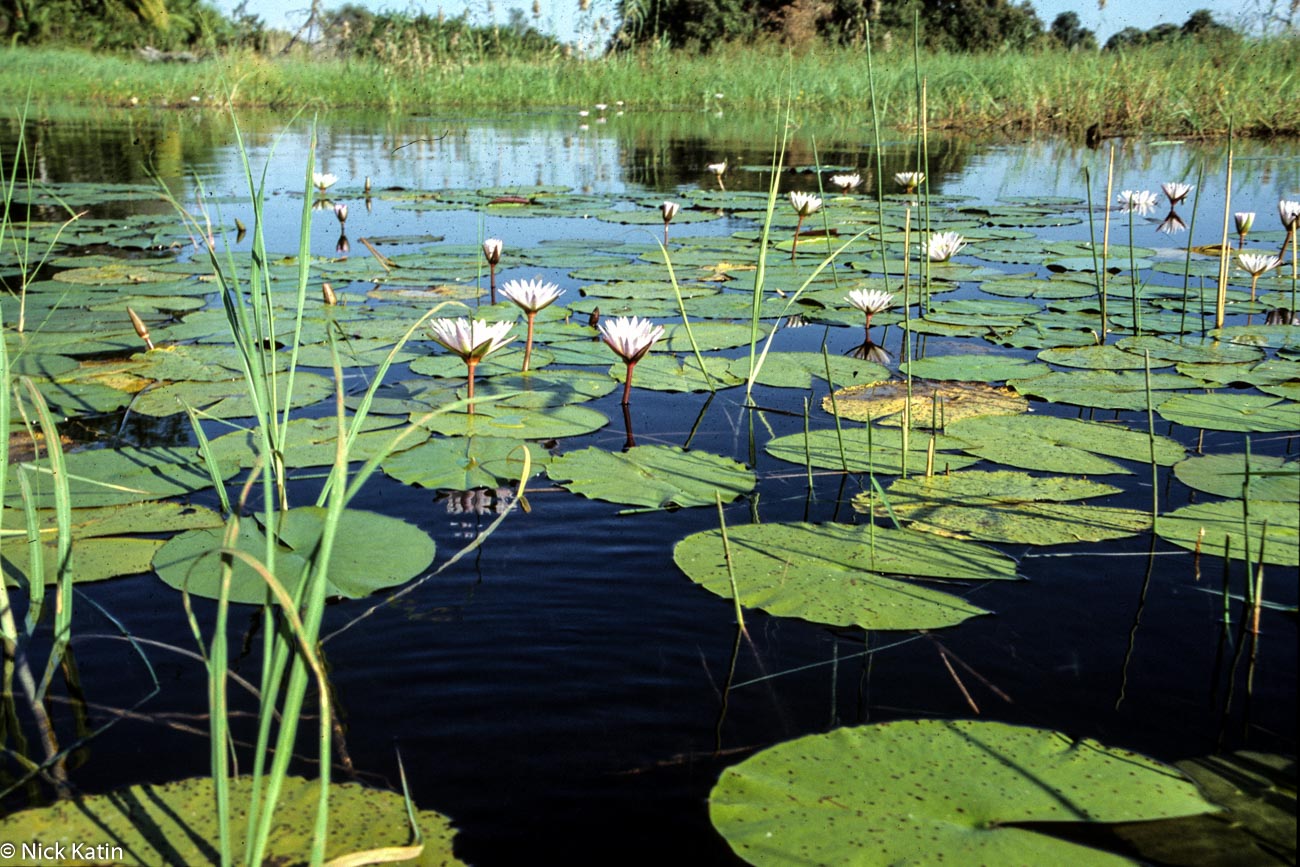
Lilies at on the Okavango Delta In Botswana Share this:
-
African shoestrings – Botswana Day Eighty Two Chobe
Audi had arranged a local tour guide to take us on a game drive into Chobe that afternoon and then a game cruise along the Chobe River the next morning. Our new tour guide didn’t show for a while and in his absence, led by yours truly, we organised with the agents at Tebe camp, where we were staying, to swap the two tours around. After all, watching the sun go down on the water from a boat surrounded by animals sounded much more romantic than being stuck in a vehicle. Not too mention that early morning is a better time to go for a game drive.
Andre had now left us and returned back to Ngepi. He had done all right for his first time; nothing had been too much trouble and had often bent over backwards to make us comfortable. Humble that he was he was also a nice guy with it. The poor bloke was also just a little bit emotional when he left.
Our new guide was a different animal!
Chris was an Ethiopian brought up in Sweden (we actually thought that he was bullshitting when he told us that but we found out much later that it was true). With his long platted Bob Marley look alike hair and a fairly relaxed and casual attitude to his job; he was also an ‘expert’. Now I know he’s meant to be an expert certainly as a tour guide but I mean he knew it all and there was no doubting that the most important thing in his life was whatever worked for Chris. Which is why he was not too happy that we had rearranged the schedule. But we held fast despite his efforts to convince us otherwise.
The cruise was pretty bloody good!
From the boat we could see elephants and buffalo on the shore and hippos in the water, watching us with those beady eyes that live just above the surface, not to mention the abundant bird life.
The most impressive sight, though, was the sunset that seemed to happen just at the river edge. At home, in Perth, we get some pretty awesome sunsets over the ocean so when I say the Chobe sunset was pretty bloody good; I mean it ‘was’ pretty bloody good. I shot off a few shots after Sue had made the suggestion. One of these shots sits proudly on our dining room wall and when anyone remarks on it, Sue turns to me and says with great satisfaction “and you never wanted to take it!”
Driving through Chobe early the next morning was a totally different affair. Safari trucks are open in the back and at 5.45 am it was bloody freezing. Obviously the animals thought so as well because none of them were anywhere to be seen. We drove around for around an hour along dusty sandy tracks with Chris barking instructions to the driver up front and scratching his head as to why we hadn’t seen anything yet. The night before despite our rearrangement of the final leg of the tour, he had promised us an abundance of wildlife and so far his promise seemed to be pretty empty. Two lionesses saved his embarrassment. They were chasing a squealing warthog 100 metres away across a water channel. We stopped and watched as the two got closer to their prey that was running at great speed first one way then another. I turned to look behind us and to my amazement saw another interested onlooker, another lioness, a mere five metres away peering around our vehicle in effort to see what her mates were up to. We had unknowingly parked right in front of her!
After that the wildlife just kept coming! It was as if someone had sounded the wake up call because everywhere we went we saw something. A herd of buffalo chewing and nonchalantly looking at us quizzically, two hippos wondering around on the river bank, kudu and impala springing away as we neared.
Back to the water channel and we just caught sight of two of the lionesses walking away into the bush. We drove on back towards to the park gates and our campsite and then suddenly around the next bend, as surprised as us, were all three lionesses walking across the track and within spitting distance of the truck.
More buffalo and a crocodile were spotted near the waters edge and then reluctantly our time was up.
Chris was crowing. “See, I said we would see lots this morning” he said in his sort of British, Swedish and African accent. My remainder that it was actually our idea to do this early morning game drive was totally ignored as he continued to crow all the way back to camp.
If you like this then hit “follow” on the side bar
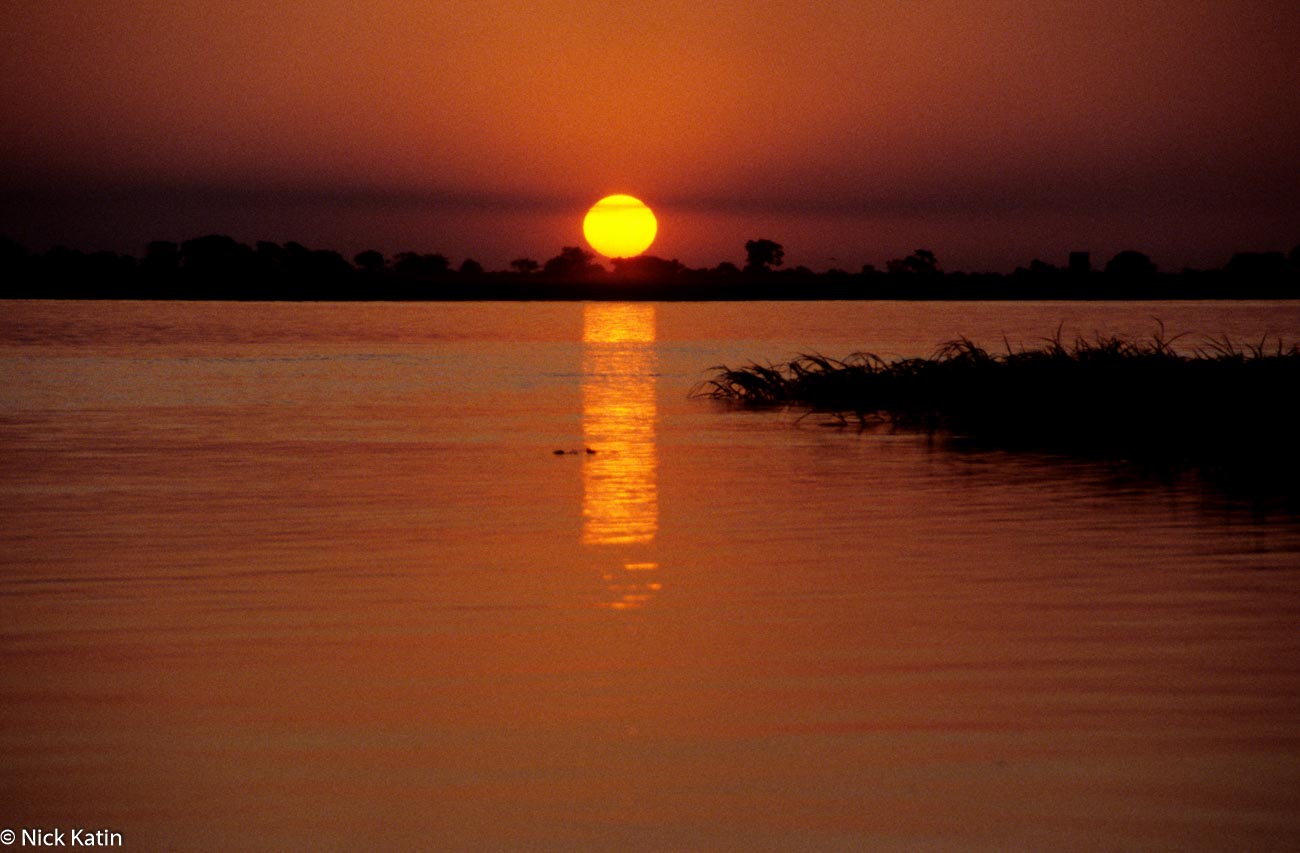
Sunset on the Chove River in Chobe National Park, Botswana Share this:
-
African shoestrings – Botswana Day Eighty One Chobe
Eventually our time was up and we had to leave this pleasant existence. We were canoed back to the village of Jao in the early hours. This time we had the opportunity to wander around this traditional village, although I think the main aim was to get us to buy hand made baskets, not wander off on a photographic shoot that yours truly did. Actually the small quantity of baskets that were for sale had enormous price tags, so business was pretty poor for them that day. What was more interesting (baskets are way down my shopping list) was the way these people lived. Jao consisted of a collection of mostly reed or bamboo huts with thatched roofs but some of them were mud and others were constructed using tin cans as bricks held together by mud or dung. Most of these homes had an enclosed yard that we sneaked a look at, used for cooking and storing chickens and donkeys. One woman took a sharp looking garden hoe to her donkey that was getting to close to comfort to her toddler. This poor animal had scars from previous encounters and probably lived a life of misery, if a donkey can have such a thing.
The children were fascinated by these white camera-carrying tourists and posed quite happily in fact almost insistently for our cameras. Some of them had runny noses and sticky eyes which made us think their health was still a long way from being as good as children of the west.
We got back to Ngepi camp, after having to cram into the one motor boat with all our bags, camping gear and supplies when only one boat turned up, in the late afternoon.
That night we had a ‘treat’; the dancers of the Mbuknshu people put on a show of traditional dancing. It was boring and repetitive and was far less entertaining than watching the antics of an overlander group who had arrived at the same time as us. It’s sort of like watching Neighbours (in fact most of them were Aussies and Kiwis). There were usual ructions created by clicks, one night stands and show offs. One guy was so ‘cool’ that he sat on the edge of the table, dressed immaculately to look so casual, drinking neat bourbon straight from the bottle. Yuk!
We had our own ruction later that night as somehow I managed to spill kero from the lantern all over the floor of the tent. Within seconds we were out of that tent with our bags and then spent the next hour erecting another in the dark. To say that Sue was not amused is probably a bit of an understatement although she has dined out on it a few billion tedious times since!
The next day we were headed through the infamous Caprivi Strip. Infamous because over the years the five tribes that make up the inhabitants, the Caprivians, of this narrow 500 kilometre long extension of Namibia, have from time to time created unrest in their demands for autonomy. This particular time there a lull in the friction and minus Klaus, Ingrid and Anna we drove the seven hour length of the strip without any incident apart from the bone jarring badly maintained roads.
Our destination was Kasane in Northeastern Botswana. You might well be asking why didn’t we go straight from the delta to Kasane instead of back via Namibia. The easiest answer is I don’t know and don’t care. These guys obviously knew what they were doing and I for one was quite happy to follow their plan. However a quick look at a map of Botswana and Namibia explains all. Whist it’s a relatively short distance as the crow flies from the delta to Kasane it’s a bloody long way by road. A circumnavigation of central Botswana is required to get there by road.
Kasane actually sits close to the borders of four different countries. Botswana, Namibia, Zambia and Zimbabwe and more importantly is the gateway to Chobe National Park, one of the gems of African Game parks. This was going to be one of the highlights of our time in Africa. We had read a fair bit about Chobe and knew that it has probably the most varied wildlife in Africa on a setting that is as varied and scenic as it inaccessible. It was the inaccessible bit that convinced us to see it with a tour operator. Heavy-duty admission fee (US25.00 per person per day), heavy duty 4WD hire meant heavy-duty money.
If you like this then hit “follow” on the side bar
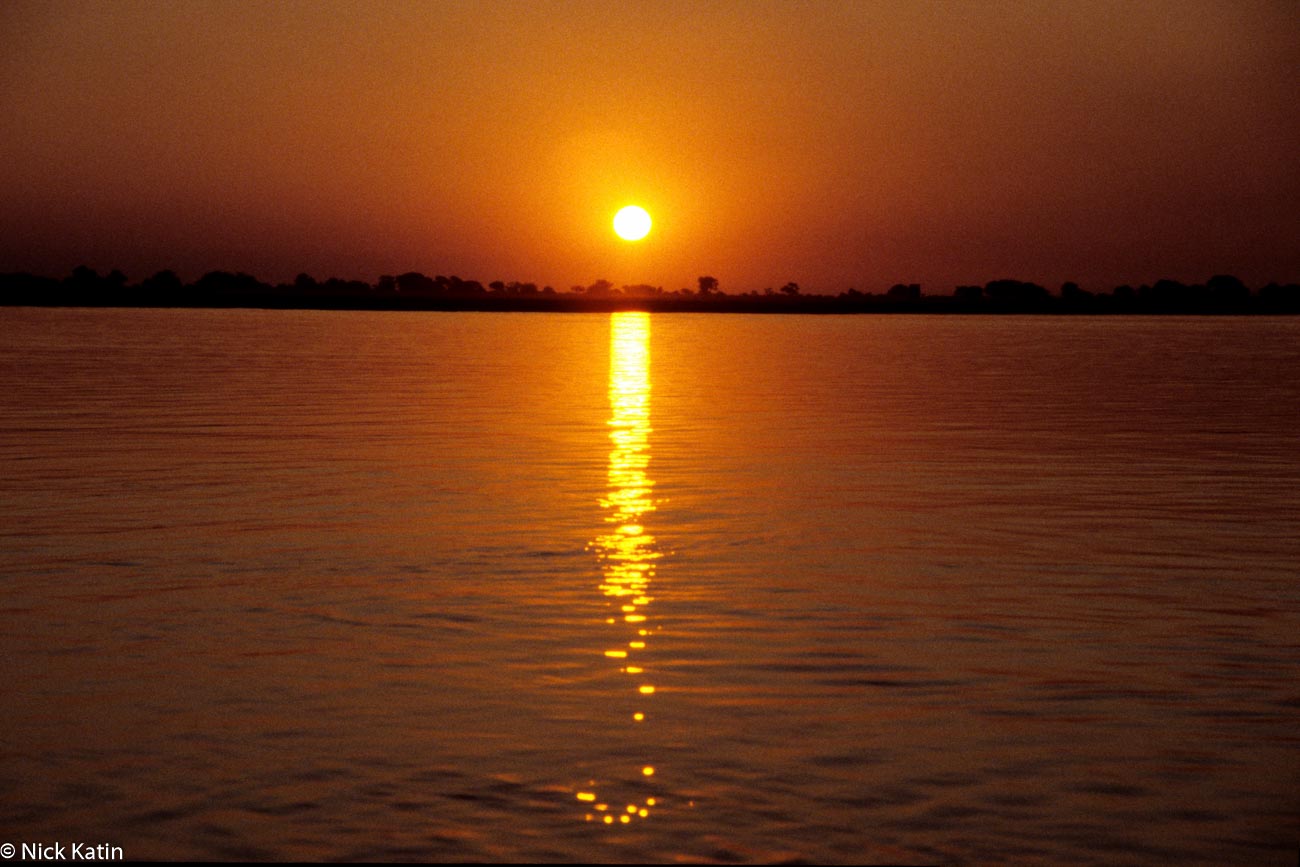
Sunset on the Chove River in Chobe National Park, Botswana Share this:
-
African shoestrings – Namibia Day Seventy Two – Swakopmund
Our final day in Swako was actually spent in Walvis Bay, a small town, 30 kilometres south. We checked out of our comfy accommodation thinking we would find something in Walvis Bay, a decision we were later to regret.
This little nondescript town was never actually colonised by the Germans. The British who controlled the Cape colony (South Africa) and laid claim to it in 1878 and didn’t let go of it until 1994, four years after Namibia’s independence. This natural harbour’s popularity is because it’s the only decent port north of Luderitz and south of Luanda in northern Angola and has been a very strategic political, defensive and commercial position to hold.
Now Walvis Bay’s main attractions are its bird life, in particular flamingoes, and Dune 7.
Dune 7 is large stand-alone sand dune north east of the town that rises above the bleak landscape and overlooks the noisy goods train railway. The locals’ flock to it in their droves to walk, run, sandboard or simply sit at the picnic tables in its shadow eating sandy sandwiches or gritty sausages. The bird life on the other hand is much more interesting. The lagoon just to the south of the town is home to half of southern Africa’s flamingo population plus pelicans, gulls and plovers to name just a few. Close by is the Raft a pub/restaurant housed in a wooden building sitting on stilts over the water. A couple of beers in there gave us a brief respite from the ever-increasing wind and in a rash moment we decided to return for dinner that night.
I have to say that it was one of the most amazing dining experiences either of us had ever had. The meal was nice we had some of the local fish species, Kobaljai and Steenbras and it was all pretty good including the service. What stole the show were the flamingos! From where we were sitting we could see the floodlight water and all night there was this constant flow of flamingos walking back and forwards doing their best to imitate the huge walking box robots from the Stars Wars movies. These wonderfully colourful waders gave us a show neither of us will ever forget!
What is forgettable however is the smelly cramped dog box of a unit we ended up staying in overnight back in Swako. We hadn’t managed to find anything cheap enough in Walvis Bay so we rang a place back in Swako without knowing what it was like. The women who answered the phone said yes it was free that night and the cost was N$100 plus $30.00 for laundry. OK I thought we don’t want any laundry done we’ll take it. What the laundry turned out to be was the cost of washing the bed linen after you had used it, assuming that you hadn’t brought your own. Well after sleeping the night in this matchbox with less facilities than a prison cell and having to listen to her winging about this that and anything else she happened to be an expert on, we told her to get stuffed, politely of course! Needless to say we headed out of there as soon as the sun was up.
Every town or city has the Café, the place to be seen at and usually has a specialty or two. Swako was no exception. The Café Anton was a trendy, probably in some eyes pretentious, indoor/ outdoor café overlooking the main beach. After such a shitty night we thought we’d treat ourselves to morning tea in the shape of a couple of German pastries and (finally) some good coffee before heading out. No doubt about its popularity, the locals were arriving in droves for both coffee and pastries and breakfast. It was a fitting end to our stay in Swako. It had been the only place in Namibia where we could take time out to get our fix of some western culture.
If you like this then hit “follow” on the side bar
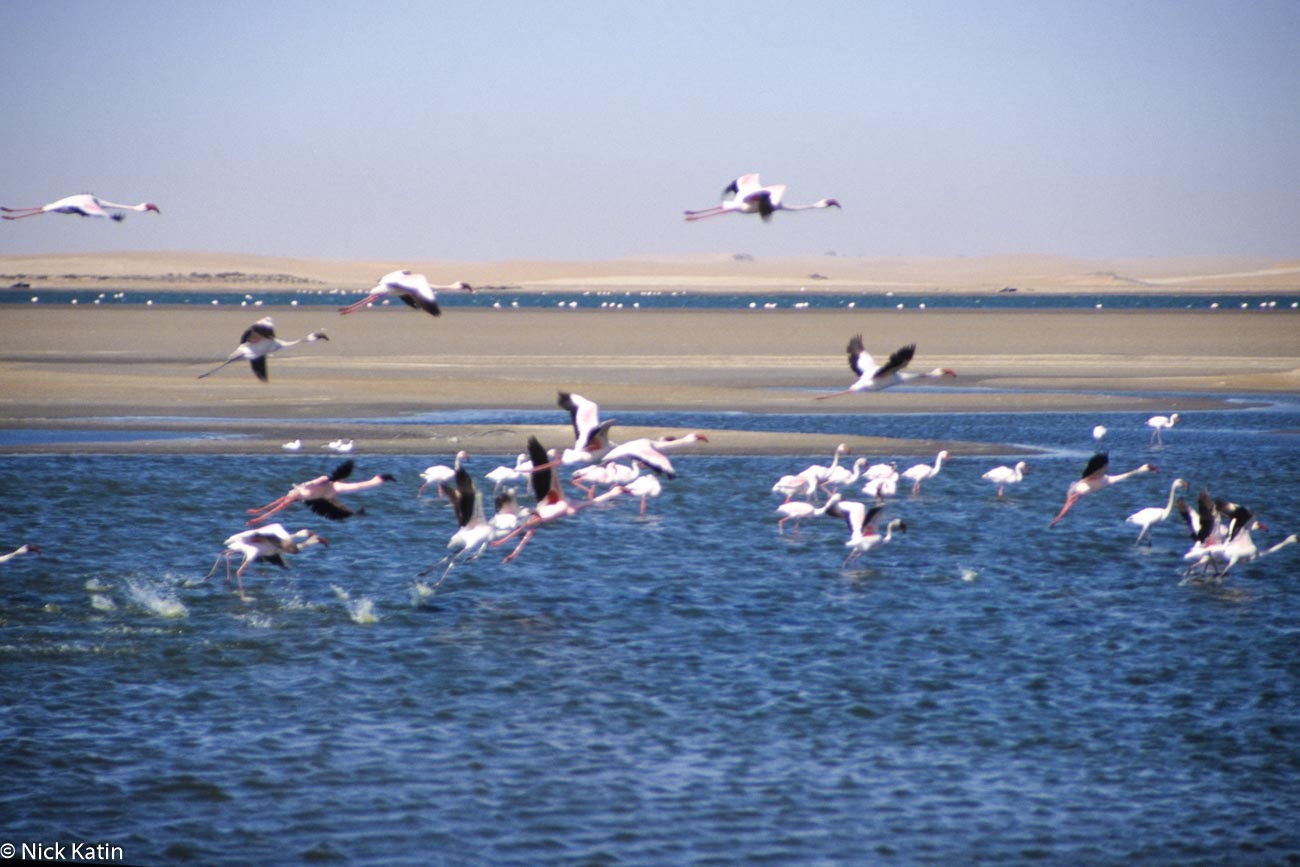
Flamingos at Walvis Bay in Namibia Share this:
-
African shoestrings – Namibia Day Sixty nine – Hentiesbaai
Terrace Bay is desert, black stone beaches and a grey sick looking ocean that yielded an endless abundance of fish. This is serious stuff! A couple of guys caught 82 fish each one weighting around seven or eight kilos off the beach! I don’t know that much about fishing but I do know that there are few places left in Australia where you could get a catch like that without a boat.
A few others must have caught a bucketload as well as it was being offered around (cooked that is) by one of the other groups at dinnertime.
This group was led by the ‘knowitall’ you know the type, there’s one in every gathering or group. Even though they were speaking Afrikaans his body language and actions told us “I know it all and I’m going to tell you”.
We were in the bar and he and his friends and family walk in and he just took over the bar. Frans, the barman, must hate arseholes like him just walking behind the bar and helping himself simply because they all arrived together and poor old Frans was a bit slow in keeping up.
Relaxing for a day or so gave Sue a chance to recover, which she did although she still felt off colour. I was hoping that the bracing air and relaxation would clear up my catarrh but that still stuck to me so much so that in frustration I started a course of antibiotics that we had brought with us.
The Skeleton park is infamous for its shipwrecks that dot the coast after hitting one of the treacherous sand banks and some bright spark thought the name ‘Skeleton’ was appropriate. It was one of these shipwrecks that got us into what we thought at the time was big trouble. Our next destination was Swakopmund some 350 kilometres south on the coast, via the Cape Cross seal colony. Bearing in mind our ‘reluctance’ to leave ‘Terrible’ bay, we set out early to ensure we had time.
Well we made good time along the salt road to the park gate at Ugab and then turned off to see one of these shipwrecks. The road had another of these heavily corrugated surfaces that have you bouncing around everywhere and just moving forward at more than 30 kilometres an hour was a struggle. Suddenly a buzzer went off and the oil light flashed on the dash. We both said “Shit!” stopped and turned off the engine. Like any part time mechanic, I was quite capable of opening the bonnet and checking the oil. Plenty there! I checked to see if the filter was loose. No that was ok as far as I could tell. Now we’re in a hire car which is less than a year old and still covered by it’s warranty, somehow fiddling with it didn’t seem the right option without authority. After all it’s my credit card imprint they’ve got as a deposit. So we did the right thing and slowly drove back. It didn’t seem to mind if we drove it at 20 kilometres an hour.
It took forever to get back to Ugab. There’s not a lot at Ugab in fact there’s not even a phone. Fortunately they did have a more modern method of communication than the pigeon, a two-way radio. The gatekeeper radioed the nearest mechanic in Hentiesbaai a small town some 137 kilometres away. His only option in these circumstances was to bring a tow truck.
All we could do now was wait and wait! Eventually Hennie turned up around 3 hours later which I guess wasn’t too bad. He took a quick look at the car and then we loaded into the back of his truck whilst we both climbed into the front.
Hennie was born and raised in Namibia and despite being white considered this was as much his country as anyone else. We talked about the fish, the up coming Rugby world cup (Namibia actually had a team entered) and life in general in Hentiesbaai. Hennie told us that there was around 200,000 whites in Namibia and then turned to us and asked “How many blecks ‘ave you goot in yoor ‘ountry?” When I replied that we had about 300,000 aboriginals. He looked at us and said “Thets nothin man, we got 3 million of them!”
Of course it turned out that there was nothing wrong with the car other than a loose wire on the oil switch in the engine which had somehow shaken loose. It cost N$1235 (US$124.00) to get us picked up from Ugab and I had to break the news to Werner. “We’ve fixed the problem mate” I told Werner on the phone and proceeded to tell him about the oil switch. We had already rang him and told him what had happened and needed permission for Hennie to look at the car which Werner got from Volkswagen. “Thing is, it’s cost N$1235.00 and they want to know how you gonna pay for it?” There was a pause. Somehow I had this picture of Werner looking to the heavens and saying “why me”. Anyway we ended up paying for it on proviso that he would settle with us when we returned the car.
If you like this then hit “follow” on the side bar
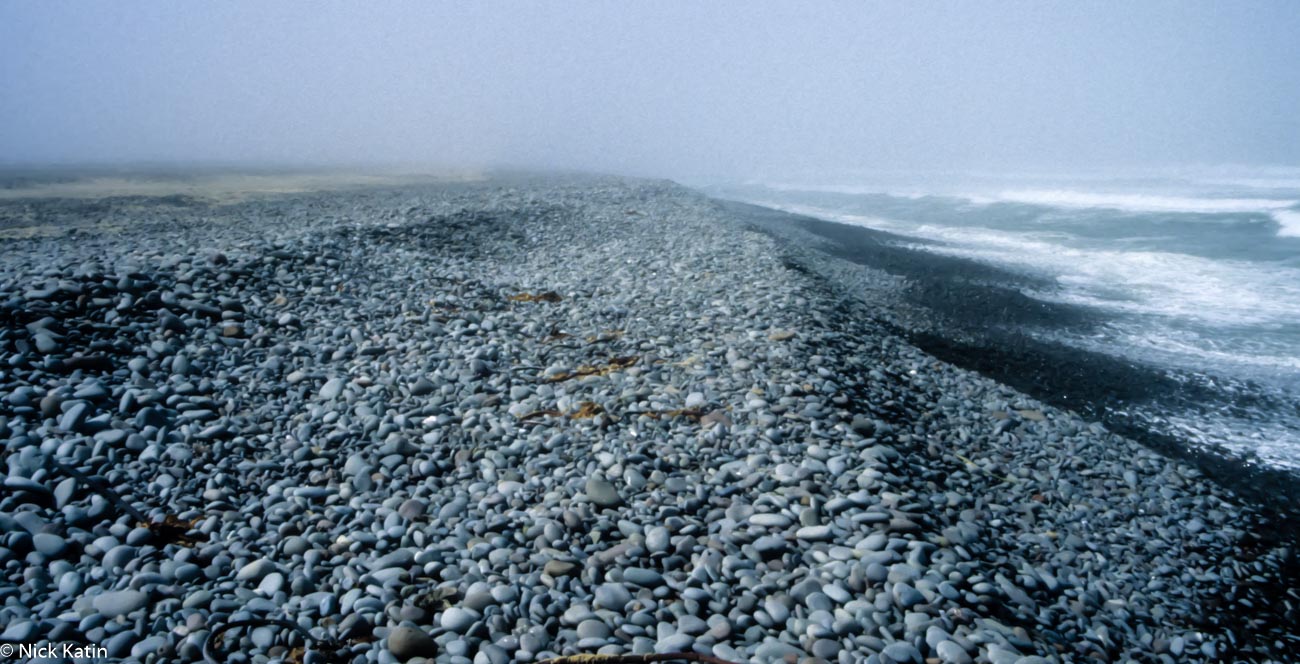
The inhospitable Skelton Coast in Namibia Share this:


 Katin Images Travel Photography