Katin Images Travel Photography

Travel Photos, Travel Photography Tips and Software

Tag: maluti

  • African shoestrings – Namibia Day Fifty six – Namib desert

    Dan Viljoen is a good place for hiking or even just casual walking. We sauntered along the 3 kilometre Wag-n-Bietjie trail to the Stengal Dam enjoying the twittering of birds and the gentle breeze and then at the dam watching a lone wildebeest and a family of warthogs go about their business.
    The park has plenty of game, none of which are at all dangerous. On the game drive we did after the walk, we spotted Mountain Zebra’s, Gemsbok, Springbok, Red Hartebeest, Kudu and two Wildebeest standing on a cliff edge with a backdrop of Windhoek in the distance.
    Coming from a country such as Australia where the wildlife is on the whole small in size and nocturnal in nature, it’s mind-blowing how much wildlife you can see on this continent. Even more mind-blowing is the thought of how much more there must have been before the arrival of Europeans, who brought hunting and poaching and the destruction of the animal’s habitat. Fortunately most African governments have recognised that preservation of these magnificent beasts is important not only to the environment but also to tourism and have set aside large areas for them to roam freely and safely.

    The Rooibes trail we followed the next morning was around 6 kilometres longer and was a good little hike through green hills covered in scrub brush and small acacia trees with panoramic views across to Windhoek before following a river bed. The final couple of kilometres let it down; taking us through a neglected part of the park that was overgrown and speckled with dumped used tyres. We’ve encountered several good walks in the past that have been spoilt by the last stretch. Its almost as if the track designer lost interest two thirds of the way and just ordered the trail builders to find the quickest and most convenient way back. Still it was a good walk and once again we saw plenty of wildlife.

    I managed to get hold of Werner, the car hire owner ,so that we could do something about the gaslight that wouldn’t work. We met him back in Windhoek at the Maerua shopping centre, Windhoek’s and probably Namibia’s biggest. We swapped lights did a bit of food shopping and headed out to our next destination, the Naukluft Camp in the Namib Naukluft National Park.

    The road to Rehobeth was 100 kilometres of flat bitumen and even in our little toy car we could get up a head of steam. What slowed us down considerably was the 130 kilometres of gravel road to Naukluft. We had, to be fair, been warned. Werner had told us to keep the windows closed to prevent dust getting in but driving in mid 30’s heat without air conditioning and no fresh air was just too much. From hereon in we knew that most of the roads we needed to use would be gravel so we had to get used it and if that meant driving with the windows down and sharing the car with grit, well too bad! So by the time we got to Naukluft we were just a little hot and dusty.

    If you like this then hit “follow” on the side bar
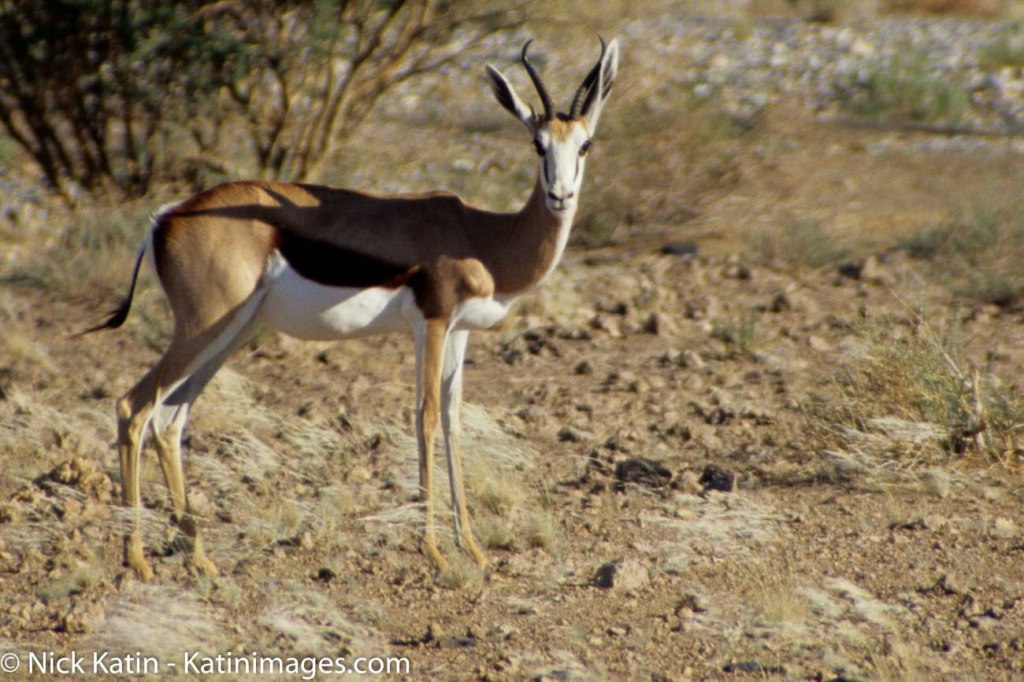
    It is extremely fast and can reach speeds of 100 km/h and can leap 4m through the air. The common name "springbok" comes from the Afrikaans and Dutch words spring = jump and bok = male antelope or goat.
    It is extremely fast and can reach speeds of 100 km/h and can leap 4m through the air. The common name “springbok” comes from the Afrikaans and Dutch words spring = jump and bok = male antelope or goat.
  • African shoestrings – South Africa Day Fourty four – Kalahari

    The plan had been to get to Augrabie Falls and camp there the night but it was a good 2-3 hours drive away and now it was too late. “So” said Roland “we’ll sleep the night in the dorm and head out early tomorrow”.
    He must have seen the look on Sue’s face, because he came up to us and said quietly “I’ve organised a double room for you two, m’dear”.

    That evening it was the Roland show! He’s an excellent cook and his yarns entertained us all. Apparently he’s done it all, played Rugby union for South Africa, seen some terrifying incidents involving Lions, Cheetahs and Leopards in his normal role of Kruger National Park ranger and lived a life that was reminiscent of some of the more famous novels about growing up in Africa.

    Roland’s dominance of the evening was interrupted by Katrina, another, in fact the only other guest at Yeho’s (do you call people staying at backpacker hostels, guests?). Katrina hailed from J’burg and was one of those ‘try hard’ hippies that are to be found running new age shops where relaxation music and the tinkling of wind chimes are designed to calm you enough to get out your credit card.

    She had just spent several days, finding herself in the Kalahari Desert! Well the Kalahari is roughly 700,000 square kilometres of red soil, sand dunes and very little vegetation and more importantly virtually uninhabited and uninhabitable. So the chances of you finding yourself are pretty high as you won’t find anyone else and unless you know what you are doing, your time with your newly found self will be extremely short! Katrina had never done anything like this before and had somehow survived and sat very satisfied with herself.
    Each to their own I suppose – not something I would do.

    We got to Augrabie Falls early enough for Breakfast. The name Augrabie is the Namaqua word “for place of great noise”. The Namaqua inhabit the north west corner of the Northern Cape and are one of the main Khoikoi tribes in South Africa, a people who were arguably one of the first inhabitants in the Cape.

    Augrabie Falls is on the Orange River and has over time carved its way through a rocky landscape and plunges down into rocky and almost lunar landscaped gorge below. The amount of water flowing down this almost vertical giant water slide is amazing considering it had been dry recently. After heavy rainfall the falls rise up along the sides of the gorge. That must be some spectacle!

    After seeing Mother Nature at its best we moved onto to see wine making at its worse. The Orange River Wine Cellar is nothing but a cheap bulk wine producer that fills bottles instead of casks and flagons. The wines tasted like flat coke!

    Still it was interesting how they had managed to carve these huge vineyards out of such an arid landscape. They couldn’t have done it without being so close to the Orange River and using the water to permanently irrigate the vines. They claim they are the second biggest individual wine producers in the world. Based on the amount of vines they had spread around, I for one wasn’t going to argue (that is apart from the fact that place seemed full of big beefy guys that looked like they had swapped punches with the best of them on the rugby pitch).

    If you like this then hit “follow” on the side bar

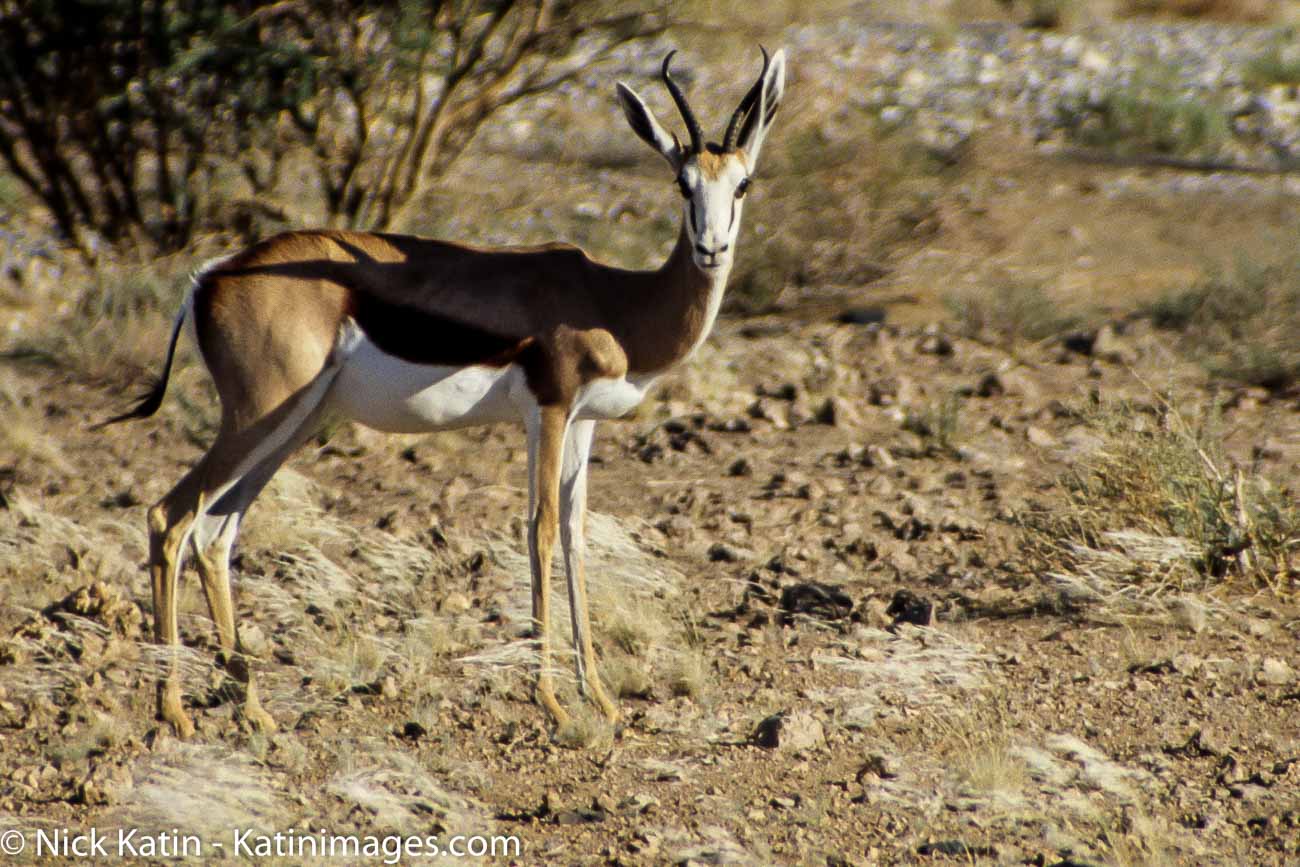
    Springboks are extremely fast and can reach speeds of 100 km/h and can leap 4m through the air. The common name "springbok" comes from the Afrikaans and Dutch words spring = jump and bok = male antelope or goat.
    Springboks are extremely fast and can reach speeds of 100 km/h and can leap 4m through the air. The common name “springbok” comes from the Afrikaans and Dutch words spring = jump and bok = male antelope or goat.
  • African shoestrings – South Africa Day Seventeen

    On our first visit to South Africa in 1996, we had very briefly skirted the Drankesberg ranges and had promised ourselves that we would return some day.
    The Drakensberg is located mostly in South Africa and snakes down the central eastern side of South Africa, for about 1125 kilometres, and then teeing off to allow a smaller range, the Malutti to join it from the west before forming the eastern boundary of Lesotho.

    Golden Gate Highlands National Park lies in the foothills of the Malutti and has some of the most striking scenery that I have ever seen.
    The R711 cuts a path straight through the middle of it and we were greeted by two huge orange and green sandstone hills on either side of the road peering down at us.
    This was our kind of place, a sort of Alps but in miniature with lots of walk tracks, game drives, bird watching and comfortable and cheap accommodation. We stayed in a Rondavel, a circular shaped hut, that were fully self contained, comfortable and cheap.

    Despite it’s beauty we actually only spent one night there.
    In 24 hours we managed to do a couple of walks, a couple of game drives, spend some time at the bird hide and sleep!
    The game drives consist of a couple of circular drives in an area set aside for game. Now we’ve been on game drives before and in our experience the best ones tend to be more difficult to get to and well controlled. So our expectations weren’t high and sure enough we drove around peering with screwed up eyes at anything that resembled a living object.
    But as is often the case all we managed to see were a few Springbok, an antelope similar to a deer but with a prominent black stripe along its flank, and some great views of the mountains around.

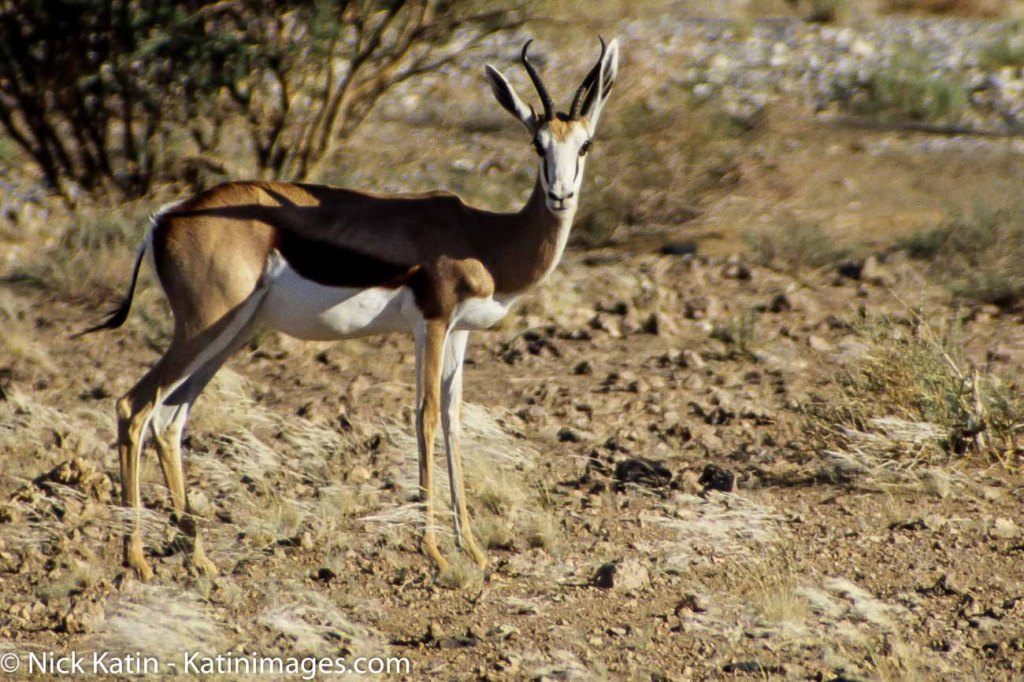
    Springboks are extremely fast and can reach speeds of 100 km/h and can leap 4m through the air. The common name "springbok" comes from the Afrikaans and Dutch words spring = jump and bok = male antelope or goat.
    Springboks are extremely fast and can reach speeds of 100 km/h and can leap 4m through the air. The common name “springbok” comes from the Afrikaans and Dutch words spring = jump and bok = male antelope or goat.