Finding the best Camera for your Travels Part 3 DSLR
In The basics of camera equipment – Best camera equipment for travel photography, I mentioned That “despite those who say its’s not about the gear, you need a camera that will suit your style and objectives.” This is especially true when you are off travelling. Having a camera that you are comfortable with and that can help you take photos that you will proud to bring home with you is essential.
Maybe you aspire to getting your travel photos published. If one or all of these is YOUR goal, I can help. Sign up in the box below to subscribe to my exclusive Travel Photo Tips Newsletter.
Remember if you want to take great travel photos
that you can share and display.
that help you relive your travel experience
that give you a chance to have your travel photos published
then sign up below and subscribe to my exclusive Travel Photo Tips Newsletter.
Finding the best Camera for your Travels Part 2 Mirrorless
In The basics of camera equipment – Best camera equipment for travel photography, I mentioned That “despite those who say its’s not about the gear, you need a camera that will suit your style and objectives.” This is especially true when you are off travelling. Having a camera that you are comfortable with and that can help you take photos that you will proud to bring home with you is essential.
In the second of this series I will defer to some reputable camera reviewers who can help guide you. Only two this time as DP Review don’t distinguish between SLR’s and Mirrorless
So, without further ado please read this one from Camera Labs below
Do you see yourself taking some great travel photos that you can share or display? Or can you see yourself reliving your travel experience by bringing home some emotive travel photos? Maybe you aspire to getting your travel photos published. If one or all of these is YOUR goal, I can help. Sign up in the box below to subscribe to my exclusive Travel Photo Tips Newsletter.
Remember if you want to take great travel photos
that you can share and display.
that help you relive your travel experience
that give you a chance to have your travel photos published
then sign up below and subscribe to my exclusive Travel Photo Tips Newsletter.
In The basics of camera equipment – Best camera equipment for travel photography, I mentioned That “despite those who say its’s not about the gear, you need a camera that will suit your style and objectives.” This is especially true when you are off travelling. Having a camera that you are comfortable with and that can help you take photos that you will proud to bring home with you is essential.
In the first of this series I will defer to some reputable camera reviewers who can help guide you.
Do you see yourself taking some great travel photos that you can share
or display?
Or can you see yourself reliving your travel experience by bringing home some
emotive travel photos?
Maybe you aspire to getting your travel photos published.
If one or all of these is YOUR goal, I can help. Sign up in the box below to
subscribe to my exclusive Travel Photo Tips Newsletter.
You’ll also get my free eBook “9 ways to improve your Travel Photography”.
Remember if you want to take great travel photos
that you can share and display.
that help you relive your travel experience
that give you a chance to have your travel photos published
then sign up below and subscribe to my exclusive Travel Photo Tips
Newsletter and for your trouble get my eBook “9 ways to improve your Travel
Photography”.
Whilst we tend to think of photographic
equipment as items that closely assist in taking travel photos. One piece of
equipment is rarely mentioned.
What is that?
Well one that should be the most expensive,
a motorized vehicle.
In the video below from Mitchell
Kanashkevich (website) he does
a great job of explaining the pros and cons of having wheels whilst travelling
and taking travel photos.
There are some countries where driving
yourself can be dangerous and others easy.
But a lot depends on your own comfort
level.
I’ve met people who won’t drive a vehicle
in any country that doesn’t drive on the same side as their home.
And then I’ve met others who would drive
anything anywhere with no concerns at all.
I tend to think that it’s horses for
courses.
I’ve hired and bought vehicles in several
different countries but also used public transport.
I adopted the latter approach by using nothing but public transport for 3 weeks in Japan last year.
Those bullet trains are unbelievable!
The Shinkansen Bullet Train in Japan
Enjoy!
Do you see yourself taking some great travel photos that you can share or display?
Or can see yourself
reliving your travel experience by bringing home some emotive travel photos?
Maybe you want to get
your travel photos published.
If one or all of these
is YOUR goal, I can help.
If you go to the form below you can sign up and get my free eBook “9 ways to improve your Travel Photography”.
At the same time, you
will also subscribe to my Travel Photo Tips Newsletter which is exclusive to
those who have signed up.
Remember if you want
to take great travel photos
• that you can share and display.
• that help you relive your travel
experience
• give you a chance to have your
travel photos published
Then subscribe below to my Travel Photo Tips Newsletter and for your trouble get my eBook “9 ways to improve your Travel Photography”
Any questions then please write your comments below or contact me here
Now that you’ve got down this far can I ask a favour?
Please share this with
anyone who is going on a trip and wants to take and bring back some great
travel photos.
In my last post I talked about the best camera to use for travel photography. If you missed it you can find it here. This time I want to talk about the best camera lens for travel photography.
In that article I inferred that the best camera to have is a mirrorless. That doesn’t mean that in this article I’ve assumed that you will have one. As in Ice Cream, there are many different flavours. There are lots of different lenses that do the same thing. There are lots of different lenses that do specific things.
Types of lenses
To ensure consistency I’ve quoted the 35mm equivalent when quoting a focal length. Why? Well most, if not all, camera manufacturers usually quote that in their literature. To cover all the different size focal lengths from each manufacturer would be confusing. E.G. a full frame camera body lens of 50mm is exactly that, 50mm. A DSLR crop sensor camera is usually around 1.6 which means 50mm is 32mm. To confuse you even more, some mirrorless cameras have crop sensors of around 2, which means a 50mm lens is 25mm. AAGH!!! More on that in a future post.
Now we’ve cleared that up, let’s go to the best camera lens for travel photography.
Built in Lenses
There are some top end compact and low end mirrorless cameras that have a built in lens. An example of both would be the Sony Cyber-shot DSC-RX10 III and Fujifilm X100F Most of the lenses that come with these cameras tend to be telephoto lenses and that’s when you need to be careful. Some of them use both Optical and Digital zooms. If you recall from the Best camera equipment for travel photography, a digital zoom is the same as having an image on your computer screen and cropping it. That means you end up with a smaller picture size, e.g. 1000 x 1000 becomes 500 x 500 Pixels.
If you zoom in optically the size remains the same and so does the resolution, allowing for bigger prints or digital sizes at better quality
So, if you are looking at a lens on a camera, ensure that you know whether it’s using optical or digital to zoom. Just because it uses digital doesn’t mean you should disregard it. If it also has an optical zoom as well, then you can choose to use the digital zoom sparingly.
Built in Telephoto lenses tend to range from around a minimum of 28mm to sometimes around 250mm. When it’s longer than that, then it’s usually at the long end that the digital zoom comes into play.
If you are going for an all-rounder, which you would be if you are considering a compact camera, then 28-150mm is the sweet spot. If you can get wider than 28mm, say 24mm, than all the better. Remember you can always, where practical, zoom in with your feet.
Great Langdale in the Langdale ranges ,Lake District, England
Click on the above image to view a larger version and for other options
Interchangeable lenses
Now we are talking about a separate lens. That is, a lens that can be removed from the camera.
With interchangeable lenses, you need to establish what you can afford and whether you want more than one lens.
The first camera I had (which was a film camera, but the principle is the same) had a 28-200mm lens. I also had a 1.5 Teleconverter with it, which meant that I could get a maximum zoom of 300mm.
So, there are other ways of having flexibility with only having one lens.
But if you are thinking about going for a camera with Interchangeable lenses, then it’s worth the price to invest in glass. The thing is that the lens is a more important and longer-term investment than the camera body. If you get a good lens, then you will keep it far longer than the camera body.
Telephoto Lenses
With a telephoto lens you have options with what you want to carry. And there are some genre’s that need telephoto lens. Wildlife and entertainment are hard to do without having a Zoom. Street, Architectural and even Landscapes can give you different viewpoints that you wouldn’t get if you have a fixed focal or prime lens.
As I mentioned in the Built in Lenses section above, the usual sweet spot for a generalist is 28-150mm.
So, you’ve decided on the length of zoom you have. Now you need to decide on how ‘fast’ you want it to be. What’s Fast? Well that relates to the maximum aperture size.
Most consumer lenses are around F4.5 and as you zoom out, so the maximum will be higher. A range of 4.5- 6.5 is common. They are fine for the majority of Travel Photography subjects.
However, if you want to get serious, then the next level up are pro lenses. They tend to have a fixed aperture i.e. don’t change as you zoom. But not only are they a lot more expensive they are also heavier and bigger. So you have not only have to consider your budget you have to consider your back as well!
Prime or Fixed Focal lenses
What’s a prime lens? Well basically it’s a fixed length. The most popular Prime Lens length is 80mm, as it’s a bit of an all-rounder and matches what you see with your eyes.
A prime lens is more restrictive but usually offer you better quality. Unlike the Telephoto lens, they have fixed apertures like a pro telephoto.
If you buy one with a large aperture of f1.2 or 2.4 you have a lot more flexibility when it comes to getting different areas of your photo in focus.
But they are probably not so good for Wildlife but depending on the size you can use it for pretty much anything. As I said before you can still zoom with your feet.
Wide-Angle Lenses
They are normally around 20-24mm and offer you, as the name suggests, a wide-angle view which can be also used for an artistic interpretation of a subject.
Some street photographers and Photo-Journalists use them a fair bit. However it’s landscape photographers that use them the most. Getting a full wide landscape can be very satisfying.
Speciality Lenses
There are many types of speciality lenses.
Tilt and shift lenses are mainly used to correct that narrowing of a building that you get when taking some architectural shots.
Macro lenses are great for small objects such as insects and flowers. A macro setting is often built into some camera bodies. But more often or not you usually need to have a prime lens that has that facility as well.
Then there are super telephotos for wildlife and sports. You see them around the boundary in sports stadium. As there are not many, if any, consumer level super telephoto lens, they are big and expensive.
Then there are the distortion type lenses, such as those that manufacturers like Lens Baby makes. Most popular of these are the Fish Eye lenses, a wide angle that makes everything look like it was in a fishbowl.
Again, whether you have these or not depends on what type of Travel photography you are going to specialise in
Let’s map those genres to a specific lens and wrap up this article on the best camera lens for travel photography.
General – Telephoto Lens plus a 80mm Prime Lens
People and Street – 50 or 80MM Prime Lens plus a 28-150mm Telephoto
Journalistic or lifestyle – 80 or 100mm Prime Lens plus a Telephoto Lens of 28-150mm
Landscape – 24mm Wide-Angle plus a Telephoto with a minimum focal length of 100mm
Architectural – 24-100mm Telephoto and a 35 or 50mm ‘Fast’ Lens i.e. F1.2 or 2.4.
Wildlife and Nature – Big Telephoto as long as you can afford (*See below) plus a Macro if you are intending to shoot flowers or insects or the smaller world.
*There is always the option to hire a lens, depending on your location. A couple of years ago, I hired a 100-400mm Canon Lens for a trip I did to Northern Canada to see the Polar Bears. Often you may not use some of the more specialist lenses all the time, so It’s a good idea to hire them. More on this in another post.
Food and Drink – Food and Drink is a tricky genre to suggest the best lens for.
If you are looking to take low light plated food, e.g. in a restaurant, then you would need a wide angle or 50mm lens with a large maximum aperture of F1.2 or 2.4.
However, if you are taking images of food in its raw state e.g. farming or even a farmers’ market, then a telephoto may be the best way to go. Same applies to drink. Vineyards, Wineries and breweries are semi landscape. And you can be really creative using a macro lens to shoot bottles of Wine or Spirits or even fluid in a glass.
Entertainment – Like Street Photography with the exception that you many need a fast lens if you are inside a concert hall and flash is not allowed
As you can see there are lots of different ways of looking at the lens you may require. If you are not sure then the best way to start is, as I’ve indicated in the general genre, to purchase a telephoto and if possible a 80mm lens.
Summary
Finding the best camera lens for travel photography can be a challenge.
Two things to remember:
1. The quality and build of a lens is more important to the quality of your images than the camera body.
2. You are likely to keep your lens for a lot longer than the camera body.
So, ensure you spend as much as you can afford on your lens.
There are many types of lenses but the most useful tend to be telephotos of around 28-150mm and 50 or 80mm prime lens.
Unless you are specialising in some tight niche, then purchasing a speciality lens like a fish eye or tilt and shift lens is not advisable, as you won’t get the use out of it.
Remember you have the option, most of the time to hire some speciality lenses.
Need some help with your travel photos? Get a free guide by filling in the form below plus you will also get content that’s only available to subscribers
Any questions then please contact me here and/or please say hello at these places:
I’ve eaten at lots of good or great restaurants (I’ve eaten at some pretty ordinary ones too but that is a story for another day).
And not once has it occurred to me to think that the equipment in the Chef’s kitchen must be fantastic!
I appreciate the fact that it’s the chef or chefs that created this meal that I found so enjoyable.
From the start of the dish to sourcing and delivery of raw materials to preparation, the cooking and assembling the meal, dishing the meal onto a plate and finally the delivery to your table, it just happens.
But nowhere on this path do we even consider what equipment they are using.
We trust that their systems in place will deliver to us their creation.
They may well have used the latest pan or cooker or have a great point of sale tablet.
They might well have great knives, to die for ovens or the latest work stations.
We, as the consumer, don’t care as long as the food has got to us in the time expected and is good or even great.
Why then as a photographer, Do I often have people say “WOW! You must have a great (or expensive) camera” when they look at my work.
As if it was the equipment that made the images that are they impressed by.
The best camera is the one you have with you.
If you’ve only got one device with you that can take photos whether it’s a phone or a DSLR – then that’s what you’ve got – period.
You can take great images with pretty much anything provided you know how.
Having an expensive camera is not directly proportional to the quality of the image.
I’ve heard it said amongst winemakers that you can make bad wine from great fruit but you can’t make a great wine from poor fruit regardless of the shiny expensive equipment you might have in the winery.
But, you can make great wine from great fruit without having the latest, greatest and most expensive equipment.
Well the same applies to a camera if you have good technique, a good eye and skill then you can make great images with any camera.
Even Stock agencies now accept images taken by mobile phones such as the iPhone or Samsung S series.
The reality is that the vast majority of ‘photographers’, who don’t rely on their cameras for use in specific genres, a simple, usable and light camera is more than enough when you know how to use it.
You see, even with all the right kit it’s easy to take an average photo.
Here’s an example of 2 images I took on a polar bear trip.
The fuzzy out of focus badly composed image on the right was taken with a Canon 5D Mk 11 with a pro 100-400mm telephoto lens.
The one on the left was taken with a soon to be traded in HTC one XL smartphone.
On both I was in the right place at the right time and for the first one I had all the time in the world but still managed to stuff it up.
You can take great photos with anything you just need to know the limitations of the camera you have.
Let’s take smartphone cameras.
Smartphone cameras struggle to take images that will blur or freeze motion.
They are hopeless in low light unless you have a tripod (and even then, it depends on the brand). Despite smartphone manufacturers best efforts phone they still can’t get the same bokeh that a camera with a interchangeable lens can.
It’s physics after all. But eventually smartphones will be able to provide the flexibility and quality of larger cameras.
But a DSLR or Mirrorless camera , can do all these things but you can’t carry it in a pocket or small bag
So, you play to its strengths not it’s weakness.
Use a smartphone for still shots in good light that don’t need that bokeh effect and you’ll have as good as image as you can get based on your ability.
So, there you have it.
Hopefully that helps you realise that you don’t need the latest and greatest camera to take some really good images for your marketing
They are some of the benefits you can get with right equipment. But to reiterate the image is only as good as the person with who has their finger on the shutter button.
To use another analogy, are drivers of Mercedes, Rolls Royce or Porsche cars any better drivers than you or me (assuming you are not one of them)? I think not.
I would be interested in your opinion.
Do you agree?
Did this help you gain some confidence in what camera you have?
So, you’ve had enough. You’ve spent hours trolling stock photography sites, looking around the web for any royalty free or creative commons images that will fit your business and your message.
Finally, you’ve said, stuff it! Let’s create our own, after all how hard can it be.
It’s a brave decision because it’s actually not that easy but, it can give you the image you’ve spent hours looking for.
So how do you go about it?
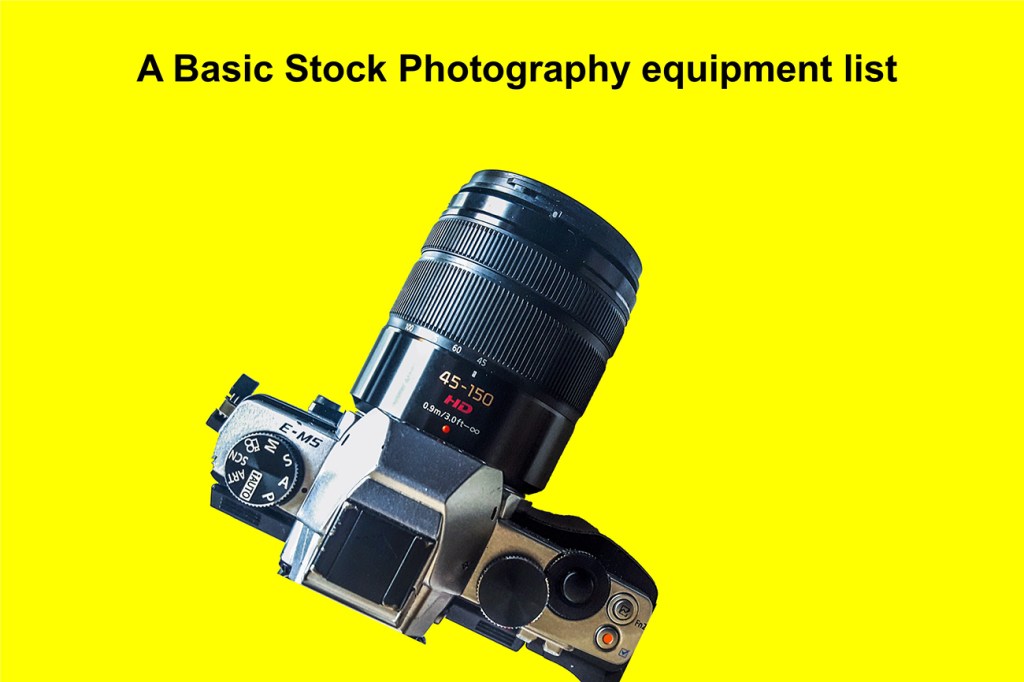
Well let’s forget the creative side for a moment, I’ll cover that in future posts. Let’s look at the second most important item and that’s equipment. Below is a basic stock photography list
“Talk Here” can be used as stock photo for communication
Equipment
Whilst equipment is not everything. It’s a bit like wanting to drive a car you have to have one or at least access to one and then you start to learn.
Now I wouldn’t recommend you borrow the equipment, at least not all of it.
Where the car analogy differs is that it usually will take you a few minutes to adapt to the basics of a different car. Unless of course it’s a car from a different country that drives on the opposite side of the road, in which case that’s going to take a lot longer.
With a camera, there are similarities and different cameras of the same brand often have strong similarities.
But to speed up the learning process and then the shooting process, it’s best to stick with the same equipment if possible.
So, without further ado, here’s’ a list of what you need to get started:
Camera:
Yes, I know, that’s obvious.
There is a whole range of cameras out there.
To help guide you in choosing, I have written a series of posts called “A Guide to Camera Features”which you can download as a free pdf here.
My suggestion is to have either a DSLR or a Mirrorless, i.e. a camera that has interchangeable lens.
Small camera:
A few years ago, I would have said a compact camera but nowadays a good smartphone camera more than does the job.
Why do you need this as well? To take reference pictures to help stimulate creativity. To quickly record some visual ideas about your business that you can come back to.
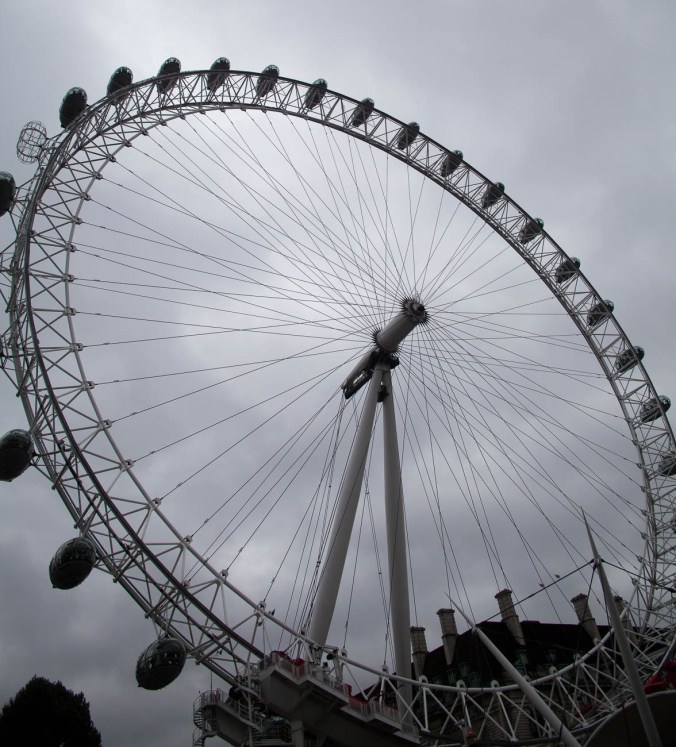
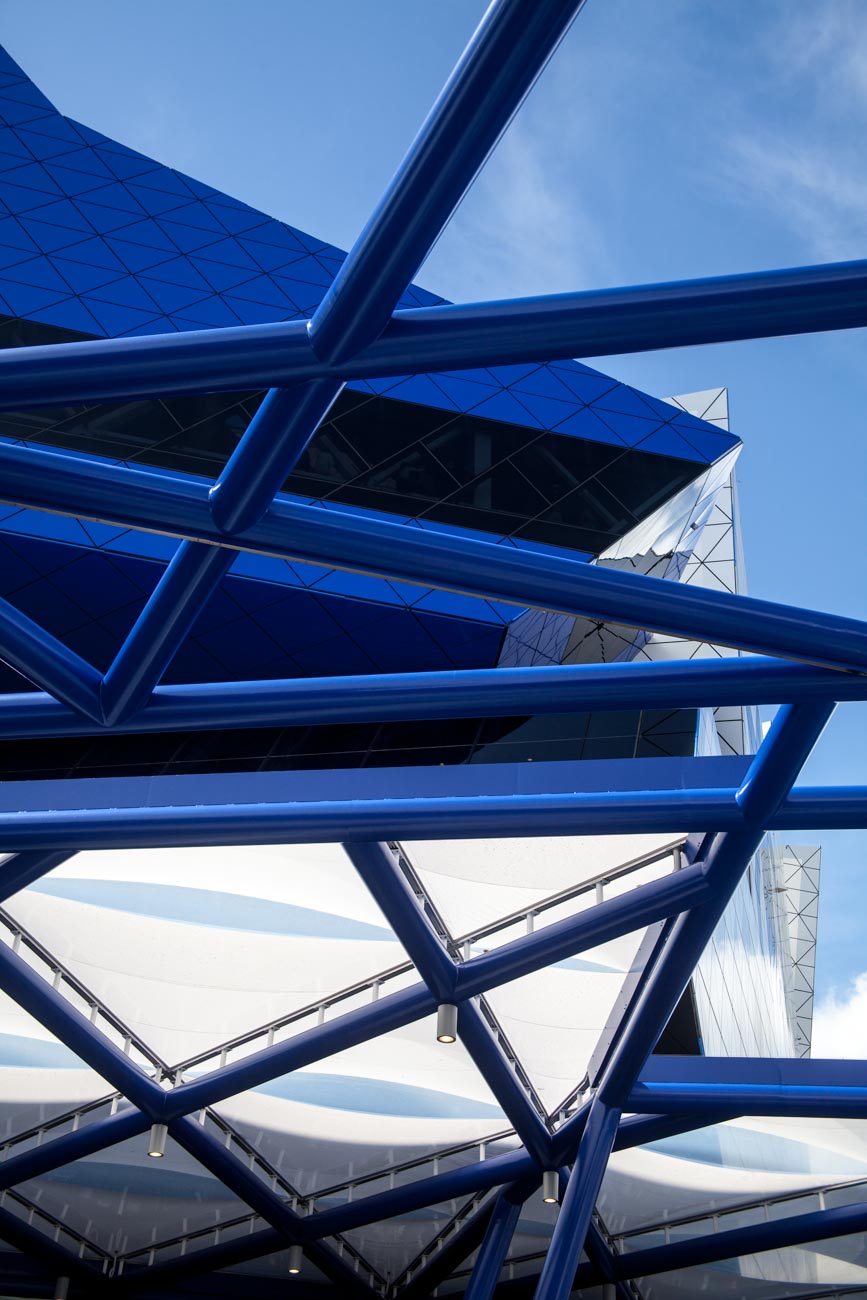
Architectural images are always good as stock photos
Lighting:
As with cameras there are countless lighting systems available. Your camera may have a flash but I would recommend that you have off camera lighting or flash.
A lot will depend on whether you intend taking images that will need artificial lighting.
Even you intend to use natural lighting there will be a situation where artificial lighting will be necessary, even if only for a special effect.
Tripod:
Keeping a camera still will be essential on some shots especially in the light is low.
Lens:
As I mentioned earlier if you have a camera that has interchangeable lens then you need a couple of lens at the least. Allrounders are the best way to go. In 35mm speak, 24-70mm and a 50-120mm or close to are good examples.
If you can stretch your budget to a prime lens, then a 50 or 100mm will give you nice crisp images.
Computer or Laptop:
Most people and businesses have at least one desktop or Laptop or something in between.
How much RAM and Processing Speed you need it will depend on the amount of post processing you want to do and what programs you will use.
I’ve found that having a SSD drive rather than a standard moving parts drive is worth the extra cost.
It’s like choosing between a motor bike or a pedal bicycle for speed! You’ll get there slowly on a bicycle but nowhere as quick as a motor bike will take.
Storage is cheap so make sure you have plenty of it.
Portable hard drives or NAS type storage always works well.
Monitor:
If you are using a laptop it’s worth investing in a good easy to calibrate monitor, so you can view and see your images as you want them to look.
Best size is around 22-26”. Bigger if you can afford it.
Accessories:
Some basic but necessary accessories would be SD or memory cards, spare camera batteries, camera bag, cleaning cloths and back up hard drives.
Good lighting can help spotlight products
Conclusion
Of course, buying photographic equipment can be a bit like a black hole.
But don’t let that scare you, what’ve I’ve listed above is the basics and even that could be cut back a bit.
It’s not the equipment that takes the photo it’s you and you can take excellent photos with even a basic smartphone camera.
Whilst the better camera equipment will give you increased quality in some circumstances, better equipment is more about having additional flexibility and options.
I hope I haven’t put you off because this is an investment in yourself and your business.
Taking some great and powerful images that compliment your brand can provide a huge return on investment, especially if you use them for marketing on the right platforms.
If you have any questions or comments about this post, please leave them in the comments section below.
Or feel free to contact me directly via my contact page
Sharing is caring as they say (although not sure who “they” is).
If there’s some people you know who may enjoy this or any other post on this site, please share with them.












 Katin Images Travel Photography