
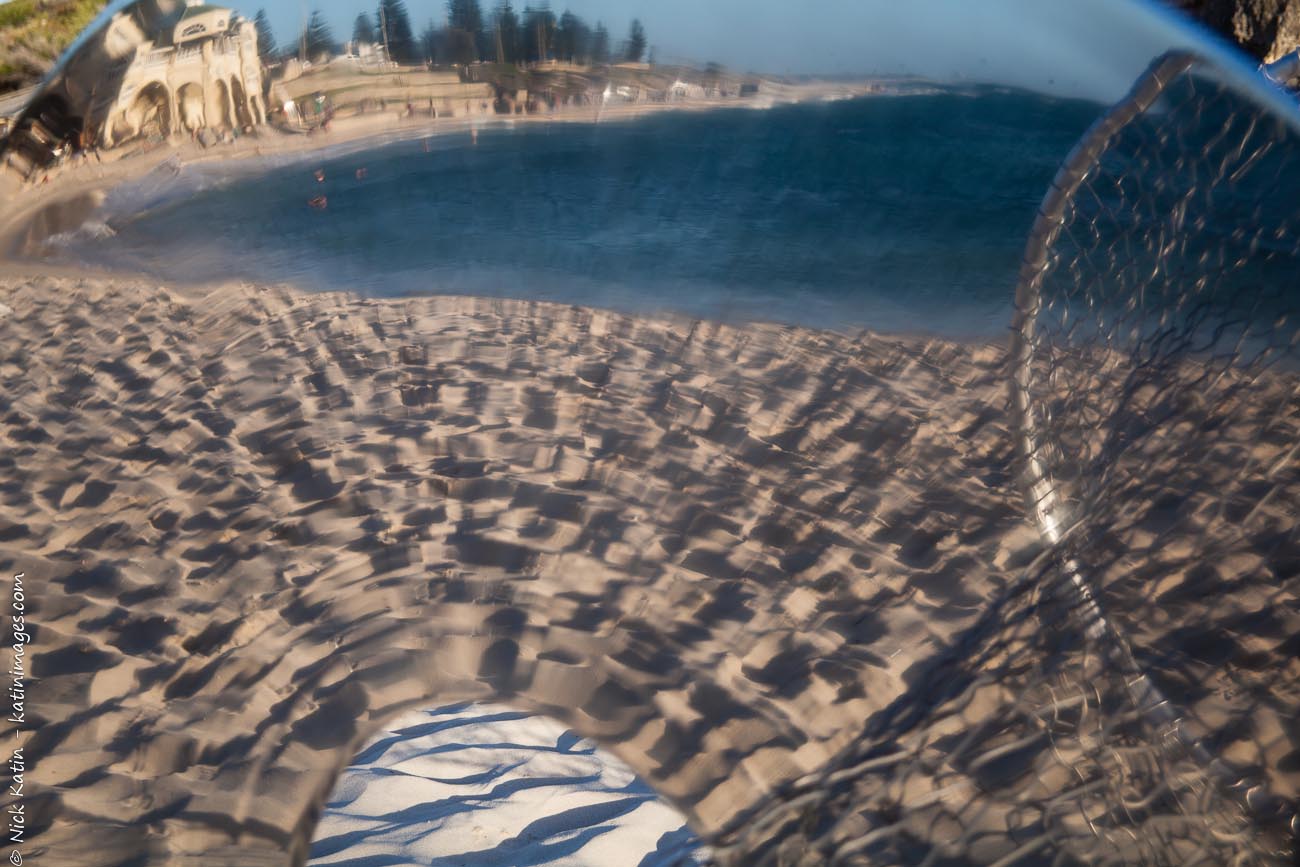
Surfers waiting for the next big wave at Cottesloe Beach Western Australia. Click on the image for a larger view
Katin Images Travel Photography
Travel Photos, Travel Photography Tips and Software


Surfers waiting for the next big wave at Cottesloe Beach Western Australia. Click on the image for a larger view




And so the events leading to bus ride from hell number three started to unfold. The bus wasn’t due to arrive until 11.30 pm but Leonard, who was not as friendly and as obliging now that we were leaving, would only give us a lift to Mzuzu at 12.30 in the afternoon and charged us for the privilege. So the three of us (Stephan and Lucy were also coming, except Lucy decided that she wasn’t ready to leave at that time and would get the bus later whilst Stephan obligingly took her bag with us) plus two other locals crammed into the back of this small Ute. After another bone jarring journey we were dropped off at the Mzuzu hotel where the porter helpfully checked in our bags whilst we killed time in the town. We had lunch at the Sombrero restaurant and wondered as aimlessly as possible around the markets. It was here that we found a tape of ‘Brenda’ the instigator of the song that had been buzzing around in our heads ever since that sleepless night in the Gross Barmen camp in Namibia. It must have finally brain washed us because we actually bought the damn thing!
Back at the hotel we settled down in the bar to watch the cricket world cup until the game got rained off and we decided that we might as well have a decent feed here at the hotel.
Stephan is a big bloke who, we had noticed, likes his tucker. So when our meals arrived first – all looking quite respectful in quality and quantity, his mouth was watering. However, the look on his face, when what can only be described as a sample of a mini pizza, was put in front of him was priceless. He shook his head in absolute disbelief and sent it back, replacing it with the curry hoping it that it came in the same or bigger portion as Lucy had. Fortunately for the rather confused waiter, it did.
We caught a taxi to the bus station with all our bags and waited there with three other tourists for three hours. At around 12.30 am the bus eventually turned up and then all hell let loose. From the shadows all the other passengers moved as one towards the bus. People on the bus were trying to get off to go to the toilet and stretch their legs whilst what seems like the population of Malawi was trying to get on. Stephan used his bulk to push his way through the madding crowd with us following in his wake and eventually we get on. But there was nowhere to sit! The bus had obviously been overbooked and we had a choice, stand and travel or get off and wait a couple of days for the next one like one of the other tourists was doing. Well we stayed on and I stood with our bags around my feet and only one of my feet actually on the floor, rubbing rear ends with a sizeable local woman and hanging on for dear life. Eventually the bus moved on and the journey for the next five and half hours will remain forever etched into my memory. The recent heavy rains and flooding had damaged a lot of the roads and once again the bus spent valuable time trying to avoid or simply running straight through potholes. At one time both Sue and I incredibly fell asleep whilst standing up for just a few seconds of escape from this nightmare. Its 36 hours to Dar and somehow the thought of travelling like this put us into denial. Surely people would get off on the way and we would end up sitting.
We reached the Tanzania border just after dawn and without much fuss we were allowed to pass into our last African country of the journey.
Even though we were assured by the driver and his sidekick that there would be seats for everyone from hereon as a lot were getting off; the thought of travelling another 30 hours standing up was too painful to contemplate and we looked for an alternative during the hour or so stop.
It was Stephan who came up trumps. A group of five preachers from Malawi were travelling to Dar for a conference. They would take us on condition that we pay some of the cost of fuel and change some local currency into US$, which they badly needed to pay the horrendous vehicle transit fees that Tanzania had imposed on them at the border. They had a four seater Toyota Hilux Ute and the only room for all of us was in the tray! We didn’t deliberate too long; at least we would be sitting down and would most likely get there well before the bus. We later found out that the bus got to Dar an hour later but had to sit on the outskirts of the city for five hours because of a midnight to dawn city curfew on large vehicles.
So we got in and somehow the four of us managed to cram amongst the preachers and our bags and we were off. It was a long trip. Lucy and Stephan jumped out at Mbeya from where they were making their way elsewhere and we continued on with another 880 kilometres to go. All in all it wasn’t too uncomfortable and we were out in the fresh air.
We soon came to realise why these guys had been so anxious to have us along…………. they had no money! The fees they had to pay at the border was an unbudgeted expense and had wiped them out, so we ended up having to pay for most of the fuel. At first I felt cheated but then I thought well we’re helping them as much as they’re helping us. Maybe their master will look after us a bit better next time we attempt to travel by local transport.
Watching the scenery and the towns and villages go past from the rear was an interesting experience for that length of time (we had our backs to the cab). It was typical African rural countryside. Dusty villages and towns were dotted along the road with crops of tobacco, coffee and various others dominated the terrain. At one stage the scenery changed to that of the high country, small streams, rainforest and mountains as we passed through the Rubeho and Ulunguru Mountains before ascending down towards the coast where Dar es Salaam sits. Just on the outskirts of the Dar we were diverted down what seemed to be an endless, very dark unsealed road that made us very nervous. Our apprehension was justified half way along when a skinny shadow suddenly appeared on the back of the Ute and was obviously looking to pinch one of the bags. The speed of my reaction surprised me as much as it did him. I lunged with my foot and made enough contact and noise to frighten him off. The old heart was pumping well at that moment.
Eventually at 1 am we reached the city and then spent the next half an hour trying to find a hotel we had booked. These guys really didn’t know Dar at all and eventually we gave up and settled for any hotel. The Starlight Hotel was not the best value for money. It was tired and grotty and for US$50 it was a rip-off but by that time we really didn’t care and just wanted to find a safe bed.
Footnote:
Get more traffic to your blog! Let me help you take, edit and publish your images now by signing up here to get “Eleven easy ways to improve your marketing photography”
A free guide on how to start improving your images to help you take control of your marketing.
That link again
No sooner than had we settled in and despite our fatigue, we were out exploring. We came across a couple that we had met in Chimanimani, Patricia and Jonathan. Patricia was a short attractive French girl who liked to talk whilst Jonathon was her antithesis, tall, balding, quiet and English. They too were staying here and told us that the Njaya resort next door was probably nicer but a lot noisier.
We went to see for ourselves. Run by an English couple, it had a sort of up market backpacker hostel feel to it. But it did have a great bar high on the hill overlooking Lake Malawi and it had a satellite TV. By now the world cup cricket was well under way and as we going to crash here for a few days, we could allow ourselves the luxury of being couch potatoes for periods of time.
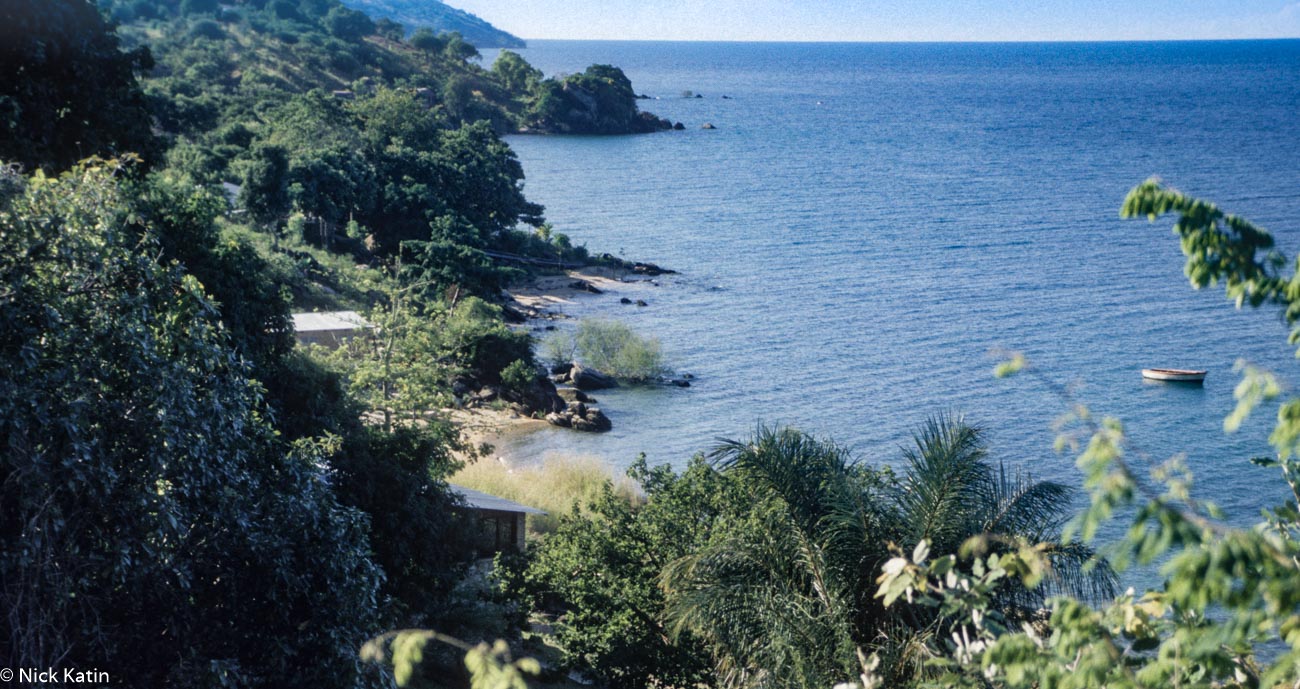
Lake Malawi is an awesome sight……….. Taking up one fifth of Malawi its located in the Great Rift Valley and forms a natural border with Tanzania in the north and Mozambique in the south. It is about 500 kilometres long and an average of about 48 kilometres wide. The area of the lake has been estimated at 27,785 square kilometres and its surface is a surprising 472 metres above sea level. Looking at it from the shore or even from the Bar of the Njaya resort it seems to have that slight concave surface of a large body of an ocean as if it were hugging the contour of the earth (which it is of course). It looked so tempting in the hot humidity of the afternoon. But there was one thing holding us back. Bilharzia!
Bilharzia is a disgusting disease. It’s not the disease itself that is so bad, although it’s pretty serious, but the way it’s caught! Its carried in freshwater by minute worms that initially live in a certain type of snail and then after an increase in numbers hit the water ready for any poor unsuspecting humans.
It will then enter through the skin and find its way to the intestines and bladder and from then on it’s all downhill. It’s found in slow moving bodies of water like the shallows of rivers and streams and lakes. There has been a long debate as to whether it exists in Lake Malawi and the bottom line is that it does in some parts. However, we decided to risk it on the basis that we were assured that the area around Nkhata Bay was clear of these horrible little bleeders. It did actually make sense. One look at the small swell and waves that seemed to continuously wash the beach meant that water was moving and the absence of reeds where the host snails were found was also comforting. So I took the plunge!
That night at the restaurant we met the other two residents. Stephan, a Swede who had been travelling all over the world for around five years (three in Australia) and Lucy another Pom. The six of us were the only guests in the resort and for the next few days we saw a lot of each other.
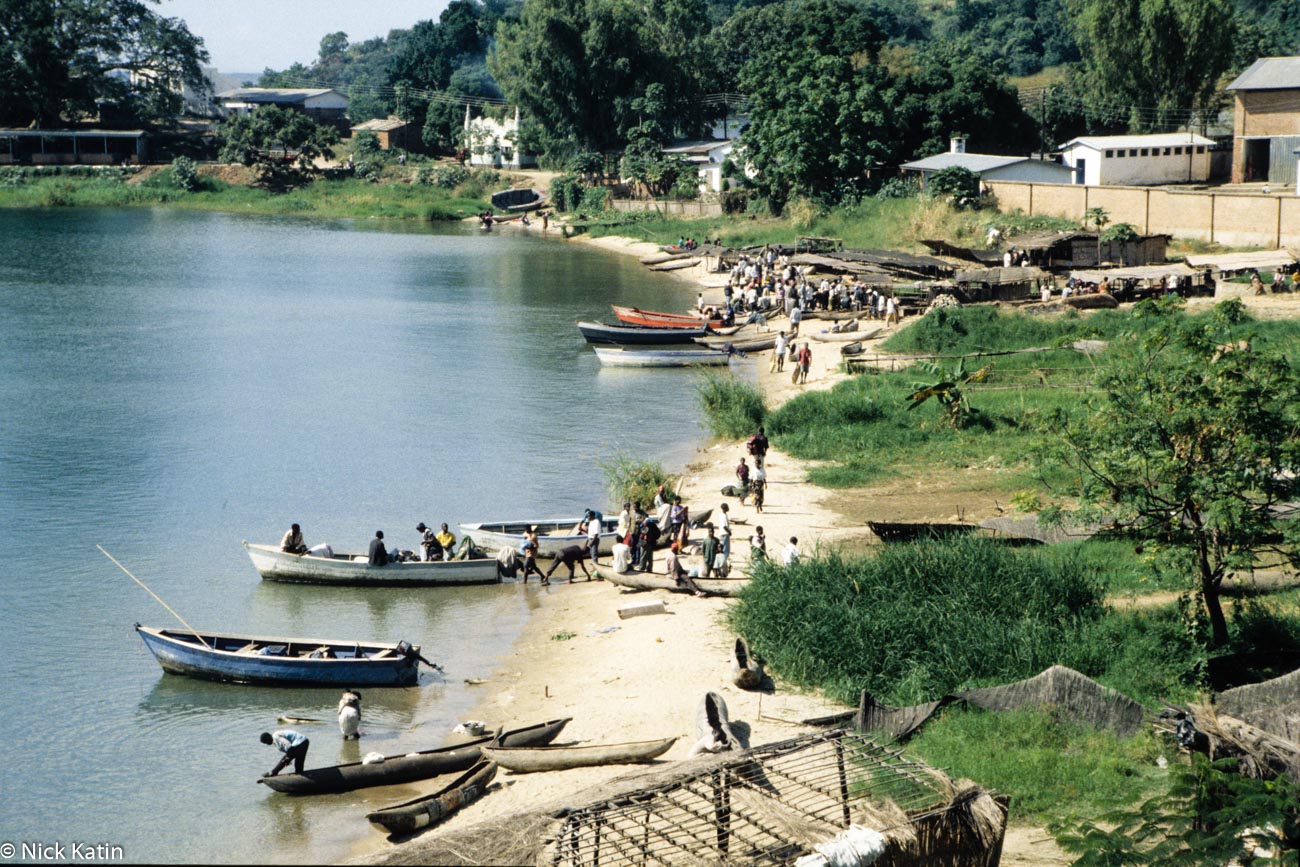
Nkhata Bay was a smaller quieter lakeside version of Blantyre. Ramshackle building and stalls lined the dusty streets that became small paths in and out of small pockets of more ramshackle buildings and stalls. Banana sellers were everywhere offering their produce for almost next to nothing in western currency.
As the others had been there longer they had already acquainted themselves with some of the more extrovert individuals of the tourist curio trail. We meet Chester, Comfort and Shosho amongst countless other sellers. Shosho to his credit showed us how to play the local game of Boa a game similar to checkers played on an indented board with Mahogany seeds. Later in the day he found us on the beach and chatted with us all the time hoping, we would buy some of his wares.
We also met Happy, Happy and Fraser, three young boys who were selling home made postcards. That’s the key to these people they wanted to learn about you and practice their English but most of all they wanted to sell you something.
I arranged to have a shirt made for the ridiculous price of US$2.
And that’s all there was to do in this tranquil place. Browse, eat, drink and swim.
The next day (Tuesday) we decided that whilst this might be a little bit of paradise it was time to move on and get to Zanzibar. We found out that there was a bus leaving to go to Dar es Salaam that night from Mzuzu. So after another eventful day of doing nothing, we said our good byes to the others in our regular lunch spot, the beautifully located Safari Restaurant and headed back to pack and leave. By the time we had walked back we had changed our minds at least four times. I felt that we were acting out that song that goes “should I stay or should I go”. In the end we decided to stay and would see if there was a bus any earlier than Saturday. We were just not ready to face yet another bus ride especially a much longer one than the last two.
Footnote:
Take control of your blog’s images now by signing up here to get “Eleven easy ways to improve your marketing photography”
A free guide on how to start improving your images to help you take control of your marketing.
That link again
So hang on tight, Bus ride from hell two starts now!
We arrived at the bus station at 5 pm for a 5.30 pm departure. This dusty, grimy, polluted bus station was not quite as threatening as Harare. There were lots of people floating around, and almost as many security guards. Music blared from the PA system and even at that time of day the market stalls that surrounded the station were doing a roaring trade.
At 7.30 pm the bus finally arrives and then all hell let loose. No orderly queue here just chaos as everyone attempts to get onto the bus at the same time with bags, pillows, blankets, box’s, small children and heaven forbid, babies. Any thoughts of having a reserved seat are blown out of the water. Another bus turned up, so thinking we were smart we attempted to board that one but were turned back by the bureaucratic driver who unconvincingly pointed out that our tickets said we should be on the other bus.
“But there’s no room on that bus” we countered.
He just repeated the fact that his bus was not our bus.
That was the final straw for Sue. She marched onto the first bus, cleared all the staff belongings from the front seat and shouting at anyone in the way that this was where we were going to sit. The rest of the passengers and staff were stunned into submission as we chucked our bags on the floor in front of us and sat down.
They had never seen a wild white woman before……….. usually we were so polite and accepting.
That’s not to say that we now had the best seats in the bus. We had to sit with our legs elevated on top of our bags, resting on the handrail in front, not the most comfortable position for a long bus ride but at least we had seats away from the congestion of the rest of the bus (the isle was crammed full of bags, boxes and other belongings). Plus we had full possession and sight of our bags. The doubt in our minds about the security of having bags stowed away in the luggage hold or on the roof were confirmed by the rest of the passengers.
Not one of them had their belongings where they couldn’t keep an eye on them.
At around 8.30 pm the bus took off and we had been going for just over an hour we were stopped at the first of five police roadblocks that we were to pass through before reaching our final destination.
Two police officers carrying AK 47’s over their shoulders, ordered us all off and went to search the bus and our bags. The reaction to this was not cooperative.
After a lot of arguing and discussion we eventually had no choice and an hour later we resumed our travels. The rest of the journey was an ongoing frustration at the speed at which we were going. Either the bus was heavily overloaded or it wasn’t man enough for the job, because it just about crawled up every hill (and in Malawi there’s nothing but hills). On some stretches we could have walked faster!
Eventually we got to the bus station at Mzuzu at around 9.30 am, some four hours late and managed to meet our next challenge finding a bus to take us to Nkhata Bay.
We found what’s known to travelers to third world countries as the chicken run bus. It was exactly like the local buses you see portrayed in the movies. Full with locals carrying on just about anything you could imagine. Bags of seed, wood, fruit, ordinary luggage and yes, of course, chickens. We sat with our bags on our laps and watched our knuckles turn white from gripping tightly anything we could hang onto as the bus weaved its way at a speed that was just a wee bit fast down the winding potholed road to Nkhata Bay.
As it sped past banana plants and maize fields, I did manage to notice that every inch of land appeared to be cultivated. Even the steep hillsides were terraced with various crops. In between there were small clusters of straw huts with their chimneys masquerading as a hole in the roof smoking. It was a cold morning in the highlands of Mzuzu.
It was a lot warmer in Nkhata Bay and we were thankful to get there in one piece. We now had to find our way to Chikale Beach Resort a couple of kilometres south. When we got off the bus a young local approached to see if we wanted a lift. Thinking that he wanted to take us to another hotel or resort we declined and with our backpacks on we summoned up some energy and marched in the general direction of Chikale Beach. A few moments later he was back.
“Where are yoou gooing?” he asked
“Chikale beach resort”
“I am Leenard, de manager. I will take yoou dar.”
This guy had to be no older than 21 but despite this and our initial concern that this was a potential mugging we jumped into the back of his Ute, too tired to really care. We had to share the Ute with a couple of crates of beer and a couple more passengers but it sure beat walking with all our belongings on our back.
The resort was pretty basic with thatched cottages grouped around a tree-lined beach and the bar/restaurant right on the beach. Each cottage had double bed and its own bathroom, which as far as we concerned after the experience of the last few days was heaven! All this for 600 kwacha (US$10) per night.
Footnote:
Take control of your blog’s images now by signing up here to get “Eleven easy ways to improve your marketing photography”
A free guide on how to start improving your images to help you take control of your marketing.
That link again
Apart from the shopping and of course the many energetic activities associated with the falls itself (like bungy jumping, white water rafting, absailing etc) there is one that takes you back to a long gone era of British colonialism; afternoon tea on the terrace of the Victoria Falls hotel. This colonial style building had for years been the centre for Europeans up until independence. It was here that local white farmers, townsfolk and well off visitors would gather for spot of ‘tiffin’. Certainly it has lost none of its atmosphere even if it has its colonial clientele. Nowadays well off tourists (mostly Americans) stay in its well-appointed and stylish rooms and budget tourists like us frequent it for afternoon or morning tea and if really feeling extravagant, dinner. Of course it does have prime position overlooking the Zambezi gorge just downstream from the falls.
I couldn’t help imagining, as we ate our cucumber and smoked salmon triangular bite sized sandwiches, men and women in hats, striped jackets and full length full dresses playing croquet or just lazing around on the expansive and immaculate back lawn. Black waiters dressed in black trousers and white dinner jackets, hovered at our beck and call and delivered the three tier silver tray full of sandwiches, scones, finger cakes and on the side the obligatory tea. It was wonderful even though I don’t like cucumber or tea and cheap at an all you can eat price of US$4 each.
Across the other side of the hotel is the train station, another relic of the Edwardian past. We had to catch a train here to Bulawayo the next day and we thought it a good idea to book. We had wanted to book a first class coupe, which sleeps just two but had to settle for a second class that sleeps three. Not a big issue we thought at the time. The train left at 5 pm the next day so we had 24 hours left in Vic. Falls.
Despite the number of tourists that increase as the years go by there is still plenty of wildlife in and around Vic Falls. On our last visit we twice come across wild elephants whilst walking and cycling just outside of town and had also seen a family crossing the Zambezi upstream from the falls. This time round we saw plenty of elephants on a night time game drive and then the following morning we actually rode on some as well!
Elephant riding is an experience not to missed. The Elephant camp is in a location too remote to find ourselves, so we were picked up and taken there early in the morning and given tea (again) and biscuits just in case we couldn’t survive a couple of hours without sustenance.
Richard our tour leader introduced us to the elephants as their riders put them through a series of exercises. Fortunately we didn’t need to follow suit! Next it was time to jump on and that’s easy. A platform has been erected just for this purpose.
Settling in behind the rider (they very wisely team novices like us with riders who really know what they’re doing) I thought how well cushioned the saddles are. Now I always thought that elephants were big heavy brutes that destroy everything in their path as they move around.
Well that myth was destroyed within the first five minutes of riding! Incredibly they just glide through the bush effortlessly and quietly leaving no trace behind them. Apparently it’s the muscles in their feet that move around to cope with the weight displacement. So it’s just a steady swaying movement as we followed Richard who was on foot and carrying a rifle with both hands behind his neck. The rifle is for our protection just in case a lion or leopard gets too near. Even though he’s never had to use it yet he still believes it’s better to be on the safe side and that sounded like a pretty good practice to me.
Richard was one of those “boy’s own” characters that seem so commonplace in the ex British colonial Africa. A tall, solidly built, good looking young man he spoke with that sort of cultured Zimbabwean English accent that’s also very close to the accent spoken by South Africans of British ancestry. He would have been born and brought up during Zimbabwe’s war of independence and most likely, as with so many others of his generation who stayed and toughed it out, he was taught how to fire a gun before he could read.
My elephant was called Manna and my rider was Sopi. Sopi was quite chatty and told me that they had eight elephants in all. They use them in rotation and were purchased for Z$500 from a nearby park that were about cull these beautiful beasts. Most of them are males; it seems that their temperament is more suited to this type of work than females. Elephants live for around 60 – 70 years and during this time they will wear out four sets of teeth. After having seen them eat at the end of the ride I’m not surprised, they chew as if their lives depend on it which in fact I suppose is true. It’s partially because of their feeding habits that the ride is only one and a half hour long. Apparently they get rather anxious and twitchy when they get hungry so it’s wise to keep it short and let us off before hunger gets the better of them.
The ride actually finished at a secluded spot where we also got fed but not until we helped the riders feed them. Both Sue and I bravely put our hands into our respective elephants mouths with some special feed which was their treat for being good little steeds (the feed not our hands). It actually wasn’t the hand I feared for the most, it was suffocation; their breath is terrible! But not quite bad enough to put me off my bacon and eggs!
If you like this then hit “follow” on the side bar
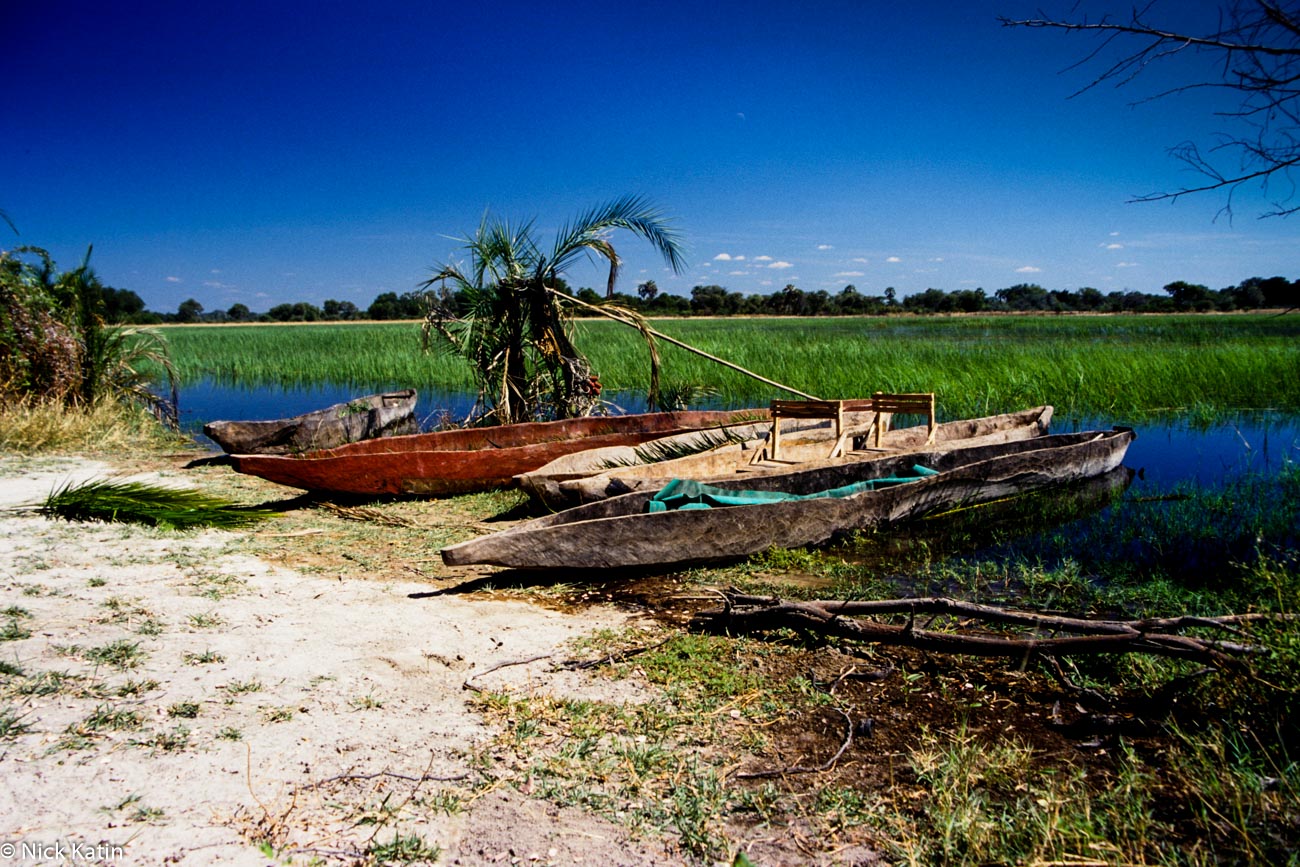
Our final day in Swako was actually spent in Walvis Bay, a small town, 30 kilometres south. We checked out of our comfy accommodation thinking we would find something in Walvis Bay, a decision we were later to regret.
This little nondescript town was never actually colonised by the Germans. The British who controlled the Cape colony (South Africa) and laid claim to it in 1878 and didn’t let go of it until 1994, four years after Namibia’s independence. This natural harbour’s popularity is because it’s the only decent port north of Luderitz and south of Luanda in northern Angola and has been a very strategic political, defensive and commercial position to hold.
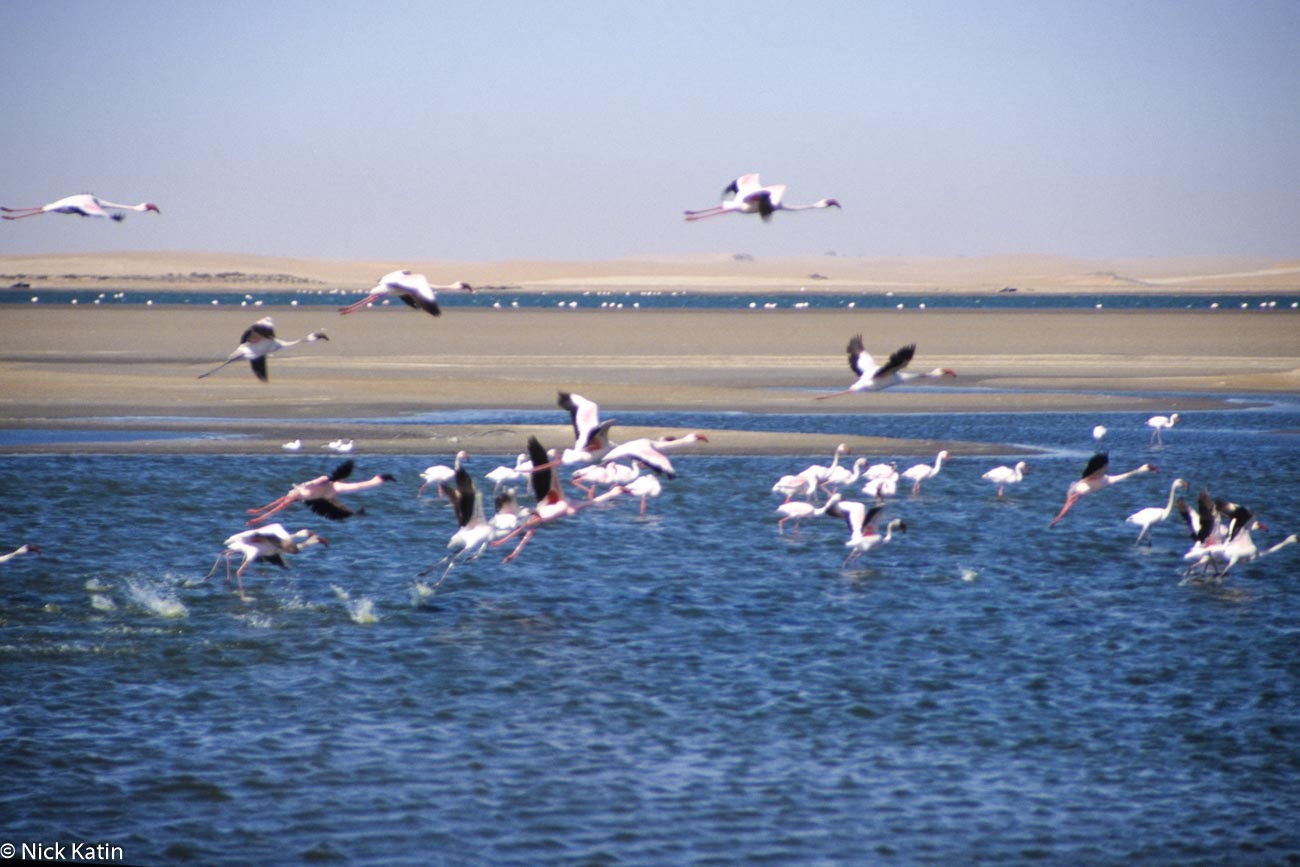
Now Walvis Bay’s main attractions are its bird life, in particular flamingoes, and Dune 7.
Dune 7 is large stand-alone sand dune north east of the town that rises above the bleak landscape and overlooks the noisy goods train railway. The locals’ flock to it in their droves to walk, run, sandboard or simply sit at the picnic tables in its shadow eating sandy sandwiches or gritty sausages. The bird life on the other hand is much more interesting. The lagoon just to the south of the town is home to half of southern Africa’s flamingo population plus pelicans, gulls and plovers to name just a few. Close by is the Raft a pub/restaurant housed in a wooden building sitting on stilts over the water. A couple of beers in there gave us a brief respite from the ever-increasing wind and in a rash moment we decided to return for dinner that night.
I have to say that it was one of the most amazing dining experiences either of us had ever had. The meal was nice we had some of the local fish species, Kobaljai and Steenbras and it was all pretty good including the service. What stole the show were the flamingos! From where we were sitting we could see the floodlight water and all night there was this constant flow of flamingos walking back and forwards doing their best to imitate the huge walking box robots from the Stars Wars movies. These wonderfully colourful waders gave us a show neither of us will ever forget!
What is forgettable however is the smelly cramped dog box of a unit we ended up staying in overnight back in Swako. We hadn’t managed to find anything cheap enough in Walvis Bay so we rang a place back in Swako without knowing what it was like. The women who answered the phone said yes it was free that night and the cost was N$100 plus $30.00 for laundry. OK I thought we don’t want any laundry done we’ll take it. What the laundry turned out to be was the cost of washing the bed linen after you had used it, assuming that you hadn’t brought your own. Well after sleeping the night in this matchbox with less facilities than a prison cell and having to listen to her winging about this that and anything else she happened to be an expert on, we told her to get stuffed, politely of course! Needless to say we headed out of there as soon as the sun was up.
Every town or city has the Café, the place to be seen at and usually has a specialty or two. Swako was no exception. The Café Anton was a trendy, probably in some eyes pretentious, indoor/ outdoor café overlooking the main beach. After such a shitty night we thought we’d treat ourselves to morning tea in the shape of a couple of German pastries and (finally) some good coffee before heading out. No doubt about its popularity, the locals were arriving in droves for both coffee and pastries and breakfast. It was a fitting end to our stay in Swako. It had been the only place in Namibia where we could take time out to get our fix of some western culture.
If you like this then hit “follow” on the side bar
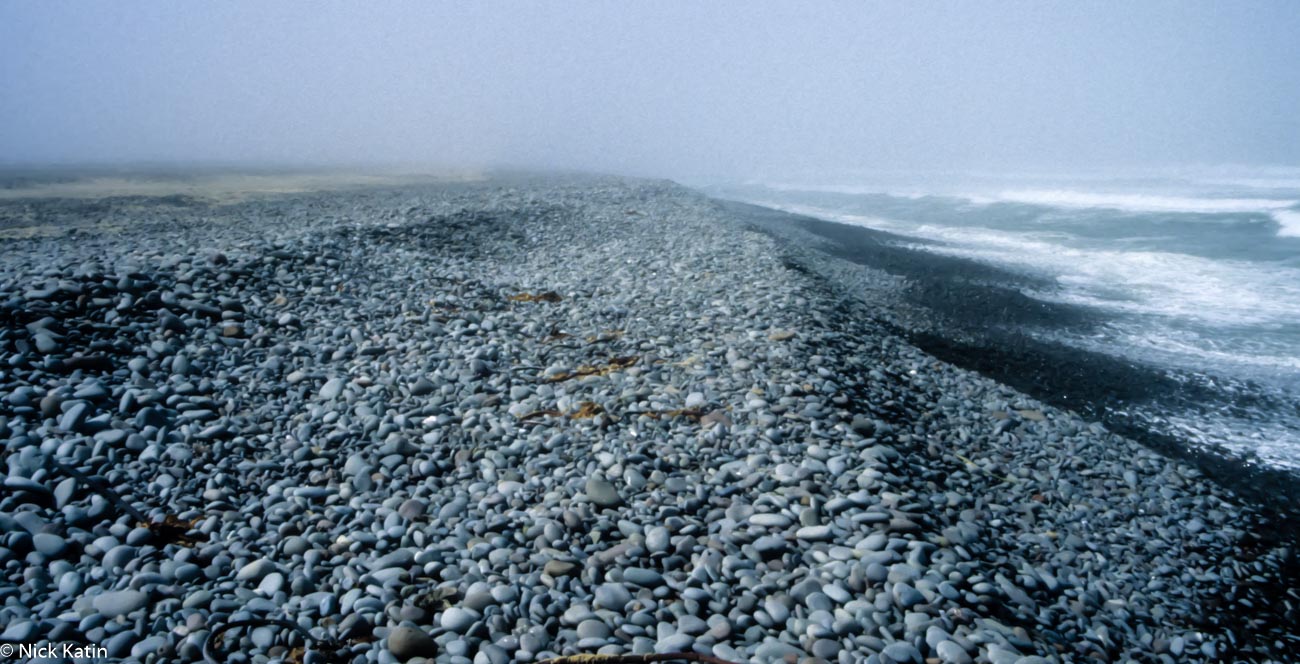
Terrace Bay is desert, black stone beaches and a grey sick looking ocean that yielded an endless abundance of fish. This is serious stuff! A couple of guys caught 82 fish each one weighting around seven or eight kilos off the beach! I don’t know that much about fishing but I do know that there are few places left in Australia where you could get a catch like that without a boat.
A few others must have caught a bucketload as well as it was being offered around (cooked that is) by one of the other groups at dinnertime.
This group was led by the ‘knowitall’ you know the type, there’s one in every gathering or group. Even though they were speaking Afrikaans his body language and actions told us “I know it all and I’m going to tell you”.
We were in the bar and he and his friends and family walk in and he just took over the bar. Frans, the barman, must hate arseholes like him just walking behind the bar and helping himself simply because they all arrived together and poor old Frans was a bit slow in keeping up.
Relaxing for a day or so gave Sue a chance to recover, which she did although she still felt off colour. I was hoping that the bracing air and relaxation would clear up my catarrh but that still stuck to me so much so that in frustration I started a course of antibiotics that we had brought with us.
The Skeleton park is infamous for its shipwrecks that dot the coast after hitting one of the treacherous sand banks and some bright spark thought the name ‘Skeleton’ was appropriate. It was one of these shipwrecks that got us into what we thought at the time was big trouble. Our next destination was Swakopmund some 350 kilometres south on the coast, via the Cape Cross seal colony. Bearing in mind our ‘reluctance’ to leave ‘Terrible’ bay, we set out early to ensure we had time.
Well we made good time along the salt road to the park gate at Ugab and then turned off to see one of these shipwrecks. The road had another of these heavily corrugated surfaces that have you bouncing around everywhere and just moving forward at more than 30 kilometres an hour was a struggle. Suddenly a buzzer went off and the oil light flashed on the dash. We both said “Shit!” stopped and turned off the engine. Like any part time mechanic, I was quite capable of opening the bonnet and checking the oil. Plenty there! I checked to see if the filter was loose. No that was ok as far as I could tell. Now we’re in a hire car which is less than a year old and still covered by it’s warranty, somehow fiddling with it didn’t seem the right option without authority. After all it’s my credit card imprint they’ve got as a deposit. So we did the right thing and slowly drove back. It didn’t seem to mind if we drove it at 20 kilometres an hour.
It took forever to get back to Ugab. There’s not a lot at Ugab in fact there’s not even a phone. Fortunately they did have a more modern method of communication than the pigeon, a two-way radio. The gatekeeper radioed the nearest mechanic in Hentiesbaai a small town some 137 kilometres away. His only option in these circumstances was to bring a tow truck.
All we could do now was wait and wait! Eventually Hennie turned up around 3 hours later which I guess wasn’t too bad. He took a quick look at the car and then we loaded into the back of his truck whilst we both climbed into the front.
Hennie was born and raised in Namibia and despite being white considered this was as much his country as anyone else. We talked about the fish, the up coming Rugby world cup (Namibia actually had a team entered) and life in general in Hentiesbaai. Hennie told us that there was around 200,000 whites in Namibia and then turned to us and asked “How many blecks ‘ave you goot in yoor ‘ountry?” When I replied that we had about 300,000 aboriginals. He looked at us and said “Thets nothin man, we got 3 million of them!”
Of course it turned out that there was nothing wrong with the car other than a loose wire on the oil switch in the engine which had somehow shaken loose. It cost N$1235 (US$124.00) to get us picked up from Ugab and I had to break the news to Werner. “We’ve fixed the problem mate” I told Werner on the phone and proceeded to tell him about the oil switch. We had already rang him and told him what had happened and needed permission for Hennie to look at the car which Werner got from Volkswagen. “Thing is, it’s cost N$1235.00 and they want to know how you gonna pay for it?” There was a pause. Somehow I had this picture of Werner looking to the heavens and saying “why me”. Anyway we ended up paying for it on proviso that he would settle with us when we returned the car.
If you like this then hit “follow” on the side bar
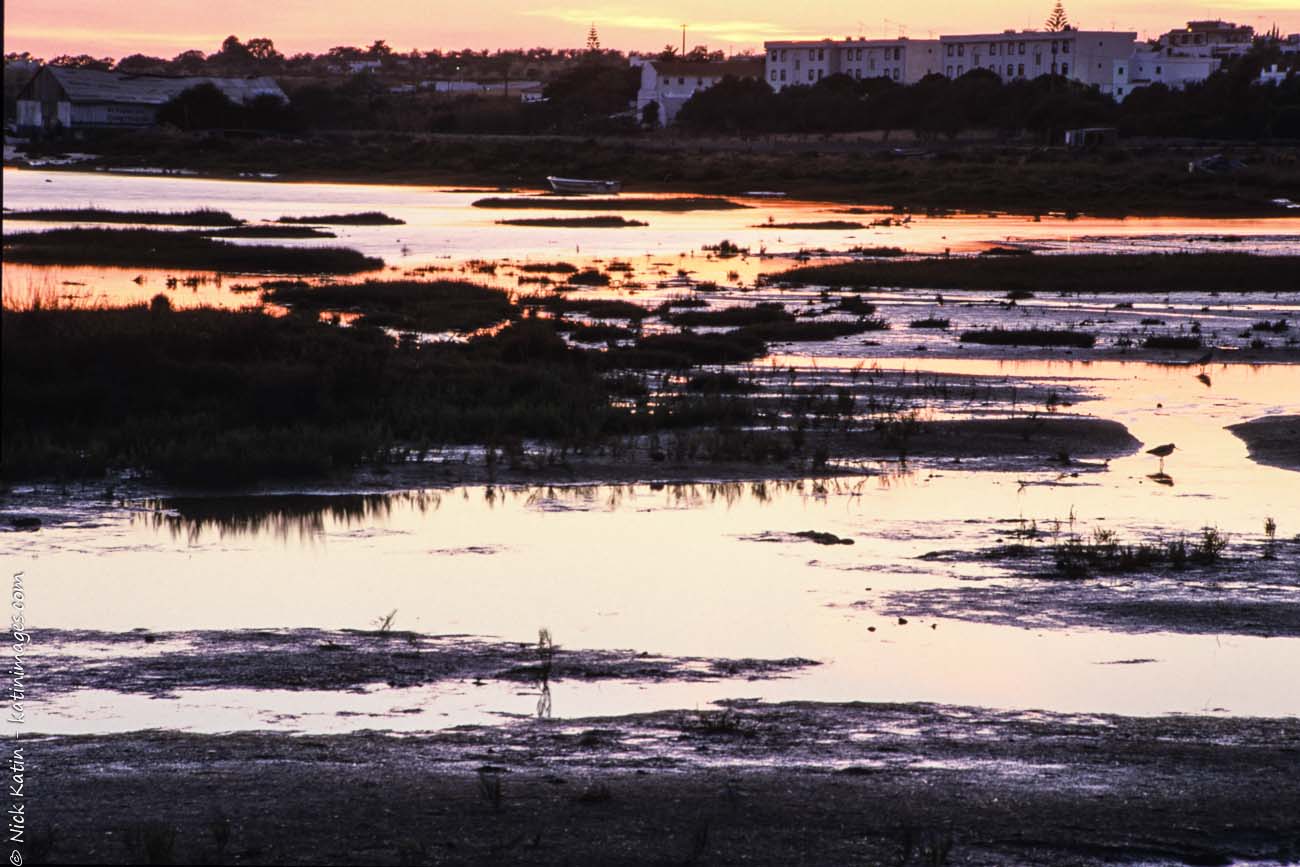
The Algarve region in Southern Portugal is a popular tourist spot for tourists looking for sun sand and good times.
But it has a quieter side as well particularly near it’s main town of Faro which is as Portuguese as it gets in this area.
Even though the area is well know for its sandy beaches and breathtaking cliffs, I couldn’t resist getting a different view of its coastline.
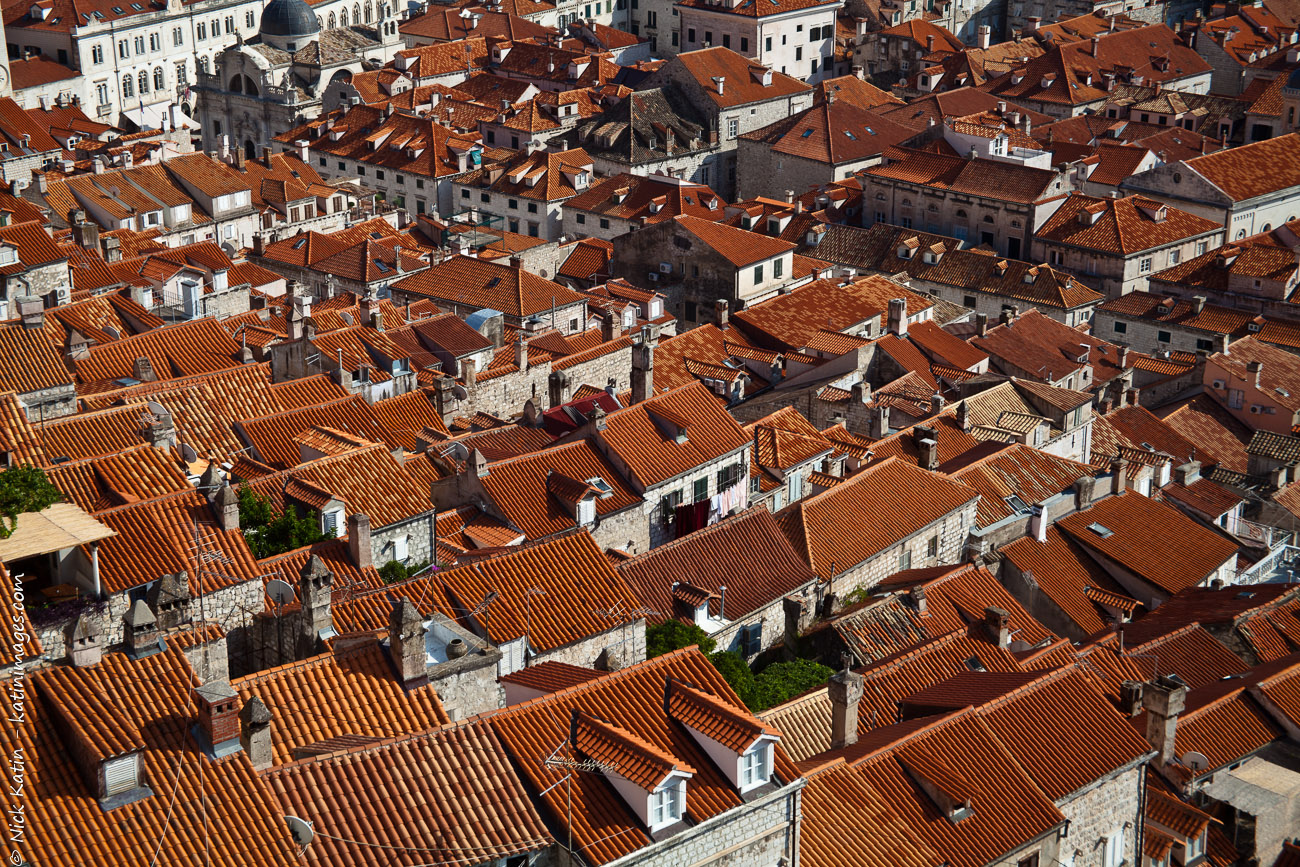
Rooftops of Dubrovnik
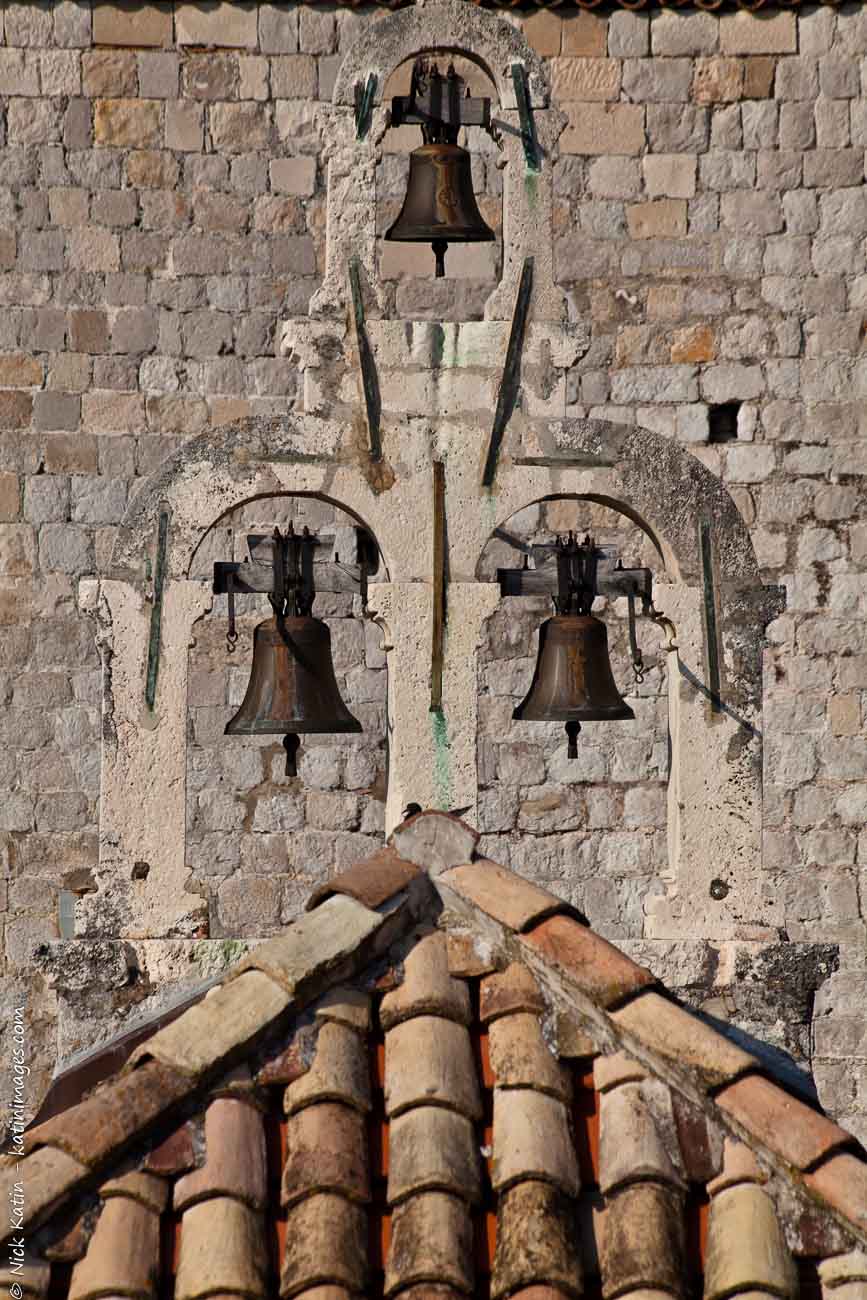
Bells at a church
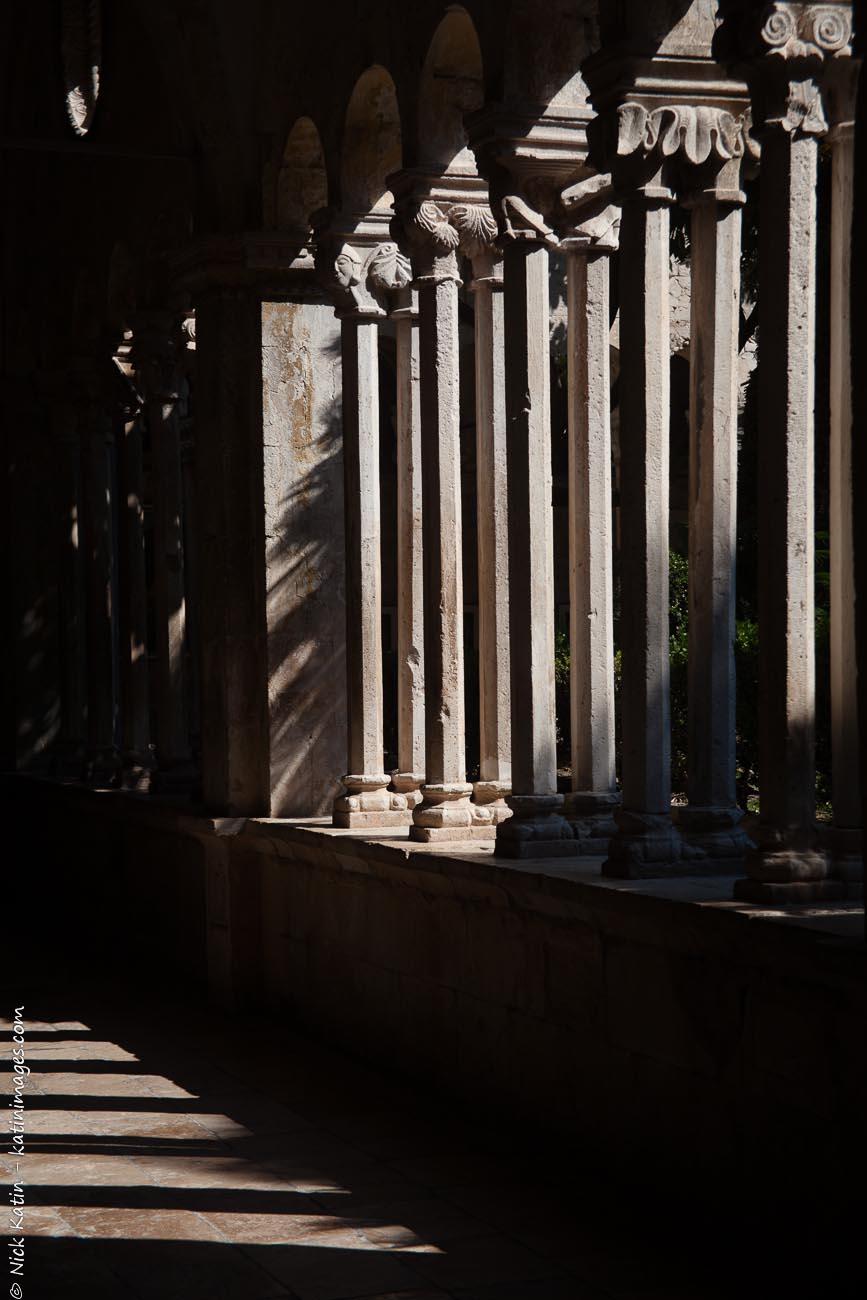
Cloisters
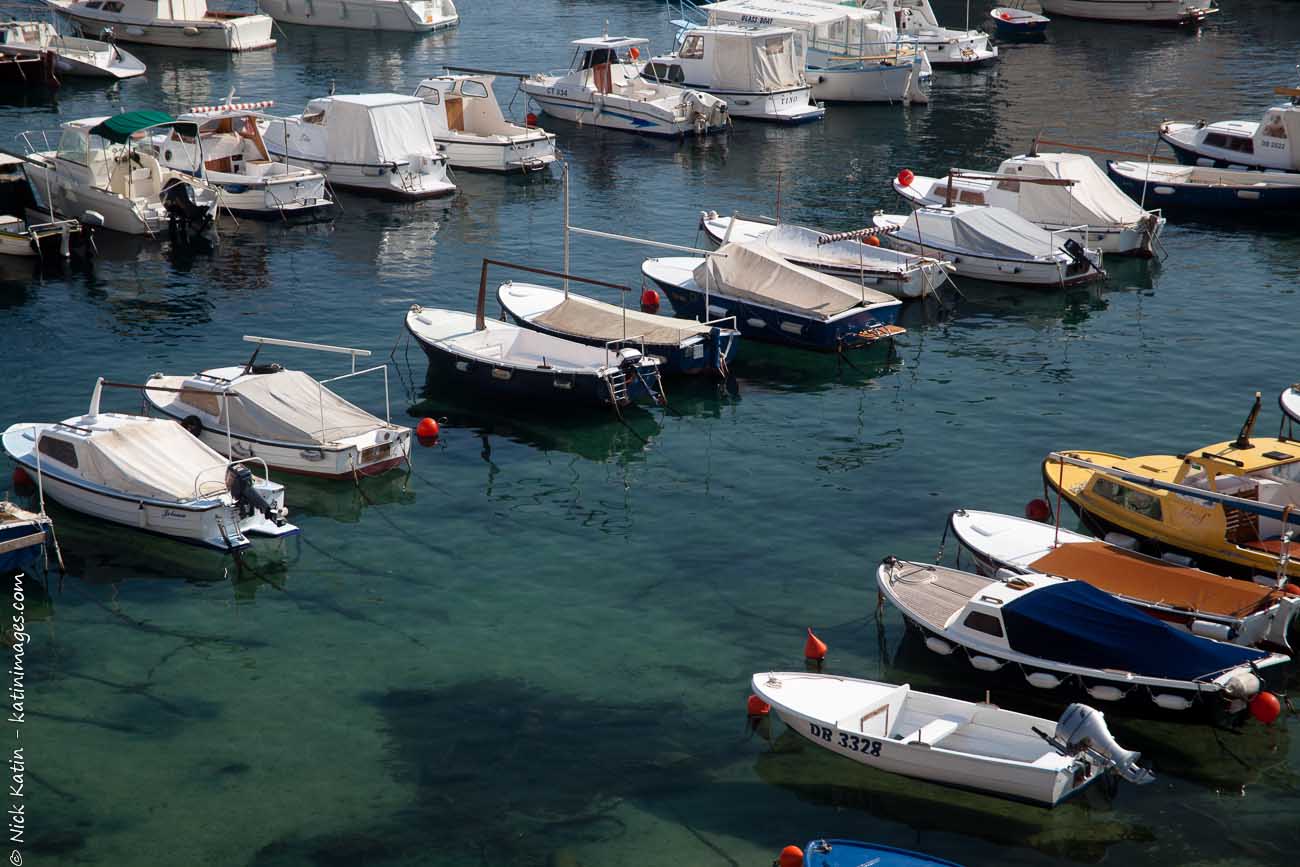
Old harbour
Why do my photos of landscapes look ordinary?
Ever taken a photo of a beautiful scene and found that even after you thought it looked OK in the rear screen, once it was displayed on your computer at home it looked nothing like you remember it. Usually that’s caused by a rush of blood to the head that tricks you into believing you can capture the scene before you (usually a landscape). Most common faults are that everything is too small, too much sky, too much foreground, e.g. grass, or it just looks uninspiring. When composing a scene look to use the rule of thirds and place the horizon carefully away from the centre either high if the sky is uninteresting or blown out and the foreground has some points of interest like interesting rock formations or place it low if the sky is full of interesting cloud formations or colour. Make sure the horizon is straight and if you have the sun at your back watch out for your shadow. Finally play around with different positions and zoom in and out.
Here’s an interesting landscape
I’m off to Bali soon for a long weekend and some RnR. Its only three a bit hours by plane from Perth. I’m also intending to add to my growing Bali image collection. This one was taken at the hotel Seminyak in of course Seminyak. Seminyak is the most western town in Bali with a big population of Aussie ex pats, designer label shops and the best restaurants on the island. In fact its fast becoming a culinary paradise with an influx some excellent international chefs who now have interests there. 1/320 @ f9 42mm ISO100.
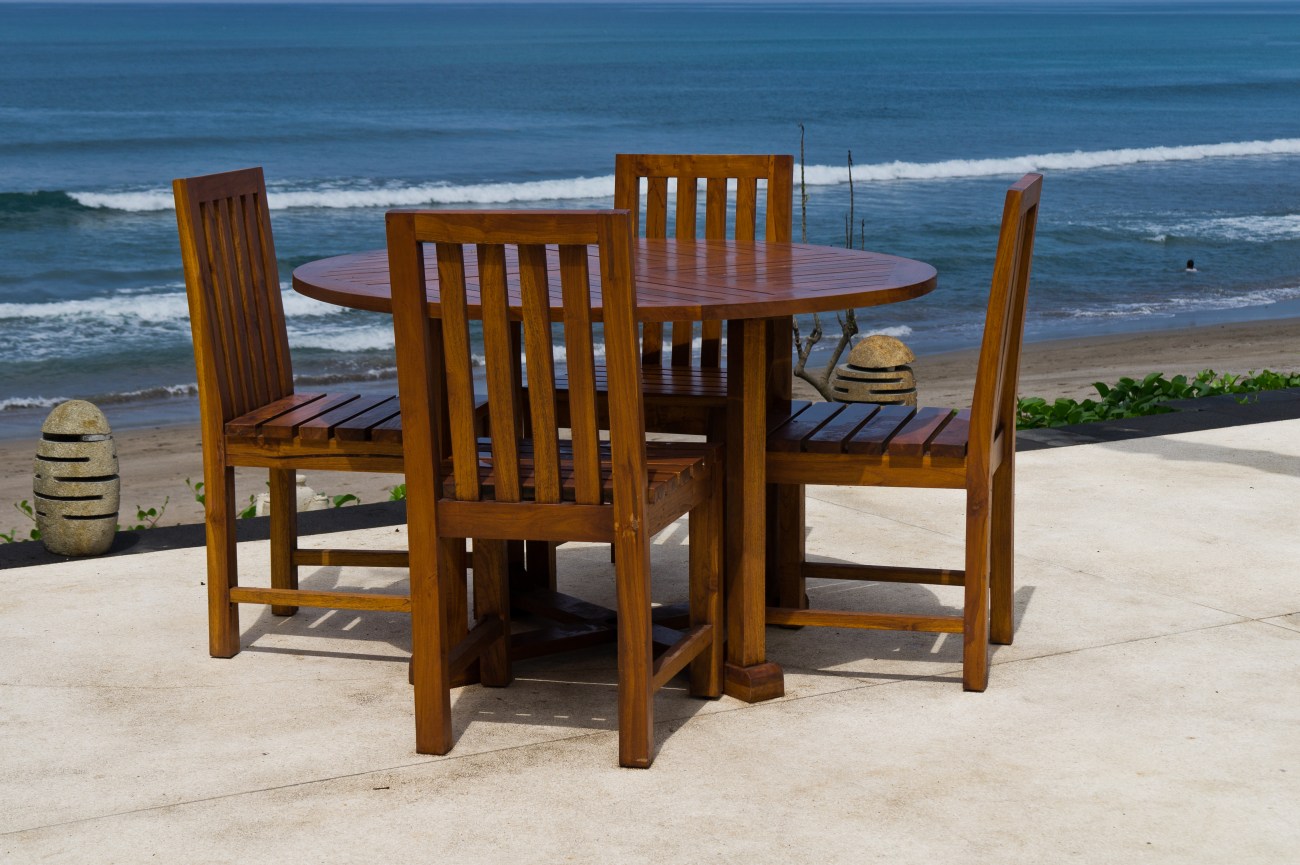
To buy a print of this photo go to Table on the beach photo. To licence this photo email or contact us


 Katin Images Travel Photography