
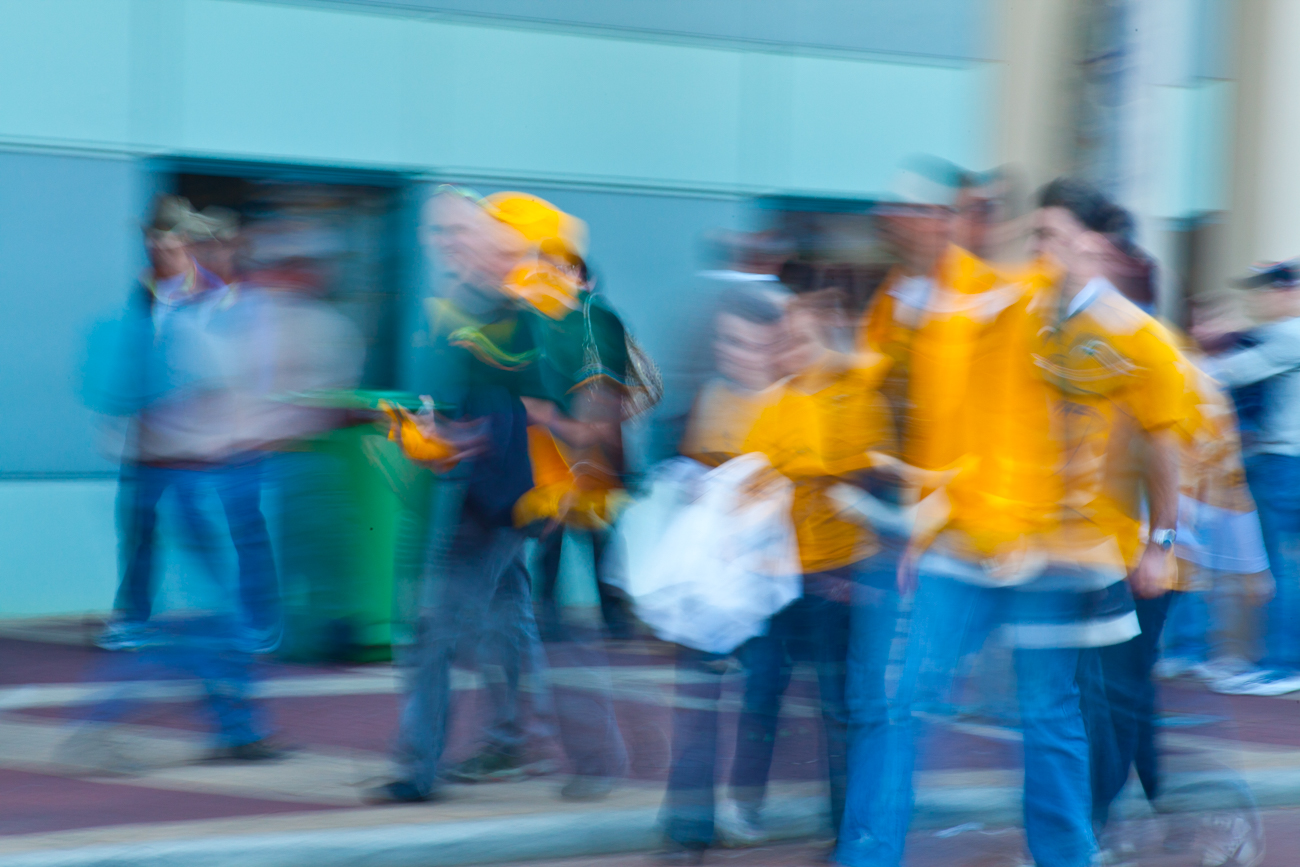
Rugby supporters outside Subiaco Oval in Perth Western Australia
Katin Images Travel Photography
Travel Photos, Travel Photography Tips and Software


Rice paddie worker near Padangaling, Bali Indonesia. Click on the lick for a larger view and other options
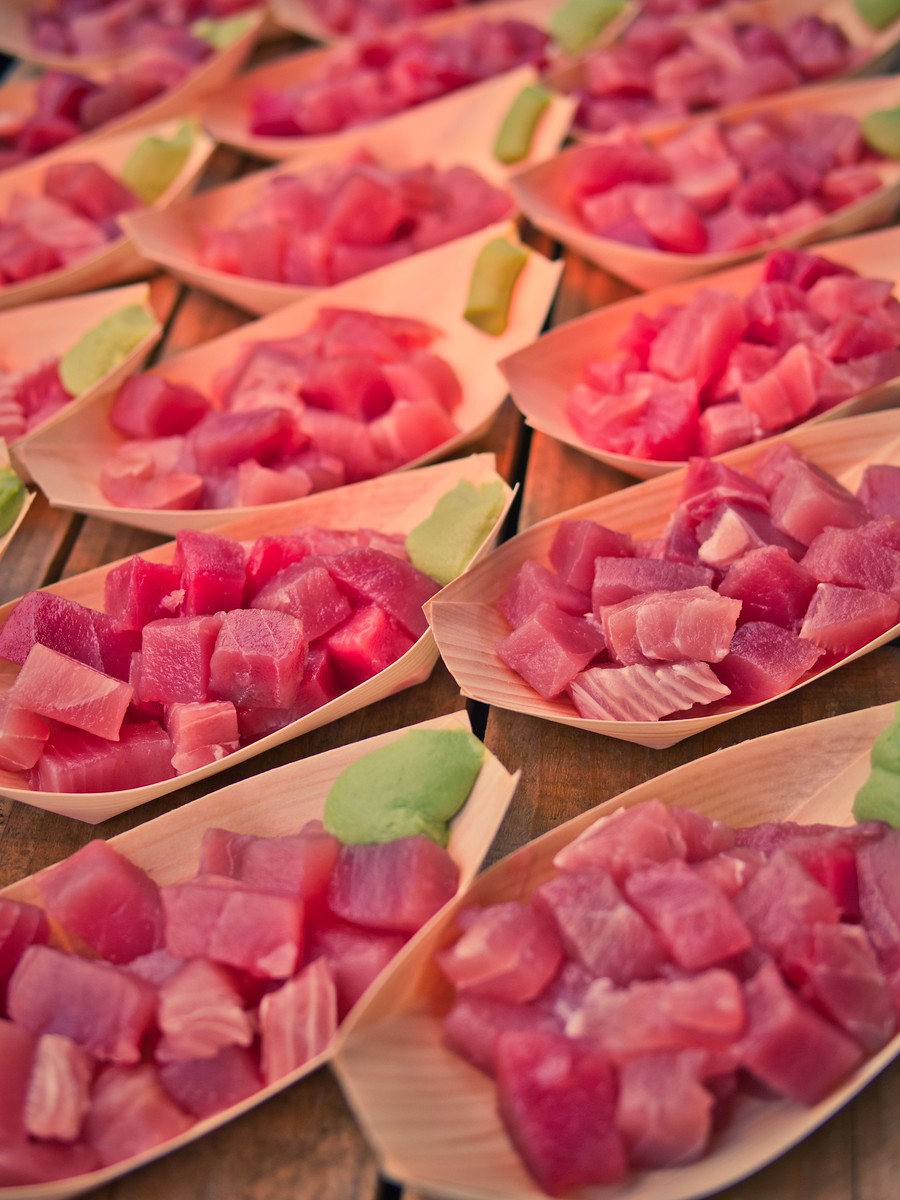

A boat of Tuna and Otoro served up in Tokyo’s Tsukiji Market. Click on the image for a larger view and other options


A barber resting between clients, Bikaner, Rajastan, India. Click on the image for a larger version and for other options


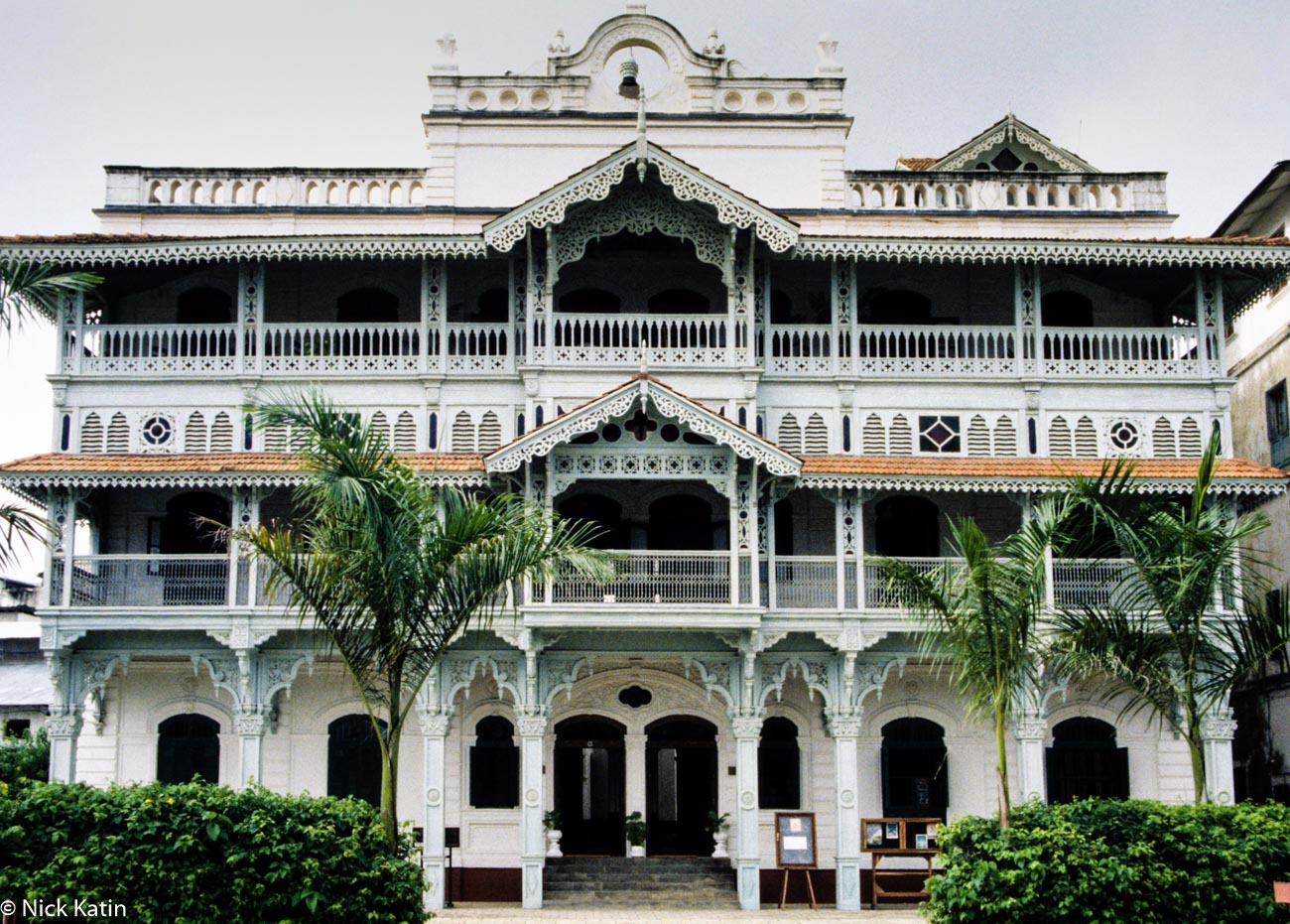
Our last full day was spent just aimlessly wondering down the alleys and streets of Stone town, stopping to browse the bazaars, have a coffee or something to eat. We finished off the day with a meal at the Stone town bistro in the old dispensary building. The old dispensary building was in fact a charming old building that was restored to its former glory in the mid 1990’s. Built for one of the richest Indian merchants in Zanzibar in the 1890’s it was donated as a medical dispensary by the same wealthy merchant at the end of the nineteenth century. It stands four stories tall with decorative balconies that give it a sort of colonial feel. We dined there twice and each time with the sort of feeling that you were dining in the same sort of atmosphere that the British Raj would have done at the height of their colonial power. We felt the urge to look around at any newcomers in case they had handlebar moustaches, belonged to the coldstream guards and said “what old boy” every other sentence.
As we left the restaurant I suddenly remembered (I’m ashamed to say that I forgot) the cricket world cup! Australia was playing South Africa in the semi. Immediately the search began for somewhere that a) had a TV and b) had it turned on and tuned into the cricket. We searched high and low and eventually found one at a hotel not far from our guesthouse and seeing that it was tuned into the wrong channel I cheekily asked the lone resident if she minded if I switched channels. We sat down ordered a drink (we thought we had better) and then proceeded to cheer like madman as the game seemed to ebb and flow from one side ‘s advantage to the other. The porter, the receptionist and a few other members of the hotel staff weren’t the slightest bit interested in the drama that was unfolding in front of our very eyes, they found our reaction much more entertaining. Not so the lady who we had hijacked the TV from. She disappeared quick smart.
Those of you who saw it will recall that South Africa needed 9 runs to win in the last 4 balls whilst Australia needed 1 wicket…………….. Lance Klusener hit 2 successive boundaries and we shook our heads discontentedly. The staff looked at us puzzingly……………. The next ball and Klusener panicked and ran out his partner, Alan Donald (to be fair to Klusener, Donald was not backing up enough).
It’s a draw and due to some rule or other Australia earned the right to go through to the final. Now we’re both up and jumping up and down, shouting and carrying on whilst the totally bemused hotel staff looked on even more puzzingly.
OK, you had to be there!
Our final few hours in Africa were spent pretty much the same way as the day before. Aimlessly wondering the alleys of Stonetown soaking in the atmosphere and feel of the place for the last time.
We checked out of the Malindi and caught a taxi to the airport. During the half an hour wait or so I totaled up our expenditure. We had failed to keep to the original daily budget and ended up spending, on average, $130. This meant we had spent $3300 more than we had budgeted and work would have to be found almost immediately we hit London. Oh well, we shrugged, we did have great time. “What’s three grand in the scheme of things!”
It took about 20 minutes to fly back to Dar es Salaam with great views of the some of the surrounding islands shimmering in the heat surrounded by the deep blue and turquoise water.
We were looking forward to being able to easily find our way to the international terminal and crash for a few hours before our flight. That plan disappeared very quickly.
The airport that we landed at was not the main Dar airport so we had to get a taxi the 1.5 kilometres to the international airport. We didn’t exactly have a choice as to which taxi we took. Once we hit the deck our bags were taken by the airline staff and deposited straight into a taxi waiting there. The driver must have thought we were rich tourists ripe for plucking. He wanted to charge us US$12 to take us. Eventually after much haggling we got him down to US$5.
At the international terminal we went to stroll into the building and were stopped. “Yoo a not aloud to go in de terminal until de chick in coonta is opan” a rather officious lady told us from her desk at the entrance. “yoo will ave to wait over der” she vaguely gestured towards a courtyard with two bench seats already filled with passengers waiting for their airline “chick in coonta” to open.
We had no choice, we had to admit defeat.
As Stephan would say, “Africa wins again”
But Africa is so spell binding, so beautiful, so rich in nature at its best that it won the day we first set foot on its fragile soil.
Footnote:
Get more traffic to your blog! Let me help you take, edit and publish your images now by signing up here to get “Eleven easy ways to improve your marketing photography”
A free guide on how to start improving your images to help you take control of your marketing.
That link again
After that sad little story (see the last post) we went further into depression and visited the Anglican Cathedral, site of the slave market. Apparently a group of missionaries came out to Africa to oppose the slave trade. They eventually found their way to Zanzibar and after its abolition of the slave trade, built a cathedral on the very site, removing almost any remnants of this ugly meat market. The altar stood at the same point as a post that was used for whipping the slaves stood. The floor was a symbolic red marble to depict the blood spilt to show potential buyers the strength or weaknesses of each slave and therefore justify the asking price.
Next door at the St Monica’s hostel we were shown the original holding cells for the slaves. About 1 metre tall and not that much wider they looked extremely cramped for one not to mention the dozens that were crammed in at any one time.
Wherever you go in the world there’s always evidence of man’s inhuman treatment of his brothers usually because of the colour of his skin, the religion he practices or the country he was born in. It seems to me that there is no end in sight and we are forever damned to be cruel to each other. The only species that has a consciousness of itself has been unable to capitalise on this gift. If anything it has used it to carry out barbaric acts in the name of intolerance of racial or religious difference. At least animals attack and kill in the name of survival.
But that’s enough of that!……………..The Busaidi Omani Arabs built the Arab fort in the seventeenth century as a defense against rival Omani Arabs, the Mazrui and the Portuguese, who they had recently kicked out.
Since then it’s been used as a prison, a railway depot and (only the Poms would think of this one) a ladies tennis club. Nowadays it’s been restored and used as an open air theatre and restaurant.
We went to one of the traditional dance shows held in the fort that evening. The ‘tucker’ was good but the dancing was at first interesting, then mildly entertaining and finally boring! I can only concentrate for so long when all there is on offer is a slightly different dance to the same tune, time and time again.
In the nineteenth century Zanzibar created for itself a niche market (to use modern marketing jargon) in the growing and exporting of spices. In the twentieth and twenty first centuries another market has grown from this industry, the spice tour. No, nothing to do with the good looking girls that prance around singing and dancing making squillions but the real spices.
We had read in a borrowed Lonely Planet guide, that Mr Mitu ran the best value spice tour. So taking that advice at face value we booked with his company and turned up at the prearranged meeting place only to be picked up by Mr. Sulaman tours. Apparently if one particular tour company doesn’t have enough paying customers to justify leaving they shunt them on onto a rival company. So there’s always a chance that the poor unsuspecting tourist will go with a tour company they haven’t booked with and may have not wanted to use. Somehow, though, I think that they are all pretty much of muchness. Certainly we had no complaints except for the weather. It literally hammered it down. Aswan, our guide, attempted to tell us how the different spices grow, when they are picked and what uses they have. Meantime we were getting soaked and struggling to hear his voice above the din created by the rain pitter-pattering on to the umbrellas and jungle vegetation. Nonetheless we were impressed by the number of spices grown. Cloves, Cardamom, Cumin, Turmeric, Ginger, Mint, Cinnamon, Lemongrass, Coconut and Nutmeg, the latter I learnt to my amusement, is used as an aphrodisiac as well as for cooking.
We were transported around in a dala-dala; a small converted covered in Ute, with wooden benches either side, to a government farm where all these spices are grown. From there we were herded on to other attractions like the Kidichi Persian baths built by the Sultan Said for his Persian wife, Sherazade, 150 years ago and now occupied by a colony of bats; the Mangapwani coral cave which was about as interesting as the bat shit left by the Kidichi bats and Mangapwani beach for an extremely pleasant swim in warm tropical waters beneath the now dry but stormy clouds. In between all that we somehow managed to try Jackfruit, a sort of fleshy pineapple and Pamillo, a giant grapefruit and chew on the addictive sugary Zanzibar doughnuts. Not to mention sitting crossed legged on the floor of an open sided enclosure surrounded by banana trees, eating pilau rice and veggies in coconut sauce for lunch.
Its funny the sort of fellow travelers you meet. Once again we met with two Poms Deb and Andy, who had spent a few months in Perth and whose eyes watered over at just the mere mention of where we lived. I suppose to the rest of the world, we live in paradise; to us it’s just home. They were with a kiwi couple who were travelling around Africa with an 18 month year old baby. Now I’m all in favour in dragging kids around the world. When we took our kids, at the ages of eight and ten, out of school for a few weeks to go to Europe many years ago their teacher was fully supportive. “They will learn a lot more in those few weeks travelling than they will back in school”. But what possible experience will a child that age remember and the potential risk for disease is far higher for an 18 month old baby than a 8 year old. Still that was their choice.
We chatted with a Norwegian couple as well and later had dinner with them at Pychi’s (pronounced peaches). Pychi’s is a casual sort of place overlooking a small beach and, as is pretty normal in this climate, was virtually all alfresco. I find the Scandinavians fascinating people. Those that travel of course, because having never been to that part of the world these are the only ones I ever meet. They are one of the few races who can relate to the Aussie ironic sense of humour (provided they speak English well enough, which almost invariable they do). Stephan the Swede actually started to act like an Aussie after his 3 year stay in Oz. These guys (the Norwegians in case you got lost) were not as well traveled as Stephan but seemed just as able to appreciate our sense of humour as we all guzzled Calzone and pizza. Of course they could have been just polite and probably said after we parted “That was pretty boring! Strange sense of humour these Aussies have!”
Footnote:
Get more traffic to your blog! Let me help you take, edit and publish your images now by signing up here to get “Eleven easy ways to improve your marketing photography”
A free guide on how to start improving your images to help you take control of your marketing.
That link again
We awoke the next morning, still shell-shocked after the events of the last 24 hours; our next challenge to catch the boat to Zanzibar.
First however we had to change some money. The hotel didn’t accept travelers cheque’s or US$ or change money and the nearest bank didn’t change travelers cheque’s either. So leaving Sue behind (she was just about ‘Africared’ out) to relax at the hotel, I went off to find a Bureau De Change or a real bank.
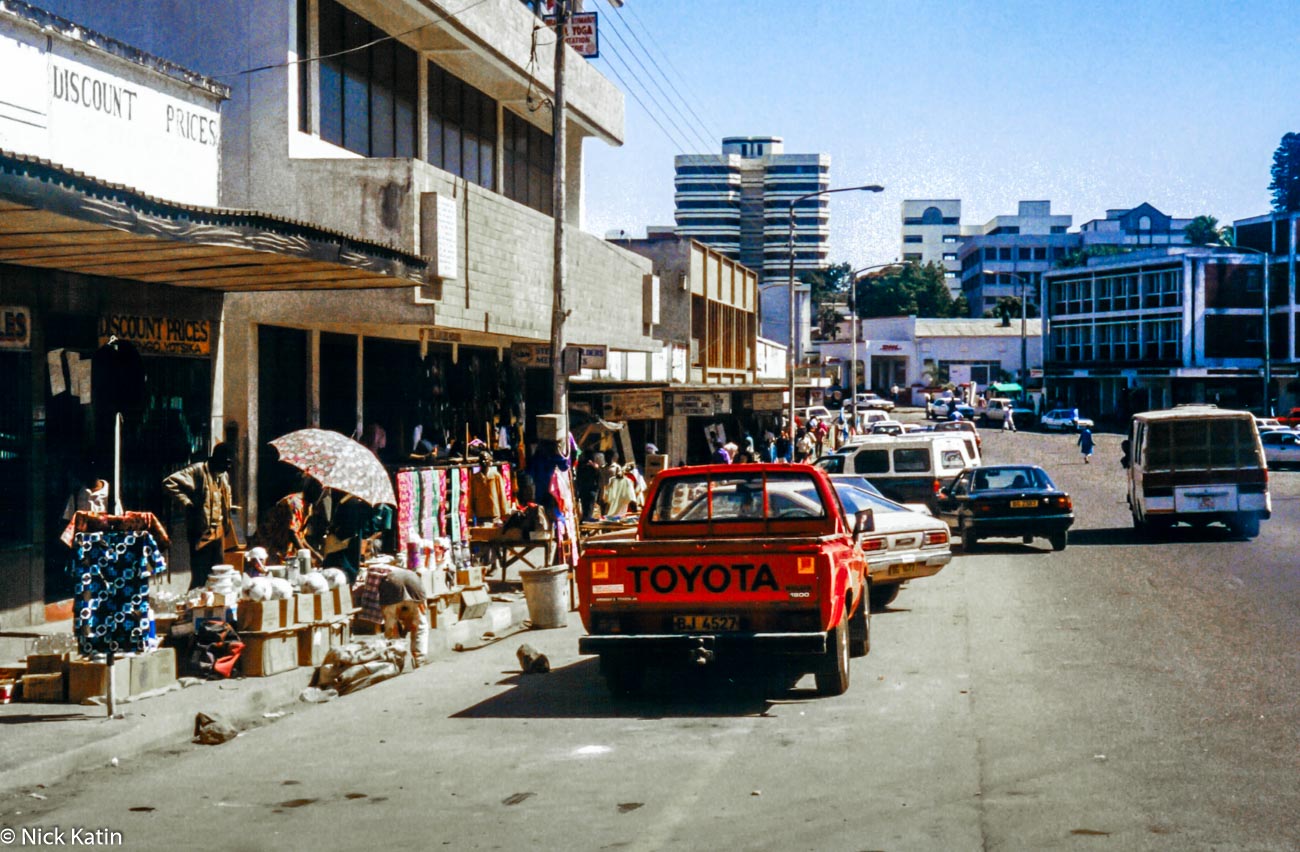
What a place Dar es Salaam is! Every street was buzzing with people of all walks of life, market stalls and shops lined the streets and footpaths. This is where the Middle East meets Africa with a small remnant of European colonialism thrown in. The peddlers were remorseless as they called out to me from everywhere.
In Malawi we had struck up a conversation with a Kiwi (New Zealander) who had just traveled through Tanzania and he had nothing but scorn for the Tanzanians who he had said “hassled us from the time we had entered the country to the time we left”. We had already struck their continual harassing in Mbeya and on our previous visit here. But this seemed different. It was light hearted and a lot less intense and added to the feel of exhilaration as I walked through this city of life.
Eventually I found a small Indian bureau de change, who tried to interest me in his cousin’s trinket shop down the road. My usual answer is “sorry, no money” but when you’ve just changed a wad, it somehow didn’t seem so convincing. “Sorry I’m in a hurry,” I just said. Expected some persistence, I was saved by another customer and he muttered something about having a good day.
With the aid of Namur a very protective taxi driver who picked us up at the hotel, we managed to purchase tickets for the next fast ‘cat’ to Zanzibar down at the wharf. As the boat wasn’t due for two hours we got Namur to drop us off at the Sheraton. We were in dire need of a bit of western culture. We were tired and just had enough of travelling in ‘local’ fashion and decide to book a flight back from Zanzibar to Dar and thus avoid the struggle across town to get to the airport.
Sitting relaxing at the café there restored some of our energy and by the time Namur picked us up we were once again ready to brave yet another challenge of travel.
As it happened there was no real challenge apart from hogging one of the seats next to us with our bags on quite a full boat.
The Sea Star was comfortable and we had a smooth journey across the Zanzibar channel. Of course it would be, after all it was built in Fremantle, Western Australia.
Zanzibar was already an important centre for trade between Africa, the Middle East, and India by the time it was visited by the Portuguese at the end of the fifteenth century. Seeing the opportunity for a trading post the Portuguese took control in 1503. Arabs from Oman ousted the Portuguese in 1698 and the island developed into a major slaving centre. After several years of political maneuverings between Britain, Germany and France plus a sustained effort to stop the slave trade that revolved around Zanzibar, the British made Zanzibar a protectorate in 1890. Some 83 years of British rule albeit through the Sultanate was ended when independence was granted. This was immediately followed by a violent revolution and the Sultan was overthrown and exiled. In 1964 Zanzibar was merged with the now also independent Tanganyika to form Tanzania.
With such a checkered history dominated by peoples from other parts of Africa and the Middle East it’s not surprising to find that the people of Zanzibar are of different stock. The largest population is that of the Swahili, which as with the rest of Tanzania is spoken widely. But these people have a Persian and Arab ancestry as well as black African. The rest of the population is made up of more recent Arab immigrants, descendants of African freed slaves, Indians, Pakistanis and the usual sprinkling of Europeans working mainly in the tourist industry or employed as teachers, doctors or engineers.
Maybe it’s because of its differences that, even though Zanzibar is part of Tanzania, we still had to pass through customs and immigration after disembarking. On the other side of customs are the hotel touts like lions waiting for their prey, they watch you carefully and when you are within striking distance they pounce.
” I know veely good hotel. Good price, good shower, big big room”
They all seem to say one after the other as we walked single mindedly through their group.
We already had our accommodation booked at the Malindi Guesthouse, just a short walk away. Oozing with character this white washed square building with dark wood shuttered windows had a pretty as a picture enclosed centre courtyard and a maze of passages leading to the rooms. Our first room was a large cool white room with a concrete floor, large wardrobe, colonial furnishings and to our surprise an en suite bathroom. I say first because after the first night they moved us to the room we should have had which was a smaller version with single beds and no bathroom. Apparently they had double booked the first night and that was the only room available.
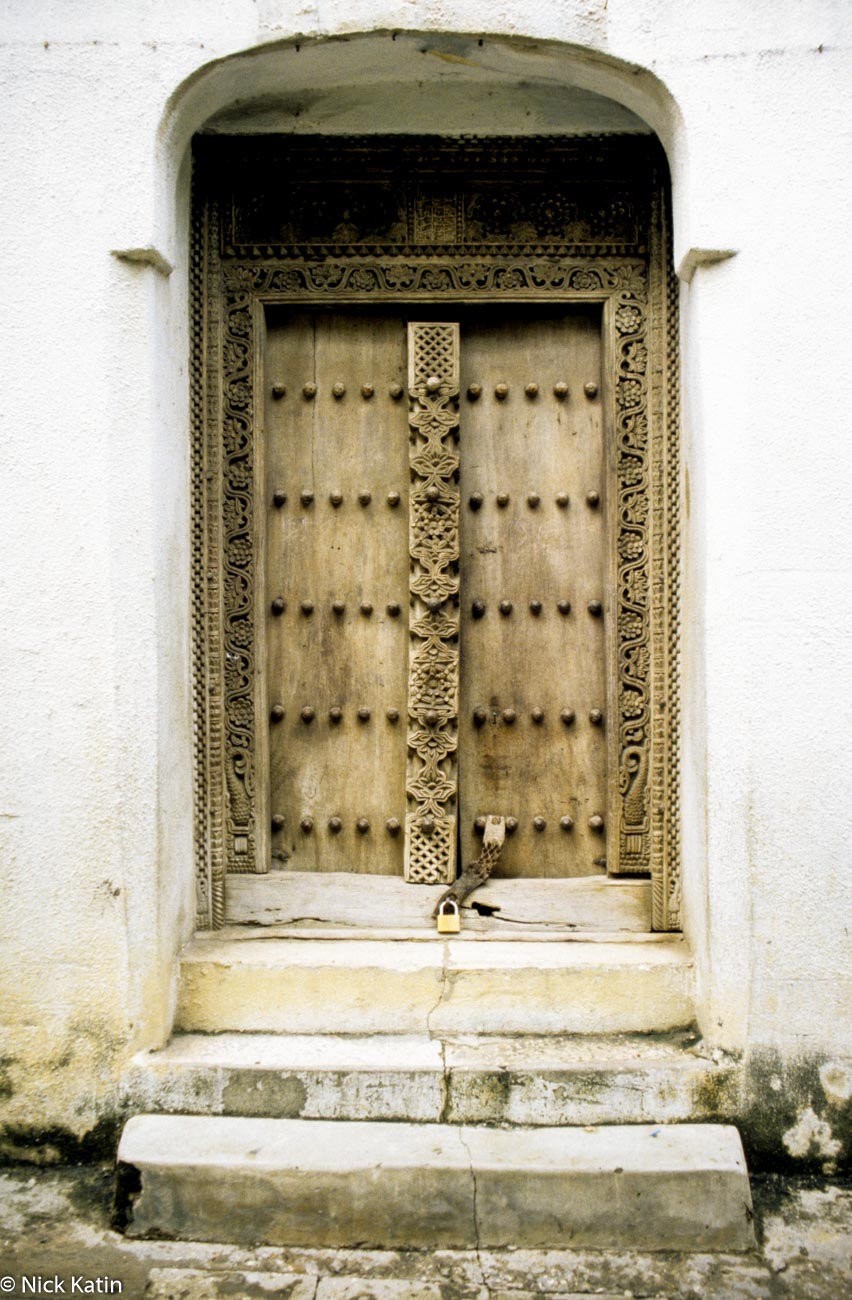
In Zanzibar the main tourist activity apart from the obvious ones of eating and drinking is to wonder the tiny streets of stone town and find a new wonder around every corner.
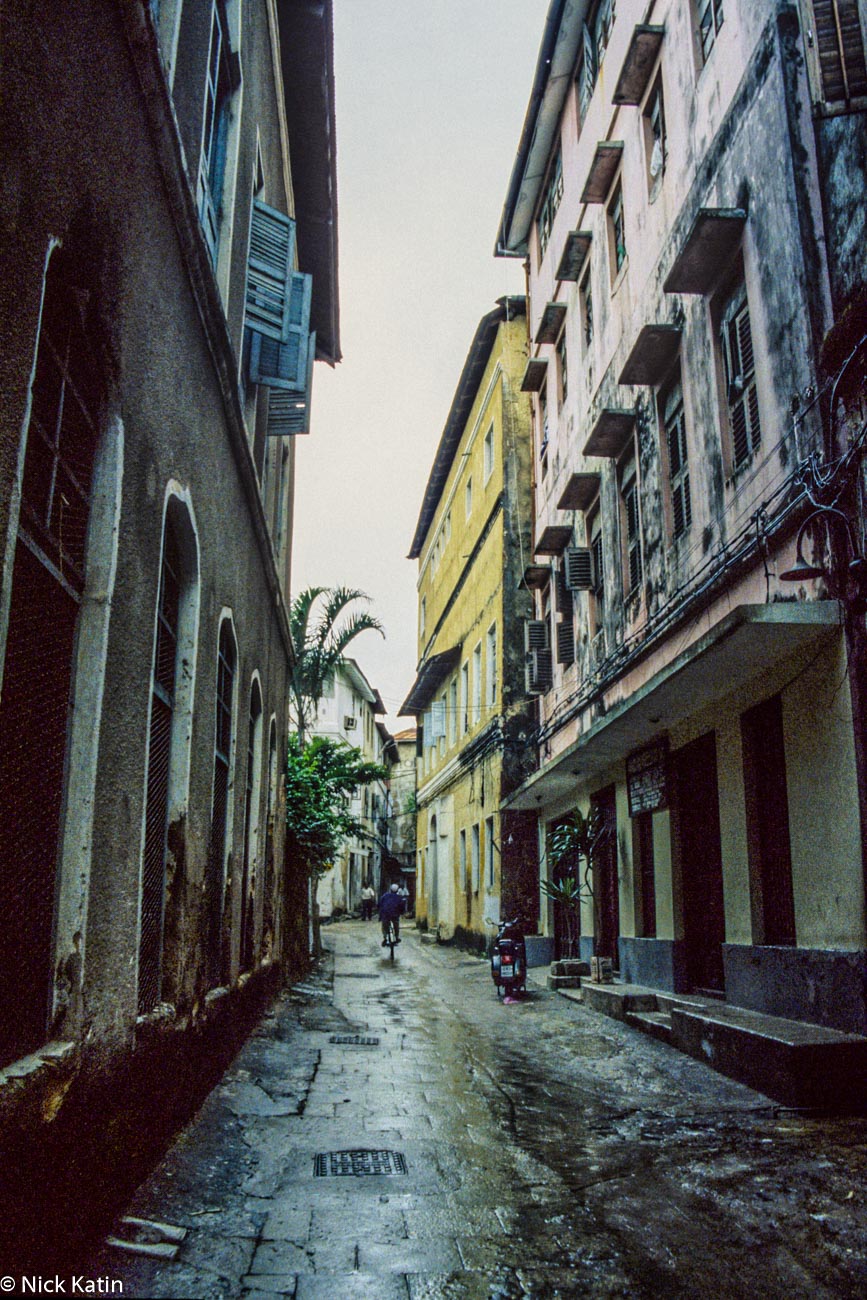
Looking at a map of Stone Town you would think that it was a map of a maze. The bulk of it is hemmed in by a triangle of main roads that despite their narrow width supports road traffic. Leading from these main roads are a myriad of miniature streets some of which can only really be described as narrow paths that wind their way through tall buildings. Unlike a maze these alleyways lead somewhere and eventually any walker will find themselves back out of the tangled web of houses, restaurants and curio shops or in a square that houses a Mosque or Palace in the middle of an alleyway.
Like many of the other African towns of our travels, many of the buildings were derelict. Wooden balconies and shutters overhung the alleyways in a state of disrepair and stray cats played amongst rubble and rubbish at the rear of some of the buildings. But through it all, the place had charm and oozed character.
Of course it’s not all about exploring alleyways. The House of Wonders is one of the largest buildings in Zanzibar. A once proud ceremonial Palace is now just a run-down shadow of its former glory, housing the National Museum. Its marble floors, huge carved doors and two old Portuguese cannons are the only things worth going there for. Another museum is the Palace museum dedicated to the Zanzibar sultans and their history. Most of the exhibits were items of furniture including a few thrones, beds and even the sultan’s water closet.
What was fascinating was the room devoted to Princess Salme, daughter of the Sultan Said. Her remarkable story started in 1859 when as a fifteen-year-old, dominated by laws that prevented her from having contact with any males other than her father and brother, she helped one of her older brothers escape after an unsuccessful attempt at overthrowing his older brother Sultan Majid. Rejected by her family, she began, as she grew older to socialise with a lot of the Europeans in Zanzibar. One of them Heinrich Reute did the unspeakable and got her pregnant, necessitating in her fleeing Zanzibar to prevent bringing shame on her family. An immediate wave of anti-European feeling on the island brought a British warship to Zanzibar just in case of reprisals.
She married Heinrich soon after and they had three children before (and this is the rub) he was tragically killed in a tram accident. They had only been married three years.
Unwelcome in her home country, Salme stayed in Germany and after a brief stay in Syria she died in Germany in 1924.
Footnote:
Get more traffic to your blog! Let me help you take, edit and publish your images now by signing up here to get “Eleven easy ways to improve your marketing photography”
A free guide on how to start improving your images to help you take control of your marketing.
That link again
An hour later we got our bags and decided that enough was enough, it was time to jump ship! We had already learnt that the Bus Company in an amazing piece of logic had decided to fix the clutch by sacking the bus driver and a replacement driver had already miraculously arrived. This was the last straw and with the other two we cleared immigration and customs and walked into Malawi.
A minibus heading for Blantyre was waiting down the road. After the usual fare negotiations and once again watching our bags being loaded onto the roof, we got going and apart from being tightly packed in and being stopped by the police, we had an uneventful two-hour journey.
The police in Malawi have quite a number of roadblocks. We were told that they were looking for drugs, guns and illegal immigrants but in this case they weren’t exactly pedantic choosing only to talk to the driver and have a quick look at the bags on the roof.
The bus dropped us off at the very pleasant Doogles Backpacker hostel, which as it happens was next door to the bus station, a place we would have to brave if we were to follow our plan. We were shell shocked and tired and all we could think about was how the hell were we going to face another bus ride again.
In fact so frazzled were we that we spent most of that day looking at alternatives.
And guess what? There weren’t any! We went to the British Airways office and got a price for a flight to Dar es Salaam. At US$195.00 each it was out of the question although such was our reluctance to catch another bus that we were tempted. But realising that we were not in the right frame of mind to make that decision we wisely decided to stay the night at Doogles and worry about it tomorrow.
Blantyre itself is one of these colourful and vibrant African towns and although we should have been in Lilongwe some 250 kilometres north, we still enjoyed its feel. The buildings were as usual rundown and dilapidated, the streets were dusty and dirty but the people were happy and smiling and seemed to spend their days in and around the many food stalls and street vendors that thronged the streets. There was a sort of musical beat about the place, as if everyone was listening to it and swaying as they went about their business.
How could these people be so happy when they have to travel on such appalling transport? Don’t they realise how stressed out we were? What right did they have to be happy and smiling when we had to brave death to move on?
As you can see we were becoming paranoid. Our paranoia subsided somewhat as we too began to feel the imaginary beat of Blantyre and then spent the evening back at Doogles watching the Aussies play India in one of the world cup cricket games.
Malawi is without doubt a beautiful country and despite our experiences on the bus has a warm, friendly and happy population. But like Mozambique, Lesotho and Zambia it’s poor. That night we met Martha an Irish nurse who had come to Malawi 10 years ago for a two year stint as a voluntary AIDS education worker. After that she had stayed on and was one of the people responsible for managing the AIDS education program for the whole country. I was touched by her willingness to give up her own life to help the people of Malawi, a task that seemed to me to be almost a lost cause.
As she said “These people are not worried about a disease that will eventually kill them in 10-15 years. They are more worried about how they can put food on the table now!”
Malawi like most of its ex colonial neighbours has a lot of growing pains since independence and has only recently become a democracy. An increasing number of the Malawi’s population doesn’t think that this has improved their lot. Dr. Banda was Malawi’s first President and held office as a dictator for 34 years and whilst freedom of speech and other common liberties that we take for granted were missing, generally the standard of living was better than it is today. As we were told; freedom of speech doesn’t put food on the table. With its main source of income being tobacco the government is hoping that tourism will bolster its ailing economy. From what we had seen and were later to see, it’s got a long way to go.
After a good night’s sleep everything looked better especially after everyone assured us that we had just unlucky and so we bought reserved seats for the bus to Mzuzu some 600 kilometres north. We had realised that time was getting away from us and Malawi was going to be the casualty. We had a little over two weeks to get to Dar es Salaam to catch our flight to London. In that time we had at least another three days of travel and wanted to spend at least five days on the island of Zanzibar off the coast of Dar. So a lot of what we had planned to see in Malawi was not going to happen especially as we had effectively lost a day and half and around 250 kilometres thanks to the bus ride from hell number one.
Our new plan therefore was to get to Nkhata Bay, a small town on the edge of Lake Malawi, chill out for a couple of days and then continue on to Dar. To get to Nkhata Bay we had to go via Mzuzu and pick up a local bus there.
Footnote:
Take control of your blog’s images now by signing up here to get “Eleven easy ways to improve your marketing photography”
A free guide on how to start improving your images to help you take control of your marketing.
That link again
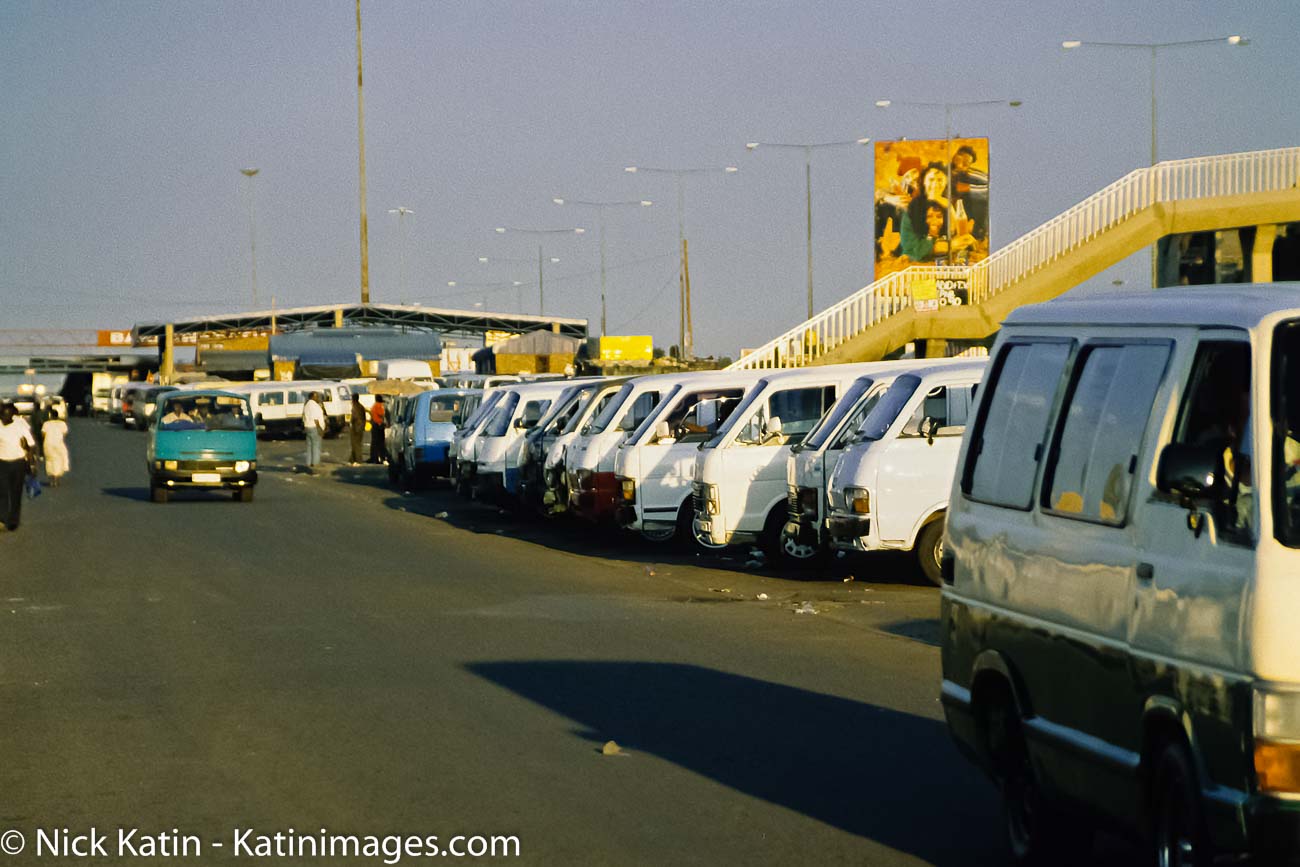
What was in regular service were the minibus taxis. If you have being paying attention you’d remember that I’ve mentioned these before.
These are generally run by black or more often or not in Cape Town, coloured South Africans and are mostly used by both these groups of people. They are of course found in almost any third world country in the world but they are particularly popular on the African continent.
At one time a white South African wouldn’t be seen dead on a minibus largely because there were restrictions on where they could operate but also because they had the Merc or BMW and didn’t need to use such transportation. Realistically I suppose a lot of them probably felt unsafe especially in some areas like the suburbs of J’burg. Except for some areas, multicultural Cape Town is considered a lot safer than J’burg and it’s now not unusual to see white travelers on these minibuses.
We didn’t know all this at the time, so when Andre told us that the best way to get into town was via minibus along the main street, it was with some apprehension that we waved down the first minibus that came along. We were the only whites in this crowded bus but none paid us any attention except the fare collector who grunted something at us that the guy sitting next to us interpreted as “that’ll be R2 each please”.
In one of these travel guides that focus on daredevil activities, like visiting war zones and terrorist training camps for kicks, I once read a list of all the most dangerous activities in the world. Riding in a minibus was way up there with swimming with crocodiles, bounty hunting and demonstrating in Tiananmen Square in Beijing.
This little tidbit of information flooded back to me as this sardine packed minibus swerved at breakneck speed around slower vehicles travelling in both directions before coming to a screeching stop to pick up any new or potentially new passengers that could be crammed in horizontally into all that air space above us.
We arrived safe and sound in the densely populated main minibus rank above the train station. People were everywhere, either being crammed in, waiting or like us shakily getting out. We had survived!


 Katin Images Travel Photography