
Next stop was the first of two shebeens. A shebeen is basically a township bar that until recently were illegal and like the rest of the world there are shebeens and there are shebeens.
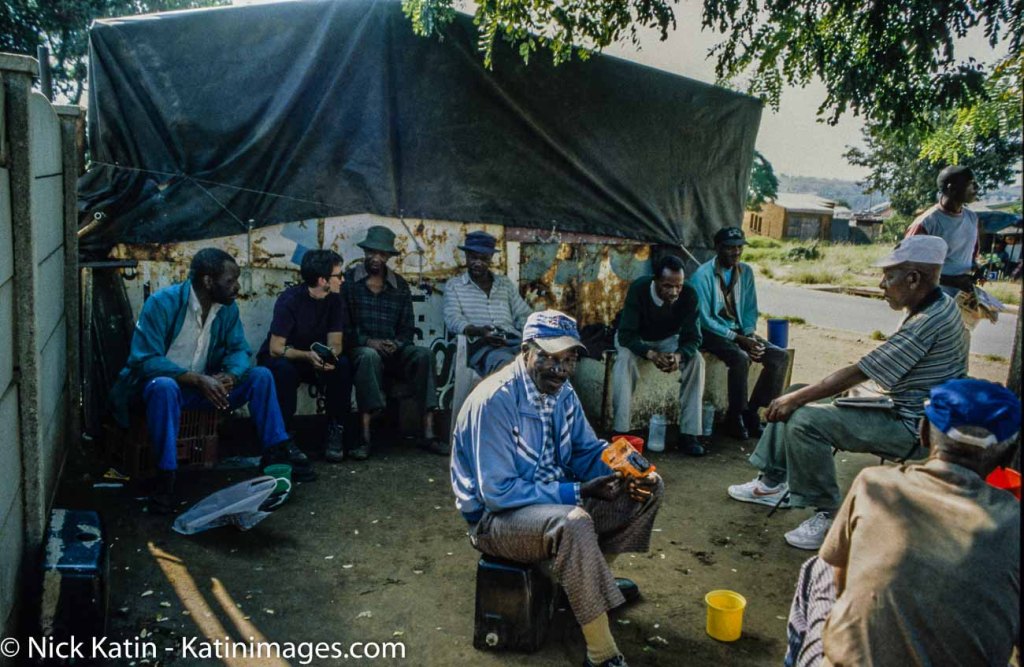
This first one was a kiosk on a small patch of land that serves beer, for R1.30 a litre, made from Sorghum or maize and is meant to taste like porridge to the uninitiated. We bought a litre, tasted it. ……..Yuk! It was a lot worse than we had imagined so we gave it to the shebeen’s ‘customers’, who were sitting outside under a big tree, contemplating the world.
We sat with them and talked for a while. These guys are all unemployed and were well into their 50’s and seemed to be just waiting for something to come along. Some were well qualified, one was an electrician, another was a fitter but as Nic said “they’ve just given up on life”. Nonetheless they were pretty jovial and we laughed and joked with them until it was time for us to go.
The second shebeen was just a like a pub with a pool table and music which apart from the clientele and the location, could have been a bar in any other part of the world. No maize beer here, these drinkers were getting into cans of Castle at R4.00 or bourbon and coke and other spirits. Outside the shebeen was an open-air barbers surrounded by hundreds of white minibus’s. So here, you could get pissed, get a haircut and get a lift home. Too easy!!
Nic also took us to a few famous and infamous landmarks like Willie Mandela’s house, Nelson Mandela’s former house before his imprisonment in 1963 and Archbishop Tutu’s house. None of these houses were anything less than comfortable middle class size homes and like all the accommodation everywhere seemed clean and tidy. Not so the streets and open spaces. Plastic bags were everywhere, caused, Nic told us, mainly through an inadequate rubbish collection service.
Actually I’m not sure I believed him.
Three years ago whilst travelling around South Africa, plastic bags seemed to be part of the landscape, a bit like multi coloured birds flocking to the ground and then spasmodically taking off.
In one particular incident we had accidentally taken a wrong turn and ended up driving through a notorious black township near Port Elizabeth for what seemed like 3 days (actually it was 30 minutes). Apart from the sheer terror we experienced (“I’m not fucking stopping for anyone even if they’re bloody lying on the road” I had said at the time), my other memory is of these thousands of plastic bags that seemed to float aimlessly along the rather bleak landscape.


 Katin Images Travel Photography