

Tag: Ocean
-

Blue water
The tranquil scenic waters of Coral Bay in North West Australia. Click on the link for a bigger image -
African shoestrings – Namibia Day Seventy Two – Swakopmund
Our final day in Swako was actually spent in Walvis Bay, a small town, 30 kilometres south. We checked out of our comfy accommodation thinking we would find something in Walvis Bay, a decision we were later to regret.
This little nondescript town was never actually colonised by the Germans. The British who controlled the Cape colony (South Africa) and laid claim to it in 1878 and didn’t let go of it until 1994, four years after Namibia’s independence. This natural harbour’s popularity is because it’s the only decent port north of Luderitz and south of Luanda in northern Angola and has been a very strategic political, defensive and commercial position to hold.
Now Walvis Bay’s main attractions are its bird life, in particular flamingoes, and Dune 7.
Dune 7 is large stand-alone sand dune north east of the town that rises above the bleak landscape and overlooks the noisy goods train railway. The locals’ flock to it in their droves to walk, run, sandboard or simply sit at the picnic tables in its shadow eating sandy sandwiches or gritty sausages. The bird life on the other hand is much more interesting. The lagoon just to the south of the town is home to half of southern Africa’s flamingo population plus pelicans, gulls and plovers to name just a few. Close by is the Raft a pub/restaurant housed in a wooden building sitting on stilts over the water. A couple of beers in there gave us a brief respite from the ever-increasing wind and in a rash moment we decided to return for dinner that night.
I have to say that it was one of the most amazing dining experiences either of us had ever had. The meal was nice we had some of the local fish species, Kobaljai and Steenbras and it was all pretty good including the service. What stole the show were the flamingos! From where we were sitting we could see the floodlight water and all night there was this constant flow of flamingos walking back and forwards doing their best to imitate the huge walking box robots from the Stars Wars movies. These wonderfully colourful waders gave us a show neither of us will ever forget!
What is forgettable however is the smelly cramped dog box of a unit we ended up staying in overnight back in Swako. We hadn’t managed to find anything cheap enough in Walvis Bay so we rang a place back in Swako without knowing what it was like. The women who answered the phone said yes it was free that night and the cost was N$100 plus $30.00 for laundry. OK I thought we don’t want any laundry done we’ll take it. What the laundry turned out to be was the cost of washing the bed linen after you had used it, assuming that you hadn’t brought your own. Well after sleeping the night in this matchbox with less facilities than a prison cell and having to listen to her winging about this that and anything else she happened to be an expert on, we told her to get stuffed, politely of course! Needless to say we headed out of there as soon as the sun was up.
Every town or city has the Café, the place to be seen at and usually has a specialty or two. Swako was no exception. The Café Anton was a trendy, probably in some eyes pretentious, indoor/ outdoor café overlooking the main beach. After such a shitty night we thought we’d treat ourselves to morning tea in the shape of a couple of German pastries and (finally) some good coffee before heading out. No doubt about its popularity, the locals were arriving in droves for both coffee and pastries and breakfast. It was a fitting end to our stay in Swako. It had been the only place in Namibia where we could take time out to get our fix of some western culture.
If you like this then hit “follow” on the side bar
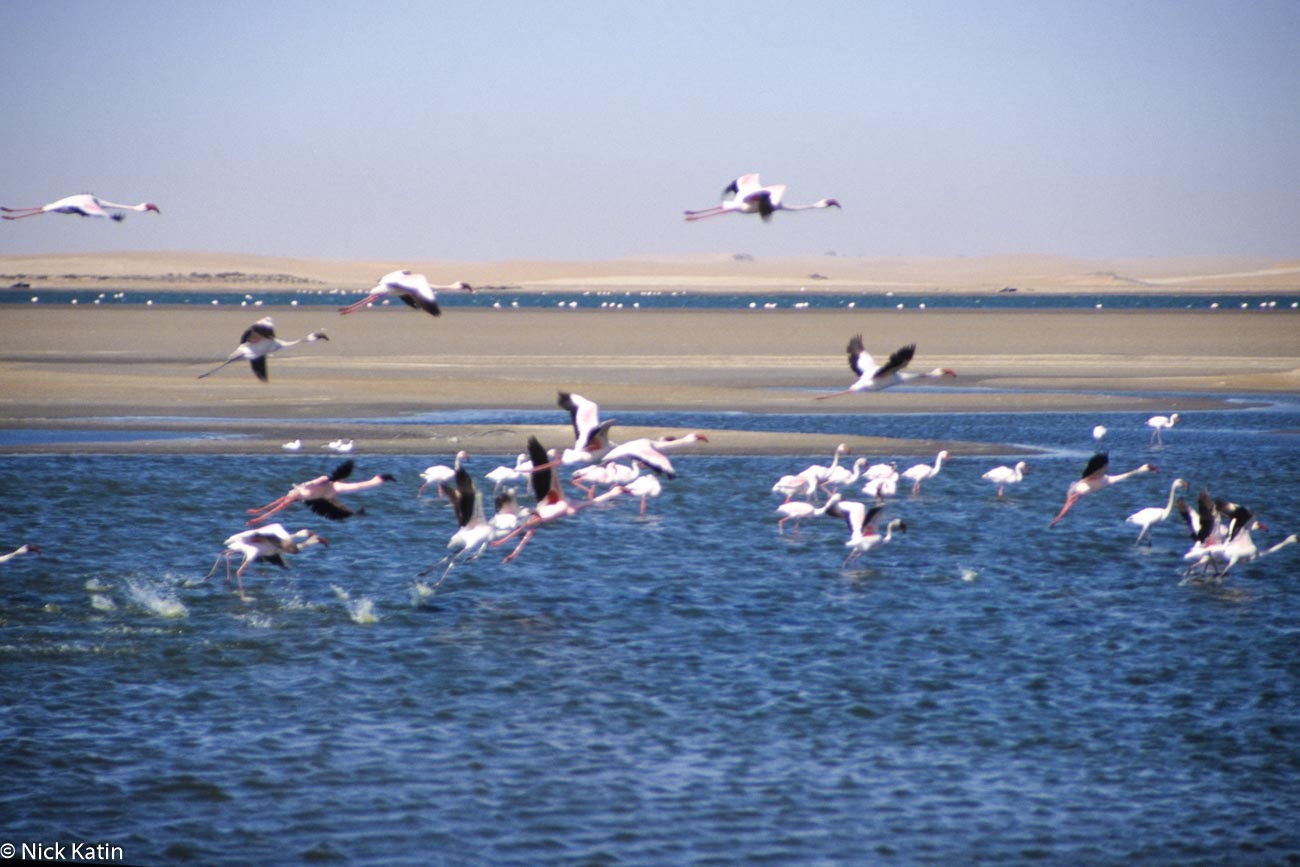
Flamingos at Walvis Bay in Namibia Share this:
-
African shoestrings – Namibia Day Sixty nine – Hentiesbaai
Terrace Bay is desert, black stone beaches and a grey sick looking ocean that yielded an endless abundance of fish. This is serious stuff! A couple of guys caught 82 fish each one weighting around seven or eight kilos off the beach! I don’t know that much about fishing but I do know that there are few places left in Australia where you could get a catch like that without a boat.
A few others must have caught a bucketload as well as it was being offered around (cooked that is) by one of the other groups at dinnertime.
This group was led by the ‘knowitall’ you know the type, there’s one in every gathering or group. Even though they were speaking Afrikaans his body language and actions told us “I know it all and I’m going to tell you”.
We were in the bar and he and his friends and family walk in and he just took over the bar. Frans, the barman, must hate arseholes like him just walking behind the bar and helping himself simply because they all arrived together and poor old Frans was a bit slow in keeping up.
Relaxing for a day or so gave Sue a chance to recover, which she did although she still felt off colour. I was hoping that the bracing air and relaxation would clear up my catarrh but that still stuck to me so much so that in frustration I started a course of antibiotics that we had brought with us.
The Skeleton park is infamous for its shipwrecks that dot the coast after hitting one of the treacherous sand banks and some bright spark thought the name ‘Skeleton’ was appropriate. It was one of these shipwrecks that got us into what we thought at the time was big trouble. Our next destination was Swakopmund some 350 kilometres south on the coast, via the Cape Cross seal colony. Bearing in mind our ‘reluctance’ to leave ‘Terrible’ bay, we set out early to ensure we had time.
Well we made good time along the salt road to the park gate at Ugab and then turned off to see one of these shipwrecks. The road had another of these heavily corrugated surfaces that have you bouncing around everywhere and just moving forward at more than 30 kilometres an hour was a struggle. Suddenly a buzzer went off and the oil light flashed on the dash. We both said “Shit!” stopped and turned off the engine. Like any part time mechanic, I was quite capable of opening the bonnet and checking the oil. Plenty there! I checked to see if the filter was loose. No that was ok as far as I could tell. Now we’re in a hire car which is less than a year old and still covered by it’s warranty, somehow fiddling with it didn’t seem the right option without authority. After all it’s my credit card imprint they’ve got as a deposit. So we did the right thing and slowly drove back. It didn’t seem to mind if we drove it at 20 kilometres an hour.
It took forever to get back to Ugab. There’s not a lot at Ugab in fact there’s not even a phone. Fortunately they did have a more modern method of communication than the pigeon, a two-way radio. The gatekeeper radioed the nearest mechanic in Hentiesbaai a small town some 137 kilometres away. His only option in these circumstances was to bring a tow truck.
All we could do now was wait and wait! Eventually Hennie turned up around 3 hours later which I guess wasn’t too bad. He took a quick look at the car and then we loaded into the back of his truck whilst we both climbed into the front.
Hennie was born and raised in Namibia and despite being white considered this was as much his country as anyone else. We talked about the fish, the up coming Rugby world cup (Namibia actually had a team entered) and life in general in Hentiesbaai. Hennie told us that there was around 200,000 whites in Namibia and then turned to us and asked “How many blecks ‘ave you goot in yoor ‘ountry?” When I replied that we had about 300,000 aboriginals. He looked at us and said “Thets nothin man, we got 3 million of them!”
Of course it turned out that there was nothing wrong with the car other than a loose wire on the oil switch in the engine which had somehow shaken loose. It cost N$1235 (US$124.00) to get us picked up from Ugab and I had to break the news to Werner. “We’ve fixed the problem mate” I told Werner on the phone and proceeded to tell him about the oil switch. We had already rang him and told him what had happened and needed permission for Hennie to look at the car which Werner got from Volkswagen. “Thing is, it’s cost N$1235.00 and they want to know how you gonna pay for it?” There was a pause. Somehow I had this picture of Werner looking to the heavens and saying “why me”. Anyway we ended up paying for it on proviso that he would settle with us when we returned the car.
If you like this then hit “follow” on the side bar
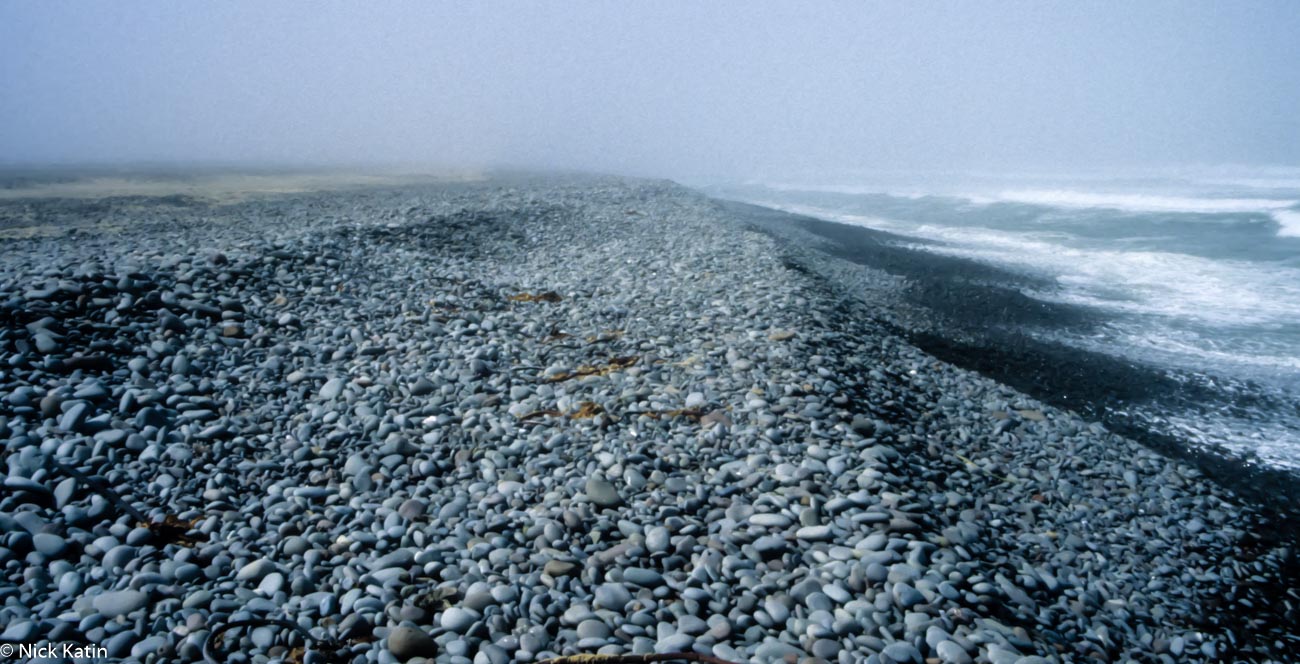
The inhospitable Skelton Coast in Namibia Share this:
-
African shoestrings – South Africa Day Thirty-seven – Rhodes Memorial Cape Town
Just up the road from Observatory, we found the Rhodes Memorial. A little gem of a place!
Cecil John Rhodes, founder of the famous De Beers Diamond Company and British Empire builder had a big influence on the way Southern Africa was carved up politically in the nineteenth century. He was Prime Minister of the Cape Colony from 1890-95 but by then he had already made his fortune through Kimberley Diamond Mines and a huge Gold strike near J’burg.
He established British Colonial power in Rhodesia (later Zimbabwe), Northern Rhodesia (Zambia) and Bechuanaland (Botswana) to name but a few.
Mind you he profited personally from these ventures as he established a few more gold mines on the way.Strangely enough he’s probably better known for the Rhodes scholarship. Something he established by way of his will devoting most of his wealth to this noble cause. The scholarship even today still sends winners from countries other than Great Britain to study at Oxford University.
From an Australian point of view the most (in)famous winner was the then beer swilling Bob Hawke, arguably it’s most popular Prime Minister ever.Well they’ve built a memorial to this guy (Rhodes, not Hawke) on the slopes of Devil’s Peak. It’s a bit like a mini coliseum, all columns and bronze statues of Lions bordering impressive bluestone granite steps that lead to a bronze bust of Rhodes. Really over the top stuff!
We found out about this place from a couple of white University students who we chatted to on one of our many minibus trips. We’re harden pro’s now. That same bus was also driven by, much to our surprise, a white guy, so times are definitely changing.
Actually they said that the little café next to it was worth a visit. In fact it was almost more fascinating than old Rhodes. To coin a phrase “it was just so colonial”. Wicker chairs and small round tables were scattered around the garden.
Nothing scattered about the young white waiters though, about six of them stood guard at the front of the garden, in their gleaming white shirts and black bow ties, waiting to pounce on unsuspecting prospects. It was the sort of place that had this been England or even Australia, would have made your wallet tremble. But this is South Africa and even our pitiful dollar made it real value for money. Mind you we only had coffee and cake!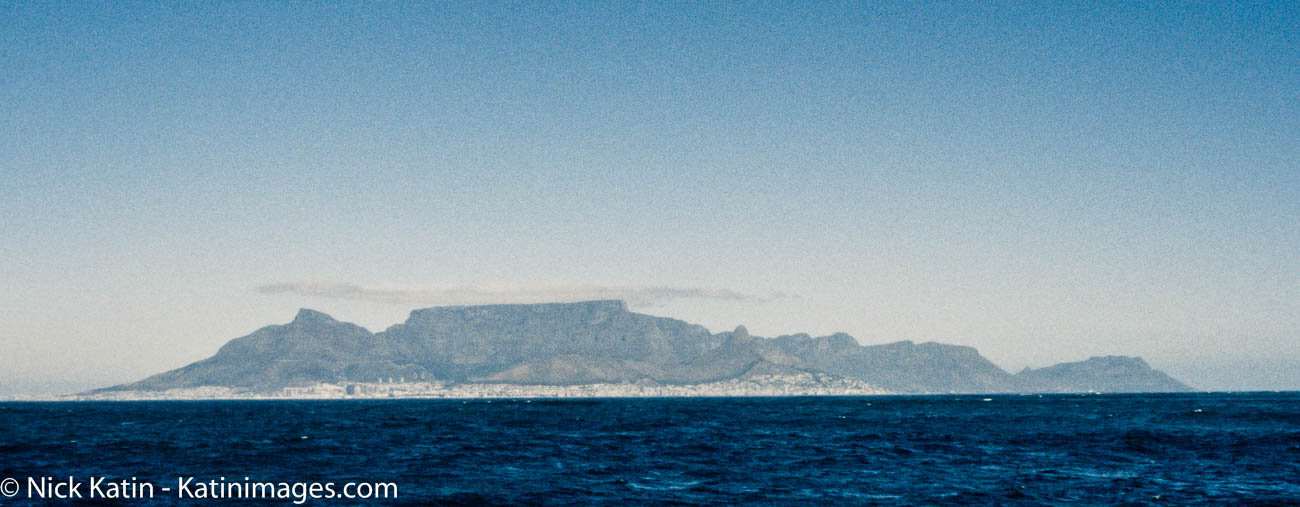
Table Mountain in Cape Town from Robben Island former prison of Nelson Mandela Share this:
-
African shoestrings – South Africa Day Thirty-six – Cape of Good Hope
We got an even closer look at the Cape the next day after picking up a cheap hire car from the unknown (to us anyway) Atlantic Car Hire. The plan was to explore the peninsula for the day and drop off the car in Stellenbosch, centre of the South Africa’s wine industry and some 40 odd kilometres away and still be within the free 150 kilometre mileage. What we didn’t realise was that drop off and pick up mileage were also included so we ended up having to fork out more money at the end of it than we had budgeted for!
Nonetheless the Cape Peninsula is a beautiful spot. This is white man country, large two storey houses, apartment blocks and trendy little village’s front onto the white sandy beaches on both sides of the peninsula.
No black or coloured townships here, just Cappuccino’s, designer labels and more BMW’s and Merc’s.
Along the western side the famous Chapman’s Peak Drive is up there with the rest of the world’s great scenic drives. Carved into solid rock, this winding 10 kilometres of bitumen has several lookout points to avoid accidents caused by sightseers slowing down to admire the panoramic scenery at every bend. I’m not sure that worked. Cars screech to snail pace as they suddenly realise that they want to stop at the lookout they are in the process of passing!Somehow that day we managed to visit the World of Birds and Groot Constania the Southern hemisphere’s oldest winery, follow Chapman’s Peak Drive, tour the windy Cape of Good Hope Nature Reserve and explore the trendy the St. Tropez of South Africa, Clifton.
We finished up having fish & chips from ‘Fish & Chips at the Rack’ in Hout Bay supposedly “the Capes best Fish and Chips” and then somehow finding our way back to the guesthouse in the dark with an extremely basic map.
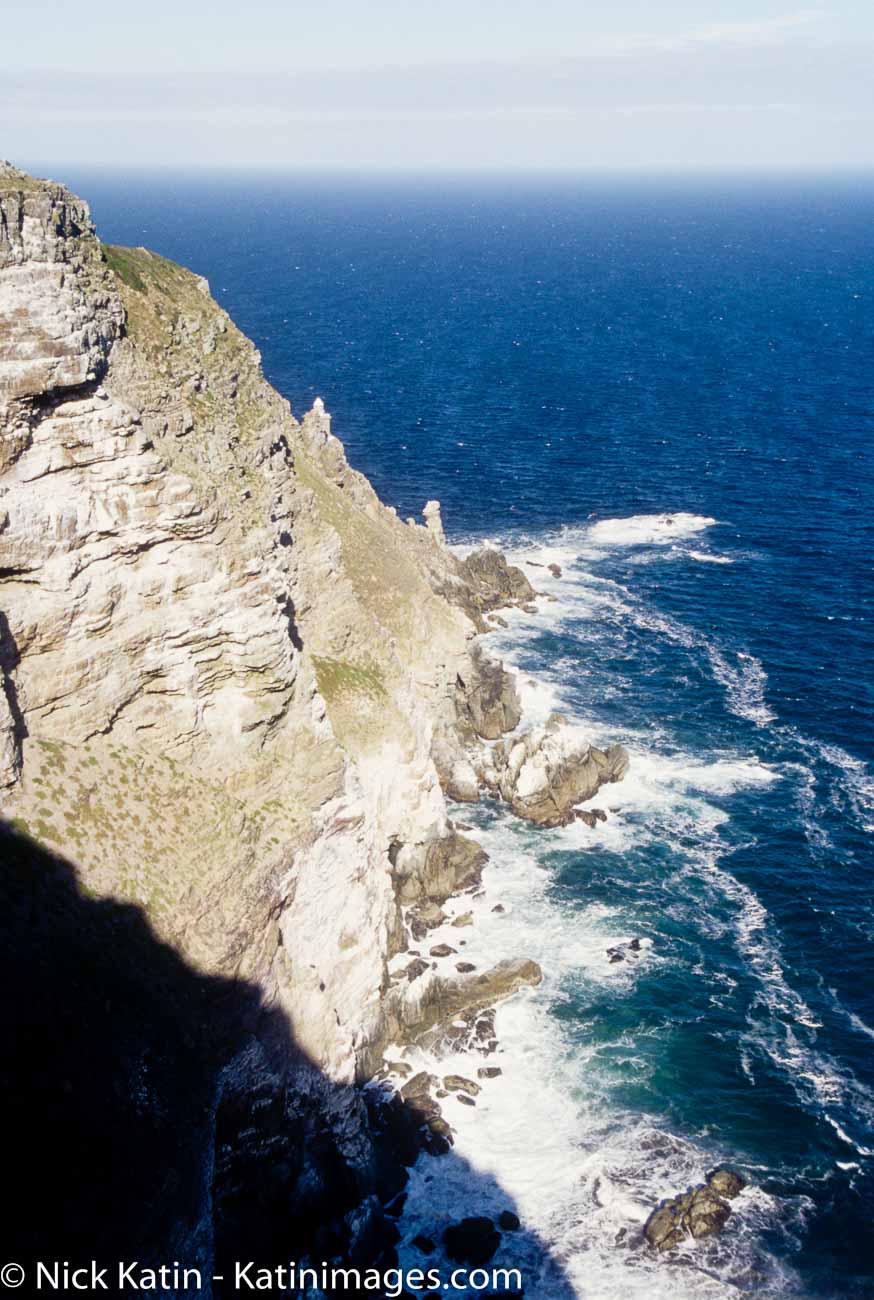
The Cape of Good Cape, a rocky headland on the Atlantic coast of the Cape Peninsula, South Africa. Share this:
-
African shoestrings – South Africa Day Thirty-five – Table Mountain Cape Town
In our previous visit to Cape Town we had taken the cable car to the top of the 1000 metre Table Mountain (and back down again).
This time, we promised ourselves, we would walk to the top and catch the cable car down. Today was a public holiday and even minibuses would be few and far between so we had to brave another of Andre’s lectures as he very kindly gave us a lift into the city.From there it was just a short walk to the main track that winds up the Platteklip gorge the easiest way up from the that side of the mountain.
There are two very distinct features about Table Mountain, the fact that from a distance it appears to have as the name suggests a completely flat top and it’s “tablecloth”. The tablecloth is cloud that regularly rolls in and covers the top for anything like a few minutes to the rest of the week. This phenomenon usually happens around mid- morning so we wanted to ensure that we got up there early enough to see the 360° views.
Last time we got to the top we had about 5 minutes before our vision was reduced to about 5 metres. This time we hadn’t even got up to the top before it rolled in, reducing visibility to a few metres and slowing our already slow progress.The track was a winding trail that zig zagged awkwardly and was strewn with large boulders and obviously designed for mountain goats. Worse still we had the challenge of having to clamber around hundreds of people all with the same idea. Now we had to pick our way through damp mist and poor visibility. Being as I said a public holiday, the last thing was I would have expected would to be find teenage school groups. But there hundreds of the little shits who, as well as some adults, seemed oblivious to the fact that there was actually a trail with lots of signs asking us to keep to it.
But the gods did smile on us as we approached the top, the ‘tablecloth’ disappeared as quickly as it had appeared and we were able to spend a good hour and a bit admiring the great views. Table Mountain is at the end or the beginning of a small range called the twelve apostles that travel south and reduce in size at the beginning of the Cape Peninsula. It had cleared enough for us to see the famous Cape of Good Hope some 70 kilometres away at the end of the peninsula.
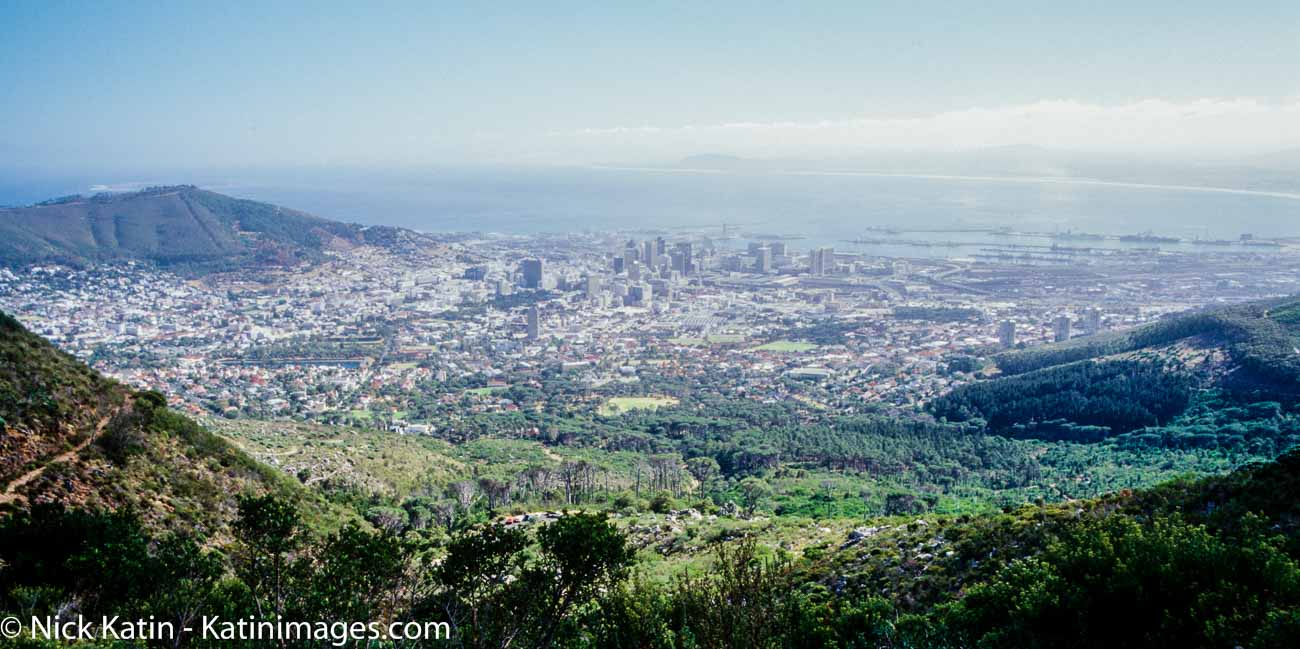
Cape Town from Table Mountain Share this:
-
African shoestrings – South Africa Day Thirty-three – Robben Island Cape Town
Another pretty interesting guy whom unfortunately we didn’t get around to meet was Nelson Mandela. We did however get to meet someone who served time with him on Robben island a small former prison island 11 kilometres north west of Cape Town.
Eugene was his name and he served seven years on Robben Island for his part in a student anti-apartheid demonstration in 1983. He was still there but this time as a guide.
Mandela spent twenty-six years as a political prisoner there and certainly in the earlier years had to overcome some pretty harsh treatment to survive.
In the 1960’s they were only allowed one visit of 30 minutes and one heavily censored letter every six months.
For around thirteen years Mandela and others were made to work with picks and shovels in a lime quarry where the heat and blinding glare in summer could eventually kill or blind.In the 1980’s the authorities eventually softened under international pressure and stopped hard labour, allowing education of selected subjects to university level.
The prison itself however is not what you expect. The layout is pretty similar to any other high security prison found in the western world, you know, small cells, high walls, a cramped exercise yard and barbed wire everywhere. For effect life size cardboard cut outs of past prison guards are strategically placed around the prison corridor and yards. These guys are pretty lifelike, at first glance I wondered what this guy in the uniform with a gun was guarding! From what Eugene was saying I was glad that they were only cardboard, their reputation as cruel and harsh was apparently well justified. Beatings and other acts of violence were all in a day’s work. And yet the main gate to the prison gives no hint to these brutal facts. Written above it in Afrikaans is “ONS DIEN MET TROTS” that means “We serve with pride”.
The known history of the island dates back some 400 years and has been used as a fishing base, a whaling station, a hospital, a mental asylum, a civilian prison, a military base, a political prison and now finally a museum.
It’s as a museum that it seeks to be as Mandela puts it “a symbol of the victory of the human spirit over political oppression; and for reconciliation over enforced division.”The island itself has little natural beauty to mention although it does have the odd gemsbok and springbok around and the views of Cape Town and its spectacular Table mountain backdrop are worth the admission price alone.
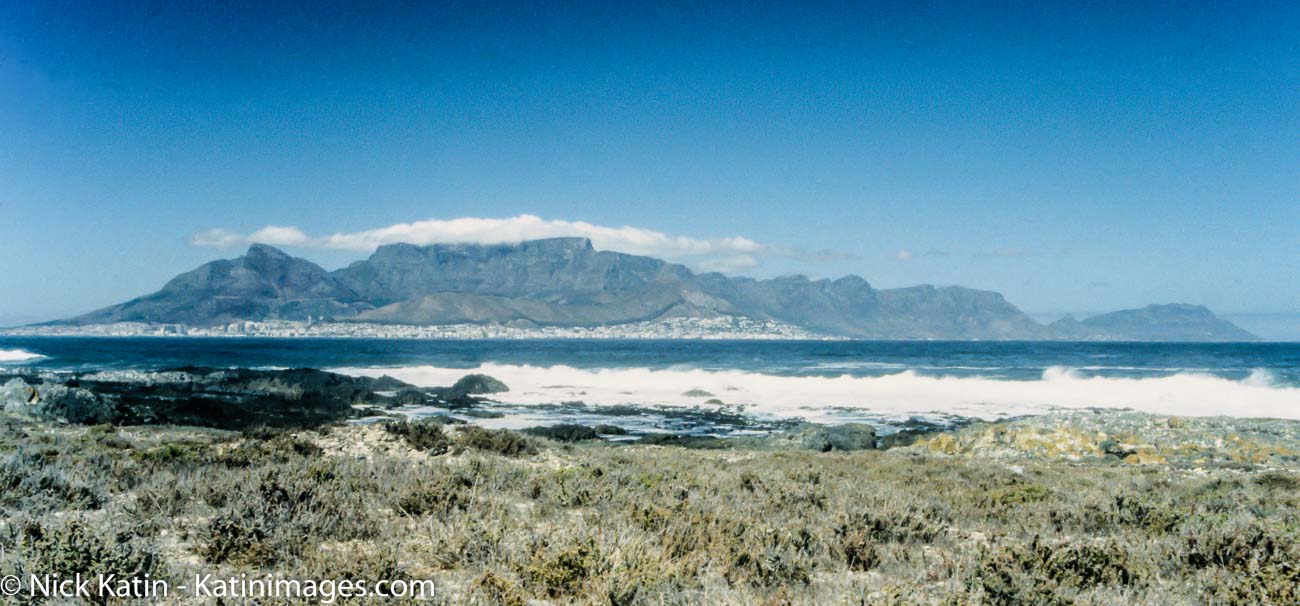
Table Mountain in Cape Town from Robben Island former prison of Nelson Mandela Share this:
-
Zinio – win a magazine subscription
I have recently been looking at Zinio a digital magazine service. They have what looks to be thousands of digital magazines at low prices. I looked at the travel and photography sections and they have publications such as Lonely Planet, Conde Nast, AFAR, Photo Plus and Shutterbug.
Now they have this new Z-Pass – YOU CAN READ WHAT YOU WANT WITH Z-PASS ON ANY DEVICE, GET 3 MAGAZINES FOR $5/MONTH WITH NO COMMITMENT AND YOU CAN TRY IT FOR 1 MONTH FREE
see Z-Pass for more info: To entice you to visit the site I have 10 free subscriptions to give away. To enter visit zinio choose a magazine title and send me your first and last name and email address and if you want send me your website address via the contact page or email. Just tell me whether the image below was taken in summer or winter.
The first 10 correct entries will win a subscription of their choice.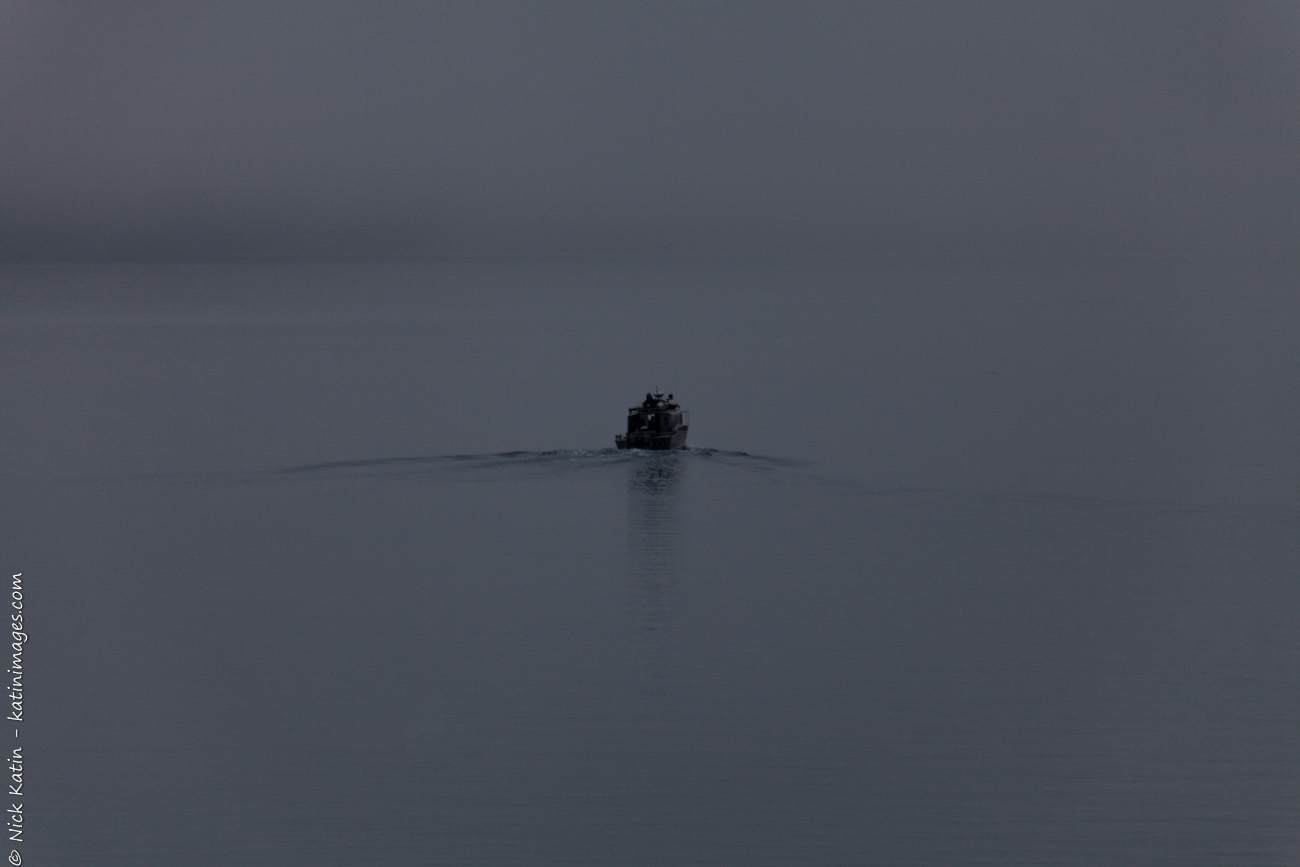
Local fishing boat heading through fog to sea from Whittier, Alaska, USA To see a larger image or to see purchase options click on the image
Share this:
-
Alaska Marine Highway photo
Last year I travelled the inside passage on the Alaska marine highway. Not on a cruise ship but on the ferry from Bellingham, near Seattle, to Alaska. More on that in the future. Came back with a lot of images which I am slowly working my way through. The weather was at best, pretty awful to begin with but it made for some interesting skies and scenery. This one is an example. Its not as it appears at first glance, black and white. 1/125 @ f11 100mm ISO100
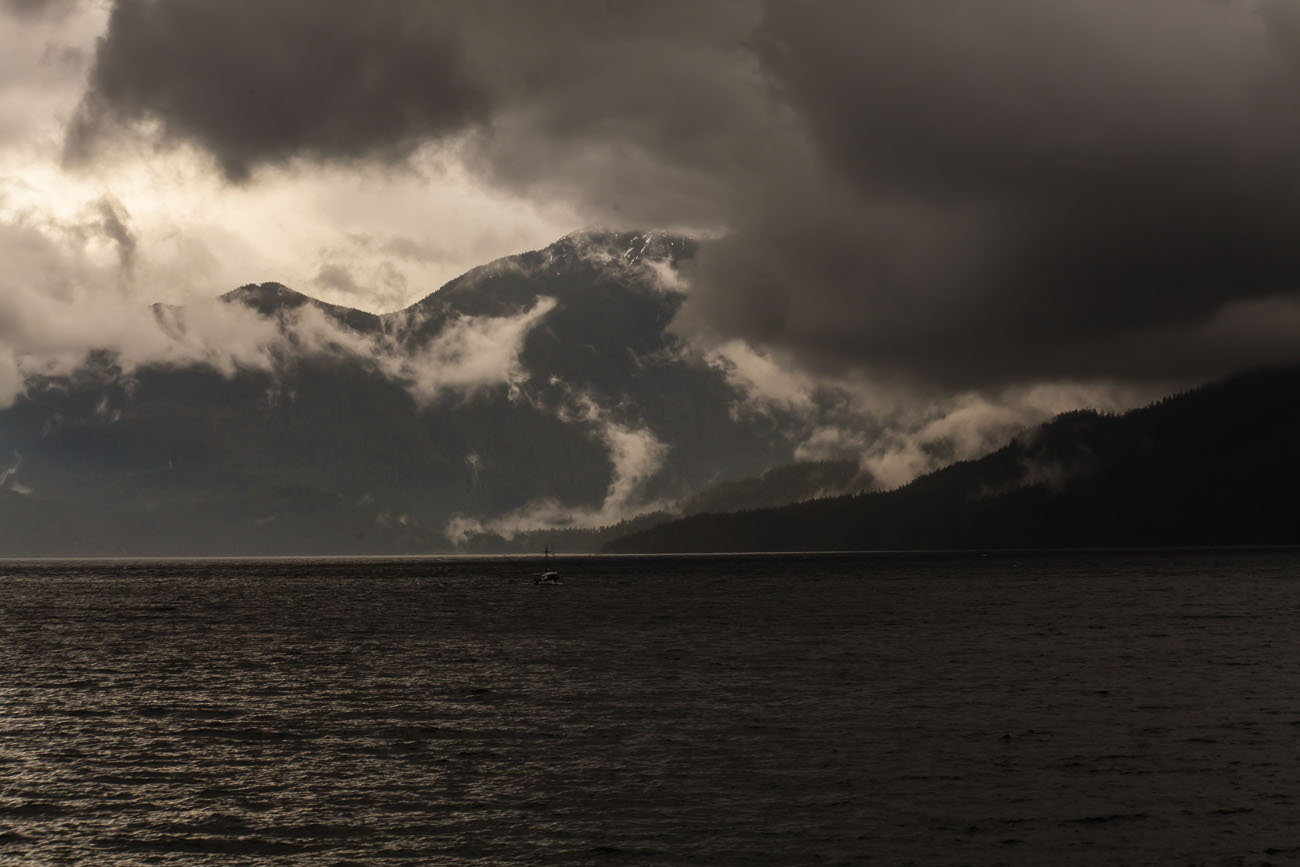
Misty Mountains near Bellingham WA at the beginning of the Alaska marine highway and the inside passage.©2013 Nick Katin To buy a print of this photo, go to Alaska marine highway photo. To licence or share this photo email or contact us
Share this:
-
Table on the beach in Seminyak, Bali photo
I’m off to Bali soon for a long weekend and some RnR. Its only three a bit hours by plane from Perth. I’m also intending to add to my growing Bali image collection. This one was taken at the hotel Seminyak in of course Seminyak. Seminyak is the most western town in Bali with a big population of Aussie ex pats, designer label shops and the best restaurants on the island. In fact its fast becoming a culinary paradise with an influx some excellent international chefs who now have interests there. 1/320 @ f9 42mm ISO100.
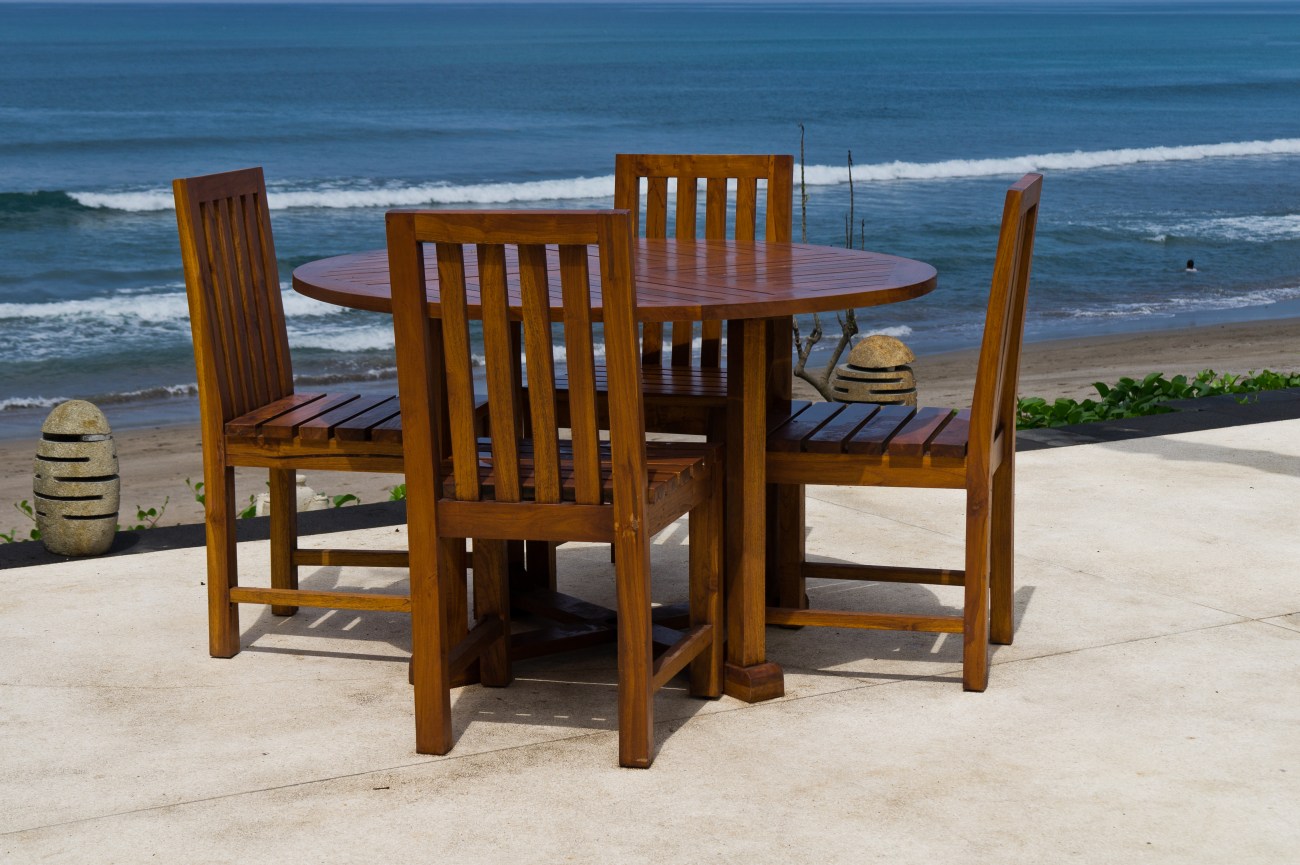
Table on the beach setting at Hotel Seminyak, Seminyak, Bali, Indonesia ©2013 Nick Katin To buy a print of this photo go to Table on the beach photo. To licence this photo email or contact us
Share this:
-
Gnarabar beach near Margaret river photo
Merry Xmas to all you out there! I hope to bring you some different images and info next year.
For all of you in the snowy and cold parts of the northern hemisphere I’ll be somewhere like this on xmas day morning (and as its going to 38C (100F) for the next 7 days) probably every day for the rest of the week!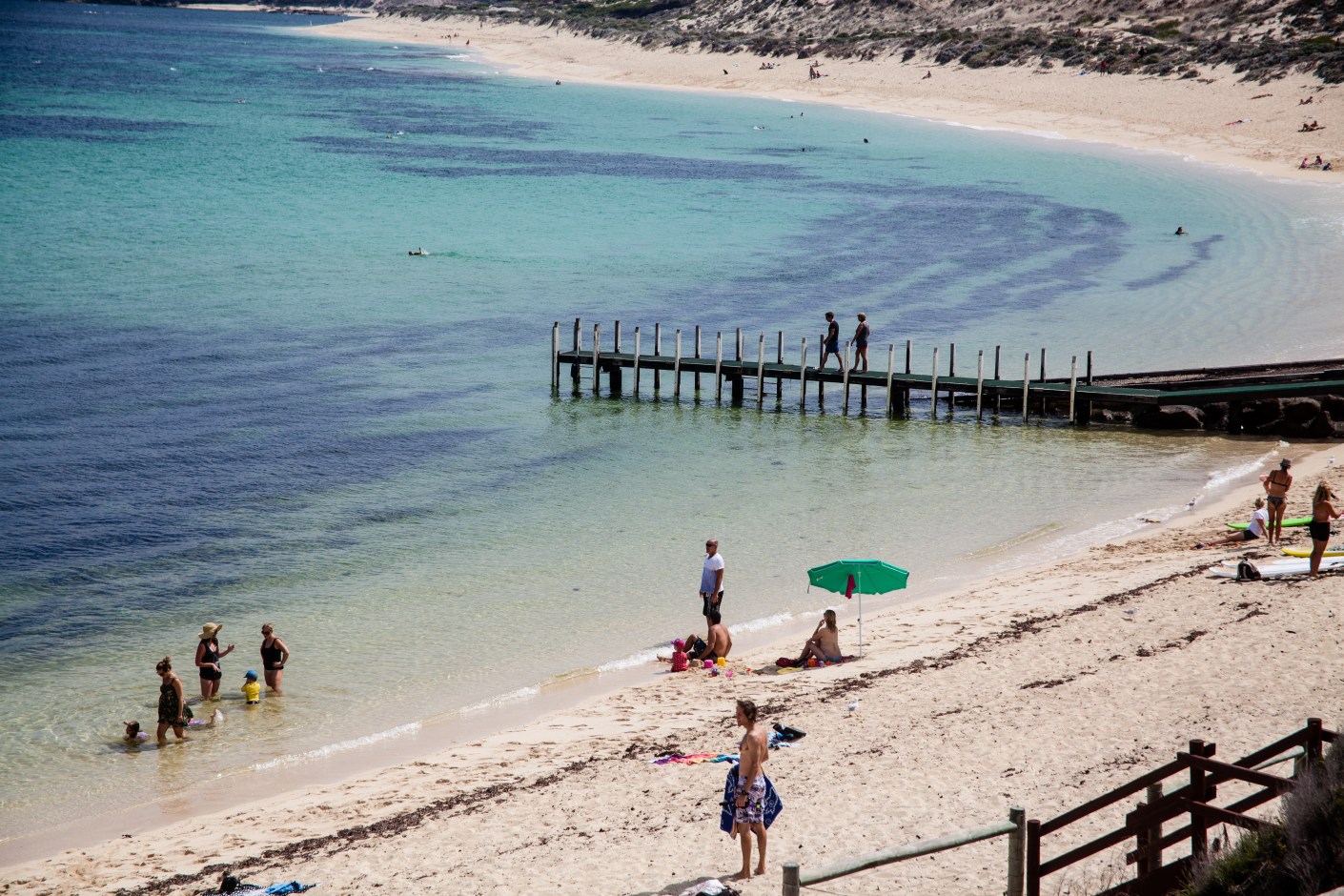
Gnarabar beach This is one of the few calm beaches along the lower SW of Western Australia.© 2012 Nick Katin To buy a print of this photo go to Gnarabar beach photo. To licence this photo email or contact us
Share this:



 Katin Images Travel Photography