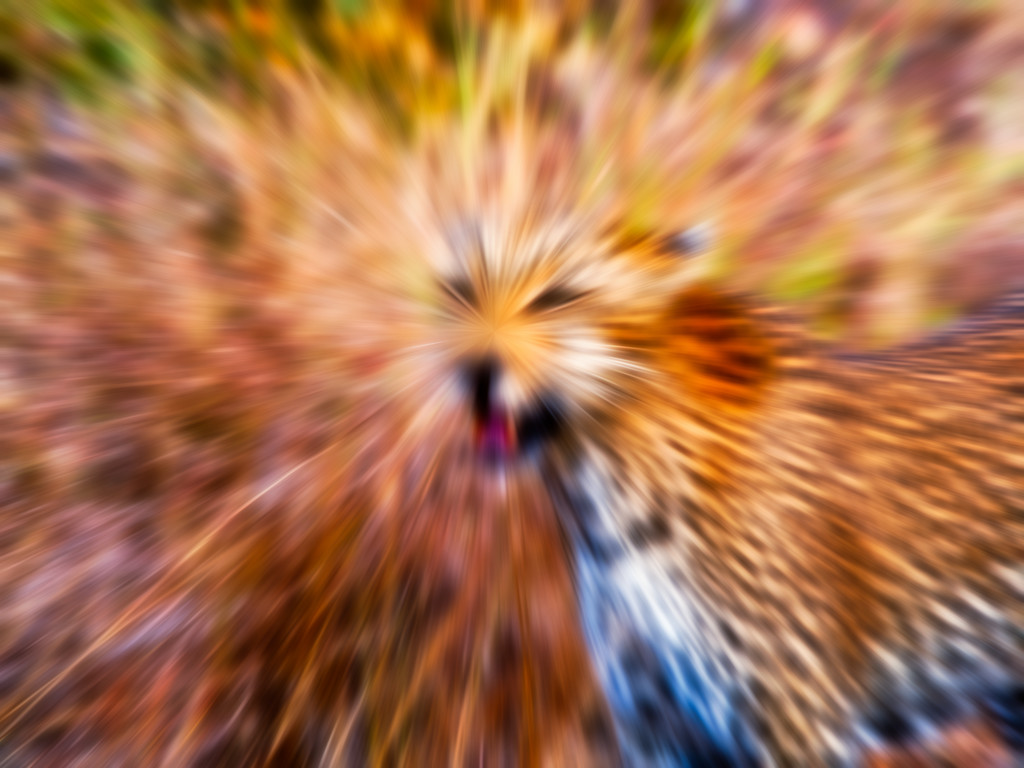
Leopard in Timbavati near Kruger NP South Africa. To order a print or digital image click on the image or contact me
Wildlife photography has always been a captivating pursuit for me, a way to connect with the natural world and its magnificent creatures. During my recent adventures in South Africa, I decided to take my passion one step further by reinterpreting my wildlife photographs into fine art.
Once I had a selection of what I thought were good quality wildlife photographs, it was time to transform them into fine art. Post-processing is where the real magic happens. I used Luminar Neo to enhance colours, adjust tones, and add effects that would elevate the images from photographs to artworks.
Fine art is a personal expression, and I wanted to infuse each piece with my own unique perspective. These Images have been transformed into digital paintings, allowing me to add my artistic flair and creativity to the mix. All photos have had the same amount of post processing to show a specific style.
Transforming wildlife photography into fine art is a deeply gratifying journey. It allows you to not only capture the beauty of nature’s creations but also to share your own unique perspective and emotions with the world. Through observation, composition, post-processing, and a touch of personal creativity, I was able to breathe new life into some of my wildlife photographs, turning them into pieces that evoke emotions and opinions. Whether you’re a passionate photographer or a lover of art, I encourage you to explore this fascinating intersection of nature and creativity; you might just discover a new dimension to your passion.
Each image is only available for purchase 15 times and a separate certificate of authenticity will be provided to the purchaser. To order a print or digital image click on the image or contact me Go to Luminar Neo for more info on this creative AI software
Leopard in Timbavati near Kruger NP South Africa. To order a print or digital image click on the image or contact me
Wildlife photography has always been a captivating pursuit for me, a way to connect with the natural world and its magnificent creatures. During my recent adventures in South Africa, I decided to take my passion one step further by reinterpreting my wildlife photographs into fine art.
Once I had a selection of what I thought were good quality wildlife photographs, it was time to transform them into fine art. Post-processing is where the real magic happens. I used Luminar Neo to enhance colours, adjust tones, and add effects that would elevate the images from photographs to artworks.
Fine art is a personal expression, and I wanted to infuse each piece with my own unique perspective. These Images have been transformed into digital paintings, allowing me to add my artistic flair and creativity to the mix. All photos have had the same amount of post processing to show a specific style.
Transforming wildlife photography into fine art is a deeply gratifying journey. It allows you to not only capture the beauty of nature’s creations but also to share your own unique perspective and emotions with the world. Through observation, composition, post-processing, and a touch of personal creativity, I was able to breathe new life into some of my wildlife photographs, turning them into pieces that evoke emotions and opinions. Whether you’re a passionate photographer or a lover of art, I encourage you to explore this fascinating intersection of nature and creativity; you might just discover a new dimension to your passion.
Each image is only available for purchase 15 times and a separate certificate of authenticity will be provided to the purchaser. To order a print or digital image click on the image or contact me Go to Luminar Neo for more info on this creative AI software
It is estimated that there are 2500 cheetahs, a quarter of the world’s population, roaming rural Namibia, that is outside of the national parks. And that’s where all the problems lie. The farms are ideal for cheetahs and leopards (the other big cat that Africat specialises in). In the National Parks and game reserves both these predators are in competition with larger predators like lions. On the farms there is no such competition. Unfortunately they can’t tell the difference between small game and small farm animals like calves, sheep or goats which upsets the farmer just enough for him to set traps or go hunting! That’s where Africat come in.
Straight after heating up the shutter in our cameras and blistering our shutter finger, we were whisked off in open top 4WD vehicles to the leopard hide. There we all sat in a small marquee whilst Guy one of the guides chats about Africat.
“When a farmer kills or captures a cheetah or a leopard it often leads to making the problem worse.” He began “when a predator holds a territory it will chase out any intruding predators. Once its removed other predators will move in and often divide up the territory, so instead of having just one animal to deal with the farmer ends up two or three times as many. What we do is to try and educate the farmers to manage their livestock better so that losses are minimised and both can live together. Of course we often meet resistance and in those cases we just ask the farmer not to kill the cats but just capture them and release them to us so that we can release them back into the wild away from that farm.”
He also told us that there were several cheetahs and leopards roaming wild on this farm and hopefully a number of leopards will visit the hide this afternoon. It occurred to me that we appeared to be in an unfenced area and wouldn’t there be the chance that the leopards might find us more attractive than the slabs of meat. Dumb question Nick!
“Big cats will only really attack a human if the cat is cornered, injured or senses that we are vulnerable”. Guy said “If it’s got a much easier alternative then it will always go for that. Of course it also associates humans with guns and that also acts as a pretty big deterrent”
I asked him what happened to his heavily bandaged foot that he couldn’t walk on without the aid of crutch.
“Oh that, this happened in the lion enclosure”
There was a complete silence. Sensing this, Guy went on. “Chris (the other guide) and I went in to see the lions and during our work I stepped backwards from the lion and caught my foot on a rock and fell spraining my ankle. As I said these big cats sense when we are vulnerable and in this case she began to make a move towards me. Fortunately Chris was there and herded her off before she actually attacked.” He smiled “So she didn’t really attack me. I just didn’t take enough care, something that when you’re dealing with these animals could cost a life”.
“Aren’t we seeing these lions in the morning?” I whispered to Sue, who ignored me.
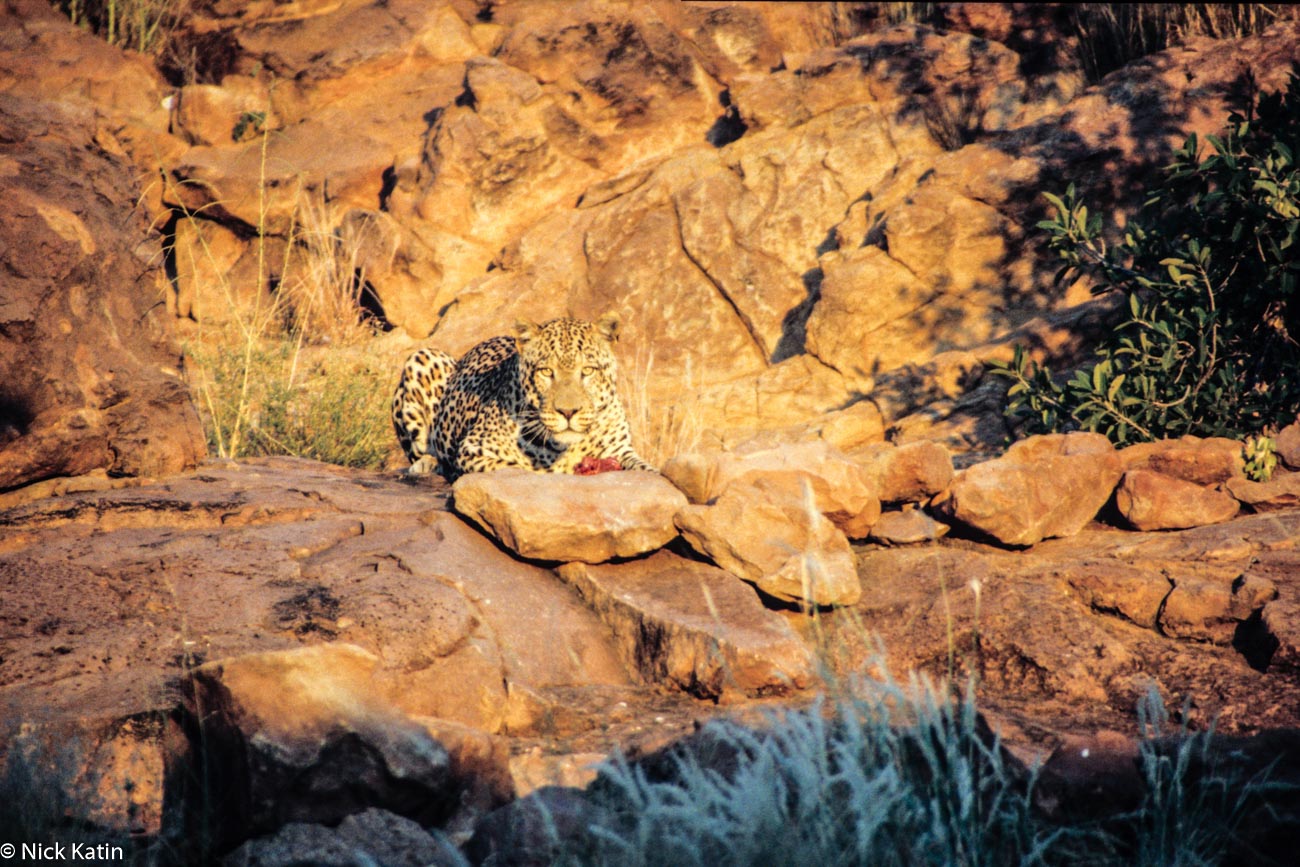
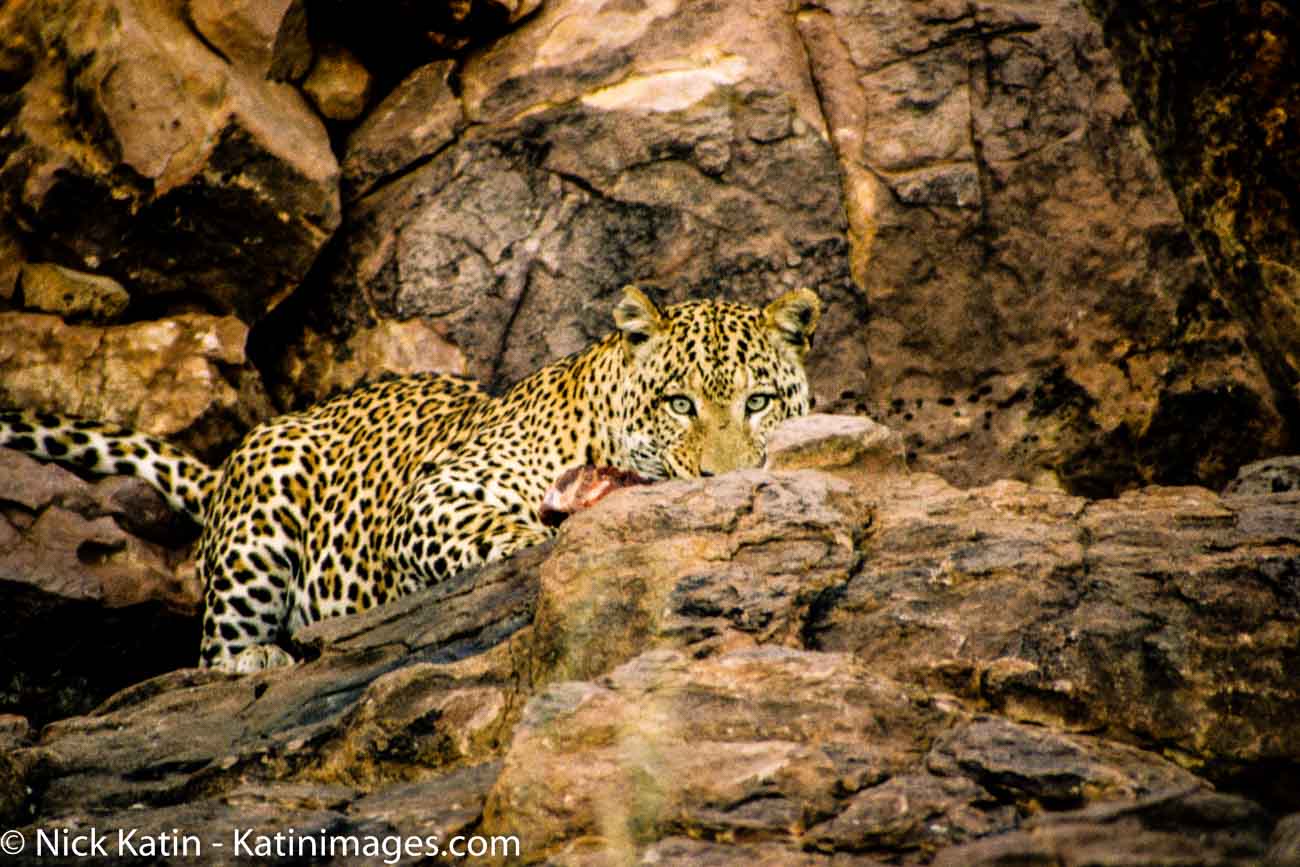
With a degree of caution we are fed into the small hide and watch as the guides leave meat in conspicuous places on the elevated rocky terrain immediately in front of us. It was getting towards sunset so the light was that golden colour which bathed the rocks in almost perfect light. Within a few minutes a leopard appeared followed a few minutes later by another to chew on the slabs of meat and then disappear. For the next hour there was a regular pattern of first one then the other appearing and then disappearing.
The hide was totally closed in except for a long thin viewing open window that made us feel like we were so close. In fact it was a zoo in reverse we were the ones imprisoned for our safety whilst the animals roamed around us. At one time one of the leopards looked straight at us and darted off after someone dropped their lens onto the small shelf we were all leaning on. Apart from that the only sound was that of camera shutters as we all strived to get that perfect leopard shot. I couldn’t help feel that this was all a bit contrived even though the leopards are free to roam anywhere they want and are native to the area. But I’m not complaining leopards are one of the most elusive animals to view in Africa and to see them up close and for so long, is an experience not to be missed.
I like leopards! They are such magnificent beasts, like the shark they appear to be the perfect hunting machine with their muscular shaped body, long tail and strong stature.
If you like this then hit “follow” on the side bar
A leopard eats it’s prey amongst the rocks in Central Namibia
The hostel itself was an old large rambling single storey house with hand me down furniture spread haphazardly around the place,………… lounge chairs, torn dining chairs and card tables that had all seen better days and a large garden.
Sounds all right doesn’t it? Well I did miss out one important fact. It backed onto the runway. It didn’t take too many jumbo jets to fly over to work out why it was called the Airport backpackers!
Gerard was actually the owner and due to his Aussie manager being away, the manager as well.
A white South African in his late 30’s or so, Gerard just likes to drink and talk and without doubt is a wealth of information on travel in Africa.
Mind you, as Gerard’s bar was outside in the garden, conversations were often interrupted by the take off or landing of 747 or something similar. The noise was deafening initially until strangely enough you got used to it.
What fascinated me more were the clientele; an Israeli couple who were not together, so they kept saying anyway, helping Gerard in slow motion; two Scottish girls who spent the day sun-baking and were never far from each others side; a Sri Lankan family, who never left the place and seemed to spend all their time cooking and washing and finally a Norwegian man in his late sixties with a much younger Thai wife, who just seemed to hover all the time in the background.
The last couple had houses in both Norway and Thailand and he was a retired engineer, the last person you would be expecting to backpack around Africa.
They were waiting to catch the ‘Baz’ bus to Victoria Falls in Zimbabwe. Now the Baz bus is one of those innovations born from the principle, necessity is the mother of invention. Clearly aimed at the backpacker market it’s a hop on hop off bus that runs between J’burg and Cape Town with several side routes and of course it’s relatively cheap. We toyed with the idea of using it ourselves except for one important detail, it didn’t go anywhere we were going!
A leopard eats it’s prey amongst the rocks in Central Namibia





 Katin Images Travel Photography