
Cecil Rhodes is buried at a spot he called the “view of the world” but is also called Malindidzimu (dwelling place of the benevolent spirits). So taken was he with what could be seen at the top of this granite mountain that he nominated this place as his last resting place. It’s an eerie place, as the huge boulders that mark the spot appear to be positioned by Rhodes himself. He was a powerful man but somehow his power did not stretch that far.
On the way back to Bulawayo we stopped off at Tshabalala Wildlife Sanctuary. Admission is free if you paid to see Matobo on the same day.
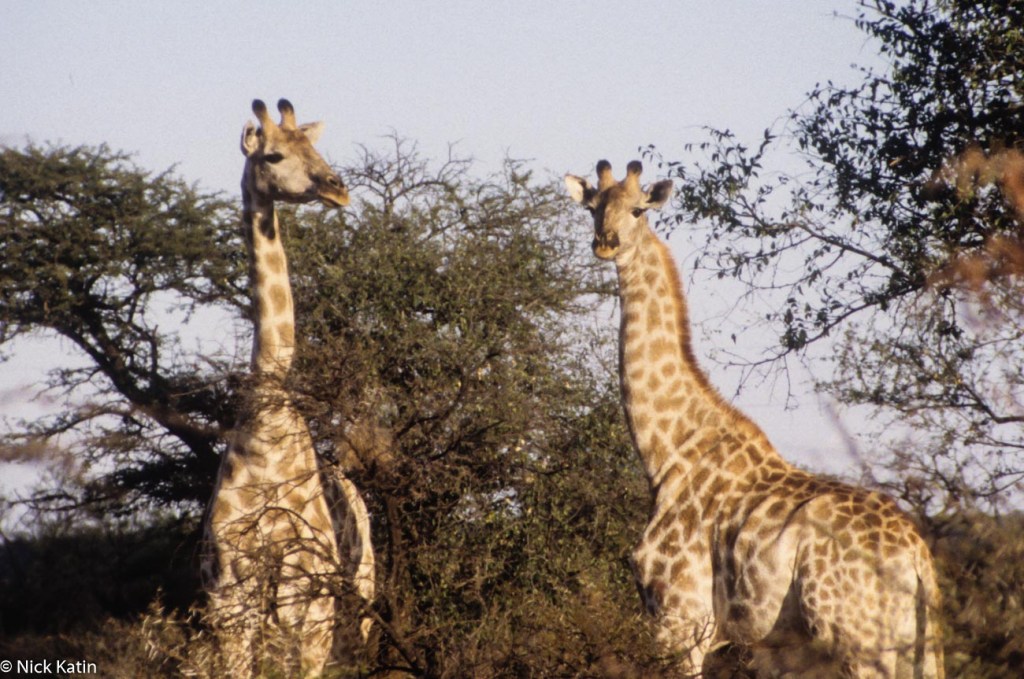
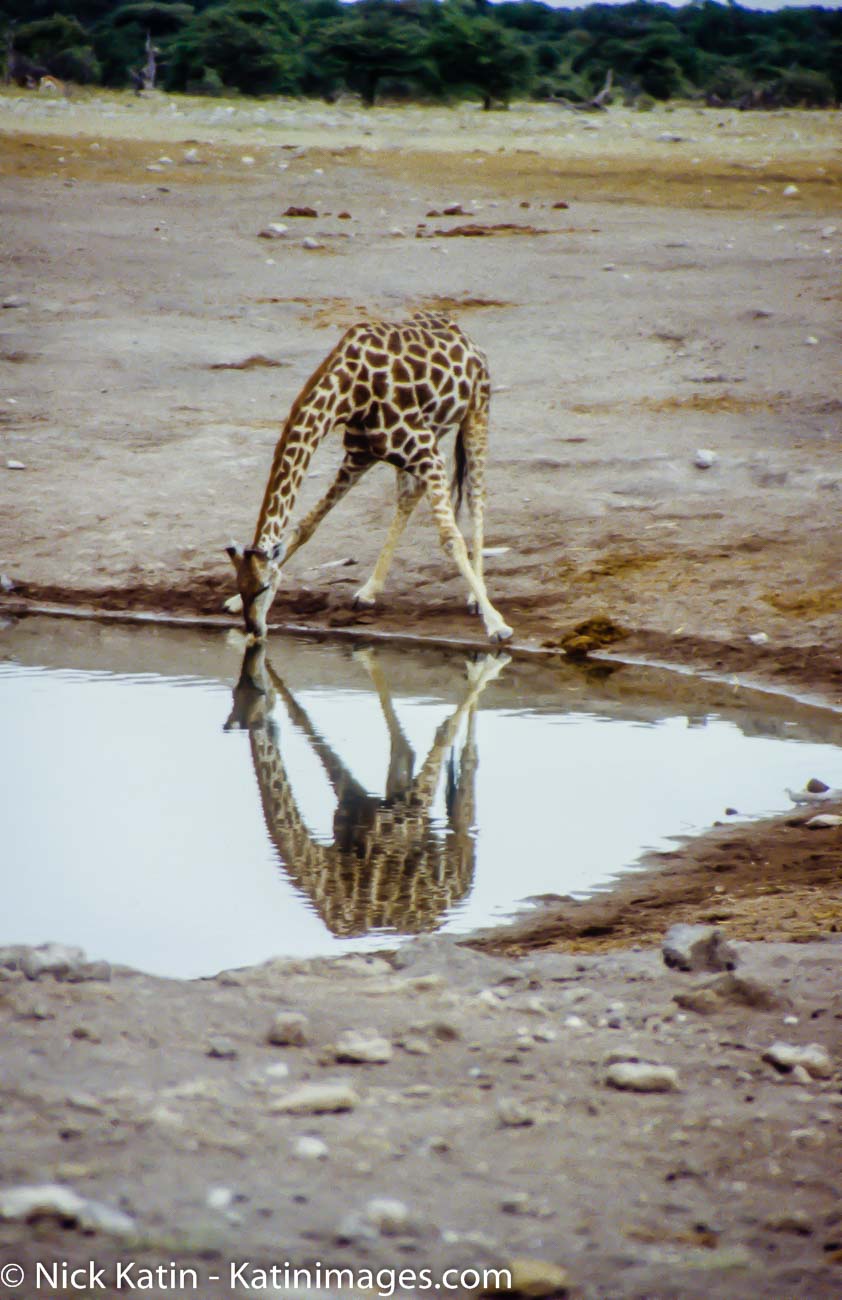
Its an excellent park as there are no predators and we could get out of the car and just stroll around the many giraffes, impala and zebra to name just three. Our only fear was of being accidentally kicked by a giraffe due to their inability to see us beneath its torso and we being such a long distance away from their head. They are soooo tall!
The following day just the two of us (Mark and Nicky left for Harare via the overnight train the previous evening) visited the Khami ruins.
Zimbabwe has several ruins dotted around the southwest and central parts of the country, the origins of which are often shrouded in mystery and varying theories. I can honestly say that Khami ruins did not leave me with lasting memory of mystique or intrigue. It’s a rather neglected and run down and the trail guide written and published by The National Museums and Monuments of Zimbabwe was ten years old and ventured very little on the taxing subject of who built this mini city. Like the Lonely Planet, it suggests that the Torwa people inhabited it until ousted by the much more powerful Rozwi who attempted to destroy Khami and from the looks of it needn’t have bothered as recent neglect seems to have done a much better job. The most recent theory given to us by Burkes Louise was the possibility that Indians from the Asian sub-continent might have been the original builders and architects.
The ruins are divided into two different areas, the hill complex and the southern area. The most notable thing about the latter was its proximity to a really smelly reservoir. The hill complex on the other hand is not as spread out and had a concentration of stone walls and terracing surrounding it on quite a prominent mount. On the hill itself are tiers of huts or at least the remains of them. This apparently was the home of Mambo king of the Torwa; where he lived with his entourage. I guess it was interesting but not enough to keep us there too long.
Across town in the opposite direction and around 24 kilometres from Bulawayo is Chipangali Animal Orphanage. This centre for injured, sick and ‘homeless’ animals was on our list of must see’s. It looks more like a zoo than a wildlife sanctuary. There were lots of cages and enclosures housing the various animals like lions, leopards, rhino, hyenas, and even crocs and snakes to name a few. Lots of these animals are perfectly fit but could not survive if returned to the wild. For instance, once a lion has had close contact with humans it loses its fear of man and becomes a risk to both man and itself. Chipangali also has breeding programs for cheetahs and rhino, so there were large enclosures for both of these animals. What always amazes me is how these places keep going. Obviously under resourced and running out of space somehow they seem to just soldier on and make the best of a bad thing. If I had one criticism it was there was very little info on why individual animals were there. Something like: “Petra (the lioness) was shot by a poacher and rescued by Tarzan, who traveled for three days carrying her to safety. She now has made a full recovery but has developed this habit for pounding her chest with her front paws and hence cannot be released back into the wild.”
We goofed! As I said earlier we passed Hwange National Park by train to get to Bulawayo just because we wanted to travel in a train and we were under the delusion that hire cars were cheaper in Bulawayo than Vic Falls. As we now know, the train ride was a disappointment and hire cars cost pretty much the same. So now we had to back track 330 kilometres each way. It’s a long drive too, three and half hours to be exact to arrive at Main camp.
If you like this then hit “follow” on the side bar


 Katin Images Travel Photography